Child of Chinese illegal immigrants charged with planting explosive at US military base


NEWYou can now listen to Fox News articles!

The Department of Homeland Security revealed that a suspect who fled to China after allegedly planting a deadly explosive device at an important military base is the child of two Chinese illegal immigrants.  

U.S. Immigration and Customs Enforcement arrested Chinese nationals Qiu Qin Zou and Jia Zhang Zheng, both of whom were living in the U.S. illegally, Homeland Security said. Their arrests came following two of their adult children, Ann Mary Zheng and Alen Zheng, being connected to a failed plot to detonate an improvised explosive device (IED) at MacDill Air Force Base in Florida in mid-March. 

The base, located in Florida, is home to U.S. Central Command, which oversees military operations in the Middle East, and Special Operations Command, which oversees all special operations forces across the Department of War.

The alleged perpetrators of the attempt were born in the U.S. after their parents illegally entered the country, according to the Department of Homeland Security. 

ICE DETAINS PRESIDENT OF WISCONSIN’S LARGEST MOSQUE, ALLEGING HE HID CONVICTION FOR ATTACKS ON ISRAELIS

The agency asserted the case “illustrates why the improper recognition of ‘birthright citizenship’ for children of illegal aliens is not only inconsistent with the Constitution, but endangers all Americans.”

Child of Chinese illegal immigrants charged with planting explosive at US military base

Jia Zhang Zheng (left) and Qiu Qin Zou (right) are Chinese illegal aliens whose adult children were allegedly behind an attempted bombing at MacDill Air Force Base. (Octavio JONES / AFP via Getty Images; DHS)

Birthright citizenship refers to the principle that anyone born on U.S. soil is automatically granted U.S. citizenship. 

The FBI said Alen Zheng, who is believed to have planted the improvised explosive device at MacDill Air Force Base on March 10, is currently in China. He is facing charges of attempted damage to government property by fire or explosion, unlawful making of a destructive device and possession of an unregistered destructive device, which carry a potential sentence of up to 40 years in prison.

FBI Tampa arrested Ann Mary Zheng March 17 following her return to the U.S. from China, where she had fled with her brother. She has been charged with accessory after the fact and tampering with evidence, facing up to 30 years in prison. 

She is accused of hiding or damaging a 2010 Mercedes-Benz to prevent its use in legal proceedings, court documents show. 

Prosecutors allege that the siblings attempted to cover their tracks by selling the vehicle to car dealer CarMax. Despite being vacuumed and cleaned, investigators later discovered trace explosive residue inside the vehicle.

The day after Ann Mary Zheng’s arrest, ICE apprehended both parents, Qiu Qin Zou and Jia Zhang Zheng. They are currently in ICE custody, according to the Department of Homeland Security. 

Both parents applied for asylum in the U.S. but were denied and ordered removed by an immigration judge in 1998, according to the agency. 

The Department of Homeland Security said the Bureau of Immigration Appeals denied multiple attempts by the parents to have their case reopened. Despite this, both remained living in the U.S. illegally for nearly three decades.

The department is positing that this case highlights the “grave danger” of current U.S. law granting automatic citizenship to anyone born on American soil, including the children of illegal immigrants.

WATCH: PRESIDENT TRUMP REVEALS FAMILIES OF SLAIN US SERVICE MEMBERS URGED HIM ‘FINISH THE JOB’

Anne Mary Zheng mugshot

Anne Mary Zheng is charged with accessory after the fact and tampering with evidence, facing up to 30 years in prison.  (DHS)

Following the parents’ arrests, Acting Department of Homeland Security Assistant Secretary Lauren Bis said that “automatically granting citizenship to children of illegal aliens born in the U.S. … poses a major national security risk.”

“That reality became apparent last week when two U.S.-born children of Chinese illegal aliens were indicted for planting a potentially deadly explosive device outside MacDill Air Force Base in Florida,” said Bis, who added that, “This incident underscores the severe national security threat that illegal immigration and birthright citizenship pose to the United States.”

Bis also asserted that the policy of granting automatic birthright citizenship “is based on a historically inaccurate interpretation of the Citizenship Clause” of the 14th Amendment.

The Supreme Court is currently weighing the constitutionality of an executive order signed by President Donald Trump that would end birthright citizenship for the children of illegal immigrants. Trump signed the order on his first day back in the Oval Office in 2025. 

PETE HEGSETH SIGNS MEMO OPENING DOOR FOR TROOPS TO CARRY PERSONAL FIREARMS ON BASES

Tampa Police Department blocks traffic near MacDill Air Force Base

Police officers with the Tampa Police Department block traffic along South Dale Mabry Highway near the main entrance of MacDill Air Force Base, which houses CENTCOM headquarters, after a suspicious package was reported at the gate in Tampa, Florida, on March 16, 2026.  (Octavio Jones/AFP via Getty Images)

The court held oral arguments on the case this Wednesday, with justices appearing skeptical of Trump’s order.

CLICK HERE TO DOWNLOAD THE FOX NEWS APP

Amy Swearer, a senior legal fellow at Advancing American Freedom, described the court’s line of questioning as “disappointing” for proponents of Trump’s stance on birthright citizenship.

“Most people understood coming into this, and I suspect even the government understood coming into this, that this was probably going to be a bit of an uphill battle,” Swearer said.

Despite this, Swearer said, “I do think there’s a path forward” for a Trump victory, though it would likely be narrow and partial.

Fox News Digital’s Alex Nitzberg and Alexandra Koch contributed to this report.


Trump threatens to destroy Iran power plants as reports emerge of downed U.S. F-35


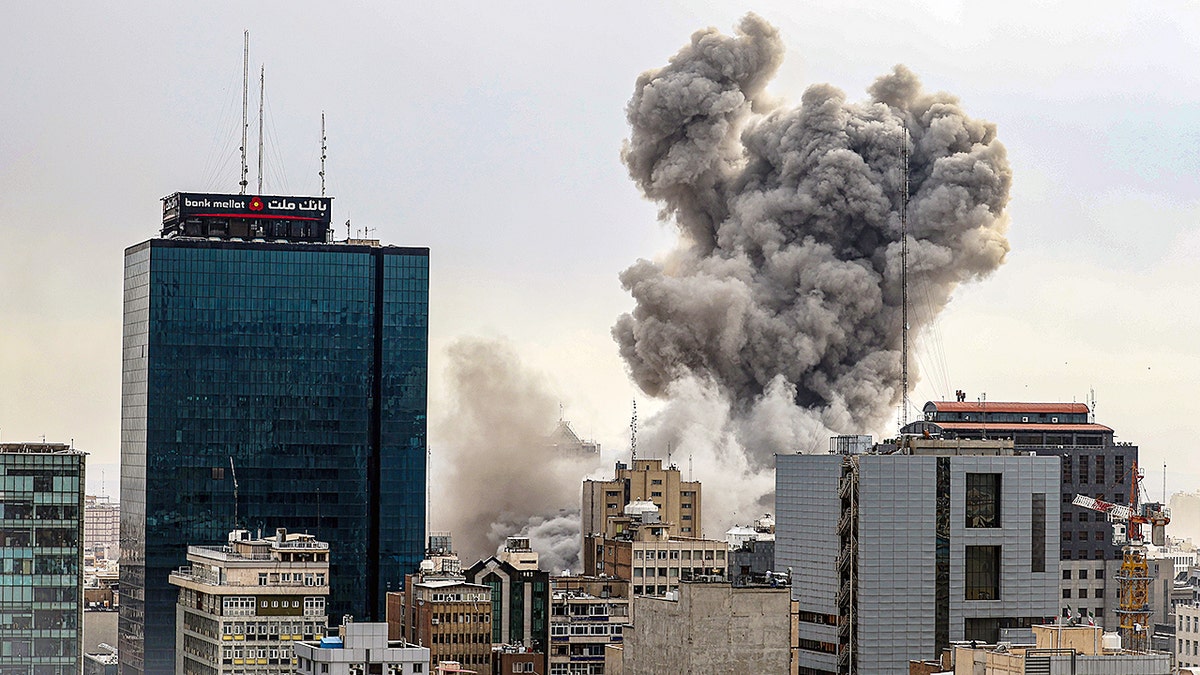
A general view of Tehran with smoke visible in the distance after explosions were reported in the city, on March 2, 2026 in Tehran, Iran.

Contributor | Getty Images

U.S. President Donald Trump on Thursday threatened to destroy Iran’s bridges and power plants, saying the “New Regime leadership knows what has to be done, and has to be done, FAST!” in a Truth Social post.

Trump did not elaborate on what needed to be “done,” but said the U.S. “hasn’t even started destroying what’s left in Iran.”

Hours later, Iran’s semi-official Tasnim news agency reportedly claimed that a U.S. F-35 fighter jet was shot down over central Iran. Images of the jet were posted on Telegram, with one photo that appeared to show the words “U.S. Air Forces in Europe” on what appeared to be the tail section of a plane.

The U.S. Central Command, which oversees the region, and Iranian authorities did not respond to a request for comment at the time of publication.

Read more U.S.-Iran war news

Trump’s latest threat came a day after a nationwide address in which he said the U.S. military would hit Iran “extremely hard” for the next two or three weeks. He added that the U.S. would “bring them back to the Stone Ages where they belong.”

Hours after his speech, Iranian Foreign Minister Abbas Araghchi struck a defiant tone on X, saying that “there was no oil or gas being pumped in the Middle East back then,” referring to Trump’s stone age remarks.

“Are POTUS and Americans who put him in office sure that they want to turn back the clock?” Araghchi said.

Iran has effectively shut tanker traffic through the Strait of Hormuz, a vital global oil route, after the U.S. and Israel attacked the country on Feb. 28.

‘Stone age’ threats

Trump has repeatedly threatened to send Iran back to the “stone age” as the war entered its second month and the U.S. military build-up in the Middle East showed no signs of slowing.

Despite reports of overtures from the U.S., including ceasefires and a 15-point peace plan to end the war, Iran has publicly contradicted multiple reports about negotiations with the Trump administration on numerous occasions.

Tehran had described the 15-point proposal as “extremely maximalist and unreasonable,” according to an Al Jazeera report on March 25, citing a high-ranking diplomatic source.

Trump said Wednesday that Iran’s “New Regime President” had asked Washington for a ceasefire, a claim that Tehran has denied. Trump has not specified who the “President” is.

“We will consider when Hormuz Strait is open, free, and clear. Until then, we are blasting Iran into oblivion or, as they say, back to the Stone Ages!!!,” he wrote.

Trump threatens to destroy Iran power plants as reports emerge of downed U.S. F-35

Attacks on power plants could constitute a war crime and violate international law, legal experts said.

In a letter dated Thursday and signed by over 100 law experts, the group said international law prohibits attacks on “objects indispensable to the survival of civilians, and the attacks threatened by Trump, if implemented, could entail war crimes.”

Trump had also earlier said that he could target water desalination plants in Iran.

China, Russia and France veto

The Gulf Cooperation Council on Thursday called on the United Nations Security Council to take “all necessary measures to ensure the immediate cessation of Iranian aggressions against the Council states.”

The six countries in the Gulf Cooperation Council — Bahrain, Kuwait, Oman, Qatar, Saudi Arabia and the United Arab Emirates — have come under attack from Iranian missiles and drones as the war entered its second month.

Freedom of navigation or toll fees? Trump's definition of an 'open' Strait of Hormuz is unclear

The Kuwait Petroleum Corporation said that its Mina al-Ahmadi refinery was hit by drones early on Friday.

Jassim Albudaiwi, Secretary-General of the Gulf Cooperation Council, said that while the bloc does not seek war, Iran had “exceeded all red lines” and described Tehran’s attacks as “treacherous.”

Bahrain, the current rotating president of the Security Council, has led an effort to pass a U.N. resolution to ​authorize “all necessary means” to protect commercial shipping in and around the Strait of Hormuz.

But the proposal reportedly stalled after veto-wielding Security Council members China, Russia and France objected to the draft resolution, which would have authorized military action against Iran.

Choose CNBC as your preferred source on Google and never miss a moment from the most trusted name in business news.


Trump’s Iran speech ignores the risks of a return to the 1970s: Analysis


Demonstrators hold posters of Ayatollah Khomeini outside the American Embassy which is occupied by ‘students following the Imam Khomeini’s line on November 16, 1979 in Tehran, Iran.

Kaveh Kazemi | Hulton Archive | Getty Images

“The hard part is done,” President Donald Trump said in his address to the nation Wednesday night about the Iran war. The recent jump in gas prices is “short term increase” that should “will rapidly come back down” once the vital Strait of Hormuz is reopened, he said.

But there is reason to worry that the conflict and its economic consequences for Americans may get worse before they get better. If so, Trump will struggle to shake off the damaging political legacy of the war.

In that he would join a long line of U.S. presidents going back to the 1970s who have seen their tenures defined by energy crisis and inflation — the economic scourge Trump has called a “nation-buster.” 

“The oil shock of the ’70s was planted in the maybe subterranean part of our brains,” said Jay Hakes, a presidential historian who led the U.S. Energy Information Administration in the 1990s during the Clinton administration. 

“It was there for a long time because it was just such a jolt. And I think this will be that kind of jolt,” Hakes said.

Read more CNBC politics coverage

Gas prices on Tuesday rose above $4 a gallon on average for the first time since the war began. Gas has followed Brent crude prices that have risen 27% since the war began to just over $100 a barrel Wednesday. Oil tankers and other commercial shippers that would normally travel through the narrow Strait of Hormuz off Iran’s southern coast have been idled due to Iran’s threats and attacks. The waterway normally carries 20% of the world’s oil. 

But $4 a gallon gas, painful as it is, may only be the tip of the iceberg. That is clearer in the rest of the world than the U.S., for now. The U.K. is set to receive its last shipment of jet fuel for the foreseeable future this week. Prices of jet fuel worldwide are up 96%, according to Platts data published by the International Air Transport Association. Futures contracts for liquid natural gas in Japan and South Korea are up 43%, according to FactSet data. 

Asia and to a lesser extent Europe are more immediately exposed to disruptions in supply from the Strait of Hormuz. Unlike the U.S. — as Trump has repeatedly pointed out — they buy directly from the Middle East. But all of these commodities are connected through global markets. Disruptions in one part of the world will quickly spread to others. Analysts fear the price of oil could jump above the record near $150 a barrel set in July 2008 during the Great Recession.

So far, the world has benefited from energy supplies that were already in transit when the war began just over a month ago, aided by emergency releases from strategic petroleum reserves. But the world is burning through those supplies. 

“With even the modest estimates we have now, the loss of oil in April will be twice the loss of oil in March,” International Energy Agency Executive Director Fatih Birol said on a podcast released Wednesday.

Energy conservation in the wake of supply disruption

Governments around the world are trying to encourage energy conservation in the face the crisis. A tracker from the IEA shows 26 governments have taken steps such as Pakistan lowering the speed limit.

Trump has taken steps to encourage the market to improve supply but has stopped short of calling on Americans to try to conserve energy. Doing so might call back uncomfortable comparisons to President Jimmy Carter’s attempts after the 1979 crisis, which began with the Iranian Revolution. Ronald Reagan turned Carter’s calls for consumers to limit themselves into a potent political weapon, winning him the presidency the next year. 

And Trump has spent part of his terms in the White House calling for limits on construction of and subsidies for renewable energy production.

The politics of energy have taken a toll on the nation. “We’ve lost our ability to ask the American public to sacrifice,” Hakes said. 

Hundred thousand of people gather at Tehran Freedom Square, formerly Monument to the Kings, to cheer the motorcade carrying Iranian opposition leader and founder of Iran’s Islamic republic ayatollah Ruhollah Khomeiny upon his return from exile on February 1, 1979 while the insurrection against the Shah’s regime spreads all over the country.

Gabriel Duval | AFP | Getty Images

Before Carter, presidents — including Republicans — called on a need for shared sacrifice. President Richard Nixon proposed a national speed limit of 55 miles per hour following the Arab Oil Embargo of 1973. It was passed into law the next year, but even before that Nixon urged people to slow down, “and they did,” Hakes said. 

“We still had a little bit of the World War II mentality,” Hakes said. 

The energy crises of the 1970s put the nail in the coffin of that mentality. Nixon and Carter struggled to lower prices, and inflation surged. Carter put Paul Volcker in place as Federal Reserve chair to tackle inflation — which he eventually did, but only by raising interest rates high enough to prompt a recession, followed by record-high mortgage rates. Carter, of course, wasn’t re-elected.

Americans’ sense of what government can and should do was permanently changed.

“The failure of the nation’s politicians to address the energy crisis contributed to the erosion of faith that Americans had in their government to solve the problems,” Princeton University historian Meg Jacobs wrote in “Panic at the Pump: The Energy Crisis and the Transformation of American Politics in the 1970s.”

“If the Vietnam war and Watergate scandal taught Americans that their presidents lied, the energy crisis showed them that their government didn’t work,” Jacobs wrote.

Today, Trump’s premise as president is that government only works when he is in charge. “Nobody knows the system better than me, which is why I alone can fix it,” he said at the 2016 Republican National Convention. He has centralized control of the executive branch in the Oval Office, drawing power from cabinet secretaries and agencies that previously operated autonomously. 

The worst-case worries may not come to pass. The U.S. could quickly force Iran to capitulate, and the global economy could heal fast, as it did after the shock of the Russian invasion of Ukraine. But if not, Trump’s decision to go to war in Iran may only deepen many Americans’ alienation from their government. And as the sole decider atop the federal bureaucracy, Trump will have a difficult time convincing the public that anyone but him bears responsibility. 

Choose CNBC as your preferred source on Google and never miss a moment from the most trusted name in business news.


Iran’s war propaganda homes in on Trump with Lego memes


Young Iranian women walk past a state building covered with a giant anti-U.S. billboard depicting a symbolic image of the destroyed USS Abraham Lincoln aircraft carrier, in downtown Tehran, Iran, on Feb. 26, 2026, the final day of Iran-U.S. talks that take place in Geneva.

Morteza Nikoubazl | Nurphoto | Getty Images

Wartime propaganda has evolved for the social media age, and Iran is now vying with the U.S. to be the world’s biggest keyboard warrior.

As the real-world bombardment in the Middle East continues and casualties mount, both sides in the month-old war are also firing off ironic, pop-culture-steeped memes on the online battlefield. Iran’s new leaders have quickly assumed an online fighting posture, amping up their memes and pointed attacks on the U.S. and Israel.

“What we’re seeing is not just a war of weapons, but it’s also a war of aesthetics,” said Nancy Snow, a professor and author who studies propaganda. “Whoever controls the meme controls the mood.”

Iran’s prime target is President Donald Trump, with state media and top officials alike relentlessly mocking and amplifying criticisms of the U.S. leader.

Top members of Iran’s parliament, its Revolutionary Guard and even its president, Masoud Pezeshkian, have sought to insult or undermine Trump in their messaging. And they’re using the world’s most popular social media platforms, such as Facebook and X, to get the word out.

Among the most striking examples: a series of seemingly AI-generated videos depicting Iranian military successes against the U.S. and Israel in a Legoesque cartoon art style.

One shows a panicked Trump ordering an airstrike after reviewing the “Epstein File” alongside Satan and Israeli Prime Minister Benjamin Netanyahu. Another, a rap diss track, calls Trump a “loser” and accuses him of being Netanyahu’s “puppet” over images of stock market sell-offs, missile strikes and coffins.

Those and other messages out of Iran regularly reference Jeffrey Epstein, the late notorious sex offender and former Trump friend at the center of conspiracy theories that the president launched the Iran war to distract the public from headlines about releases of files related to the Epstein investigation.

The plain intent of Iran’s messaging is not just to project defiance and counter U.S. assessments of Tehran’s military weakness, but also to undermine Trump by homing in on some of his biggest political vulnerabilities.

“Iran is blending grievance with meme culture — mixing Epstein, anti-war sentiment and pop visuals to penetrate fragmented Western audiences,” Snow said.

As for why they’re using Legos to convey their message, it may be because of their universal appeal, said Dan Butler, a political science professor at Washington University in St. Louis who uses the toys in his teaching.

“The same reason it works in education is the reason actors would use it for propaganda: people like Legos and will tune in to watch Lego-based films,” Butler told CNBC in an email.

“In fact if something is violent, using Legos might make people lower their defenses and also be more likely to share the material,” he said.

Airstrikes, bowling and Grand Theft Auto

The Trump administration, meanwhile, has melded wartime messaging with internet culture even more literally.

In the early days of the war, official accounts shared videos splicing clips from sports, movies and video games into real footage of military strikes.

The visuals dovetail with the relentlessly bombastic and boastful rhetoric from Trump and Defense Secretary Pete Hegseth, who have repeatedly trumpeted the “obliteration” of Iran’s military while assuring that the U.S. is rapidly nearing its objectives for victory.

The videos have drawn criticism, including from some former U.S. military officials, for trivializing a war in which more than a dozen U.S. service members have died and hundreds more have been injured.

But the White House officials involved in creating the videos say they have proven effective in drawing attention and connecting with young people. One of them told Politico the efforts are meant to tout U.S. troops’ heroic work “in a way that captivates an audience.”

The White House told CNBC it intends to stick with its messaging strategy.

“The legacy media wants us to apologize for highlighting the United States Military’s incredible success, but the White House will continue showcasing the many examples of Iran’s ballistic missiles, production facilities, and dreams of owning a nuclear weapon being destroyed in real time,” spokeswoman Anna Kelly said.

The meme war’s endgame

War propaganda is nothing new, but what’s being produced now — and what it’s intended to achieve — is unprecedented, said Roger Stahl, a University of Georgia communications professor whose research covers rhetoric and propaganda.

The Trump administration didn’t mount much of a war propaganda campaign before launching initial strikes on Feb. 28, and “there’s been no attempt to justify this conflict before or after,” Stahl said.

“Instead we get a series of memes” and “really bellicose statements from Pete Hegseth,” Stahl said. “I don’t see any message discipline. I think they are all over the place.”

The purpose of it, he said, is to galvanize Trump’s base of supporters and draw attention. 

Read more CNBC politics coverage

On the latter metric, the strategy has been a success: Four videos posted on the official White House X account on March 5 and 6 have garnered nearly 100 million impressions as of April 1.

Iran’s goal isn’t to convince or corral its own people — who are reportedly facing extended internet outages — but rather to craft a “response offensive” to undermine the U.S. globally, Stahl said.

“There’s a lot of erosion with regard to potential [U.S.] ally support for this war, and these messages from Iran are playing right into that.”

Targeting Trump

It’s not all memes and trolling. Iranian officials are also homing in on the war’s destabilizing impact on the global economy and energy prices.

On Sunday, Mohammad-Bagher Ghalibaf, speaker of Iran’s parliament, suggested on X that Trump’s habit of announcing war updates from his Truth Social account is actually an effort to influence stock markets.

“Heads-up: Pre-market so-called ‘news’ or ‘Truth’ is often just a setup for profit-taking. Basically, it’s a reverse indicator,” Ghalibaf wrote.

“Do the opposite,” the speaker advised investors. “If they pump it, short it. If they dump it, go long. See something tomorrow? You know the drill.”

On Monday morning, Trump wrote on Truth Social that the U.S. is “in serious discussions with A NEW, AND MORE REASONABLE, REGIME to end our Military Operations in Iran.”

The S&P 500 ended the trading day lower while oil prices continued to rise.

Ghalibaf on Tuesday shared a CNN article on Americans struggling with the war-induced spike in U.S. gas prices.

“Sad, but this is what happens when your leaders put others ahead of hard-working and ordinary Americans. It’s not America First anymore … it’s Israel First,” he wrote.

Choose CNBC as your preferred source on Google and never miss a moment from the most trusted name in business news.


European defense startups eye commercial deals and hiring push in the Middle East amid the Iran war


European defense tech startups are ramping up commercial discussions with Middle East governments since the Iran war, company execs told CNBC. Another CEO said interest from Gulf states was “skyrocketing” as they race to bolster measures to counter drone and missile attacks.

Iran has targeted its neighbors since a joint U.S.-Israeli military operation began at the end of February, with more than 3,000 drones and missiles having been fired on the United Arab Emirates, Saudi Arabia, Bahrain and Kuwait, according to data compiled by think tank the Center for Strategic and International Studies.

European startups that develop defense technology, in particular drone and missile interceptors, told CNBC they were increasingly talking with and receiving approaches from Gulf states to supply their militaries. Others are ramping up hiring in the region as they look to meet the demand for their systems.

Commercial conversations

Earlier this month, the UK government convened a meeting of defense companies to meet ambassadors and defense attaches from Saudi Arabia, Kuwait, Bahrain, Qatar, the UAE, Iraq and Jordan.

The discussion focused on “potential new defensive equipment and technology that British-based companies could supply at rapid pace to allies to counter Iranian drone and missile attacks,” the government said in a statement.

The meeting included Frankenburg Technologies, an Estonia-headquartered startup developing missiles to intercept drones, UK-based drone and missile interceptor company Cambridge Aerospace and Ukrainian-UK startup Uforce, which is developing autonomous systems.

Frankenburg has seen commercial conversations with Gulf states speed up since the onset of the Iran war, CEO Kusti Salm told CNBC.

The startup is currently in discussions with a number of governments in the Middle East about procuring its tech, Salm said, though declined to share which.

The potential order volume from Gulf states is in the thousands of missiles, Salm told CNBC, adding that Frankenburg is working with those customers to meet demand in an “expediated delivery schedule.”

Frankenburg Mark I interceptor missile live-fire test. Credit: Frankenburg.

Cambridge Aerospace, which declined to comment on commercial discussions in the Middle East or fundraising plans when approached by CNBC, announced two missile and drone interceptor products in September.

One is positioned by the company as a low-cost and scalable interceptor for cruise missiles and large drones, while another is described as an “interceptor for higher speed and value targets.”

Earlier this month, the Financial Times reported that the company was in talks to raise new funding at more than a $1 billion valuation.

UK-based startup Valarian, which builds digital infrastructure for sensitive use cases including those in defense, didn’t have defense contracts with Gulf states before the Iran war but has seen commercial discussions with them increase since the conflict began, CEO Max Buchan told CNBC.

Inbound interest

Uforce has seen interest from Gulf states in its defense tech “skyrocket” since the beginning of the Iran war, CEO Oleg Rogynskyy told CNBC. Uforce is developing several defense technologies, including counter-uncrewed aerial systems (UAS), maritime and strike drones and battlefield software.

“We’re having a ton of inbound interest,” he said. “Gulf states are coming to us to figure out how to do large-scale, unmanned operations.” That included intercept, de-mining, strike, future convoy and escort and patrol operations at sea, Rogynskyy added.

Uforce has been providing defence tech for Ukrainian operations in the Black Sea, he told CNBC, adding that the lessons from that war “are directly applicable to what is happening in Iran, both from an operational, tactical and strategic perspective.”

“We are looking at the very similar mine and missile-based sea denial from the Iran side, to how Russia prevented Ukrainian grain from being exported, initially.”

Uforce, which raised $50 million at a valuation above $1 billion earlier this month, is now looking to hire a team permanently based in the Middle East, because of the demand caused by the Iran war. The company currently has a Ukrainian delegation in the region, but aims to recruit five to 10 employees in the next few weeks, Rogynskyy told CNBC.

Frankenburg is also looking to build out a Middle East-based team. The startup didn’t have any employees in the region before the war, but is now looking to hire there “significantly,” CEO Salm told CNBC. While the Middle East has been a focus of Frankenburg since the company’s inception in 2024, hiring plans have been accelerated because of the Iran war, he said.

Defense tech startups in Europe have raised record sums in recent years as global geopolitical tensions have risen. The sector picked up $1.8 billion in 2025, according to deal-counting platform Dealroom, nearly three times the previous highest yearly figure, and has already raised $854 million so far in 2026.

Why Europe is racing to build its own defense industry — and what it means

– CNBC’s Emma Graham also contributed to the report.

Choose CNBC as your preferred source on Google and never miss a moment from the most trusted name in business news.


Army investigates helicopter flyby at Kid Rock’s Nashville home


President Donald Trump speaks alongside entertainer Kid Rock before signing an executive order in the Oval Office of the White House on March 31, 2025.

Andrew Harnik | Getty Images

The U.S. Army is investigating the apparent flyby of that military branch’s Apache helicopters over the weekend at the Nashville, Tennessee, home of singer Kid Rock, a prominent supporter of President Donald Trump, an Army spokesman said Monday.

On Saturday, Kid Rock posted videos on his X account showing two helicopters hovering and flying close to his home, as he pointed at them, pumped his fist in appreciation and saluted while standing next to a pool, a miniature Statue of Liberty and a sign above his head that said, “Southern White House.”

“This is a level of respect that s— for brains Governor of California will never know,” the singer wrote in one post, referring to Gov. Gavin Newsom, a staunch Democratic critic of Trump. “God Bless America and all those who have made the ultimate sacrifice to defend her.”

Read more CNBC politics coverage

“The Army is aware of a video circulating online that appears to show AH 64 Apache helicopters operating in the vicinity of a private residence in the Nashville area,” Army Spokesman Maj. Montrell Russell said in an emailed statement to CNBC.

“Army aviators must adhere to strict safety standards, professionalism, and established flight regulations. An administrative review is underway to assess the mission and verify compliance with regulations and airspace requirements,” Russell said.

The spokesman added, “Appropriate action will be taken if any violations are found. Until the review is complete, there will be no further comment.”

The X posts by Kid Rock were made on the same day as anti-Trump “No Kings” demonstrations were held around the United States.

Newsom’s X account in February mocked Kid Rock for a video showing him and Health and Human Services Secretary Robert Kennedy Jr. working out together shirtless.

Choose CNBC as your preferred source on Google and never miss a moment from the most trusted name in business news.


Cruz says Trump’s move to strike Iran ‘most consequential decision’ of his presidency


NEWYou can now listen to Fox News articles!

Republican Sen. Ted Cruz says that the U.S. is “unquestionably winning the war” with Iran.

And the conservative firebrand and three-term senator from Texas tells Fox News Digital that, in his opinion, President Donald Trump’s “decision to launch this military action is the most consequential decision” of his presidency.

“If you look at how our military has carried out this action, it has been an incredible success,” Cruz emphasized in an interview this week.

But many Americans don’t agree with the senator’s reading on the nearly month-long strikes by the U.S. and Israel on Iran.

MOST AMERICANS OPPOSE STRIKES ON IRAN, BUT BIG GAP BETWEEN DEMOCRATS, REPUBLICANS: POLLS

Several new national surveys released this week, including a new Fox News poll, indicate that most Americans give the military strikes a thumbs down. But the surveys point to a continued broad partisan divide between Democrats and Republicans over the ongoing fighting in the volatile Middle East.

HEAD HERE FOR FOX NEWS LIVE UPDATES ON THE STRIKES AGAINST IRAN

The military attacks by the U.S. and Israel have resulted in the deaths of Iranian Supreme Leader Ayatollah Ali Khamenei and other top officials, and the decimation of the country’s military.

But Iran has retaliated with attacks against Israel and many of its other neighbors in the region.

Cruz says Trump’s move to strike Iran ‘most consequential decision’ of his presidency

A general view of Tehran, Iran with smoke visible in the distance after explosions were reported in the city, on March 2, 2026. (Contributor/Getty Images)

And Iran has targeted energy facilities with missile and drone attacks in a number of Persian Gulf nations. It has also made the Strait of Hormuz nearly impassable to commercial shipping, bringing to a halt roughly 20% of the world’s oil supply and in turn sending fuel prices skyrocketing in the U.S. and across the globe.

Asked about the ongoing operation, Cruz highlighted, “We’ve taken out virtually the entirety of their air defenses. We have taken out their short range and medium range ballistic missile launchers, their missiles, and their missile manufacturing capacity. Have taken out their drone launchers, their drones and their drone manufacturing capacity.”

ONLY ON FOX NEWS: PENCE SAYS TRUMP ‘TURNED A DEAF EAR’ TO ISOLATIONISTS IN GOP

“We have executed over 9000 military strikes. We have sunk 140 of their ships. That is the largest… sinking of naval ships since World War Two, and on top of that, we’ve taken out the Ayatollah and virtually the entirety of the top military leaders. That is a profound victory,” the senator emphasized.

Cruz noted that he “spent the entire day” with Trump on the eve of the launch of the strikes, as the president traveled to Texas.

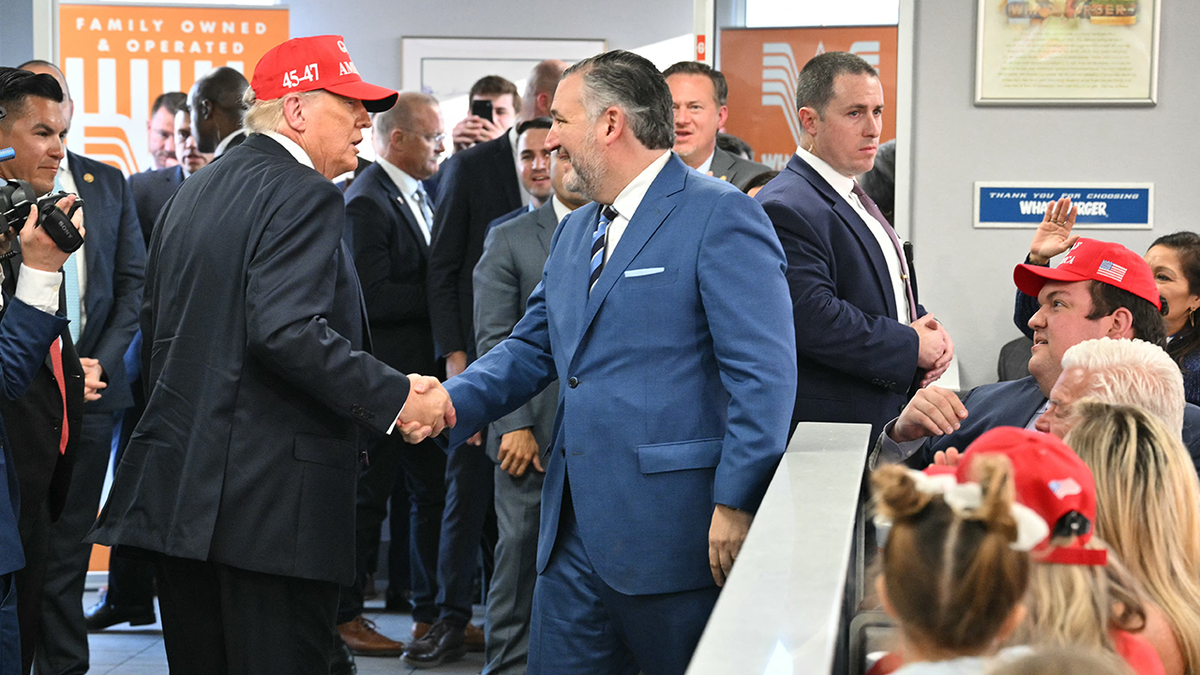
US President Donald Trump shakes hands with US Senator Ted Cruz (R-TX) in a Whataburger restaurant in Corpus Christi, Texas.

President Donald Trump shakes hands with Republican Sen. Ted Cruz in a Whataburger restaurant in Corpus Christi, Texas, on Feb. 27, 2026.  (Mandel Ngan/AFP via Getty Images)

“The day before he launched this military action, I was on Air Force One with him. He was flying down to Texas, and then he and I were one on one in the Beast, the Presidential limo, and we spent most of the day talking about, should he launch this military action, or should he negotiate further.”

Cruz recollected, “What I told him at the time is, I said, I don’t think there’s anything to negotiate. The Ayatollah is negotiating in bad faith and the regime was weaker than it ever has been.”

The senator highlighted that “the Ayatollah and the mullahs in Iran have been waging war against the United States for 47 years… Iran has been the number one state funder of terrorism in the world.”

According to the Fox News poll, a third of voters nationwide said the U.S. military action against Iran will make America safer, with 44% saying less safe and nearly one in four (23%) saying the strikes will make no difference.

CLICK HERE TO GET THE FOX NEWS APP

Cruz disagrees.

“The president decimating this regime has made America substantially safer, and that is his responsibility as commander in chief,” the senator stressed.


Anthropic wins preliminary injunction in DOD fight as judge cites ‘First Amendment retaliation’


CEO and co-founder of Anthropic Dario Amodei speak onstage during the 2025 New York Times Dealbook Summit at Jazz at Lincoln Center on December 03, 2025 in New York City.

Michael M. Santiago | Getty Images

A federal judge in San Francisco granted Anthropic’s request for a preliminary injunction in its lawsuit against the Trump administration. 

Judge Rita Lin issued the ruling on Thursday, two days after lawyers for the artificial intelligence startup and the U.S. government appeared in court for a hearing. Anthropic sued the administration to try to reverse its blacklisting by the Pentagon and President Donald Trump’s directive banning federal agencies from using its Claude models.

Anthropic sought the injunction to pause those actions and prevent further monetary and reputational harm as the case unfolds. The order bars the Trump administration from implementing, applying or enforcing the president’s directive, and hampers the Pentagon’s efforts to designate Anthropic as a threat to U.S. national security. 

“Punishing Anthropic for bringing public scrutiny to the government’s contracting position is classic illegal First Amendment retaliation,” Lin wrote in the order. A final verdict in the case could still be months away. 

During Tuesday’s hearing, Lin pressed the government’s lawyers about why Anthropic was blacklisted. Her language in Thursday’s order was even sharper.

“Nothing in the governing statute supports the Orwellian notion that an American company may be branded a potential adversary and saboteur of the U.S. for expressing disagreement with the government,” she wrote.

Following the ruling, Anthropic said it’s “grateful to the court for moving swiftly.”

“While this case was necessary to protect Anthropic, our customers, and our partners, our focus remains on working productively with the government to ensure all Americans benefit from safe, reliable AI,” the company said in a statement.  

Anthropic’s suit earlier this month followed a dramatic couple weeks in Washington D.C., between the Department of Defense and one of the most valuable private companies in the world.

In a post on X in late February, Defense Secretary Pete Hegseth declared Anthropic a so-called supply chain risk, meaning that use of the company’s technology purportedly threatens U.S. national security. In early March, the DOD officially notified Anthropic about the designation via a letter.

Anthropic is the first American company to publicly be named a supply chain risk, as the designation has historically been reserved for foreign adversaries. The label requires Defense contractors, including Amazon, Microsoft, and Palantir, to certify that they do not use Claude in their work with the military. 

The Trump administration relied on two distinct designations – 10 U.S.C. § 3252 and 41 U.S.C. § 4713 – to justify the action, and they have to be challenged in two separate courts. Because of that, Anthropic has filed another lawsuit for a formal review of the Defense Department’s determination in the U.S. Court of Appeals in Washington. 

Shortly before Hegseth declared Anthropic a supply chain risk, President Donald Trump wrote a Truth Social post ordering federal agencies to “immediately cease” all use of Anthropic’s technology. He said there would be a six-month phase-out period for agencies like the DOD.

“WE will decide the fate of our Country — NOT some out-of-control, Radical Left AI company run by people who have no idea what the real World is all about,” Trump wrote.

The Trump administration’s actions surprised many officials in Washington who had come to admire and rely on Anthropic’s technology. The company was the first to deploy its models across the DOD’s classified networks, and it was championed for its ability to integrate with existing Defense contractors like Palantir

Anthropic signed a $200 million contract with the Pentagon in July, but as the company began negotiating Claude’s deployment on the DOD’s GenAI.mil AI platform in September, talks stalled.

The DOD wanted Anthropic to grant the Pentagon unfettered access to its models across all lawful purposes, while Anthropic wanted assurance that its technology would not be used for fully autonomous weapons or domestic mass surveillance. 

The two failed to reach an agreement, and now, the dispute will be settled in court. 

“Everyone, including Anthropic, agrees that the Department of [Defense] is free to stop using Claude and look for a more permissive AI vendor,” Lin said during the hearing Tuesday. “I don’t see that as being what this case is about. I see the question in this case as being a very different one, which is whether the government violated the law.

WATCH: Anthropic vs. Pentagon hearing

Anthropic wins preliminary injunction in DOD fight as judge cites ‘First Amendment retaliation’
Choose CNBC as your preferred source on Google and never miss a moment from the most trusted name in business news.


Polls: Most Americans oppose strikes on Iran, but big gap between Democrats, Republicans


NEWYou can now listen to Fox News articles!

Nearly a month since the U.S. and Israeli launched military attacks on Iran, a slew of new national polls indicate that most Americans give the military strikes a thumbs down.

But the surveys point to a continued broad partisan divide between Democrats and Republicans over the ongoing fighting in the volatile Middle East.

Forty-two percent of voters support the current U.S. military action against Iran, and 58% oppose it, including nearly 4 in 10 who are strongly opposed, according to a Fox News national poll conducted last Friday through Monday (March 20–23) and released on Wednesday.

That’s a switch from the previous Fox News poll, which was in the field Feb. 28 to March 2, when those questioned were evenly divided on support for the strikes.

WHAT AMERICANS SAY ABOUT THE WAR WITH IRAN – IN OUR LATEST FOX NEWS POLL

The Fox News poll is far from alone in pointing to underwater support for the fighting.

Fifty-four percent of voters questioned in a Quinnipiac University survey conducted March 19-23 said they opposed the military action, while 39% supported it.

HEAD HERE FOR FOX NEWS LIVE UPDATES ON THE STRIKES AGAINST IRAN

Only 35% said they supported the strikes in a Reuters/Ipsos poll in the field March 20–22, with 61% saying they disapproved of the military action.

According to an AP/NORC poll that surveyed respondents from March 19–23, six in 10 said the military action against Iran had gone too far, with just over a quarter saying it’s been about right, and 13% saying it has not gone far enough.

Polls: Most Americans oppose strikes on Iran, but big gap between Democrats, Republicans

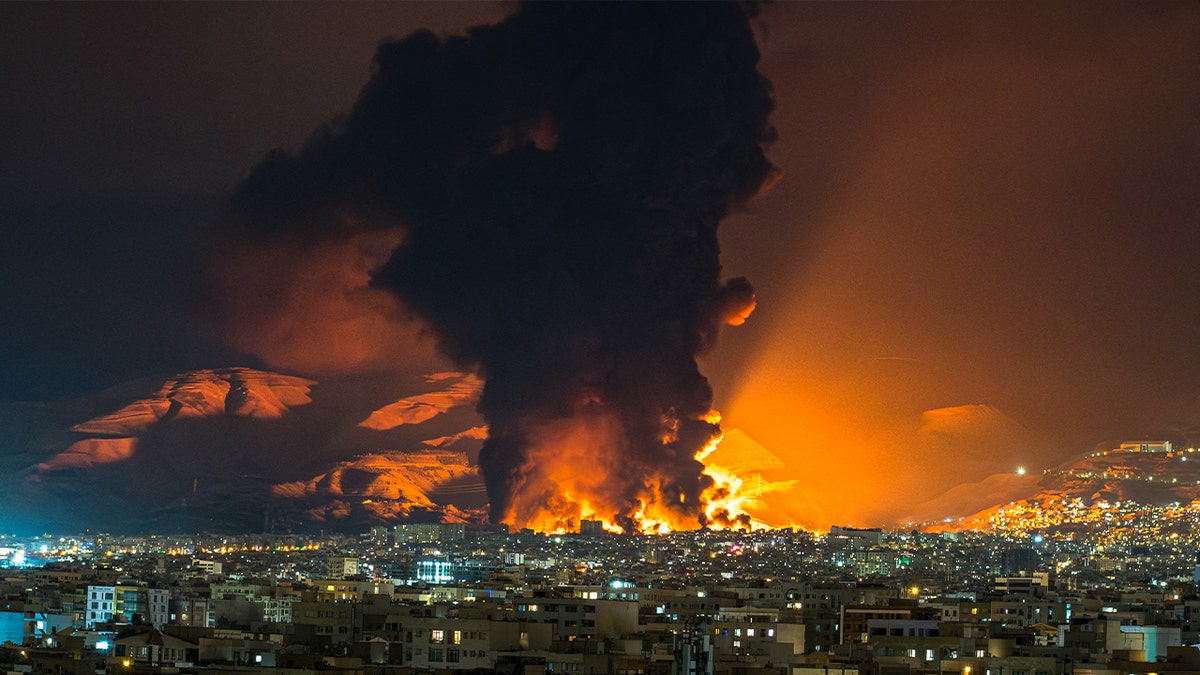
Smoke and flames rise at the site of airstrikes on an oil depot in Tehran, Iran on March 7, 2026.  ( Sasan / Middle East Images / AFP via Getty Images)

And a Pew Research Center poll conducted March 16–22 indicated that 61% disapproved of President Donald Trump’s handling of the conflict with Iran, with 37% approving.

The military attacks by the U.S. and Israel have resulted in the deaths of Iranian Supreme Leader Ayatollah Ali Khamenei and other top officials, and the decimation of the country’s military.

But Iran has retaliated with attacks against Israel and many of its other neighbors in the region.

ONLY ON FOX NEWS: PENCE SAYS TRUMP ‘TURNED A DEAF EAR’ TO ISOLATIONISTS IN GOP

And Iran has targeted energy facilities with missile and drone attacks in a number of Persian Gulf nations. It has also made the Strait of Hormuz nearly impassable to commercial shipping, bringing to a halt roughly 20% of the world’s oil supply and in turn sending fuel prices skyrocketing in the U.S. and across the globe.

Trump said on Thursday that Iran is “begging to make a deal” to end the fighting.

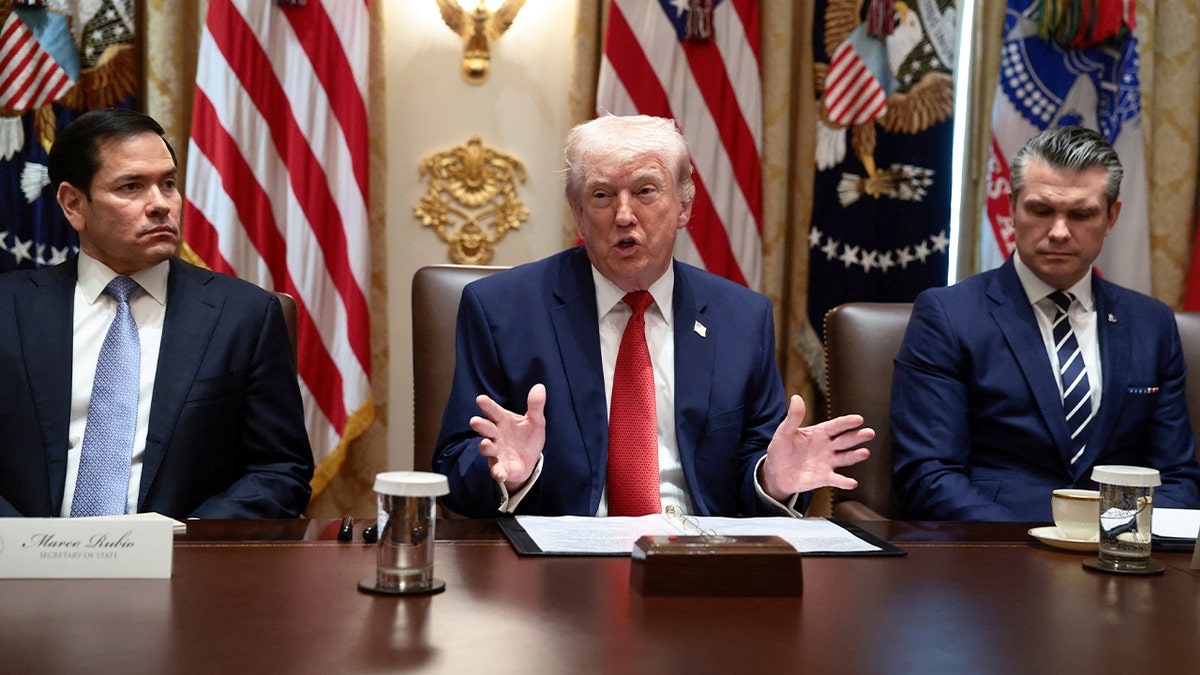
Trump, Rubio and Hegseth at cabinet meeting

President Donald Trump, sitting next to Secretary of State Marco Rubio and Defense Secretary Pete Hegseth, speaks during a cabinet meeting at the White House in Washington, D.C., on March 26, 2026. (Evelyn Hockstein/Reuters)

While many Democratic political leaders have criticized Trump’s handling of the conflict, most Republicans are standing with the president.

And that’s reflected in opinions among Democratic and Republican voters.

CLICK HERE TO GET THE FOX NEWS APP

The partisan divide was stark in the Fox News poll.

More than three-quarters (77%) of Republicans supported the effort compared to 12% of Democrats and 28% of independents. Within the GOP, support ranged from 90% among MAGA supporters to 52% of non-MAGA Republicans.

The gap was just as wide in the other polls, including the Quinnipiac survey, where 86% of Republicans supported the military action, compared to 28% of independents and just five percent of Democrats.


Trump tells CNBC ‘we are very intent on making a deal’ with Iran


Trump tells CNBC ‘we are very intent on making a deal’ with Iran

President Donald Trump said in a Truth Social post Monday that, following talks with Iranian authorities, he ordered the U.S. military to postpone strikes on Iran’s power plants and energy infrastructure for five days.

He told CNBC’s Joe Kernen in a phone call shortly after the post that “we are very intent on making a deal with Iran.”

However, Iranian state media, citing an unnamed “senior security official” in a post on Telegram disputed Trump’s description of conversations, saying direct or indirect talks have not taken place between Washington and Tehran.

“There is been no negotiation and there is no negotiation, and with this kind of psychological warfare, neither the Strait of Hormuz will return to its pre-war conditions nor will there be peace in the energy markets,” state media reported the official as saying.

Trump countered later Monday morning that the U.S. and Iran “have had very, very strong talks” yielding “major points of agreement,” including that Tehran will “never have a nuclear weapon.”

Trump, speaking to reporters in Palm Beach, Florida, said his son-in-law Jared Kushner and U.S. special envoy Steve Witkoff participated in those talks Sunday evening with “a top person” in Iran.

“They want, very much to make a deal. We’d like to make a deal too,” he said. “We’re going to get together today by, probably, phone, because it’s … very hard for them to get out, I guess. But we’ll, at some point, very, very soon, meet.”

Trump said that if the five-day halt in strikes goes well, the parties could end up “settling this.”

“Otherwise, we’ll just keep bombing our little hearts out,” he said.

The president also said that he believes Israel will be “very happy” with the progress made with Iran so far.

He added that the Strait of Hormuz “will be opened very soon, if this works.”

Asked who would control the strait, Trump said it might be “jointly controlled” by himself and “whoever the ayatollah is,” suggesting that such a move would come as part of a “very serious form of regime change.”

President Trump: Iran wants to make a deal

In his Truth Social post earlier Monday, Trump said that the U.S. and Iran had “VERY GOOD AND PRODUCTIVE CONVERSATIONS REGARDING A COMPLETE AND TOTAL RESOLUTION OF OUR HOSTILITIES IN THE MIDDLE EAST.”

The U.S. president said these talks would continue through the week. It was not immediately clear who participated in the talks or when and where they were held.

U.S. stock futures rallied, the dollar fell against other major currencies, and oil prices tumbled on the news.

Speaking with Kernen, Trump said discussions with Iranian authorities had been very intense and that he remains hopeful something very substantive can be achieved.

The U.S. president also insisted on the same call that what is unfolding in Iran can be described as regime change, Kernen reported.

The White House did not immediately respond to CNBC’s request for additional information about the purported talks, and did not immediately respond to Iran’s claim that no such negotiations are underway.

U.S. President Donald Trump speaks to reporters before boarding Air Force One at Palm Beach International Airport on March 23, 2026 in West Palm Beach, Florida.

Roberto Schmidt | Getty Images

The U.S. president on Saturday issued a 48-hour ultimatum to Tehran to reopen the Strait of Hormuz or face strikes on Iran’s power plants.

The narrow waterway is a key maritime corridor that connects the Persian Gulf and the Gulf of Oman. Roughly 20% of global oil and gas typically passes through it.

The deadline had been due to expire on Monday evening in Washington.

Read more U.S.-Iran war news

Iranian Parliament spokesperson Mohammad Baqer Qalibaf had said critical infrastructure and energy facilities in the Persian Gulf region could be “irreversibly destroyed” should Iranian power plants be attacked.

Shipping traffic through the Strait of Hormuz has virtually ground to a halt since the U.S. and Israel launched airstrikes on Iran on Feb. 28. Iran has retaliated by targeting ships trying to pass through the strait, with several incidents reported in recent weeks.

The Iran war has stoked global inflation fears and created what the International Energy Agency calls the largest supply disruption in the history of the oil market.

— CNBC’s Anniek Bao contributed to this report.

Choose CNBC as your preferred source on Google and never miss a moment from the most trusted name in business news.