Trump faces calls for removal over threats to wipe out ‘whole civilization’ in Iran


U.S. Rep. Alexandria Ocasio-Cortez, D-N.Y., speaks to the media outside the U.S. Capitol after the House of Representatives voted to pass President Donald Trump’s sweeping spending and tax bill, in Washington, July 3, 2025.

Ken Cedeno | Reuters

The reticence expressed by Democrats about removing President Donald Trump from office — even after he ousted Venezuelan President Nicolás Maduro and attacked Iran without seeking congressional approval — quickly fell away after his latest threat to Iran.

The president’s Tuesday morning Truth Social post, which threatened “a whole civilization will die tonight” and raised the specter of nuclear war, began a chorus of calls either for Trump’s impeachment or for his removal via the invocation of the 25th Amendment. On Tuesday evening, Trump and Iran announced a two-week ceasefire.

“This is a threat of genocide and merits removal from office. The President’s mental faculties are collapsing and cannot be trusted,” Rep. Alexandria Ocasio-Cortez, D-N.Y., posted to X on Tuesday. “To every individual in the President’s chain of command: You have a duty to refuse illegal orders. That includes carrying out this threat.”

Read more CNBC politics coverage

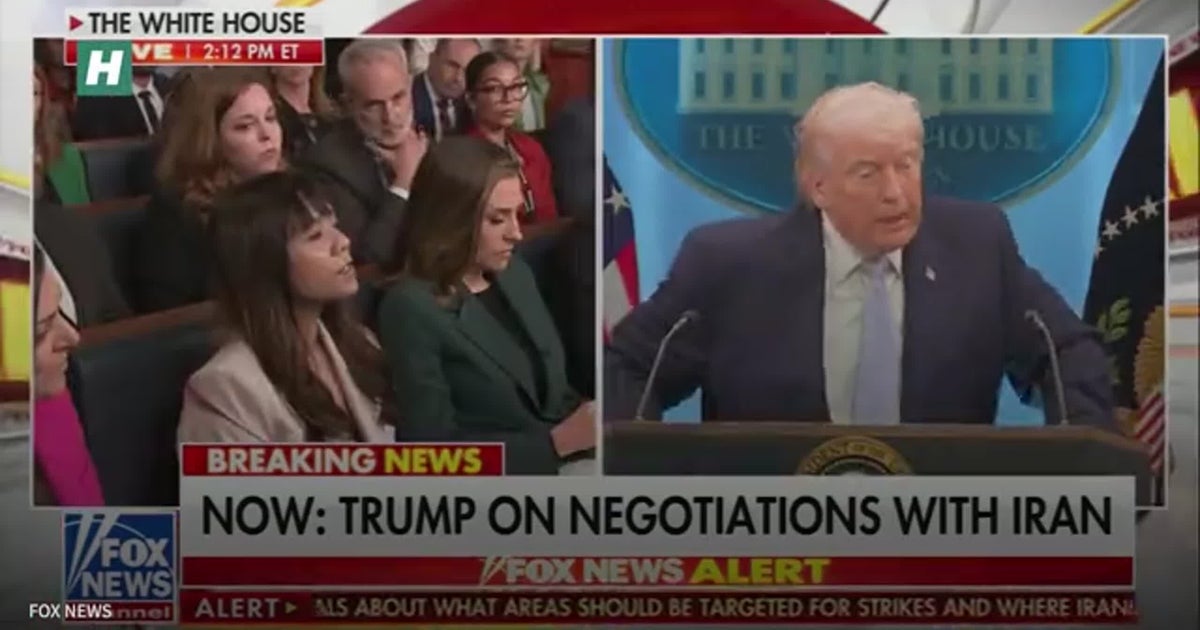
Trump’s ultimatum came ahead of his Tuesday night deadline for Iran to make a deal with the U.S. and reopen the Strait of Hormuz, the key shipping channel for the world’s oil out of the Persian Gulf.

The chance of Trump being removed from office is low, and his Cabinet members — who would have to play an active role in invoking the 25th Amendment — routinely publicly praise him.

Senate Minority Leader Chuck Schumer, D-N.Y., posted to X after the announcement that he was “glad Trump backed off and is desperately searching for any sort of exit ramp from his ridiculous bluster.”

But the pause may not be enough to forestall calls for removal in Congress, where dozens of Democrats — and a few Republicans — condemned Trump on Tuesday. Several said the ceasefire changes nothing.

“Just because a President announces he’s agreed to a two week ceasefire moments before he threatened to commit war crimes, does not mean he is suddenly fit to serve. #25thAmendment,” posted Rep. Melanie Stansbury, D-N.M.

Articles of impeachment introduced

Talk of removal began even before the Tuesday Truth Social post, after Trump started the clock on Iran with an Easter Sunday post threatening to attack Iranian bridges and power plants if the country did not soon make a deal.

Rep. John Larson, D-Conn., on Monday introduced articles of impeachment, citing Trump’s “serial usurpation of the congressional war power and commission of murder, war crimes and piracy.”

On Tuesday, Rep. Ilhan Omar, D-Minn., also advocated for impeachment. “When will it be enough for my Republican colleagues to grow spines and remove him from office?” Omar posted to X.

Others, such as Rep. Ro Khanna, D-Calif., argued that Section 4 of the 25th Amendment — which allows for the involuntary transfer of power if the vice president and a majority of the Cabinet declare the president incapacitated — should be invoked.

“If the United States Congress has any life left in it, every member of Congress and senator must be calling for Trump’s removal today based on the 25th Amendment,” Khanna said in a video posted to X. “He is threatening the entire destruction of a civilization. He is calling Iranians animals.”

Former House Speaker Nancy Pelosi, D-Calif., said in a statement late Tuesday that Trump should be removed from office one way or another.

“If the Cabinet is not willing to invoke the 25th Amendment and restore sanity, Republicans must reconvene Congress to end this war.”

The White House criticized the calls for Trump to be removed from office.

“This is pathetic,” White House spokesperson Davis Ingle said in an email. “Democrats have been talking about impeaching President Trump since before he was even sworn into office. The Democrats in Congress are deranged, weak, and ineffective, which is why their approval ratings are at historic lows.”

Twice impeached, never convicted by the Senate

Trump was twice impeached by the House in his first term, but was not convicted in the Senate. While there have been occasional attempts this Congress to impeach Trump, none have garnered significant support from Democrats.

Just 140 Democrats in December voted to advance a measure from Rep. Al Green, D-Texas, to impeach Trump.

Rep. Maxine Waters, D-Calif., who has at times called for Trump’s impeachment, told CNBC in March that any such effort was off the table for at least as long as Democrats are in the minority in both chambers. And in an election year in which Democrats are trying to hammer Trump and Republicans on affordability, many see impeachment as a losing issue.

“I think when we take control of the House we will consider that,” Waters said.

Removal from office is unlikely

But neither impeachment nor the use of the 25th Amendment is likely at the moment, with Republicans in control of both chambers and no open revolt within the Trump administration over the Iran war.

Section 4 of the 25th Amendment has never been invoked and would require buy-in from Vice President JD Vance, the Cabinet and eventually two-thirds of Congress if Trump argued he is not incapacitated.

Vance, who would assume the role of president if the 25th Amendment were invoked, on Tuesday lauded Trump from a stage in Budapest where he spoke in support of Hungarian Prime Minister Viktor Orbán.

Republicans criticize threat to Iranian civilization

Still, concern grew Tuesday even among Republicans and former Trump allies.

Republican Marjorie Taylor Greene, the former Georgia representative and Trump acolyte-turned-antagonist, called Trump’s post “evil and madness.”

“25TH AMENDMENT!!! Not a single bomb has dropped on America. We cannot kill an entire civilization,” Greene posted to X.

Elected Republicans began to publicly recoil in the hours after the president’s initial proclamation that he would destroy the Iranian civilization.

Sen. Lisa Murkowski, R-Alaska, broke sharply with Trump in a social media post on Tuesday, condemning his rhetoric.

“The President’s threat that ‘a whole civilization will die tonight’ cannot be excused away as an attempt to gain leverage in negotiations with Iran,” Murkowski said. “This type of rhetoric is an affront to the ideals our nation has sought to uphold and promote around the world for nearly 250 years. It undermines our long-standing role as a global beacon of freedom and directly endangers Americans both abroad and at home.”

Murkowski, a moderate who has clashed with Trump in the past, said “[e]veryone involved — especially the President and Iran’s leaders — must de-escalate their unprecedented saber-rattling before it is too late.”

Sen. Ron Johnson, R-Wis., a current Trump ally, broke with the president during a Monday appearance on the “John Solomon Reports” podcast. Johnson said he hoped Trump’s words were “bluster.”

“I do not want to see us start blowing up civilian infrastructure,” Johnson said. “We are not at war with the Iranian people. We are trying to liberate them.”

And Rep. Nathaniel Moran, R-Texas, in a statement posted to X on Tuesday pushed back on Trump’s rhetoric while stopping short of calling for his removal.

“I do not support the destruction of a ‘whole civilization.’ That is not who we are, and it is not consistent with the principles that have long guided America,” Moran wrote. “I have and will continue to support a strong national defense — one that is focused, disciplined, and firmly rooted in protecting the safety and security of the American people. But, how we protect the lives of the innocent is just as important as how we engage the enemy.”

Rep. Kevin Kiley, a former California Republican recently turned independent, in a post on X said, “The United States does not destroy civilizations.”

“Nor do we threaten to do so as some sort of negotiating tactic. We should all desire a future of freedom, security, and prosperity for the people of Iran,” he said, asserting that Congress “has a responsibility to conduct oversight with respect to ongoing military operations and our obligations under both U.S. law and international agreements to which we are a signatory.”

Choose CNBC as your preferred source on Google and never miss a moment from the most trusted name in business news.


Australia’s most decorated living veteran to be charged with committing 5 war crime murders in Afghanistan


Australia’s most decorated living veteran, Ben Roberts-Smith, faces war crime charges on allegations that he killed five unarmed Afghans while serving in Afghanistan from 2009 and 2012, police and media reported on Tuesday.

Police have not confirmed the name of the 47-year-old former soldier who was arrested on Tuesday. But he has been widely reported in the media to be Roberts-Smith, a former Special Air Service Regiment corporal who was awarded both the Victoria Cross and Medal of Gallantry for his service in Afghanistan.

He is expected to appear in a Sydney court late Tuesday or Wednesday, police said.

Ben Roberts-Smith arrives at the Federal Court in Sydney, Australia, on June 9, 2021. AP

Roberts-Smith is only the second Australian veteran of the Afghanistan campaign to be charged with a war crime.

Former SAS soldier Oliver Schulz, 44, has pleaded not guilty to a charge of war crime murder. He is accused of shooting Afghan man Dad Mohammad three times in the head in an Uruzgan province wheatfield in May 2012.

War crime murder carries a potential sentence of life in prison. It’s a federal crime in Australia, defined as the intentional killing in the context of armed conflict of a person who is not taking an active part in hostilities, such as civilians, prisoners of war or wounded soldiers.

Police arrested Roberts-Smith at Sydney Airport on Tuesday after he arrived on a flight from Brisbane, Australian Federal Police Commissioner Krissy Barrett said.

“It will be alleged that the victims were not taking part in hostilities at the time of their alleged murder in Afghanistan. It will be alleged the victims were detained, unarmed and were under the control of ADF members when they were killed,” Barrett told reporters, referring to the Australian Defense Force.

Queen Elizabeth II greets Australian SAS Corporal Ben Roberts-Smith (L), who was recently awarded the Victoria Cross for Australia, during an audience at Buckingham Palace in London on Nov. 15, 2011. PA

“It will be alleged the victims were shot by the accused or shot by subordinate members of the ADF in the presence of and acting on the orders of the accused,” Barrett added.

In September last year, Australia’s highest court removed Roberts-Smith’s last chance to clear his name of court findings that he unlawfully killed four Afghans.

The High Court said it would not hear his appeal against a federal judge’s civil court finding in 2023 that he likely killed noncombatants unlawfully in 2009 and 2012.

Three federal court judges had unanimously rejected his appeal against that ruling.

Roberts-Smith sued for defamation after several newspapers published articles in 2018 accusing him of a range of war crimes.

Roberts-Smith, a former Special Air Service Regiment corporal who was awarded both the Victoria Cross and Medal of Gallantry for his service in Afghanistan. AFP via Getty Images

But while the civil courts found the war crimes allegations were mostly proven on a balance of probabilities, the new charges would have to be proved in a criminal court to a higher standard of beyond reasonable doubt.

The charges follow a military report released in 2020 that found evidence that elite Australian SAS and commando regiment troops unlawfully killed 39 Afghan prisoners, farmers and other noncombatants.

Barrett said few soldiers were involved in the new allegations.

“The alleged conduct related to these charges is confined to a very small section of our trusted and respected ADF which helps keep this country safe,” Barrett said.

“The overwhelming majority of our ADF do our country proud. Today’s charges are not reflective of the majority of members who serve under our Australian flag with honor, with distinction and with the values of a democratic nation,” she added.

The Office of the Special Investigator was established to work with police on the war crime allegations. The office’s director of investigations Ross Barnett said allegations of 53 war crimes had been investigated and 39 of those investigations had concluded without charges. Around 40,000 Australian military personnel served in Afghanistan between 2001 and 2021, of whom 41 were killed.


Trump’s Shock Answer On Iran War Time Frame


!function(n){if(!window.cnx){window.cnx={},window.cnx.cmd=[];var t=n.createElement(‘iframe’);t.display=’none’,t.onload=function(){var n=t.contentWindow.document,c=n.createElement(‘script’);c.src=”//cd.connatix.com/connatix.player.js”,c.setAttribute(‘async’,’1′),c.setAttribute(‘type’,’text/javascript’),n.body.appendChild(c)},n.head.appendChild(t)}}(document);(new Image()).src=”


US, Israeli airstrikes batter Iran as Trump’s Strait of Hormuz deadline looms


Israel and the United States carried out a wave of attacks on Monday that killed more than 25 people in Iran.

Tehran responded with missile fire on Israel and its Gulf Arab neighbors as US President Donald Trump’s deadline for Tehran to reopen the Strait of Hormuz loomed.

Explosions rang out into the night in Tehran and low-flying jets could be heard for hours as the capital was pounded. Thick black smoke rose near the city’s Azadi Square after one airstrike hit the Sharif University of Technology grounds.

Two people were found dead in the rubble of a residential building in Haifa, according to Israeli authorities. The search was ongoing for two more even as new Iranian missile attacks hit the northern Israel city early Monday.

Smoke rises from the site of an Israeli airstrike that targeted a building in Beirut’s southern suburbs, on April 5, 2026. AFP via Getty Images

Kuwait and the United Arab Emirates both activated their air defense systems to intercept incoming Iranian missiles and drones, as Tehran kept up the pressure on its Gulf neighbors. Iran’s regular attacks on regional energy infrastructure and its stranglehold on the Strait of Hormuz, through which a fifth of the world’s oil is shipped in peacetime, has sent global energy prices soaring.

Under pressure at home as consumers are growing increasingly concerned, Trump gave Tehran a deadline that expires Monday night, Washington time, saying if no deal was reached to reopen the strait the US would hit Iran’s power plants and other infrastructure targets and set the country “back to the stone ages.”

“Tuesday will be Power Plant Day, and Bridge Day, all wrapped up in one, in Iran,” he threatened in a social media post, adding that if Iran did not open the strait “you’ll be living in Hell.”

Trump’s deadline to open Hormuz strait looms but no signs of Tehran backing off

Tehran has shown no signs of backing down off of its stranglehold on shipping through the strait, which was fully open before Israel and the US attacked Iran on Feb. 28 to start the war.

Smoke rises from Israeli airstrikes in Dahiyeh, a southern suburb of Beirut, Lebanon, Sunday, April 5, 2026. AP

Following Trump’s expletive-laced posts on Easter Sunday, Iran’s parliamentary speaker Mohammad Bagher Qalibaf called the threats of targeting Iran’s infrastructure “reckless.”

“You won’t gain anything through war crimes,” Qalibaf wrote on X. “The only real solution is respecting the rights of the Iranian people and ending this dangerous game.”

Brent crude oil, the international standard, rose to $109 in early Monday spot trading, some 50% higher than it was when the war started.

Iran has let some vessels through the strait since the war began, but none belonging to the US, Israel or countries perceived as helping them. Some have paid Iran for passage and the overall flow of traffic is down more than 90% over the same period last year.

A commercial plane is preparing to land at Beirut Airport as smoke rises from Israeli airstrikes in Dahiyeh, a southern suburb of Beirut, Lebanon, on April 5, 2026. AP

Beyond Trump’s military threats, diplomatic efforts are still underway to see if a solution can be reached to open the waterway.

Oman’s Foreign Ministry said that deputy foreign ministers and experts from Iran and Oman met to discuss proposals to ensure “smooth transit” through the strait.

Egypt said that Foreign Minister Badr Abdelatty had spoken with US envoy Steve Witkoff and Iranian Foreign Minister Abbas Araghchi, and with Turkish and Pakistani counterparts. Russia said that Araghchi also spoke with Russian Foreign Minister Sergey Lavrov.

Airstrikes kill more than 25 across Iran

One of Monday’s morning airstrikes targeted Tehran’s Sharif University of Technology, where Iranian media reported damage to the buildings as well as a natural gas distribution site next to the campus.

Smoke rises from the site of an Israeli airstrike that targeted an area in Beirut’s southern suburbs, on April 5, 2026. AFP via Getty Images

It wasn’t immediately clear what had been targeted on the grounds of the university, which is empty of students as the war has forced all schools into the country into online classes. However, multiple countries over the years have sanctioned the university for its work with the military, particularly on Iran’s ballistic missile program, which is controlled by the country’s paramilitary Revolutionary Guard.

A strike near Eslamshar, southwest of Tehran, killed at least 13 people, the semiofficial Fars news agency reported. Five others were killed when a residential area in the city of Qom was hit, and six more were killed in strikes on other cities, the state-run IRAN daily newspaper reported.

Three more people were killed when an airstrike hit a home in Tehran, Iranian state television reported.

War’s death toll in the thousands

More than 1,900 people have been killed in Iran since the war began, but its government has not updated the toll for days.

In Lebanon, which Israel has invaded by ground, more than 1,400 people have been killed and more than 1 million people have been displaced. Eleven Israeli soldiers have died there while targeting Iranian-backed Hezbollah militants.

In Gulf Arab states and the occupied West Bank, more than two dozen people have died, while 19 have been reported dead in Israel and 13 US service members have been killed.


How US used SEAL Team 6, a CIA ruse and death from above to rescue missing F-15 airman in Iran: ‘They’ve been schwackin’ dudes chasing him’


The US rescued a missing F-15E airman deep inside Iran with an incredibly complex and daring mission that involved SEAL Team 6, a CIA ruse, a hastily constructed forward air strip in hostile territory and patrols of friendly aircraft that gave the Air Force colonel cover.

A life-or-death race between US and Iranian forces to find the “seriously injured” weapons officer outside Isfahan over two days culminated in the crew member’s extraction by America’s most elite commandos and a fire fight with local militias that were hunting for him, according to a report in the New York Times.

The unnamed officer hid out in the mountains and managed to climb a 7,000-foot ridge in order to evade capture while American MQ-9 Reaper drones pounded nearby Iranian forces with missiles if they got close to his position, according to reports.

“He evaded up a 7k ridge. They’ve been schwackin’ dudes chasing him all day. Was nuts,” a source told Toby Harnden, the veteran war correspond and author.

In an effort to confuse the Iranians, who put a $60,000 bounty (more than 10 times the average household income) on the officer’s head, the CIA pulled off a diversion — planting fake intel that he had already been rescued and was being driven out of Iran, according to the Times.

US forces successfully rescued a missing F-15E airman shot down over Iran. United States Air Forces Central

The operation involved landing multiple transport aircraft inside Iranian territory just south of the city of Isfahan, some 200 miles inside the country.

Two of the aircraft — believed to be MC-130J Commando IIs, specialized, high-tech transport planes, became stuck at the forward airfield in Iran — and three more aircraft were dispatched to pick up the US forces left stranded there, according to the Times.

The two MC-130Js — each worth around $100 million — were demolished in place so as not to fall into enemy hands.

Photos from Iran show the burned out wreckage of multiple aircraft, believed to be the planes.

President Trump confirmed the successful operation. Getty Images

There were no US deaths among the rescue team, and all the commandos and the weapons officer involved returned safety, a senior US military official said.

The injured airman has been flown to Kuwait for medical treatment in a rescue plane.

On Friday, the first of the two pilots was rescued during another daring operation.

The daring raid involved hundreds of special ops forces. Nellis Air Force Base

“WE GOT HIM!” President Trump confirmed in a Truth Social post. “This brave Warrior was behind enemy lines in the treacherous mountains of Iran, being hunted down by our enemies, who were getting closer and closer by the hour.”

In a later post, he said, “this type of raid is seldom attempted because of the danger to ‘man and equipment.’”

The president said he would hold a news conference with the military at the Oval Office on Monday at 1:00 p.m. in the aftermath of the successful operation.


Iran war-induced fertilizer shortage threatens Republicans in farm states ahead of midterms


Garrett Mauch spreads manure as fertilizer on fields at his family’s farm in Lamar, Colorado, on January 21, 2026.

RJ Sangosti | The Denver Post Via Getty Images | Denver Post | Getty Images

The Strait of Hormuz shutdown caused by the war in Iran is jacking up fertilizer prices, hitting farmers in their pocketbooks and threatening to raise food prices.

Now, Democrats trying to win the U.S. midterm elections in November see another new opportunity to pound the affordability crisis and turn the tide after years of losses in the states that produce crops and livestock.

The Strait of Hormuz is a critical channel for fertilizer, including about 50% of global nitrogen-rich urea fertilizers, according to the Fertilizer Institute, the industry’s trade association. The strait has been effectively impassable since President Donald Trump launched the assault, which is now in its third week with no end in sight.

The closure has spiked fertilizer prices just before planting season, potentially scrambling decision-making for farmers across the U.S. And it comes on top of already low commodity prices that have lingered for years and eaten into farmers’ margins.

“We’re in uncharted territory,” Matt Frostic, a Michigan farmer who sits on the board of the National Corn Growers Association, said in an interview with CNBC. “It’s like a code red.”

Frostic said he purchased nitrogen fertilizer, critical for corn crops, in January for around $350 per ton. That same product, he said, is now closing in on $600 per ton.

The murky farm outlook also comes eight months before the midterm elections that could cost Trump control of both the House of Representatives and the Senate. Democrats, who are trying to win competitive seats in farm-heavy states such as Iowa, Minnesota and Nebraska, are jumping on the high fertilizer prices as a new example of the affordability issue that continues to haunt Trump and Republicans.

Read more CNBC politics coverage

“There are tons of people just like me in our district who are like, I don’t get it. I don’t understand. It was already hard, and now they’re making it harder, and nobody knows why,” said Jake Johnson, a public school teacher who is running for Congress in Minnesota’s first District against incumbent Republican Rep. Brad Finstad.

“Our number one job as a campaign and what we want to talk about to every single person we talk to is we need ways to make things cheaper,” Johnson said.

The rural entreaties from Democrats come after years of bleeding support in the country’s rural, agrarian states in the middle of the country. Trump in 2024 won nearly every state in the Midwest, with exceptions in Minnesota and Illinois. He also dominated the county-by-county contest, according to the Center for Politics, winning 2,660 counties compared with former Vice President Kamala Harris’ 451, which were centered in the most populated parts of the U.S.

Democrats want to win rural America

Turning the tide in rural America has been a longtime goal for Democrats, but has often proved elusive. In Iowa in 2018, Democrats won 3 out of the 4 congressional seats in the state. Now, Republicans control all four. But with Trump’s economic approval plummeting and Democrats leading in the generic ballot, Democrats have high hopes this year.

Johnson said farmers in particular are recoiling from Trump’s tariff campaign, which saw his White House authorize a roughly $12 billion bailout last year. The war now adds a new inflationary wrinkle.

“A vote for me is a vote to end tariffs, and it’s a vote to end the war,” he said. “We do have to start by undoing the obvious damage that the status quo has foisted upon us.”

Republican presidential candidate and former U.S. President Donald Trump takes the stage during his Iowa caucus night watch party in Des Moines, Iowa, U.S., January 15, 2024.

Evelyn Hockstein | Reuters

Finding a fertilizer price solution

Sen. John Boozman, R-Ark., the Senate Agriculture Committee chair, said he’s working with the administration to quickly find a solution to the fertilizer issue.

“The good news is everybody understands what a problem this is for our farmers,” Boozman said in an interview. “Because of that, everything’s on the table. We’re looking at all the options that are available, and hopefully we’ll decide on a plan soon.”

Boozman did not detail what those plans would be. His counterpart in the House, Rep. G.T. Thompson, R-Ark., said Trump is “aggressively” trying to work on getting the Strait of Hormuz back open.

Thompson noted Trump’s efforts to court “other countries in order to make those transport ships and tankers be able to pass safely during that narrow strip.”

He also said any tariffs on fertilizer should be removed ahead of planting season.

“We really shouldn’t have tariffs on fertilizer or any of the components,” he said.

Treasury Secretary Scott Bessent on Fox Business Thursday said Agriculture Secretary Brooke Rollins “will likely be making an announcement on fertilizer in the next few days.”

Bessent noted the Trump tariffs largely exempt nitrogen-based fertilizer, which is critical to growing corn.

But opening the strait to allow fertilizer to flow is a tall order for the administration, despite efforts to free trapped cargo ships. And the risks for U.S. farmers and food consumers continue to rise.

“Without strategically prioritizing the delivery of critical farm inputs such as urea, ammonia, nitrogen, phosphate, and sulfur-based products, the U.S. risks a shortfall in crops,” American Farm Bureau Federation President Zippy Duvall said in a recent letter to Trump. “Not only is this a threat to our food security — and by extension our national security — such a production shock could contribute to inflationary pressures across the U.S. economy.”

Agriculture price shocks similar to 2022

Joe Glauber, a former chief economist at the Agriculture Department under the Obama administration and a research fellow emeritus at the International Food Policy Research Institute, said the shock is similar to when Russia invaded Ukraine — but noted that the accompanying commodity price spikes are now missing.

“We hit record levels in 2022,” Glauber said. “But the other thing that was really high in 2022 were grain prices, and so farmers, even though they were paying really high fertilizer costs, they were able to more or less get by because they were getting good returns from what they were selling.”

Glauber said farmers are right to be worried if they’re only considering their balance sheet — what they grow and what they sell. But he noted the influx in government payments to farmers, like the one being considered now in Congress, has been huge in recent years.

“It’s a different story if you include government payments,” Glauber said. “And there’s just been a ton of government payments.”

Frostic, the Michigan farmer, said he’s aiming for Congress to pass a “consumer choice” bill that would allow drivers to buy ethanol gasoline, known as E15, year-round. Ethanol is typically priced cheaper than regular gasoline, and the bill would potentially lift commodity prices by giving farmers a new market to sell into.

And Frostic, while saying he was grateful for government payments, said the bailout may fall short and that he’d rather make money by selling his crop.

“I would rather sell my products and make money than have the government write me a check to make me whole,” he said. “It distorts the market too much, it can kind of pick winners and losers, and typically when we get checks like that, it’s a pass-through.”

Choose CNBC as your preferred source on Google and never miss a moment from the most trusted name in business news.


Trump Reveals How ‘Operation Epic Fury’ Got Its Name — And It’s More Ridiculous Than You Think


It shouldn’t come as too much of a surprise that President Donald Trump’s taste in mission names is on par with his flair for decorating.

At a rally Wednesday in Kentucky, the president bragged about how he chose “Operation Epic Fury” as the name for the US-Israeli attack on Iran during what he implied was a very boring meeting.

“Operation Epic Fury!” Trump exclaimed at the rally, like he was announcing the next installment in the “Fast & Furious” franchise. “Is that a great name? Well, it’s only good if you win, ya know?… And we’ve won. We won. … In the first hour it was over, but we won.”

He continued, “They gave me a list of names to choose. ‘Sir, you could pick the name you’d like, sir.’ I said, ‘The name of what?’ ‘The name of the attack on Iran, sir,’” Trump told the crowd, making sure to use a cartoonishly stiff voice for whoever was asking him to make the decision.

“And they gave me, like, 20 names, and I’m, like, falling asleep. I didn’t like any of them. Then I see ‘Epic Fury.’ I said, ‘I like that name! I like that name!’”

Despite Trump’s claim that the conflict, launched February 28, was over in an hour, it is still very much in full swing, claiming the lives of more than 1,000 Iranians, along with Supreme Leader Ayatollah Ali Khamenei.

Khamenei’s son, Mojtaba Khamenei, the newly appointed supreme leader of Iran, released a statement Thursday that the Iranian military plans to keep blocking the Strait of Hormuz, a vital oil shipping route on its southern coast, and that any vessels that pass through it are at risk of being attacked, meaning global oil prices will continue to soar.

Trump Reveals How ‘Operation Epic Fury’ Got Its Name — And It’s More Ridiculous Than You Think
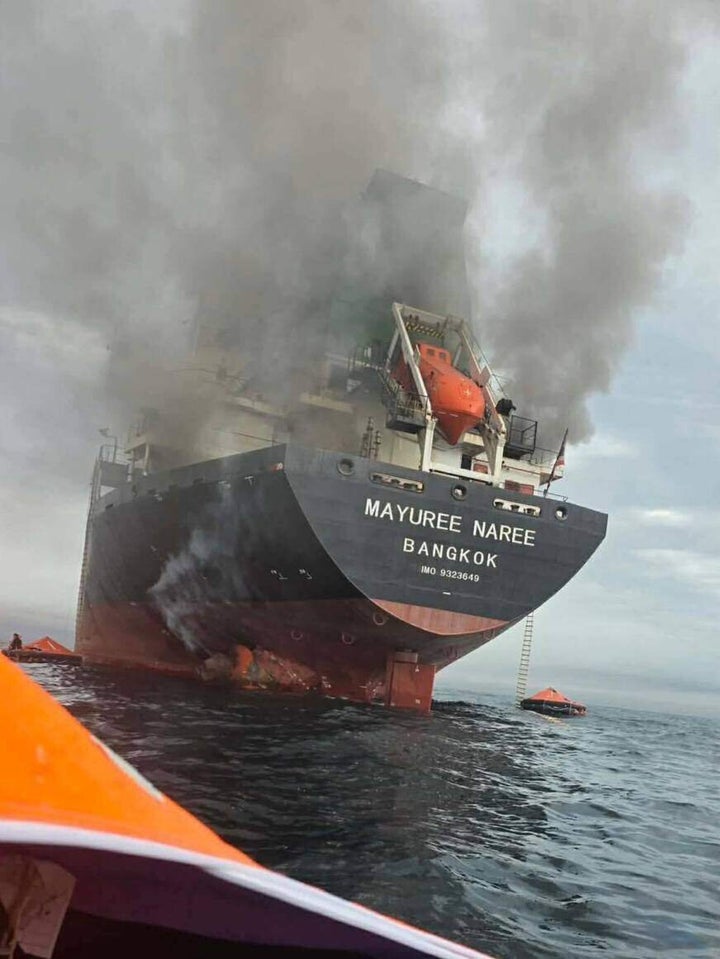
This image released by the Royal Thai Navy shows Thai cargo ship Mayuree Naree ablaze in the Strait of Hormuz on March 11, 2026.

The new Ayatollah Khamenei also specifically promised to avenge the 175 civilians killed at the start of the war, most of whom were schoolgirls who died in what is believed to be a US airstrike on an elementary school in Minab.

The Pentagon said in a statement to The New York Times on Tuesday that Iranian strikes have killed seven American service members, severely injured eight and injured 140. The Pentagon also told Congress that the conflict has cost the US $11.3 billion in just the first week.


How the Iran war and rising energy prices are threatening semiconductor demand


SK Hynix Inc. 12-layer HBM3E memory chips, front, and a LPDDR5X CAMM2 memory module arranged at the company’s office in Seongnam, South Korea, on Tuesday, April 22, 2025.

SeongJoon Cho | Bloomberg | Getty Images

A prolonged conflict in the Middle East could impact the semiconductor industry’s access to key materials while rising costs could hit demand for chips that have been central to the artificial intelligence boom, analysts warned.

The U.S.-Israel war with Iran has shone a spotlight on the role countries in the Middle East play in the complex and intricate semiconductor supply chain.

Semiconductor stocks were caught in the sell-off seen in equity markets before President Donald Trump said on Monday that war will end “very soon.”

Memory chipmakers SK Hynix and Samsung have been hit particularly badly with more than $200 billion wiped off their combined value since the start of the war, even with both stocks rallying sharply on Tuesday. The VanEck Semiconductor ETF is down about 3% since the start of the war paring some losses after a 3.6% jump on Monday.

“A prolonged regional conflict could potentially disrupt chipmakers’ manufacturing operations regarding sourcing materials like Helium and Bromine,” Ray Wang, memory analyst at SemiAnalysis, told CNBC.

“For now, the impact appears to be limited. However, a prolonged conflict could eventually lead to disruptions or require adjustments in the sourcing of key materials.”

Middle East key to chip industry

A South Korean lawmaker warned last week that the Iran war could hamper access to key materials from the Middle East such as helium, Reuters reported. The lawmaker also warned a prolonged conflict could lead to higher energy prices.

So, what exactly is the role of certain countries in the Middle East in the semiconductor supply chain?

Qatar produces over a third of the world’s helium supply, according to the U.S. Geological Survey. Helium is used in the manufacturing process to transfer away heat. It is also used in areas like lithography, which is key for printing the intricate circuitry of a chip. There is no viable alternative to helium.

In 2023, the Semiconductor Industry Association warned that if the supply of helium were to be disrupted, “there would likely be shocks to the global semiconductor manufacturing industry.”

Not only is production an issue. Transportation of the element out of the Middle East could become increasingly difficult with the effective closure of the crucial Strait of Hormuz shipping route.

More than 25% of the world’s helium supply would be taken off the market by an extended shutdown of the Strait of Hormuz, Phil Kornbluth, president of Kornbluth Helium Consulting, told CNBC.

How the Iran war and rising energy prices are threatening semiconductor demand

Qatar’s state-owned QatarEnergy produces helium as a byproduct of liquefied natural gas (LNG). QatarEnergy’s Ras Laffan Industrial City was hit by an Iranian drone attack last week, taking the site offline.

Kornbluth said it “is getting hard to imagine” that the world is not looking at a “minimum” two-to-three month shutdown of helium production and a four-to-six month period before the helium supply chain “returns to normal.”

Bromine is another element in focus and is a key part of the semiconductor manufacturing process. Around two-thirds of the world’s bromine production comes from Israel and Jordan, according to the USGS.

“There is modest risk to critical materials. Helium is the main one we are watching. Qatar is one of the largest sources of Helium. Canada and the United States are also large suppliers,” Peter Hanbury, partner in Bain & Company’s Technology practice, told CNBC.

Energy impact on demand

Tim Seymour: If oil prices stay in a range South Korea is the place to invest

The conflict caused the price of Brent crude to rise above $100 before paring some of those gains on Tuesday. The “high depedency” of the U.S. on crude oil “indicates significantly higher costs for AI datacenters” which are roughly three-to-five times “more power-hungry than regular data centers,” Jing Jie Yu, equity analyst at Morningstar, told CNBC.

“This could significantly increase the total cost of ownership (TCO) for hyperscalers, thereby posing a threat towards AI infrastructure adoption,” Yu added. “An extended war would lead to some pullback in AI memory chip demand.”

Why are the Korean chipmakers most hit?

Asia markets and tech are relatively insulated from geopolitical risk, but Korea is an outlier

This, in turn, has fueled strong profits at both Samsung and SK Hynix and a massive rally in the share price over the last nine months or so, which has been built on this AI build out. But rising costs and the threat of weaker demand is making investors nervous.

MS Hwang, research director at Counterpoint Research, said electricity accounts for about half of a data center’s operating expenses and roughly half of that is used to power memory.

“Therefore, if memory prices continue to rise due to supply chain instability while energy-driven operating costs also climb, customers operating data centers may reduce their capital spendings and semiconductor demand,” Hwang told CNBC.

Morningstar’s Yu noted both Samsung and SK Hynix have supply contracts for HBM locked in for the year and “both players have sufficient reserves to sustain production for the time being.”

However, Yu said “an extended war could materially delay AI infrastructure builds” and weigh on more “conventional DRAM” products that are not subject to these longer term contracts. That could lead to weaker DRAM pricing and lower-than-expected revenues.

“An extended war also drives up overall cost of productions, from a utilities angle as well lower yields due to the lack of key stabilizing materials as mentioned above. Coupled with weaker DRAM pricing, we think this potentially weighs on the high margins that the market is currently pricing into valuations,” Yu said.

— CNBC’s Dylan Butts contributed to this report.

Choose CNBC as your preferred source on Google and never miss a moment from the most trusted name in business news.


JD Vance attends dignified transfer for seventh US soldier killed in Iran war


Vice President JD Vance joined the grieving family of a Kentucky man who was the seventh US service member to die in combat during the Iran war as his remains were brought back to the US Monday evening.

The dignified transfer, a solemn event that honors US service members killed in action, took place at Dover Air Force Base in Delaware for Army Sgt. Benjamin N. Pennington, 26, of Glendale, Kentucky. He died Sunday after being wounded during a March 1 attack on the Prince Sultan Air Base, Saudi Arabia, a Pentagon statement said.

Vance and Defense Secretary Pete Hegseth saluted alongside high ranking military officials as the transfer case draped with the American flag was carried from the military aircraft and into an awaiting vehicle.

A US Army carry team moves the transfer case containing the remains of Sgt. Benjamin N. Pennington, 26, of Glendale, Ky., on March 9, 2026. AP

Mike Bell, retired pastor of Glendale Christian Church, said he’d known Pennington since he was a toddler and got a call from Pennington’s father when the soldier was hurt.

“I talked to Tim Saturday morning, and he was doing a little better, and they were talking about maybe moving him to Germany,” Bell said. Tim Pennington called again that evening, Bell said, to ask for prayers as his son’s condition was worsening, and then later told him the soldier had succumbed to his injuries.

“He was just a quiet person,” said Bell, noting that Pennington attended the church’s after-school program. “I mean, he never attracted attention because he was just steady doing what he needed to do to do it.”

State and local officials grieve

Pennington was assigned to the 1st Space Battalion, 1st Space Brigade of the U.S. Army Space and Missile Defense Command based at Fort Carson, Colorado.

The unit’s mission focused on “missile warning, GPS, and long-haul satellite communications,” according to their website.

“This just breaks my heart,” Keith Taul, judge-executive of Hardin County, where Pennington was from, said in a statement emailed to The Associated Press. “I have known the family for at least 30 years. I can’t imagine the pain and suffering they are experiencing.”

Vice President JD Vance (L) and Secretary of War Pete Hegseth salute as a US Army carry team moves a flag-draped transfer case containing the remains of Army Sgt. Benjamin N. Pennington at Dover Air Force Base on March 9, 2026, in Dover, Delaware. Getty Images

Glendale is an unincorporated town of about 300 residents south of the Hardin County seat of Elizabethtown.

In a statement posted on social media, Kentucky Gov. Andy Beshear called Pennington “a hero who sacrificed everything serving our country.”

Six other soldiers killed

The other six service members killed since the conflict began on Feb. 28 were Army reservists killed in Kuwait when an Iranian drone struck an operations center at a civilian port.

President Donald Trump on Saturday joined grieving families at Dover Air Force Base at the dignified transfer for those six US soldiers.

Pennington, 26, was killed in a retaliatory attack by Iran last week. US ARMY/AFP via Getty Images

The dignified transfer is considered one of the most somber duties of any commander in chief. During his first term, Trump said bearing witness to the transfer was “the toughest thing I have to do” as president.

‘An American hero’

Pennington graduated in 2017 from Central Hardin High School, where he was enrolled in the automotive technology pathway, district spokesman John Wright told the AP. Former automotive tech instructor Tom Pitt, who taught Pennington in 2017 at Hardin County Early College and Career Center, called him “an American hero.”

“A lot of times as a teacher, you have students who are smart, you have students who are charismatic, who are likable, dare I say, enchanting,” said Pitt, who called Pennington Nate. “Rarely do you have students who are all of those. And Ben Pennington was all of those. He was basically the quintessential all-American.”

Pennington was assigned to the 1st Space Battalion, 1st Space Brigade, at Fort Carson in Colo. REUTERS

Photos on his and family members’ Facebook pages show that Pennington achieved the rank of Eagle Scout in August 2017. His Eagle project was the demolition of some old baseball dugouts in Glendale, said Darin Life, former committee chairman for Troop 221.

“If you look up Eagle Scout, his picture’s probably there,” said Life, who knew Pennington throughout his scouting career. “He loved his country. I would have expected nothing less of him than to lose his life protecting his country.”

Awards and decorations

A month after his Eagle ceremony, Pennington posted a photo of himself taking the oath of enlistment. He entered the service as a unit supply specialist and was assigned to the Space and Missile Command on June 10, 2025, the Army said in a release.

Among his awards and decorations were the Army Commendation Medal, Army Achievement Medal, Army Good Conduct Medal, National Defense Service Medal, Global War on Terrorism Service Medal and the Army Service Ribbon.

“The U.S. Army Space and Missile Defense Command is deeply saddened by the loss of Sgt. Pennington,” said Lt. Gen. Sean A. Gainey, USASMDC commanding general. “He gave the ultimate sacrifice for the country he loved.”

Col. Michael F. Dyer, 1st Space Brigade commander, described Pennington as “a dedicated and experienced noncommissioned officer who led with strength, professionalism and sense of duty.”

Pennington will be posthumously promoted to staff sergeant, the Pentagon said.


Trump says no deal with Iran to end war without ‘unconditional surrender’


U.S. President Donald Trump takes questions from the media during a bilateral meeting with German Chancellor Friedrich Merz in the Oval Office of the White House on March 03, 2026 in Washington, DC.

Win Mcnamee | Getty Images

President Donald Trump said in a social media post on Friday that there would be no deal to end the U.S. war against Iran without an “UNCONDITIONAL SURRENDER” by Iran.

The Dow Jones Industrial Average dropped more than 900 points, or nearly 2%, after Trump’s demand, which he wrote on Truth Social. The S&P 500 and Nasdaq Composite fell 1.6% each, and oil futures prices rose.

Trump said that after a surrender and “the selection of a GREAT & ACCEPTABLE Leader(s), we, and many of our wonderful and very brave allies and partners, will work tirelessly to bring Iran back from the brink of destruction, making it economically bigger, better, and stronger than ever before.”

“IRAN WILL HAVE A GREAT FUTURE. “MAKE IRAN GREAT AGAIN (MIGA!)” Trump wrote.

Trump’s demand came as Iran has yet to pick a leader to replace Supreme Leader Ayatollah Ali Khamenei, who was killed last weekend in an airstrike at the beginning of the war by the U.S. and Israel.

White House Press Secretary Karoline Leavitt, when asked by reporters later about potential future leaders of Iran, said, “I know there are a number of people that our intelligence agencies, that the United States government are looking at, but I won’t get any further.”

Trump in June made an identical demand of “UNCONDITIONAL SURRENDER” by Iran in another social media post as he considered launching a military strike against that nation.

Read more U.S.-Iran war news

The futures price of the global benchmark Brent crude oil rose, breaking $90 per barrel, after Trump posted his latest demand for Iran to surrender without conditions.

Qatar’s energy minister, Saad al-Kaabi, warned Friday that rising oil prices due to the war against Iran “could bring down the economies of the world.”

Al-Kaabi told The Financial Times that crude oil prices could hit as high as $150 per barrel within weeks if tankers cannot pass through the Strait of Hormuz. The last time oil topped $100 a barrel was when Russia invaded Ukraine in 2022.

Trump says no deal with Iran to end war without ‘unconditional surrender’