Study Suggests These Lifestyle Habits May Increase Your Risk Of Dementia


Engaging in “mentally active” activities versus “mentally passive” ones while sitting or lounging may affect your risk for dementia, according to a recent study.

In a study published in the American Journal of Preventive Medicine last month, researchers evaluated over 20,000 adult participants in Sweden, most of whom were women. Researchers administered a baseline questionnaire to participants in 1997 to assess their mentally passive sedentary behaviours, such as watching TV and listening to music. They also assessed their mentally active sedentary behaviours, such as office work or knitting and sewing. Their light and moderate-to-vigorous physical activity was also assessed using questionnaires. The participants were evaluated for incident dementia nearly two decades later.

The study found that mentally passive sedentary behaviour ― for example, watching TV ― was associated with a higher incidence of dementia. But adding mentally active sedentary behaviour (needlepointing, anyone?) showed promising outcomes.

Researchers found that each additional hour of mentally active sedentary behaviour a day was associated with a 4% lower risk of dementia — and that adding mentally active sedentary behaviour showed a higher protective effect for participants aged 50 to 64.

The study also found that replacing one hour of mentally passive sedentary behaviour with one hour of active sedentary behaviour was associated with a 7% decreased risk. What’s more, adding one hour of mentally active sedentary behaviour, while maintaining the same passive sedentary behaviour and light and moderate-to-vigorous physical activity, was associated with a 11% decrease in incident dementia risk.

Researchers noted that the study had some limitations. For starters, the study began in 1997, before the vast introduction of smartphones, social media and video streaming — which are now very common ways people engage in sedentary behaviour.

Dr. Hussein Yassine, a professor of neurology at the University of Southern California Keck School of Medicine, emphasised to NBC News that phone and social media usage, which are considered mentally passive behaviours, may pose risks to our ability to concentrate.

“It’s going to be affecting your ability to process information and potentially build synapses in certain areas in the brain that help with concentrating,” Yassine told the outlet. “So the next time you have a serious task or you need to concentrate, you’re less capable because your brain networks have been hijacked by this passive reception.”

Among several other limitations cited in the study: Researchers pointed out that cognitive assessments were not done at the start, and it’s possible the sample may have included more prevalent cases of dementia, which may have resulted in a bias in the results.

Study Suggests These Lifestyle Habits May Increase Your Risk Of Dementia

Justin Paget via Getty Images

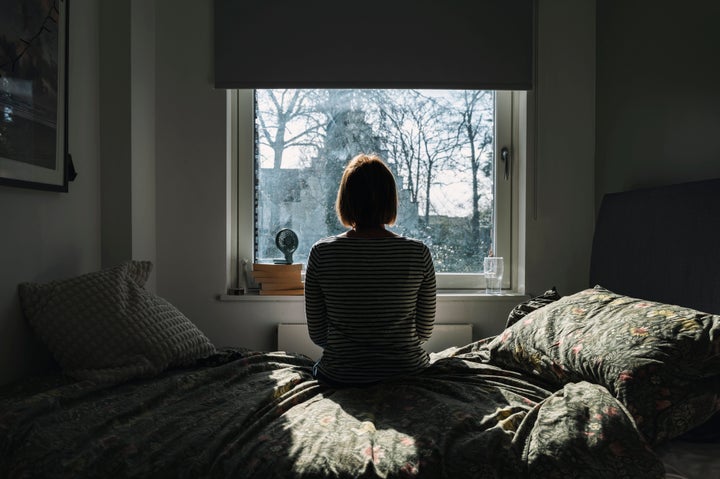
A study published in the American Journal of Preventive Medicine found that “mentally passive” sedentary behavior versus “mentally active” was associated with a higher incidence of dementia

Dr. Leana Wen, an emergency physician and clinical associate professor at George Washington University and CNN wellness expert, told CNN that one explanation for the results of the study could be due to the fact that “the brain benefits from being challenged.”

“Cognitive engagement helps maintain neural connections and may support what’s called cognitive reserve, which is the brain’s ability to adapt and compensate for changes over time,” she said. “When people spend long periods in activities that require very little mental effort, those pathways may not be stimulated in the same way. Over the course of months and years, that lack of engagement could contribute to decline in memory and thinking.”

Wen cautioned, though, that the study doesn’t prove cause and effect.

“It’s possible that people with better baseline cognitive function are more likely to choose mentally engaging activities,” she said. “So, while the findings are compelling, they should be interpreted as an association rather than proof that choosing passive activities directly leads to dementia.”

Research has shown that engaging in mentally stimulating activities, in addition to staying physically active, can be beneficial for your brain health.

Dr. Dylan Wint, director of the Cleveland Clinic Lou Ruvo Center for Brain Health, previously emphasised the importance of strengthening the brain in an interview with HuffPost.

“You could try brain games, a new hobby, taking a class at a college or community centre, or learning a new language or instrument,” Wint said. “When determining whether an activity can have some cognitive benefit, what’s most important is that you are challenged and learning.”



The Jennifer Aniston-Approved Workout Science Says Is Great For Menopause


Exercise seems to help to manage some of the symptoms of menopause. One study found that women with high and moderate levels of physical activity tended to experience less severe signs than their inactive peers; yoga appears to be one of many great options.

And some research from the University of Exeter has found that Pvolve, an exercise routine that partnered with Friends star Jenifer Aniston in 2023, is linked to better hip function, lower body strength, lean muscle mass, full-body flexibility, balance, mobility, and stability (phew).

That’s key for those facing menopause as these often wane during this life stage.

What is Pvolve?

It’s a form of low-impact resistance training. It uses tools like resistance bands, gliders, ankle weights, and light dumbbells to apply force without straining joints.

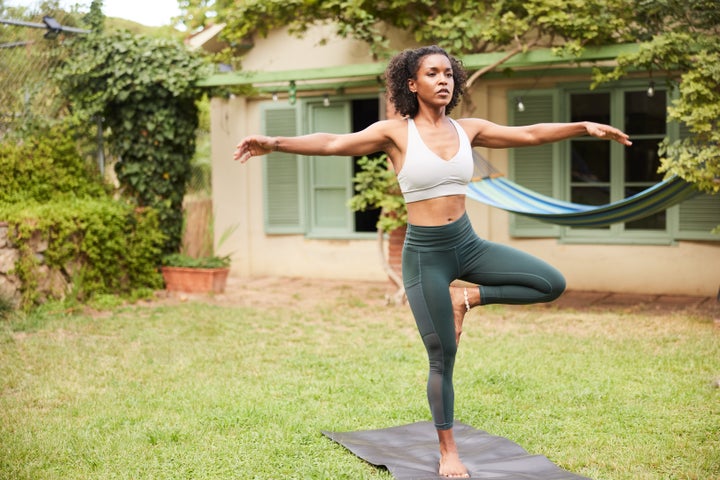
These are combined with stability training, including single-leg balances, and bodyweight exercises, like hip hinges and planks.

Sessions last about 35 minutes each.

Resistance training is linked to better bone health, which is crucial for menopausal women, as the changes to their hormones can decrease their bone density.

That leaves you at greater risk of falls and broken bones.

What did the researchers find?

The University of Exeter study involved 72 pre-, peri-, and post-menopausal women. They were all active.

Half of them completed 150 minutes of exercise per week, while the others completed a 12-week Pvolve training plan which increased in intensity over time.

Afterwards, they found that those who did the Pvolve Method had the following advantages over the people doing 150 minutes of exercise:

  • 19% increase in hip function and lower body strength
  • 21% increase in full-body flexibility
  • 10% increase in dynamic balance, mobility, and stability
  • Increase in lean muscle.

Speaking to the University of Exeter, the study’s lead author, Professor Francis Stephens, said: “Women often see a decline in their muscle strength and balance shortly before, during and after the menopause. This ultimately increases the risk of falls and fractures later in life, particularly of the hip, which is why it’s so important to find a way for women to maintain that strength and balance as they get older.

“The great thing about these simple resistance exercises is they can easily be performed at home, and we’ve now shown they’re effective at improving strength and balance in women during and post-menopause. In fact, some measures of balance appeared to increase to a greater degree in post-menopausal women, suggesting that these exercises are not hindered by the menopause transition.”


The Length Of Time You Should Be Able To Balance On One Leg


There are many important factors to consider when thinking about healthy ageing, not the least of which is fall risk.

One in four adults over 65 falls each year, according to Centers for Disease Control data from the US, and many of those people require hospitalisation, medical attention or lifestyle changes due to injury.

“One of the biggest issues that we worry about as geriatricians in older adults is falls because they can cause a lot of injuries,” said Dr. Maureen Dale, an associate professor of geriatric medicine at the University of North Carolina at Chapel Hill School of Medicine.

Falls can cause hip fractures, vertebral fractures or worse, all of which can hugely impact day-to-day life for older adults, she added. “And so preventing falls is really important in our patients as we age, and one of the best ways to prevent falls is to make sure people have good balance.”

This is particularly important for post-menopausal women who may have low bone density, said Dr. James F. Wyss, a spine and sports medicine physiatrist at the Hospital for Special Surgery in New York.

“Lots of times, the focus on preventing a fracture is addressing bone density and strength training. But the greatest way to prevent a fracture is to prevent a fall,” Wyss said. “Sure, it’s great if you can get your bones stronger through strength training or a medication, but if you don’t fall, you’ve eliminated the risk altogether.”

Being able to balance for a few seconds is fine, but research shows that adults should be able to balance for longer. Here’s what to know.

You should be able to balance on one foot for at least 10 seconds

“People should be able to stand on one foot for about 10 seconds and be able to hold their balance,” Dale said. “If they can’t do that, that’s worth talking to their primary care provider or physician about to think about things that they can do.”

There are often medical interventions that can improve balance, she noted.

While 10 seconds is the goal, the longer you can balance – even up to 30 seconds – the better, noted Janice McGrail, a physical therapist at Mass General Brigham’s Spaulding Rehabilitation.

The Length Of Time You Should Be Able To Balance On One Leg
You are at higher risk of falling if you can’t balance for 10 seconds on one leg.

Not being able to balance for 10 seconds can signal potential health issues

Research shows that if you can’t balance for 10 seconds, you’re at a higher risk of falls, according to Wyss. And if you can’t hold your balance for five seconds, you are at an even higher fall risk.

Being unable to stay steady on one leg can also be a sign of other medical issues.

“Sometimes it’s just that people have a little bit of weakness in their leg muscles and need to work on an exercise program or a physical therapy program that focuses on strengthening those leg and core muscles that help support our balance,” Dale said.

Stability issues may be caused by medications, Dale noted. Certain vitamin deficiencies can also be the culprit, Dale added, such as a vitamin B12 deficiency.

“And then sometimes we find that people have sensory changes, so decreased sensation in their feet and legs that can impact their balance as well,” Dale noted.

Your doctor can help determine the cause of your balance issues and work with you toward a solution.

“There are a lot of things that we can do to help support and promote healthy balance in people. So that’s why the starting point really is talking to your primary care provider,” Dale explained.

There are ways to safely practice balancing at home and ways to prioritise it throughout your life

It’s simple to start working on your balance – as long as your doctor says it’s safe to do so.

You can begin by building balance work into daily habits such as standing on one foot as you brush your teeth or as you wait for your lunch to heat up in the microwave, according to McGrail.

Depending on how steady you feel, you can also try standing with one foot in front of the other like you’re walking on balance beams.

It’s important to practice this safely so you don’t end up falling, McGrail said.

“When I’m giving someone an exercise to do at home for balance, I always tell them to stand at the kitchen counter [if you’re microwaving food] or at the sink counter if you’re brushing your teeth … so that you have something in front of you that you can hold on to if you need to,” McGrail said, adding that you should also put a chair behind you so that if you fall backwards, you “can just sit in the chair rather than ending up on the floor.”

If you aren’t ready to try standing on one foot, you can practice balancing by walking on your toes or heels throughout your house, Wyss said.

Folks who can easily balance on one leg while brushing their teeth or microwaving food can take it one step further and incorporate balance into their workout regimen, such as doing bicep curls while balancing on one foot, Wyss suggested.

“It’s 40s, 50s that I start tell people, ‘All right, start incorporating a little more balance training into your routine,’” Wyss explained.

Regular exercise three times a week is also a good way to improve and maintain your balance, according to Dale. Additionally, programs like tai chi, yoga and a physical therapy program known as Otago have been shown to also improve stability.

It’s never too late to work on your balance, McGrail stressed. As long as you’re up and moving, you can make small steps to improve it.

If you need support from a doctor or physical therapist, reach out and they can help prescribe you a safe balance-building program. Even if you’re not yet at an age where you worry much about balance, it’s still important to see your doctor regularly and manage any chronic medical issues that could contribute to balance issues down the road, Dale said.

“Making sure that we’re managing diabetes and heart disease and vascular disease are important things to keep us healthy now and to keep us healthy and well-balanced later,” Dale said.


95-year-old swimmer’s workouts stun experts as she defies aging, shows others how to stay strong


NEWYou can now listen to Fox News articles!

A great-grandmother, age 95, is still breaking swimming world records — and the pictures alone demonstrate her remarkably fit physique and health routine. 

Jane Asher recently achieved five age group world records, adding to her already 100-strong collection.

The swimming legend from Merton Park, South London, also has a British Empire Medal for her dedication to the sport. She’s in the International Swimming Hall of Fame as well, as news agency SWNS reported.

Looking back on her long career, which includes 26 gold medals, Asher said she credits her love of the water for her good health and long-lasting happiness.

KEY FITNESS MEASURE IS STRONG PREDICTOR OF LONGEVITY AFTER CERTAIN AGE, STUDY FINDS

“It does keep you healthy,” she said. “I have taught people who just had surgery — and their doctors were amazed by how much they improved because of the swimming.”

Asher said she wants to “show people what a lot of fun you can have if you like competing and how good you feel when you work hard at something.”

95-year-old swimmer’s workouts stun experts as she defies aging, shows others how to stay strong

Jane Asher, a great-grandmother, is still breaking swimming world records at age 95. She’s in the International Swimming Hall of Fame. (SWNS)

She acknowledged that “quite a lot” of young people nowadays “have put on weight. Swimming doesn’t help you to lose weight, but it finds the muscles. … It opened a whole new world for me. It made me happy and healthy.”

Taught by her mother, then teaches others

Born in Zambia, South Africa, Asher spent most of her childhood in Johannesburg, she said, where her English mother taught her to swim. Her interest in swimming only grew at boarding school, where she was allowed to use the pool on her own in the mornings, mostly doing the backstroke.

6 PILLARS OF A HEALTHIER, AGE-DEFYING LIFESTYLE IN 2026, ACCORDING TO EXPERTS

Today, Asher is a grandmother of 11 and a great-grandmother of six — and wherever she’s lived throughout her life, she’s always joined local swim teams, per the SWNS report.

“It opened a whole new world for me. It made me happy and healthy.”

Once she even joined a rowing club just to be in the water.

Asher married a vet named Robbie — and when he had an accident at work, she decided to get a job teaching swimming at the local school to help pay the family bills.

NEARLY HALF OF SENIORS IMPROVE WITH AGE — AND RESEARCHERS THINK THEY KNOW WHY

She said her mother “was taught to swim in the sea in Cornwall and was addicted to water. We spent all of our free time just jumping in and out of the water. I took to it quite quickly.”

In Asher’s very first swim race, “a girl said that I kicked like hell. It was because my mother was watching. Now every time I have a backstroke race, I think, ‘Mom is up there watching.’”

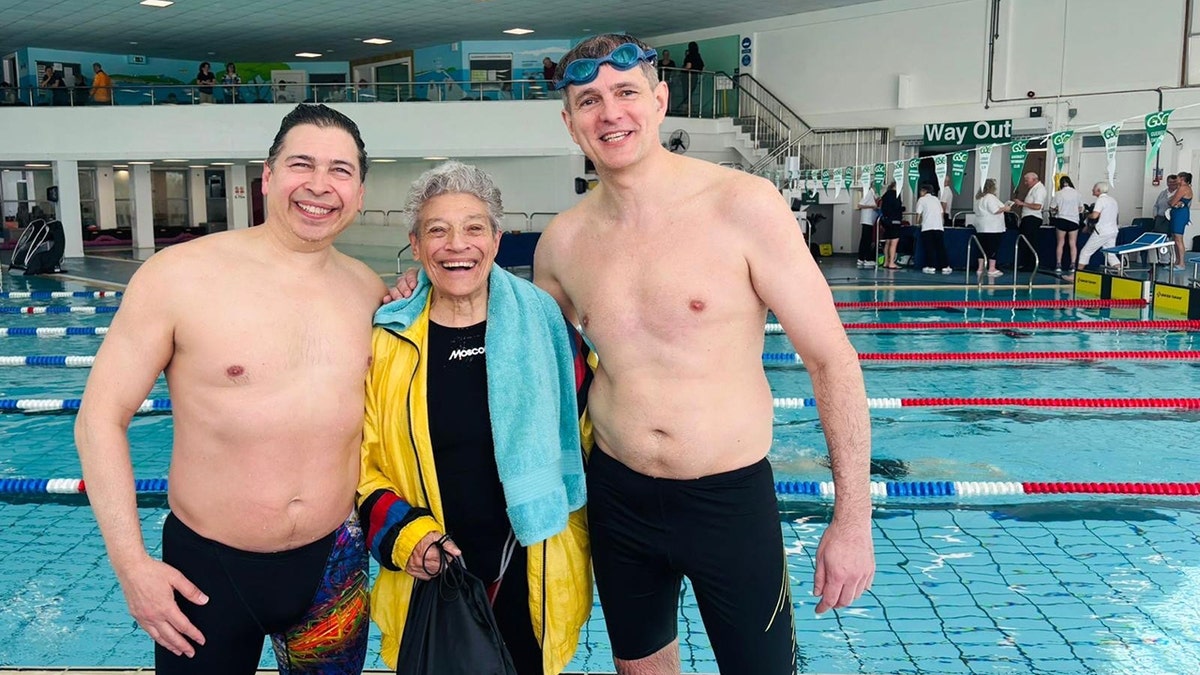
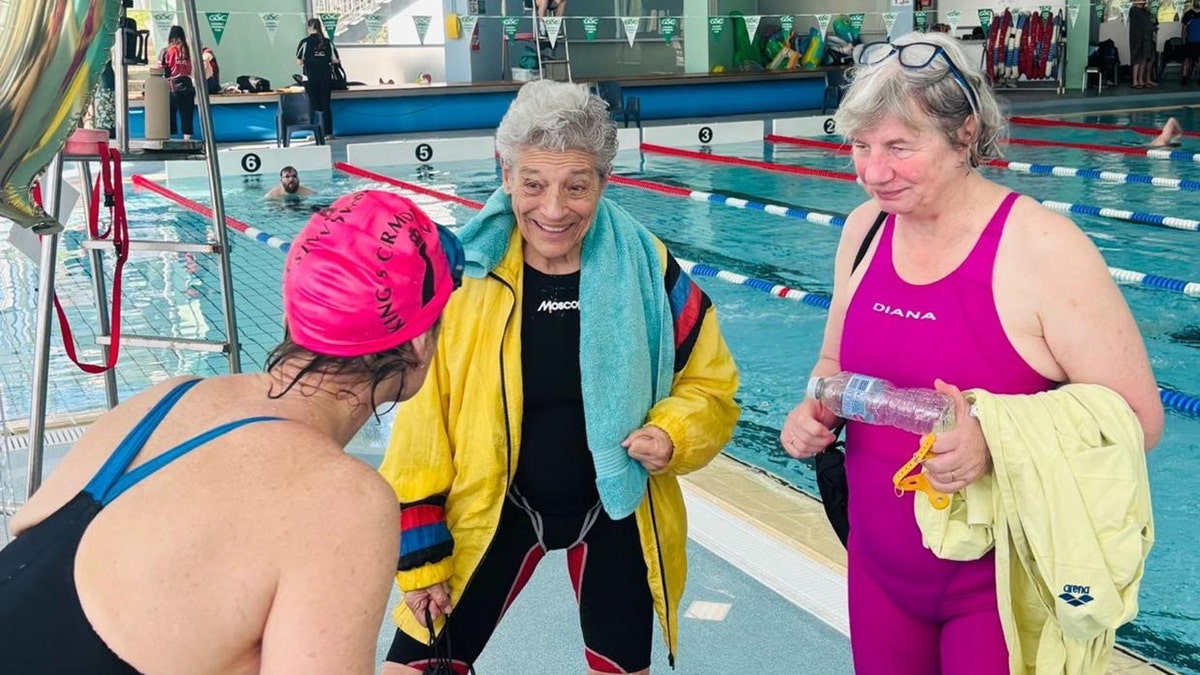
Jane Asher with her swim friends talking outside the pool.

Looking back on her long career, which includes 26 gold medals, Asher, at center, credits her love of the water for her health and happiness. (SWNS)

After transitioning to teaching adults how to swim, Asher started entering swimming competitions when she was 50 years old. She broke 100 records by age 80.

The legendary swimmer broke her first European record at an 800m race in Crystal Palace — after a wedding where she’d had a few drinks.

TEST YOURSELF WITH OUR LATEST LIFESTYLE QUIZ

To this day, she competes in several different races, but said her favorite swim race is the individual medley, which involves backstroke, breaststroke, front crawl and butterfly.

Said Asher, “When my husband died, I started filling the time, but it was hard because there is this big hole in your life. But swimming has given me such good friends, and they give back to me. All of my kids are very sporty, and I am very proud of them, and I didn’t realize that they are proud of me.”

Jane Asher and her swim friends standing outside the pool.

Asher, center, with some of her swimming teammates. Her advice for the younger crowd is to keep active and swim wherever and whenever they can. (SWNS)

She noted, “Without friends, life doesn’t happen. There is always somebody pushing you on. I think that is what keeps me going — [knowing that] somebody [is] waiting for me.”

CLICK HERE TO DOWNLOAD THE FOX NEWS APP

In terms of her health and wellness advice for the younger generation, Asher said she’d tell folks to keep active and swim wherever they can in order to be healthy.

CLICK HERE FOR MORE HEALTH STORIES

“It is a really good non-contact sport,” she said. “You can’t hurt yourself. Running hurts your knees and your hips, and even tennis causes shoulder problems. … I had a good kick with very strong legs.”

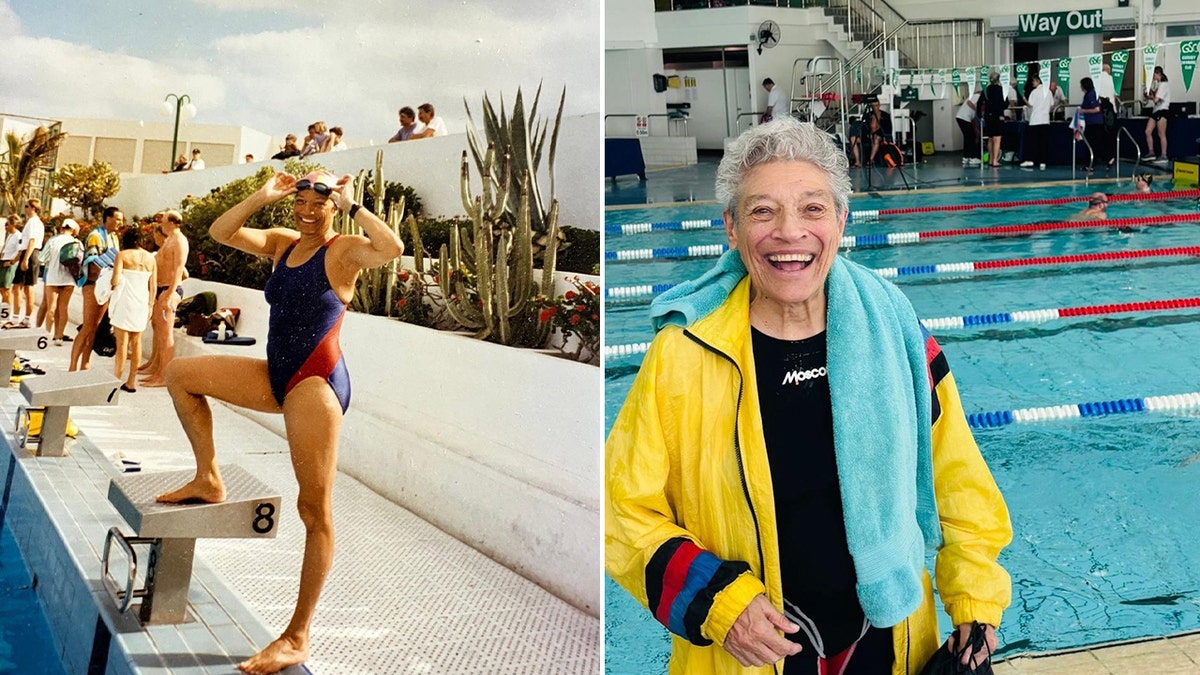
Split image showing Jane Asher as a young athlete posing on a starting block and as an older woman smiling poolside at a swim meet.

“You must not stiffen up,” said Asher, shown above in both photos, “because then you go down like a stone.” (SWNS)

She also pointed out, “It is good to have something to think about. It is a bit like meditation. That is the secret, of course. You must not stiffen up, because then you go down like a stone.”

CLICK HERE TO SIGN UP FOR OUR HEALTH NEWSLETTER

Asher said she has no plans to slow down.

She’s currently working toward her next competition and another potential world record in Budapest, noted the SWNS report.


Air India rolls out new cabin crew fitness policy – and those who fail risk going without pay


It won’t just be planes that are grounded. 

A major airline is rolling out a new cabin crew fitness policy – and those who fail risk going without pay.

Air India officials will be carrying out body mass index (BMI) checks on its aircraft staff from May 1, local media outlet NDTV reported.


Air India rolls out new cabin crew fitness policy – and those who fail risk going without pay
Air India is rolling out a new cabin crew fitness policy. REUTERS

Chiefs are cracking down on those who do not report a healthy range, which is somewhere between 18 and 24.9.

Cabin crew staffers who report a BMI under 18 are considered underweight and will have to be medically cleared.

They will be removed from rosters while they await clearance and risk going without pay.

Overweight stewards who report a BMI between 25 and 29.9 will also have to undergo an exam before being cleared to fly.

But, obese cabin crew members with a BMI of 30 or above will be immediately grounded.

Those who fail the new fitness policy will have 30 days to provide an acceptable score.


An airline stewardess in uniform walks down the aisle of an airplane filled with seated passengers.
Cabin crew who breach the rules will be removed from rosters. Shutterstock

Staffers that continue to report readings outside the acceptable range risk being slapped with caution letters and potential disciplinary action.

The new policy will apply to those training to become cabin crew, the Economic Times reported.

Air India isn’t the only airline to roll out a controversial measure.

Southwest Airlines came under heavy criticism after bosses ended the carrier’s 50-year-old open seating policy.

Plus-size travelers are also impacted by the airline’s policy when it comes to booking two seats.

Larger travelers must pay for a second seat in advance. 


Eight Incredible Benefits Of Going For A Run (Even For 10 Minutes)


About six and a half million adults in the UK were regular runners from 2023-24, or just over 9% of the population.

Still, not everyone sticks to it. In one paper, 11% of people who said they wanted to run a marathon quit the sport entirely before they got close to the start line.

But you don’t need to break records to see the health benefits of running. Here, we thought we’d share some of the (many) advantages of the sport – just in case you needed a little extra motivation.

1) It may be beneficial for your joints

You might have grown up hearing that running wrecks your knees (I did). But a systematic review of 17 studies found that “In the short term, running is not associated with worsening [patient-reported outcomes] or radiological signs of knee [osteoarthritis] and may be protective against generalised knee pain.”

2) It can boost your mood

A review of over 100 studies concluded that running appeared to have “important positive implications for mental health, particularly depression and anxiety disorders”.

And another paper found that a single 10-minute run can help to boost participants’ mood and even executive function.

3) It could help you live longer

More proof that small efforts are far better than nothing in a 2015 paper, researchers noted that five to 10 minutes of running a day and/or running slower than 9.6km/hour was linked to a lower risk of all-cause and cardiovascular mortality.

4) It’s really, really good for your heart

Running is a cardio workout, so perhaps it’s no wonder it’s so good for our hearts. It’s linked to lower cholesterol, better blood pressure, and a decreased risk of adverse cardiovascular events, like heart attacks or strokes.

5) It can strengthen your bones

Scientists found that marathon runners’ bones may be denser than those of their non-running counterparts.

6) It’s a great way to get a good night’s sleep

Exercise, especially exercise with outdoor light exposure (e.g. running in your local park) is linked to better sleep quality and improved sleep habits.

7) It can make your legs stronger

Like walking, running can help to build your leg strength. But it can plateau after a while, which is why it’s important to mix in some strength training.

8) Your endurance will improve

Running trains the heart and lungs, meaning you’ll be able to exercise harder, for longer, once you get into the habit.

What about the downsides?

While running is good for us, there are some downsides.

A 2020 paper found that injury rates were about 20% among runners, especially those with weaker hips. The risk is higher for new runners.

Strength training, including that which targets the hamstrings, knee-stabilising methods, hips, and glutes, can reduce your likelihood of getting injured.

Like HIIT, overdoing running can lead to insomnia. About a third of all runners are believed to suffer some form of overtraining syndrome.

If you notice mood changes, fatigue, poor sleep, and getting sick more often, get more rest and let your running shoes breathe for a while.

Remember that running three days a week is enough to lower your risk of early death by 40%, and that five to 10 minutes of running does a lot of good.


If You Want To Stay Strong, Mobile, And Flexible, Try ‘Isotonic Exercise’


Some exercises, like Spanish and goblet squats as well as reverse lunges, are kinder to ailing joints than others.

But if you want to train the range of motion (ROM) of your joints, as well as your flexibility and strength, “isotonic training” might help.

What is “isotonic training”?

“Isotonic”, which has its origins in Ancient Greek, roughly translates to “same tension”.

The idea is that you keep the muscle at roughly the same tension throughout the movement.

It involves the “rhythmic muscular contractions”, most often using little force. It is sometimes also called “dynamic” movement,

Another type of exercise, isometric (or “static”) training, does the opposite: lots of load, and very little change to the length of the muscle.

Most exercises involve a combination of isometric and isotonic movements, though some tend more towards one then the other.

What are some examples of isotonic exercises?

Some exercises that mostly, or entirely, use isotonic movement are:

  • squats
  • pushups
  • pullups
  • bench presses
  • deadlifts
  • jogging
  • crunches
  • sit-ups
  • Russian twists
  • reverse crunches
  • burpees
  • cross-country skiing
  • swimming.

What are the benefits of isotonic exercise?

A 2022 review found that isotonic exercise helped to improve the strength of participants’ hamstring muscles.

“These exercises, when performed at low intensity, but with high repetition, can be used by the healthy general population to prepare for training and daily exercise,” it read.

And in another 2022 study, isotonic training was found to be a more efficient way to improve muscle strength, flexibility, and endurance more than isometric movement.

Healthline explained that isometric training targets the ROM of joints. It may help with functional movement (like lifting things from a shelf or crouching to pick something up), and mobility, too.

If you have existing joint or heart conditions, are injured, or have other medical concerns, though, it may be worth speaking to a doctor before taking up any new exercise.


Sitting All Day Is Linked To A Painful Symptom, With Men More Likely To Develop It


You may want to stand up and do a few stretches while reading this.

Research has already established that prolonged sitting is really harmful to our health. It’s linked to conditions like high blood pressure, heart disease and diabetes.

But what if it’s also the reason for your back pain or that pesky knee pain that pops up every time you try to jog?

While there are multiple causes of back and knee pain, sitting all day at a desk job may be a major factor, too. Here’s what to know:

Sitting all day can cause tight hip flexors

“A lot depends on how you sit, but essentially, prolonged sitting puts your iliopsoas, which is your primary hip flexor, into a shortened position,” said Dr. Michael Fredericson, a professor of sports medicine and the director of Stanford Lifestyle Medicine in California.

Your hip flexors are a group of muscles that allow you to raise your knee. You also use these muscles when you step up and bend forward.

“So if you’re staying in that position for seven, eight hours a day, then it becomes chronically tight into that position, and you get what we call passive muscle stiffness,” Fredericson said.

This isn’t only a problem for people who sit all day; it’s also common among runners and cyclists, said Brian Kracyla, a physical therapist and owner of Cloudline Physical Therapy in Philadelphia.

According to Melanie McNeal, physical and occupational therapy manager at Baylor College of Medicine in Texas, men are often affected.

“Most everyone has tight hip flexors, because we’re a society that does a lot of sitting, so it is a huge issue,” McNeal said. However, it tends to be even more prevalent in men “because males tend to be tighter than females on the whole”.

Sitting All Day Is Linked To A Painful Symptom, With Men More Likely To Develop It

Luis Alvarez via Getty Images

Sitting in a slouched position behind a desk for seven or eight hours a day is causing your hip flexors to tighten, which can lead to back, hip and knee pain.

Tight hip flexors can cause knee and back pain

Why does it matter if you have tight hip flexors? Well, it turns out this issue could be causing pain and mobility problems that you probably aren’t even connecting to tight hips.

One problem people with tight hips may experience is knee pain, McNeal said, “because if your hip flexor is tight … it compresses your kneecap, your patella, and that can cause knee pain, especially with activity like jogging or running or fast walking.”

If you have tight hip flexors, your stride length will be shorter when walking and running, Kracyla said. This contributes to the shuffling gait that’s often seen in older adults.

Having tight hip flexors can also lead to posture issues and back pain.

“You’re going to have a pelvic tilt in the front, which is going to increase the curve of your spine in the back,” Kracyla said, “and often that will manifest itself on our end with lumbar extension compensation, so you could feel more low-back stiffness with activity due to your tight hip flexors.”

“That’s why a lot of times when you stretch the hip flexors, people’s back pain feels better,” Fredericson said.

If you can’t avoid sitting all day, there is a better way to sit

A lot of people have desk jobs and long commutes that require them to sit for many hours of the day, and there is no way around that reality. While sitting all day long isn’t ideal for your hip mobility (and many other systems in your body), there’s a way to adjust.

The problem with sitting all day is the slouching and slumping that most of us do when we’re on our computers, tablets or phones, Fredericson said, “instead of actively using your core and postural muscles to keep your pelvis in a more neutral position.”

“When you’re slouched all day, those hip flexors are in this chronically shortened position, but if you look at people who maintain better posture, their pelvis is not … going into a posterior pelvic tilt. It’s staying in a more neutral position,” Fredericson added. This way, you’re engaging your muscles and participating in more “active sitting.”

Beyond maintaining good posture while sitting, it’s important to stand and move around for at least five minutes every half hour, according to Fredericson. This can look like going on a walk, heading downstairs for a snack, stretching or switching to your walking pad for a low-stakes call.

“Not only is that going to be good for your hip flexors and your flexibility, but it’s just good for your whole metabolic system,” Fredericson said. “We know the people who do that, their blood pressure is lower. They have less cardiovascular risk factors.”

Exercise can also help, but going to the gym after sitting for eight hours a day, five days a week, isn’t going to counteract your inactivity.

“You might get this false belief that you’re still staying in great shape because you go to that gym, but then you still sit all day — but it doesn’t really work like that,” Fredericson said.

This doesn’t mean your exercise regimen isn’t helpful. For optimal body function, you should practice good sitting posture, get up for movement breaks and follow an exercise regimen. Movement, in general, helps with everything.

“The more active we can be, the fewer problems we have,” McNeal said.

Treating tight hip flexors comes down to a multi-pronged approach, Kracyla added, including stretching, mobility work and strength training. According to the Hospital for Special Surgery, helpful stretches for tight hip flexors include the half-kneeling stretch and the 90/90 stretch. Child’s pose and low-lunge stretch can be beneficial, too.

It’s not enough to hold a stretch for 15 seconds and move on, though. McNeal said you should aim to hold each stretch for 30 seconds and repeat it three times.

If you notice pain or difficulty with movement or stretching, it’s worth talking to a doctor to see if you could benefit from additional support from a physical therapist.

“There is some nuance to it,” Kracyla said, before adding that it often requires a clinical eye to prescribe treatment.


Fashionable Workout Gear That Can Handle Spring’s Transitional Weather


We hope you love the products we recommend! All of them were independently selected by our editors. Just so you know, HuffPost UK may collect a share of sales or other compensation from the links on this page if you decide to shop from them. Oh, and FYI – prices are accurate and items in stock as of time of publication.

Spring is here at last – the birds are chirping, the bees are buzzing and the sun is just starting to peek through the clouds, teasing us with what’s to come during the summer.

But during this tricky, barely-warming-up time of year, getting your transitional dressing right can be such a pain. And that goes double for your fitness gear, which needs to see you through not just rain or shine, but sweat too.

Whether you’re prepping for April’s showers or May’s flowers, give these fashionable fitness ’fits a look in.


Clamshells Are A Knee And Back Pain-Friendly Way To Strengthen Balance


If you’re one of the many people experiencing lower back or knee pain, “Spanish” and “goblet” squats can help you build leg muscle without added stress.

But strengthening your hips can go a long way towards reducing your risk of further pain, too.

It can help to stabilise your spine and even reduce strain on your knees.

And according to a paper published in the Journal of Orthopaedic and Sports Physical Therapy, “clamshell” exercises are one of the best ways to strengthen the area and protect against future injury.

What are ‘clamshell’ exercises?

It involves lying on your side in the foetal position. Your knees should be bent at a 45-degree angle, and the sides of your feet should be touching.

Keep your knees stacked on top of each other, rather than rolling the top one over the bottom one. Rest your head on your lower arm.

From there, lift the knee that isn’t touching the ground into the air.

Keep your hips and core engaged and your spine straight.

Ben Shatto, a physical therapist, shared on his YouTube channel that “it needs to be a painfully slow exercise”.

He recommends lifting the knee for five seconds, holding it there for five further seconds, and then dropping the knee back for (you guessed it) five seconds.

Shatto recommended “at least 10 repetitions” on each side.

If you like, you can add a resistance band to the exercise by placing it around the front and back of your knees.

What are the benefits of ‘clamshell’ exercises?

It helps to strengthen the “deep rotators of the hip,” Shatto said.

Clamshell exercises mostly target the gluteus medius and gluteus minimus. These help to stabilise your body and maintain your posture.

The stronger these are, the more likely our knees are to remain aligned, taking extra pressure off existing sore knees and reducing the risk of harm in the future.

And speaking to Woman & Home, Paola Di Lanzo, a personal trainer, pilates instructor and founder of Paola’s Body Barre, said: “Clamshells support better pelvic alignment by activating deep glute muscles, which can alleviate tension in the lower back and hips.”