Abortion pill mifepristone stays available by mail for now as FDA faces 6-month review deadline


NEWYou can now listen to Fox News articles!

A federal judge allowed the abortion pill mifepristone to continue being distributed by mail nationwide for now, but warned the Biden-era policy could soon face major legal changes as a Food and Drug Administration (FDA) safety review of the drug unfolds.

The legal challenge to the U.S. Food and Drug Administration’s January 2023 Risk Evaluation and Mitigation Strategy (REMS) seeks to end the “certified pharmacies” regulation that allows for the drug to be mailed across state lines while the federal agency continues its review.

U.S. District Court Judge David C. Joseph, appointed by President Donald Trump, ruled against Louisiana Attorney General Liz Murrill on Tuesday, citing what he referred to as a “government by lawsuit.”

“…It is the completion of FDA’s promised good faith, evidence-based, and expeditious review of the mifepristone REMS, not “government by lawsuit,” that this Court finds to be in the public interest,” Joseph wrote in his ruling.

PLANNED PARENTHOOD ATTACKS HAWLEY EFFORT TO STRIP FDA APPROVAL OF MIFEPRISTONE

Abortion pill mifepristone stays available by mail for now as FDA faces 6-month review deadline

A federal judge Tuesday allowed the abortion pill mifepristone to continue being distributed by mail nationwide. (Evelyn Hockstein/Reuters, File)

Joseph also cited a letter from both Department of Health and Human Services (HHS) Secretary Robert F. Kennedy Jr. and FDA Commissioner Marty Makary asking their respective agencies to “conduct a comprehensive safety review” of the 2023 mifepristone REMS.

Murrill told Fox News Digital she plans on taking Joseph’s ruling to the Fifth Circuit despite the ongoing mifepristone REMS review from both agencies.

“Judge Joseph concluded that Louisiana has standing to sue and is likely to succeed in showing that the 2023 REMS is unlawful,” Murrill said to Fox News Digital in a statement.

YOUNG, GOP SENATORS URGES TRUMP TO REINSTATE ‘PROTECT LIFE RULE’ TO BLOCK TITLE X FUNDS FROM ABORTION CLINICS
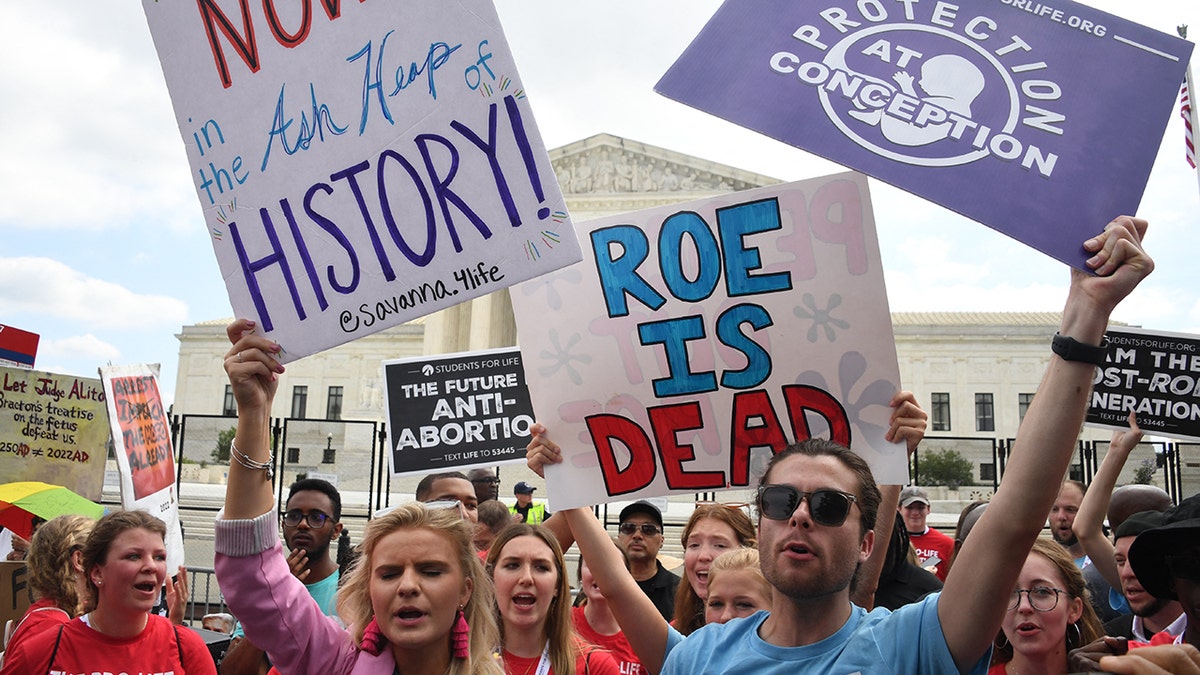
Pro-life supporters holding signs outside the US Supreme Court in Washington, D.C.

Pro-life supporters rally outside the Supreme Court in Washington, D.C. (Olivier Douliery/AFP, File)

“He also concluded that Louisiana suffers irreparable harm every day that the 2023 REMS remains in effect,” she added. “Accordingly, under binding Fifth Circuit precedent, the only thing left to do is vacate the 2023 REMS pending the outcome of this litigation. We will ask the Fifth Circuit to do so.”

The ruling sets up a high-stakes legal fight over abortion pills, with a federal appeals court showdown looming and the FDA under pressure to justify rules that dramatically expanded access in recent years.

In the past year, many red states nationwide have taken the 2023 REMS mail-order regulation to the courts. 

In one notable incident last year, a Texas man who fathered an unborn child sued a California doctor who prescribed his ex-girlfriend mifepristone through the organization “Aid Access.” His case, Rodriguez v. Coeytaux, is still ongoing.

HAWLEY INTRODUCES BILL TO STRIP FDA APPROVAL FROM ‘INHERENTLY DANGEROUS’ ABORTION PILL
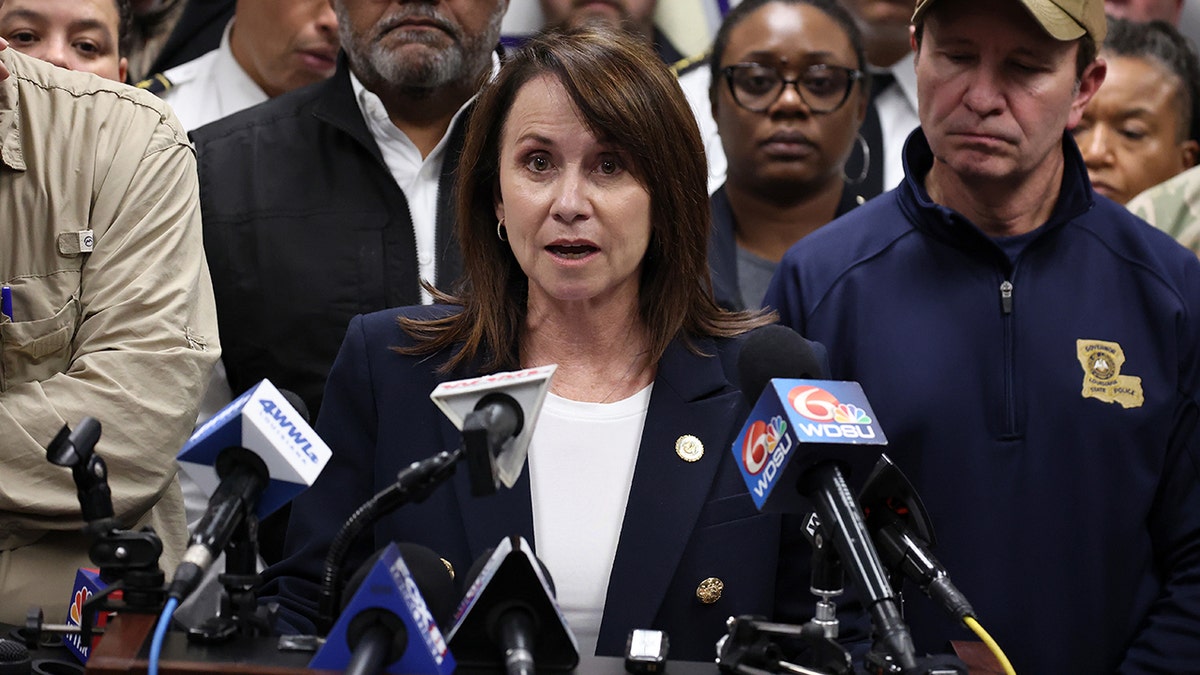
Louisiana Attorney General Liz Murrill

A federal judge ruled against Louisiana Attorney General Liz Murrill on Tuesday, citing what he referred to as a “government by lawsuit.” (Chris Graythen/Getty Images, File)

In the State of Louisiana v. U.S. Food and Drug Administration, Murrill seeks a full rollback of the REMS policy regardless of the findings of the review.

Joseph denied injunction without prejudice in the suit that Louisiana brought to the court, but also granted stay of the case. His ruling orders the FDA to complete their safety review, which had been postponed through the November midterm elections, and to report back in six months.

“Should the agency fail to complete its review and make any necessary revisions to the REMS within a reasonable timeframe, the Court’s analysis – and the weight accorded to these factors – will inevitably change,” Joseph wrote in his ruling.

Joseph did point to Louisiana’s standing in the suit, claiming the state is suffering “ongoing harm” after the Dobbs decision in 2022 allowed the state to ban abortion.

“Thus, in that post-Dobbs regulatory environment, there is evidence that the 2023 REMS was approved without adequate consideration, at least in part, as part of an effort to circumvent anti-abortion states’ ability to regulate abortion,” Joseph wrote. “Likewise, there is evidence that the consequences of this action were predictable – out-of-state providers and related entities would expand access to mifepristone in ways designed to reach into jurisdictions like Louisiana.”

PRO-LIFE ORGANIZATION CALLS ON HHS AND FDA TO SUSPEND ABORTION PILL APPROVAL, TIGHTEN SAFETY RULES
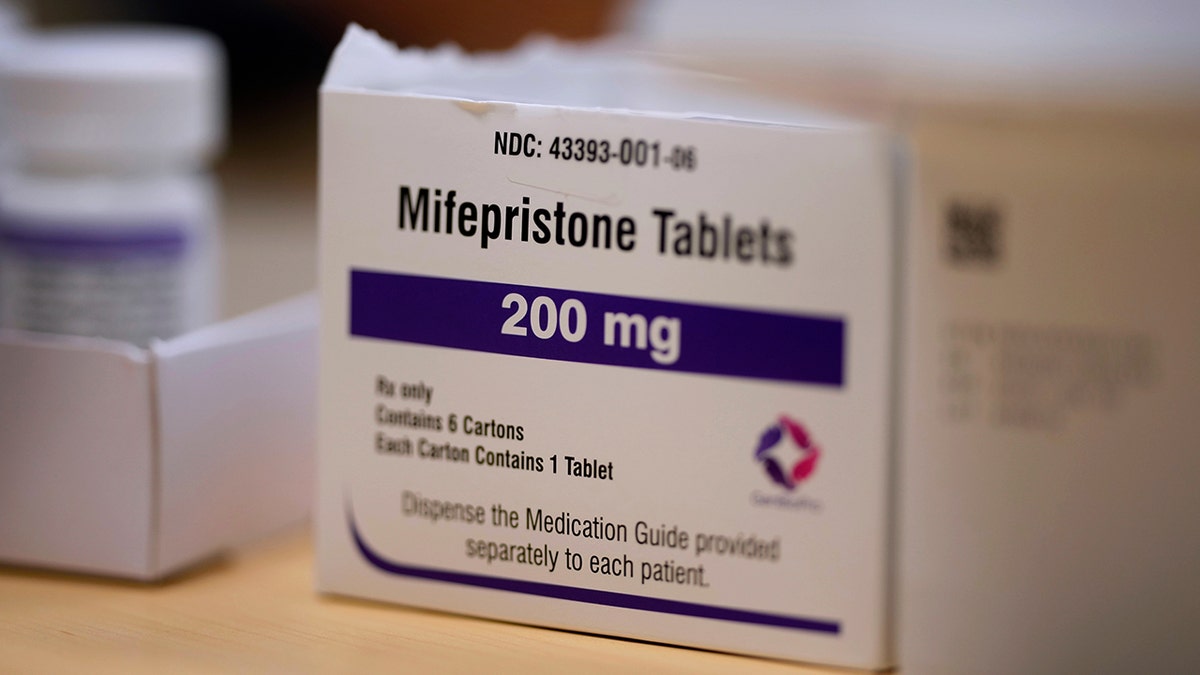
Closeup of a mifepristone tablets box

Mifepristone was first approved by the FDA in 2000 under strict guidelines. (Charlie Neibergall/AP, File)

However, Joseph pointed to the FDA as the ultimate decision maker on the issue, as a matter of “public health judgment.”

Mifepristone was first approved by the FDA in 2000 under strict guidelines, requiring a pregnancy at seven weeks’ gestation or fewer, and only administered in-person after being seen by a prescribing physician. 

The guidelines were first relaxed in 2016, where the gestational age of the proposed pregnancy was lengthened to 10 weeks, and required fewer in-person visits to obtain a prescription.

After the COVID-19 pandemic, where mifepristone was prescribed and sent via mail under unprecedented circumstances, the same rules were legalized under the FDA’s REMS in 2023.

Reuters reported that mifepristone is the single-most popular method of abortion in the U.S., representing about 60% of all abortions.

HAWLEY LAUNCHES INVESTIGATION INTO ABORTION DRUG MANUFACTURERS OVER ‘GRAVE RISKS’ TO WOMEN
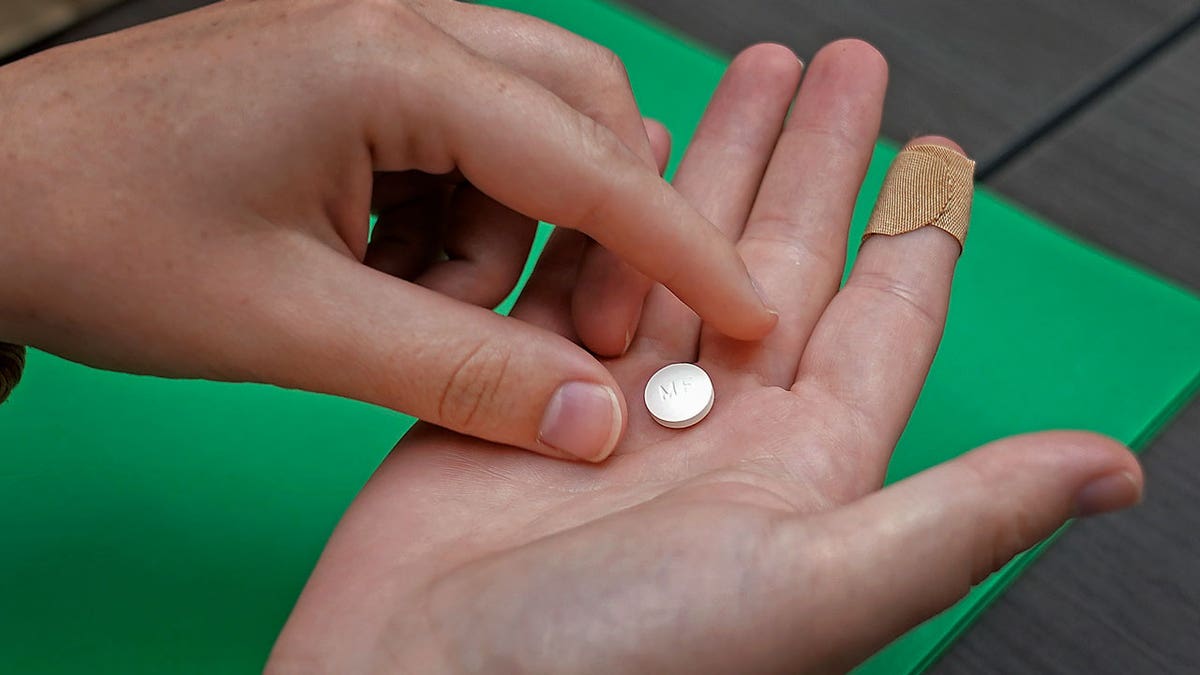
Kansas abortion pills

A Kansas law requiring that patients be informed of reversal regimens for medication abortion is one of two being challenged in a lawsuit by abortion providers. (Charlie Riedel/AP)

Joseph’s ruling orders the FDA to finish their review, which may revise rules under the 2023 REMS guidelines. It also allows the court to act if the agency continues to delay its safety review more than six months.

“Should the agency fail… the Court’s analysis… will inevitably change,” Joseph concluded.

Joseph maintained mifepristone access in Louisiana for now, but signaled the legal and scientific basis for those rules may not hold.

CLICK HERE TO DOWNLOAD THE FOX NEWS APP

“This is one of the many reasons why the investigation into the FDA must be sped up so that states can begin to regulate abortions if the feds don’t,” 40 Days for Life President Shawn Carney told Fox News Digital. “This was one of the great promises by RFK that they initiated last year, because we now know how dangerous these abortion drugs are.”

“The investigation into the FDA must be sped up because every abortion pill sent through the mail is a huge, unregulated danger that has been a disaster since Biden deregulated it,” Carney added.

The FDA did not immediately respond to Fox News Digital’s request for comment.


String of inmate deaths linked to paper laced with toxic drug rocks infamous Chicago jail: ‘How do you keep it out of schools?’


These books were written with a poison pen.

A string of inmate deaths at an infamous Chicago jail have been linked to a terrifying new drug trend — paper laced with a deadly drug and smuggled behind bars.

And the correction officers who have been fighting it say it threatens to be more lethal than the crack epidemic of the 1990s.

When guards at the Cook County Correctional Facility found 57-year-old inmate Thomas Diskin dead, slumped around his cell’s toilet in January 2023, investigators were left scratching their heads — there was no evidence of foul play or a fall that could’ve killed the prisoner. 

Pieces of white paper containing drugs confiscated from Chicago’s infamous Cook County Correctional Facility. Cook County Sheriff’s Office

The only thing out of the norm? Tiny strips of singed paper littered around his cell. 

“I said, we need to test this and find out what’s going on with it,” Cook County Sheriff’s Office Chief of Staff Brad Curry recalled about that moment, referring to the paper shreds. 

Eventually, a Virginia lab would confirm that the strips were soaked in a synthetic cannabinoid called Pinaca, which proved lethal when Diskin smoked the paper.

Before authorities could stop it, other inmates were dropping dead under eerily similar circumstances. 

Jail officials tried to warn prisoners about the dangers of the toxic laced paper by posting these signs throughout the facility. courtesy of Cook County Sheriff’s Office

Less than two weeks after the first death, a 23-year-old was found dead, and less than a month after that, a 35-year-old inmate died.

By year’s end, six prisoners fatally overdosed after smoking tiny strips of paper that had been soaked in synthetic drugs — often using a “wick,” or slow-burning string of toilet paper or fabric.

“We didn’t know what was on [the paper in Diskin’s cell], but we knew it was a drug,” Curry told The Post. 

“And it was a race against time … we had a new drug that is very, very toxic and very, very deadly, that Narcan apparently didn’t work on,” he explained. 

Video showing a suspected non-fatal overdose in CCCF in 2023. Courtesy of Cook County Sheriff’s Office

They tried to warn prisoners about the dangers — throwing up signs in every ward of the approximately 6,000-inmate facility, warning against “drugs smuggled into the jail, like soaked paper.”

The message was stark: “Do not take drugs in the jail if you want to live.”

Guards also began inspecting every single piece of mail that came into the lockup, looking for stains and discoloration that could indicate synthetic drugs on it, and ramped up random cell searches and surveillance. 

Several prisoners fatally overdosed by smoking the laced paper, often using a self-made wick, which inmates are seen lighting in a microwave. Courtesy of Cook County Sheriff’s Office

But the strips of drug-soaked paper were sometimes so tiny, guards wouldn’t find them — and not even drug-trained police K-9s were able to sniff out the new synthetic cannabinoid they contained, Curry explained. 

While officials did everything short of banning paper — which “is necessary for everybody’s job function here, and for inmates to communicate with their family and friends,” Curry said — to curtail the trend, smugglers grew more advanced.

‘Doing it for the money’

When the mailroom got too hot with scrutiny, smugglers began dousing legal documents in drugs to make it look like it came straight from the courthouse.

They even put it on pages of thick books that came to the prison packaged as if they’d been sent straight from Amazon or a local bookstore. 

Just one, 12×12 piece of paper full of the drugs could run up to $10,000 — a price tag apparently high enough to turn the heads of several money-hungry staffers — who ended up in cuffs for smuggling it to inmates, according to Curry. 

“If you’re a dirty officer, [inmates working as dealers] will give them a certain amount of that every time they bring in a sheet of paper … so they’re doing it for the money. It’s so lucrative,” Curry said. 

In-person visitors are another avenue to get the goods inside prison walls. Surveillance footage shared with The Post from one May 2024 visit shows a female guest take a tiny, white slip of sullied paper and suddenly launch it across the table, with the inmate catching it across the table and slyly moving it into his uniform pocket. 

A Cooks County Sheriff’s Office investigator tests a book for the deadly drug. Courtesy of Cook County Sheriff’s Office

Between smugglers and inmates found possessing the drug-dunked paper, Cook County law enforcement has made a combined 130 felony arrests since 2023. 

A sophisticated, paper-testing machine — which blinks red if paper has anything other than ink on it, and can test hundreds of sheets at one time — has also assisted in their efforts against the epidemic. 

Prison deaths from smoking drug-soaked paper fell to just one in 2024. However, one death in 2025 and two already in 2026 are being eyed as drug-doused paper deaths, according to the sheriff’s office, which said it’s awaiting official results from the Cook County Medical Examiner’s Office. 

And throughout the years, the synthetic cannabinoids used in the recipes have changed — and gotten stronger. 

“I think the type of drug that they’re using now, the potency of that drug, will probably be a contributing factor to why we see a [bigger] rise this year [in deaths] than what we’ve seen the last two years,” Curry explained.

Although the epidemic has since hit other prisons throughout the country, Curry said, he and his sheriff’s office cohorts fear for what would happen if the drug-doused paper hit the outside world. 

“If you’re a police officer and you pull somebody over … and there’s a stack of paper in an open Office Depot wrapper, you have no idea that that’s $1 million worth of drugs right there, and your dogs are not going to hit on it. Nobody’s going to know that … until we educate all our police officers. 

“So the ramifications, if this does go to the street, are huge. This would be the biggest war on drugs you’ve ever seen in your life … you’d have a lot of new drug dealers that are millionaires, because nobody would catch onto it probably for a long time,” he warned. 

“And how do you keep it out of schools, because it’s on pieces of paper? It’s terrifying. It would be worse than the fentanyl in the street,” Curry said. 


Trump slaps up to 100% tariff on some brand-name drug imports in major America First push


NEWYou can now listen to Fox News articles!

President Donald Trump on Thursday proclaimed that certain imported patented pharmaceuticals and related ingredients could face tariffs of up to 100%, framing the move as a national security measure and intensifying his push to bring drug manufacturing back to the United States.

The proclamation creates a tiered system for drugmakers: companies with Commerce Department-approved plans to onshore production could face a 20% tariff instead, while some firms that strike pricing and manufacturing agreements with the administration could receive zero-tariff treatment for a period.

A senior administration official said the policy amounts to a “100% tax” on drugs produced abroad.

Trump’s proclamation states that imported pharmaceuticals and key ingredients “are being imported into the United States in such quantities and under such circumstances as to threaten to impair the national security of the United States.”

TRUMP’S NEW TARIFF PLAN BARRELS BACK TO COURT FOLLOWING MULTISTATE LAWSUIT

Trump slaps up to 100% tariff on some brand-name drug imports in major America First push

The move ties into Trump’s TrumpRx initiative, including TrumpRx.gov, which the White House says will lower prices on some costly brand-name drugs through “Most-Favored-Nation” pricing deals. (Alex Brandon/AP Images)

The move sets up a major clash over the cost and supply of brand-name medicines, as Trump argues the U.S. is overly dependent on foreign pharmaceutical manufacturing while offering lower tariffs to companies that build in America.

According to the proclamation, about 53% of patented pharmaceutical products distributed in the U.S. are produced abroad, while only 15% of patented active pharmaceutical ingredients by volume are made domestically.

VOTERS REACT AS TRUMP TOUTS SIGNATURE TARIFF PLAN AT STATE OF THE UNION

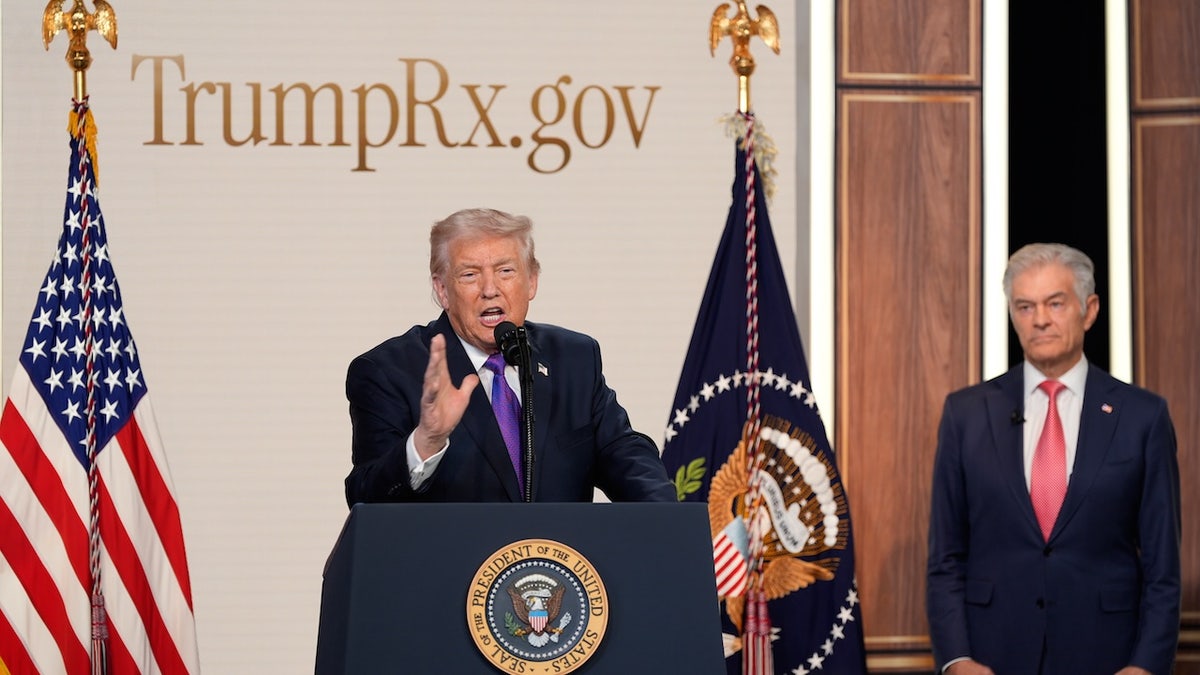
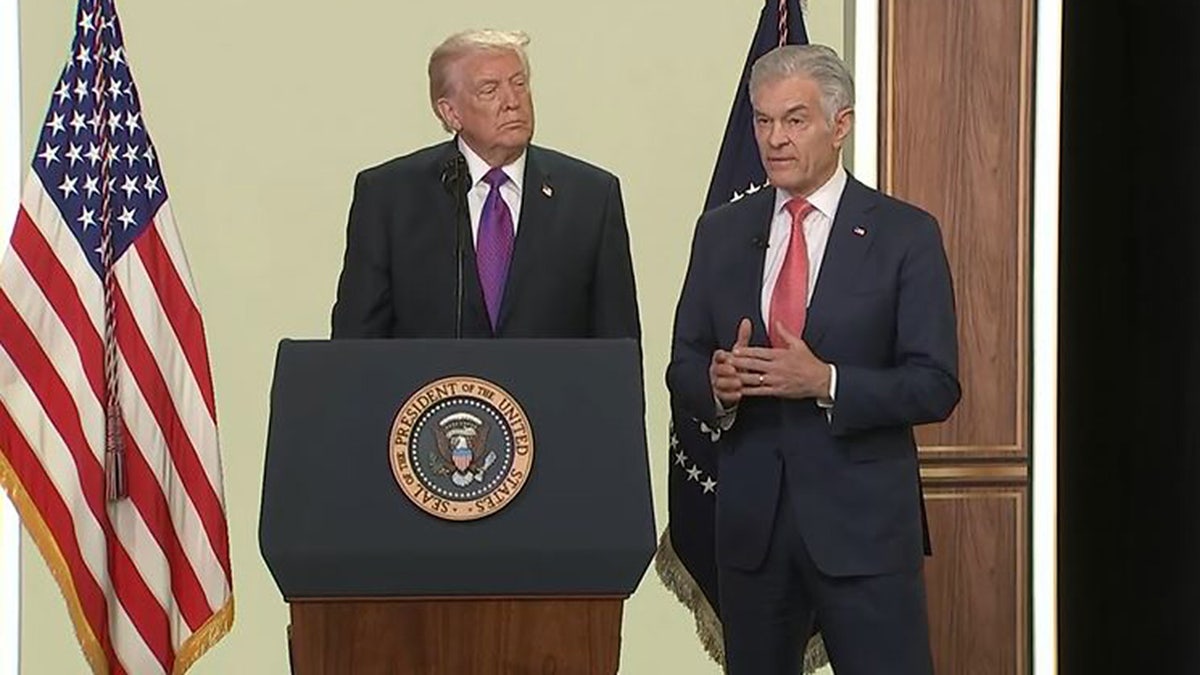
President Donald Trump makes and Centers for Medicare and Medicaid Services Administrator Dr. Mehmet Oz discuss the TrumpRx.gov prescription website, Thursday, Feb. 5, 2026, at the White House in Washington, D.C.

President Donald Trump with Centers for Medicare and Medicaid Services Administrator Dr. Mehmet Oz. (Pool / Fox News)

Under the framework, imports of patented pharmaceuticals listed in Annex I will face a 100% tariff, unless they qualify for lower rates.

Companies with approved onshoring plans can instead receive a 20% tariff, though that rate rises to 100% in 2030, according to the proclamation.

The administration is using that structure to push companies to shift production to the United States, officials said.

TRUMP RAISES GLOBAL TARIFF TO 15%

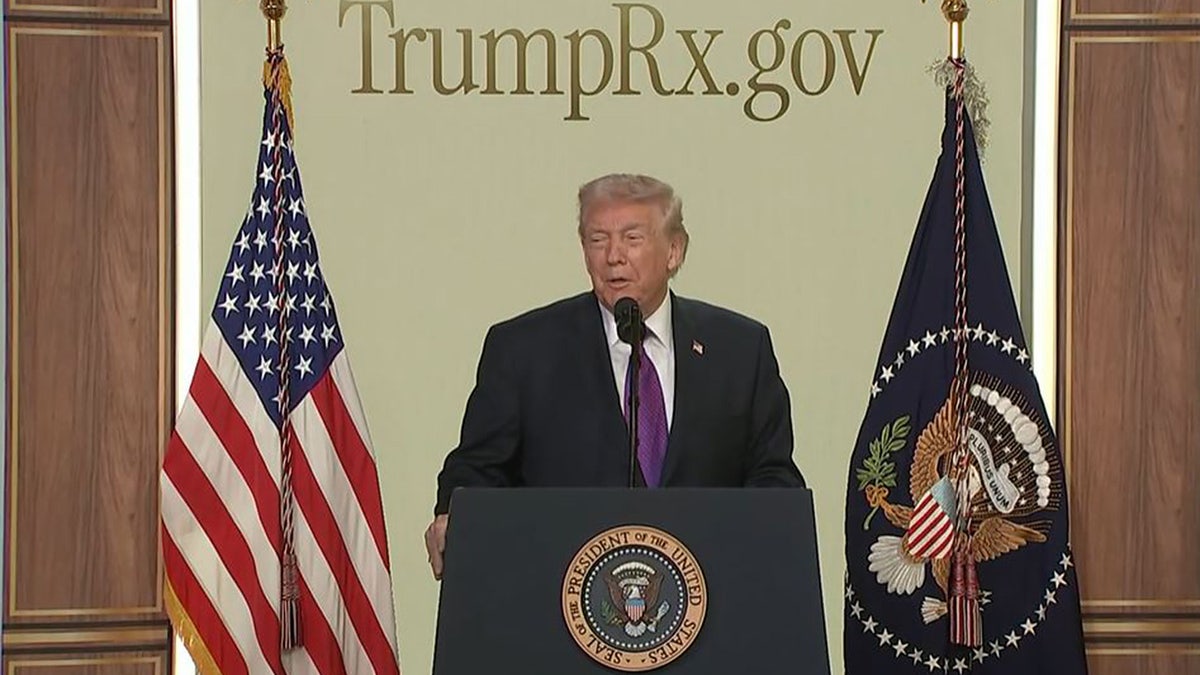
President Donald Trump makes announcement about TrumpRx.gov prescription website, Thursday, Feb. 5, 2026, at the White House in Washington, D.C.

President Trump has made lowering drug prices a major priority of his administration.  (Pool / Fox News)

The proclamation also sets lower tariff rates for certain allies: 15% for products from Japan, the European Union (EU), South Korea, and Switzerland, and 10% for the United Kingdom (UK), which could fall to zero under a future agreement.

It also creates a zero-tariff lane for companies that both onshore production and enter “Most-Favored-Nation” pricing agreements with the administration.

Not all drugs are affected. The proclamation says generic pharmaceuticals will not be subject to tariffs “at this time,” and U.S.-origin drugs are also excluded.

The broader push ties into the administration’s TrumpRx initiative, including the recently launched TrumpRx.gov platform, which the White House says gives Americans access to lower prices on some high-cost brand-name drugs through “Most-Favored-Nation” pricing agreements with pharmaceutical companies.

CLICK HERE TO DOWNLOAD THE FOX NEWS APP

The tariffs will take effect July 31, 2026, for some companies and Sept. 29, 2026, for others, according to the proclamation.

Trump issued the order under Section 232 of the Trade Expansion Act of 1962, which allows the president to restrict imports deemed a national security threat.


New provincial offence for public drug use gives officers ‘more options,’ police say | Globalnews.ca


Law enforcement officials hope new provincial offences pushed through by the Ford government last year will give them more options to deal with public drug use as major cities struggle with enforcement.

New provincial offence for public drug use gives officers ‘more options,’ police say  | Globalnews.ca

As part of its Safer Municipalities Act last year, Ontario began the process of creating a provincial offence for people using illegal drugs in public.

The offence means police officers will be able to hand out non-criminal tickets to people ordering them to court if they’re found using illegal substances in the open.

The government is currently considering offering the power to special constables, who work in places like transit and university campuses, as well.

Sarah Kennedy, president of the Ontario Special Constables Association, said the powers would give her and her colleagues an important middle ground between a full criminal offence and being forced to move people on without taking any further action.

Story continues below advertisement

“(Currently), they would be arrested for possession of a controlled substance and searched accordingly. They’d be fingerprinted and photographed, and they’d be put through a criminal process. That’s extensive and cumbersome considering it’s for personal use — it’s a small, small amount,” she explained to Global News.

Get daily Canada news delivered to your inbox so you'll never miss the day's top stories.

Get daily National news

Get daily Canada news delivered to your inbox so you’ll never miss the day’s top stories.

“Alternatively, if we don’t pursue a criminal avenue, the alternative is to do nothing.”

The provincial government recently posted its proposed regulation to allow special constables to hand out tickets for public drug use.

Advocates responded with concern, particularly over how it could be used on Toronto’s public transit system.

“Quite frankly, we’ve had problems in the past with special constables using force on the TTC,” Coun. Gord Perks told Global News. “There have been court cases over it … this is a big step back.”

Kennedy, however, said she believed it could offer a route for people to get help instead of being bounced from one station to another. Or, alternatively, going through a full trial for possession of an illegal drug.

“The criminal courts are full. They’re full, full of stuff, lots of busy stuff going on. Is it not in the public’s interest to have the criminal courts going after drug dealers and importers? Those are the people that prey on the people with addiction issues,” she said.


Story continues below advertisement

“The reason that pursuing a provincial avenue is beneficial to everyone involved is because … they can get before a justice of the peace and that justice of the peace can put a probation order or a peace bond on them where they are required to seek treatment and get help.”

A spokesperson for Ontario’s solicitor general said offering the powers to special constables was still under consultation. If approved, it would be added to mandatory training offered by the police college.

Tim Farquharson, chief of police in Port Hope and a member of the Ontario Association of Chiefs of Police, said public consumption offences would compel people to court.

“In this case (public consumption) it would be a  Part 111 summons with no set fine and simply a court date given to the person and they will attend court and a fine would be issued,” he wrote in an email.

Ontario’s police chiefs also welcomed the changes, which they said will give officers more ways to deal with dynamic situations.

“This approach recognizes that incidents involving substance use are often complex and require responses tailored to the specific circumstances, particularly where individuals may be vulnerable but unwilling to comply with available supports,” the chiefs said in a statement.

“We acknowledge that enforcement alone cannot solve the complex challenges facing our communities. Police services continue to pursue balanced approaches that prioritize support and treatment, while maintaining the ability to use discretionary policing tools when required.”

&copy 2026 Global News, a division of Corus Entertainment Inc.


How ‘RHOSLC’ star Mary Cosby honored her son, Robert Jr., with ‘rapturous’ memorial service


Andy Cohen was told that Mary Cosby’s memorial for her late son, Robert Jr., was “rapturous.”

The “Watch What Happens Live” host, who could not attend the funeral, said he got a “full report” of the services from other Bravolebrities who showed up to support Cosby.

“I had so many things to do with the kids this weekend, a lot of commitments, which is why I actually was not able to go to Robert Jr’.s service on Saturday in Salt Lake City,” Cohen, who is dad to kids Ben, 7, and Lucy, 3, said on his SiriusXM show, “Radio Andy Live,” Monday.

Andy Cohen shared what he heard about Mary Cosby’s “rapturous” memorial for her late son, Robert Jr. (seen above with his mom). Bravo
The “WWHL” host (seen above with Cosby on his Bravo show) could not attend the services due to prior engagements with his kids. NBCU Photo Bank via Getty Images

“I got a full report, though, and I hear it was an absolutely incredible ceremony,” he added.

The Bravo boss said the cast and production team for “RHOSLC” were present, along with other “Housewives” such as Cynthia Bailey, Sheree Whitfield, and Kyle Richards.

“I love it that they went,” the TV host, 57, added. “I think that is so kind. They are real ones, those three.”

Cohen said the “RHOSLC” cast (seen above) and production team were present, as well as other Bravo stars. Koury Angelo/Bravo
“I love it that they went,” the TV host (seen above with Cosby and Angie Katsanevas at Bravocon 2025) added. “I think that is so kind.” Todd Williamson/Bravo via Getty Images

Cohen said he heard the service was “so uplifting and so moving and absolutely, kind of, rapturous.”

“And Mary was on one, I mean, in a spiritual way. She was spiritually on one, let me say that,” he revealed.

Cohen said Richards informed him that Robert Jr.’s father, Robert Cosby Sr., delivered a speech that “was unbelievable.”

On Feb. 23, Robert Jr. (seen above) was found dead after officers responded to an overdose call.
Robert Jr. (seen above with his mom) was 23. Instagram/mary_m_cosby

Last month, Robert Jr. was found dead after officers “responded to an overdose call that turned into a death investigation,” a Salt Lake City Police Department spokesperson confirmed to Page Six.

He was 23.

Robert Jr.’s history with drug use was documented on the Bravo reality show.

Robert Jr.’s history with drug use was documented on the Bravo reality show, as seen above. BRAVO
During the “RHOSLC” Season 6 reunion, Mary (seen above in a yellow suit) revealed that she feared her son would die months before his passing. Brian Zak/NY Post
Robert Jr. (seen above in a white T-shirt and hat) once revealed he would often take 10 OxyContin pills a day. Bravo

During the “RHOSLC” Season 6 reunion, Mary, 53, revealed that she feared her son, who was incarcerated in Salt Lake County Metro Jail due to violating a pretrial protective order against his now ex-wife, Alexiana Smokoff, at the time, would die months before his passing.

“It’s just, you don’t want to see your kid suffer, but I know it’s good,” she explained about her son being in jail. “And I’d rather him be there than dead, you know?”

During a 2024 episode of “RHOSLC,” Robert Jr. detailed his drug addiction, saying that he would often take 10 OxyContin pills a day.


How long to wait between taking different drugs, from alcohol to MDMA


How long to wait between taking different drugs, from alcohol to MDMA
Breaks are a vital part of harm reduction (Picture: Getty/Metro)

A recent TikTok from the University of Bristol’s student TV station sparked conversation for giving students advice on how to take MDMA.

The UBTV video, overlaid with text reading ‘how often should I take breaks from MDMA’, was presented by a spokesperson from The Drop, part of Bristol Drugs Project, which offers information and support for people using drugs recreationally.

So far, it’s racked up more than 35,000 views, but comments aren’t all positive, with the top liked reply simply saying ‘or don’t do it’.

However, given new research shows a third (32%) of British 23-year-olds have tried hard drugs such as cocaine, ketamine and ecstasy — triple the figure for 17-year-olds — judgement-free information like this is vital from a perspective of harm reduction.

Instead of abstinence, the harm reduction approach to drugs accepts that people will take them, regardless of any ban or warning put in place.

It therefore focuses on practical strategies to minimise negative impacts, from overdose prevention to signposting to addiction support services, with the ultimate goal being to prevent drug-related deaths (now at the highest numbers since records began in England in Wales).

Encouraging safer use is a key cornerstone of this approach, and leaving gaps between ‘sessions’ can go a long way in keeping drug users safe.

Recreational vs dependent

Organisations like The Drop acknowledge that many people won’t stop using drugs, and won’t get addicted.

The harm reduction approach offers advice for people that occasionally use drugs recreationally, for pleasure and enjoyment.

Addiction however, is a chronic condition, defined by the NHS as ‘not having control over doing, taking or using something to the point where it could be harmful to you’.

A person who is dependent or addicted to drugs has a compulsion to use, despite the negative impact the habit may be having on their life.

Dr Rayyan Zafar, neuropsychopharmacologist at Drug Science, tells Metro: ‘A break [between drug taking] isn’t just letting the drug leave the system, it’s about giving the brain and body the time to reverse potential neuro-adaptations that happen in response to the drug.’

These include changes to your tolerance level, a temporary decrease of different chemicals or hormones, and overstimulation of parts of the brain required for you to function at your best.

‘On top of that is the restoration of sleep and appetite, and the reduction of harm to organs,’ he adds.

According to Dr Zafar, ‘it’s a frequency in the dose that drives the harm, not single one-off exposures per se,’ which is why breaks are so important. The risks also multiply if you combine different substances.

The fact is, there are no ‘safe use guarantees’ when it comes to either dose or time limit, and beyond the potential health dangers, getting caught in possession of illegal drugs can also carry a penalty of up to seven years in prison.

However, if you are going to take them, these science-backed guidelines may help lessen the long-term impact.

GHB, heroin, methamphetamine and crack cocaine

Although all drugs can be harmful, GHB, heroin, methamphetamine and crack cocaine have been omitted from this piece, as Dr Zafar says they have no safe limits between use — and because they’re so extremely dangerous, should be avoided altogether.

MDMA: 3 months

Although Dr Zafar says six to eight weeks is the minimum amount of time you should leave between MDMA doses, he recommends a ‘more conservative’ break of three months (as advised in the UBTV TikTok).

There’s no evidence to suggest recreational MDMA use causes any long-term damage to the adult brain, but because it stimulates the production ofserotonin — a hormone related to stress, sleep and temperature — Dr Zafar says it’s possible that, over time, the changes to your brain’s serotonin system may affect how you feel and think.

Ecstasy pills
Compared to some drugs, MDMA – also known as ecstasy – is considered relatively ‘safe’ (Picture: Getty Images/iStockphoto)

Recent studies suggest the brain doesn’t fully-form until age 32, so extra caution is also advised for younger people.

Despite this though, Dr Zafar adds that MDMA is ‘by and large, in the way that people use it, a very safe drug.’

MDMA-related fatalities are typically the result of inadequate temperature regulation, taking it alongside other drugs, and high-potency pills, with the risks increasing for first-time users and women (because of how it interacts with the oestrogen and vasopressin in their bodies).

Need support?

If you’re concerned about your own or a loved one’s drug use, the NHS recommends speaking to your GP or visiting the Frank website to find specific support services near you.

If you’re having trouble finding the right sort of help, call the Frank drugs helpline on 0300 123 6600 and they can talk you through your options.

Cocaine: At least a month

Cocaine may be one of the most popular recreational drugs in the UK, but according to Dr Zafar, there’s ‘no evidence-based safe gap’ between sessions.

At the very least, he recommends avoiding consecutive days, as there’s a ’24-fold heart attack increase in the hour after using cocaine’ which decreases over time, but a break of a month or more is preferred.

Man Doing Lines With Credit Card
Cocaine works on your dopamine receptors, which can lead to dependency (Picture: Getty Images)

‘Even weekly use of cocaine can lead to something called dopamine sensitisation,’ Dr Zafar continues. ‘So weekend binge culture can actually make your brain become more dependent on it, and cause sleep loss, anxiety, dependence, risk and cardiotoxicity (heart damage) when combined with alcohol.’

Cannabis: 1 month

‘Tolerance to cannabis is linked to the CB1 receptor,’ explains Dr Zafar. That’s the part of the brain that helps regulate things like appetite, pain, memory and mood. ‘There’s evidence that its density normalises four weeks after abstinence in daily users,’ says Dr Zafar.

After two weeks without a joint, your tolerance is reduced, but a month’s break is better for a ‘complete reset’ of the CB1 receptor, where you can ‘noticeably’ feel a difference.

Passing the cannabis joint
A few weeks without cannabis can help tolerance return to ‘normal’ levels (Picture: Getty Images)

In terms of regular users, he says dependency often develops as people try to avoid the withdrawal that comes with CB1 receptor downregulation.

‘Basically, the cannabis will dampen it down, which is a response to kind of having loads of like THC in the system,’ he adds. ‘It tries to reduce the number of receptors to reduce the effects… But then, when you stop using the drug, you have the withdrawal like effect, and then they’ll grow back up.’

Amphetamines: 1 month

If you’ve taken amphetamines such as speed, you need to wait a month before doing so again, both to combat the effects of sleep deprivation and overheating, and to avoid falling into chronic use, which ‘is linked to neurochemical and neuroanatomical changes.’

Dr Zafar explains: ‘There are brain changes and also psychiatric risk, with reviews of alterations to the dopamine systems in the brains of people who regularly use amphetamines.’

Pile of white powder on a black surface
Sleep deprivation is a major issue here (Picture: Getty Images)

You may have heard that one of these drugs, mephedrone – also known as M-CAT or meow meow – is being trialled as a psychiatric drug, and has been advocated as a reduced-harm alternative to cocaine by Drug Science founder, Professor David Nutt, a former UK government drug advisor, because it’s less neurotoxic and causes fewer deaths.

‘But the issue with M-CAT is people generally tend to stay up for days on it, where it’s harder to stay up to days on cocaine because of the pharmacokinetic profile,’ adds Dr Zafar. ‘So we can’t take away from the harms entirely.’

Hallucinogens: 3 to 7 days

‘Psychedelics like LSD and psilocybin (magic mushrooms) tolerance builds up really fast, but it also drops really fast, so you probably need around three to seven days to clear acute tolerance,’ says Dr Zafar.

Essentially, if you take hallucinogens more than once or twice within a week, you’ll feel less each time — which is why in clinical psychedelic therapy programs researchers schedule breaks of two to four-weeks between doses.

pink lsd stamp mark on fingertip, recreational drugs lysergic acid intake
The setting is equally important when it comes to psychedelics (Picture: Getty Images)

On retreats, however, people are often given two or three doses over the course of as many days, and when it comes to ‘meaning making’, ‘the longer the breaks are, the more insight.’

Keep in mind too, that while there’s limited evidence of neurotoxicity with these drugs, in some cases they can precipitate psychosis, and it’s important to take them in a comfortable and supportive environment because they’re ‘quite powerful’.

Ketamine: Minimum 2 weeks

Alongside avoiding frequent use, Dr Zafar says you should ‘think weeks between sessions – at minimum two weeks – and stop immediately if you get urinary symptoms’.

He continues: ‘There is a cumulative bladder and urinary tract toxicity that occurs, which is a standout harm for ketamine, and the risk rises significantly with regular patterns… For example, using ketamine at least three times a week over a period of two years has been shown to result in alterations in bladder function.’

Drugs addicted person just purchased illegal Heroin or Fentanyl like powder substance from the dealer on the street and looking at it. Person ready to have a party. Illegal street drugs epidemic.
Keep an eye out for urinary symptoms (Picture: Getty Images)

This level of use applies to a ‘small and increasing number of people’, but even though it’s not likely to have bladder issues with infrequent recreational comsumption, you should still be careful and seek medical advice if you do experience any worrying symptoms.

After all, it’s better to be safe than sorry.

Alcohol: 2 weeks

You may not consider alcohol as a ‘drug’, but despite the fact it’s readily available and widely used, Professor David Nutt, considers it one of the most harmful.

And although the NHS guideline is no more than 14 units a week, Dr Zafar says ‘no amount of alcohol is safe for the body’ due to how it ‘affects every organ in the body destructively.’

The impact also worsens following ‘cumulative exposure’, with studies showing that three days of drinking in a row causes your liver to start producing ‘alcohol-related fatty deposits’, which can then lead to cirrhosis.

To mitigate this somewhat, Dr Zafar recommends spreading your drinking you out as much possible, from taking specific days off booze each week to practicing Dry January and Sober October for a bigger reset.

He says most people begin to feel more energetic, less irritable and have better sleep better after two weeks abstinence.

‘If you go and have a binge again, then you then got to wait another two weeks to get back to the point that you’ve just earned,’ Dr Zafar concludes.

Tips for harm reduction

Whatever the substance, Dr Zafar recommends these tips to limit its negative impact on your health:

  • Don’t mix drugs.
  • Avoid binges.
  • Watch out for warning signs, from psychological symptoms like anxiety and low mood to physical ones like chest pains, breathlessness and headaches; ‘that’s your body’s way of basically saying you need to be in recovery.’
  • Check the drug’s potency. Legally-available testing kits can give you an example of what’s inside a drug, as well as the potential potency of the drug, helping you make an informed decision on how much you should take.
  • Seek support as soon as you feel use is becoming problematic, for example if ‘you’re beginning to feel like when you’re off the drug, you’re not feeling great’ — ‘that might be the start of a bigger problem.’

This article was first published on January 22, 2026.

Do you have a story to share?

Get in touch by emailing MetroLifestyleTeam@Metro.co.uk.


Exclusive | LA hotspot where Lisa Rinna was allegedly drugged during ‘Traitors’ party responds


The trendy West Hollywood bar where Lisa Rinna was allegedly drugged during a “Traitors” party addressed the incident.

A spokesperson for The Abby West Hollywood told Page Six in a statement Thursday that they are aware of the Bavolebrity’s “concerns” following her visit at the bar last month.

“Lisa’s team shared concerns with us following her visit, and we immediately conducted a thorough internal review,” the statement began.


Exclusive | LA hotspot where Lisa Rinna was allegedly drugged during ‘Traitors’ party responds
Fox

Lisa Rinna on Fox5, wearing a red hooded jacket.
Fox

“When she became unwell, our security team assisted her and escorted her safely out of the venue,” the statement continued. “We pulled and reviewed all available surveillance footage from the time in question and interviewed staff on duty.”

The bar claimed they found “no evidence” of drink tampering or suspicious behavior toward her.

“We cannot speak to medical findings and do not want to speculate about toxicology results,” the statement said. “We take any report of a guest feeling unwell or unsafe extremely seriously and follow established investigative protocols.

The venue expressed they are aware of the severity of drink tampering, calling it a “crime.”

“If any guest believes their drink has been compromised, we strongly encourage them to report it immediately, either to our management team so we can respond in real time, or directly to law enforcement if they prefer,” they wrote.

“The Abbey has extensive surveillance coverage, trained security personnel, and ongoing drink-safety measures in place,” the statement concluded. “Guest safety remains our highest priority.”

This is a developing story…


Manitoba launches drug-trafficking task force as province has ‘had enough’ | Globalnews.ca


Months after putting forward the idea of a drug enforcement task force, the Manitoba government is moving ahead with the premier’s plan with its first meeting happening today.

New provincial offence for public drug use gives officers ‘more options,’ police say  | Globalnews.ca

Premier Wab Kinew hinted at the task force last November in the throne speech, promising the establishment of a body to help coordinate drug enforcement among all police agencies in the province.

Justice Minister Matt Wiebe announced the creation of Manitoba’s Organized Crime and Drug Trafficking Task Force on Wednesday.

The task force, Wiebe said, would strengthen the response to the trafficking of methamphetamine, fentanyl, cocaine and other illicit drugs.

“We’re charting a new course to address drug enforcement in Manitoba,” Wiebe said. “Toxic drugs have devastated people, they’ve devastated individuals and they’ve devastated whole communities … Manitobans have had enough.”

When he first announced what he called a “meth task force,” Kinew said the Winnipeg Police Service, RCMP, and “all the law enforcement agencies including First Nations” would be involved to “bring the hammer down” on drug traffickers.

Story continues below advertisement

Officials from the WPS, RCMP and Manitoba First Nations Police Service were all in attendance Wednesday, alongside Kevin Brosseau, Canada’s fentanyl czar.

Wiebe said the task force was the first of its kind and would hold its first meeting later on Wednesday. A second meeting, he said, is already planned for March 20.

For news impacting Canada and around the world, sign up for breaking news alerts delivered directly to you when they happen.

Get breaking National news

For news impacting Canada and around the world, sign up for breaking news alerts delivered directly to you when they happen.

The minister said under advice and guidance of Brosseau, a province-wide enforcement strategy focused on resources and coordination will be honed.


Click to play video: 'Winnipeg opening meth detox facility'


Winnipeg opening meth detox facility


Brosseau said with multi-commodity trafficking, complex organized crime groups and synthetic drugs that are cheaper and more potent, it requires an “equally sophisticated, coordinated, and united” response.

“It reflects what’s really simple, but it’s a vital truth that no single agency on its own, no matter how capable, can meet these challenges alone,” Brosseau said.

Story continues below advertisement

According to a news release, the task force will look at new ways to disrupt criminal organizations, including using unexplained wealth orders, and support joint police operations.

An unexplained wealth order can be used to require a person to provide information about how they lawfully acquired property or an interest in property that is suspected to be linked to crime.

Wiebe said organized crime is operating at both an international and national level, but in Manitoba the drugs are being brought in and distributed and impacting both big and small communities.


“This is an opportunity for us to bring everyone to one table, to bring the expertise and develop the opportunities together at one table and to really go after those organized crime groups,” Wiebe said.

He added what spurred the creation of the task force was the government’s commitment to getting “tough on crime.”

Assistant commissioner Scott McMurchy, commanding officer of the Manitoba RCMP, said when it comes to their jurisdictions they see everything from street-level individual dealers to small gangs to street gangs in the province.

He also said he’s heard concerns from multiple jurisdictions about what they’re seeing.

“Crystal meth and methamphetamines is taking over the city of Winnipeg, it’s taking over the city of Brandon, and it is slowly creeping into rural Manitoba,” McMurthy said.

Story continues below advertisement

“I work very closely with First Nations leaders in northern Manitoba, Grand Chiefs, Chiefs and Councils, and they are deathly afraid of the wave of drugs that are coming into their communities.”

He also raised concerns about the synthetic drugs that are being seen, like fentanyl and other opiates.

Winnipeg Police Service Chief Gene Bowers said the task force will also look at how to improve the tools they use to combat drug crime, including improving technology just as drug dealers and organized crime are doing the same.

Bowers had one message though to dealers as the task force begins its work: “If you’re going to do this kind of behaviour, you’re going to end up in handcuffs.”

&copy 2026 Global News, a division of Corus Entertainment Inc.


Violence erupts across Mexico after drugs kingpin El Mencho assassinated


To view this video please enable JavaScript, and consider upgrading to a web
browser that
supports HTML5
video

The killing of the Jalisco New Generation Cartel leader, ‘El Mencho’ has sparked unrest, fires and chaos across tourist hotspots in Mexico.

‘El Mencho’, whose real name is Nemesio Ruben Oseguera Cervantes, was killed in the western state of Jalisco.

His death triggered unrest and hours of roadblocks, with vehicles set ablaze across the state, including in the tourist hot spots of Guadalajara and Puerto Vallarta.

Videos circulating on social media showed plumes of smoke billowing over the tourist city in Jalisco, and people sprinting through the airport of the state’s capital in panic.

Burning vehicles and setting up roadblocks are commonly used by cartels to block military operations.

El Mencho was wounded during an operation to capture him in Tapalpa but died while being flown to Mexico City for treatment, the Defence Department said.

The chaos which unfolded in the aftermath of his death, however, prompted major airlines, including Air Canada, to suspend flights to Puerto Vallarta and urge customers not to go to the airport.

What is the Jalisco New Generation Cartel?

Violence erupts across Mexico after drugs kingpin El Mencho assassinated
The cartel has quickly grown to one of the most powerful organisations in Mexico (Picture: Reuters)

The Jalisco New Generation Cartel, known as CJNG, is one of the most powerful and fastest-growing criminal organisations in Mexico and was born in 2009.

The Jalisco cartel has been one of the most aggressive cartels in its attacks on the military – including on helicopters – and is a pioneer in launching explosives from drones and installing mines.

In 2020, it carried out a spectacular assassination attempt with grenades and high-powered rifles in the heart of Mexico City against the then head of the capital’s police force and now federal security secretary.

The DEA considers the cartel to be as powerful as the Sinaloa cartel, one of Mexico’s most infamous criminal groups, with a presence in all 50 US states.

It is one of the main suppliers of cocaine to the US market and, like the Sinaloa cartel, earns billions from the production of fentanyl and methamphetamines.

Who is ‘El Mencho’?

Mexican drug lord Nemesio Oseguera Cervantes, also known as El Mencho, appears in an undated photograph on the U.S. Drug Enforcement Agency (DEA) website with a $15 million reward offered for information leading to his arrest. Mexico's defense ministry said a shootout in the western state of Jalisco left Oseguera seriously injured and he died during an air transfer to Mexico City. DEA/Handout via REUTERS THIS IMAGE HAS BEEN SUPPLIED BY A THIRD PARTY. BACKGROUND MASKED AT SOURCE
Cervantes died while on the way to hospital in Mexico City (Picture: Reuters)

Oseguera Cervantes has been significantly involved in drug trafficking activities since the 1990s.

He was convicted of conspiracy to distribute heroin in the US District Court for the Northern District of California in 1994 and served nearly three years in prison.

Following his release from custody, Oseguera Cervantes returned to Mexico and reengaged in drug trafficking activity.

Since 2017, Oseguera Cervantes has been indicted several times in the United States District Court for the District of Columbia.

What have Mexico and the US said?

A view of a burning truck, allegedly set on fire by organised crime groups in response to an operation to arrest a high-priority security target, on a highway near Acatlan de Juarez, Jalisco state, Mexico on February 22, 2026. The Mexican army announced that it had killed powerful drug lord Nemesio
Cartel members set fire to dozens of vehicles (Picture: AFP)

Mexican President Claudia Sheinbaum, like her predecessor, has criticised the ‘kingpin’ strategy of previous administrations that took out cartel leaders only to trigger explosions of violence as cartels fractured.

But since US President Donald Trump took office a year ago, she has been under tremendous pressure to show results against drug trafficking.

Earlier today, it was revealed that US intelligence helped aid Mexico in the raid that killed El Mencho. It comes just a year after the Trump administration designated the cartel as a foreign terrorist organisation.

White House Press Secretary Karoline Leavitt said in a statement: ‘President Trump has been very clear — the United States will ensure narcoterrorists sending deadly drugs to our homeland are forced to face the wrath of justice they have long deserved.’

The US State Department warned US citizens in Jalisco, Tamaulipas, Michoacan, Guerrero and Nuevo Leon states to remain in safe places because of the ongoing security operations.

Get in touch with our news team by emailing us at webnews@metro.co.uk.

For more stories like this, check our news page.