
As recession looms, Donald Trump desperately needs a deal
The International Monetary Fund (IMF) could hardly have been more gloomy in its forecasts for the world this year.
“War Darkens Global Economic Outlook” is its headline. There is more than a hint that there could be a recession this year, with price rises accelerating and output growth falling back even on the more optimistic of the fund’s scenarios.
“Stagflation” is the phenomenon that dare not quite speak its name, but will soon perhaps stalk the Earth. Crucially, that depends on how long the Iran war lasts, and the skill of central banks and national treasuries, but it could easily become an extremely uncomfortable reality in the coming months.
Given that the United States is the IMF’s major “shareholder”, and its irascible president is known to take critical remarks personally, the IMF avoided mentioning Donald Trump by name. But we all know who is to blame for this catastrophe – the president, with his illegal, unplanned and unnecessary war.
The IMF’s list of industrial casualties from this war is a long one. The Gulf economies, which had in recent decades become a new hub for global growth (and tax avoidance), are the hardest hit, for obvious reasons. But, in the broader sense of their vast reserves of money and natural resources, they can afford it. As with the spike in commodities prices that followed Russia’s full-scale invasion of Ukraine in 2022, it is the poorer people in Africa and Asia who will find the struggle to survive even harder.
The emerging economies of East Asia, which rely so heavily on the Middle East for their oil and gas supply, and for many raw materials, will also suffer a slowdown, having already borne the brunt of Mr Trump’s tariff war. China, in particular, will see growth drop to its lowest in three decades – around 4.5 per cent. While enviable by European standards, that is insufficient to sustain jobs growth for the rising generation.
The advanced economies will also suffer from the disruption to trade and investment, and the cost-of-living crisis will intensify once more – including in the United States. President Trump’s “hottest nation in the world” will cool, even if its fossil-fuel providers enjoy a windfall.
But make no mistake: once again, the UK is forecast to be the most exposed to the oil shock, and hardest hit, among the G7 economies. The solution to that generally, the IMF wisely concludes, is not to gamble with the future of life on Earth by drilling for more hydrocarbons, but to increase energy security through renewable green technologies. At any rate, Labour’s manifesto promise to make Britain the fastest-growing economy in the G7 looks entirely out of reach.
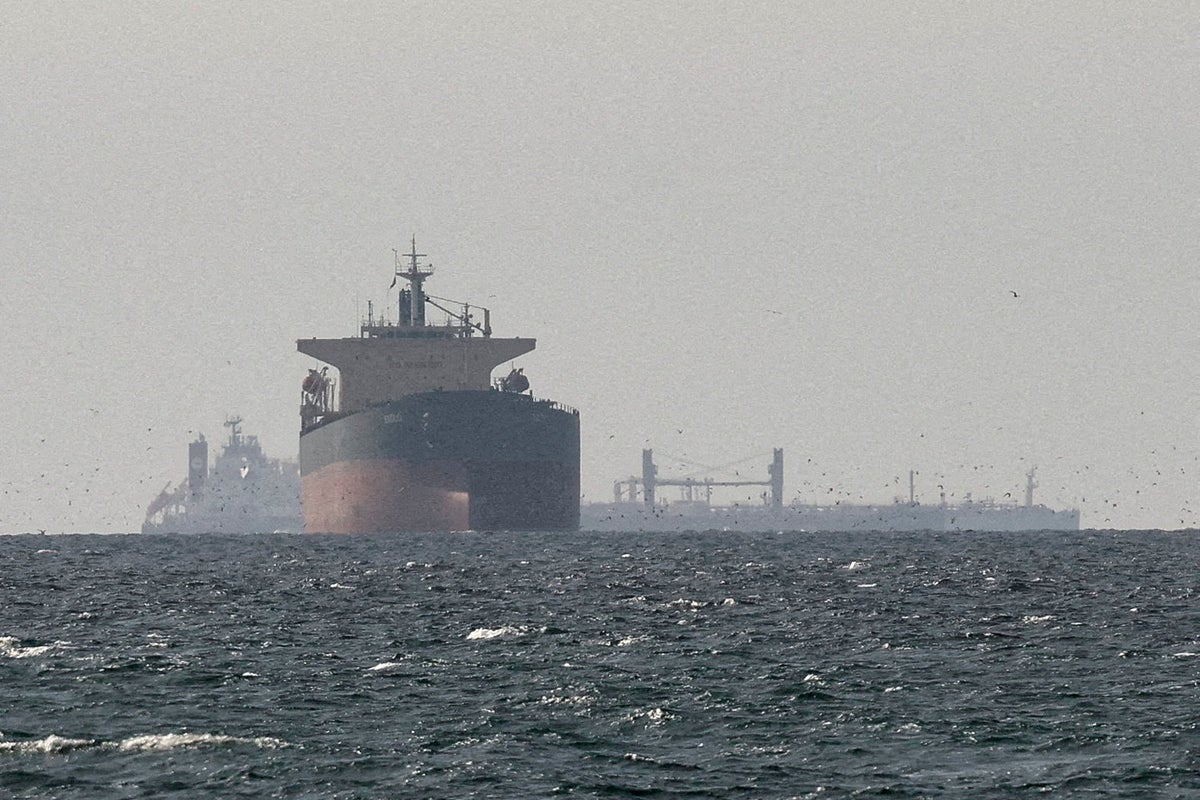
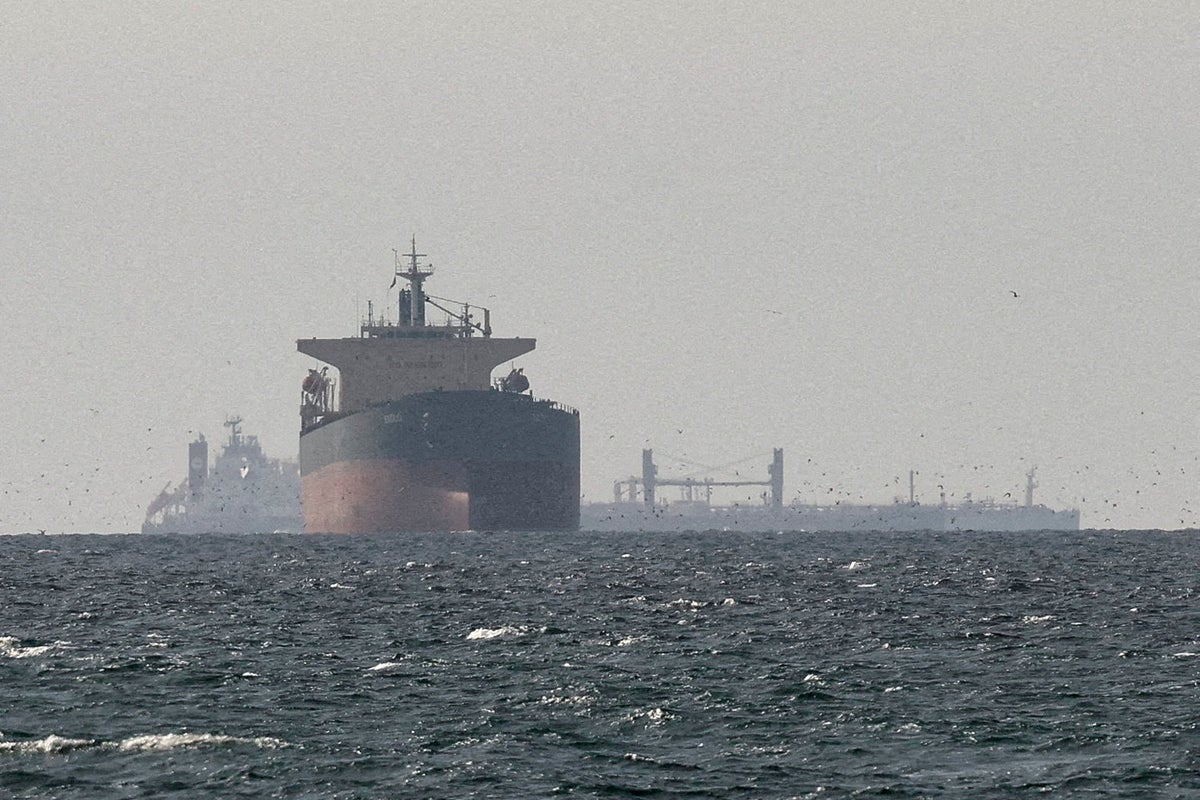
Reading through the IMF’s slumping graphs and deflating bar charts, it is all too clear that the world economy is indeed being held to ransom by Iran, with the Strait of Hormuz the metaphorical hostage. The IMF’s World Economic Outlook is effectively a ransom note from Tehran to the world – leave us alone, or the world economy won’t see growth again.
So the urgency of ending the Iran war is obvious. A swift de-escalation of the situation, let alone a resolution of the crisis, cannot be achieved militarily, and certainly not by President Trump’s dangerous blockade of the Iranian ports. Even if successful in shutting Iran’s shipping lanes down, this would only serve to restrict oil, gas and other supplies still further, driving prices higher.
Inevitably, a more desperate Iran would lash out again at its Gulf neighbours, adding another twist to the cycle of violence. But still more hazardous would be a clash between a Chinese ship (crewed, owned, or destined for a port there) and the US Navy. A direct confrontation between Beijing and Washington would have grim consequences indeed.
Whether an already volatile position can be prevented from becoming worse depends on the outcome of two sets of talks: those in Washington between Israeli and Lebanese officials, about dealing with Hezbollah and the occupation of Lebanon, are almost as crucial as the next round of discussions in Islamabad involving the US and Iran. Above all, it will be up to President Trump to extricate the world from the mess he has created, and make peace with Tehran.
The president fancies himself a master of the art of the deal. It is now vital that he show himself to be one.