Defense’s Silicon Valley pivot: Ukraine, Iran wars challenge the legacy playbook


Warfare is undergoing a fundamental shift where tech with big price tags is being challenged by a more agile, decentralized model, spearheaded by Silicon Valley-backed start-ups, industry watchers told CNBC.

The traditional defense model — notorious for development cycles that can span decades — is coming under increasing pressure. Companies are instead betting on a new type of warfare, based on shorter lead times that allow for rapid deployments and more cost-effective solutions.

Previously, warfare was about expensive platforms and precision strikes, driving a downsizing in military forces as countries increasingly relied on cutting-edge technology, said Blythe Crawford, former commandant of the RAF’s Air and Space Warfare Centre.

“That all changed, I would argue, when the first $500 drone took out a $5 million tank on the battlefield in Ukraine,” Crawford told CNBC’s “Squawk Box Europe.”

The company Ark Robotics, develops autonomous robots for rapid deployment using feedback from the battlefield to shape the technology. The CEO, who goes by the pseudonym Achi for security reasons, told CNBC that the war in Ukraine shows a paradigm shift in warfare, part of a bigger change also seen in the Iran war. 

“[It’s] a totally new approach, how you handle the military conflict the game [has] changed into the mass, affordable systems that are to be orchestrated with AI,” the CEO told CNBC’s Ritika Gupta.

Defense’s Silicon Valley pivot: Ukraine, Iran wars challenge the legacy playbook

The urgency for this shift is driven by a sobering economic reality. 

“History tells us that the last 400 wars were won on economics,” said Andy Baynes, co-founder of Tiberius Aerospace. “If we continue to fire $4 million Patriot systems at $20,000 Shahed drones, we’re going to lose.”

Crawford also noted that while high-end products like the Eurofighter Typhoon remain vital, they now require a “low-cost wrapper” to survive. He pointed to the U.K.’s Storm Shadow missiles, which saw dramatically increased success rates in Ukraine only after being complemented by swarms of cheap drones and electronic warfare to overwhelm Russian defenses.

“It’s what we refer to as a high-low mix,” Crawford said. “The character of war has changed when a $500 drone can take out a $5 million tank.”

Tiberius Aerospace is one company betting on the need for low-cost, scalable warfare equipment. The two-year-old company, founded by Silicon Valley entrepreneurs, focuses on design and development of weapons and licenses designs out to domestic manufacturers.

Defense is entering an entirely new era, says Tiberius Aerospace

It’s introducing a new way to speedily segregate design and development from manufacturing, through its GRAIL platform. 

The company announced Thursday that Ukrainian defense technology IP will be available for license and manufacturing in the U.K. through the AI-powered platform, which it positions as a defense-as-a-service model. 

“It’s going to show that separating design from manufacturing is commercially viable. It’s a way to reduce defense budgets or dependency on exquisite, high-cost systems and move into high-impact, cost-effective systems in the future,” Baynes told CNBC.  

“That’s a key difference to how defense primes operate today, where they have monolithic systems where they’re doing both design and manufacturing under one roof, similar to how my former sector in the electronics industry were doing it in the 1990s,” he told CNBC’s “Squawk Box Europe.”

Safety net?

Beyond efficiency, there is also a strategic play for European autonomy. As rhetoric regarding the future of NATO and U.S. commitment fluctuates, the ability to manufacture sovereign, low-cost munitions could provide a safety net for the region’s governments. 

NATO still cornerstone of UK defense: Former British military official

Ark Robotics’ Achi warned that the West isn’t adequately equipped for the “mass, affordable” reality of modern conflict, which has been exposed by the Ukraine war. “Most of the military personnel [are] still trying to prepare for the previous generation of warfare,” he said.

His company is currently developing technology that allows a single operator to control hundreds of unmanned systems across air, land, and sea. Accessing U.K. manufacturing capacity through the GRAIL platform will allow Ark to efficiently scale production of its systems, he said.

The platform aims to solve the “procurement bottleneck” by creating a secure marketplace where NATO members can access battle-proven tech and set up local manufacturing in weeks, rather than years. 

This Silicon Valley approach, with rapid iteration – the time it takes to design, test, deploy, and refine a piece of military technology based on real-world feedback – and software updates delivered over-the-air, contrasts sharply with the lengthy processes of legacy contractors.

Big defense companies on both sides of the Atlantic have seen their stock prices soar over the past few years, as investors bet governments’ increased spending on military capabilities will benefit them. 

Revenue has shot up sharply for these companies since Russia invaded Ukraine in 2022, with gains matched only by order intake as many struggle to meet increased demand.

Arms maker Rheinmetall and fighter jet developer Saab have seen the most explosive growth in order intake between 2021 and 2025 among the big European names, of 323% and 284%, respectively. 

Rheinmetall forecast its sales could grow as much as 45% this year and has said it is in a “prime position” to arm the U.S. amid the war in Iran.

“It’s now about whoever innovates fastest, scales quickest, and does the cheapest, [that’s] the person that’s going to prevail,” said Crawford. “Those are problem sets and pain points that Silicon Valley and other areas of industry have already solved.”

While historically, there’s been a reluctance among early investors to get into defense, that is now changing as a result of recent developments. 

“There was a mood in Silicon Valley among private equity VCs to not touch defense, but that mood has changed now,” said Baynes. “One of the main reasons is that there is a more transparent marketplace in defense now than there used to be.”

— CNBC’s Jackson Peck contributed to this report.

Choose CNBC as your preferred source on Google and never miss a moment from the most trusted name in business news.


JPMorgan CEO Jamie Dimon in annual letter cites risks in geopolitics, AI and private markets


JPMorgan CEO Jamie Dimon in annual letter cites risks in geopolitics, AI and private markets

JPMorgan Chase CEO Jamie Dimon is calling for a broad recommitment to American ideals as his bank navigates geopolitical uncertainty, a teetering economy and the revolutionary impact of artificial intelligence.

Dimon in his annual letter to shareholders, published Monday, noted the country’s 250th anniversary as “the perfect time to rededicate ourselves to the values that made this great nation of ours — freedom, liberty and opportunity.”

“The challenges we all face are significant. The list is long but at the top are the terrible ongoing war and violence in Ukraine, the current war in Iran and the broader hostilities in the Middle East, terrorist activity and growing geopolitical tensions, importantly with China,” Dimon said. “Even in troubled times, we have confidence that America do what it has always done — look to the values that have defined our singular nation and sustained our leadership of the free world.”

Dimon, the longtime leader of the world’s largest bank by market cap, is among the most outspoken of U.S. corporate leaders. His annual letter offers not only a matter of record for his firm’s performance, but also sweeping perspectives on the global state of affairs.

In Monday’s letter, Dimon noted headwinds including global conflicts, persistent inflation, private market upheaval and what he called “poor bank regulations.”

Dimon said that while regulations like those put in place after the 2008 financial crisis “accomplished some good things … they also created a fragmented, slow-moving system with expensive, overlapping and excessive rules and regulations — some of which made the financial system weaker and reduced productive lending.”

He specifically cited negative consequences of capital and liquidity requirements, the current construction of the Federal Reserve’s stress test and a “badly handled” process at the Federal Deposit Insurance Corporation.

Dimon also said JPMorgan’s reaction to revised proposals for Basel 3 Endgame and a global systemically important bank (GSIB) surcharge — issued by U.S. regulators last month — were “mixed.”

“While it was good to see that the recent proposals for the Basel 3 Endgame (B3E) and GSIB attempted to reduce the increase in required capital from the 2023 proposals, there are still some aspects that are frankly nonsensical,” Dimon said.

The CEO said the aggregate proposed surcharges of about 5%, the bank would need to hold “as much as 50% more capital across the vast majority of loans to U.S. consumers and businesses when compared with a large non-GSIB bank for the same set of loans.”

“Frankly, it’s not right, and it’s un-American,” he said.

On trade and geopolitics

Dimon identified geopolitical tensions as the primary risk facing his bank, namely the wars in Ukraine and Iran and their impacts on commodities and global markets — deeming war “the realm of uncertainty.”

“The outcome of current geopolitical events may very well be the defining factor in how the future global economic order unfolds,” he said. “Then again, it may not.”

He also cited a “realignment of economic relations in the world” brought on by U.S. trade policy. U.S. President Donald Trump has made tariffs a signature policy of his second term in office, introducing higher duties on dozens of trade partners and import categories.

“The trade battles are clearly not over, and it should be expected that many nations are analyzing how and with whom they should create trade arrangements,” Dimon said. “While some of this is necessary for national security and resiliency, which are paramount, it is hard to figure out what the long-term effects will be.”

On private markets

On AI

Choose CNBC as your preferred source on Google and never miss a moment from the most trusted name in business news.


How Putin could attack Europe if Trump abandons Nato: Fears Russia will seize on alliance chaos as US President threatens to withdraw America’s military might


Donald Trump’s warning that he is ‘absolutely’ considering withdrawing from NATO has raised a difficult question for Europe: will Vladimir Putin seize on the chaos within the alliance to attack the continent?

The US President dubbed NATO a ‘paper tiger’ and said removing America from the defence treaty was now ‘beyond reconsideration’ in an interview with the Telegraph.

And in an address to the American nation last night, he appeared to wash his hands of the Strait of Hormuz, calling on his European allies to ‘build up some delayed courage’ and sort the situation out themselves as global oil and gas prices continue to spiral.

‘The countries of the world that do receive oil through the Hormuz Strait must take care of that passage. They must cherish it. They must grab it and cherish it, they can do it easily,’ Trump declared.

‘We will be helpful, but they should take the lead in protecting the oil that they so desperately depend on.’

Now, experts are speculating whether the Russian dictator could exploit Trump’s threat to quit NATO by launching an attack elsewhere in Europe. 

‘Of course it plays into the hands of Putin,’ a senior diplomat from a European NATO country told The i Paper. ‘He can fetch his popcorn and watch America deal with the mistake [it has made and] divisions becoming more visible between the US and Europeans.’

Considering Trump’s declining approval ratings in America and expectations that the Democrats will enjoy success in November’s mid-term elections, the diplomat added that Putin might conclude that he has a short ‘window of opportunity’ for an attack, which will close if a more Russo-sceptic, pro-NATO leader is elected in 2028. 

How Putin could attack Europe if Trump abandons Nato: Fears Russia will seize on alliance chaos as US President threatens to withdraw America’s military might

Experts are speculating whether Vladimir Putin could exploit Trump’s threat to quit NATO by trying to provoke a ‘crisis or conflict’ elsewhere in Europe

Firefighters work on an apartment building hit by a Russian drone strike, amid Russia's attack on Ukraine, in Kharkiv, Ukraine, April 2

Firefighters work on an apartment building hit by a Russian drone strike, amid Russia’s attack on Ukraine, in Kharkiv, Ukraine, April 2

In recent weeks, Trump has accused NATO nations of being ‘cowards’ who have done ‘absolutely nothing’ to help his war with Iran, writing on Truth Social: ‘The U.S.A. needs nothing from NATO, but “never forget” this very important point in time!’

The sentiment was echoed by US Secretary of State Marco Rubio, who said America will ‘reexamine’ its relationship with NATO once the Iran war has ended.

‘When we need them to allow us to use their military bases, their answer is no? Then why are we in NATO?’ Rubio told Fox News, adding that you have to ask why the US has contributed ‘trillions of dollars’ to the alliance over the years.

Another European diplomatic said that while Moscow probably did not have sufficient troops to launch a direct military assault on a NATO country because of the bombardment of Ukraine, ‘there is room for other types of escalation’.

They added that Putin could employ hybrid-warfare tactics, with many countries in the EU already being pummelled with ‘constant cyber-attacks, constant disinformation’. 

‘It’s not peacetime we live in,’ they added. 

It comes as the Russian dictator dismissed Ukrainian President Volodymyr Zelensky’s call for an Easter ceasefire, claiming the proposal was too vague to lead to a lasting peace.

Meanwhile, Moscow rolled out a terrifying intercontinental missile for nuclear drills this week, with eerie released by the defence ministry appearing to show the missile being driven through a snow-covered forest in the dead of night, its launcher looming out of the darkness during the exercise. 

Crews practiced a range of activities during the drills in Siberia, involving camouflaged movements of Yars intercontinental ballistic missiles capable of carrying nuclear warheads.

There is no denying that the US has long been NATO’s backbone. In 2025, the combined military spending of NATO states reached approximately 1.5 trillion dollars, with the US alone accounting for over 900 billion dollars of that total.

NATO members were previously expected to spend at least 2 per cent of GDP on defence, a number Trump had long argued should be higher, leading to a new 5 per cent target by 2035 being agreed upon at last year’s NATO Summit.

In 2024, the US spent around 3.38 per cent of GDP on defence, trumped only by Estonia who spent 3.43 per cent and Poland’s 4.12 per cent.

In military power, NATO as a whole dominates Russia. As of 2025, the alliance had around 3.5 million active military personnel compared with Russia’s 1.32 million.

NATO countries collectively have more than 22,000 aircrafts compared to Russia’s 4,292, as well as 1,143 military ships compared with their 400.

Meanwhile, the combined nuclear arsenal of the US, UK, and France is slightly lower, amounting to 5,692 nuclear warheads, compared with Russia’s 5,600.

On the whole, Europe without the US would not be defenceless. According to CNN, the 31 NATO members aside from America still control over a million troops, hold advanced weaponry, and significant industrial and technological capacity.

Turkey alone has the alliance’s largest armed forces after the US, with more than 355,000 active personnel, followed by France, Germany, Poland, Italy and the UK.

Several European NATO countries have weapons that rival or exceed Russian equivalents.

While Russia operates a single aging aircraft carrier, the UK commands two modern carriers capable of launching F-35B stealth fighters.

France, Italy and Spain also operate aircraft carriers or amphibious ships capable of launching combat aircraft.

France and the UK maintain independent nuclear deterrents, and European NATO members collectively operate around 2,000 fighter and ground attack jets, including dozens of F-35s.

Yet military experts argue that what Europe lacks is not manpower or hardware alone, but the strategic enablers that allow modern wars to be fought and sustained.

Russia's Yars intercontinental ballistic missile system unit drives during drills by the country's strategic missile forces in an unknown location in Siberia, Russia, April 2

Russia’s Yars intercontinental ballistic missile system unit drives during drills by the country’s strategic missile forces in an unknown location in Siberia, Russia, April 2

The US President dubbed the alliance a 'paper tiger' and said removing America from the defence treaty was now 'beyond reconsideration'

The US President dubbed the alliance a ‘paper tiger’ and said removing America from the defence treaty was now ‘beyond reconsideration’

According to the Centre for European Policy Analysis, Europe remains heavily dependent on the United States for intelligence, surveillance and reconnaissance capabilities, integrated air and missile defence, strategic airlift, space assets, cyber capabilities and long range precision striking.

US Major General (rtd.) Gordon ‘Skip’ Davis said these capabilities are essential to command and control multi-domain operations at scale.

‘What the US brings is capabilities like strategic command and control systems and intelligence, surveillance, and reconnaissance (ISR) assets,’ Davis said, warning that without them European forces would struggle to sustain prolonged high intensity conflict.

Command structures pose another major challenge. NATO’s most senior operational commands, including Supreme Allied Commander Europe, Allied Air Command and Allied Land Command, are all led by US officers.

‘I don’t think that NATO could operate without US commanders and staff. That would be extremely difficult,’ Davis said.

The war in Ukraine has also exposed shortages in ammunition stockpiles and industrial capacity.

The EU failed to meet its target of supplying Ukraine with one million artillery shells by spring 2024, while the US doubled its monthly production of 155mm shells.

Russia, meanwhile, is reportedly producing around three million artillery munitions annually. 

US aid has also been central to Ukraine’s cause, through American supplied HIMARS rocket systems, Patriot air defences and earlier deliveries of Javelin anti-tank missiles.

The pause in US aid at the start of March 2025 raised doubts about whether European allies can compensate if American support is withdrawn completely.

As Davis warned, if Russia is given time to rebuild while Europe fails to rearm at the same pace, the balance could shift.

‘I’ve been one of the strongest defenders of NATO during my time as a United States senator because I found great value in it,’ Rubio told Fox News. ‘And it wasn’t just about defending Europe. I said it also allowed us to have military bases in Europe that allowed us to project power into different parts of the world when our national security was threatened. 

‘If now we have reached a point where the NATO alliance means that we can’t use those bases, that in fact – that we can no longer use those bases to defend America’s interests, then NATO is a one-way street,’ he concluded.

In a recent post on Truth Social, Trump expressed about his disappointment with NATO, particularly his allies’ unwillingness to deploy naval escorts to help secure the Strait of Hormuz.  

‘They didn’t want to join the fight to stop a Nuclear Powered Iran. Now that fight is Militarily WON, ​with very little danger for them, they complain about the high ​oil prices they are forced to pay, but don’t want to help open ‌the ⁠Strait of Hormuz, a simple military maneuver that is the single reason for the high oil prices. So easy for them to do, with so little risk,’ Trump wrote.

On Tuesday, the President singled out the UK over Sir Keir Starmer’s attitude towards military involvement, saying: ‘All of those countries that can’t get jet fuel because of the Strait of Hormuz, like the United Kingdom, which refused to get involved in the decapitation of Iran, I have a suggestion for you: Number 1, buy from the US, we have plenty, and Number 2, build up some delayed courage, go to the Strait, and just TAKE IT.’

He continued: ‘You’ll have to start learning how to fight for yourself, the U.S.A. won’t be there to help you anymore, just like you weren’t there for us. Iran has been, essentially, decimated. The hard part is done. Go get your own oil!’ 

Trump’s recent public criticism of the UK prime minister – deriding Starmer as ‘no Winston Churchill’ – has had a chilling effect on US-UK relations behind the scenes, according to the Financial Times.

Now, cracks are appearing in security cooperation between the allies as tensions rise over the crisis in the Middle East.

The President previously mocked Britain for seeking to ‘join wars after we’ve already won’ after the UK government’s initial decision not to join initial US and Israel strikes on Tehran.

Now, the handful of American officials seconded to UK government departments are increasingly being asked to exit meetings when sensitive information is discussed, in contrast to a more permissive approach historically, a source told the FT.

While such behaviour has been present since Trump returned to the White House, a more alarming development is the longer time taken by the UK to approve requests for American aircraft to use British military sites including RAF Fairford in Gloucestershire, the person added.

These requests used to just be ‘rubber-stamped’ by the UK, but now were ‘stickier’ due to the ‘little bit of extra tension in the system’, they said.

Last week, the US President described Britain’s aircraft carriers as ‘toys compared to what we have’ in another swipe at the UK’s lack of support for his war against the Islamic Republic.

Speaking to reporters at the White House last Thursday, Trump said: ‘The British said: “We’ll send our aircraft carriers” – which aren’t the best aircraft carriers by the way, they are toys compared to what we have – “We’ll send our aircraft carrier when the war is over”. I said: “That’s wonderful, thank you very much – don’t bother.”‘

It comes amid claims that the US President threatened to stop supplying weapons for Ukraine in order to pressure European nations into joining a ‘coalition of the willing’ to reopen the strait.

In response to the reluctance of NATO nations to send warships, Trump said he would stop supplying NATO’s Purl, a European-funded initiative which secures the procurement of US weapons for Kyiv’s war, according to the FT.

As a result of Trump’s warning, and at the urging of NATO secretary-general Mark Rutte, a group of countries including France, Germany and the UK issued an urgent statement on March 19 which said: ‘We express our readiness to contribute to appropriate efforts to ensure safe passage through the Strait [of Hormuz].’

An official briefed on the President’s thinking told the FT: ‘It was Rutte who insisted on the joint statement because Trump had threatened to withdraw from Purl and from Ukraine in general.

‘The statement was then quickly put together, and other countries joined in afterwards because there was not enough time to invite everyone to sign up straight away.’

In the two days before the hastily written statement was released, Rutte was involved in several calls with Trump and Rubio.

The NATO chief will travel to Washington next week for a ‘long-planned visit’ as tensions continue to escalate.


Russian military plane crash in Crimea kills 29 people


NEWYou can now listen to Fox News articles!

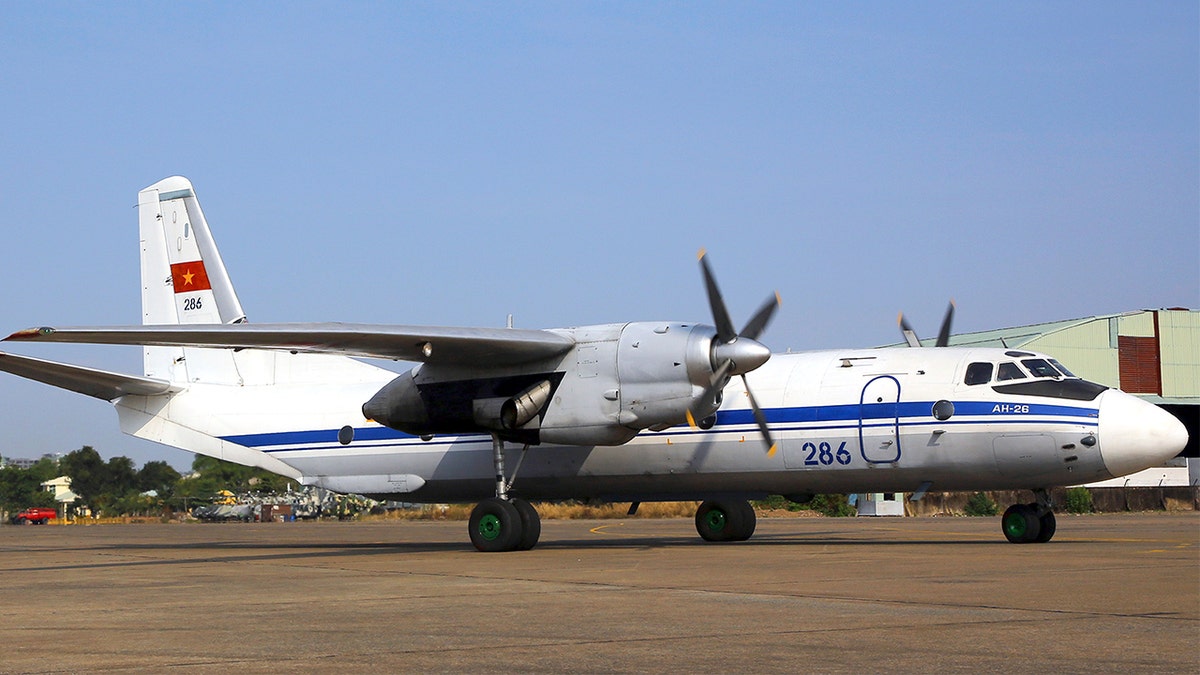
A Russian military plane crash in annexed Crimea has killed six crew and 23 passengers, Russian news agencies reported in the early hours of Wednesday, citing the Defense Ministry.

The An-26 military transport plane was carrying out a scheduled flight over the Crimean Peninsula, which Russia illegally annexed from Ukraine in 2014, the reports said. The military lost contact with the plane around 6 p.m. on Tuesday.

PLANE CRASH IN RUSSIA’S FAR EAST LEAVES 48 DEAD

Russian military plane crash in Crimea kills 29 people

An An-26 plane is pictured at a base in Ho Chi Minh City, Vietnam, on March 9, 2014. On Tuesday, March 31, 2026, a Russian An-26 military transport plane crashed in annexed Crimea, killing 29 people on board. (AP Photo/Na Son Nguyen, File)

The Soviet-designed military transport turboprop aircraft crashed into a cliff, sources at the scene told state news agencies Tass and RIA Novosti.

Russia’s Investigative Committee said a total of seven crew members and 23 passengers were on board. It wasn’t immediately clear from official statements if one crew member had survived.

TRUMP SAYS ‘INFLAMMATORY’ ZELENSKYY STATEMENT ON CRIMEA PROLONGS WAR WITH RUSSIA

Russia's President Vladimir Putin sits at a table.

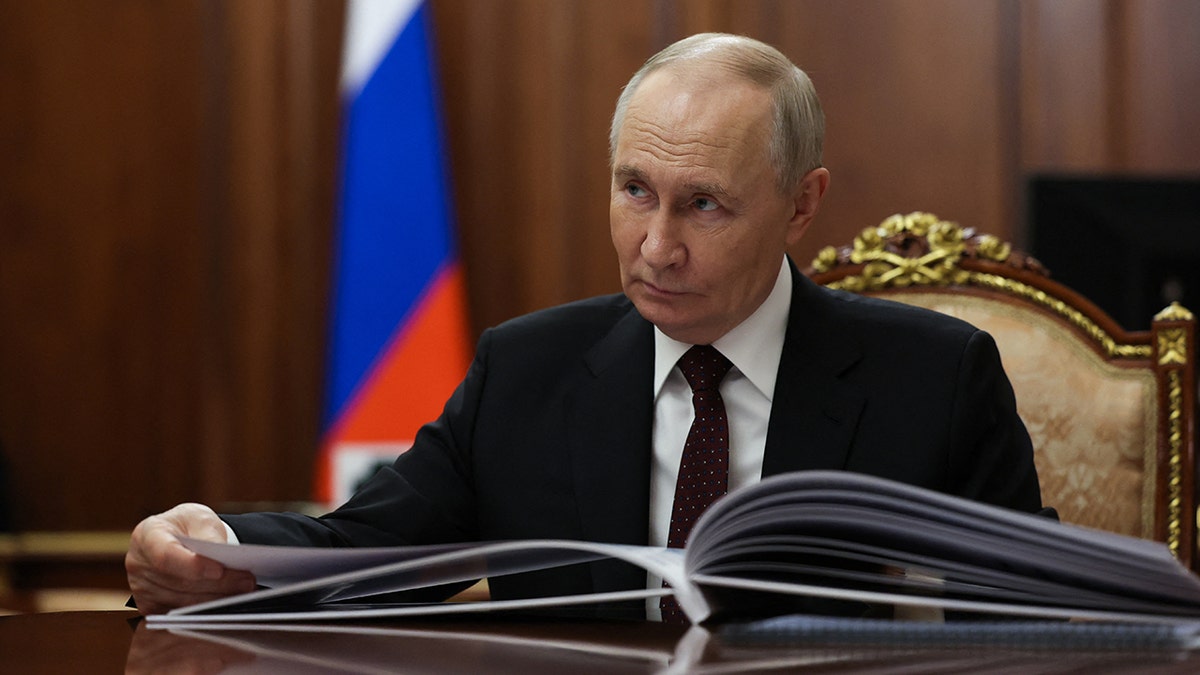
Russia’s President Vladimir Putin is pictured during a meeting on March 30, 2026. Since the Kremlin sent troops into Ukraine in 2022, accidents involving Russian military planes have been frequent. (Alexander KAZAKOV / POOL / AFP via Getty Images)

The Investigative Committee said it has launched a criminal probe in connection with flight regulations and a search is underway in a mountainous forested area in the Bakhchisarai district.

The Interfax news agency cited the Defense Ministry as saying a suspected technical malfunction may have caused the crash and that there was no “damaging interference” with the aircraft.

Accidents involving Russian military planes have been frequent since the Kremlin sent troops into Ukraine.

CLICK HERE TO GET THE FOX NEWS APP

Russian officials inspect the site of a plane crash.

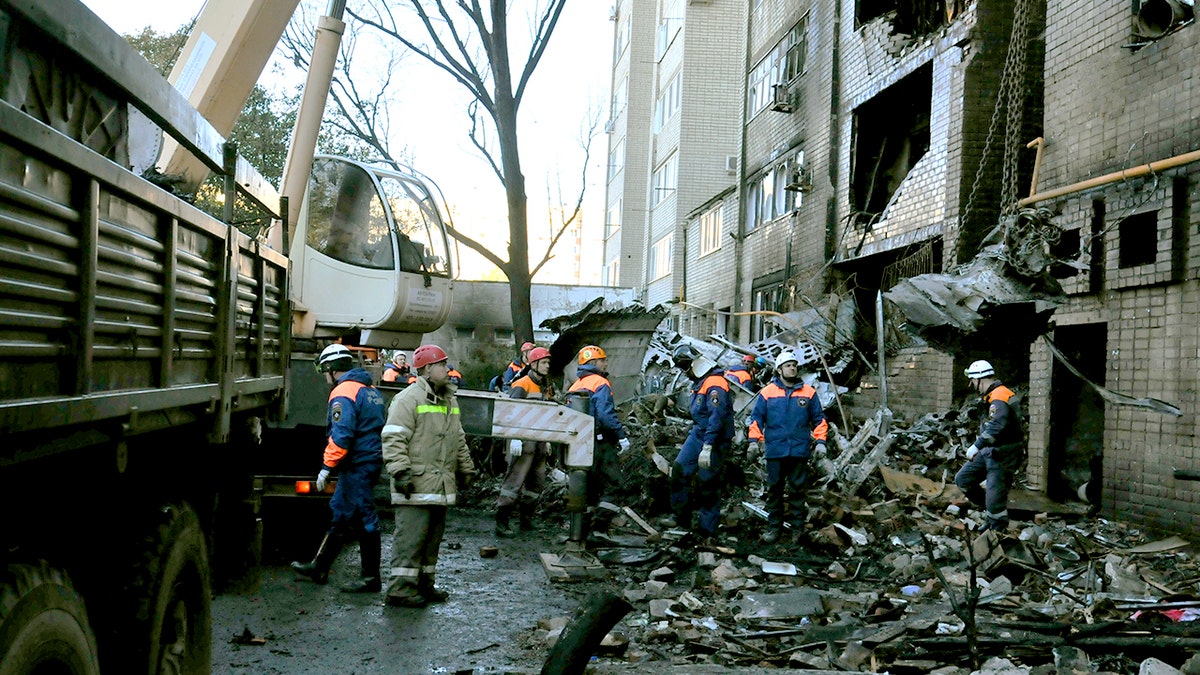
Russian officials inspect a building after an Su-34 bomber military plane crashed into a residential area in Yeysk, Russia, in October 2022, killing 15 people. A military plane carrying crew and passengers crashed into a cliff in annexed Crimea on March 31, 2026, according to Russian officials. (Arkady Budnitsky/Anadolu Agency via Getty Images)

In December, an An-22 military transport plane crashed in Russia’s Ivanovo region, killing seven crew. In October, a MiG-31 fighter jet crashed in the Lipetsk region, while a Tu-22M3 bomber crashed in the Siberian region of Irkutsk in April 2025.

In October 2022, a Su-34 bomber crashed into a residential area of Yeysk, a Russian city on the Azov sea, sparking a massive fire and killing 15 people.


Marco Rubio Struggles To Explain Trump’s Ukraine Policy Clearly In 1 Messy Minute


Marco Rubio perfectly demonstrated the US’s inconsistent messaging over Ukraine in a one-minute interview.

Donald Trump has vowed to end the Ukraine war as soon as possible and has frequently suggested Kyiv bow to Russia’s demands – even though Moscow started the conflict by invading its European neighbour.

Pressed over how the trilateral talks are going on Friday, the US’s top diplomat initially accused Volodymyr Zelenskyy of misrepresenting America’s stance in the ongoing negotiations.

In his next answer, he appeared to prove the Ukrainian president right.

Asked if American security guarantees for Ukraine after the war were dependent on the country giving up the eastern Donbas territory, Rubio immediately slapped it down.

He told reporters: “That’s a lie. I saw him [Zelenskyy] say that and it’s unfortunate that he would say that because he knows it’s not true and that’s not what he was told.”

“Security guarantees are not going to kick in until there’s an end to the war because otherwise you’re getting yourself involved in the war,” Rubio insisted.

“It’s a truce that you’re willing to step in and secure. If you’re putting that in place, that means you’re injecting yourself in the war.”

He said the guarantees were not attached to giving up the Donbas, adding: “I don’t know why he says these things, they’re just not true.”

Rubio said: “We’ve told the Ukrainian side what the Russians are insisting on.

“We’re not advocating for it, we explained it to them. It’s their choice to make. It’s not for us to make. We never told them to take it or leave it.

“The role we have played is to try and figure out what both sides want and to try and reach a middle ground.”

But, in the next breath, he suggests the war will only end – meaning, Ukraine will only get US security guarantees, if it concedes to Russian wishes.

Rubio said: “The decision ultimately is up to Ukraine, if they don’t want to make concessions, then the war keeps going.”

Zelenskyy told Reuters that questions remain around the security guarantees Ukraine could receive once the war ends, such as how allies would respond in the face of future Russian aggression and who would help to fund the country’s weapons purchase to sustain its military deterrent.

He added that the US will finalise questions “once Ukraine is ready to withdrawfrom Donbas”, which is one of Vladimir Putin’s maximalist demands – but that is a red line for Kyiv.

“I would very much like the American side to understand that the eastern part of our country is part of our security guarantees,” Zelenskyy said.


Putin Is Losing The Ukraine War – But, Thanks To Trump, Not As Fast As He Was


Vladimir Putin broke his own record this week by launching his most aggressive strikes against Ukraine yet.

An astonishing 948 drones attacked Ukraine in a 24-hour period, killing at least six people across the country.

The barbaric attacks even reached the western city of Lviv, often viewed as one of the safest places in the beleaguered nation.

Moscow is evidently keen to remind Kyiv that, even four years after the invasion, nowhere is off limits.

But focusing solely on Russia’s spring offensive misses the bigger picture.

Despite baseless claims from Donald Trump about Ukraine’s decline, those close to the war believe Russia is actually losing.

Putin has not been able to keep up with his war of attrition, according to his rival Volodymyr Zelenskyy.

The Ukrainian president wrote on X on Thursday: “In historical terms, the Russians are losing, one hundred percent.

“Right now, they are suffering a terrifying number of casualties – 30,000 to 35,000 people a month.

“Russia cannot keep up with mobilisation, contract recruitment, and certainly cannot keep up with training its troops.”

Dossier Center, a non-profit founded by the Russian opposition leader Mikhail Khodorkovsky, reported this week that the odds of surviving the war as a Russian soldier on the frontline in Ukraine are close to zero.

Dr Simon Bennett, the director of the civil safety and security unit at University of Leicester, told HuffPost UK that eastern Ukraine’s Donbas region had become “a meat grinder for both sides” – but especially for Russia.

Putin’s military exceeded one million casualties last June, with Ukraine’s general staff now predicting Russia has lost 1,280,960 troops throughout the war.

However, Bennett noted that Russian casualties will not affect the ranks as much as Ukrainian losses.

He said: “The Ukrainians have fewer troops than the Russians and there is a strong incentive to carefully husband available resources.

“So, the Russians will always lose more troops than the Ukrainians.”

Keir Giles – associate fellow of Chatham House’s Russia and Eurasia Programme – also said the poor performance on the frontline was not why Putin was losing.

“The frontline is of no greater importance now than it has been at any point during this war,” he told HuffPost UK.

“It’s more about the politics, the geo-strategy, the economics – whether the US is willing to put sufficient pressure on Ukraine to surrender to Russia.”

Trump has been trying to force Ukraine to bend to Russia’s maximalist war goals and hand over more territory in the name of peace.

But territorial concessions and security guarantees have remained major sticking points.

Ukraine has so far resisted calls to give up more land, even though 2025 was the deadliest period for Ukrainian civilians since the initial months of the full-scale invasion.

According to some reports, Putin was thinking about finally compromising as his economy struggled to stay afloat while funding the war.

But last month’s Israel-US strikes on Iran ended up giving Russia a surprise boost.

When Tehran moved to block the Strait of Hormuz oil shipping lane, the US president decided to ease oil sanctions on Russia to help the global markets – meaning Moscow’s enthusiasm for negotiations waned.

Bennett told HuffPost UK that the money flooding into Russia as a result has allowed Putin “to turbocharge an already highly efficient war economy.”

The Economist’s defence editor Shashank Joshi pointed out this means Russians feel as though they have a “little bit of economic wind in their sails again”.

The Iran war means the US is re-routing munitions earmarked for Ukraine to the Middle East, too, reducing Kyiv’s ability to strike back.

Even so, this unexpected “lifeline” is not enough to push Russia to win the war.

As Giles noted, this boost only means Putin is not “losing as fast as he was before”.

Putin Is Losing The Ukraine War – But, Thanks To Trump, Not As Fast As He Was
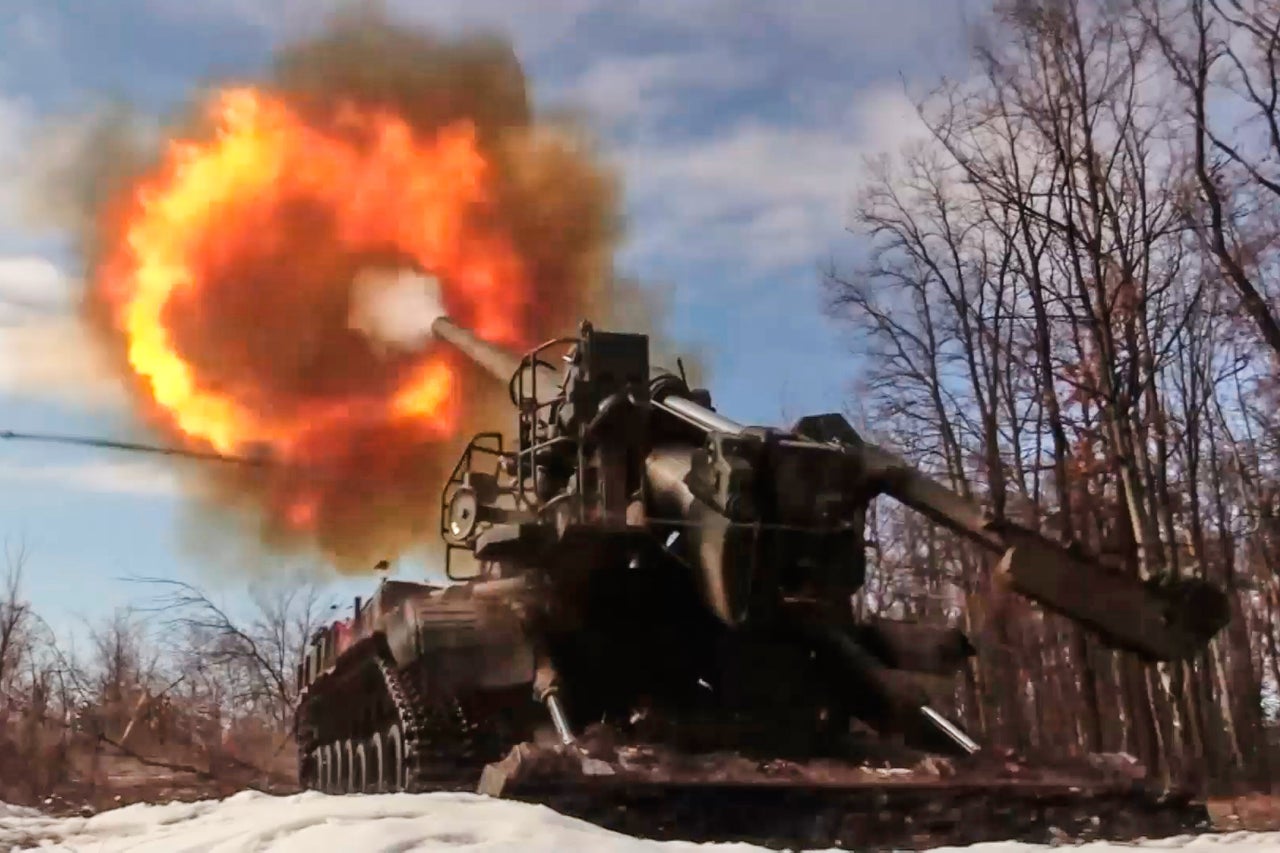
In this image made from video provided by Russian Defense Ministry Press Service on Monday, March 23, 2026, a Russian Pion self-propelled 203 mm cannon fires towards a Ukrainian position.

Kyiv is also not completely oblivious to this change in Putin’s fortunes.

It continues to hold its own by targeting Russian oil refineries in the hope of putting a dent in Putin’s war machine.

Giles said: “I’m sure Ukraine is hoping that Trump does not notice this is happening or care because, if he does, he will certainly look for ways of limiting the damage to Russia.”

Even so, the impact of these attacks on Putin and the Kremlin will not be “immediate”, according to Giles.

He warned Ukraine needs to be a “much more comprehensive programme” to effectively cut off Russia’s income – meaning Putin will continue to line his pockets amid the chaos in the Middle East.

One senior Labour MP told HuffPost UK they privately suspected the conflict in Iran would last three months while the Ukraine war would rumble on for another three years.

But, according to some, optimism that Putin might realistically ever be able to give up may be misplaced.

As Zelenskyy told Reuters news agency, the “Russians have whipped up pro-war sentiment internally to such an extent that if we don’t stop Putin now, war will continue”.

He added: “He will pick some small country. He needs it.

“He’s boosted the war economy and radicalised the Russians.

“Today, 20–25% young people in Russia want to destroy Ukraine and Europe; they want to restore Soviet influence and revive the idea of destroying Nato. This will not just vanish.”

The Ukrainian president also theorised that Putin will have to either risk upset within Russian society, or he will “make a few steps into one of the Baltic states and set down his right or left foot there”.

Giles suggested Zelenskyy was bang on the money, telling HuffPost UK: “Russians have been told for more than a decade that the war is on.

“The assumption that many young Russians have grown up with is that they’re already in conflict.

“The entirety of the Russian economy has been turned into a war machine, and to turn it back would be massively disruptive.”

Asked to put a timeframe on when the war might end, Giles offered a rather bleak answer: “It will continue for as long as Russia exists.”


It’s not just oil and gas. The Strait of Hormuz blockage is rattling another vital commodity


Workers unload urea fertilizer from a cargo ship in Yantai Port, Shandong Province, China on March 13, 2026.

Cfoto | Future Publishing | Getty Images

Farmers in the northern hemisphere are heading into the crucial spring months, during which major fieldwork must begin. Their peers in the south, meanwhile, are busy harvesting crops before the winter sets in.

However, their work now takes place as the Iran war creates serious supply constraints for essential fertilizer products — fueling massive price spikes and warnings of looming food insecurity.

Around one-third of the global seaborne fertilizer trade passes through the Strait of Hormuz, according to the UN.

The waterway, a critical shipping route that runs along Iran’s southern border, has been severely disrupted since the start of the war, with traffic effectively coming to a halt and several ships being hit by projectiles in or near the waterway.

Since the U.S. and Israel launched strikes on Iran on Feb. 28, the price of fertilizer — much of which is produced in the Middle East — has skyrocketed.

Fertilizer futures contracts are less liquid than other commodities, making prices more opaque. But analysts working in the sector told CNBC that they had seen the cost of FOB granular urea in Egypt — a bellwether of nitrogen fertilizers — jump to around $700 per metric ton, up from $400 to $490 before the war began.

In a Monday note, Oxford Economics’ Alpine Macro said urea and ammonia prices had surged by around 50% and 20%, respectively, since the war began. Other fertilizers, like potash and sulfur, have also risen in price.

The Middle East is a particularly large exporter of urea and nitrogen products, according to Chris Lawson, VP of market intelligence and prices at CRU.

“With the Strait of Hormuz essentially cut off, there’s a big chunk of global trade that isn’t able to move right now,” Lawson said. “We estimate around 30% of exportable suppliers are not really available to the market right now, that is Saudi Arabia, Qatar and Bahrain, but that also includes Iran.”

Iran, Lawson said, is an important producer of nitrogen-based fertilizers and one of the largest exporters globally.

“There’s a lot of traded supply that is at risk — 30% of global urea trade comes out of Iran and the Hormuz-constrained countries,” he told CNBC.

“It’s a long supply chain — if farmers aren’t able to get the urea that they need, crop yields will inevitably go lower. Nitrogen is the main nutrient that a crop needs to grow, [and] there will be inventories that can be drawn down, so you’re not really going to see an impact on crop yields and a loss of crop production until later in the year.”

‘You can’t skip a season of nitrogen’

Dawid Heyl, a co-portfolio manager for the Global Natural Resources strategy at Ninety One, told CNBC that nitrogen fertilizers like urea were at the forefront of the Middle East crisis because — unlike other fertilizer groups like potash and phosphates — nitrogen is “the one element that you need to get to the plant every single year.”

“You can skip a season of potash, you can skip a season of phosphates, but you can’t skip a season of nitrogen,” Heyl said.

With farmers in the northern hemisphere due to begin fertilizing their fields, the supply constraint has intersected with cyclical demand. Urea, one of the world’s most used fertilizers, is used in the growth of various crops, including maize, wheat, rapeseed and some fruits and vegetables.

A worker operates a tractor to plant and fertilize corn at a farm in Wapato, Washington, U.S., on May 2, 2025.

Emree Weaver | Bloomberg | Getty Images

“There’s a direct correlation to your nitrogen application and your agricultural yield in the end,” Heyl said. “That’s why I’m a lot more concerned about the current crisis than I was when Russia-Ukraine happened four years ago.”

When Moscow launched its full-scale invasion of Ukraine in early 2022, the two countries were major exporters of fertilizers, with Russia accounting for a significant proportion of global potash production. Sanctions on Russian exports added pressure to a market that was already experiencing shortages, pushing prices higher.

I’m a lot more concerned about the current crisis than I was when Russia-Ukraine happened four years ago.

Dawid Heyl

Co-portfolio manager, Global Natural Resources strategy at Ninety One

“This, to me, is starting to feel like it could be worse, because it could really have an impact on agricultural yields across a lot of geographies, and across the major crops such as maize [and] other big ones,” Heyl added, noting that most fertilizer futures had seen double-digit price growth in the weeks since the war began.

Sarah Marlow, global head of fertiliser pricing at Argus, agreed that the unfolding crisis in the Middle East would have a bigger impact on the fertilizer trade than the Russia-Ukraine war.

“Almost 50% of all globally traded sulfur comes from that region. For urea, it’s around a third of all globally traded urea that comes from that region and for ammonia, it’s close to 25%,” Marlow told CNBC on a video call.

“So, it’s huge. It’s very significant — and more significant in some ways than the impact of Ukraine because it is affecting multiple producers.”

“You’re not just talking about one or two,” she added, noting that exports from Saudi Arabia, Kuwait, Qatar, Iran and the UAE were all being affected.

“The sulfur market was already structurally tight before this began and we’d already seen a peak in price in January,” Marlow said. “We’ve now seen more production go offline and exports unable to get out and to leave the region, so there’s even more of a shortage and we could see further price spikes as a result.”

Fertilizer production is also taking a hit due to a lack of storage options for products that cannot be shipped and a shutdown of some energy facilities in the Middle East.

Earlier this month, QatarEnergy announced it would stop downstream production of urea following its decision to bring liquefied natural gas production to a halt.

Meanwhile, China — another large exporter of fertilizers — has put restrictions on exports to protect its domestic market from shortages, news agency Reuters reported last week.

Food security fears

Ninety One’s Heyl said that markets had entered 2026 with fairly high stocks of basic food commodities that were reliant on fertilizer deliveries, meaning there were “buffer stocks” that might help offset some shortages of corn, wheat, soybeans and rice.

“If agricultural yields were [hypothetically] impacted by 5% this year, I don’t think we’ll be looking at starvation, but it would certainly cause food inflation,” he told CNBC, noting that emerging-market countries were more likely to feel the brunt of the impact.

“Unfortunately, the poorer countries in the world are quite often more exposed to these crises,” Heyl said. “I think some of the African nations that import a lot of grains, for instance, are going to be impacted.”

India, which imports nitrogen fertilizers as well as natural gas to produce them domestically, also faces high exposure to the shortages, Heyl added.

“I’m more concerned for [a country] like India, for regions like East Africa, which are going to be more vulnerable,” he said. “Emerging markets east of Suez and the global south are quite often the sort of last to be able to afford [inflated prices].”

But he noted that the U.S. was not completely insulated from the implications of a fertilizer price shock, noting that while America produces a lot of its own nitrogen fertilizer, the country “has not got self-sufficiency.”

It’s not just oil and gas. The Strait of Hormuz blockage is rattling another vital commodity

According to the U.S. Fertilizer Institute, around a third of nitrogen, phosphate and potash fertilizers used in the United States are imported.

“It’s going to be inflationary for the farmer,” Heyl said of rising fertilizer prices trickling through to the United States. “Are there going to be certain regions that can’t get their hand on the fertilizer or have to ration?”

A total of 54 agricultural groups recently wrote to U.S. President Donald Trump to call for “much-needed market relief for America’s farmers” amid surging fuel and fertilizer prices.

“As planting season began in earnest across much of the U.S., the closure of the Strait of Hormuz sent fuel and fertilizer prices skyrocketing,” they said. “Maritime freight disruptions from the ongoing conflict in Iran pose significant consequences to food security here at home and around the world.”

Choose CNBC as your preferred source on Google and never miss a moment from the most trusted name in business news.


Iran’s Revolutionary Guards warn US companies will be attacked as employees are urged to evacuate across Middle East – recap


Iran’s Revolutionary Guards have threatened to attack American companies across the Middle East with workers urged to evacuate their offices immediately.

‘Employees of American companies… are requested to leave these areas immediately. These areas will soon be targeted by the Islamic Revolutionary Guard Corps,’ said the Guards in on their official Sepah News website.

It was not immediately clear which companies would be targeted but last week, the Tasnim news agency published a list of potential targets on Telegram that included the offices of tech giants such as Amazon, Google, Microsoft and Nvidia in Gulf countries.

It comes after Iran launched fresh drone strikes on the UAE sparking huge fires near Dubai airport and at a major oil terminal in Fujairah.

Meanwhile the Israeli military has declared it has begun what it described as ‘limited ground operations’ against Hezbollah in southern Lebanon and vowed bombing will continue in Tehran for a further three weeks.

And European leaders have pushed back at Donald Trump’s plan to send an armada of warships to help secure the Strait of Hormuz after the President warned NATO faces a ‘very bad’ future if allies do not help the US.

Follow the latest updates on the Iran war 

Iran’s Revolutionary Guards to launch attack on US companies in Middle East

Iran’s Revolutionary Guards have threatened to target US companies across the region, calling on employees to evacuate the sites.

‘Employees of American companies… are requested to leave these areas immediately. These areas will soon be targeted by the Islamic Revolutionary Guard Corps,’ said the Guards in on their official Sepah News website.

It was not immediately clear which companies would be targeted but last week, the Tasnim news agency published a list of potential targets on Telegram that included the offices of tech giants such as Amazon, Google, Microsoft and Nvidia in Gulf countries.

US-Israel war with Iran: Everything you need to know on day 17 of the conflict

An Emirates plane prepares to land as smoke rises near Dubai airport

Iran’s Revolutionary Guards warn US companies will be attacked as employees are urged to evacuate across Middle East – recap

Here are the latest events in the Iran war as the conflict enters its third week:

  • Dubai airport halted flights after a drone struck a fuel tank nearby in latest incident to disrupt travel at one of the world’s busiest hubs
  • Oil loading operations have been suspended at the United Arab Emirates port of Fujairah after a drone attack
  • Iran’s Revolutionary Guards have warned they will attack US companies in Middle East with employees urged to evacuate
  • The Israeli military said it has begun what it described as ‘limited ground’ against Hezbollah in southern Lebanon
  • Oil prices rose further, with Brent North Sea Crude up three percent to $106.50 per barrel in Monday trading
  • Sir Keir Starmer said the UK will not be drawn into a wider war as he knocks back a request from the US to deploy British warships
  • Saudi Arabia intercepts more than 60 drones since midnight
  • Donald Trump said the United States was in discussions with Iran but that Tehran was not ready for a deal to end the war
  • The US President said NATO faces a ‘very bad’ future if US allies fail to help open the Strait of Hormuz
  • But European leaders have pushed back against Trump’s appeal to send warships to Strait of Hormuz

Thank you for tuning in…

That’s the end of our live coverage – for now.

But don’t fret, you can keep up to date with the latest developments on the Israel/US-Iran war by checking our homepage.

READ: Iran’s new supreme leader ‘escaped death by seconds’

It has emerged that Mojtaba Khamenei escaped death by seconds after he stepped outside to take a stroll in the garden.

Iran’s new supreme leader was targeted in the same attack that killed his father on February 28 – but his decision to venture outdoors ‘to do something’ saved his life.

Read our full report below

Iranian foreign minister denies reports he texted a US special envoy

FILE PHOTO: Iran's Foreign Minister Abbas Araghchi on the day he addresses a special session of the Conference on Disarmament at the United Nations, aside of U.S.-Iran talks in Geneva, Switzerland, February 17, 2026. REUTERS/Pierre Albouy/File Photo

Iran’s foreign minister Abbas Araghchi has hit out at claims that he texted US special envoy Steve Witkoff – insisting they are ‘not talking’.

It follows reports he had contacted the American politician to open up lines of communication amid the war.

However, Mr Araghchi said:

My last contact with Mr Witkoff was prior to his employer’s decision to kill diplomacy with another illegal military attack on Iran.

Any claim to the contrary appears geared solely to mislead oil traders and the public.

IN PICTURES: Tehran devastated after US-Israeli strike on residential building

Emergency crews have been pictured searching for survivors among rubble following a US-Israeli air strike on a residential building today in Tehran.

Iran retaliated by firing waves of missiles and drones at Israel, and targeting U.S. allies in the region.

TEHRAN, IRAN - MARCH 16: (EDITORS NOTE: Image contains graphic content) Emergency rescuers pull a person from the rubble following a strike on a residential building on March 16, 2026 in central Tehran, Iran. The United States and Israel continued their joint attack on Iran that began on February 28. Iran retaliated by firing waves of missiles and drones at Israel, and targeting U.S. allies in the region. (Photo by Getty Images)
TEHRAN, IRAN - MARCH 16: Emergency workers carry an injured person on a stretcher following a strike on a residential building on March 16, 2026 in central Tehran, Iran. The United States and Israel continued their joint attack on Iran that began on February 28. Iran retaliated by firing waves of missiles and drones at Israel, and targeting U.S. allies in the region. (Photo by Getty Images)
TEHRAN, IRAN - MARCH 16: A man reacts at the scene of a strike on a residential building on March 16, 2026 in central Tehran, Iran. The United States and Israel continued their joint attack on Iran that began on February 28. Iran retaliated by firing waves of missiles and drones at Israel, and targeting U.S. allies in the region. (Photo by Getty Images)
TEHRAN, IRAN - MARCH 16: People make their way through debris following a strike on a residential building on March 16, 2026 in central Tehran, Iran. The United States and Israel continued their joint attack on Iran that began on February 28. Iran retaliated by firing waves of missiles and drones at Israel, and targeting U.S. allies in the region. (Photo by Getty Images)
TEHRAN, IRAN - MARCH 16: People react as emergency crews search for people trapped in the rubble following a strike on a residential building on March 16, 2026 in central Tehran, Iran. The United States and Israel continued their joint attack on Iran that began on February 28. Iran retaliated by firing waves of missiles and drones at Israel, and targeting U.S. allies in the region. (Photo by Getty Images)
TEHRAN, IRAN - MARCH 16: An injured is helped away from the scene of a strike on a residential building on March 16, 2026 in central Tehran, Iran. The United States and Israel continued their joint attack on Iran that began on February 28. Iran retaliated by firing waves of missiles and drones at Israel, and targeting U.S. allies in the region. (Photo by Getty Images)

Iran warns of SECOND VIETNAM if US puts boots on ground

Iran’s Deputy Foreign Minister Saeed Khatibzadeh warned of a second Vietnam after he was asked what the country would do if the US put Marines onto Kharg Island, which controls the majority of Iran’s oil output.

IN PICTURES: Now Taliban accuses Pakistan of striking Kabul

Smoke and flames were seen rising from an area hit by airstrikes in Kabul today.

Afghan authorities accused neighbouring Pakistan of carrying out the attack – as residents reported loud explosion overhead.

This photograph shows smoke and flames rising from an area hit by airstrikes, in Kabul on March 16, 2026. The Afghan authorities accused neighbouring Pakistan of attacking Kabul, as AFP journalists heard loud explosions overhead and anti-aircraft defences swung into action. (Photo by AFP via Getty Images)
Smoke rises after an explosion in what the Taliban said was a Pakistani air strike in Kabul, Afghanistan, March 16, 2026. REUTERS/Sayed Hassib

‘Our work must continue’: Mojtaba Khamenei speaks out

FILE PHOTO: Iran's new supreme leader, Mojtaba Khamenei, the second son of late Iran's Supreme Leader Ayatollah Ali Khamenei, attends a meeting in Tehran, Iran, July 18, 2024. Majid Khahi/ISNA/WANA (West Asia News Agency) via REUTERS ATTENTION EDITORS - THIS PICTURE WAS PROVIDED BY A THIRD PARTY/File Photo 15633591

Iran’s new supreme leader Mojtaba Khamenei has released a new message, it is understood – advising current government officials to remain in post and push on through.

According to the BBC, he said:

I hereby announce that, for the present, none of them requires the renewal of their appointment.

It is crucial that they continue their work in accordance with the directives received during the lifetime of Ayatollah Khamenei

Khamenei has not been seen in public since his appointment on March 8.

This has prompted President Donald Trump to allege he is ‘dead’ – claims Iranian officials, including the country’s foreign minister, have denied.

Mr Trump is ‘not happy’ with the UK

In his latest broadside Mr Trump has said Britain ‘should be involved enthusiastically’ with helping struggling US forces reopen the Straits of Hormuz to oil tankers and bring down global prices.

He added he is ‘not happy’ and ‘very surprised’ at the UK’s response.

Earlier today Sir Keir insisted the UK will not be drawn into a ‘wider war’ in the Middle East today as he knocked back the plea for warships in the Strait of Hormuz.

Read the full story by David Wilcock below

Trump tells Starmer: You don’t need to ‘meet your team’ you can make your own decisions

epa12825662 US President Donald Trump speaks during a meeting with trustees of the John F. Kennedy Center for Performing Arts in the East Room of the White House in Washington, DC, USA, 16 March 2026. The board is set to vote on plans to close the institution for two years for renovations starting 06 July 2026.  EPA/AARON SCHWARTZ / POOL

Donald Trump has now issued a scathing attack on Sir Keir Starmer – asking why he insists on ‘meeting with his team’ before making decisions.

The US President vented his frustration at the Prime Minister consulting his advisers about sending a warship to the Gulf.

Saying he did not ‘need advisers’ to know what would happen to oil prices, Mr Trump said:

The Prime Minister of UK, United Kingdom, yesterday told me, I’m meeting with my team to make a determination.

I said you don’t need to meet with your team, you’re the Prime Minister, you can make your own, why do you have to meet with your team to find out whether or not you’re going to send some minesweepers to help us or to send some boats.

I said you don’t have to meet with your team, it’s the same thing here.’

Mr Trump added oil prices would fall ‘very, very rapidly’.

UK now has more jets in the region than at ANY period in past 15 years

British pilots have continued to conduct ‘defensive air patrols’ over Qatar, Jordan, Bahrain and the Easter Mediterranean.

The Ministry of Defence added: ‘The UK now has more jets in the region than at any period in the past 15 years.’

Key Updates

  • Donald Trump: Iran has been ‘literally obliterated’

  • Iran’s Revolutionary Guards to launch attack on US companies in Middle East

  • EU leaders line up to reject Trump’s appeal to send warships to Strait of Hormuz

  • Starmer knocks back Trump’s call for British ships in the Strait of Hormuz

  • Oil loading operations resume at Fujairah

  • UK working with other countries to reopen Strait of Hormuz

  • Germany does not see NATO role in securing Strait of Hormuz

  • Saudi Arabia intercepts more than 60 drones since midnight

  • US-Israel war with Iran: Everything you need to know on day 17 of the conflict

  • We know where you are! Israel warns new Iranian leader


  • Starmer appears set to refuse Trump’s demand for UK to help secure Strait of Hormuz

  • Oil loading suspension at Fujairah comes after weekend disruption

  • Israel destroys plane belonging to Iran’s former supreme leader

  • Oil loading suspended at Fujairah port after drone strike causes fire

  • Airport passengers evacuated after latest Iranian attacks on Dubai

  • Flights gradually resume after fire near airport

  • Dubai International Airport shut as Iranian drones blow up fuel tank


Putin’s Aide Hits Out At ‘British Specialists’ Over Ukrainian Strike On Missile Factory


Russia has blamed “British specialists” for helping Ukraine execute a deadly missile strike on a munitions factory.

Kyiv said it had struck one of Russia’s “most important military factories” on Tuesday, known as the Kremniy El plant, using British-supplied Storm Shadow missiles.

The site is the second-largest microelectronics manufacturer in Russia.

According to Russian authorities, at least seven civilians were killed and 42 injured in what it called a “terrorist missile attack”.

The Kremlin’s spokesperson, Dmitry Peskov, told reporters: “It is obvious that the launch of these missiles was impossible without British specialists.

“We are aware of this, we know it well, and we naturally take it into account.

“In order to prevent such barbaric actions by the Kyiv regime from continuing, the special military operation is being conducted.”

Russia’s foreign ministry also claimed the attack was premeditated.

It said: “Western states bear full responsibility for the consequences of this strike, which resulted in civilian casualties.

“Britain has gone beyond the norms of international law and is ready… to take the conflict to a fundamentally new level.”

But Ukrainians rejected that analysis, saying the strike targeted the facility itself not civilian infrastructure.

A UK official also told Ukrainian outlet, the Kyiv Independent, that Britain’s support for Kyiv reflects the country’s “clear right of self-defence against Russia’s illegal attacks”.

“We are clear that the equipment provided by the UK is intended for the defence of Ukraine. Ukraine has the right of self-defence,” the official said.

They also made it clear they do not “comment on operational details” when asked about Russia’s claim of direct UK involvement in that operation.

The UK has been sending missiles to Ukraine since May 2023 for use against Russia-occupied territories.

The criticism from Russia comes as Vladimir Putin continues to fight his war of attrition over Ukrainian land.

He already holds a fifth of the neighbouring European country but continues to push for more territory, even as the US attempts to negotiate new peace deals – efforts torpedoed by Putin’s refusal to compromise on his maximalist war aims.

Russia has consistently criticised the UK and other Ukrainian allies throughout the four-year war, even falsely blaming Britain for starting the war.

It’s worth remembering there is an international arrest warrant out for Putin himself for the alleged abduction of Ukrainian children.


U.S. ‘misadventure’ in Iran has no clear exit strategy, Russia’s UK ambassador says


Ambassador of the Russian Federation to the UK Andrei Kelin during an interview with PA at the official residence of the Russian Ambassador in London. Picture date: Monday February 21, 2022.

Aaron Chown – Pa Images | Pa Images | Getty Images

The U.S.-Israeli war on Iran is a “misadventure” whose goals and exit strategy remain unclear, Russia’s ambassador to the U.K. told CNBC.

Andrey Kelin said Russia has “a lot of sympathy” with Tehran and said “the best end” to the escalating Middle East war is for it to “show only that they are senseless.”

“We still are trying to understand, what are the goals of President Trump in this campaign. You know that lots of doubts have been expressed about the exit strategy that the American administration can have in this endeavour,” Kelin told CNBC’s Steve Sedgwick in an interview recorded on Thursday.

Russian President Vladimir Putin sent a message to Iran’s new supreme leader, Mojtaba Khamenei, earlier this week, offering his “unwavering support” to Tehran and saying the country “has been and will remain the Islamic Republic’s reliable partner.”

U.S. ‘misadventure’ in Iran has no clear exit strategy, Russia’s UK ambassador says

The war has been raging for two weeks, with heavy strikes reported across Iran’s capital city and shipping traffic through the strategically vital Strait of Hormuz severely disrupted.

The White House has said the objectives of Operation Epic Fury have been to destroy Iran’s ballistic missile arsenal and production capacity and its navy, sever its support for proxies in other countries and ensure Iran can never acquire a nuclear weapon.

The White House said on Thursday these objectives “have remained unchanged unambiguous, and consistent” since the operation began on Feb. 28.

“We have a lot of sympathy with Iran. We have a lot of sympathy as well with the Persian Gulf states, there is no doubt at all. As for the beginning, I cannot understand the position of when everybody is blaming Iran,” Kelin said.

“[The] crisis has started with the, as I have said, with Israel and U.S. aggression against Iran and it was in the middle of talks, of course,” he continued, referring to negotiations over Iran’s nuclear program held in the Swiss city of Geneva last month.

In this pool photograph distributed by the Russian state agency Sputnik, Russia’s President Vladimir Putin attends a meeting with Iranian President in Ashgabat on December 12, 2025.

Alexander Kazakov | Afp | Getty Images

“My president discussed this issue with the president of the United States, and we can make a good contribution by the way to finish it, to wrap it up.”

CNBC has contacted a spokesperson at the White House and Israel’s Foreign Ministry and is awaiting a response.

‘A strategic partnership’

Funerals are held for members of Iran’s Revolutionary Guards Corps (IRGC) and other military figures at Enghelab Square on March 11, 2026 in Tehran, Iran.

Majid Saeedi | Getty Images News | Getty Images

U.K. Defense Secretary John Healy told reporters on Thursday that Putin’s “hidden hand” appears to be behind Iran’s military playbook as well as potentially some of Tehran’s military capabilities.

Iran has reportedly fired off more than 2,000 Shahed drones across the Middle East since the war began. These drones, which were first designed in Iran, have been used extensively during Russia’s invasion of Ukraine.

Diplomatic solution on Ukraine is ‘badly needed’

A report from the Center for Strategic and International Studies published in January said Russian battlefield casualties are significantly greater than Ukrainian fatalities, with Ukrainian forces likely suffering somewhere between 500,000 and 600,000 casualties.

Kelin said he was sure that both Moscow and Kyiv would eventually agree to a diplomatic resolution to the war.

“I cannot say when it is going to happen, but a diplomatic solution is badly needed,” Kelin said.

Kelin said The U.S. was “playing a constructive role in this diplomatic effort,” but added: “Since Ukraine is not prepared at the moment and since Europe still prefer to back up Ukraine as much as possible, to supply it with weapons, with money … making no efforts to solicit or to help this diplomatic solution, this will last for some time.”

U.S-brokered talks on the Ukraine war have been put on hold due to the Iran conflict, with U.S. Special Envoy Steve Witkoff telling CNBC on Tuesday that the discussions would now likely take place next week. Ukraine’s Zelenskyy had urged the U.S. not to remove sanctions on Russia ahead of those talks, although the White House has since moved to temporarily lift sanctions on Russian crude at sea.

A Shahed-136 drone is displayed at a rally in western Tehran, Iran, on February 11, 2026.

Nurphoto | Nurphoto | Getty Images

The European Union’s foreign policy chief, Kaja Kallas, recently said there appears to be “no end in sight” to Russia’s full-scale invasion of Ukraine.

Speaking at a news conference on Monday, she said it is clear Russia’s army was “bogged down” and its economy is in steep decline.

“Russia’s maximalist demands cannot be met with a minimalist response,” Kallas said. “It’s just common sense, if Ukraine’s military is to be limited in size, Russia’s should be too.”

Choose CNBC as your preferred source on Google and never miss a moment from the most trusted name in business news.