Cracking the Code: Using AI to Solve Difficult-to-Map Proteins


BYLINE: Ashleigh Papp

Newswise — Using a tool to solve a protein’s structure, for most researchers in the world of structural biology and computational chemistry, is not unlike using the Rosetta Stone to unlock the secrets of ancient Egyptian texts. Once a protein’s structure has been discovered, or defined, one can infer crucial information about its function or, in a diseased state, its dysfunction. While researchers have been pursuing the quest of solving protein structure for decades, advancing tools and computing technologies offer a new frontier for this work.

A collaborative study recently published in Nature Communications unveiled a new computing program that offers a faster and more accurate way to determine protein structure at a new level of precision. Researchers from the Department of Energy’s Lawrence Berkeley National Laboratory (Berkeley Lab), along with an international team of researchers, were a part of the effort. This tool, dubbed AI-enabled Quantum Refinement, or AQuaRef for short, uses quantum-mechanical calculations (QM) and artificial intelligence (AI) to predict the highly-accurate placement of atoms and electrons to determine a protein’s molecular structure.

This program is a part of Phenix, a comprehensive software suite that generates realistic computer models used by structural biologists around the world to solve macromolecular structures. “We’re all basically a bunch of proteins,” said Nigel Moriarty, a Berkeley Lab researcher and contributor to the recent publication. “They do so much in our bodies that detail the processes of life. Understanding their structure can give us insights into the mechanisms that cause disease in humans or produce energy in plants. All of this knowledge can lead to more effective therapeutics and bioenergy production.”

The current way of mapping a protein’s structure entails bringing together two streams of information: experimental data produced through techniques like X-ray crystallography and cryogenic electron microscopy (cryo-EM), and theoretical data that exists in a library of detailed, known protein structural information. But the current options are limited, explained Moriarty, a computational research scientist in the Molecular Biophysics and Integrated Bioimaging (MBIB) Division’s Phenix group. Our understanding today is limited to the chemical entities that have already been defined and doesn’t yet include meaningful noncovalent interactions, the type of attraction typically seen holding a protein in its structural form. “That’s where quantum and AI come in,” he said.

Nearly five years ago, members of the Phenix team began working with researchers at Carnegie Mellon University to explore how they might be able to apply their coding work to Phenix’s offerings. The collaborative approach, coupled with 15 years of incremental research, led to this breakthrough program. In addition to Moriarty, other members of the Phenix team involved in this work were Paul Adams and Billy Poon, with Pavel Afonine leading the research. AQuaRef uses machine learning (ML) tools developed at Carnegie Mellon integrated with the Phenix software to compute energy and forces for scientifically interesting proteins—making quantum-level refinement practical where it was previously impossible.

Of the 71 experiments that were tested in this study, AQuaRef produced higher quality structural information at a substantially lower computational cost while maintaining an equal or better fit to experimental data. In addition to the proof-of-concept results from this work, AQuaRef also correctly determined proton positions in DJ-1, a human protein linked to some forms of Parkinson’s Disease, the structure of which has been notoriously difficult to map. Now that the team has confirmed that quantum-level refinement of a 3D protein model structure is possible, they’re aiming to broaden the scope to include more diverse structures, such as those required for pharmaceutical drug design. And the potential impacts of this work reach far beyond human health, from better understanding the mechanisms of photosynthesis for enhanced crop productivity to mapping the proteins in plants as it relates to biofuel production.

“There is a near-infinite number of things that can benefit from a detailed understanding of these mechanisms and protein structure,” said Moriarty. “I’m excited to see how the paradigm shift that AQuaRef represents impacts the field of protein structure determination.”

This international team also included collaborators from the University of Wrocław, Poland, the University of Florida, and Pending.AI, Australia.

This work was funded by the National Institutes of Health as well as with support from the Phenix Industrial Consortium.

###

Lawrence Berkeley National Laboratory (Berkeley Lab) is committed to groundbreaking research focused on discovery science and solutions for abundant and reliable energy supplies. The lab’s expertise spans materials, chemistry, physics, biology, earth and environmental science, mathematics, and computing. Researchers from around the world rely on the lab’s world-class scientific facilities for their own pioneering research. Founded in 1931 on the belief that the biggest problems are best addressed by teams, Berkeley Lab and its scientists have been recognized with 17 Nobel Prizes. Berkeley Lab is a multiprogram national laboratory managed by the University of California for the U.S. Department of Energy’s Office of Science.

DOE’s Office of Science is the single largest supporter of basic research in the physical sciences in the United States, and is working to address some of the most pressing challenges of our time. For more information, please visit energy.gov/science.


Five Georgia Tech Faculty Named to NAI Senior Members Class of 2026 | Newswise


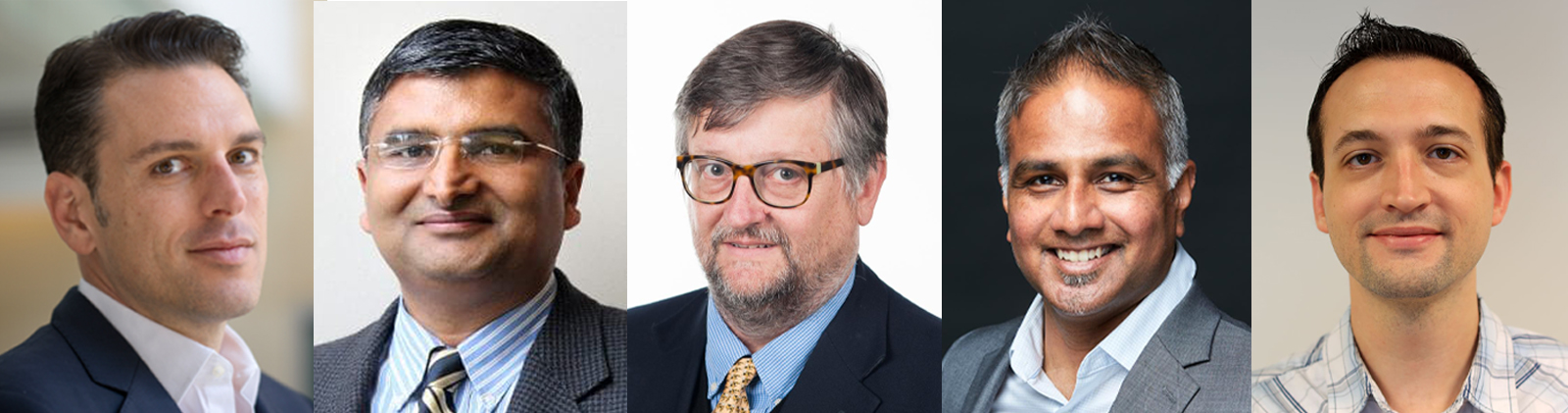
Newswise — Five faculty members from Georgia Tech have been elected as senior members of the National Academy of Inventors (NAI). As members, they are recognized as distinguished academic inventors with a strong record of patenting technologies, licensing IP, and commercializing their research. Their innovations have made, or have the potential to make, meaningful impacts on society. 

 “The election of our faculty members to this prestigious association is a powerful affirmation of the innovative research happening at Georgia Tech,” said Raghupathy “Siva” Sivakumar, chief commercialization officer at Georgia Tech. “Their work to take research to market reflects the growing importance of invention in addressing society’s most complex challenges. This recognition signals the strength of the commercialization ecosystem at Georgia Tech to advance impactful research, encourage innovation, and prepare the next generation of inventors.” 

The 2026 Georgia Tech NAI senior members are: 

  • Jason David Azoulay, associate professor, School of Materials Science and Engineering School and School of Chemistry and Biochemistry
  • Jaydev Prataprai Desai, professor and cardiovascular biomedical engineering distinguished chair, Wallace H. Coulter Department of Biomedical Engineering
  • David Frost, Elizabeth and Bill Higginbotham Professor and Regents’ Entrepreneur, School of Civil and Environmental Engineering
  • Chandra Raman, Dunn Family Professor of Physics, School of Physics
  • Aaron Young, associate professor, George W. Woodruff School of Mechanical Engineering

Jason David Azoulay

Azoulay is recognized for pioneering new classes of functional materials through innovative polymer synthesis, heterocycle chemistry, and polymerization reactions. His work spans electronic, photonic, and quantum materials, device fabrication, and chemical sensing for environmental monitoring. He has demonstrated new classes of organic semiconductors with infrared functionality and holds nine issued U.S. patents. Azoulay is the Georgia Research Alliance Vasser-Woolley Distinguished Investigator and holds a joint appointment in the School of Chemistry and Biochemistry. 

Jaydev Prataprai Desai

Desai is recognized for advancing medical robotics and translational biomedical innovation with inventions spanning robotically steerable guidewires for endovascular interventions, minimally invasive surgical tools, MEMS sensors for cancer diagnosis, and rehabilitation robotics for people with motor impairments. He is the founding editor-in-chief of the Journal of Medical Robotics Research, has authored more than 225 peer-reviewed publications, and serves as the Director of Georgia Center for Medical Robotics at Georgia Tech. Desai holds 16 U.S. and International patents.  

David Frost

Frost has built a career at the intersection of civil engineering research and entrepreneurship. A leader in the study of natural and human-made disasters and their impacts on infrastructure, he has founded two Georgia Tech-based software companies: Dataforensics, which offers tools for subsurface data collection and infrastructure project management, and Filio, an AI-powered mobile platform that supports visual asset management in construction and post-disaster reconnaissance. In 2023, Frost was named a Regents’ Entrepreneur by the University System of Georgia’s Board of Regents, a designation reserved for tenured faculty who have successfully taken their research into a commercial setting. He holds four U.S. patents.  

Chandra Raman

Raman is a physicist, inventor, and technology entrepreneur whose research on ultracold atoms is enabling a new generation of ultraprecise quantum sensing devices. He is the co-inventor of chip-scale atomic beam technology — a breakthrough that makes it possible to miniaturize quantum sensors for navigation and timing applications in environments where GPS fails, with uses spanning autonomous vehicles, aerospace, and national security. Raman holds six U.S. patents, three of which have been issued and two licensed. To bring his inventions to market, he founded 8Seven8 Inc., Georgia’s first quantum hardware company. He is a fellow of the American Physical Society and an advisor to national and space-based quantum initiatives. 

Aaron Young

Young directs the Exoskeleton and Prosthetic Intelligent Controls Lab, where he develops robotic exoskeletons and intelligent control systems to improve walking function and physical capability for people with mobility impairments and industrial safety applications. His research has been supported by major federal grants from the National Institutes of Health, and he holds three U.S. patents. Young works with Georgia Tech’s Office of Technology Licensing and Quadrant-i to advance promising technologies toward real-world adoption. 

About Georgia Tech’s Office of Commercialization 

The Office of Commercialization is the nexus of research commercialization and entrepreneurship at Georgia Tech, bringing leading-edge research and innovation to market. It comprises six key units — ATDC, CREATE-X, VentureLab, Quadrant-i, Technology Licensing, and Velocity Startups — that empower students and faculty to launch startups, manage intellectual property, and transform research ideas into positive societal impact. Learn more at commercialization.gatech.edu

About the National Academy of Inventors 

The National Academy of Inventors is a member organization comprising U.S. and international universities, and governmental and nonprofit research institutes, with over 4,000 individual inventor members and fellows spanning more than 250 institutions worldwide. It was founded in 2010 to recognize and encourage inventors with patents issued from the U.S. Patent and Trademark Office, enhance the visibility of academic technology and innovation, and translate the inventions of its members to benefit society. Learn more at academyofinventors.org


Google sells partial stake in fiber business, becomes minority owner of new venture


A technician gets cabling out of his truck to install Google Fiber.

George Frey | Reuters

Google said its fiber internet unit called GFiber is combining with Astound Broadband and forming an independent provider, with Google remaining as a minority shareholder.

The new company will be majority owned by investment firm Stonepeak and led by the existing GFiber executive team, “utilizing their expertise in high-speed fiber innovation to manage the combined network footprint,” Google said in a press release on Wednesday. The transaction is expected to close in the fourth quarter.

Google Fiber, launched in 2010, was an early effort by Google to build ultra-fast fiber-optic broadband networks in the U.S., starting with a gigabit-speed rollout in Kansas City in 2012. Google proposed building gigabit fiber connections to homes, far faster than typical U.S. internet speeds at the time.

Since then, some planned expansions were canceled and the company focused on select markets rather than a costly and time-intensive nationwide rollout.

The spinout comes at a time when demand is growing for high-capacity networks fueled by the increasing popularity of artificial intelligence services. The external capital will help the new entity expand across the country, the company said.

“This partnership with Astound and Stonepeak is the next step in our decade-long mission to redefine what customers can expect from their internet provider,” GFiber CEO Dinni Jain said in the release.

GFiber has been part of Google’s “Other Bets” segment, which includes non-core assets such as the Waymo robotaxi division and drug discovery business Isomorphic Labs. In 2025, the combined segment generated $1.54 billion in revenue, or less than 0.5% of Alphabet’s total sales, and recorded an operating loss of $16.8 billion.

The shift toward fiber infrastructure has become increasingly important as demand grows for networks that can support cloud computing, streaming and emerging AI services. U.S. tech giants are also rolling out a rapidly expanding network of transcontinental subsea cables, seeking to keep pace with growing bandwidth demand.

Astound is a major U.S. cable operator and broadband platform, which was acquired by Stonepeak in 2021 for $8.1 billion. Stonepeak specializes in infrastructure and real estate.

A Google spokesperson didn’t immediately respond to a request for comment.

WATCH: Google’s capacity advantage

Google sells partial stake in fiber business, becomes minority owner of new venture
Choose CNBC as your preferred source on Google and never miss a moment from the most trusted name in business news.


FCC chair slams Amazon for slow satellite launches after it opposed SpaceX data center plan


FCC Chairman Brendan Carr testifies during the House Energy and Commerce Subcommittee on Communications and Technology hearing titled “Oversight of the Federal Communications Commission,” in Rayburn building on Wednesday, January 14, 2026.

Tom Williams | Cq-roll Call, Inc. | Getty Images

Federal Communications Commission Chairman Brendan Carr lashed out at Amazon on Wednesday for opposing SpaceX’s orbital data center plans while it’s falling short of its own satellite “deployment milestone.”

“Amazon should focus on the fact that it will fall roughly 1,000 satellites short of meeting its upcoming deployment milestone, rather than spending their time and resources filing petitions against companies that are putting thousands of satellites in orbit,” Carr wrote in a post on X.

Amazon declined to comment.

Amazon last week urged the FCC to reject a SpaceX application for permission to launch a constellation of up to 1 million low Earth orbit satellites, which would function as a data center network in space to support artificial intelligence projects.

Amazon characterized the application as a “lofty ambition rather than a real plan,” noting SpaceX has provided scant details around how it will “deliver on these grand claims.”

SpaceX’s Starlink service currently dominates the internet-from-space market. Amazon has been vying to compete with Starlink via its Leo satellite service, previously branded as Kuiper. The company has invested more than $10 billion into the effort, and has sent up at least 200 satellites since last April via a variety of launch partners, including Elon Musk’s SpaceX.

In late January, Amazon asked the FCC for a waiver or 24-month extension, to July 2028, to meet a deadline that requires it to deploy roughly 1,600 internet satellites by July 2026. At the time, the company blamed delays beyond its control, including a “shortage in the near-term availability” of rockets and manufacturing disruptions.

Amazon noted in its request that the FCC has previously granted similar extensions. The FCC last month approved a separate petition from Amazon to deploy 4,500 internet satellites, which would more than double the size of its constellation.

Starlink has around 9,000 satellites in orbit today and roughly 9 million customers. It recently received authorization from the FCC to put another 7,500 satellites into orbit.

Scientists have decried the SpaceX proposal to launch one million satellites into orbit, citing a wide range of issues, including light pollution, orbital debris and other harms to the broader orbital environment, as well as increased risk of “Kessler syndrome,” a scenario in which debris and clutter in space can cause a chain reaction that makes low Earth orbit unusable.

Amazon pointed to these concerns from astronomers and environmental groups in its petition, and said SpaceX’s application “risks worsening international backlash” from regulators who are concerned about monopolization of space resources.

“Granting the application would worsen matters further, forcing every other operator in Low-Earth Orbit to plan around a constellation that may never exist, distorting international spectrum and orbital coordination proceedings, and lending regulatory legitimacy to what amounts to a publicity and narrative-shaping exercise,” Amazon wrote in its request to the FCC.

The FCC hasn’t yet approved SpaceX’s request, but in separate remarks to Reuters on Wednesday, Carr said he doesn’t expect Amazon’s petition to “get much traction.”

Carr is a longtime public fan of SpaceX who has mocked environmental concerns from those calling out Musk’s company for launches that harmed public lands and endangered species’ habitat.

He also accused the FCC, under former President Joe Biden, of “regulatory harassment” of SpaceX when the agency found the company’s Starlink WiFi service was not fit at the time to fulfill the program needs of a rural broadband initiative.

FCC chair slams Amazon for slow satellite launches after it opposed SpaceX data center plan
Choose CNBC as your preferred source on Google and never miss a moment from the most trusted name in business news.


Powering AI: Europe switches on its first microgrid-connected data center


A CGI image of what the complete microgrid-connected AVK and Pure DC facility will look like in Dublin, Ireland. (Photo: Pure Data Centres Group)

(Photo: Pure Data Centres Group)

Just outside Ireland’s capital, Dublin, a data center has become the first in Europe to turn to an independent, so-called “islanded,” microgrid to keep its servers running.

Europe is looking to cash in on the AI boom while tackling power connection delays that have persisted for decades. The European Commission estimates the bloc needs at least 1.2 trillion euros ($1.39 trillion) in investments by 2040. In some cases, companies can’t wait for bottlenecks to be eased and are turning to their own sources of power.

The Dublin facility, operated by power supply solutions provider AVK and digital infrastructure developer Pure Data Centre Group, could mark the continent’s first step toward a privately powered ecosystem.

Microgrids are localized energy systems that can generate, store, and distribute power. The systems are already being widely used in the U.S., where a boom in data centers in red-hot areas like Texas and Virginia has seen an increasing need for off-grid power.

AVK and Pure DC say their Dublin installation is the first data center in Europe to be operated by a live microgrid.

“As these data centers get bigger and we see AI workloads and that data becoming more of a feature in our day-to-day lives, that only puts more stress on the grid. So we have to drive to a different solution,” AVK CEO Ben Pritchard told CNBC.

The systems are not without their challenges. Regulatory hurdles could slow deployment, and the long-term success of microgrids likely depends on whether their power sources are both reliable and sustainable.

Overcoming an energy moratorium

Ireland is one of two European countries to have enforced a moratorium on new data center applications as the energy-intensive facilities put pressure on the nation’s grid. The facilities consumed a staggering 22% of the small country’s power in 2024.

Ireland’s national grid operator warned in late February that meeting power demand could be “challenging” as consumers use electricity in new ways. It identified data centers as a key driver of that demand growth.

But late last year, Irish authorities eased the moratorium, as the AI boom saw sentiment U-turn on their economic potential.

All new data centers connecting to the grid must now provide dispatchable power — electricity that can be turned on or off depending on the national grid’s needs — or have the capacity to store energy. They must also source at least 80% of annual demand from renewable electricity generated in Ireland, according to guidelines set by the country’s regulator CRU.

“The alternative in Ireland was to wait, literally wait for an unknown time to be able to get a grid connection, and still today you’re not able to get a grid connection. So creating a microgrid enabled us to move our project forward,” Pure DC President Dawn Childs told CNBC.

Childs, who was appointed a Dame in the U.K. for her services to engineering, added that the project is intended as both an immediate and a long-term solution. “If we have to stay as an islanded solution, we absolutely can … However, to get the most sustainable solution and to provide services back into the grid in Dublin, in the most constrained area of Ireland, it would be our desire to get a grid connection.”

The Dublin data center, which can run both cloud and AI workloads, has a total capacity of about 110 megawatts. Total projected investment in the site is about 1 billion euros ($1.2 billion).

The facility is currently powered by natural gas engines with the ability to switch to Hydrotreated Vegetable Oil (HVO). The site has also trialled biomethane as a power source.

If the Dublin data center does eventually secure a grid connection, it will be able to offer dispatchable power and provide up to 20 MW of battery storage, Childs said.

Islanded power

The global microgrid market was worth around $29 billion in 2025, with Europe’s market expected to grow by nearly 10% per year due to its aging infrastructure, according to estimates from Global Market Insights. While investments are made in modernizing the national grid, companies are expected to increasingly turn to more immediate solutions for power.

Microgrids are already being used to power industrial sites and plants in Europe, but there aren’t many instances of them powering data centers when compared to the U.S.

In addition to AVK, companies such as ABB and Siemens are racing to develop the technology, with Schneider Electric opening a microgrid testing lab in Massachusetts last year to test the systems in real-world conditions.

Siemens sees “potential opportunities” for implementing microgrids at data center locations and is currently in discussions with several customers, a company spokesperson told CNBC. The topic is particularly relevant for the U.S. market, but it is also having similar discussions in Europe, they said.

Siemens is also interested in the use of microgrids to support electric vehicle charging infrastructure and port decarbonization.

AVK, which is expected to reach at least a billion-dollar valuation by 2030, initially focused on standby and backup power generation before expanding to become a full power solutions provider.

According to the company’s CEO, discussions and plans for microgrids were underway in Europe, but the U.S. market quickly overtook the 27-nation bloc. “It’s just that the U.S. has such a high demand that we’ve seen the rollout a little bit quicker than we’ve seen here in Europe,” Pritchard told CNBC, adding that the company is now seeing a new type of investor who is specifically interested in microgrids and not necessarily the data center itself.

“They’re infrastructure funds who are looking to build, own and operate microgrids and supply power to the data centers,” Pritchard said. He expects this type of asset class to mature over the next three to five years.

Sustainability and reliability

One of the biggest challenges facing the market is how microgrids are deployed sustainably, as much of the discussion on the tech has revolved around the use of gas turbines or fuel cells, Diego Diaz Hernandez, a partner at McKinsey, told CNBC.

“Making these assets grid participants in theory and in practice are very different questions,” Diaz Hernandez said.

“Technically speaking, it’s very feasible to do so, and we’ve seen examples of that in the U.S. [where] grid operators are requiring 50 or even 100 hours of flexibility out of the entire year in order to ease the pressure on the grid. So they’re not asking for a lot, but actually having the regulation and policy in place to allow for that to happen is a big question.”

Ensuring the power supply is reliable, as well as overcoming regulation, will also be key, Hernandez said. He noted that in the U.S., around 30% of data centers are adopting microgrid or other behind-the-meter solutions, like fuel cells and gas turbines — power sources that don’t require a connection to the main grid. In Europe, the share was just 5–10% 18 months ago, but has since already risen to about 20%, he added.

The energy center in construction at AVK and Pure DC’s microgrid connected data center in Dublin. (Photo: Pure Data Centres Group)

Pure Data Centres Group

Choose CNBC as your preferred source on Google and never miss a moment from the most trusted name in business news.


AI chipmaker Cerebras namedropped by Oracle, alongside Nvidia and AMD


As AI chipmaker Cerebras angles for an eventual IPO, the company appears to have landed a significant cloud-computing customer: Oracle.

On a conference call with analysts on Tuesday following Oracle’s quarterly earnings, Clay Magouyrk, one of the software vendor’s two CEOs, indicated that his company’s infrastructure includes Cerebras chips, alongside graphics processing units (GPUs) from market leader Nvidia and rival Advanced Micro Devices.

“We build infrastructure which is flexible, fungible, and can support the smallest workloads up to the largest,” Magouyrk said. “We continually offer the latest in accelerators, from the most recent Nvidia and AMD options to emerging designs from companies like Cerebras and Positron,” another AI hardware startup.

Cerebras offers cloud services that employ its large-scale WSE-3 chips. The company filed paperwork for an IPO in 2024 but withdrew the filing last October. Days later, it announced a $1.1 billion funding round at a valuation of $8.1 billion, and CEO Andrew Feldman said Cerebras still intends to go public.

For prospective investors, one of the most glaring concerns from Cerebras’ original prospectus was its reliance on a single customer based in the Middle East. G42, backed by Microsoft, is headquartered in Abu Dhabi, United Arab Emirates, and in the first half of 2024, it accounted for 87% of Cerebras’ revenue.

Bolstering its client roster with a name like Oracle could be a big boon for Cerebras, and it would follow another significant announcement earlier this year. In January, Cerebras said it had received a $10 billion commitment from OpenAI, which relies on Oracle, and other companies, for cloud services. The next month, OpenAI said it was collaborating with Cerebras on a research preview of Codex-Spark, a fast-acting AI model geared toward software development, for ChatGPT Pro customers.

Oracle didn’t immediately respond to a request for comment, and its price list does not mention a Cerebras option. Cerebras didn’t immediately provide a comment.

Oracle’s earnings call came after the company reported better-than-expected results, lifted its fiscal 2027 guidance and said remaining performance obligations more than quadrupled to $553 billion from a year earlier.

“Altogether, we are confident that the investments we make now in data centers, compute capacity and customer relationships will only grow more valuable over time,” Magouyrk said, after naming Cerebras and other chipmakers.

While Cerebras is trying to compete as an upstart against the world’s most valuable company, it’s playing in a market with seemingly insatiable demand for computing power as AI model developers scale to quickly respond to the needs of users.

Nvidia is using its mammoth cash pile to expand into new product areas. In December, the company bought key assets from AI chip startup Groq for about $20 billion. Nvidia plans to announce a new architecture drawing on Groq at its GTC developer conference in California next week, The Wall Street Journal reported.

Magouyrk said on the call that GTC will feature some “key announcements.” He also said that speed in responding to incoming requests requires innovative technology in addition to strategically located data centers.

“It’s the type of hardware that’s being deployed, and that’s why you’re seeing so much innovation going on around these AI accelerators,” he said. “If you look at what Groq does, or Cerebras or Positron, all of these different types of customers are saying, well, not only how do we reduce the cost of inferencing, but also, how can we significantly reduce the latency of it?”

WATCH: OpenAI unveils first AI model running on Cerebras chips


Oracle stock jumps 9% on earnings beat and increased guidance as cloud revenue climbs 44%


Oracle shares rose as much as 10% in extended trading on Tuesday after the software vendor reported quarterly results that surpassed Wall Street projections and boosted its revenue guidance for fiscal 2027.

Oracle sees $1.92 and $1.96 in adjusted earnings per share for the fiscal fourth quarter, with revenue growth between 19% and 20%. LSEG’s consensus included $1.70 per share and 20% revenue growth.

Here’s how the company did in the quarter relative to LSEG consensus:

  • Earnings per share: $1.79 adjusted vs. $1.70 expected
  • Revenue: $17.19 billion vs. $16.91 billion expected

Oracle’s overall revenue increased 22% year over year in the fiscal third quarter, which ended on Feb. 28, according to a statement. Net income rose to $3.72 billion, or $1.27 a share, from $2.94 billion, or $1.02 a share, in the same quarter a year earlier. Adjusted earnings per share excludes stock-based compensation expense.

The company reported $8.9 billion in total cloud revenue, including infrastructure and software as a service, or SaaS. The number was up 44% and more than the $8.85 billion consensus among analysts surveyed by StreetAccount.

Management pushed up the company’s fiscal 2027 revenue forecast by $1 billion to $90 billion. Analysts polled by LSEG had anticipated $86.6 billion.

Oracle said it generated $4.9 billion in cloud infrastructure revenue, up 84%, a faster pace than the 68% growth in the prior quarter. The company touted cloud business from Air France-KLM, Lockheed Martin, SoftBank Corp. and Microsoft’s Activision Blizzard video game subsidiary.

Shares of Oracle have plummeted over 50% from their September highs, falling along with other software vendors on broader artificial intelligence concerns as well as Wall Street’s specific fears about the company’s hefty debt load that’s funding its AI buildout.

Thank God we have these coding tools now that allow us to build a comprehensive set of software, agent-based software, to implement, to automate a complete ecosystem like healthcare or financial services,” Larry Ellison, Oracle’s co-founder, technology chief and executive chairman, said on a conference call with analysts. “That’s what we’re doing at Oracle. That’s why we think we’re a disruptor. That’s why we think the SaaS apocalypse applies to others but not to us.”

As of Tuesday’s close, the stock had declined 23% in 2026, while the S&P 500 is down less than 1% in the same period.

Oracle has won large contracts to deliver cloud infrastructure to AI companies such as OpenAI, but has less cash on hand than larger competitors such as Amazon and Microsoft.

Renting out Nvidia graphics chips ekes out a smaller profit margin than selling software licenses, and Oracle reported $13.18 billion in negative free cash flow for the past 12 months.

During the quarter, Oracle announced plans to raise $45 billion to $50 billion in the fiscal year to expand its cloud infrastructure capacity. The company is planning for over 10 gigawatts worth of computing power coming online in the next three years, Clay Magouyrk, its other CEO, said on the call.

The across-the-board beat may help settle a nervous investor base, at least for the time being, as Oracle’s results and backlog point to a continuing surge in demand for AI infrastructure. Remaining performance obligations more than quadrupled to $553 billion from a year earlier — although it was slightly lower than StreetAccount’s $556 billion consensus — and the company said it has the capital to support that growth.

“Most of the increase in RPO in Q3 related to large scale AI contracts where Oracle does not expect to have to raise any incremental funds to support these contracts as most of the equipment needed is either funded upfront via customer prepayments so Oracle can purchase the GPUs, or the customer buys the GPUs and supplies them to Oracle,” the company said in the statement.

In Abilene, Texas, where Oracle and Crusoe are constructing a data center project for OpenAI, “two buildings are completely operational and the rest of the campus is on track,” Oracle said in a Sunday X post. The statement came after Bloomberg reported that Oracle and OpenAI had dropped plans to expand the site, though Oracle said media reports regarding Abilene were incorrect.

At the end of February, Oracle announced a $110 funding round, with backing from Amazon and Nvidia, among others.

“Some of the largest consumers of AI Cloud capacity have recently strengthened their financial positions quite substantially,” Oracle said in its Tuesday statement.

Bloomberg reported last week that Oracle was planning layoffs.

“AI models for generating computer code have become so efficient that we have been restructuring our product development teams into smaller, more agile and productive groups,” Oracle said in the statement. “This new AI Code Generation technology is enabling us to build more software in less time with fewer people. Oracle is now building more SaaS applications for more industries at a lower cost.”

— CNBC’s Ari Levy contributed to this report.

WATCH: Inside Oracle’s risky AI bet


Swedish legaltech Legora hits $5 billion valuation as investors pile money into European AI startups


Swedish legaltech Legora has raised $550 million at a $5.55 billion valuation in a Series D round, the company announced on Tuesday, as investors pile money into European AI startups.

The round was led by Accel, with participation from existing investors Benchmark, Bessemer Venture Partners, General Catalyst, ICONIQ, Redpoint Ventures and Y Combinator.

New investors including Alkeon Capital, Bain Capital, Firstmark Capital, Menlo Ventures, Salesforce Ventures, Sands Capital and Starwood Capital were also involved.

Legora’s Series D is its third raise in the past year.

The announcement comes on the back of a bumper start to the week for European AI companies.

U.K.-based AI infrastructure Nscale said on Monday that it had raised a $2 billion Series C and on Tuesday former Meta AI chief Yann LeCun’s new AI startup Advanced Machine Intelligence Labs announced it had picked up over $1 billion. U.K. autonomous driving startup Wayve hit an $8.6 billion valuation in February after raising a $1.2 billion Series D.

Record funds were ploughed into European AI startups in 2025, with $21.7 billion invested, according to dealcounting platform Dealroom. Just over two months into 2026, AI startups in the region have raised more than $9 billion.

“Over the past year, the pace of adoption in the U.S. has exceeded our expectations, as leading firms and in-house teams move decisively from experimentation to embedding AI across their organisations,” Max Junestrand, CEO and cofounder of Legora, said in a statement.

“This funding enables us to accelerate our U.S. growth – investing in talent and infrastructure, strengthening our presence in key markets, and ensuring we can support customers on the ground as they integrate AI into their core workflows.”

Legora is expanding its footprint in the U.S. with new offices in Houston and Chicago, alongside its existing presence in New York and Denver. The company expects to open additional local hubs and grow to more than 300 employees across its U.S. offices by the end of 2026, it said.

Choose CNBC as your preferred source on Google and never miss a moment from the most trusted name in business news.


How the Iran war and rising energy prices are threatening semiconductor demand


SK Hynix Inc. 12-layer HBM3E memory chips, front, and a LPDDR5X CAMM2 memory module arranged at the company’s office in Seongnam, South Korea, on Tuesday, April 22, 2025.

SeongJoon Cho | Bloomberg | Getty Images

A prolonged conflict in the Middle East could impact the semiconductor industry’s access to key materials while rising costs could hit demand for chips that have been central to the artificial intelligence boom, analysts warned.

The U.S.-Israel war with Iran has shone a spotlight on the role countries in the Middle East play in the complex and intricate semiconductor supply chain.

Semiconductor stocks were caught in the sell-off seen in equity markets before President Donald Trump said on Monday that war will end “very soon.”

Memory chipmakers SK Hynix and Samsung have been hit particularly badly with more than $200 billion wiped off their combined value since the start of the war, even with both stocks rallying sharply on Tuesday. The VanEck Semiconductor ETF is down about 3% since the start of the war paring some losses after a 3.6% jump on Monday.

“A prolonged regional conflict could potentially disrupt chipmakers’ manufacturing operations regarding sourcing materials like Helium and Bromine,” Ray Wang, memory analyst at SemiAnalysis, told CNBC.

“For now, the impact appears to be limited. However, a prolonged conflict could eventually lead to disruptions or require adjustments in the sourcing of key materials.”

Middle East key to chip industry

A South Korean lawmaker warned last week that the Iran war could hamper access to key materials from the Middle East such as helium, Reuters reported. The lawmaker also warned a prolonged conflict could lead to higher energy prices.

So, what exactly is the role of certain countries in the Middle East in the semiconductor supply chain?

Qatar produces over a third of the world’s helium supply, according to the U.S. Geological Survey. Helium is used in the manufacturing process to transfer away heat. It is also used in areas like lithography, which is key for printing the intricate circuitry of a chip. There is no viable alternative to helium.

In 2023, the Semiconductor Industry Association warned that if the supply of helium were to be disrupted, “there would likely be shocks to the global semiconductor manufacturing industry.”

Not only is production an issue. Transportation of the element out of the Middle East could become increasingly difficult with the effective closure of the crucial Strait of Hormuz shipping route.

More than 25% of the world’s helium supply would be taken off the market by an extended shutdown of the Strait of Hormuz, Phil Kornbluth, president of Kornbluth Helium Consulting, told CNBC.

How the Iran war and rising energy prices are threatening semiconductor demand

Qatar’s state-owned QatarEnergy produces helium as a byproduct of liquefied natural gas (LNG). QatarEnergy’s Ras Laffan Industrial City was hit by an Iranian drone attack last week, taking the site offline.

Kornbluth said it “is getting hard to imagine” that the world is not looking at a “minimum” two-to-three month shutdown of helium production and a four-to-six month period before the helium supply chain “returns to normal.”

Bromine is another element in focus and is a key part of the semiconductor manufacturing process. Around two-thirds of the world’s bromine production comes from Israel and Jordan, according to the USGS.

“There is modest risk to critical materials. Helium is the main one we are watching. Qatar is one of the largest sources of Helium. Canada and the United States are also large suppliers,” Peter Hanbury, partner in Bain & Company’s Technology practice, told CNBC.

Energy impact on demand

Tim Seymour: If oil prices stay in a range South Korea is the place to invest

The conflict caused the price of Brent crude to rise above $100 before paring some of those gains on Tuesday. The “high depedency” of the U.S. on crude oil “indicates significantly higher costs for AI datacenters” which are roughly three-to-five times “more power-hungry than regular data centers,” Jing Jie Yu, equity analyst at Morningstar, told CNBC.

“This could significantly increase the total cost of ownership (TCO) for hyperscalers, thereby posing a threat towards AI infrastructure adoption,” Yu added. “An extended war would lead to some pullback in AI memory chip demand.”

Why are the Korean chipmakers most hit?

Asia markets and tech are relatively insulated from geopolitical risk, but Korea is an outlier

This, in turn, has fueled strong profits at both Samsung and SK Hynix and a massive rally in the share price over the last nine months or so, which has been built on this AI build out. But rising costs and the threat of weaker demand is making investors nervous.

MS Hwang, research director at Counterpoint Research, said electricity accounts for about half of a data center’s operating expenses and roughly half of that is used to power memory.

“Therefore, if memory prices continue to rise due to supply chain instability while energy-driven operating costs also climb, customers operating data centers may reduce their capital spendings and semiconductor demand,” Hwang told CNBC.

Morningstar’s Yu noted both Samsung and SK Hynix have supply contracts for HBM locked in for the year and “both players have sufficient reserves to sustain production for the time being.”

However, Yu said “an extended war could materially delay AI infrastructure builds” and weigh on more “conventional DRAM” products that are not subject to these longer term contracts. That could lead to weaker DRAM pricing and lower-than-expected revenues.

“An extended war also drives up overall cost of productions, from a utilities angle as well lower yields due to the lack of key stabilizing materials as mentioned above. Coupled with weaker DRAM pricing, we think this potentially weighs on the high margins that the market is currently pricing into valuations,” Yu said.

— CNBC’s Dylan Butts contributed to this report.

Choose CNBC as your preferred source on Google and never miss a moment from the most trusted name in business news.


Elon Musk’s xAI wants to build a power plant in Mississippi. Regulators plan a key meeting on Election Day


Elon Musk waves to the crowd during the 56th annual World Economic Forum (WEF) meeting in Davos, Switzerland, January 22, 2026.

Denis Balibouse | Reuters

With Elon Musk’s xAI planning to build a massive, natural-gas burning power plant in Southaven, Mississippi, the state’s environmental authority has scheduled a board meeting for Tuesday — Election Day for the 2026 primaries — to decide whether to grant the company key permits.

The NAACP and other civil rights and environmental advocates tried to get the meeting delayed, arguing that it was being rushed and would conflict with some residents’ efforts to vote. The groups also said that by holding the meeting in Jackson, nearly 200 miles away from Southaven, those directly affected by the plant are impeded from attending.

“This is not only a civic duty conundrum, but an unnecessary financial burden to Black residents and individuals who live in low-income and other communities near the facility,” the NAACP wrote in a letter to the Mississippi Department of Environmental Quality (MDEQ) that’s dated March 8, but was released publicly on Monday.

They asked that the hearing be rescheduled and moved to a site closer to the proposed facility.

The MDEQ denied the request on Monday, writing in a response to the NAACP that its permit board “regularly meets on the second Tuesday of each month, which has been the standard practice for decades,” and that the regulator, “considers matters on a statewide basis.” A copy of the letter was shared with CNBC.

The meeting is set to take place a little over a month after Musk merged xAI with SpaceX, his reusable rocket company, in a transaction that valued the combined entity at $1.25 trillion. Since starting xAI in 2023, Musk has tried to turn the AI company into an OpenAI competitor in the booming generative AI market.

Elon Musk’s xAI wants to build a power plant in Mississippi. Regulators plan a key meeting on Election Day

Training and running AI models requires hefty amounts of compute and power, and rising utility bills have been partly blamed on the massive electricity consumption of new data centers. At a meeting last week with the White House, execs from tech companies, including xAI, signed non-binding pledges to supply their own power for their facilities.

So far, xAI has relied on its Colossus 1 and Colossus 2 data centers in Memphis, Tennessee, just across the Mississippi state line. In Southaven, a roughly 15 minute drive from Memphis, xAI is investing in the proposed power plant, and a large data center dubbed Macrohardrr.

Following the MDEQ’s response on Monday, the NAACP said in a statement that by having the hearing the morning of Election Day, three hours away from the community, “their actions speak volumes.”

“They’re trying to sneak xAI’s data center into the community’s backyard and they don’t care about the people living there,” the letter said.

In February, the NAACP filed a notice of intent to sue xAI over alleged Clean Air Act violations in Southaven.

As CNBC previously reported, residents in the area say they’ve endured round-the-clock noise pollution, and are concerned about air quality and public health issues from xAI’s use of “temporary” natural gas-burning turbines. Research by scientists at the University of Tennessee found that xAI’s earlier turbine use added to air pollution woes in Greater Memphis.

At a public hearing on Feb. 17 in Southaven, about 200 residents turned out to implore state and local officials to deny xAI authorization to rapidly build out data and power infrastructure without greater transparency, community engagement and effective efforts to prevent noise and air pollution.

Physicians, parents, teachers and local officials spoke out at the hearing.

“We are slowly falling out of love with where we have decided to grow our family,” said Taylor Logsdon, a mother of three, citing pollutants, noise levels and negative health effects. “It’s no coincidence that this is happening now. And I feel it will only get worse.”

A recent investigation by Floodlight showed that xAI has been operating more than a dozen “temporary” turbines concurrently in Southaven, as it previously did in Memphis. The company has argued that the turbines did not require federal permits, but environmental compliance experts have disagreed.

Community pushback and regulatory requirements are among the factors driving Musk and other tech executives to explore the potential of data centers in space.

WATCH: SpaceX takes on xAI cash burn after merger

SpaceX takes on xAI cash burn after merger
Choose CNBC as your preferred source on Google and never miss a moment from the most trusted name in business news.