More People Are Now Identifying As ‘Heteroflexible’


If you asked dating app and content creator Terry Rhea what his sexual orientation is, he’d say he’s “heteroflexible”.

If you responded quizzically – what’s that? – he’d gladly go into detail about what the word means to him.

“To me, heteroflexible means that under the right circumstances – the right place, time, person and environment – I would potentially have fun with someone of the same sex,” Rhea told HuffPost.

“I view sex as something pleasurable, intimate and connecting. It’s supposed to be fun,” he said. “As long as everyone has been tested, boundaries are established, and all parties are consenting adults, I see no issue with that.”

The “mostly straight” messaging of “heteroflexible” works for him in a way that “bisexual” doesn’t.

“Bisexual, to me, means you are romantically attracted to and would date or marry either sex,” he said. “Heteroflexible means you are primarily attracted to the opposite sex, but under the right conditions, you’d be open to same-sex experiences – for me, it’s strictly for fun, nothing more.”

He’s not alone in embracing the label. In its recent annual data deep dive, Feeld – a dating app that brands itself “for open-minded individuals” – found that heteroflexible is the fastest-growing sexuality on the platform. The number of people choosing the label increased by 193% over the past year.

Rhea isn’t the least surprised.

“We have more nuanced terminology to describe the full spectrum of sexual identity these days,” he said. “People aren’t forcing themselves into boxes that don’t quite work anymore.”

But how does “heteroflexible” differ from all the other terms that are already out there: bi-curious, bisexual and pansexual? And is there something a little queerbaiting about hinting at queerness while aligning yourself with heterosexuality, as some critics have claimed? Below, we explore that and more.

More People Are Now Identifying As ‘Heteroflexible’

FG Trade via Getty Images

For some people, heteroflexible feels like an orientation, and for others it is more of a descriptive label for behavior or curiosity, explained Jesse Kahn, the director and a sex therapist at the Gender & Sexuality Therapy Center in New York.

Where did the word come from, and how does it differ from bisexual and other labels?

“Heteroflexible” first gained traction in the early 2000s on U.S. college campuses and in online forums. (For those too young to know, this was the “I kissed a girl, and I liked it” era.) People also started using the term “homoflexible”. Its inverse: someone who is mostly gay but open to opposite-sex experiences under the right circumstances.

Is it full-blown orientation? Depends on who you ask.

For some people, heteroflexible feels like that, but for others, it’s more of a descriptive label for behaviour or even just curiosity, explained Jesse Kahn, the director and a sex therapist at the Gender & Sexuality Therapy Center in New York.

“Experiences like this have always existed, and the language continues to evolve as people look for words that feel accurate and affirming,” he said. “The word reflects a broader shift toward understanding sexuality as fluid, contextual, and not always fixed or binary.”

Bisexuality and pansexuality are more fixed, said Alexandra Askenazi Marcus, a therapist and clinical supervisor at the Gender & Sexuality Therapy Center.

“Bisexuality and pansexuality are more established sexual orientations that involve consistent attraction to more than one gender, with pansexuality emphasising attraction regardless of gender,” she said.

“Heteroflexibility differs in that it often maintains heterosexuality as the primary identity while allowing for exceptions,” she said. “It’s less about identity.”

“Younger generations have been more open to viewing sexuality (and sexual orientation) as a spectrum,” said Jaunté Marquel Reynolds-Villarreal, another therapist and clinical Supervisor at the Gender & Sexuality Therapy Center in New York.

“Queer” meanwhile works as an umbrella term that gives people room to define their sexuality outside rigid or traditional categories.

Jaunté Marquel Reynolds-Villarreal, another therapist and clinical supervisor at the Gender & Sexuality Therapy Center, isn’t surprised the label is catching on. The discourse on love and sexuality is changing, he said, and younger people these days are down with the Kinsey Scale.

“Younger generations have been more open to viewing sexuality and sexual orientation as a spectrum,” he said. “In the past, we tended to use labels as very restrictive constructs, binding people into specific interests or attractions that just don’t really hold true here in 2026.”

There are some queer people who are critical of the label

Mary Hellstrom, a therapist and clinical supervisor at The Expansive Group in Honolulu, Hawaii, thinks that for some heteroflexible people, the label may function similarly to the popular ’90s term “bi-curious”.

As Hellstrom poetically put it, “[It’s] like a beautiful stepping stone along the path, or a set of water wings as one begins wading into the deep waters of queer sexuality for the first time”.

If the sexual orientations of bisexual, pansexual or queer function like houses of self, with permanent walls and art and glass windows, Hellstrom suggested that heteroflexibility functions more like a pop-up camper.

“It’s available for use when needed and easily packed away in storage when it isn’t,” she said. “Pop-up campers are wonderful inventions, perfect for those spontaneous, off-road weekend adventures, but they differ from a house and require much less effort to create and sustain.”

For critics of heteroflexibility – especially queer critics – what feels a little questionable about the label is how closely it sits to heterosexuality. Out of all the labels available, it’s a choice to describe your queer identity using the word hetero.

Given the hostile political climate LGBTQ people are currently facing, there’s safety in being straight adjacent, sex therapists we spoke to said.

“The most obvious difference between pansexual, queer or bisexual and heteroflexible is that those other identities are all subject to marginalisation and a lack of safety within our patriarchal systems,” Hellstrom said.

And as single women joke about frequently on TikTok, most people using the word heteroflexible on Feeld tend to be cis-men. “‘No homo,’ but I do occasionally have sex with men.”

Heteroflexible straight men get to experience the safety and privileges that come with the identity, without fully buying in and having their queerness threaten their masculinity. A full-bodied label, like, queer or gay, comes with a whole lot more stigma.

Rhea, the self-identifying heteroflexible man, agrees that such fears may come into play for some men who pick the label on Feeld.

“Because of how patriarchy functions, straight men who also experience any inkling of a homosexual thought or feeling often experience this as deeply threatening to their sense of self and masculinity,” he said. “The system is designed to evoke this feeling.”

For heteroflexible people, the label may function similarly to the aforementioned '90s term "bi-curious."

xavierarnau via Getty Images

For heteroflexible people, the label may function similarly to the aforementioned ’90s term “bi-curious.”

Rhea understands the criticism, but he views the terms as genuinely distinct. (And for the most part, people have reacted positively when he shares that he’s heteroflexible.)

“To me, bisexual is the umbrella term. Heteroflexible and homoflexible are subsets within it,” he said. “Heteroflexible means you primarily date and partner with the opposite sex but are occasionally open to same-sex play. Bisexual, in my view, sits in the middle: open to dating, partnering with, or marrying either sex. These aren’t the same thing, and the distinctions matter.”

Calling himself “heteroflexible” is an ethical, honest choice, he thinks: As he dates around, he doesn’t want a man to get the wrong impression about his openness to a relationship.

“I’m glad that Feeld offers heteroflexible as an option,” he said. “We’ve been placed into a worn-out box of compulsory heterosexuality. It’s refreshing to see that people are experimenting with little pushes against its walls.”



The Best Sex Positions For People Over 60, According To Sex Experts


As we age, it’s natural for our bodies, minds and everyday lives to change. And those shifts bring about changes to our sexuality, too.

But different doesn’t necessarily mean bad. It’s very much possible to have satisfying sex well into your 60s and beyond, even if it’s not the same kind of sex you had in your younger years.

For some, that may mean trying different sex positions that honour their current body and its abilities, while also exploring other intimate acts that don’t necessarily include penetration.

“Getting older is not about trying to be able to do the same sexual activities you’ve always done before,” clinical sexologist and sexuality educator Lawrence Siegel told HuffPost, “but to find positions and paces that are more comfortable and make the sexual act more enjoyable.”

“If sex is painful or uncomfortable, it leads to disappointment and avoidance, which detracts from the quality of life for both individuals and couples,” he added.

The Best Sex Positions For People Over 60, According To Sex Experts

wundervisuals via Getty Images

These expert-backed tips will make sex after 60 more pleasurable.

Finding ways to be more present and comfortable in your body and less caught up in your thoughts can make sex much more pleasurable at any age.

“People who enjoy sex over their lifespan all report being able to enjoy first and foremost being in their bodies,” said sex therapist Nan Wise, author of Why Good Sex Matters.

“Rather than thinking so much about how our bodies look to others, the ability to feel connected with the sensations in our bodies and appreciate all that’s right with our bodies, rather than focus on how we think our bodies should look and feel, is key to lifelong sexual potential.”

We asked sex experts which positions they recommend for folks in their 60s and beyond.

Modified Missionary

Modified missionary is a variation on the tried-and-true sex position.

Illustration:Jianan Liu/HuffPost; Photo:Getty Images

Modified missionary is a variation on the tried-and-true sex position.

In the classic missionary sex position, the receiving partner is lying flat on their back, while the penetrating partner is on top of them and they’re facing one another. In this variation on missionary, the receiving partner lays on their back with their legs in the air and places a pillow beneath their lower back. It’s a great option if standard missionary puts too much pressure on the penetrating partner’s hips or back, said sex therapist Jesse Kahn.

“If they’re on a bed, the penetrating partner then stands at the edge of the bed. This gives the partner lying down additional support while the partner standing up is able to use more of their body for force, rather than predominantly their hips,” Kahn, the director of the Gender & Sexuality Therapy Center in New York City, told HuffPost.

69ing

Sixty-nining is when two partners are giving and receiving oral sex simultaneously. The inverted position of the two bodies – their face by your genitals, your face by their genitals – sort of looks like the numbers 6 and 9, hence the name.

Traditionally, 69ing is done with one partner lying on their back and the other on top, straddling their partner’s face. But you can also do it lying on your sides, facing one another.

“You can play around with positions based on each person’s needs, such as one partner being on top of the other or the sideways 69,” Kahn said. “The sideways 69 reduces stress on the joints and body to hold yourself up by having both partners laying on their sides. Of course, being on a soft surface, such as a bed, can help with comfort and reduce stress on the body as well.”

The Speed Bump

For the speed bump, you'll need a regular pillow or a sex wedge, if you have one.

Illustration:Jianan Liu/HuffPost; Photo:Getty Images

For the speed bump, you’ll need a regular pillow or a sex wedge, if you have one.

Also known as “supported rear entry,” the speed bump is a position that involves the receiving partner lying on their stomach with a pillow (wedged-shaped ones can be useful here) beneath their hips, with the penetrating partner on top in a tabletop position, entering from behind.

“This position allows the bottom partner to control the depth and angle of the penetration,” said Siegel. “It can also make it easier to hit the G-spot, as well as giving more control to those that find deep penetration either comfortable or uncomfortable. There can also be added clitoral or penile stimulation by grinding against the pillow or bolster underneath.”

For a non-penetrative option, you can have the person on top lay face down, across the back of the partner on the bottom.

“This can be particularly fun when a good massage oil is added and it becomes about bodies rubbing against each other and does not have to involve penetration at all,” Siegel said.

“In situations where both partners have vulvas, this position affords the person on top to grind their clitoris and vulva against the buttocks of the person below. It can also be an ideal position for strap-on play, even in the absence of physical limitations.”

Doggy-Style

Doggy style is when the receiving partner is on all fours and the penetrating partner kneels and enters them from behind. Kahn recommends this one for folks with lower mobility and hip pain, but notes that it might not be so comfortable for people with certain types of back pain.

For additional support, the receiving partner can also try placing a pillow (or a sex wedge, if they have one) beneath their pelvic area.

“In this position, you can also play around with your leg position, such as wide-legged, based on each person’s body’s needs,” Kahn said.

Spooning

The spooning position is a great option even when full-on intercourse is not on the menu.

Illustration:Jianan Liu/HuffPost; Photo:Getty Images

The spooning position is a great option even when full-on intercourse is not on the menu.

When spooning, “both partners are lying on their sides, facing the same direction, with the back of one partner against the front of the other,” Siegel explained.

The benefit of this position: It allows you to explore many different types of stimulation without a whole lot of physical effort, he said, such as “reaching over and playing with your partner’s breasts, vulva, penis or belly, holding them close as you press against them,” Siegel said.

“This could be a good position for entering your partner’s vagina or anusor just sliding your penis between your partner’s thighs if full intercourse is not desired. This can be helpful for those with limited mobility, knee or back pain or upper-body weakness.”

Remember that sex doesn’t need to be centered around genital penetration to be pleasurable. For many older adults, “it’s about sharing intimacy, affection and emotional gratification,” Siegel said.

The original version of this story was published on HuffPost at an earlier date.


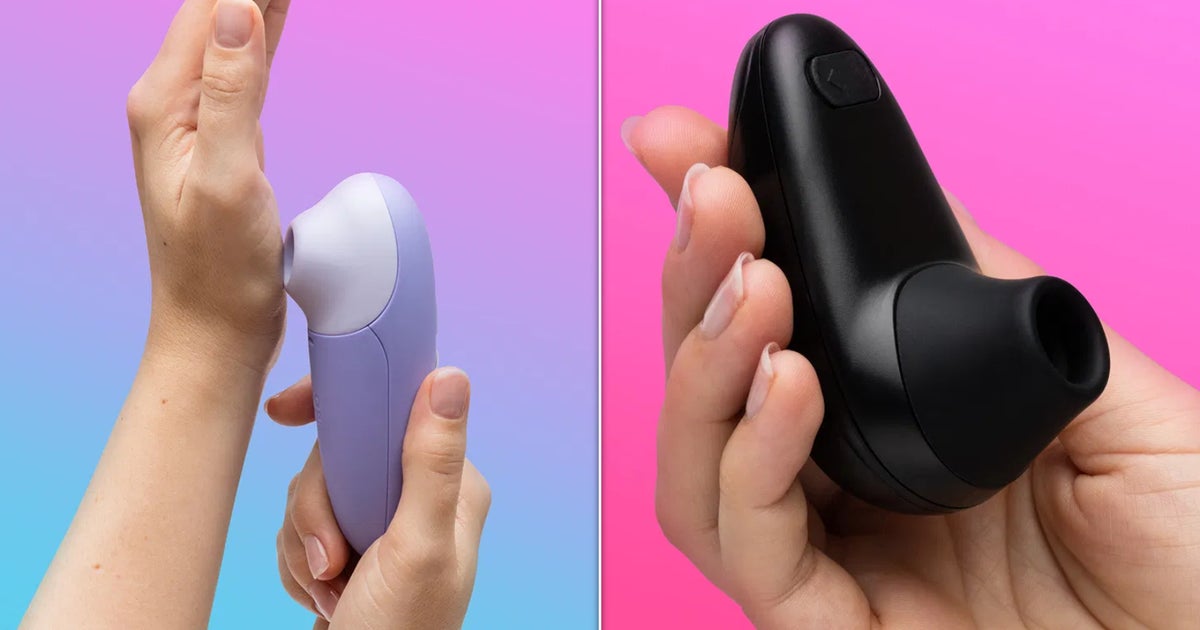
‘It Was Like An Exorcism’: The Sex Toys Making Waves In 2026


We hope you love the products we recommend! All of them were independently selected by our editors. Just so you know, HuffPost UK may collect a share of sales or other compensation from the links on this page if you decide to shop from them. Oh, and FYI — prices are accurate and items in stock as of time of publication.

Every now and then, something comes along that changes your life forever. It’s the start of any love story for the ages: girl meets sex toy, falls in love, and lives happily ever after. It could happen to anyone.

Since the suction category took off, this has been more true than ever. These oral sex stimulators, which pulsate air waves against the clitoris, have taken the world by storm.

Remember the hype for the Rose in 2020? The world shut down, and at the same time attitudes towards this petalled pulser blossomed, with people raving about their love for it on social media.

But we’ve moved on to better things since then. At least, the reviews on two Lovehoney suction toys seem to suggest so. As the owners of Pleasure Air Technology – used in toys from Womanizer, to ROMP, and the Rose – Lovehoney is no stranger to wet and wild (literally) feedback on its products.


Couples Who Are In Love Should Be Able To Answer These Questions


When was the last time you asked your partner something more meaningful than “How was your day?” or “What’s for dinner?”.

It’s easy to think you know everything about the person you’re with. But people evolve over time, and relationships thrive on curiosity.

Asking the right questions can help you better understand your partner and deepen the emotional intimacy between you.

“The ‘right’ questions deepen emotional connection and shared meaning,” licensed marriage and family therapist Tara Gogolinski told HuffPost.

“They focus on each other’s inner worlds, not trivia facts or sameness. Couples who understand each other’s emotions, needs, and desires are more resilient, more satisfied, and better able to navigate conflict.”

Couples Who Are In Love Should Be Able To Answer These Questions

Westend61 via Getty Images

“Getting to know your partner intimately isn’t a one-off process; it takes consistency,” clinical psychologist Annie Hsueh said.

Dr. Annie Hsueh, a licensed clinical psychologist and couples therapist, said asking thoughtful questions also helps partners develop a “love map” of one another’s inner world – a concept popularised by relationship researcher Dr. John Gottman in The Seven Principles for Making Marriage Work.

Couples who maintain detailed love maps are better able to navigate stress, conflict and life transitions, such as having a child or coping with illness.

“Getting to know your partner intimately isn’t a one-off process; it takes consistency,” Hsueh said.

Regular check-ins – whether daily or weekly – while asking the right questions can help couples stay curious about one another and deepen their understanding over time.

The most important questions to ask your partner

According to Gogolinski, healthy couples don’t need to know everything about each other. But there are key questions that, if partners know the answers to them, are strong indicators of a healthy relationship.

“These questions get at the heart of three important concepts: being in tune with each other’s feelings and noticing when something is off (emotional attunement); feeling safe, supported and confident in the relationship (secure connection) and listening, responding, and showing your partner that what they say truly matters (responsive communication),” she said.

Some core questions include:

  • What helps you feel most loved or valued?
  • What fears or insecurities tend to trigger you?
  • How do you prefer to receive comfort when you’re overwhelmed?

To navigate recurring conflicts, Gogolinski recommended knowing your partner’s stress patterns:

  • What situations or topics cause you the most stress?
  • How do you typically cope: withdrawal, problem-solving, humour?
  • What cues indicate you’re feeling overwhelmed or shutting down?
  • How can I best support you during stress?

Understanding each other’s emotional world also extends to long-term dreams, values, and personal history:

  • What are your long-term goals?
  • What excites you the most?
  • Who influenced you most growing up?
  • What experiences shaped who you are today?

Gogolinski said, “Asking these questions helps you understand your partner on a deeper level and allows you to support them meaningfully.”

It can be hard to break out of the day-to-day grind to connect beyond surface level, but you can intentionally seek out time to connect together.

bymuratdeniz via Getty Images

It can be hard to break out of the day-to-day grind to connect beyond surface level, but you can intentionally seek out time to connect together.

Questions that can deepen your connection

One simple way couples can stay emotionally connected is by asking questions that go beyond surface-level updates, Hsueh said.

“When you ask not just what has been on your partner’s mind, but also what has been on their heart, it allows them to reflect more deeply on the things that matter most,” she said. “Stay curious and let the conversation flow. It can deepen your bond.”

Hsueh suggests starting with a daily debrief at the end of the day, which can open the door to more meaningful conversations.

Daily check-in questions might include:

  • What was the toughest part of your day today?
  • How are you feeling about it now?
  • How can I best support you?
  • What was the best part of your day today?
  • What’s something unique that happened today?

Beyond day-to-day updates, Hsueh recommended regularly checking in about different aspects of your partner’s inner world – including their stress, dreams, emotions, personal history and relationships.

Deeper check-in questions could include…

Stress and concerns

  • What’s been weighing on you lately?
  • Is there something difficult you’re dealing with that you wish I understood better?
  • What concerns have been on your mind recently?

Hopes and dreams

  • Where do you see yourself in five years?
  • What excites you the most right now?
  • Is there something new you’d like to try or learn?
  • How can I support you in achieving your goals?

Emotional world

  • What moments have brought you joy lately?
  • When do you feel happiest?
  • What’s something that has been upsetting recently?

Personal history

  • Who influenced you most growing up?
  • What childhood memories stand out to you the most?
  • What experiences shaped who you are today?

Relationships

  • How are you feeling about your friendships lately?
  • How are things with your family?
  • When do you feel most supported by the people around you?

“These types of questions allow you to get to know your partner on a deeper level,” Hsueh said. “They can also help you understand how best to support them, and even make exploring different parts of your lives together more fun.”

How to ask these questions effectively

If asking these types of questions are new to both you and your partner, both Gogolinski and Hsueh recommend the following to make it feel more seamless and natural:

  • Soft startups: Begin with curiosity, not accusation.
  • Scheduled rituals of connection: Regular check-ins and shared routines keep communication consistent. Pick a time of day or a specific day of the week, and stick with it.
  • Turn-taking: Let one partner speak while the other listens fully.
  • Normalise differences: Accept that you don’t have to share all preferences to have a strong bond.
  • Create emotional safety: Private, distraction-free conversations build trust.

As important as it is to ask the right questions at the right time, both Hsueh and Gogolinski emphasise the importance of honing your listening skills.

People with strong, active listening skills have a better chance of creating the safety needed to grow deep, lasting connections.

“Work on being a good listener,” Hsueh said. “Respond to your partner with curiosity and openness. Listening and staying engaged can help your partner feel safe sharing their thoughts and feelings. The more you create safety around vulnerability, the more you’ll be able to open up to one another – and the closer you’ll become.”

Gogolinski agrees that the intention behind listening matters just as much as the questions themselves.

“It’s important to listen with the intention of understanding, rather than simply preparing your response,” Gogolinski said.

“Validate what you hear your partner saying – for example, ‘Thank you for sharing that,’ or ‘I can see why you’d feel that way.’ Staying curious helps keep the conversation open and prevents defensiveness, assumptions or mind-reading.”

“Try to listen for the emotion being expressed, not just the surface-level content,” she continued. “When we reflect our partner’s emotions back to them, it helps them feel truly understood.”


‘Tolyamory’ May Have Crept Into Your Relationship Without You Realising


Expert comment provided by licensed sexologist, relationship therapist, and author at Passionerad, Sofie Roos.

You’ve probably heard of polyamory, or non-monogamous relationships, which can sometimes involve more than two partners.

When done healthily, these involve open communication, clear boundaries, and frank discussions.

And while “tolyamory,” which was coined by relationship writer Dan Savage, is a relatively new term, sexologist and relationship therapist Sofie Roos says this kind of permissive behaviour has been happening for ages.

“I would say that this phenomenon is pretty common,” she told HuffPost UK.

What is tolyamory?

It’s a combination of the words “polyamorous” and “tolerate”. It refers to a relationship where some indiscretion – be it flirting, flings, or inappropriate messages to other people – is understood to be going on in the relationship, but is never discussed openly.

One partner usually turns a “blind eye,” Savage said.

Roos told us people can be hesitant to bring up behaviour outside of the implied or stated boundaries of their relationship, “to protect the safety, peace, the family, to avoid conflicts or because it feels scary to open a door you might not be able to close again”.

And while the sexologist doesn’t think tolyamory is absolutely always terrible, she does think it usually comes with an imbalance of power.

“If two adults actively choose… this quiet agreement… I think it’s up to them,” she said.

“However, the problem is that this most often isn’t a mutual decision… [often], one tolerates, and the other one takes liberties. The one who’s the victim doesn’t feel they can say what it really costs them emotionally as they’re afraid of the consequences, which leads to a toxic situation.”

How can I tell if I’m in a “tolyamorous” relationship?

“The most obvious sign is that there are situations where boundaries have been crossed, moments which you both know you should talk about,” but nobody brings them up, shared Roos.

You might also sense an invisible “line” of candour about suspected, or known, indiscretions. These don’t have to involve outright cheating: it can also include unspoken feelings about an ex, a slightly-too-close relationship with a coworker, or “a general feeling around how your partner gives other people romantic appreciation”.

Perhaps, “you aren’t asking the questions you wanna ask, maybe because you don’t want to hear the answer, or… you tell yourself it’s better to keep the peace than to be honest”.

Your relationship could look, and even feel, great on the outside or the inside. But the two of you have “shut off” some lines of communication.

“To me, the problem seriously starts when this turns into you not being able to trust your partner, and when you start putting your own feelings aside to spare peace between you, which… tends to lead to a toxic relationship where you also start to step over the line with others instead of setting boundaries,” said Roos.

When should I consider tolyamory a dealbreaker?

If you identify with some of this and aren’t sure whether it should be a dealbreaker, Roos says you should consider your sense of ownership in the decision.

“In my opinion, it should be a dealbreaker when the tolerance no longer is made out of free will, but is something you do out of feeling powerless, broken down or afraid of losing the relationship,” she shared.

That includes regularly feeling uncomfortable with your dynamic, constantly comparing yourself to others, losing your self-esteem, or feeling that your needs always have to come last.

“Another red flag is if the person uses confusion to their advantage in a way where they want to be free to do whatever they want, but without taking
responsibility, checking in on you, or giving you the same freedom,” she said.

If that’s the case, you’re likely facing an “imbalance” where it feels as though “one partner sets the boundaries for the relationship without you being a part of it”.

Ultimately, when silence is used to avoid responsibility, when you feel unable to tackle difficult topics head-on, and when you’re staying more out of fear than love, try to “think over the situation”, Roos warns, as the price for your relationship “is too high to pay”.


Venting Or Complaining: Therapists Say The Difference Matters


When your partner frustrates you or your mum is on your last nerve, it’s natural to call a friend or talk about your feelings at the next wine night. But not all emotional unloading is created equal.

“Although they seem similar on the surface, venting and complaining are actually distinct phenomena that lead to different outcomes for your mental health,” Natalie Moore, a licensed marriage and family therapist, told HuffPost.

So what exactly is the difference? And when does talking to friends about your feelings about a person or situation go from a healthy outlet to an unproductive cycle of negativity?

Below, Moore and other relationship experts break it down.

What is venting?

“I think of venting as letting off steam about the annoying habits or behaviours that are inevitable in a relationship,” said Tracy Ross, a licensed clinical social worker specialising in couples and family therapy. “And more often than not it’s helpful to have a friend who listens, validates and just understands why you feel the way you do – without judgment.”

Having a little vent session with a close friend can be a healthy way to engage with something that’s bothering you.

“Venting typically involves expressing emotions and frustrations in a way that seeks understanding or relief,” said relationship therapist Joy Berkheimer. “It allows for an honest exploration of feelings and can facilitate personal insight or clarity when approached constructively. Essentially, venting can be a form of processing, providing a necessary outlet for emotional burdens.”

It feels good to get something off your chest and discuss how it’s been affecting you.

“Venting often sounds like, ‘I just need to talk this through – I had a moment, and I need someone to hear me out,’” said Sanah Kotadia, a licensed professional counsellor with Balanced Minds Therapy. “There’s usually emotion, but also a sense of release or clarity afterward.”

Getting to hear someone else’s perspective can also help you see the situation more clearly.

“Honestly, sometimes we need to talk to our friends when we’re confused, frustrated, or even just want someone to say, ‘Yeah, that would drive me nuts too,’” said April Davis, the founder of Luma Luxury Matchmaking. “It can be a way to process what you’re feeling in a safe, supportive space.”

A little venting can give you the chance to calm down and explore why you’re feeling strongly so that you can address the issue directly with the other person later with a cooler head.

Venting Or Complaining: Therapists Say The Difference Matters
Intention, tone and level of emotion can help you determine if something is amiss.

“Venting can be a healthy outlet if it’s done intentionally, with self-awareness,” said dating coach Sabrina Zohar. “It’s about releasing tension, exploring feelings, and often includes self-reflection. It sounds like, ‘I’m overwhelmed and need to talk this through so I can make sense of it.’”

Maybe you had an argument with your partner over something small, like not getting to go to the beach for a weekend because you have to go visit your in-laws.

“Sometimes, all we need is the opportunity to let off steam and we’re ready to let the situation go,” Moore said. “Other times, the venting allows us to transition into problem-solving mode. Venting primarily indicates that there is an emotional release that needs to occur to avoid a blowup, much like relieving pressure on a pressure cooker so it doesn’t explode.”

What is complaining? How does it differ?

“Complaining often carries a more negative connotation,” Berkheimer said. “It tends to focus on grievances without seeking resolution or understanding. Complaining may involve repetitive criticism that doesn’t foster growth, and it can lead to a cycle of negativity that detracts from the relationship.”

There’s a greater focus on blame in complaining, which has a critical edge to it.

“It’s more about being right than being real,” Zohar said. “It sounds like, ‘Can you believe they did this again?’ and usually doesn’t leave room for personal accountability or change.”

Rather than exploring and shifting your own thinking on the subject, you tend to circle the same frustration over and over.

“When someone engages in chronic complaining, they aren’t just releasing tension from the system – they’re actually subtly communicating that they aren’t ready to make the necessary changes to solve the problem,” Moore said.

“For example, someone who isn’t ready to face conflict head-on might complain to their friends about their partner as a way of expressing frustration without having to face their own fears.”

Ultimately, complaining feels like an attack rather than a way to blow off steam. There might even be a sense that you’re putting the weight of these issues on your loved ones and expecting them to solve the problem.

“Complaining goes more to the character of the person and can be detrimental,” Ross said. “It can be disloyal depending on the content and the intent behind sharing. It may backfire – if you have serious complaints about your partner that you want to address, the person to do that with is your partner, not your friends.”

Understanding the difference between venting and complaining can help people nurture healthier relationships.

“While both can emerge from a place of frustration, the intention behind venting is generally to seek support and empathy, whereas complaining often lacks this constructive purpose,” Berkhaimer said.

“Venting is more of an emotional release and desire to fix the issue, whereas complaining is the same story, over and over, with no real intention to fix your relationship,” Davis echoed.

Emotional expression should ideally have a positive long-term impact on your personal well-being and your connections with others.

“One way to tell the difference is by noticing how you feel afterward – do you feel clearer and more grounded, or more stuck and frustrated?” Kotadia noted.

Experts see more nuance in venting, whereas complaining often flattens complex situations into black-and-white thinking.

“One is a step toward repair. The other is a step toward emotional gridlock,” Zohar said. “And when complaining becomes habitual, it reinforces powerlessness – it makes you the victim of a relationship you’re not taking ownership in.”

How do you know if you’re engaging in healthy venting or an unhealthy complaining cycle?

“Venting is often a healthy, normal, outlet for letting off steam that is inevitable in a relationship,” Ross said. “Venting about everyday annoyances like domestic chores, messiness or being late is normal and often helpful. There are things we just have to accept about our partners, yet they still annoy us and make us angry.”

Releasing the tension by talking to friends can feel validating, particularly if they sometimes get annoyed with their partner over similar things. By venting to a group, you also give everyone else permission to do the same.

“In groups of people, it’s common for themes to emerge and for friends to feel less alone in their frustrations,” Moore said. “If the group venting sessions lead you feeling seen, heard and supported, then it’s an overall positive experience.”

You might want to reevaluate your participation in the group venting sessions if the experience leaves you feeling demoralised or hopeless, however. The goal is to process your emotions and gain perspective in a positive way.

“Ideally, venting should be approached with intention,” Berkheimer said. “It’s beneficial when it fosters constructive discussions and deeper understanding, not just about our partner, but about our own needs and patterns. When we share in a way that seeks support and growth rather than merely complaining, it can strengthen our relationships with both our partners and our friends.”

Experts emphasise that venting about someone is not inherently “good” or “bad”. Life and relationships are complex and nuanced.

If you find yourself venting about someone often, it might be time for some serious reflection.

“When determining whether your behavior is healthy or not, look at the big picture,” Moore said. She recommended asking yourself questions: “Am I overall fulfilled in my relationship?” “Do I feel better after venting to my friends?” “Am I willing to look at my part in problems and address them with my partner head-on most of the time?”

If the answer to all three of these questions is yes, then you probably don’t need to worry. But maybe you’ll discover these vent sessions are your only coping mechanism and just keep you stuck in repetitive negativity.

“We can easily fall into this cycle of rehashing the same issues over and over because we aren’t addressing the root of the problem,” Davis said. “That might mean you need to have difficult conversations with your partner or consider couples counseling.”

Therapy provides a safe, supportive environment to discuss your frustrations with a trained professional, and with couples or family counseling, you and the other person can go into it with the shared goal of improving the health of your relationship.

“Repeated venting can sometimes be a sign that you don’t feel equipped to bring certain things up with your partner, or that you don’t believe anything will change,” Kotadia said. “That’s when it might be worth exploring those patterns more intentionally – either through self-reflection or with support from a therapist.”

She advised looking inward and examining what you’re seeking when you vent. Is it just a little support and perspective? Or are you feeling utterly unheard, underappreciated and overwhelmed in your relationship? Maybe you’re using these conversations as an avoidance technique.

“Venting should be a release valve, not a lifestyle,” Zohar said. “If you’re constantly bringing your relationship to the group chat instead of the person you’re dating, something deeper is going on – and it’s not just about them.”

Think about the tone and level of emotion you bring to these conversations. Look for negative patterns in your communication and whether you feel comfortable having an honest, open conversation with your partner.

“There is a difference between sharing, talking it through and figuring out what you want to do about it – and revealing serious issues and disturbing behaviours that are red flags,” Ross said. “If you have serious doubts or concerns about your relationship, be clear before you start the conversation, know whether you are venting so that you can then put your head in the sand and ignore the flags, or because you aren’t sure what to do and need a friend to talk it through.”

That’s why it’s important to consider your audience, the content of what you’re discussing and your priorities. Perhaps you know you need to accept your partner will never be as neat as you are, but you cope by occasionally complaining to a trusted friend. Or maybe you’re diving into serious problems that go into a partner’s character or the viability of your relationship.

“Venting can put friends in an awkward situation,” Ross noted. “In the heat of the moment, you may be very upset about an argument, and if that’s when you complain to your friend, it can come across as more serious than it actually is.”

Understand that what you say may well change your friend’s opinion of your partner and lead them to question your choice to stay in the relationship. Consider how you would feel if your friend shared something similar about their partner.

“Remember, venting is only one person’s side of the story and may be taken out of context,” Ross added. “The thing to ask yourself is, ‘If my partner knew I was sharing this, how would they feel?’ While they may not love it in any instance, there is a difference between things you can laugh off and things that feel like a breach of loyalty and confidence.”

Basically, you should give the other person involved a chance to work on big issues directly with you before you go off about them with your friends.

“Sometimes venting is a symptom of emotional self-abandonment,” Zohar said. “You’re not a bad partner for needing support, but if you’re outsourcing all your emotional expression to friends, you’re not in a full relationship with the person you’re dating. You’re managing perception, not building connection.”

That’s why it’s worth getting curious – without judgment – about why you aren’t saying these things to the other person. Do you feel emotionally safe? Are you worried that bringing it up would cause insurmountable conflict or rejection?

“Many people aren’t venting to gain clarity – they’re avoiding direct conflict,” Zohar said. “They’re using their friends to emotionally regulate, validate their side, or make sense of dynamics that feel unsafe to bring up in the relationship. If your friends know more about your emotional needs or resentments than your partner does, that’s not communication – that’s emotional outsourcing.”


The Topics Virgins Over 30 Bring Up Most In Sex Therapy


Expert comment provided by licensed sexologist, relationship therapist, and author at Passionerad, Sofie Roos.

Previously, we heard from sexologist and relationship therapist Sofie Roos about what straight men and straight women bring up the most in sex therapy.

And this week, she spoke to us about the topics virgins over 30 discuss most with her.

1) Performance anxiety and not knowing “what to do”

“Many people over 30 who’re still virgins… [talk to me] about performance anxiety… they often worry about not knowing what to do during sex, that they will mess up, or that it will get awkward,” Roos said.

Other common fears include being judged by your partner and not having the supposed “right” physical responses to sex and foreplay.

This stress, the sexologist said, can sometimes create a vicious cycle. “These kinds of worries easily lead to the physical reactions they’re afraid of, such as erection problems, difficulties with getting wet, or having a hard time relaxing.”

2) Feelings of shame and feeling “behind”

Because society often has “norms for when we should have sex the first time,” Roos said, some virgins aged 30 and over feel they’re behind or “as if something is wrong with you, even though it most often isn’t”.

It can make communication with partners and even dating feel more difficult, she added.

3) Worries about their desirability and low sexual self-esteem

Some in this group “develop doubts about their ability to attract, or their desirability as a romantic partner,” the therapist told us.

“Even though there’s absolutely nothing wrong with you,” she said, those who haven’t lost their virginity at 30 or older can “see themselves as less appealing and capable in intimate situations than what they actually are”.

And it’s not uncommon for people to “grow an insecurity around flirting, intimacy and emotional closeness, making many of the natural elements in finding a partner feel too overwhelming,” she added.

4) Fear of pain

Pain during penetration is a relatively common concern for straight women, Roos told us last week. And for virgins aged 30 and over, she told us many are afraid of “pain during sex, which just increases the risk for unpleasant intimacy, especially in women.

“For people with vulvas, being afraid of pain during penetration can lead to difficulties with relaxing and getting wet, making the sex unpleasant,” she added.

And for men, “worrying can cause temporary erection problems, which also tend to put people in a very negative loop where having sex becomes something that feels more and more difficult each time you try”.

So… any advice?

Roos had some words of wisdom for people in this group, starting with destigmatising being a virgin after 30.

“There’s no deadline for when you should have sex for the first time – it’s all about what feels right for you! It’s normal to have your sex debut early, and it’s normal to have it late, and at what age you first get intimate says extremely little about how the rest of your sex life will be,” she said.

She also said that sometimes, those who feel they’re “late” to having sex can put a premium on experience, even at the cost of pleasure. But she thinks it’s healthier to stay present, start as slow as you like, and communicate.

“Start with kisses and just being close, and then take it from there at the tempo you enjoy, and focus on how it feels and on the moment instead of on what you’re doing, something that builds safety and makes it feel way better”.

Roos also says many virgins over 30 are “scared about telling the person they’re seeing that they never have had sex before, but in my experience, a date often responds with way more understanding and empathy than we expect.”

Explaining where you’re at sexually can make further communication easier.

You should also learn “what feels good, both physically, emotionally and mentally” – that “makes sexual encounters feel more welcoming, safe and less mystical, which is key for taking that step”.

Lastly, the sexologist said, don’t be afraid of seeking expert help, or even talking to a friend, if you need. That’s “extremely valuable if the fear, shame and anxiety are strong and difficult to deal with on your own”.


The Issues Straight Women Bring Up Most In Sex Therapy


Sexologist comment provided by licensed sexologist, relationship therapist, and author at Passionerad, Sofie Roos.

Last week, sexologist and therapist Sofie Roos shared the issues straight men most often brought up in sex therapy.

And this week, she spoke to us about straight women.

Here, she shared the topics she hears about most frequently:

1) Having a lower sex drive than their partner

“The single most common problem straight women bring up with me is that their sex drive has decreased or is overall low, while their partner is way more interested in being intimate, leading to worries and tension in the relationship,” Roos told us.

She added that women may be more likely to compare their lust levels to their partner’s, and feel their lower desire poses an “issue”.

2) Pain during penetrative sex

Experiencing pain during sex thanks to conditions like vulvodynia, vaginal dryness, or pelvic floor issues is “extremely common” among this group, said Roos.

“What most don’t know is that there’s both a physical and mental part… pain leads to fear, and fear leads to deeper problems,” leaving some in a vicious cycle.

3) Not orgasming during partnered sex

Straight women have long suffered from “the orgasm gap”. The sexologist said this doesn’t seem to be going away.

“Many straight women are having a very hard time orgasming during intimacy with their partner, and they don’t know how to solve it,” she said.

4) Body image issues

“I’ve met countless straight women that are extremely aware of how their own bodies look, smell and feel… they think so much about age, weight and how they are seen that it becomes difficult to just let go and be in the moment,” Roos added.

5) Losing desire thanks to the mental load

In straight relationships, the mental load – or having to think about, keep track of, and remember the endless tasks that keep a household going – still predominantly falls on women’s shoulders.

And the sexologist said that can have a knock-on effect in the bedroom. Doing “all the planning… as well as all the emotional work in the relationship” can “lead to higher stress levels, which makes the body de-prioritise desire”.

6) Not putting their own pleasure first

“I often meet women who describe themselves as having a hard time with setting their sexual needs and boundaries first, as they’ve been taught to be accommodating rather than prioritise what they want and don’t want,” she stated.

So, uh, any advice?

Yes. The sexologist said that accepting shifts in your levels of lust and trying alternative forms of intimacy, like “oral sex, massage, kisses, caresses and more mentally-focused pleasure, such as roleplaying or dirty talk,” may help.

Explore your own desires, perhaps through masturbation, and communicate them with your partner. “As a majority of women can only reach all the way via clitoral stimulation, I also advise focusing more on that, either with your hands, mouth or a sex toy,” the sexologist said.

Remember also that “pain during sex isn’t normal”, so it’s important to seek professional help if you experience it.

And keep in mind that “your sex life isn’t isolated from the rest of the way you live, so try to look at your diet, sleep schedule, exercise habits, how you drink, how you deal with stress and how your relationships are,” she concluded.


The Best Sex Of Your Life Is Still To Come: The Age Satisfaction Actually Peaks At


Out of all the things we expect to get better with age, I don’t think sex necessarily tops that list. Surely in our 20s and 30s, with youth on our side (and – ahem – flexibility), our sex lives should be in their glory days?

Well, as it turns out, we couldn’t be more wrong. According to a new study, it’s actually incredibly likely that you’ve not even had the best sex of your life yet. Talk about something to look forward to, eh?

The new research from leading digital health and wellness platform Hims, shared exclusively with HuffPost UK, reveals that sexual satisfaction peaks at 55 for women, and 56 for men.

In fact, over half of the respondents to their survey (53%) aged 50+ said sex improves or may improve after the age of 50 – a far cry from the assumption that our needs will begin to ‘fizzle out’ as we age.

According to Dr Peter Stahl, Head of Men’s Health at Hims, this doesn’t come as a surprise to someone who works in the field: “In my experience as a urologist for more than 20 years, fulfilment is rarely defined by fitness peaks or stamina.”

It’s not physical vigour that makes sex better decade after decade – it’s the joys of increasing experience, confidence, and deeper emotional connection.

Over a quarter of respondents (27%) told Hims that they’re more confident during sex now than when they were younger, and 28% attribute better sex in later life to being more confident in their body. Additionally, 24% of all respondents report they’ve become better in bed with age – practice makes perfect, right?

As Dr. Stahl puts it: “Greater emotional maturity, stronger self-awareness, and more stable, trusted partnerships often come with age. Those factors can meaningfully enhance sexual wellbeing and experience.”

The biggest surprise in the data however? Their finding that the age reported as the lowest age for sexual satisfaction was just 27. It certainly backs up the idea that emotional maturity has a huge impact on how much we enjoy time between the sheets.

“In early adulthood, many people are still building self-confidence, navigating new relationships, and learning how to express themselves and their sexual needs. Sexual satisfaction is defined by much more than physical performance,” Dr. Stahl adds.

However, that’s not to say sex as we age doesn’t come with its own set of issues. Almost one in ten men surveyed (9%) stated that they have experienced erectile dysfunction, while the research also found that low libido for men and women (15%) and vaginal dryness (12%) have had an impact on some respondents’ sex lives.

Luckily it’s not the be all and end all for your sex life – as Superdrug Online Doctor previously told us at HuffPost UK: “The most effective approach for couples to enhance intimacy and revive their sex life in the presence of erectile dysfunction is to prioritise the journey rather than solely focusing on the end goal.

“Often, sex becomes too focused on achieving penetrative intercourse and orgasms, couples can benefit from cherishing the connection and intimacy they experience by simply being physically and emotionally close to one another.”

So, if you’re sitting reading this in your 20s or 30s and feeling as though you’re in a sexual satisfaction rut, never fear – the best is yet to… come.


From BDSM To Sordid Affairs: What Emerald Fennell’s Wuthering Heights Gets Right About 18th Century Sex


Whether you loved it or you hated it, Emerald Fennell’s sexually-charged reimagining of Emily Bronte’s Wuthering Heights – featuring a brooding Jacob Elordi – still has us all talking over a week after its cinematic release. While the original 1847 novel didn’t feature any sex scenes, Fennell’s film is far more ‘Heathcliff, it’s me, it’s Cathy, I’m horny.’

But for all the sneaking out of bedroom windows, romping in carriages, grinding in the moors, finger sucking and… puppy play that Fennell portrays in her take of Wuthering Heights, how much of this raunchery was actually going on during the period in which the original novel was set?

When you think of sexy periods of time in history, we tend to think of the promiscuity of the Ancient Romans or even the more recent free love movement of the 1970s – not the late Georgian era. So before we all start wishing that we could jump in a time machine to 1770 and find our own Heathcliff to romp about the moors with, we asked leading UK historians what sex and relationships back then were actually like.

Social Class Dictated Your Sex Life

Right from the first opening scene, Fennell’s version of Wuthering Heights features public hand jobs at the gallows and crowds snogging during a frenzied public hanging in an impoverished town centre – and you’ll be surprised to know the film was actually onto something historically accurate.

As the London Museum explains, public executions were more like a fair and a party atmosphere would be in the air as thousands of people gathered to watch someone’s final moments. Gruesome, we know – however, apparently it wouldn’t be enough to turn the Georgians off.

You see, according to Dr. Ruth Larsen, Senior Lecturer in History at the University of Derby, pre-marital sex was really common among poorer classes during the time in which Wuthering Heights was set (1770 to around 1801). “Poorer people tended to marry older and engage in sexual activity prior to that, especially those living in urban areas,” she tells HuffPost UK.

So: thousands of people, likely from poorer classes, gathering en masse in an urban area with drinking and partying going on? You do the math – it would appear that this is a big old tick for Fennell’s uninhibited Wuthering Heights adaptation.

But what about those lucky enough to be born into aristocracy? Unfortunately you wouldn’t be ‘getting lucky’ as often as your less well-off counterparts.

“For the wealthier classes, it was very unusual for women to have sexual relations before wedlock,” Dr. Larsen explains. For people like Cathy, pre-marital sex would be off the cards as “the usual form of courting would have been through assemblies, formal gathering and family acquaintances.”

The sense of familial obligation, to uphold the positive reputation of the family, was felt by many, not just the richest in society – and the film yet again gets this right with Edgar Linton, whom Cathy marries, despite her love for Heathcliff in order to improve her family’s social standing.

And her choice wouldn’t have been uncommon in the late Georgian era either. As Dr. Larsen adds: “For most young women, marriages were an opportunity to find their place in society, to become mistress of the house and, if they were landed, of the estate. To decide to take a different path would have been seen by most people as unwise.”

The Logistical Nightmare Of Affairs In Georgian Britain

Of course, the sauciness in Fennell’s Wuthering Heights really ramps up when Heathcliff and Cathy give up yearning and instead start a steamy affair (cue the famous sex scene montage).

However, as easy as the duo make it look, having an affair in the late 18th century was far from plain-sailing.

“The scenes where Heathcliff crawls in through Cathy’s window are very much representative of the literary tropes we love today, but this might have been difficult to pull off in historical reality,” Lauren Good, Senior Content Producer from HistoryExtra, tells HuffPost UK.

If you were rich enough, you’d be lucky enough to have a separate bedroom to that of your spouse (as Margot Robbie’s iteration of Cathy thoroughly enjoys), however your bedroom would be adjoined – which, as Good points out, “isn’t ideal in allowing for a quick exit from your illicit lover!”

And if you did manage to get some time alone with your ‘bit on the side’, trying to then have sex wasn’t straightforward thanks to the fashion of the era.

“Women’s dress of the era wouldn’t have been so easy to get into,” Nichi Hodgson, author of the Curious History of Dating: From Jane Austen to Tinder explains.

“Women typically wore a chemise, corset, under petticoat, hoop skirt or crinoline, over petticoat and long sleeved gown – plus gloves.” Good luck trying to remove all of that while your husband snores next door.

At least Cathy wouldn’t have had to try and get her knickers off, as Hodgson points out that drawers did not come into fashion until the 1870s: “If a hooped skirt tipped to one side, you may have got an eyeful!”

In fairness to Fennell, we don’t see a nude Cathy in any of the film as Heathcliff navigates her many, many layers of opulent clothing during the daytime sex scenes in the montage – so once again, we have another historical accuracy win!

The Surprising Sadomasochism Of The Late 18th Century

Excuse our phrasing but buckle up – this might be the most surprising historical accuracy of the entire film.

Arguably the most shocking portrayals of sex in Fennell’s film come in the shape of sadomasochistic relationships, namely two servants enjoying off screen flagellation in the stables and Isabella Linton’s submissive role to Heathcliff’s dominant. And it turns out, in the words of Hodgson, “bondage and kink were alive and well in the 18th century!”

“We often assume that the stricter societal expectations placed upon those who lived centuries before us translated into their intimate lives, but that wasn’t always the case,” Good explains.

“We might dismiss this as shock factor in Wuthering Heights but flagellation, as Hilary Mitchell told us at HistoryExtra, ‘played a prominent role in English sex work from about 1700 onwards’.”

But before we get ahead of ourselves, it’s worth noting that BSDM-inspired activities were most likely services that men paid for, or engaged in with women in their service (female maids were often treated as household sex workers) as Hodgson explains.

And as for Isabella panting on a lead, you can forget about it happening in real life she adds – “not because those sort of dynamics didn’t exist but because no middle class gentleman and woman would ever be that brazen in front of a visitor like Nelly Dean in the film.”

While the release of Wuthering Heights has us yearning for moody Georgian era romance, it’s surprising how much of it is rooted in reality. If we do hop in that time machine, we’ll just have to remember to pack easier to remove clothing.