Meet Figure AI: The company behind the humanoid robot hosted by Melania Trump


First lady of Sierra Leone Fatima Jabbe-Bio, Polish first lady Marta Nawrocka, French first lady Brigitte Macron, and U.S. first lady Melania Trump look at a humanoid robot during the Fostering the Future Together Global Coalition Summit in the East Room of the White House in Washington, DC, on March 25, 2026.

Oliver Contreras | Afp | Getty Images

The White House hosted its “first humanoid robot guest” on Wednesday, with first lady Melania Trump appearing alongside a robot from robotics upstart Figure AI.

The robot, identified as Figure 3, accompanied the first lady during the second day of the Fostering the Future Together Global Coalition Summit, a gathering focused on technology and children’s education. 

The machine greeted attendees in multiple languages and described itself as “a humanoid built in the United States of America,” according to widely circulated footage from the event.

The display represented one of, if not the, highest-profile showcases of humanoid robotics in the U.S. to date and highlights how the tech is becoming a national priority amid global tech competition. Beijing has also promoted humanoid robots at highly publicized events this year.

The first lady used the robot to promote her push for artificial intelligence in children’s education, suggesting that the robots could one day act as interactive educators at home. However, Figure AI says its third-generation humanoids are also applicable for more general purposes, including commercial and household tasks. 

The White House spotlight is likely to boost the brand of Nvidia-backed Figure AI, a lesser-known robot company compared to larger humanoid players like Tesla‘s Optimus and Boston Dynamics, though some of its team comes from those competitors, as well as tech giants like Apple.

A surging upstart 

Figure AI was founded in 2022 by Brett Adcock, a tech entrepreneur and billionaire who previously co-founded the publicly traded drone company Archer Aviation and a digital hiring marketplace Vettery. 

Powering its robots is the firm’s in-house Helix AI system, a vision-language-action model that powers its robots and enables learning through observation and verbal commands.

Amid growing investor excitement for physical AI, the firm raised more than $1 billion in its Series C funding round in September led by Parkway Venture Capital with participation from other notable investors such as Nvidia, Intel Capital, Qualcomm Ventures and Salesforce. That gave it a post-money valuation of $39 billion. 

The fundraising is expected to be put towards the firm’s aim to deploy thousands of robots in homes and logistics over the coming years — a goal that has likely been made easier by a major endorsement from the White House. 

Figure AI has already begun work with its first commercial customer in BMW, deploying its robots for tasks like handling sheet metal parts in manufacturing facilities.

Ongoing lawsuit

A tech figure across national priorities

Interestingly, the White House event on Wednesday wasn’t the first time that a company connected to Adcock received some major shine from the Trump administration. 

Shares of the drone company he co-founded, Archer Aviation, surged in June last year after U.S. President Donald Trump signed an Executive Order directing the establishment of a program to promote the safe integration of electric air taxis in U.S. cities.

Archer is participating in the initiative and is working on projects involving aircraft demonstrations. Following the June 2025 executive order, Archer raised $850 million in a registered direct stock offering. 

Adcock co-founded Archer Aviation in 2018 with Adam Goldstein and initially served as co-CEO. However, Adcock stepped down in April 2022, and then resigned from the company’s board of directors shortly afterward. 

He remains a shareholder, according to investment research platform Business Quant, but he has no active executive, board, or advisory position at the company. 

Choose CNBC as your preferred source on Google and never miss a moment from the most trusted name in business news.


Teaching Robots to Fly Like Birds | Newswise


BYLINE: Kitta MacPherson

Newswise — A bird banking in a crosswind doesn’t rely on spinning blades. Its wings flex, twist and respond instantly to its environment.

Engineers at Rutgers University have taken a major step toward building bird-like drones that move the same way, flapping their wings like real birds, using electricity-driven materials instead of conventional electromagnetic motors to power them.

In a study published in Aerospace Science and Technology, aerospace researchers Xin Shan and Onur Bilgen describe a “solid state” bird-like drone, typically referred to as an ornithopter, whose flexible wings flap and twist without motors, gears or mechanical linkages. Instead, the system relies on the piezoelectric effect, special materials that change shape when voltage is applied.

“We apply electricity to the piezoelectric materials, and they move the surface directly, without extra joints, extra linkages or motors,” said Bilgen, an associate professor in the Department of Mechanical and Aerospace Engineering in the Rutgers School of Engineering. “The wing is a composite including a piezoelectric material layer and a carbon-fiber layer. Apply voltage to the piezoelectric layer, and the whole composite flexes.”

With their bird-like design, ornithopters offer a level of flexibility that makes such drones well suited for future tasks such as search and rescue, environmental monitoring, inspection of hard-to-reach places, and urban package delivery, where aircraft must navigate around buildings, wires, people, and so much more.

The research team also developed a powerful computer model that connects all the important physics involved in flight at once: wing and body motion, aerodynamics, electrical dynamics, and the control architecture. That allows engineers to test and optimize designs virtually before building physical prototypes, saving time and money while speeding development.

“We’ve scientifically demonstrated that this type of ornithopter can be possible when we make certain material assumptions,” he said. “We can show the feasibility of designs that are not yet physically possible.”

For now, the primary obstacle is the performance of the piezoelectric material.

“Today’s piezoelectric materials are not capable enough,” Bilgen said. “However, our mathematical model allows us to look into the future with reasonable assumptions.”

Bilgen first encountered ornithopters in 2007 while he was a graduate student, but he said his interest deepened in 2013, when he began seriously exploring how flapping-wing flight might be reimagined using smart materials. Various companies have built experimental bird-like drones, but most existing designs rely on motors, gears and conventional actuators to drive wing motion.

Those systems, Bilgen said, struggle to match the performance of natural wings, which flex and respond continuously to changing air.

Bilgen says nature offers powerful lessons for engineers.

“Things that need to move fast must be lightweight,” he said. “That’s why bird wings are delicate structures, and aircraft wings mimic bird wings.”

While birds and insects provide inspiration for the work, Bilgen’s goal isn’t simple imitation.

“We don’t want to just mimic nature,” he said. “We want to exceed what nature does.”

So far, most prototypes of robotic birds rely on mechanisms that imitate bones and muscles. Bilgen’s team is taking a simpler path.

“We want to achieve flapping flight without bone-like structures or muscle-like actuators, flapping in a much simpler way,” he said.

Instead of motors acting as muscles, thin strips called Macro Fiber Composites (MFCs) are glued directly on their models onto flexible wings. When electricity flows through them, the wings flap, twist and morph.

“The carbon fiber acts like feathers and bone, and the surface-mounted MFCs act like muscles and nerves,” Bilgen explained.

Because the system has no gears or joints, the researchers call it a mechanism-free or solid state ornithopter.

Flapping wings offer advantages that spinning propellers found on conventional drones cannot, especially at small scales. “When flapping wings come in contact with the environment, they’re less destructive to themselves and to what they contact,” Bilgen said.

The use of piezoelectric materials or other smart materials could also improve renewable energy systems.

“A turbine blade is basically a rotating wing,” Bilgen said. “We’ve been looking at applying piezoelectric materials to turbine blades to see if there are aerodynamic benefits.”

By subtly changing blade shape in real time, engineers may be able to influence how air flows across the blade surface. That could lead to more efficient wind turbines, he said.

Explore more of the ways Rutgers research is shaping the future.


UAH to Host Southeast Aerial Drone Competition Regional Championship April 17–18 for Middle and High School Students | Newswise


BYLINE: Russ Nelson

Newswise — The University of Alabama in Huntsville (UAH), a part of The University of Alabama System, will host the Southeast Aerial Drone Competition (ADC) Regional Championship April 17–18 at Spragins Hall on the UAH campus. The event will bring middle and high school students from across the Southeast to Huntsville to compete in a series of team-based aerial drone challenges designed to test their technical knowledge, piloting skills and problem-solving abilities. Participants will apply science, technology, engineering and mathematics principles in real-world scenarios, demonstrating both engineering design and flight operations expertise.

The regional event is hosted by UAH’s Rotorcraft Systems Engineering and Simulation Center (RSESC), a research center focused on advancing innovation in aerospace systems and autonomous technologies. By serving as the site of the Southeast Regional Championship, UAH continues to strengthen its role as a leader in STEM education and workforce development, while connecting university research and expertise with K-12 outreach initiatives.

“At RSESC, we view the Southeast Aerial Drone Competition as an investment in the future of uncrewed systems, robotics and the STEM workforce,” says Justin Kumor, a principal research engineer at RSESC and UAH lead organizer of the competition. “Hosting this event reflects our commitment to developing talent, expanding opportunity and strengthening the partnerships that drive innovation.”

The championship is sanctioned by the Robotics Education and Competition Foundation (RECF), the governing body for the Aerial Drone Competition. The public is encouraged to attend and watch the competition, and admission is free.


Student teams must qualify at a REC Foundation–sanctioned qualifying event during the 2025–2026 season in order to compete. Participating teams represent middle and high schools from across the Southeast region, including Alabama, Florida, Georgia, Kentucky, Louisiana, Mississippi, North Carolina, South Carolina and Tennessee.

The ADC is a STEM-focused, hands-on experience in which student teams compete in four distinct missions designed to assess technical proficiency, teamwork and problem-solving skills:

  • Teamwork Mission: Two teams work together in a timed match to score points collaboratively on a field designed for strategic drone operations.
  • Piloting Skills Mission: An individual team pilots a drone through an obstacle course, scoring points for precision, timing and execution.
  • Autonomous Flight Skills Mission: Teams program their drones to fly autonomously, completing tasks without manual control and earning points for successful autonomous operations.
  • Communications Mission: Teams interview with judges and explain their work, design decisions, programming logic and logbook documentation — demonstrating both technical understanding and communication skills.

Volunteers needed

UAH is seeking volunteers to assist with the event. Volunteers play an essential role in the success of the Aerial Drone Competition, with several opportunities available for individuals of all experience levels. Field Reset volunteers support match operations by accurately resetting the competition field after each round and assisting the Field Manager or Head Referee as needed. This high-energy, physically active role is ideal for enthusiastic participants who can follow field diagrams, move efficiently and respond to direction.

Inspectors help ensure fair play by verifying that drones meet competition rules and specifications using a provided checklist. This moderate-activity role requires attention to detail, teamwork and the ability to follow established guidelines. No prior experience is required for either position, and training will be provided prior to the event.

The volunteer registration deadline is April 12. Students, faculty staff and community members are encouraged to participate. Those interested may register by filling out the ADC Volunteer Registration Form.


Five Georgia Tech Faculty Named to NAI Senior Members Class of 2026 | Newswise


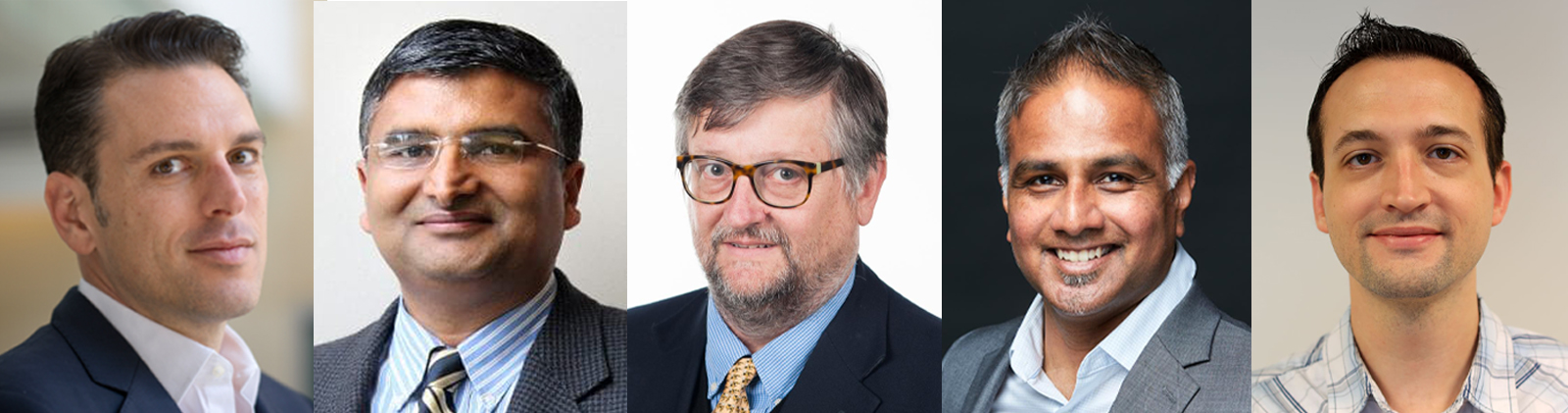
Newswise — Five faculty members from Georgia Tech have been elected as senior members of the National Academy of Inventors (NAI). As members, they are recognized as distinguished academic inventors with a strong record of patenting technologies, licensing IP, and commercializing their research. Their innovations have made, or have the potential to make, meaningful impacts on society. 

 “The election of our faculty members to this prestigious association is a powerful affirmation of the innovative research happening at Georgia Tech,” said Raghupathy “Siva” Sivakumar, chief commercialization officer at Georgia Tech. “Their work to take research to market reflects the growing importance of invention in addressing society’s most complex challenges. This recognition signals the strength of the commercialization ecosystem at Georgia Tech to advance impactful research, encourage innovation, and prepare the next generation of inventors.” 

The 2026 Georgia Tech NAI senior members are: 

  • Jason David Azoulay, associate professor, School of Materials Science and Engineering School and School of Chemistry and Biochemistry
  • Jaydev Prataprai Desai, professor and cardiovascular biomedical engineering distinguished chair, Wallace H. Coulter Department of Biomedical Engineering
  • David Frost, Elizabeth and Bill Higginbotham Professor and Regents’ Entrepreneur, School of Civil and Environmental Engineering
  • Chandra Raman, Dunn Family Professor of Physics, School of Physics
  • Aaron Young, associate professor, George W. Woodruff School of Mechanical Engineering

Jason David Azoulay

Azoulay is recognized for pioneering new classes of functional materials through innovative polymer synthesis, heterocycle chemistry, and polymerization reactions. His work spans electronic, photonic, and quantum materials, device fabrication, and chemical sensing for environmental monitoring. He has demonstrated new classes of organic semiconductors with infrared functionality and holds nine issued U.S. patents. Azoulay is the Georgia Research Alliance Vasser-Woolley Distinguished Investigator and holds a joint appointment in the School of Chemistry and Biochemistry. 

Jaydev Prataprai Desai

Desai is recognized for advancing medical robotics and translational biomedical innovation with inventions spanning robotically steerable guidewires for endovascular interventions, minimally invasive surgical tools, MEMS sensors for cancer diagnosis, and rehabilitation robotics for people with motor impairments. He is the founding editor-in-chief of the Journal of Medical Robotics Research, has authored more than 225 peer-reviewed publications, and serves as the Director of Georgia Center for Medical Robotics at Georgia Tech. Desai holds 16 U.S. and International patents.  

David Frost

Frost has built a career at the intersection of civil engineering research and entrepreneurship. A leader in the study of natural and human-made disasters and their impacts on infrastructure, he has founded two Georgia Tech-based software companies: Dataforensics, which offers tools for subsurface data collection and infrastructure project management, and Filio, an AI-powered mobile platform that supports visual asset management in construction and post-disaster reconnaissance. In 2023, Frost was named a Regents’ Entrepreneur by the University System of Georgia’s Board of Regents, a designation reserved for tenured faculty who have successfully taken their research into a commercial setting. He holds four U.S. patents.  

Chandra Raman

Raman is a physicist, inventor, and technology entrepreneur whose research on ultracold atoms is enabling a new generation of ultraprecise quantum sensing devices. He is the co-inventor of chip-scale atomic beam technology — a breakthrough that makes it possible to miniaturize quantum sensors for navigation and timing applications in environments where GPS fails, with uses spanning autonomous vehicles, aerospace, and national security. Raman holds six U.S. patents, three of which have been issued and two licensed. To bring his inventions to market, he founded 8Seven8 Inc., Georgia’s first quantum hardware company. He is a fellow of the American Physical Society and an advisor to national and space-based quantum initiatives. 

Aaron Young

Young directs the Exoskeleton and Prosthetic Intelligent Controls Lab, where he develops robotic exoskeletons and intelligent control systems to improve walking function and physical capability for people with mobility impairments and industrial safety applications. His research has been supported by major federal grants from the National Institutes of Health, and he holds three U.S. patents. Young works with Georgia Tech’s Office of Technology Licensing and Quadrant-i to advance promising technologies toward real-world adoption. 

About Georgia Tech’s Office of Commercialization 

The Office of Commercialization is the nexus of research commercialization and entrepreneurship at Georgia Tech, bringing leading-edge research and innovation to market. It comprises six key units — ATDC, CREATE-X, VentureLab, Quadrant-i, Technology Licensing, and Velocity Startups — that empower students and faculty to launch startups, manage intellectual property, and transform research ideas into positive societal impact. Learn more at commercialization.gatech.edu

About the National Academy of Inventors 

The National Academy of Inventors is a member organization comprising U.S. and international universities, and governmental and nonprofit research institutes, with over 4,000 individual inventor members and fellows spanning more than 250 institutions worldwide. It was founded in 2010 to recognize and encourage inventors with patents issued from the U.S. Patent and Trademark Office, enhance the visibility of academic technology and innovation, and translate the inventions of its members to benefit society. Learn more at academyofinventors.org


Qualcomm CEO sees robotics as a ‘larger opportunity’ within 2 years


Qualcomm CEO Cristiano Amon delivers a keynote speech at Computex in Taipei, Taiwan, May 19, 2025.

Ann Wang | Reuters

BARCELONA, Spain — Robotics will become a “larger opportunity” for Qualcomm within the next two years, CEO Cristiano Amon told CNBC, as the chip giant continues its foray into areas beyond the smartphone.

In January, Qualcomm launched a robotics processor under the Dragonwing brand name, as it looks to create a chipset that can work on multiple robotics platforms. It’s a similar approach the company has taken to smartphones, where its Snapdragon processors have become a key chip used by electronics companies.

“I think robotics will start to get scale within the next two years,” Amon told CNBC on Monday, in response to a question about when robotics becomes a material business for Qualcomm.

“I think it’s going to become like a larger opportunity within two years,” he added during the interview at the Mobile World Congress in Barcelona, Spain.

There are lots of different types of robots, from those focused on industrial applications such as robotic arms, through to humanoid robots, the type Tesla and a plethora of Chinese companies are developing.

There are various forecasts for the size of the robotics market. McKinsey projects the market for general-purpose robots could reach $370 billion by 2040, while analysts at RBC Capital Markets have forecast a global total addressable market for humanoids of $9 trillion by 2050.

Robots need processors and a lot of difficult engineering to move. But the increased bullishness around robotics has also come due to advances in AI models. These models are designed to power the robot so it can understand the world around it and act accordingly. Robots are often spoken about in a category called physical AI.

“People have said just robotics alone could be a trillion-dollar opportunity in terms of market size … the reality is, we see now, because of physical AI, robots have become a lot more useful,” Amon said.

Jensen Huang, CEO of Nvidia, said last year that robotics is one of the company’s major potential sources of growth.

Robotics is a key theme at Mobile World Congress, with different robots on display. On Sunday, Chinese smartphone player Honor teased its first humanoid robot.


A Generational ‘Moonshot’: INL’s Mining Enhancements Extract Vital Resources From Rocks | Newswise


Newswise — One of the United States’ most urgent challenges is securing a reliable domestic supply of critical materials and minerals essential for technologies like smartphones, satellites, computer chips, rechargeable batteries and advanced weapons systems.

Although the U.S. has deposits of nearly all critical materials, domestic mining is unable to meet demand, which is expected to grow over the next decade. Most extraction and processing occurs outside the country, particularly in China. This reliance on foreign processing can lead to disruptions that affect national security, economic growth and technological advancement.

“Critical materials and metals are crucial to our daily lives,” said Travis McLing, a subsurface research scientist at the Idaho National Laboratory (INL). “However, we depend heavily on foreign entities, jeopardizing our technological leadership and national security. The supply chain needs to be connected and sourced in the U.S. It isn’t enough to mine materials here. We must also produce and refine them domestically. Our goal is to create a resilient supply chain from rock to final product.”

INL is collaborating with eight national labs and nearly 30 companies to develop technologies and processes that enhance domestic critical material mining and production. The short-term goal is to advance cost-effective, low-waste processing technologies that can be rapidly deployed. The long-term goal is to better understand critical material sources, intermediate states, separation processes and final products to reduce reliance on foreign mining.

“Our aim is to increase the recovery of minerals from both conventional and unconventional sources,” said Aaron Wilson, a chemical scientist at INL. “We want to help industry maximize recovery while minimizing waste and protect American workers and the environment.”

Mining and ore processing

After extraction, rocks undergo beneficiation, a process of crushing and grinding to separate desired materials from waste. These materials are then concentrated for easier transport and treated with heat or chemicals to fully extract and purify them. However, modern processing isn’t always sufficient and often produces significant waste.

“If you look at a copper mine, for example, mine ore only contains about 0.2% copper on the high end,” said McLing. “That means they have to process and throw away 99.8% of the rock to get the 0.2% they want.”

That waste may not be worthless. According to McLing, most processing facilities are designed to extract only one or two materials. Anything of value that requires a different extraction process is often lost or discarded. Building additional processing facilities at mines or sending the materials to other processing facilities might reduce waste and bolster domestic supplies of critical materials.

Compounding the challenge is the diversity of rock types that host critical minerals. Alkaline intrusive rocks, pegmatites and hydrothermally altered rocks are known for containing significant concentrations of critical materials. Each must be processed differently based on its characteristics.

Alkaline-intrusive rocks form when magma cools slowly underground and are rich in alkali metals like sodium and potassium. Pegmatites are igneous rocks with large crystals that often contain lithium and beryllium. Hydrothermally altered rocks have been changed by hot, mineral-rich fluids under high pressure, concentrating metals and minerals that are otherwise difficult to access.

Getting industry to invest in new technologies and processes can be difficult, especially since mining lacks the research capabilities of other resource sectors like oil and gas.

“There are challenges in engaging industry effectively,” said McLing. “But INL is well suited to work with mining companies to make the entire process, from mining to production, more economical and efficient.”

To improve efficiency and safety, INL is pioneering innovative technologies and processes that optimize mining, from extraction to final processing.

Innovations in mining and processing

INL is developing digital tools and robots to characterize ores, manage mining resources and process critical materials. Digital tools use remote sensing, autonomous mining equipment, digital twins and other computational technologies to improve efficiency. INL’s robotics research is advancing systems and sensors that can more effectively separate, process and recover materials.

Another area of focus is critical material extraction. INL is developing advanced analytical instruments capable of detecting and quantifying trace amounts of critical materials in natural water, mine tailings, recycled materials and other sources.

Mineral processing separates valuable materials from waste. Advanced separation techniques further isolate and purify critical materials, ensuring the high purity required for use in consumer electronics, competitive energy systems and national defense.

INL is also advancing a method called leaching, which uses a liquid, usually an acid or base, to separate critical materials from ores, batteries or electronic waste.

Impacts

“INL researchers are inventing the next generation of mining technology,” Wilson said. “Our work will minimize waste, enhance safety and increase recovery rates. We are experienced thought leaders creating the technologies the industry needs.”

INL’s innovative technologies are crucial for securing a reliable domestic supply of critical materials. By tackling mining and ore processing challenges, INL is enhancing the efficiency and sustainability of operations and supporting U.S. economic growth and national security. As these technologies evolve, they will help build a resilient supply chain that underpins America’s technological leadership.

“Critical material extraction is this generation’s moonshot,” said McLing. “We need to solve our supply chain in the next five to seven years. That’s a policy and technical solution to create a friendly supply chain that works for everyone.”


AI robots may outnumber workers in a few decades as firms ramp up investment


Digital generated image of multiple robots working on laptops siting in a raw.

Andriy Onufriyenko | Moment | Getty Images

AI robots will exceed the working population within a few decades as more firms adopt AI agents and continue to squeeze costs, a former Citi executive warned on Monday.

Rob Garlick, Citi Global Insights’ former head of innovation, technology, and future of work, told CNBC’s “Squawk Box Europe” that as leaders continue to prioritize profitability, their human workers will be left in the dust.

“We have a leadership system in the economic terms and business terms that celebrates profitability,” Garlick said in a conversation with CNBC’s Steve Sedgwick and Ben Boulos.

“When you marry profitability up with the technology progress, we have the biggest trade in history coming, which is basically that artificial intelligence will be able to do more and more, better and better, cheaper and cheaper, and that will be able to substitute for people.”

Garlick, who recently authored “AI – Anarchy or Abundance? Why the Future of Work Needs Pro-Human Leaders,” explained that his previous research at Citi showed that the number of AI robots is going to skyrocket as a result of these business decisions.

“We’re going to go over the next couple of decades to more moving robots than the working population, and then you add on agents, little agents, and it is going to explode,” he added.

AI robots may outnumber workers in a few decades as firms ramp up investment

AI robots ranging from humanoids to domestic cleaning robots and autonomous vehicles are forecasted to increase to 1.3 billion by 2035, according to a 2024 Citi report led by Garlick. The number of AI robots would quickly increase to over 4 billion by 2050, per the insights.

The Citi report even measured how long it would take for a robot to pay for itself through the money saved by replacing a human worker, for example, a $15,000 robot would break even in 3.8 weeks for a $41 an hour human job, or 21.6 weeks for a $7.25 human job. Meanwhile, a robot that costs $35,000 would have a payback time of 8.9 weeks for a $41 an hour human job.

“You can already buy a humanoid today, which gives you a payback period versus human workers of less than 10 weeks,” Garlick told CNBC, citing a figure from his book. “Humans can’t compete on this basis.”

The rise of AI agents

Microsoft’s Work Trend Index report showed that 80% of leaders expect AI agents to be largely integrated into their AI strategy within the next 12 to 18 months. AI agents are a type of software program that can make decisions and complete tasks without much human direction.

Meanwhile, McKinsey & Company’s global managing partner, Bob Sternfels, noted that the company currently employs 20,000 agents alongside 40,000 humans, in an interview with Harvard Business Review. A year prior, the company only had 3,000 agents, and Sternfels predicts that in 18 months from now, there will be an equal number of employees and agents.

“AI agents will get better over time,” says Cresta CEO

Tesla CEO Elon Musk also shared similar views at the World Economic Forum’s flagship conference in Davos last month, saying that AI will likely surpass human intelligence by the end of this year.

“My prediction is, in the benign scenario of the future, that we will actually make so many robots in AI that they will actually saturate all human… there will be such an abundance of goods and services because my prediction is that there’ll be more robots than people,” Musk said.

Fears around AI replacing workers have mounted in the past year as major firms, including Amazon, Salesforce, Accenture, Heineken, and Lufthansa, have cited the technology as part of the reason for eliminating thousands of roles.

Kristalina Georgieva, managing director at the International Monetary Fund, told CNBC in January that AI is “hitting the labor market like a tsunami” and warned that “most countries and most businesses are not prepared for it.”

In the U.S., AI played a role in almost 55,000 layoffs in the U.S. in 2025, according to December data from consulting firm Challenger, Gray & Christmas.

However, some leaders are striking a more positive tone. Nvidia’s CEO Jensen Huang predicts that the “AI boom” will create six-figure salaries for the workers building AI and chip factories. Huang said the technology will boost skilled trade work, such as for plumbers, electricians, construction, and steel workers.


Light-Based 3D Printing Method Lets Scientists Program Plastic Properties at the Microscale | Newswise


Newswise — Researchers at Lawrence Livermore National Laboratory (LLNL) have co-developed a new way to precisely control the internal structure of common plastics during 3D printing, allowing a single printed object to seamlessly shift from rigid to flexible using only light.

In a paper published today in Science, the researchers describe a technique called crystallinity regulation in additive fabrication of thermoplastics (CRAFT) that enables microscopic control over how plastic molecules arrange themselves as an object is printed. The work opens new possibilities for advanced manufacturing, soft robotics, national defense, energy damping and information storage, according to the researchers. The team includes collaborators from Sandia National Laboratories (SNL), the University of Texas at Austin, Oregon State University, Arizona State University and Savannah River National Laboratory.

The team demonstrated that by carefully tuning light intensity during printing, they could dictate how crystalline or amorphous a thermoplastic becomes at specific locations within a part. That molecular arrangement determines whether a material behaves more stiff and rigid, or as a softer, more flexible plastic — without changing the base material. CRAFT builds on that principle by allowing researchers to control crystallinity spatially during printing, rather than uniformly throughout a part.

“A classic example of crystallinity is the difference between high-density polyethylene —picture a milk jug — and low-density polyethylene, like squeeze bottles and plastic bags. The bulk property difference in these two forms of polyethylene stems largely from differences in crystallinity,” said LLNL staff scientist Johanna Schwartz. “Our CRAFT effort is exciting in that we are controlling the crystallinity within a thermoplastic spatially with variations in light intensity, making areas of increased and decreased crystallinity to produce parts with control over material properties throughout the whole geometry.”

A key challenge, however, was translating this new materials capability into practical manufacturing instructions that could be used on real 3D printers, according to LLNL engineer Hernán Villanueva. Villanueva joined the project after early discussions with Schwartz and former SNL scientists Samuel Leguizamon and Alex Commisso identified a missing link: a way to convert any three-dimensional computer-aided design (CAD) into the detailed light patterns needed to print parts using the CRAFT method.

Villanueva said he drew on prior work in a multi-institutional team focused on lattice structures and advanced manufacturing workflows. In that effort, he developed software that rapidly converted complex, topology-optimized designs into printing instructions by parallelizing the process on LLNL’s high-performance computing (HPC) systems — reducing turnaround times from days to hours or minutes.

Applying that same computational approach to CRAFT, Villanueva adapted the workflow to encode “changes in light” rather than changes in material. He was soon able to convert 3D CAD geometries directly into CRAFT printing instructions, cutting instruction-generation time from hours — or even a full day — down to seconds, making rapid design iteration and demonstration of the method practical.

“This work is a natural extension of the Lab’s strengths in advanced manufacturing and materials by design,” Villanueva said. “As part of the CRAFT effort, we have evolved a tool that connects materials science with computational workflows and advanced printing, enabling us to move directly from a 3D design to a part with spatially varying properties.”

The team’s method relies on a light-activated polymerization process in which exposure level governs the stereochemistry of growing polymer chains, researchers said. Lower light intensities favor more ordered crystalline regions, while higher intensities suppress crystallization, yielding softer, more transparent material. By projecting grayscale patterns during printing, the team produced parts with smoothly varying mechanical and optical properties.

The demonstrated ability to tune properties by changing a light’s intensity rather than swapping materials could significantly simplify additive manufacturing (3D printing), Schwartz explained.

“If you can get many different properties from one vat of material, printing complex multi-material or multi-modulus structures becomes much easier,” she said.

The researchers demonstrated the CRAFT technique on commercial 3D printers, fabricating objects that combine multiple mechanical behaviors in a single print. Examples included bio-inspired structures that mimic bones, tendons and soft tissue, reproductions of famous paintings, as well as materials designed to absorb or redirect vibrational energy without adding weight or complexity. Among the most striking demonstrations was the ability to encode crystallinity through transparency differences, according to Schwartz.

“Being able to visualize the differences easily spatially, to the point of generating the Mona Lisa out of only one material, was incredibly cool,” Schwartz said.

LLNL’s Villanueva said the work reflects the Lab’s long-standing investments in HPC and in integrating modeling, design tools and novel manufacturing processes. He added that future work could integrate topology optimization directly into the CRAFT framework, enabling researchers to optimize light patterns themselves — rather than material layouts — to achieve desired performance.

Because the process works with thermoplastics — materials that can be melted and reshaped — printed parts remain recyclable and reprocessable, an important advantage for manufacturing sustainability. The findings suggest a future where 3D-printed plastic components can be tailored at the molecular level for specific functions, bridging the gap between material science and digital manufacturing.

From an applications standpoint, Schwartz said the technology could have broad and near-term impact.

“Energy dampening and metamaterial design are the most exciting use cases to me,” she said. “From space to fusion to electronics, there are so many industries that rely on energy and vibrational dampening control. This CRAFT printing process can access all of them.”