
I’m A Beginner Gardener – Here’s Exactly What I’m Planting This Spring
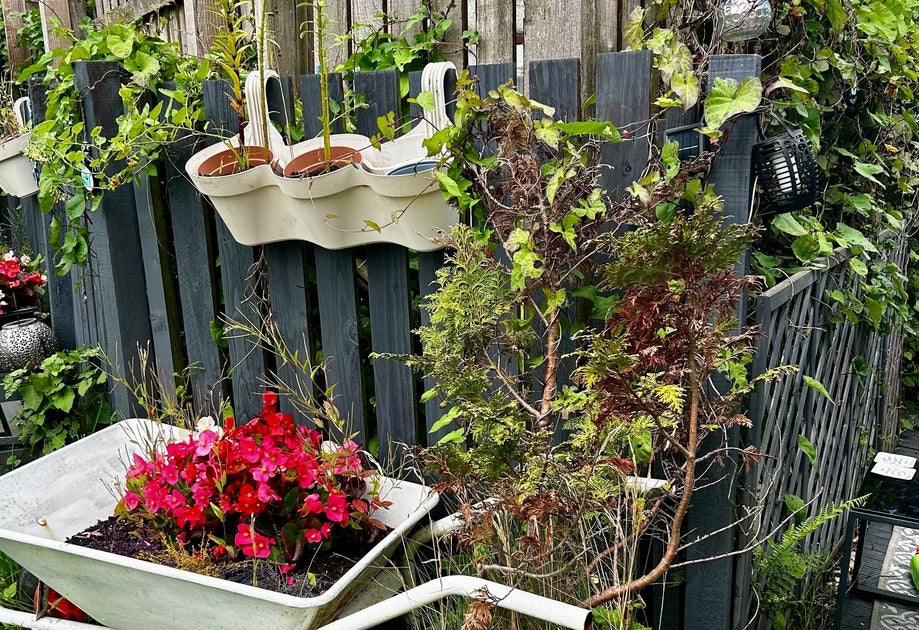
This summer will be my fifth summer in this house and that means it’s also my fifth summer of enjoying my garden, reading on the grass outside with my cat on lunch breaks and trying to be something of a successful gardener.
Like all creative pursuits, gardening comes with the acceptance that failure is essential to growth but nevertheless, I’ll be planting salad leaves, potatoes, cornflowers and dahlias just to name a few this spring.
I know that I should have done some planting in the winter so that I’d see my garden blooming in the coming spring days but I’ll be honest, the chill of Scottish winters don’t exactly motivate me to kneel on frosty grass.
What I’ll be planting to make my small garden bloom
Another thing worth noting is that my garden is tiny. I live in a cottage flat, which is a popular type of housing in the west of Scotland. Basically, it’s a two-storey block containing four separate flats. It’s like a house split into four and our back garden is split with the upstairs neighbours.
So when it comes to gardening, I’m working with limited space and can’t risk taking over their space.
Vegetables I’ll be planting in March
Ideal for beginners, salad leaves can be planted in spring for summer harvesting and make for delicious, fresh summer lunches. For me, I’ll be going for just standard loose-leaf lettuce but other options include spinach, chard and rocket, according to the Royal Horticultural Society (RHS).
Have you ever tasted homegrown tomatoes? Honestly, once you have, you’ll struggle to tolerate supermarket ones ever again. I’ll be growing some Cordon tomatoes and BBC Gardener’s World advises: “Cordon tomatoes grow to a height of 1.5-2m and need some form of support, such as stout string secured under the plants’ roots and tied to an overhead frame or wire, and proprietary grow frame supports.
“You can also train cordon tomatoes on sturdy bamboo canes, trellis or to wires on a fence.”
I’ve grown potatoes before and it is an incredibly rewarding process but you are kept in the dark (pun intended) on their process for a long time so you kind of have to hope for the best until it’s time to harvest.
Potatoes can be grown directly in soil (which isn’t possible with my garden, unfortunately), in grow bags or in containers. I’ll be growing some main-crop potatoes which can be harvested after around 15-20 weeks.
Flowers I’ll be planting in March
Cornflowers are bold, blue flowers that perfectly punctuate gardens but more than that, they’re SO easy to grow. The RHS even recommends them as beginner flowers for kids to grow. Sowing them in March will bring some colour to your garden from around July-September. Lovely.
As I’m in Scotland, I’ll have to wait until frost has definitely gone before planting Zinnia as they’re very sensitive to chilly temperatures but once the warm days are definitely here, I’ll be planting them in a container, stored in a sunny part of my garden.
Dahlias are hardy flowers which is essential for our climate According to the National Dahlia Society: “Dahlias can be grown in an herbaceous border, in mixed beds, or as a dedicated dahlia display.”
I will be opting for a dedicated display in some pots with great drainage.
Are you going to be tackling the garden this spring?
