
Experts Say You Should Never Give Apps Full Access To Your Photos — The Reason Why Is Disturbing
When you decide to upload a photo on to your Instagram or social media, you will face a choice: Are you going to let the app see your entire camera roll or not?
Many of the apps that we use every day will ask if you want to grant the app full access to your phone’s images and videos ― and you should think twice before permitting this, no matter how convenient it is, privacy experts say.
“When you limit access to only select photos, you’re both … protecting yourself from accidentally uploading multiple pictures you do not intend, and ensuring that the app can’t access more than you want, either by accident or malicious intent,” said Thorin Klosowski, a security and privacy activist for the Electronic Frontier Foundation.
Your camera roll doesn’t just have fun photos from vacations and pictures of your families, it’s also a record of who you are and what you like. Many of us often take photos for verification that reveal our identities like passports and new credit cards. These are the kind of images scammers want to exploit. In 2023, researchers discovered that malicious apps were scanning users’ image galleries to hunt for crypto wallet access recovery phrases. Google and Apple later removed these apps from their stores.

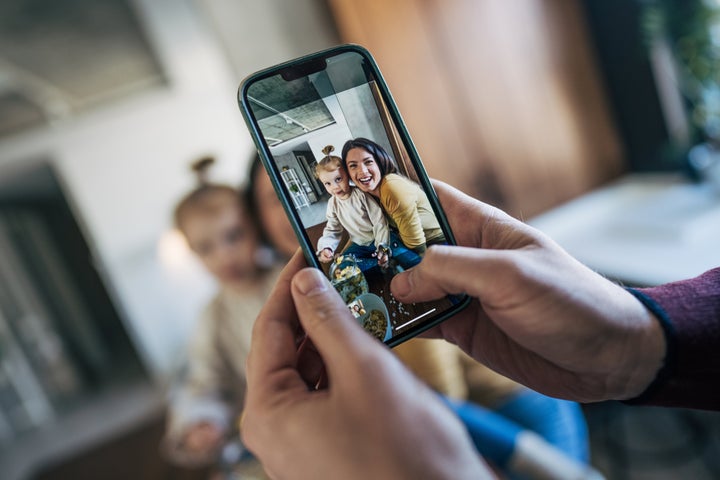
milorad kravic via Getty Images
It’s definitely more inconvenient to search through albums to find that one photo you want to post instead of having the full library within an app, but that’s the point. That extra time you take to select one photo forces you to think about what exactly you want to share with an app that may compromise your privacy later.
Meta, in particular, has a long history of concerning privacy advocates. In 2022, Facebook gave police private messages of a mother and daughter facing criminal charges for allegedly carrying out an abortion.
“That’s an especially striking example of how Meta is willing to share data with law enforcement … to continue chipping away at Americans’ privacy and civil rights,” said Will Owen, communication director for the nonprofit Surveillance Technology Oversight Project.
Last year, a Facebook feature asked users to grant access to their phone’s camera roll in order to automatically suggest AI-edited versions of their photos. The pop-up prompt would ask: “Allow cloud processing to get creative ideas from your camera roll?” However, if users permitted this, they also opted into having their images and facial features analyzed by Meta’s AI ― which upset some users. This feature no longer appears available to users within Facebook. Meta did not respond to HuffPost questions about the status of this feature.
In general, you should always double-check what you’re letting an app see from your phone. On Facebook, you can do this by going to the Facebook app, choosing “Settings & Privacy” and then selecting “Camera roll sharing suggestions” within “Settings.” From there, you can toggle on or off the option to “Get camera roll suggestions when you’re browsing Facebook.”
Refusing to grant full access to any one app is one small way to stop yourself from sharing images you would regret later by accident or on purpose.
Klosowski said he’s seen “countless stories over the years of people just accidentally uploading their entire photo libraries to social media because of confusing prompts.”
When you refuse to grant your favourite social media app full access to your camera roll, it will take you more steps to find and select your preferred image, and this will be a bit more of a hassle. “I realise people find the photo picker cumbersome because the user experience is kind of awful,” Klosowski said.
“But a side effect is it also puts a little speed bump in front of you while you’re thinking about whether you should post that photo to begin with, which isn’t always a bad thing,” he continued.