Five Georgia Tech Faculty Named to NAI Senior Members Class of 2026 | Newswise


Newswise — Five faculty members from Georgia Tech have been elected as senior members of the National Academy of Inventors (NAI). As members, they are recognized as distinguished academic inventors with a strong record of patenting technologies, licensing IP, and commercializing their research. Their innovations have made, or have the potential to make, meaningful impacts on society. 

 “The election of our faculty members to this prestigious association is a powerful affirmation of the innovative research happening at Georgia Tech,” said Raghupathy “Siva” Sivakumar, chief commercialization officer at Georgia Tech. “Their work to take research to market reflects the growing importance of invention in addressing society’s most complex challenges. This recognition signals the strength of the commercialization ecosystem at Georgia Tech to advance impactful research, encourage innovation, and prepare the next generation of inventors.” 

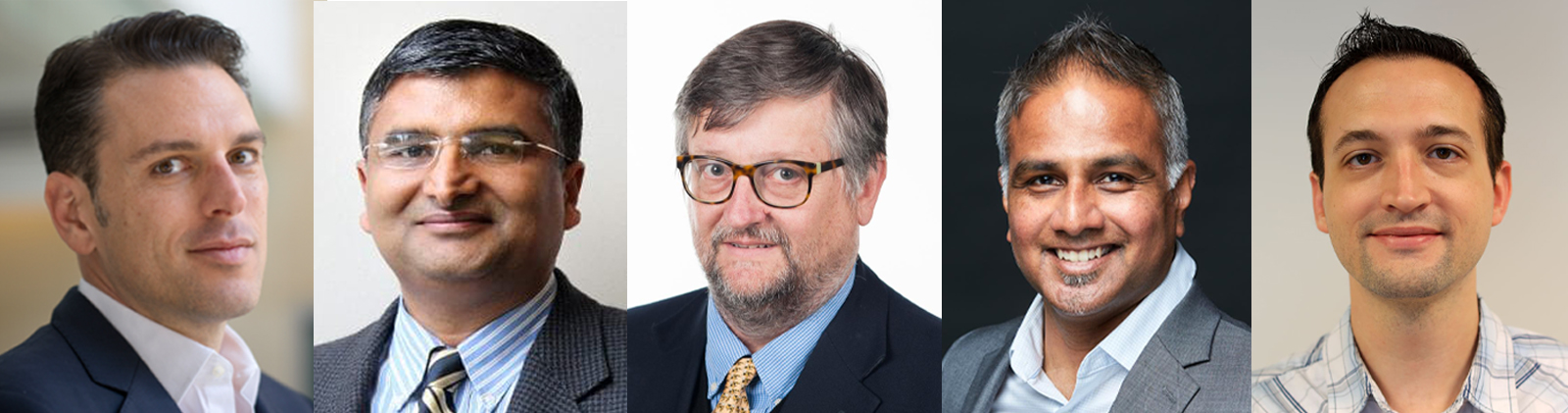
The 2026 Georgia Tech NAI senior members are: 

  • Jason David Azoulay, associate professor, School of Materials Science and Engineering School and School of Chemistry and Biochemistry
  • Jaydev Prataprai Desai, professor and cardiovascular biomedical engineering distinguished chair, Wallace H. Coulter Department of Biomedical Engineering
  • David Frost, Elizabeth and Bill Higginbotham Professor and Regents’ Entrepreneur, School of Civil and Environmental Engineering
  • Chandra Raman, Dunn Family Professor of Physics, School of Physics
  • Aaron Young, associate professor, George W. Woodruff School of Mechanical Engineering

Jason David Azoulay

Azoulay is recognized for pioneering new classes of functional materials through innovative polymer synthesis, heterocycle chemistry, and polymerization reactions. His work spans electronic, photonic, and quantum materials, device fabrication, and chemical sensing for environmental monitoring. He has demonstrated new classes of organic semiconductors with infrared functionality and holds nine issued U.S. patents. Azoulay is the Georgia Research Alliance Vasser-Woolley Distinguished Investigator and holds a joint appointment in the School of Chemistry and Biochemistry. 

Jaydev Prataprai Desai

Desai is recognized for advancing medical robotics and translational biomedical innovation with inventions spanning robotically steerable guidewires for endovascular interventions, minimally invasive surgical tools, MEMS sensors for cancer diagnosis, and rehabilitation robotics for people with motor impairments. He is the founding editor-in-chief of the Journal of Medical Robotics Research, has authored more than 225 peer-reviewed publications, and serves as the Director of Georgia Center for Medical Robotics at Georgia Tech. Desai holds 16 U.S. and International patents.  

David Frost

Frost has built a career at the intersection of civil engineering research and entrepreneurship. A leader in the study of natural and human-made disasters and their impacts on infrastructure, he has founded two Georgia Tech-based software companies: Dataforensics, which offers tools for subsurface data collection and infrastructure project management, and Filio, an AI-powered mobile platform that supports visual asset management in construction and post-disaster reconnaissance. In 2023, Frost was named a Regents’ Entrepreneur by the University System of Georgia’s Board of Regents, a designation reserved for tenured faculty who have successfully taken their research into a commercial setting. He holds four U.S. patents.  

Chandra Raman

Raman is a physicist, inventor, and technology entrepreneur whose research on ultracold atoms is enabling a new generation of ultraprecise quantum sensing devices. He is the co-inventor of chip-scale atomic beam technology — a breakthrough that makes it possible to miniaturize quantum sensors for navigation and timing applications in environments where GPS fails, with uses spanning autonomous vehicles, aerospace, and national security. Raman holds six U.S. patents, three of which have been issued and two licensed. To bring his inventions to market, he founded 8Seven8 Inc., Georgia’s first quantum hardware company. He is a fellow of the American Physical Society and an advisor to national and space-based quantum initiatives. 

Aaron Young

Young directs the Exoskeleton and Prosthetic Intelligent Controls Lab, where he develops robotic exoskeletons and intelligent control systems to improve walking function and physical capability for people with mobility impairments and industrial safety applications. His research has been supported by major federal grants from the National Institutes of Health, and he holds three U.S. patents. Young works with Georgia Tech’s Office of Technology Licensing and Quadrant-i to advance promising technologies toward real-world adoption. 

About Georgia Tech’s Office of Commercialization 

The Office of Commercialization is the nexus of research commercialization and entrepreneurship at Georgia Tech, bringing leading-edge research and innovation to market. It comprises six key units — ATDC, CREATE-X, VentureLab, Quadrant-i, Technology Licensing, and Velocity Startups — that empower students and faculty to launch startups, manage intellectual property, and transform research ideas into positive societal impact. Learn more at commercialization.gatech.edu

About the National Academy of Inventors 

The National Academy of Inventors is a member organization comprising U.S. and international universities, and governmental and nonprofit research institutes, with over 4,000 individual inventor members and fellows spanning more than 250 institutions worldwide. It was founded in 2010 to recognize and encourage inventors with patents issued from the U.S. Patent and Trademark Office, enhance the visibility of academic technology and innovation, and translate the inventions of its members to benefit society. Learn more at academyofinventors.org


Target the Tumor. Spare the Body | Newswise


Newswise — Exhaustion creeps in. Appetite vanishes. Hair thins. The person in the mirror looks gaunt. It’s the paradox of cancer treatment: The same drugs meant to save a life can also wear the body down.

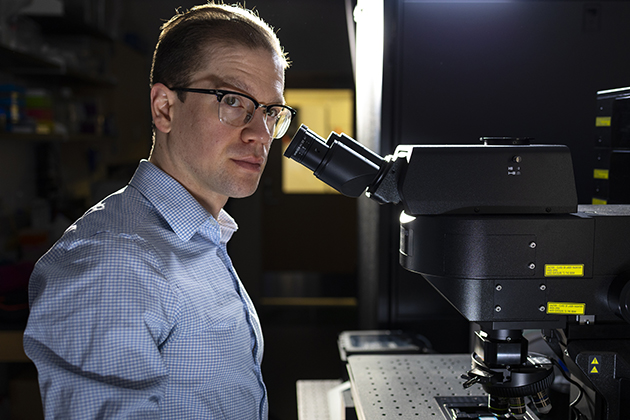
Nick Housley, assistant professor in Georgia Tech’s School of Biological Sciences, wants to change that. He studies where cancer drugs go once they’re inside the body, including places they were never intended to reach. Some of the medicine finds the tumor. The rest interacts with healthy tissue.

This approach has saved millions of lives. It can also create punishing side effects.

“The problem isn’t that these drugs don’t work,” said Housley. “It’s that they affect far more of the body than they need to.”

When Chemistry Does the Work

Cancer cells consume oxygen and nutrients at a higher rate than healthy tissue, and that changes the environment around a tumor. In a recent Nature Communications paper, Housley and his team introduced a drug delivery system that senses those physical changes and guides medicine to the disease. The drug is released only when it encounters those tumor-specific conditions.

Housley’s system is designed to work across many cancer types. Rather than being tailored to a specific tumor type or genetic marker, the system is “cancer agnostic.”

“We don’t need to know anything about the tumor ahead of time,” said Housley. “These particles circulate through the body, but they persist where tumors create those conditions.”

The Whack-a-Mole Problem

Housley’s design sidesteps a constant challenge in cancer treatment. Tumors are not static. They change in response to pressure from therapy, creating what Housley describes as “a whack-a-mole problem”, where hitting one target can push the disease to reemerge in a different form.

“Tumors are constantly changing,” said Housley. “You hit one thing with a targeted therapy, and that pressure causes the tumor to evolve. That’s a big problem with classically targeted therapies.”

“It has the potential to be a breakthrough at the clinic…patients in early trials could benefit directly; that’s rare and exciting.” –Nick Housley

Letting the Body Lead

Housley’s drug delivery system is called SANGs, short for “self-assembling nanohydrogels.” Nanohydrogels are microscopic, gel-like particles designed to carry drugs through the bloodstream. As the nanohydrogels circulate, they keep the drug contained. The particles pass through healthy tissue without releasing medicine. When they encounter the environment created by a tumor, they linger and release the drug where it’s needed most.

In preclinical studies, the nanohydrogels did what they were designed to do. They circulated through the body without releasing the drug too early, responding to tumor-specific conditions and concentrating treatment at the disease site.

Moving Toward Patients

Housley and his team are now planning to test SANGs with additional drugs and across a wider range of cancers, laying the groundwork for human clinical trials.

“The moment we can get our first patient in the study, the moment we can collect that first data and begin to see what this really changes, that will be a big moment,” he said.

Cancer treatment is physically taxing, but it also forces people into what Housley describes as “a constant calculus — weighing time gained against what that time will feel like.”

The goal isn’t to remove uncertainty from cancer care. It’s to narrow the impact of treatment, so patients aren’t forced to sacrifice how they feel for how long they live.


Wine, Science, and Spectroscopy: Georgia Tech Outreach Produces Published Research | Newswise


Newswise — New work from Georgia Tech is showing how a simple glass of wine can serve as a powerful gateway for understanding advanced research and technologies.

The project, inspired by an Atlanta Science Festival event hosted by School of Chemistry and Biochemistry Assistant Professor Andrew McShan, develops an innovative outreach and teaching module around nuclear magnetic resonance (NMR) techniques, and is designed for easy adoption in introductory chemistry and biochemistry courses. 

Published earlier this year in the Journal of Chemical Education, the study, “Automated Chemical Profiling of Wine by Solution NMR Spectroscopy: A Demonstration for Outreach and Education” was led by a team from the School of Chemistry and Biochemistry including lead author McShan, Ph.D. students Lily CapeciElizabeth A. Corbin, Ruoqing JiaMiriam K. Simma, and F. N. U. Vidya, Academic Professional Mary E. Peek, and Georgia Tech NMR Center Co-Directors Johannes E. Leisen and Hongwei Wu.

“NMR is one of the most widely used analytical tools in chemistry and the life sciences, and Georgia Tech hosts one of the most cutting-edge NMR centers in the world,” McShan says. “Our study shows that you don’t need advanced training to appreciate how powerful tools like NMR work and how those tools are used in research.”

All materials, tutorials, and data are freely available via online tutorials and a YouTube video, enabling educators to replicate or adapt the activity even in settings with limited access to NMR facilities.

Wine sleuthing at the Atlanta Science Festival

From families with K-12 students to undergraduates to adults with no prior chemistry experience, nearly 130 visitors explored wine chemistry at the Georgia Tech NMR Center during the Atlanta Science Festival event. With McShan’s guidance, they identified and quantified more than 70 chemical components that influence wine taste, aroma, and quality by analyzing the chemical composition, structure, and dynamics of molecules.

Taking on the role of wine investigators (a real-world application of NMR), the group investigated examples of wine fraud, learning to identify harmful additives like methanol, antifreeze, and lead acetate – additives that played roles in both historical and modern wine scandals.

“By connecting the science to something familiar like wine, we were able to spark curiosity and excitement across age groups,” says McShan. “This a framework for how complex analytical techniques can be made inclusive, interactive, and inspiring whether in the classroom or at a science festival.”

Science for all

The study underscores the potential of NMR and other powerful technologies as outreach opportunities – from engaging the public to better teaching undergraduate students.

“After the event, adults said they learned how chemical composition affects wine characteristics and how NMR is used in research and industry,” McShan says. “Younger participants learned key concepts about wine composition and found benefits from the sensory elements, like watching the spectrometer in action.”

They aim to use these takeaways to continue developing outreach tools. “My end goal is to develop NMR into a practical teaching tool by grounding the technique in real-world examples,” adds McShan. “Using this approach is a clear avenue to introducing the general public to the world-class instruments used by researchers at Georgia Tech and exposing undergraduate students to the powerful analytical techniques they are likely to encounter throughout their careers.”


Funding: National Science Foundation


Georgia Tech Names Mike Gazarik Director of Georgia Tech Research Institute | Newswise


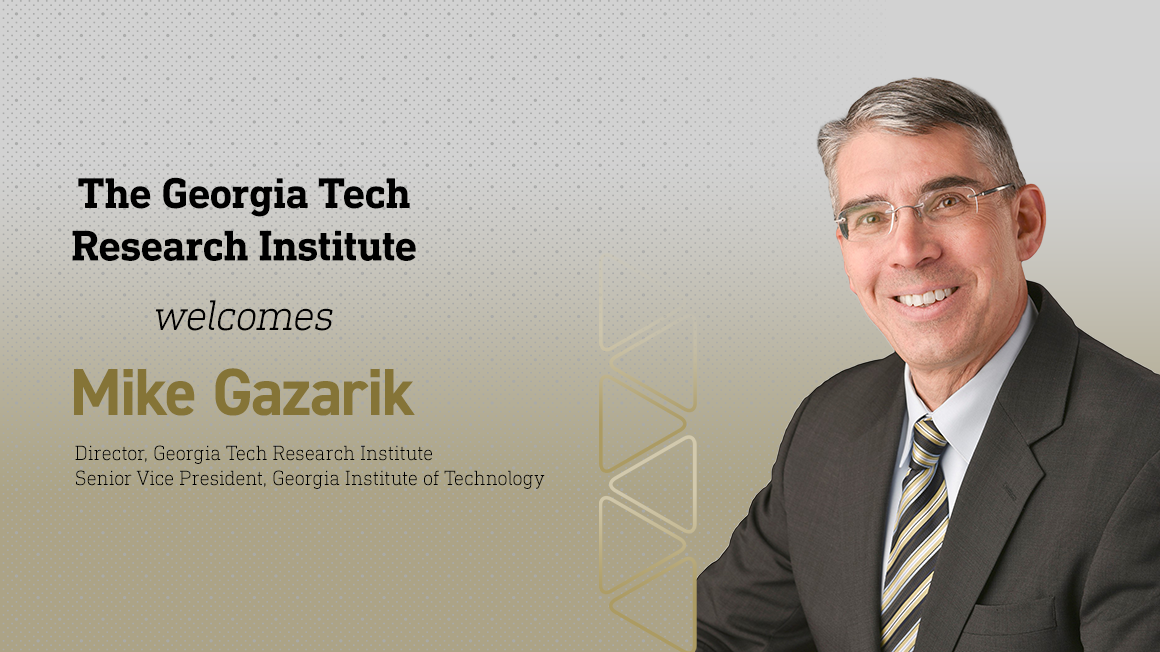
Newswise — Georgia Institute of Technology has named Michael “Mike” Gazarik as the new director of the Georgia Tech Research Institute (GTRI) and a Georgia Tech senior vice president, effective February 16. 

A nationally respected aerospace and research leader, Gazarik has led large, complex research organizations across government, industry, and academia, shaping strategy, driving growth, and building institutions that deliver mission-critical innovation. With more than three decades of experience, his career reflects a deep ability to align technology with national priorities and guide organizations through periods of change and opportunity. 

A Georgia Tech alumnus, Gazarik currently serves as faculty director of the Engineering Management Program at the University of Colorado Boulder and as a part‑time staff member at the Johns Hopkins Applied Physics Laboratory. He previously held senior leadership roles at NASA, including director of engineering at NASA Langley Research Center and inaugural associate administrator for the Space Technology Mission Directorate (STMD). In industry, he spent eight years as vice president of engineering at Ball Aerospace, leading its strategic growth from an elite science contractor into a strategic national security asset that doubled in size.

“Mike Gazarik brings a rare combination of technical depth, executive leadership, and deep government experience,” said Tim Lieuwen, Georgia Tech’s executive vice president for Research. “He knows large research enterprises operate within the realities of policy and budget and has a proven ability to align technology with mission priorities while earning trust across stakeholders. We are excited to welcome Mike back to Georgia Tech to lead GTRI at a pivotal moment for research and innovation.”

GTRI employs more than 3,000 employees, conducting nearly $1 billion in annual research in areas such as autonomous systems, cybersecurity, electromagnetics, electronic warfare, modeling and simulation, sensors, systems engineering, and threat systems. GTRI’s renowned researchers combine science, engineering, economics, and policy to address challenges facing national security, industry, and society.

For nearly a century, GTRI has partnered with government and industry to deliver solutions to the most mission-critical challenges facing our nation,” said Georgia Tech President Ángel Cabrera. “We are proud to welcome Mike Gazarik to lead a crown jewel of our research enterprise and a crucial component of our nation’s science and technology fabric. His experience and leadership will strengthen GTRI’s ability to deliver on its mission and help make our nation safer, healthier, and more competitive.”

Gazarik is widely recognized for leading complex research enterprises with a focus on stability, strategic alignment, and mission impact. At NASA, he helped shape the agency’s science and technology enterprise during periods of fiscal constraint and technical risk, maintaining balance across broad mission areas and forming STMD to consolidate technology development. At Ball Aerospace, he guided significant growth and aligned strategy with evolving national security and civil space needs. His academic work has focused on preparing engineering leaders for mission-driven organizations — experience that aligns closely with GTRI’s role as a trusted partner to government and industry.

He earned a B.S. in electrical engineering from the University of Pittsburgh and an M.S. and Ph.D. in electrical engineering from Georgia Tech. Gazarik is a fellow of the American Institute of Aeronautics and Astronautics (AIAA), a former chair of AIAA’s Corporate Strategic Committee, and was elected to the AIAA Board of Trustees in 2025. His honors include NASA’s Outstanding Leadership Medal, the Silver Snoopy Award, the 2023 AIAA Rocky Mountain Section Educator of the Year, and recognition as Engineering Manager of the Year by the American Society of Engineering Management.

“GTRI has a remarkable legacy of delivering solutions that matter for the nation,” said Gazarik. “I’m honored to return to Georgia Tech and lead an organization that combines deep technical expertise with a mission-driven culture. My focus will be on listening, building on GTRI’s strengths, and ensuring we continue to advance research that makes a real difference for our partners and society.”

As director, Gazarik will lead GTRI’s multidisciplinary research enterprise, advancing its mission to deliver high‑impact science and technology solutions in support of national security, space systems, and critical societal needs.