Three U Professors Elected as AAAS Fellows | Newswise


Newswise — University of Utah professors Hilary Coon, PhD, David Grunwald, PhD, and Chris Hill, DPhil, have been elected by the Council of the American Association for the Advancement of Science as AAAS Fellows. This prestigious lifetime honor recognizes scientists who have advanced their fields through research, leadership, or mentorship.

Hill, Grunwald, and Coon are among nearly 500 scientists, engineers, and innovators who have been elected 2025 Fellows for their scientifically and socially distinguished achievements throughout their careers.

“The election of Drs. Coon, Grunwald, and Hill reflects the lifetime of outstanding work that they have contributed to their scientific fields as researchers, leaders, and collaborators,” says Rachel Hess, MD, MS, Associate Vice President for Research at U of U Health. “They are key members of our Utah community, and we are so excited for them to receive this recognition.”

Hilary Coon

Coon, Benning Endowed Presidential Professor of psychiatry and researcher at Huntsman Mental Health Institute, studies the complex genetic and environmental factors that contribute to psychiatric conditions.

Her research currently focuses on a large population-based study of risks leading to suicide mortality which she developed over a span of two decades. This study has begun to reveal clinical, demographic, and genetic changes that are linked to suicide risk. By better identifying who’s at risk, Coon’s research opens the door to targeted interventions and new treatments to save lives. Her work has also spanned studies focused on other psychiatric conditions and complex medical disorders. 

Coon attributes her achievements to the large-scale, multidisciplinary collaborations she’s fostered across institutions. “Focusing on open collaboration is really central to my identity,” she says. “Collaboration has allowed me not only to have the privilege of working with amazing scientists but also to push limits and go beyond conventional thinking—to enable creative studies integrating different aspects of health in complex landscapes of risk.” 

Utah’s uniquely rich genealogical data resources are one of the invaluable assets for studying the interplay between environmental, sociological, and genetic factors, Coon adds.

Coon was elected as an AAAS Fellow “for distinguished contributions to psychiatric genetics, in particular the development and leadership of an unprecedented population-based, genetically informed comprehensive resource for the study of risks leading to suicide mortality.” 

On being elected as a Fellow, Coon says, “It’s pretty amazing. It’s not really why I do things—you just want to do good work. But to have a lot of colleagues from a lot of different places recognize your work, well, that is pretty stunning.”

David Grunwald

Grunwald, professor of human genetics, was one of the first researchers to make a career out of studying zebrafish, tiny freshwater fish that have helped reveal countless facets of human biology.

“You have to understand—these embryos are beautiful,” Grunwald says. “They’re absolutely beautiful, and they grow up so quickly that you literally watch life forming before your eyes in the microscope. They are crystal clear, and you can watch as all of the tissues in the animal develop. And it turns out that all of the principles that govern formation of the animal are nearly identical to those operating in all other vertebrates, including humans.” 

By studying zebrafish, Grunwald’s lab discovered aspects of human health and biology ranging from the genetic basis of skin pigmentation—which is the same between fish and humans—to the underlying mechanisms of inherited muscle weakness diseases (congenital myopathies). A focus of the lab now is to develop tools that make it very easy to use the zebrafish to study how modifications of genes can affect development, evolutionary adaptations, and disease states.

Grunwald also established a collaborative space for zebrafish biology research at the U, where newcomers to the field can learn the ropes and incoming researchers can tackle big questions. “It’s all shared resources,” he says. “It’s a place where everyone can teach each other. As a result, there are many, many collaborations, and it makes it very easy to recruit smart people here.”

Grunwald was elected as an AAAS Fellow “for distinguished contributions in understanding the development of zebrafish.”

Chris Hill

“There’s lots of ways to lead,” says Hill, distinguished professor of biochemistry. “One of them is by example, and all the others fail.”

As a research mentor and the Vice Dean of Research for the Spencer Fox Eccles School of Medicine at the University of Utah, Hill focuses on finding better ways to support other scientists. “There’s nothing more rewarding than seeing someone in the lab develop to become an independent thinker and a colleague who challenges your own assumptions and ideas and says ‘No, I think you’re wrong; I think we should do this next,’” Hill says. “Helping create the environment in which they can succeed is very rewarding.”

Hill’s scientific career has spanned topics from the biology of HIV—a collaboration that helped lead to a highly effective preventive drug—to current work exploring how insulin molecules bind their receptor. The unifying thread is a focus on structural biology: discovering the shapes and structures of biological molecules to understand how they function.
Hill describes determining the structure of a biological molecule called VPS4, which is involved in virus life cycles as well as cell division and protein sorting, as “One of the most satisfying things we’ve ever done.”

“People had been scratching their heads over how these molecules actually work,” Hill recalls. “There were all sorts of ideas out there. We determined the first structure, and when we looked at it, we immediately knew how it worked. When you can see it captured in the act of doing what it does, it all just becomes really obvious, and that’s very satisfying.”

Hill was elected as an AAAS Fellow “for distinguished contributions to the field of structural biology and exemplary leadership within the scientific community.”

Grunwald, Hill, and Coon join an esteemed group of AAAS Fellows at the U, including Amy Barrios, PhD; Nancy Songer, PhD; Thure Cerling, PhD; Vahe Bandarian, PhD; Eric W. Schmidt, PhD; Jennifer S. Shumaker-Parry, PhD; and Mario Capecchi, PhD.

This year’s cohort of fellows will be highlighted in the AAAS News & Notes section of Science in April 2026 and also celebrated at the annual Fellows Forum in Washington, DC, on May 29, 2026.



AI-Powered Drug Discovery Meets Field-Ready Diagnostics in SLAS Technology Vol. 37 | Newswise


Newswise — Oak Brook, ILVolume 37 of SLAS Technology includes one technical brief, four original research articles, two literature highlights, and four entries from the Special Issue on Revolutionizing Transcriptomics from Single-Cell Insights to RNA-Based Interventions.

Technical Brief

Original Research

Literature Highlight

  • Life Sciences Discovery and Technology Highlights
    The authors highlight several recent advances in laboratory automation, microfluidics and AI-enhanced biosensing, that are transforming biological research through high-throughput genome editing platforms, automated nucleic acid extraction protocols and intelligent strain engineering systems.
  • Life Sciences and Anxiety – Between Enlightenment and Uncertainty
    This entry in the Life Sciences and Society series by SLAS Technology Associate Editor Kerstin Thurow, PhD, explores the paradoxical relationship between scientific advancement and cultural anxiety in the life sciences. Thurow examines how greater biological knowledge can simultaneously empower and burden individuals while raising ethical questions about genetic modification and human enhancement.

Special Issue

  • Revolutionizing Transcriptomics from Single-Cell Insights to RNA-Based Interventions
    This Special Issue on systems genetics examines gene and molecular interaction networks, utilizing high-throughput sequencing and multi-omics technologies to understand how genetic networks influence phenotypes. It emphasizes the significance of personalized medicine, therapeutic target discovery and biomarker identification through integrated genomic and epigenomic approaches.

All active SLAS Discovery and SLAS Technology call for papers are available at: https://www.slas.org/publications/call-for-papers/

This volume of SLAS Technology is available at https://www.slas-technology.org/issue/S2472-6303(25)X0008-X

*****

SLAS Technology reveals how scientists adapt technological advancements for life sciences exploration and experimentation in biomedical research and development. The journal emphasizes scientific and technical advances that enable and improve:

  • Life sciences research and development
  • Drug delivery
  • Diagnostics
  • Biomedical and molecular imaging
  • Personalized and precision medicine

SLAS (Society for Laboratory Automation and Screening) is an international professional society of academic, industry and government life sciences researchers and the developers and providers of laboratory automation technology. The SLAS mission is to bring together researchers in academia, industry and government to advance life sciences discovery and technology via education, knowledge exchange and global community building.

SLAS Technology: Translating Life Sciences Innovation, 2024 Impact Factor 3.7. Editor-in-Chief Edward Kai-Hua Chow, PhD, KYAN Technologies, Los Angeles, CA (USA).


###


Team Simulates a Living Cell That Grows and Divides | Newswise


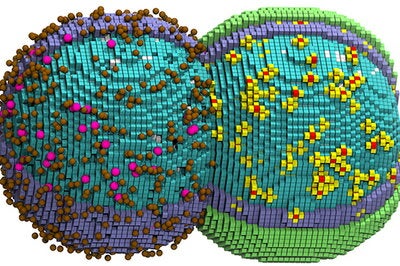
Newswise — By simulating the life cycle of a minimal bacterial cell — from DNA replication to protein translation to metabolism and cell division — scientists have opened a new frontier of computer vision into the essential processes of life.

The researchers, led by chemistry professor Zan Luthey-Schulten, present their findings in the journal Cell.

The team simulated a living cell at nanoscale resolution and recapitulated how every molecule within that cell behaved over the course of a full cell cycle. The work took many years, vast computer resources, large experimental datasets, a suite of experimental and computational techniques and an understanding of the roles, behaviors and physical interactions of thousands of molecular players. The researchers had to account for every gene, protein, RNA molecule and chemical reaction occurring within the cell to recreate the timing of cellular events. For example, their model had to accurately reflect the processes that allow the cell to double in size prior to cell division.

Watch a video of the full life cycle 4D simulation of a minimal bacterial cell. 

To make the task more manageable, the team used a living “minimal cell” developed at the J. Craig Venter Institute in California. The version of the cell used in the new study, JCVI-syn3A — “Syn3A” for short — is a modified bacterium with a pared-down genome that carries only the genes needed to replicate its DNA, grow, divide and perform most of the other functions that make life possible.

“This is a three-dimensional, fully dynamic kinetic model of a living minimal cell that mimics what goes on in the actual cell,” Luthey-Schulten said. “Such a comprehensive undertaking was only possible through the combined efforts of a host of collaborators at the U of I as well as Harvard Medical School, where we systematically modeled the essential metabolism and other subcellular networks through a series of publications starting in 2018.”

The Syn3A cell has fewer than 500 genes, all of which reside on a single circular strand of DNA. The laboratories of study co-authors Angad Mehta, a professor of chemistry, and Taekjip Ha, of Boston Children’s Hospital and Harvard Medical School, generated additional experimental data that allowed the team to accurately simulate and validate numerous aspects of cell function.

Watch a video of the first-ever whole cell 4D simulation showing everything everywhere all at once.

“Most importantly, their work revealed the extent of DNA replication and that Syn3A’s cell division is symmetrical,” Luthey-Schulten said.

Both factors guided and validated the simulations performed by Zane Thornburg, a postdoctoral fellow at the Beckman Institute for Advanced Science and Technology and the Cancer Center at Illinois, and Andrew Maytin, a graduate student in Luthey-Schulten’s lab.

Like other bacterial cells, Syn3A has no nucleus. Every molecule that comprises and sustains it is either a component of its outer membrane, is transported into it from outside the cell or is assembled in the cytoplasm. The cell is so jam-packed with molecular players that, when creating high-resolution cartoons and animations of their computer simulations, the researchers had to render some of the components invisible. Making all the cellular proteins invisible, for example, allowed the scientists to see how Syn3A’s chromosome threads through the cell’s crowded interior.

Some processes were more computationally expensive than others, the team discovered. For example, Maytin realized that chromosome replication was slowing the whole simulation to a crawl, nearly doubling the time it took to capture the whole cell cycle. He determined that efficiently simulating the cell’s DNA replication process required its own dedicated graphics processing unit, while another GPU handled all other cellular dynamics. This allowed the team to simulate the full, 105-minute cell cycle in just six days of computer time.

Thornburg and Maytin struggled with the challenge of simulating cellular events occurring at the same time in various parts of the cell.

“I can’t overstate how hard it is to simulate things that are moving — and doing it in 3D for an entire cell was … triumphant,” Thornburg said. “One of the last big hurdles that Andrew and I had to solve was understanding how the membrane and the DNA talk to one another when both are moving.”

While the simulated cell cycle has its limitations — this was not an atom-by-atom simulation but instead averaged the dynamics of individual molecules — it yielded a surprisingly accurate accounting of the timing of cellular processes. In repeated simulations involving individual cells with slightly varying start conditions, the simulated cell cycle occurred, on average, within two minutes of the real-world cell cycle, Thornburg said. The work was repeatedly guided and tested against actual experimental outcomes, a process that allowed the scientists to refine their simulations.

The ability to accurately capture the ever-changing conditions within a living cell opens a new window on the foundations of living systems, Luthey-Schulten said.

“We have a whole-cell model that predicts many cellular properties simultaneously,” she said. “If you want to know what’s going on, say, in nucleotide metabolism, you can also look at what’s going on in DNA replication and the biogenesis of ribosomes. So the simulations can give you the results of hundreds of experiments simultaneously.”

Study co-authors also include Illinois chemistry alumnus Benjamin Gilbert and John Glass, who leads the J. Craig Venter Institute Synthetic Biology Group.

This work was conducted in the National Science Foundation’s Science and Technology Center for Quantitative Cell Biology at the U of I. Luthey-Schulten also is a professor of physics and a professor in the Beckman Institute at the U. of I. The research was conducted using the Delta advanced computing and data resource, which is supported by the NSF and the state of Illinois. Delta is a joint effort of the U of I and its National Center for Supercomputing Applications.


From Leaf Images to Genomes: Deep Learning Reshapes Pest-Resistant Breeding | Newswise


Newswise — Agricultural pest management has traditionally relied on chemical insecticides, but their overuse has led to environmental contamination, health risks, and rapidly evolving pesticide resistance. Meanwhile, natural variation in pest resistance exists within crops and their wild relatives, offering valuable resources for breeding. However, resistance traits are difficult to measure accurately, as they are often scored visually using coarse categories that fail to capture continuous variation. This limits the effectiveness of genome-wide association studies and genomic selection. Advances in deep learning provide new opportunities to extract detailed phenotypic information directly from images, overcoming subjectivity and labor constraints. Based on these challenges, there is a pressing need to conduct in-depth research on AI-enabled phenotyping and genomic breeding for pest resistance.

Researchers from the Chinese Academy of Agricultural Sciences and collaborating institutions report (DOI: 10.1093/hr/uhaf128) on 7 May 2025 in Horticulture Research that deep learning can substantially improve genomic selection for pest-resistant grapevine. The team developed convolutional neural networks to automatically assess insect damage on grape leaves and combined these data with genome resequencing, genome-wide association studies, and transcriptomic analyses. By linking AI-derived phenotypes with genetic markers, the study identifies key resistance genes and demonstrates highly accurate machine-learning-based prediction of pest resistance, offering a new framework for precision breeding.

The study analyzed 231 grapevine accessions subjected to natural infestations of the tobacco cutworm, a major leaf-feeding pest. Deep convolutional neural networks were trained to classify pest damage as mild or severe, achieving over 95% accuracy, while a custom regression model generated continuous damage scores strongly correlated with human assessments. These AI-derived phenotypes enabled more precise genetic analyses than traditional categorical scoring. Genome-wide association studies identified 69 quantitative trait loci and 139 candidate genes linked to pest resistance, many involved in jasmonic acid, salicylic acid, ethylene, and calcium-mediated signaling pathways. By integrating transcriptomic data, the researchers pinpointed key defense genes, including calcium-transporting ATPase ACA12 and the protein kinase CRK3, both strongly induced during herbivore attack. Machine-learning-based genomic selection models further demonstrated high predictive power, reaching 95.7% accuracy for binary traits and strong correlations for continuous traits. Together, these results show that combining deep learning phenotyping with genomics reveals subtle resistance mechanisms and enables reliable prediction of complex, polygenic pest-resistance traits.

“This work highlights how artificial intelligence can fundamentally change plant breeding,” said the study’s senior authors. “By replacing subjective visual scoring with fast, objective deep-learning-based phenotyping, we can capture continuous variation in pest damage that was previously overlooked. When these high-quality phenotypes are integrated with genomics and transcriptomics, they reveal the true polygenic architecture of pest resistance. This approach not only improves prediction accuracy, but also allows breeders to make informed selections much earlier in the breeding cycle.”

The findings have broad implications for sustainable agriculture and crop improvement. AI-driven phenomics enables rapid, large-scale assessment of pest resistance without increasing labor costs, making it suitable for breeding programs worldwide. By identifying resistance genes and accurately predicting pest tolerance, breeders can reduce reliance on chemical pesticides while improving crop resilience. The framework established in grapevine can be readily adapted to other crops and stress traits, supporting the development of automated, data-driven breeding platforms. Ultimately, integrating deep learning, genomics, and machine learning could accelerate the creation of pest-resistant varieties essential for food security under increasing environmental pressure.

###

References

DOI

10.1093/hr/uhaf128

Original Source URL

https://doi.org/10.1093/hr/uhaf128

Funding information

This work was supported by the National Key Research and Development Program of China (No. 2023YFD2200702), the project of National Key Laboratory for Tropical Crop Breeding (No. NKLTCB202325), the National Natural Science Foundation of China (No. 32372662), and the Science Fund Program for Distinguished Young Scholars of the National Natural Science Foundation of China (Overseas) to Yongfeng Zhou.

About Horticulture Research

Horticulture Research is an open access journal of Nanjing Agricultural University and ranked number one in the Horticulture category of the Journal Citation Reports ™ from Clarivate, 2023. The journal is committed to publishing original research articles, reviews, perspectives, comments, correspondence articles and letters to the editor related to all major horticultural plants and disciplines, including biotechnology, breeding, cellular and molecular biology, evolution, genetics, inter-species interactions, physiology, and the origination and domestication of crops.