Etiquette expert reveals 5 common coffee shop habits that customers need to stop


Coffee shops may feel cozy and casual, but one etiquette expert says too many customers forget they are still shared public spaces.

“Coffee shops may feel like our living rooms, but they’re really shared living rooms, and shared spaces work best when everyone remembers their manners,” California-based etiquette expert Lisa Mirza Grotts told Fox News Digital.

In a recent blog post, Grotts said even well-meaning customers often break unwritten rules without realizing it. 

“Public spaces require extra awareness,” she said.

Here are five common habits she says customers should stop.

1. Going to the counter unprepared

Customers should decide on their drink — including size and any sweetness adjustments — before stepping up to the counter, Grotts said. “Awareness saves everyone from unnecessary tension.”

She advises following what she calls the “three P’s.” 

“Be prepared, present and polite. Know what you want before you reach the counter, put your phone away — unless you’re using it to pay — make eye contact, and say ‘please’ and ‘thank you,’” she added. 

Customers should decide on their drink — including size and any sweetness adjustments — before stepping up to the counter, Grotts said. Rawpixel.com – stock.adobe.com

2. Using your phone while ordering

“Coffee shops operate on flow,” Grotts said in her post. “When one customer hesitates at the counter, it disrupts the rhythm for everyone behind them. A moment of awareness keeps the line — and the mood — moving.”

Good manners are really about awareness, Grotts said. 

“Recognizing that baristas are working hard and that other customers are waiting their turn. You’re one in a line of many.”

Grotts said these small courtesies help keep the line moving and make the experience better for everyone.

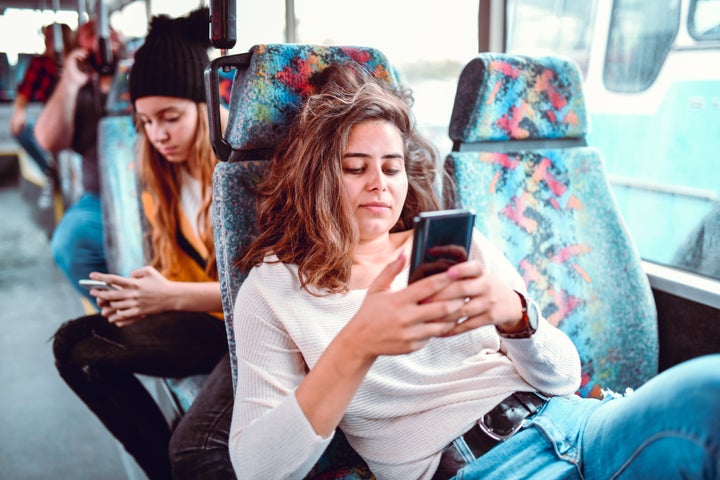
Grotts says customers should remain off their phones while on line at a coffee shop. mangpor2004 – stock.adobe.com

3. Treating the café like your personal office

The coffee shop is not your living room or personal office, Grotts said.

“Shared spaces come with shared responsibility,” she said. “Clean up after yourself, keep conversations at a reasonable volume and treat staff respectfully. These small behaviors show that you recognize you’re part of a community; not the only person in the room.”

The coffee shop is not your living room or personal office, Grotts said. Monkey Business – stock.adobe.com

4. Overcomplicated orders

Coffee culture has made highly customized drinks the norm, but Grotts said timing should guide how elaborate a request becomes and that courtesy matters most when others are waiting.

“Etiquette is really about reading the room and recognizing that your choices affect other people’s time,” she added.  “If the line is long, keeping your order simple is thoughtful, especially if you’re ordering something you get regularly.”

5. Camping out without buying

“It’s rude when a café becomes a rent-free workspace,” Grotts said. “The unspoken agreement is simple: You purchase, they welcome you. You linger, you replenish. Repeat as needed.”

A good rule of thumb is to order something when you first sit down and to make another purchase about every hour you stay there, she said. During busy times, customers should also be prepared to give up their seats.

“In the end, good manners aren’t about rules. They’re about respect,” Grotts said.



This Rude Phone Habit Is Seriously Risky – And Too Many People Do It


It’s an all too common ― but incredibly annoying ― experience. You’re sitting in a coffee shop, waiting room, airport terminal or other public place, and someone nearby starts talking on the phone, using speakerphone.

Whether you want to or not, you can hear every detail, from the weekend plans to the workplace gossip to the doctor’s appointment recap. And according to etiquette experts, this behaviour is not just annoying ― it’s quite rude too.

“You’re forcing those around you to participate in your private conversation,” said Nick Leighton, an etiquette expert and host of the Were You Raised by Wolves? podcast.

Unlike a traditional phone call, where only one side of the dialogue is audible, talking on speakerphone in public broadcasts everything into a shared space.

“This is both rude and dangerous,” said Jodi R.R. Smith, the president of Mannersmith Etiquette Consulting. “First, is it rude to those forced others to endure your own personal version of performance art. Second, callers should only be put on speakerphone after granting permission. Not all callers realise that their conversation is public and may have details they do not want the entire world to know.”

The person on the other end may assume they’re having a private exchange and broadcast personal information about you to the ears of strangers. Someone with bad intentions could hear sensitive financial or medical information.

That lack of consent is also a key issue, as the person didn’t necessarily want random people in line at the pharmacy to overhear their conversation.

“It’s also not polite to the person on the other end who may not realise they’re on speakerphone and strangers are listening in,” Leighton added.

Discretion is a key factor as well. Speakerphone calls tend to be louder, with exaggerated vocal tones that amplify the disruption.

“Speakerphone etiquette dictates that you use it only in a public space,” said Diane Gottsman, the author of Modern Etiquette for a Better Life and founder of The Protocol School of Texas. “You’re sharing information that may be confidential. The other person may not know they are on speakerphone and it interrupts and disrupts the people around.”

“Basically, confined spaces and loud noise and exaggerated gestures are not a good combination for other people’s comfort level,” she added.

This Rude Phone Habit Is Seriously Risky – And Too Many People Do It

skynesher via Getty Images

This behavior brings up issues with privacy, consent, safety and consideration.

But whether you’re on a small, crowded bus or in a big terminal, you should be mindful of voice volume and disturbance.

“When others are around, any conversation ― including those on speakerphone ― should be kept to a minimum,” Smith said. “We need to be conscious and respectful to those around us.”

She acknowledged that there can be exceptions ― moments when using speakerphone might be briefly necessary.

“You forgot your earbuds and need to type a note into your cell phone as the caller is explaining something to you,” Smith said. “For a moment or two, yes, it is fine to have a quick conversation on speaker. But not a prolonged conversation.”

There are also accessibility considerations.

“It used to be the case that a cell phone directly on the ear of someone wearing a hearing aid caused the listener great discomfort,” Smith said. “Thankfully, hearing aids have made great strides and those with Bluetooth allow the wearer to actually answer the phone directly into the hearing aid. But this is a point of privilege, and not everyone has or can afford these.”

Gottsman emphasised that emergencies and accessibility needs deserve grace.

“Those who have accessibility issues can use captions, and if they must use the phone on speaker, I believe we should give an exception if it’s an emergency period,” she said. “If it’s just to call a friend, the same rules of courtesy would apply.”

In general, it’s probably best to pretend that speakerphone isn’t an option when you’re out in public.

“Holding the phone up to your ear or using earphones is good,” Leighton said. “If you need to take a call and need to use speakerphone, it’s kind to step away from other people if at all possible and keep your voice low.”

And if stepping away isn’t feasible? Keep it short.

“If you need to have a longer conversation or when you are using speakerphone, either schedule a time to call them back or find a quiet corner where you will not be distracting or disturbing others,” Smith said.

Ultimately, this isn’t about rigid rules ― it’s about recognising that shared spaces require shared courtesy.

“Etiquette understands that perfection is not always possible,” Leighton said. “But the key is that you at least try.”


‘Bare Beating’ Might Be The Most Irritating Public Habit Right Now


Have you ever been trapped on a train carriage with someone watching TikToks from their phone without headphones? Or seated on a plane by a passenger blasting music? Or even stuck in a doctor’s office waiting room as a fellow patient broadcasts radio commentary on a sports stream?

If so, you’ve experienced what some call “bare beating”. This term refers to the act of playing music, videos, podcasts or other audio out loud in public without headphones – essentially treating shared space like a personal living room.

“This. Is. Rude. There just is no other way to slice it,” said Nick Leighton, an etiquette expert and host of the Were You Raised by Wolves? podcast.

“You’re imposing your choices on a captive audience. Nobody decided they wanted to listen to that YouTube video, and yet here we are all having to endure it without our consent.”

Jodi R.R. Smith, the president of Mannersmith Etiquette Consulting, agreed, emphasising that bare beating is “unequivocally rude”.

“The presumption that everyone wants to listen to what you are listening to is simply unacceptable,” she said. “This is doubly so if others are unable to move away from you – at work, in an elevator, on public transportation, etc.”

In those tight quarters, what might even seem like low or moderate volume to you can feel disruptive to someone sitting inches away.

“Whether the distraction is visual, or noise related, when someone is intruding on another person’s public space, it’s not easy to look away and ignore,” said Diane Gottsman, the author of Modern Etiquette for a Better Life and founder of The Protocol School of Texas.

“Think of it this way: if a child was doing it in a public space, tight quarters or a restaurant, others would be annoyed and blame the parents for not adjusting the behaviour. When an adult does the same thing, it’s important for them to self adjust and be respectful of others in close proximity.”

Children might get grace for this behaviour because they aren’t as aware of social norms, but for adults who should know better, it’s simply rude. And depending on where you are, it might even be subject to legal penalties.

“Some people just aren’t mindful of how their behaviour affects others and simply have no idea how far phone speakers can carry sound,” Leighton said. “Spoiler alert: It’s way farther than you think.”

‘Bare Beating’ Might Be The Most Irritating Public Habit Right Now

AleksandarGeorgiev via Getty Images

Are you guilty of “bare beating” in public? Here’s what etiquette experts think of the “unequivocally rude” behavior.

Indeed, “bare beaters” don’t necessarily have negative intent and are sometimes blissfully unaware.

“The reason people are doing this is because they are trying to pass the time or may not even realise their volume is offensive,” Gottsman said. “But when you’re sitting inches away from another person, even lower noises are amplified.”

There may even sometimes be understandable reasons for the behaviour. Someone with hearing difficulties may not realise how loud their device is, or they may be experiencing technical issues. Still, Gottsman said, unless it’s an emergency, the courteous move is to wait to listen to the audio when you’re in private.

“Of course, using earbuds and utilising captions is a reasonable option,” she added.

And while bare beating feels like a modern behaviour, it’s not entirely new.

“Forcing strangers to become your unwilling audience has been an issue that’s plagued humanity since the dawn of time,” Leighton said.

Smith pointed out that methods and norms have shifted over the decades.

“Back in the ’80s, being a DJ to those in your surrounding area was actually considered the norm,” she said.

“The person with the giant boombox would play it so that everyone nearby could enjoy the sound,” she said.

“But times change and nearly everyone has the ability to listen to what they like almost anywhere – so long as they are wearing headphones or earbuds.”

For those who flout modern etiquette rules by bare beating, sometimes all it takes is a gentle nudge.

Smith recalled a recent experience at an airport gate where a man was loudly streaming a soccer game on his phone as it was time to board.

“After a few minutes, I turned and asked him what he was watching,” she said. “He excitedly told me his favourite team was playing. I told him that I was having a hard time hearing the boarding announcements and asked if he could use earbuds. He gave his head a quick shake and looked around sheepishly.

“He had not realised how loud his phone was or how many people were giving him ‘the look.’ He apologised to me and the others around him as he put in his earbuds.”

Still, Gottsman emphasised that deciding whether to speak up is a judgment call.

“Is it rude to intrude on other people‘s personal space? The answer is yes,” she said. “But understand that we cannot determine another person‘s reaction, and if you can ignore it for a very short subway ride, it’s probably best to do so.”

Regardless of whether you choose to confront someone over this behaviour, the important thing is to avoid bare beating yourself. Remember: Just because you can press play doesn’t mean everyone else signed up to listen.