HKIAS Annual General Meeting 2025: Commemorating a Decade of Excellence and Embracing Future Endeavors | Newswise


Newswise — The Hong Kong Institute for Advanced Study (HKIAS) hosted its Annual General Meeting (AGM) on October 15, 2025, gathering Senior Fellows from across the globe to mark the Institute’s 10th anniversary and engage in discussions centered on strategic advancements in research and international collaboration. Under the leadership of Chairman Professor Serge Haroche, the meeting commenced with a heart-warming welcome to the new appointed HKIAS Senior Fellows: Professor Françoise Combes, Professor Étienne Ghys, Professor Dame Madeleine Atkins, Professor Alessio Figalli and Professor Sylvie Méléard. The Executive Director, Professor Shuk Han Cheng, presented a comprehensive review of the recent initiatives undertaken by City University of Hong Kong (CityUHK) and HKIAS, highlighting current news, activities, collaborative interactions with faculty members between CityUHK and the home institutions of our Senior Fellows and the significant achievements of Senior Fellows to underscore a decade of excellence.

As a key component of the HKIAS 10th anniversary celebration activities, HKIAS organised a series of distinguished lectures and round table discussion. These activities, which showcased the cutting-edge research contributions of our Senior Fellows across multitude of disciplines, were supported partially by the Kwang Hua Educational Foundation. Their reception among students and faculty at CityUHK and various academic institutions across Hong Kong highlighted a profound interest and active engagement within the academic community. 

13 October: Professor Serge Haroche, an esteemed Nobel laureate in Physics, unveiled the intricacies of laser and quantum physics. On the same day, Professor Pierre-Louis Lions, the 1994 recipient of the Fields Medal, engaged the audience with a discourse on the intersection of mathematics and artificial intelligence (AI).

14 October: Professor George Fu Gao, a world-renowned virologist, delivered an insightful lecture on AI-empowered vaccine and antibody development. Additionally, Professor Mu-ming Poo, a distinguished figure in neuroscience and brain-inspired technology illuminated the audience on brain science and its implications for AI development.

15 October: Professor Dame Madeleine Atkins, President Emeritus of Lucy Cavendish College at the University of Cambridge, led a Round Table Discussion on Additional Models of Research Grant Funding, with Mr David Foster, Executive Director of the Croucher Foundation, as the online guest speaker.

Throughout the AGM week, interdisciplinary meetings and networking events were integral to fostering mentorship opportunities and collaboration among HKIAS Senior Fellows, CityU Faculty members, emerging researchers and students from various disciplines.

These events reaffirmed HKIAS’s unwavering commitment to fostering global collaboration and scientific excellence over the past decade. As the Institute celebrated its 10th anniversary, we look forward to organizing further initiatives that will enhance the international profile of the science and engineering community at CityUHK and explore new frontiers in research and collaboration.

For more details on the celebration events, please visit HKIAS past events.


Advancing education and discovery, Don and Linda Brodie endow WVU Eberly College deanship with $5M gift | Newswise


Newswise — West Virginia University empowered budding innovator Don Brodie to succeed by nurturing his passion for science and sense of curiosity. More than 50 years later, Brodie and his wife, Linda, are enriching academics, research and more to help future generations excel with a $5 million gift to strengthen leadership at the WVU Eberly College of Arts and Sciences.

The couple’s gift, made through their family foundation, establishes the Linda and Don Brodie Deanship at the WVU Eberly College. The associated endowment provides broad support to advance the mission of the University’s largest academic unit, which serves more than 5,000 students across over 60 undergraduate and graduate programs. 

“From literature and the humanities to mathematics, natural sciences, and social and behavioral sciences, the reach of the WVU Eberly College is wide,” WVU President Michael T. Benson said. “This gift is an investment in the future of the University’s largest College, which serves as a launch point for students of all interests and majors, and we thank Linda and Don Brodie for their incredible show of support for WVU.”

The Brodie gift comes as WVU seeks a new leader to guide the Eberly College. Longtime Dean Gregory Dunaway will conclude 10 years at the College’s helm on June 30, although he will remain a faculty member.

Greenwood Asher & Associates is leading the national search for the next Eberly College dean.

“Education is the most powerful investment we can make in the future,” Don and Linda Brodie said. “Our hope is that this deanship strengthens leadership, inspires discovery and opens doors for students to reach their full potential.”

Eberly programs span diverse disciplines including chemistry, which sparked Don’s scientific interest.

A native of Philadelphia, Brodie was drawn to WVU by affordable out-of-state tuition and initially chose chemistry because the registration line was short. He said he appreciates the education he received from his professors, who encouraged his innovative mind and laid the groundwork for a career rooted in chemistry. He graduated with his bachelor’s degree in 1969.

Brodie worked as a chemist and sales associate in the Philadelphia area through the 1970s. After he met and married Linda, they were inspired by their entrepreneurial parents to start a business.

With Linda’s support, Don partnered with his brother, Steve, to launch the Purolite Company from the couple’s basement in 1981. Over the next 40 years, the family-owned business grew into a global manufacturer of pharmaceutical and bioprocessing production products, industrial water treatment, chemical and refining for food processing, metals extraction, finishing and electroplating, and products used for nuclear power generation.

Brodie’s leadership as co-founder of Purolite contributed to the development of cost-effective ways to manufacture products for a cleaner environment, as well as groundbreaking innovations in medical treatment.

Linda Brodie played a pivotal role during Purolite’s formative years, applying her experience managing a law firm to lay the foundation for administration and finance operations. As the company grew, she continued to provide critical support, guidance and leadership.

The Brodies have amplified their impact in recent years through philanthropy. They established the Don and Linda Brodie Family Foundation to support the communities in which they live and create opportunities through education. Their giving is driven by their Jewish faith and shared values, anchored by strong beliefs in tradition, responsibility and integrity.

Their generous support for WVU includes two funds established within the Eberly College to support chemistry students and faculty pursuing research and discovery with the potential for commercialization.

“The Eberly College has been so fortunate to benefit from the generosity of Linda and Don Brodie,” Dunaway said. “They have made so many investments in the College to ensure opportunity and success for our students and faculty. This extraordinary gift reflects Don and Linda’s deep belief in Eberly and their desire to help the College thrive well into the future. It strengthens the foundation of the Eberly community to reach new heights in academic excellence, innovation and opportunities for those inside and outside of WVU.”

Don Brodie has also shared his time with WVU, serving as chair of the Eberly Advisory Committee and assisting with development efforts. He was inducted into the Academy of Distinguished Alumni in 2012 and selected last year to receive an honorary Doctor of Science degree from the Eberly College.

Don and Linda reside in Boca Raton, Florida. They are deeply devoted to their family, including their three adult children and five grandchildren.

The Brodie gift was made through the WVU Foundation, the nonprofit organization that receives and administers private donations on behalf of the University.


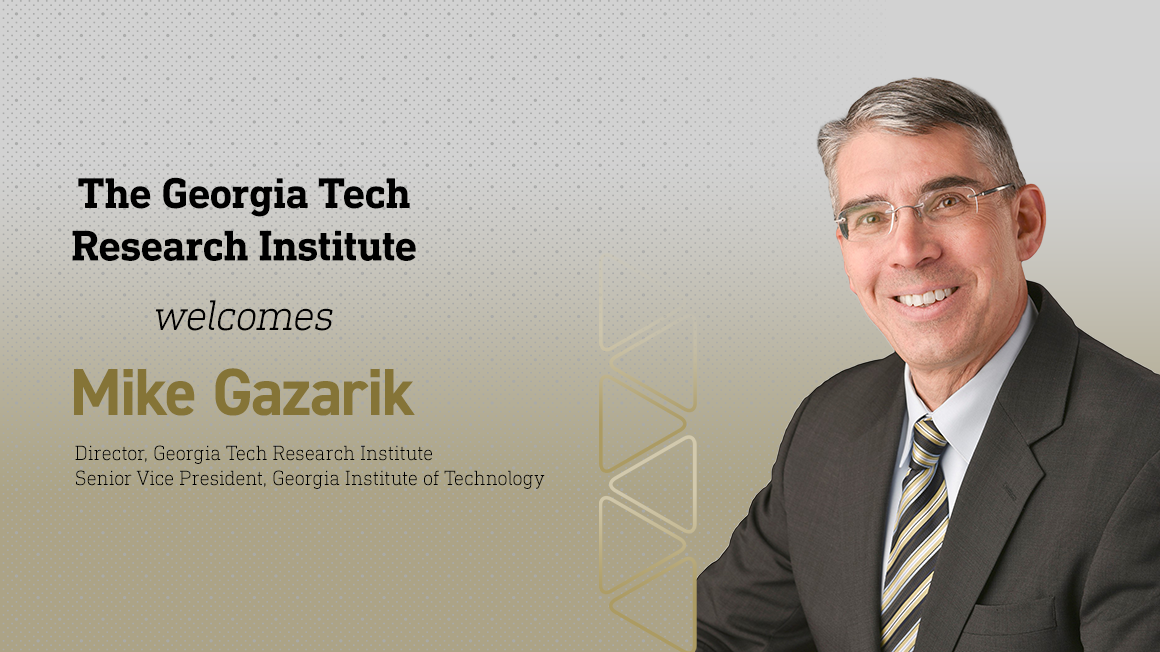
Georgia Tech Names Mike Gazarik Director of Georgia Tech Research Institute | Newswise


Newswise — Georgia Institute of Technology has named Michael “Mike” Gazarik as the new director of the Georgia Tech Research Institute (GTRI) and a Georgia Tech senior vice president, effective February 16. 

A nationally respected aerospace and research leader, Gazarik has led large, complex research organizations across government, industry, and academia, shaping strategy, driving growth, and building institutions that deliver mission-critical innovation. With more than three decades of experience, his career reflects a deep ability to align technology with national priorities and guide organizations through periods of change and opportunity. 

A Georgia Tech alumnus, Gazarik currently serves as faculty director of the Engineering Management Program at the University of Colorado Boulder and as a part‑time staff member at the Johns Hopkins Applied Physics Laboratory. He previously held senior leadership roles at NASA, including director of engineering at NASA Langley Research Center and inaugural associate administrator for the Space Technology Mission Directorate (STMD). In industry, he spent eight years as vice president of engineering at Ball Aerospace, leading its strategic growth from an elite science contractor into a strategic national security asset that doubled in size.

“Mike Gazarik brings a rare combination of technical depth, executive leadership, and deep government experience,” said Tim Lieuwen, Georgia Tech’s executive vice president for Research. “He knows large research enterprises operate within the realities of policy and budget and has a proven ability to align technology with mission priorities while earning trust across stakeholders. We are excited to welcome Mike back to Georgia Tech to lead GTRI at a pivotal moment for research and innovation.”

GTRI employs more than 3,000 employees, conducting nearly $1 billion in annual research in areas such as autonomous systems, cybersecurity, electromagnetics, electronic warfare, modeling and simulation, sensors, systems engineering, and threat systems. GTRI’s renowned researchers combine science, engineering, economics, and policy to address challenges facing national security, industry, and society.

For nearly a century, GTRI has partnered with government and industry to deliver solutions to the most mission-critical challenges facing our nation,” said Georgia Tech President Ángel Cabrera. “We are proud to welcome Mike Gazarik to lead a crown jewel of our research enterprise and a crucial component of our nation’s science and technology fabric. His experience and leadership will strengthen GTRI’s ability to deliver on its mission and help make our nation safer, healthier, and more competitive.”

Gazarik is widely recognized for leading complex research enterprises with a focus on stability, strategic alignment, and mission impact. At NASA, he helped shape the agency’s science and technology enterprise during periods of fiscal constraint and technical risk, maintaining balance across broad mission areas and forming STMD to consolidate technology development. At Ball Aerospace, he guided significant growth and aligned strategy with evolving national security and civil space needs. His academic work has focused on preparing engineering leaders for mission-driven organizations — experience that aligns closely with GTRI’s role as a trusted partner to government and industry.

He earned a B.S. in electrical engineering from the University of Pittsburgh and an M.S. and Ph.D. in electrical engineering from Georgia Tech. Gazarik is a fellow of the American Institute of Aeronautics and Astronautics (AIAA), a former chair of AIAA’s Corporate Strategic Committee, and was elected to the AIAA Board of Trustees in 2025. His honors include NASA’s Outstanding Leadership Medal, the Silver Snoopy Award, the 2023 AIAA Rocky Mountain Section Educator of the Year, and recognition as Engineering Manager of the Year by the American Society of Engineering Management.

“GTRI has a remarkable legacy of delivering solutions that matter for the nation,” said Gazarik. “I’m honored to return to Georgia Tech and lead an organization that combines deep technical expertise with a mission-driven culture. My focus will be on listening, building on GTRI’s strengths, and ensuring we continue to advance research that makes a real difference for our partners and society.”

As director, Gazarik will lead GTRI’s multidisciplinary research enterprise, advancing its mission to deliver high‑impact science and technology solutions in support of national security, space systems, and critical societal needs.


AI, Automation, and Biosensors Speed the Path to Synthetic Jet Fuel | Newswise


BYLINE: Will Ferguson

Newswise — When it comes to powering aircraft, jet engines need dense, energy-packed fuels. Right now, nearly all of that fuel comes from petroleum, as batteries don’t yet deliver enough punch for most flights. Scientists have long dreamed of a synthetic alternative: teaching microbes to ferment plant material into high-performance jet fuels. But designing these microbial “mini-factories” has traditionally been slow and expensive because of the unpredictability of biological systems.

In a pair of recent studies, two teams at the Joint BioEnergy Institute (JBEI), which is managed by Lawrence Berkeley National Laboratory (Berkeley Lab), have demonstrated complementary ways to dramatically speed up this process. One combines artificial intelligence and lab automation to rapidly test and refine the genetic designs of biofuel-producing microbes. The other turns a microbe’s “bad habit” into a powerful sensing tool, uncovering hidden pathways that boost production.

Their shared target is isoprenol — a clear, volatile alcohol that can be converted into DMCO, a next-generation jet fuel with higher energy density than today’s conventional aviation fuels. Producing isoprenol efficiently has been a long-standing challenge in synthetic biology.

The two studies — one published in Nature Communications, the other in Science Advances — tackle different sides of this challenge. The first uses automation and machine learning to engineer Pseudomonas putida strains that produce five times more isoprenol than before. The second approach turns the bacterium’s natural fuel-sensing ability into an advantage. By rewiring that system into a biosensor, the team could rapidly screen millions of variants and identify strains that make up to 36 times more isoprenol.

“These are two powerful complementary strategies,” said senior author of the biosensor study Thomas Eng, JBEI deputy director of Host Engineering and a research scientist in Berkeley Lab’s Biological Systems and Engineering (BSE) Division. “One is data-driven optimization; the other is discovery. Together, they give us a way to move much faster than traditional trial-and-error.”

A new engine for strain design

The AI and automation study was led by Taek Soon Lee, director of Pathway and Metabolic Engineering at JBEI, and Héctor García Martín, director of Data Science and Modeling at JBEI, both staff scientists in Berkeley Lab’s BSE Division. They set out to accelerate one of synthetic biology’s most time-consuming steps: improving microbial production through a series of genetic tweaks to different combinations of genes. Traditionally, scientists alter a few genes at a time and test the results — a painstaking, intuition-driven process that can take months or even years to yield meaningful gains.

By contrast, the Berkeley Lab researchers built an automated pipeline that uses robotics to create and test hundreds of genetic designs in parallel. After each round, machine learning algorithms analyze the results to systematically suggest the next set of strain genetic designs. The result is a system that moves 10 to 100 times faster than conventional methods.

“Standard metabolic engineering is slow because you’re relying on human intuition and biological knowledge,” said García Martín. “Our goal was to make strain improvement systematic and fast.”

Lead author David Carruthers, a scientific engineering associate with JBEI and BSE, developed a robotic workflow that connects key lab steps into one automated system. Working with collaborators at Lawrence Livermore National Laboratory, the team introduced a custom microfluidic electroporation device that can insert genetic material into 384 Pseudomonas putida strains in under a minute — a task that typically takes hours by hand.

At the core of the system is CRISPR interference (CRISPRi), a tool that lets researchers “turn down” gene activity rather than switching genes off completely. This fine-tuning makes it possible to test subtle gene combinations that shape the cell’s metabolism and track the effects through detailed protein measurements. After each round, the machine learning model analyzes the results and recommends the next set of genes that are most likely to boost performance when dialed down.

“Traditionally, optimizing production is a kind of guess-and-check process,” Carruthers said. “You make one change, test it, and hope you’re climbing toward a higher peak. By combining automation and machine learning, we were able to climb that landscape systematically — in weeks, not years.”

Lee, who led the metabolic engineering work, emphasized why this level of automation is so transformative for biology.

“We have been engineering Pseudomonas by hand for years, but biological experiments always come with small variations that are hard to control,” he said. “Automation gives us the ability to generate the same high-quality data every time, which is essential for machine learning to work well.”

Patrick Kinnunen, a former Berkeley Lab JBEI postdoctoral researcher who co-developed the data strategy, highlighted how crucial that reproducibility was for the algorithms. “Automation didn’t just make the experiments faster — it made the data cleaner,” he said. “That clarity is what lets it uncover non-intuitive genetic combinations that we probably would have missed by hand.”

Using their automated learning loop, the team completed six engineering cycles, each lasting just a few weeks instead of the months typical of manual workflows. They boosted isoprenol titers (the concentration of product in the culture) five-fold compared to their starting strain.

Turning a bug into a feature

Meanwhile, a second team led by Eng tackled a different but equally stubborn hurdle: how to select target genes that, when dialed down, improve isoprenol production significantly. The team’s microbe, Pseudomonas putida, posed a peculiar problem. It didn’t just make isoprenol, it also consumed the fuel molecule almost as soon as it produced it, undermining production efforts. Initially, this looked like a flaw. But during the COVID-19 pandemic, Eng and colleagues realized it might be a clue: if the microbe could sense and eat isoprenol, it likely had a built-in molecular sensor.

“There was a real ‘Aha!’ moment,” Eng said. “We had spent more than a year trying to figure out why the cells were consuming the product. One day we thought, ‘Wait, if they can sense it, there has to be a protein that detects it. Maybe we can turn that from a problem into a tool.’”

The team discovered the molecular system the microbe uses to sense isoprenol: two proteins that work together to detect the fuel and send signals inside the cell. They then rewired this system into a biosensor — a kind of biological “engine light” that turns on in proportion to how much fuel the cell produces.

Then came the clever twist: They linked the sensor to genes essential for survival, creating a system where only the microbes that make the most fuel can grow. Instead of measuring thousands of samples by hand, they let natural selection do the screening. This approach rapidly surfaced “champion” strains, including variants that produced up to 36 times more isoprenol than the original.

“What started as a frustrating bug became our biggest asset,” Eng said. “We turned the microbe’s fuel-eating behavior into a sensor that reports and selects for the best producers automatically.”

The approach also revealed surprising biology; high-producing strains switched to feed on their own amino acids once glucose ran out, sustaining production by rewiring their metabolism in unexpected ways. Just as importantly, the workflow can be applied to other molecules, offering a flexible new tool for rapidly engineering microbes — not just for isoprenol, but for a wide range of bio-based products.

Scaling up to industry-ready

Although developed independently, the two approaches fit together well. The AI-driven pipeline excels at rapidly optimizing combinations of a known set of gene targets, while the biosensor method is best for discovering novel gene targets, revealing genetic levers that would be difficult to predict.

“One is depth-first; the other is breadth-first,” Eng said. “Machine learning systematically optimizes combinations of annotated targets, while the biosensor approach starts fresh and lets the cells tell us which gene targets matter.”

Both teams are now working to scale their methods from lab experiments to industrially relevant fermentation systems — a critical step for producing synthetic aviation fuel at commercial levels. They’re also adapting their approaches to other microbes and target molecules, aiming to make them broadly applicable in biomanufacturing.

“If widely adopted, these approaches could reshape the industry,” García Martín said. “Instead of taking a decade and hundreds of people to develop one new bioproduct, small teams could do it in a year or less.”

Aindrila Mukhopadhyay, BSE deputy director for science, director of Host Engineering at JBEI, and a coauthor on the biosensor study, said these kinds of tools are changing how biological research gets done.

“Engineering biology is challenging due to the inherent unpredictability of metabolism and that makes the engineering slow,” Mukhopadhyay said. “By streamlining key steps — as we did through selections — and leveraging automation and AI, we’re making it a faster, more systematic process that is easier to adopt.”

JBEI is a Bioenergy Research Center funded by the Department of Energy Office of Science.

###

Lawrence Berkeley National Laboratory (Berkeley Lab) is committed to groundbreaking research focused on discovery science and solutions for abundant and reliable energy supplies. The lab’s expertise spans materials, chemistry, physics, biology, earth and environmental science, mathematics, and computing. Researchers from around the world rely on the lab’s world-class scientific facilities for their own pioneering research. Founded in 1931 on the belief that the biggest problems are best addressed by teams, Berkeley Lab and its scientists have been recognized with 17 Nobel Prizes. Berkeley Lab is a multiprogram national laboratory managed by the University of California for the U.S. Department of Energy’s Office of Science.

DOE’s Office of Science is the single largest supporter of basic research in the physical sciences in the United States, and is working to address some of the most pressing challenges of our time. For more information, please visit energy.gov/science.