SCOTUS conservatives signal readiness to curb late-arriving mail ballots


NEWYou can now listen to Fox News articles!

The Supreme Court’s conservative majority on Monday appeared poised to overturn state laws from Mississippi and other U.S. states that allow for the counting of mail-in ballots received after Election Day — a major case that could upend voting laws for millions of Americans just months before the 2026 midterm elections.

At issue is a Mississippi voting law that allows the state to count mail-in ballots that are received up to five days after the election, so long as they are postmarked by or before Election Day. 

President Donald Trump has focused on mail-in voting during his second White House term, and has argued that such laws undermine voter confidence. Similar laws are currently on the books for at least 13 states and the District of Columbia, in a sign of the wide-ranging nature of the case. 

During roughly two hours of oral arguments Monday, conservative justices appeared sympathetic to the argument made by the Trump administration’s lawyer, U.S. Solicitor General D. John Sauer, who noted that the Mississippi law and similar voting laws in other states could erode voter trust in election results.

SCOTUS TO REVIEW TRUMP EXECUTIVE ORDER ON BIRTHRIGHT CITIZENSHIP
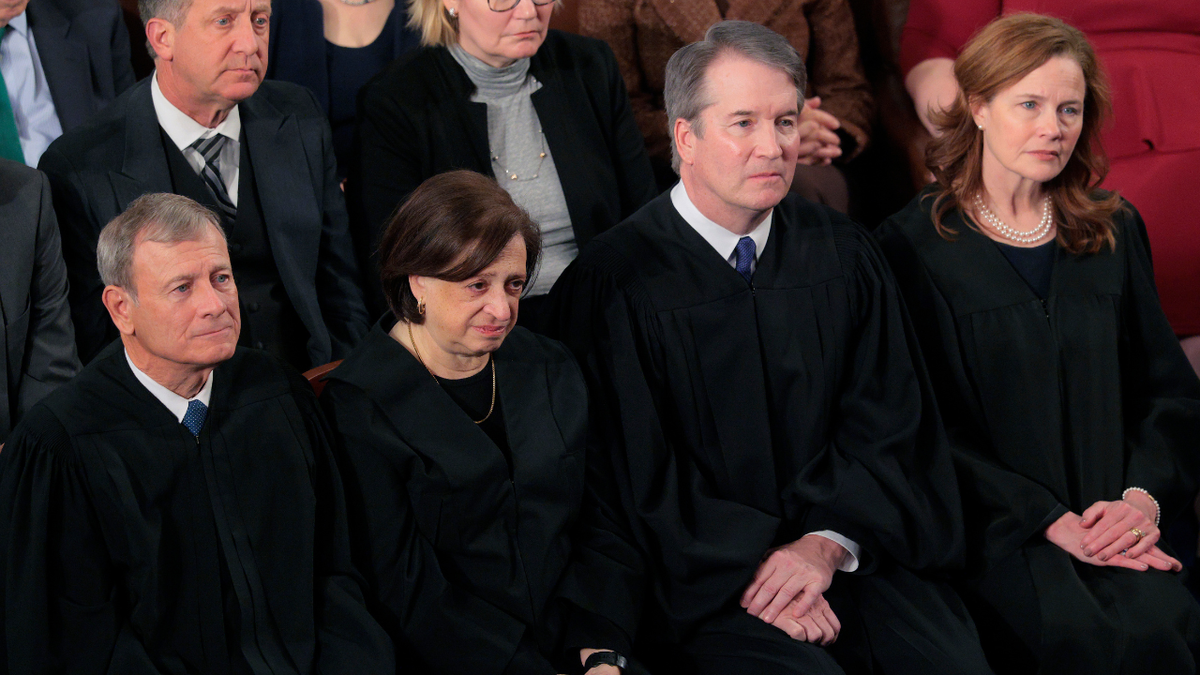
SCOTUS conservatives signal readiness to curb late-arriving mail ballots

Supreme Court justices are seen at the State of the Union. ( Chip Somodevilla/Getty Images)

Justice Samuel Alito pointed to concerns that “confidence in election outcomes can be seriously undermined” when results are delayed, which was echoed later by Justice Brett Kavanaugh.

“If the apparent winner the morning after the election ends up losing due to late arriving ballots, charges of a rigged election could explode,” Kavanaugh noted. 

The case comes as Trump has targeted mail-in voting efforts in his second presidential term. He previously signed an executive order seeking to end mail-in ballots in federal elections, with which several GOP-led states have complied.

That action was separate from the current Supreme Court appeal, however, which centered on the Republican National Committee’s lawsuit brought against Mississippi over its mail-in voting statutes, enacted after the COVID-19 pandemic. The law allows mail-in voting ballots to be received up to five days after the election.

Mississippi officials sought to defend their law against questions from conservative justices regarding a “slippery slope,” and other hypothetical questions raised by conservative justices, including questions centered on early voting, and votes sent by U.S. service members stationed overseas.

SUPREME COURT SIGNALS IT MAY LIMIT KEY VOTING RIGHTS ACT RULE
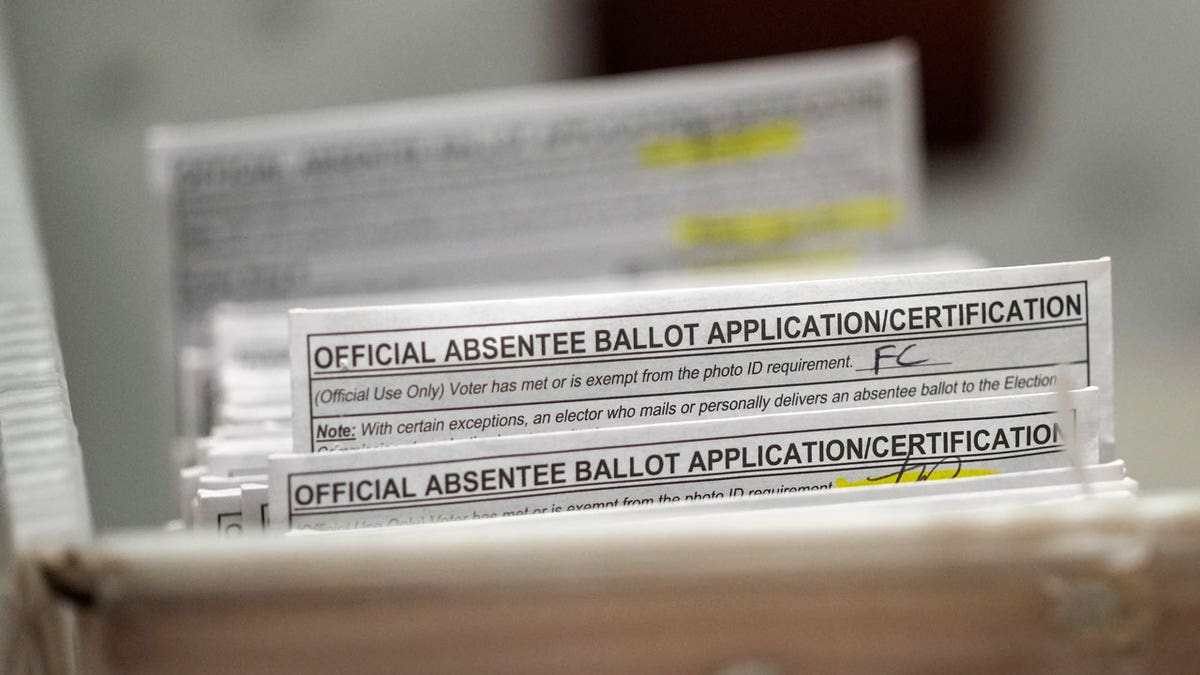
Ohio voter law

Certified absentee ballots are seen in this file photo ahead of the Supreme Court’s consideration of a Mississippi mail-in voting law. (AP Photo/Morry Gash, File)

“If history teaches anything,” Justice Neil Gorsuch noted, “[it is that] as soon as anything is allowed, it will happen.”

Gorsuch pressed lawyers on various hypothetical questions, including how far states could go in pushing their own deadlines for accepting mail-in ballots, should the Supreme Court side with Mississippi in the case.

 “If we were to rule against you, is there anything that would limit a state from allowing a receipt by election officials up until the day of the next Congress?” Gorsuch asked at one point during arguments.

Paul Clement, who presented arguments for the Republican Party and Libertarian voters, suggested that a high court ruling for Mississippi would open the door to “limitless” options. 

“Maybe the next state can figure out a way to have an election without anybody even receiving anything, I don’t know,” Clement said. “That seems to me to be a large reason why Election Day should mean ‘Election Day.’” 

FEDERAL JUDGES IN NEW YORK AND TEXAS BLOCK TRUMP DEPORTATIONS AFTER SCOTUS RULING
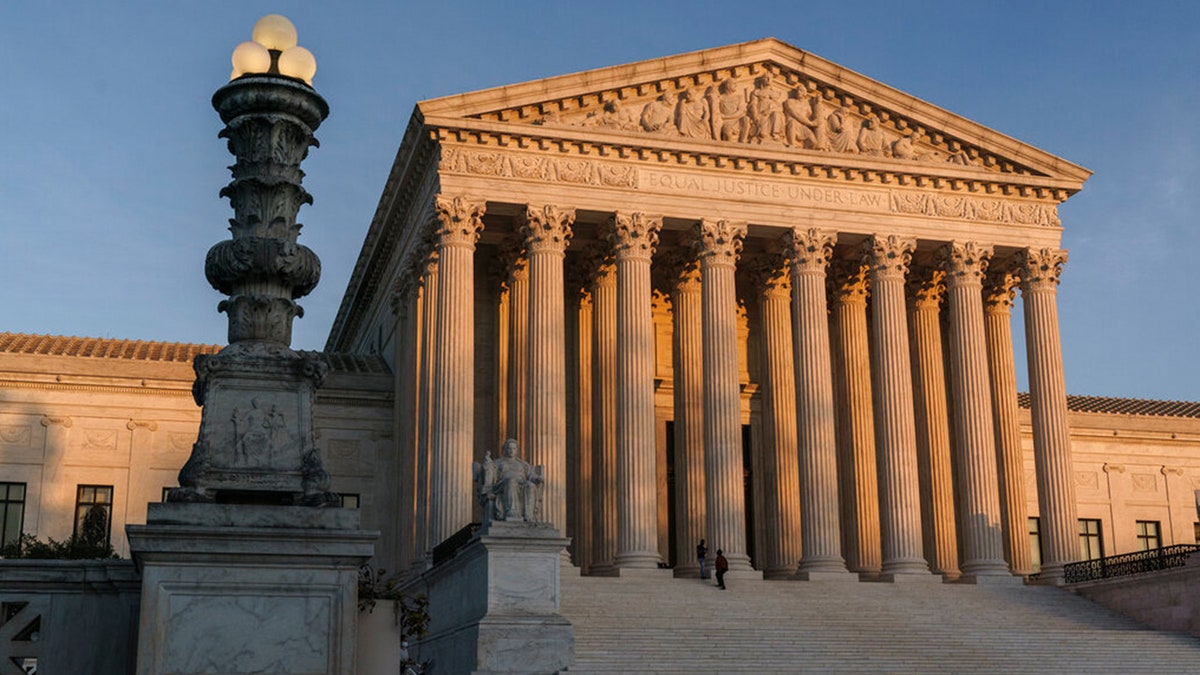
The Supreme Court building

The Supreme Court building in Washington, D.C. (AP Photo/J. Scott Applewhite, File)

The high court’s consideration of the case comes amid a longstanding legal tug-of-war over how much control states should have over their voting regulations, including in elections involving both federal and local candidates.

It comes as justices are weighing other high-stakes election cases this year, including the use of race to draw congressional voting districts, and a federal law restricting the amount of money that political parties can spend in coordination with candidates for Congress and president. 

Lawyers for Mississippi told the court that an “‘election’ is the conclusive choice of an officer…  So the federal election-day statutes require only that the voters cast their ballots by election day.”

“The election has then occurred, even if election officials do not receive all ballots by that day.”

CLICK HERE TO GET THE FOX NEWS APP 

The high court is expected to rule on the states’ counting of mail-in ballots by June.

This is a breaking news story. Check back for updates.


Disgraced ‘Dolton Dictator’ Tiffany Henyard runs for office as a Republican in Georgia while she plots political comeback


Changing of the cards.

Disgraced “Dolton Dictator” Tiffany Henyard dumped the Democratic Party and is running as a Republican in Georgia in an attempted political comeback over a year after her embarrassing ouster in Illinois.

Henyard, who described herself as a “super mayor,” filed to run as a Republican in Georgia’s Fulton County Board of Commissioners election in May, according to county election records.

Tiffany Henyard speaks during a Facebook Live stream after qualifying to run for the Fulton County Board of Commissioners on March 11, 2026. Tiffany Henyard / Facebook

The 42-year-old is vying for the District 5 commissioner’s seat and is one of five current contenders, but is the only GOP candidate.

District 5 encompasses the southwestern suburbs of Atlanta, including South Fulton, Union City and Palmetto. President Trump’s Georgia rival, Fani Willis, is the district attorney of Fulton County.

Henyard qualified for the ballot on March 5 — over a year after her heavily celebrated ouster from Illinois politics that included her scandal-scarred stints as mayor of Dolton and supervisor of Thornton Township.

In her roles, Henyard faced a plethora of damaging accusations. She claimed she oversaw off-the-rails spending, allegedly making more than $43,000 in Amazon purchases in a single day while the municipality’s finances were in shambles.

The FBI launched an investigation into Henyard in 2024 following the allegations.

Henyard was accused of misusing taxpayer money on lavish trips and her own $1 million police detail, but a probe into the finances was vetoed by the sitting mayor.

Henyard qualified for the ballot on March 5 — over a year after her heavily celebrated ouster from Illinois politics that included her scandal-scarred stints as mayor of Dolton and supervisor of Thornton Township. Fox 32
Henyard was accused of misusing taxpayer money on lavish trips and her own $1 million police detail, but a probe into the finances was vetoed by the sitting mayor. Instagram / @tiffanyhenyard

She has consistently defended herself against the stinging criticism and accusations, calling the backlash a smear campaign and blasting it as fake news.

Her downfall was complete when she lost the Democratic Primary for Thornton supervisor and the Dolton mayoral Democratic primary to current Mayor Jason House in February 2025.

The self-centered politician introduced the political rebirth — which she named “Project Phoenix” — during a Facebook Live on Wednesday, saying her critics and the “fake news” couldn’t stop her.

Henyard shared that she moved to Georgia and was ready to change Atlanta and the encompassing Fulton County.

“Project Phoenix is me rising, me showing the world what it looks like to come out of controversy. Me showing the world like when they keep trying to dirty your name up, you keep going. Don’t you ever give up,” Henyard told her followers.

Henyard claimed she was working to fix Fulton County’s notorious jails that had been ignored for decades by current leadership.

The self-centered politician introduced the political rebirth — which she named “Project Phoenix” — during a Facebook Live on Wednesday. Fox 32 Chicago
Henyard shared that she moved to Georgia and was ready to change Atlanta and the encompassing Fulton County. @tiffanyhenyard/Instagram
Henyard claimed she was working to fix Fulton County’s notorious jails that had been ignored for decades by current leadership. Tiffany Henyard / Facebook

“The residents are tired, they are looking for a new leader, new leadership, they looking for new direction, they looking for somebody that provides hope and change and actually do what they said they’re going to do and that’s Tiffany Henyard,” she said.

“Anyone that know me knows I put on for my city they know that if I’m coming, we coming. And they know that once we start making noise the change will happen. Because you can’t expect change without making a change,” Henyard added.

The Illinois native claimed she had experience from her previous positions in Dolton and Thornton Township to be a commissioner in Fulton County.

“I have the real power, the energy, the know-how. I have everything it takes to help the people,” she said.


$900M taken from solar panel program and pumped into Dem. voting activism, CAL DOGE claims


CAL DOGE has claimed nearly $1 billion was taken from a California solar panel program and funneled into Democratic voter registration and activism.

The report, out Thursday, argues $928 million from gas tax and electric bills intended for solar panels for apartment buildings went to the leftist groups.

SOMAH, which stands for Solar on Multifamily Affordable Housing, was created by AB 693 in 2015. Since then it has been funded for up to $100 million every year using “cap and trade auctions proceeds.”

CAL DOGE said $1 billion has been given to the program since its creation Obtained by the CA POST

CAL DOGE said that according to SOMAH’s latest report they have completed only 269 projects for a total of $72 million.

Republican gubernatorial candidate Steve Hilton, who has maintained his lead in the race in the latest poll, said he wants to know where the rest of the money went.

“$928 million has been stolen. Your money,” Hilton said. “Do you know where it’s gone? Voter registration. By leftist groups supporting the Democratic Party.

“It is an absolute scandal. Just the latest in the amount of money that’s been stolen from you.”

The report lists what CAL DOGE called the partner organizations of SOMAH, who were “double dipping on public funds to provide solar panels on apartment buildings.”

It continues: “But actually are building a left-wing activist machine in economically disadvantaged neighborhoods across the state.”

Steve Hilton said it’s “an absolute scandal.” Obtained by the CA POST

CAL DOGE Director Jenny Rae Le Roux said that when the program began Californians were promised it would lower their utility bills. But what has happened is the opposite.

Meanwhile everyone except who was in the program has seen their utility bills more than double what they were paying in 2015, she claimed.

Under SOMAH’s structure, GRID Alternatives is a non-profit that serves as a key program administrator on the team, while the California Environmental Justice Alliance (CEJA) is promoted as a long-standing partner and community-based coordinating entity for outreach that gets paid by GRID’s team as a subcontractor, CAL DOGE claimed.

CEJA’s related entity, CEJA Action, is a 501(c)(4) political organization that explicitly seeks to build political power and operates as a project of Tides Advocacy, according to CAL DOGE.

CAL DOGE claims a solar panel program is funding left-wing voter registration and activism. REUTERS

CAL DOGE said the political organization published voter guides, and mobilized voters of color in 2024, along with endorsing 24 progressive candidates for the CA legislature.

It claimed the “fiscal sponsorship structure and overlapping ecosystem is how public funds meant to inform tenants about solar benefits are indirectly supporting partisan campaign activity.”

Le Roux said the Trump administration pulled funding from GRID in August 2025, but claimed the money is still flowing in from California with no accountability as to what happened with those federal funds before.

CAL DOGE is calling on a full audit of the solar panel program outreach and education spending, including subcontractors and pass-through payments.

Obtained by the CA POST

Calls to SOMAH were not immediately returned to The Post.