
Proba-3 Captures Faster-Than-Expected Solar Wind in the Inner Corona
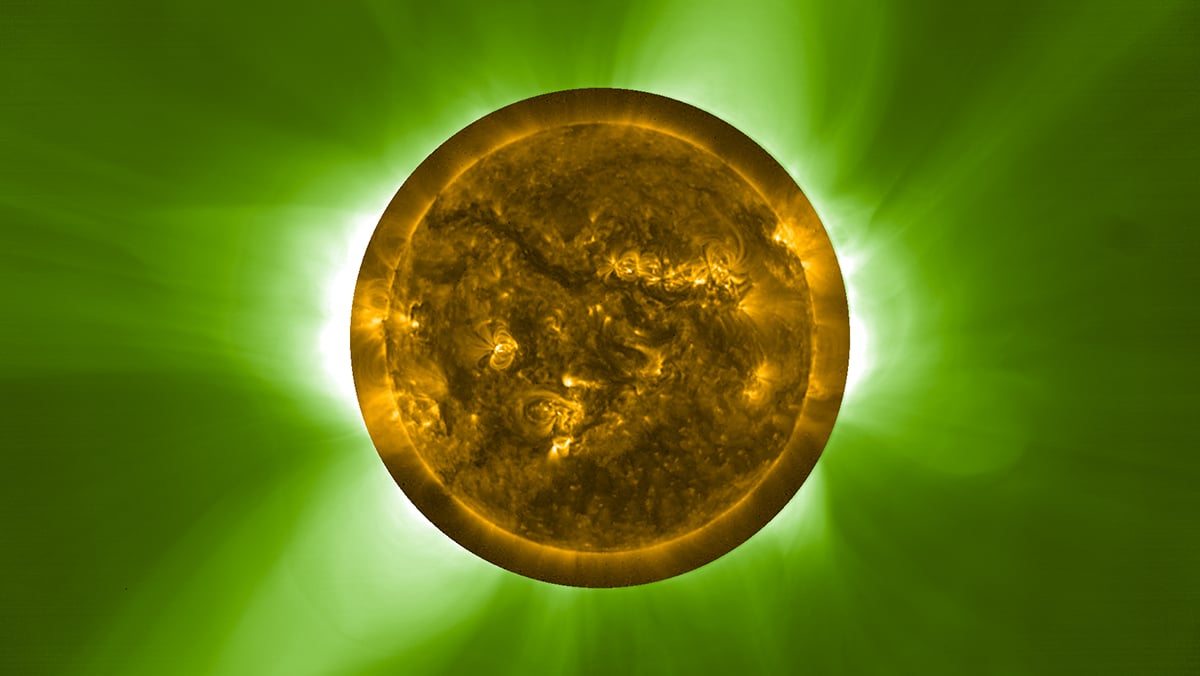
The acceleration of the slow solar wind remains one of the central unsolved problems in solar physics. Researchers know that this component of the solar wind originates in the structured magnetic environment of the inner corona. However, observations of plasma motion within roughly three solar radii of the surface have remained limited for decades.
The European Space Agency’s Proba-3 mission has provided new measurements from this critical region using its formation-flying coronagraph system. Early observations indicate that plasma associated with the slow solar wind moves significantly faster near the Sun than previously predicted by models. These results mark the first major scientific outcome of the mission and also show the value of long-duration artificial eclipse observations in space.
Observing the inner corona: The difficult part
The solar corona extends far into interplanetary space. Yet the region closest to the solar surface remains difficult to observe. The brightness of the solar disc overwhelms faint coronal emission. As a result, instruments struggle to record detailed structures near the limb of the Sun.
For many years, total solar eclipses provided the most effective method for studying the inner corona. During these events, the Moon blocks the bright solar surface, revealing the surrounding atmosphere. Observers can then examine streamers, loops, and fine plasma structures. However, total eclipses last only a few minutes at any given location. They also occur infrequently.
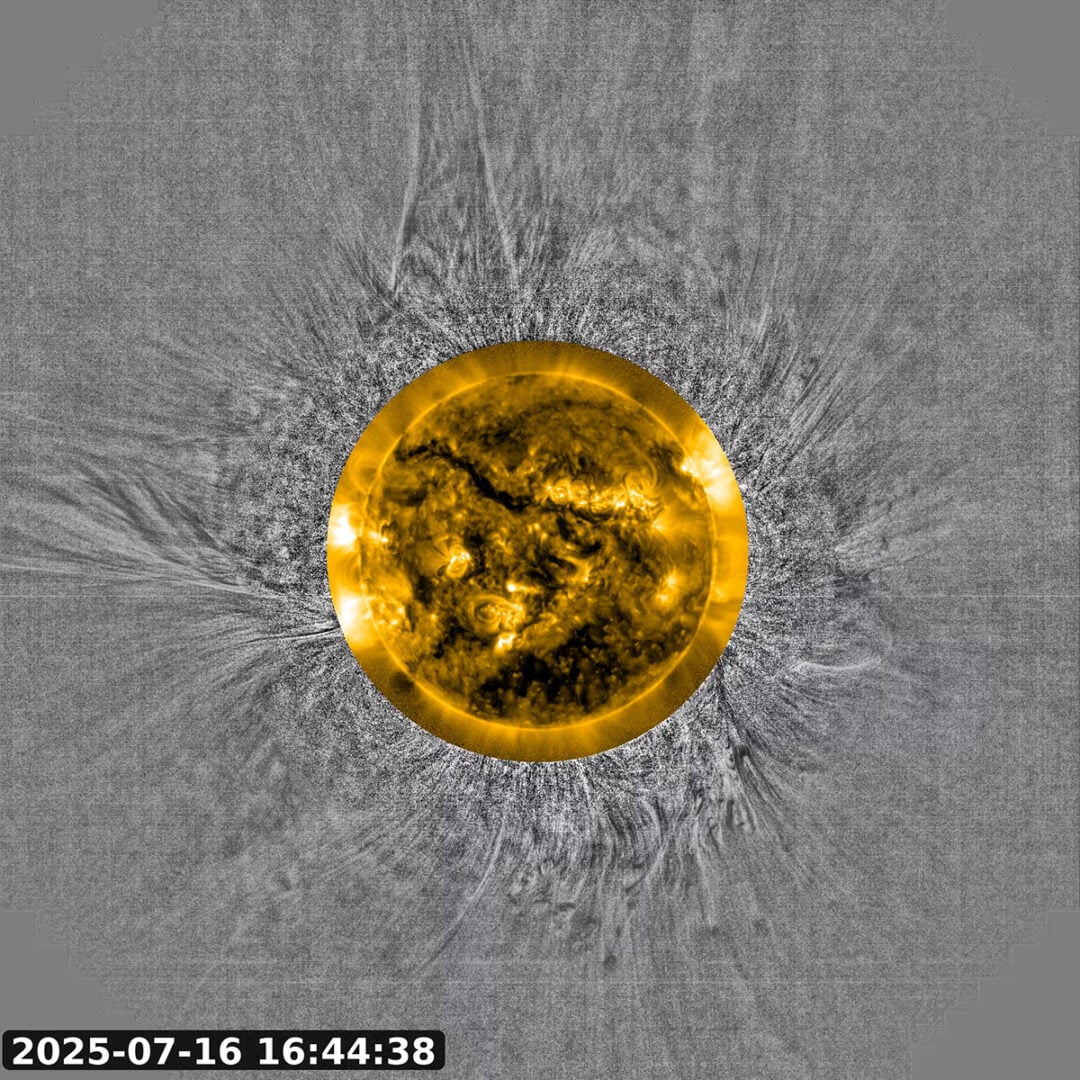
Space coronagraphs improved the situation. These instruments use internal occulting discs to block direct sunlight. Even so, most earlier coronagraphs could not observe the corona very close to the solar surface. The region where the slow solar wind begins its acceleration remained only partly explored.
Researchers relied on indirect measurements and theoretical models to describe plasma behaviour in this zone. Proba-3 now provides sustained observations from exactly this region.
Long-duration artificial eclipse with formation flying
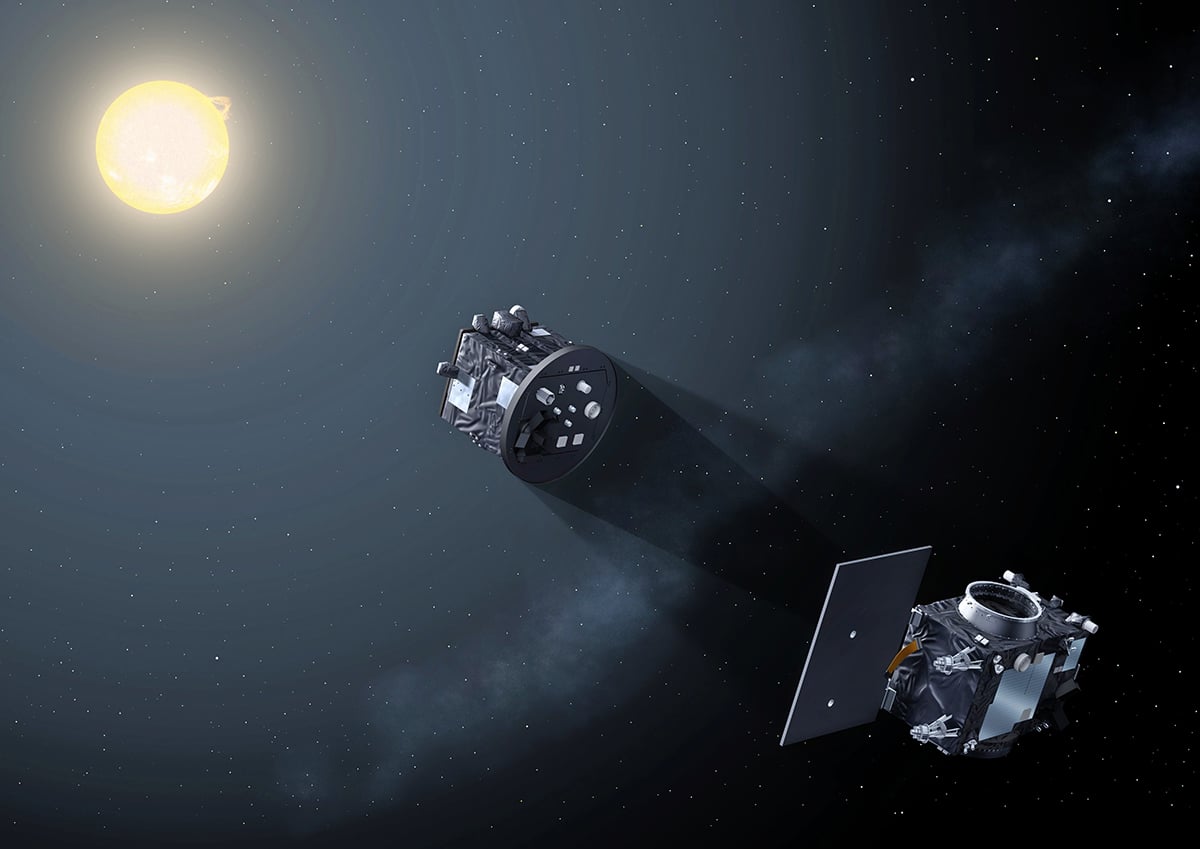
The Proba-3 mission uses two spacecraft flying in precise formation to create an artificial solar eclipse in orbit. One spacecraft carries an occulting disc. The second spacecraft carries the ASPIICS coronagraph. Together they form a single large optical system separated by about 150 metres.
This configuration allows the occulting spacecraft to block the bright solar disc before light reaches the telescope. As a result, the coronagraph records a very clean view of faint coronal structures close to the Sun.
The two spacecraft maintain alignment with millimetre-level accuracy. Since mid-2025, the spacecraft pair has produced dozens of artificial eclipses and recorded more than 250 hours of coronal observations. This extended observing time has allowed scientists to follow plasma motion in the inner corona with unusual continuity.
Early observations reveal unexpectedly fast plasma motion
One of the main scientific goals of Proba-3 is the study of the slow solar wind. This component of the solar wind originates in streamer regions and evolves through complex magnetic interactions. Although spacecraft measure the solar wind farther from the Sun, measurements close to the acceleration region remained limited until now.
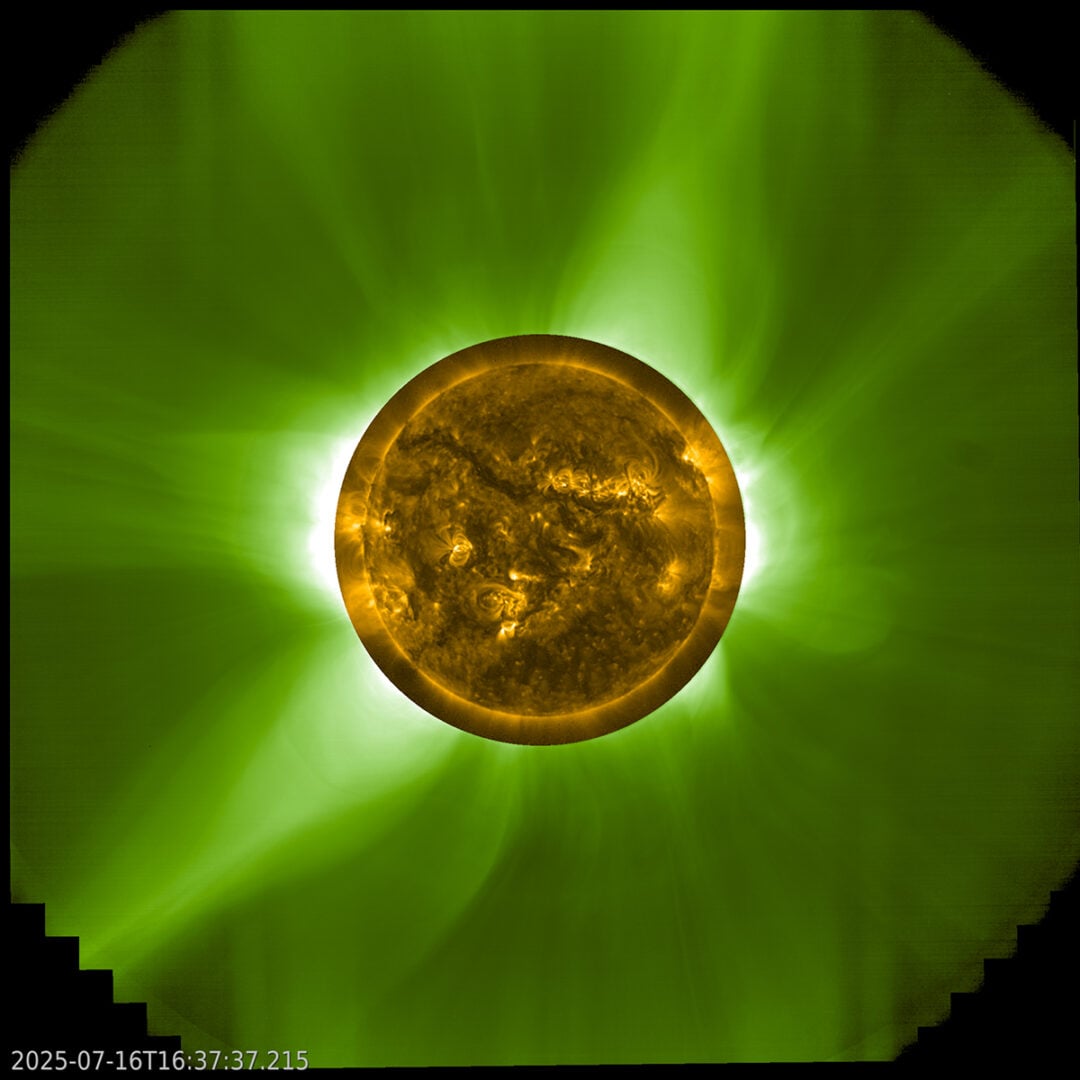
Using the ASPIICS coronagraph, researchers tracked small plasma structures moving outward through the inner corona. These structures form part of the slow solar wind outflow. Scientists measured their velocities directly within a region extending from roughly 1.3 to 3 solar radii.
Earlier models predicted speeds near 100 kilometres per second at these heights. However, Proba-3 observations show plasma moving between about 250 and 500 kilometres per second. These values indicate that acceleration begins earlier and proceeds more rapidly than expected.
Reconnection-driven acceleration models
Solar-wind acceleration depends strongly on magnetic structure in the corona. Researchers have long suggested that magnetic reconnection plays an important role in driving slow solar-wind outflows. This process releases stored magnetic energy and transfers momentum to coronal plasma.
The Proba-3 observations support this interpretation. Plasma motion within streamer regions appears irregular and episodic rather than smooth. Such behaviour matches predictions from reconnection-driven models of the slow solar wind.
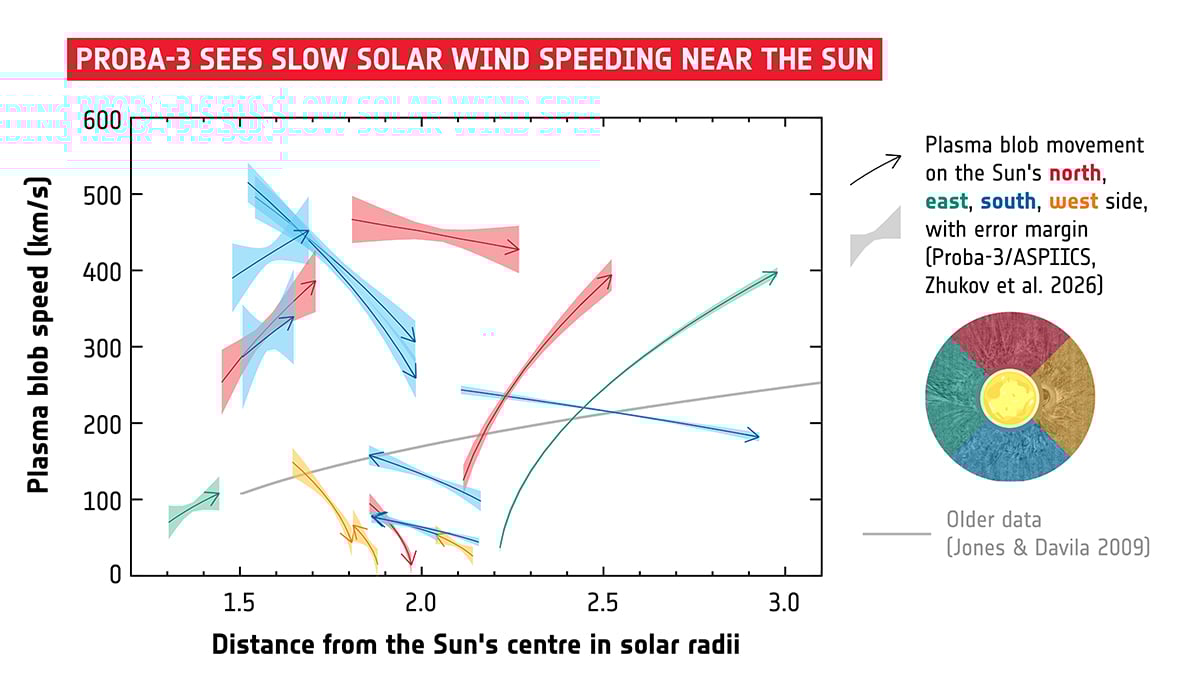
At the same time, the measurements indicate that acceleration begins closer to the solar surface than earlier estimates suggested. This information helps refine models of how magnetic fields transfer energy into the expanding solar atmosphere.
These results also improve understanding of the transition between closed magnetic structures and open field regions that guide plasma into interplanetary space. Researchers can now examine this transition zone with much greater observational detail.
ASPIICS provides a new view of coronal structure and dynamics
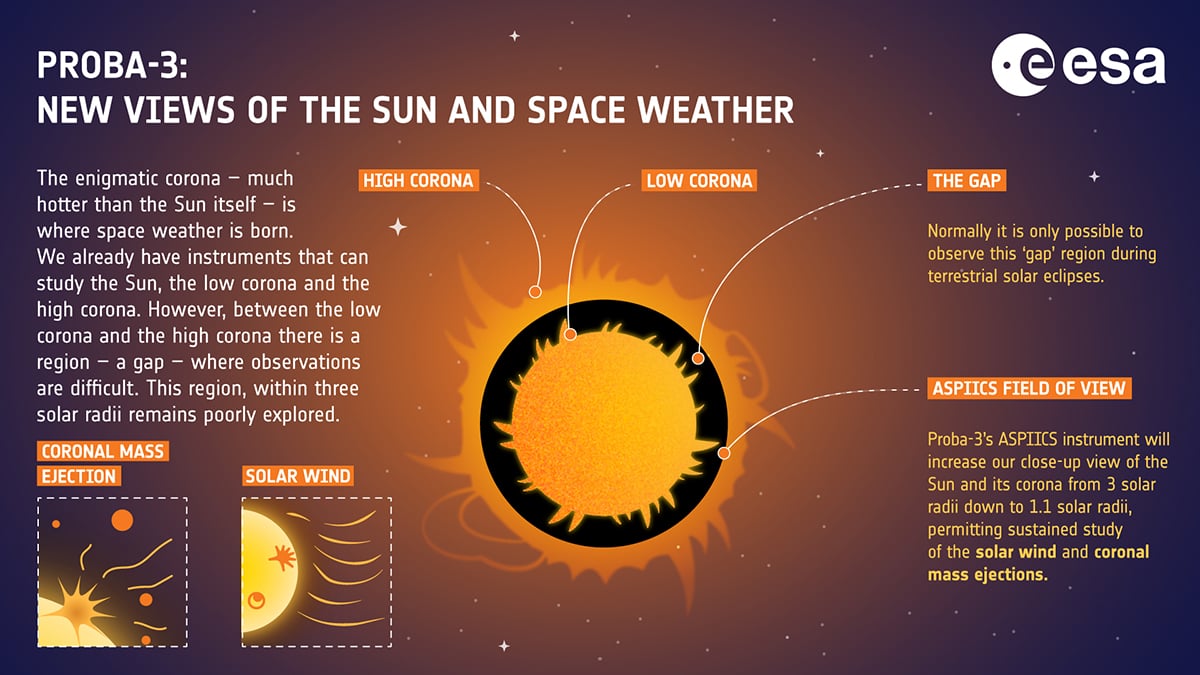
The ASPIICS coronagraph observes the solar corona closer to the surface than earlier space-based coronagraph systems. The instrument studies regions beginning roughly 70,000 kilometres above the solar surface. This observing range fills an important gap between surface imaging and measurements obtained farther out in the heliosphere.
During each observing session, the instrument records images at regular intervals and builds time-resolved sequences of coronal activity. These sequences allow scientists to follow the evolution of streamers, loops, and plasma outflows across the inner corona.
Researchers can now measure how small structures move through this region and how their motion changes with time. Such measurements help identify the locations where the solar wind begins to accelerate.
The instrument also supports investigations of coronal heating and the early development of coronal mass ejections. Continuous monitoring provides context for interpreting measurements from other solar missions operating at different distances from the Sun.
Clear skies!