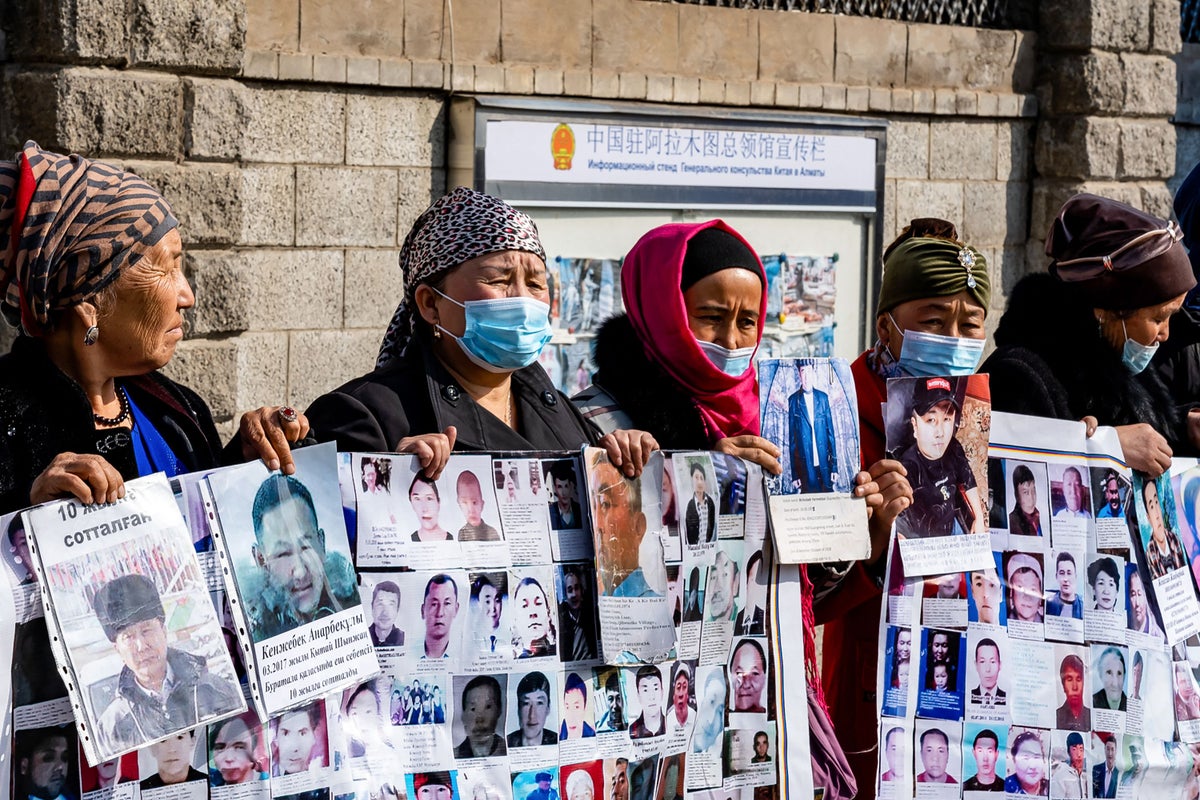

Kazakhstan jails peaceful protesters for five years after rally ‘displeases’ China
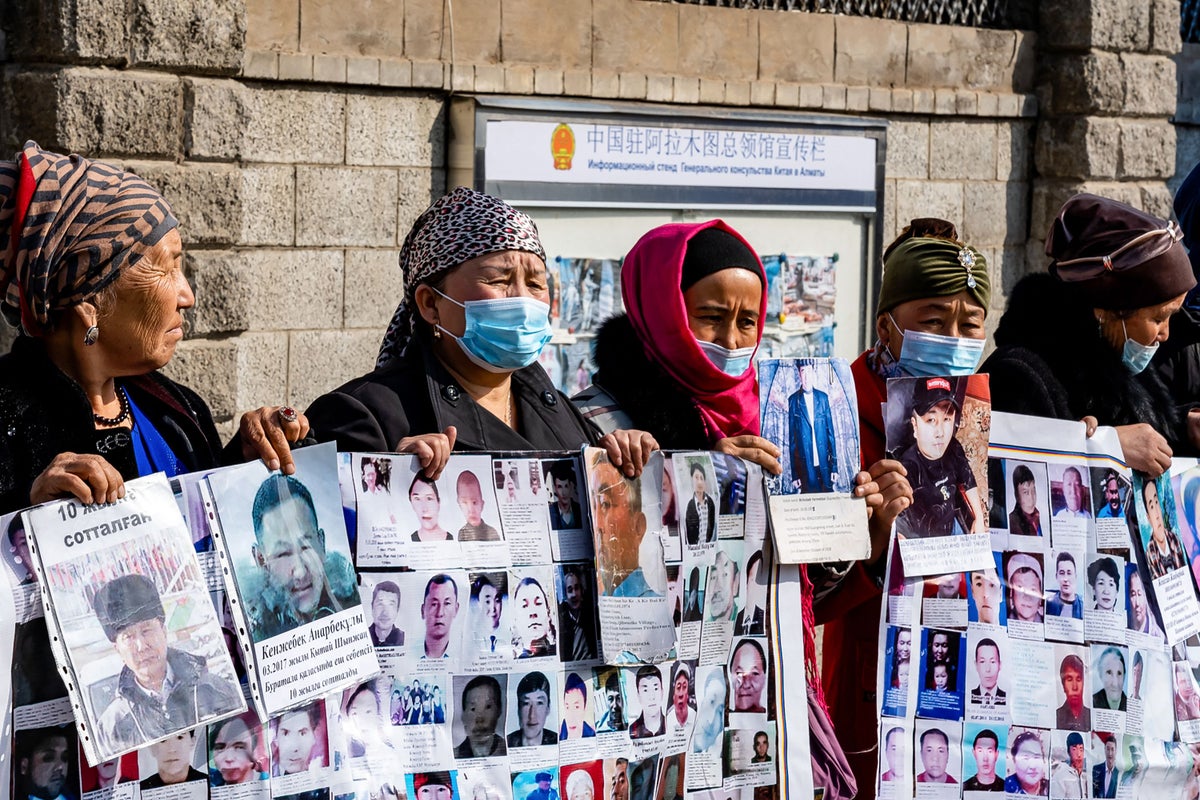
Kazakhstan has sent 19 people to jail for participating in a peaceful protest against human rights abuses in China’s northwestern Xinjiang region.
A court in Taldykorgan, a town about 260km north of Almaty, found all the defendants guilty of “inciting interethnic or social discord” for staging protests in November last year.
The defendants, associated with the Atajurt movement, were arrested following a protest in which they demanded the release of Alimnur Turganbay, an ethnic Kazakh detained in Xinjiang.
Atajurt is an unregistered group which documents alleged rights abuses against ethnic Kazakhs and Uyghurs in Xinjiang and advocates for families separated by the China-Kazakhstan border.
While 11 of the 19 convicts were handed five-year prison terms on charges of “social discord”, the rest were given non-custodial “restriction of freedom” sentences. They were all also banned from engaging in public or political activities for three years.
Videos from the November protest showed the demonstrators burning the Chinese flag and a portrait of Xi Jinping, chanting slogans against the Chinese leader, and demanding the release of Mr Turganbay, who was detained in China last July.
Mr Turganbay’s wife, Guldariya Sherizat, said she went out to protest to demand her husband’s freedom because he was “not guilty of anything”.
“We wanted to reach the border holding Chinese flags and Xi Jinping’s portrait but we were not allowed to proceed so we burned them,” she told Eurasianet earlier in January from her house in Uzynagash, where she was kept under house arrest. “We burned them to protest over why Xi Jinping is holding a Kazakh citizen”.
The protesters were arrested after the Chinese consulate in Almaty urged Kazakh authorities to “take appropriate measures”. Beijing enjoys close diplomatic ties with its neighbour.
The trial was held under tight security restrictions, with reporters denied access to the courtroom and told to follow the proceedings via a live video link.
Kazakhstan, which shares a 1,700km border with China, is home to sizeable Uyghur and Kazakh diasporas from Xinjiang.
China stands accused by Western countries and rights groups of committing “crimes against humanity” against Uyghur Muslims and fellow ethnic minorities in Xinjiang over the past decade by subjecting them to alleged widespread abuses, including mass incarceration, forced labour, torture and sexual assault.
The US and other Western nations have labelled China’s policies as a “genocide”, a claim Beijing has denied as “the lie of the century”.
Rights groups have accused Chinese authorities of punishing Uyghurs and Kazakhs with foreign links, detaining and arbitrarily imprisoning those who have family in or have visited any of the so-called “26 sensitive countries”, including Kazakhstan.
Human Rights Watch said that Kazakh authorities had long misused the vague and overly broad offence of “inciting discord” to suppress dissent. However, Monday’s sentencing marked the first instance of imprisoning “such a large group of activists advocating for human rights in Xinjiang”.
“With this heavy-handed prosecution and punishment,” the group argued, “the Kazakh government has made it clear that it is only too willing to sacrifice the freedoms of its citizens in an apparent attempt to maintain increasingly cozy relations with Beijing.”
Amnesty International criticised the ruling and demanded the release of the convicts. “Criminalising peaceful protest under the vague pretext of ‘inciting discord’ is a travesty of justice and an affront to international human rights standards,” said Marie Struthers, director for Eastern Europe and Central Asia.
Speaking before the start of the trial in January, Ms Struthers had called the charges “baseless” and warned that: “Peaceful protest is not a crime simply because it makes those in power uncomfortable – even when that discomfort extends to displeasing a powerful geopolitical player such as China.”