Friday on MS NOW’s “The Weeknight,” Rep. Jasmine Crockett (D-TX) argued Republicans would vote for her in the general election for U.S. Senate.
Co-host Michael Steele said, “Do you think Republicans, when you get to a general election, can be convinced that you are the representative they need in Washington?”
Crockett said, “Oh, absolutely. Now, Michael, you can maybe talk about this a little bit more because I think the Democrats have a perception of what Republicans want. And I think that, you know, what the real is. I think that Republicans aren’t looking for somebody that is Republican lite. They can just go and get the real thing. What they want is somebody that they know who they are. So I have text messages from Republicans that have made it clear that if there is a certain person that ends up making it through, they are absolutely voting for me because they know who I am.”
She added, “And so that’s why we can understand. When Republicans went out and voted for a less than perfect candidate in Donald Trump, they don’t seek perfection, whereas Democrats typically do. And so while I may not be their perfect candidate, they know that. I know the issues. They know that I know how to work across the aisle when necessary. And they also know that I don’t take any mess. And when you are Texas, then it’s a matter of you don’t mess with Texas.”
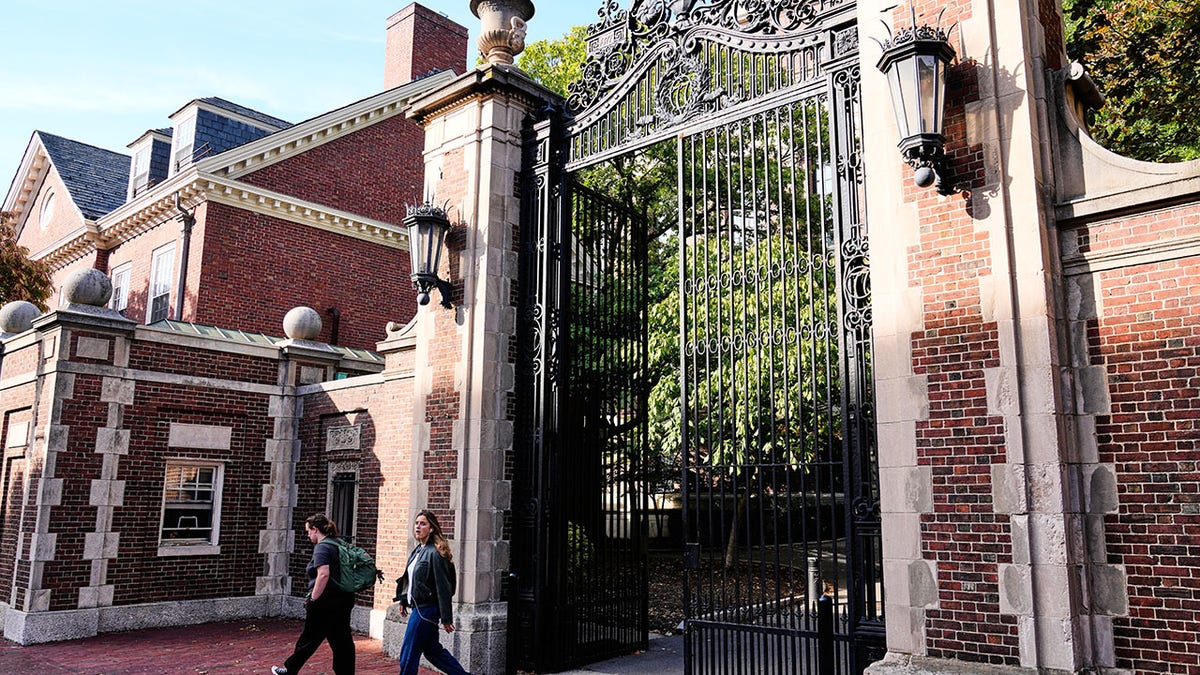
The Department of War said Friday that it will end all professional military education, fellowships and certificate programs with Harvard University.
Secretary of War Pete Hegseth slammed the university in a video announcement posted on X, saying the department would be cutting ties with Harvard for active-duty service members beginning in the 2026–27 school year — a move he said was “long overdue.”
“Harvard is woke; The War Department is not,” Hegseth stated.
While Hegseth, who has a master’s degree from Harvard’s John F. Kennedy School of Government, said the U.S. military has had a “rich tradition” with the Ivy League school, he argued that Harvard has become one of the “red-hot centers of Hate America activism.”
HARVARD KENNEDY SCHOOL ANNOUNCES LAYOFFS AFTER TRUMP CUTS BILLIONS IN FUNDING
War Secretary Pete Hegseth arrives at the U.S. Capitol for a briefing with House and Senate members on Venezuela, in Washington, on Wednesday, Jan. 7, 2026.(Tom Williams/CQ-Roll Call, Inc via Getty Images)
“Too many faculty members openly loathe our military. They cast our armed forces in a negative light and squelch anyone who challenges their leftist political leanings, all while charging enormous tuition. It’s not worth it,” he said. ”They’ve replaced open inquiry and honest debate with rigid orthodoxy.”
The announcement comes amid the Trump administration’s ongoing feud with the Ivy League school.
President Donald Trump said Monday he is seeking $1 billion in damages from Harvard University, which the Trump administration has made a primary target in its effort to leverage federal funding to crack down on antisemitism and “woke” ideology.
40-YEAR HARVARD PROFESSOR PENS SCATHING PIECE ON SCHOOL’S ‘EXCLUSION OF WHITE MALES,’ ANTI-WESTERN TRENDS
Lawyers for the Trump administration have appealed a judge’s order requiring the restoration of $2.7 billion in frozen federal research funding to Harvard. The university sued the administration in April over the funding freeze, arguing in court that the move amounted to an unconstitutional “pressure campaign” aimed at influencing and exerting control over elite academic institutions.
Hegseth also criticized Harvard’s campus environment, alleging that research programs have partnered with the Chinese Communist Party and that university leadership has encouraged an atmosphere that celebrates Hamas, allows attacks on Jews, and prioritizes Diversity, Equity and Inclusion initiatives.
“Why should the War Department support an environment that’s destructive to our nation and the principles that the vast majority of Americans hold dear?” Hegseth said. ”The answer to that question is that we should not, and we will not.”
HARVARD DEAN REMOVED AFTER ANTI-WHITE, ANTI-POLICE SOCIAL MEDIA POSTS RESURFACED
Secretary of War Pete Hegseth announced that military education programs with Harvard University will end in the 2026-27 academic year.(Omar Havana/Getty Images)
“For too long, this department has sent our best and brightest officers to Harvard, hoping the university would better understand and appreciate our warrior class,” he continued. “Instead, too many of our officers came back looking too much like Harvard — heads full of globalist and radical ideologies that do not improve our fighting ranks.”
In addition to Harvard, Hegseth took aim at much of the Ivy League, saying the schools have a “pervasive institutional bias” and a lack of viewpoint diversity, including the “coddling of toxic ideologies,” that he said undercuts the military’s mission.
He said that in the coming weeks, all departments at the Pentagon will evaluate existing graduate programs for active-duty service members at Ivy League schools and other civilian universities.
UNIVERSITIES SLASH 9,000+ POSITIONS IN 2025 AS TRUMP TARGETS FEDERAL FUNDING AND FOREIGN STUDENTS: REPORT
War Secretary Pete Hegseth described Harvard as one of the “red-hot centers of Hate America activism.”(Associated Press)
“The goal is to determine whether or not they actually deliver cost effective strategic education for future senior leaders, when compared to, say, public universities and our military graduate programs,” he said. “At the War Department, we will strive to maximize taxpayer value in building lethality to establish deterrence. It’s that simple. That no longer includes spending millions of dollars on expensive universities that actively undercut our mission and undercut our country.”
Hegseth concluded his message, saying, “We train warriors, not wokesters. Harvard, good riddance.”
CLICK HERE TO DOWNLOAD THE FOX NEWS APP
Harvard University did not immediately respond to Fox News Digital’s request for comment.
Fox News Digital’s Brian Flood contributed to this report.
A 15-year-old student accused of assaulting a teacher has been charged with inflicting grievous bodily harm and possession of a bladed article on education premises.
Dyfed-Powys Police said the boy has been remanded in custody and is scheduled to appear at Swansea Magistrates’ Court on Saturday.
Officers were called to Milford Haven Comprehensive School in Pembrokeshire, southwest Wales, at about 3.20pm on Thursday, following a report that a teacher was assaulted by a pupil brandishing a weapon.
Police said the teacher was taken to hospital for treatment and later discharged.
All of the pupils “returned home unharmed” on Thursday, the force said, adding that the school was closed on Friday.
Detective Chief Inspector Matthew Briggs, senior investigating officer, said the force is “continuing to support the victim whilst they recover from this traumatic event”.
He said the injuries suffered by the victim “have now been confirmed as stab wounds”, and “there will continue to be a higher than usual police presence in the area over the coming days to provide further reassurance”.
Police officers will also be “working closely with local secondary schools to offer support over the coming week”, he added.
Read more from Sky News: Police search Mandelson properties and car Three months until crucial Welsh elections
Welsh First Minister Baroness Eluned Morgan, who had visited the school last week, said on Thursday evening that she was “deeply concerned by the incident”.
“My thoughts are with the injured teacher, their family and the entire school community during this difficult time,” she added.
“I want to pay tribute to the emergency services and school staff for their swift and professional response in ensuring the safety of pupils and staff.
“While this remains an active police investigation that must be allowed to proceed without interference, I want to be unequivocal… violence of any kind has no place in our schools.”
The first minister also said the Welsh government will “continue to work closely with local authorities, schools and partners to support all those affected and to ensure our schools remain safe environments for learning and care”.
Police investigating the disappearance of a US TV host’s mother are searching for a vehicle or vehicles that may be connected to her case.
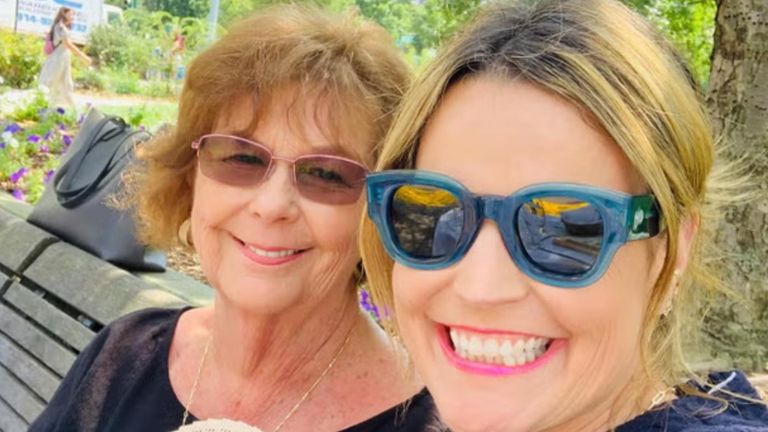
Nancy Guthrie, the daughter of NBC’s Today show co-host Savannah Guthrie, is feared to have been kidnapped.
She was last seen at her own home near Tucson, Arizona, on the evening of 31 January, with a local TV station since receiving two messages that appear to be connected to the case.
One demanded money in exchange for the 84-year-old’s return and contained information about her Apple watch and floodlights on her property.
Image: Nancy Guthrie and her daughter, Today show co-host Savannah Guthrie. Pic: Savannah Guthrie/Instagram
On Friday, a spokesperson for the convenience store chain Circle K told NBC News, Sky News’s US partner, that officers visited one of their stores after “receiving a tip regarding a vehicle of interest, and our team has provided them access to the store’s surveillance video”.
Officials have not said whether the vehicle or vehicles are connected to any part of the crime.
It comes as the FBI and Pima County Sheriff’s Department said they were aware of a “new message regarding Nancy Guthrie”.
It was not clear what the message was or if it was connected to previously reported notes.
The message was sent to Tucson TV station KOLD, three officials briefed on the meeting told NBC News.
The FBI is working to confirm if it came from the same sender as the first reported ransom note, the sources said.
They stressed that the FBI has not yet verified if the first note came from someone who may have taken Ms Guthrie from her home.
NBC host’s emotional plea to mum’s kidnapper
Ms Guthrie’s children have released two videos appealing to her apparent kidnappers.
On Wednesday, Savannah Guthrie posted a video in which she tearfully pleaded for her mother’s safe return and appealed to the presumed kidnappers to open a line of communication with the family.
On Thursday evening, her son Cameron Guthrie said in a video posted to his sister’s Instagram account: “Whoever is out there holding our mother, we want to hear from you.”
Image: Nancy Guthrie. Pic: Pima County Sheriff’s Department
Read more: A neighbourhood left stunned by a crime that’s mystifying US Three months until crucial Welsh elections
US President Donald Trump, speaking to reporters on Air Force One, said late on Friday that the investigation into Ms Guthrie’s disappearance was going “very well”.
“We have some clues that I think are very strong,” he added. “We have some things that may be coming out reasonably soon.”
Pam Bondi reacts to Nancy Guthrie disappearance
US attorney general Pam Bondi told reporters earlier on Friday that federal authorities were assisting Arizona officials, but she declined to offer details.
“It breaks my heart for Savannah and for her family,” she added.
Meanwhile, the sheriff investigating Ms Guthrie’s disappearance said concern about her condition is growing because authorities say she needs daily medicine.
Pima County Sheriff Chris Nanos said: “Her conditions, I would imagine, are worsening day by day.
“She requires medication. And I have no way of knowing whether they’re getting that medication to her.”
Ms Guthrie was said to have a pacemaker and dealt with high blood pressure and heart issues, according to the sheriff’s dispatcher audio on broadcastify.com.
By KATELYN CARALLE, SENIOR U.S. POLITICAL REPORTER
Published: | Updated:
Social media users are calling for the author of one particularly egregious email to be unredacted from the Jeffrey Epstein files.
A message sent to Epstein’s ‘vacation’ email account in 2014 featured the vulgar note about the ‘littlest girl.’ When put in the context of Epstein’s child sex trafficking crimes, the email is even more heinous.
‘Thank you for a fun night,’ the email reads, followed by the second line: ‘Your littlest girl was a little naughty.’
It was sent March 11, 2014 from an iPhone to Epstein’s account jeevacation@gmail.com, which is the email repeatedly featured in the files.
Everything in the email is included except for the name of the sender, which, like many other names in the files, is covered with two black bars concealing their identity.
The message was just one of the 3.5 million documents, images and correspondences included in the Justice Department’s drop of Epstein files last week.
Americans are furious, however, over the selective redaction of the emails.
Social media is demanding that the DOJ un-redact the name of someone who sent an email to Jeffrey Epstein saying: ‘Your littlest girl was a little naiughty’
The latest Epstein files drop shows several egregious emails between the convicted child sex offender and other rich, powerful and influential people – though many names remain redacted
Critics claim the black bars and blocks throughout the files do little to protect victims like the Justice Department promised. Instead, they complain, it many times conceals the identities of those who were in contact with Epstein and allegedly potentially involved with his parties and sex trafficking ring.
The DOJ did not respond to the Daily Mail’s request for comment on whether there will be consideration to reveal portions that were previously redacted and black-barred.
The email to Epstein about his ‘littlest girl’ was sent six years after the offender was sentenced to 18 months in a Florida jail for charges of solicitation of prostitution from a minor.
‘America deserves to know who the f**k this person is,’ a furious X user wrote with an image of the redacted email.
Another said: ‘I second this.’
Following negotiations conducted in 2007, Epstein pleaded guilty in 2008 to state charges in Florida as part of a plea deal to avoid federal charges that could result in life in prison. At the time of the ‘secret arrangement,’ the Florida US Attorney’s office was headed by Alexander Acosta.
Epstein served 13 months of the 18-month sentence in a private wing of the Palm Beach County jail. He got a cushy deal and was allowed to leave jail six days every week for a ‘work release’ that spanned 12 hours every day.
He began the sentence the summer of 2008 and was released on probation in July 2009.
There are several nefarious messages sent between Epstein and other rich, powerful and famous men after his release from jail.
Share or comment on this article:
Calls for one of the creepiest Epstein emails to be unredacted
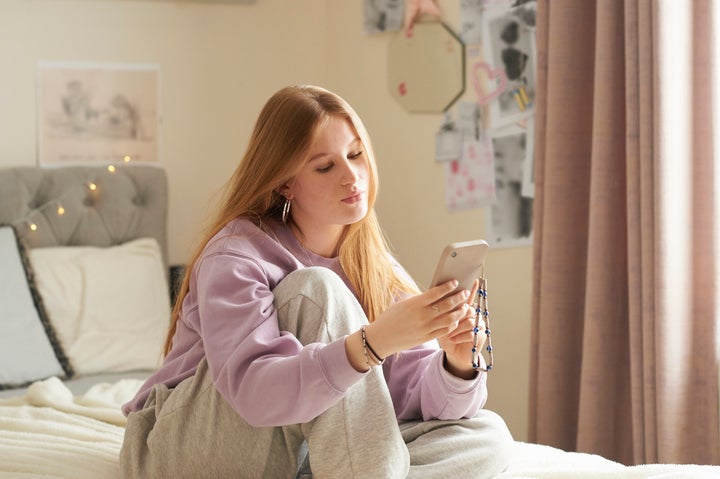
Most children of secondary school age (we’re talking 12- to 15-year-olds) have a smartphone – and some of them will be allowed to have one on the condition they’re happy to give their device up every now and then for their parents to check.
But what happens if, during one of these checks, you spot something that makes your heart sink? And what about if your teen hasn’t given you permission to check their phone, but you’ve seen a notification flash up that’s left you worried?
It’s a minefield – and there’s no set rule for tackling this, as everyone’s situation will be different. That said, experts have shared their thoughts on how to approach this tricky moment, without causing a huge rift.
If you DO have consent to look at your child’s phone…
Counselling Directory member Bella Hird told HuffPost UK parents who have an agreement in place with their child where they can do spot checks “are in a very good starting place”.
“Think of your child’s phone a little as you would think of the world. They need your support to navigate it. There will be places and situations that, until they reach a certain age, you would not let them wander off into unsupervised,” she said.
If there’s a message on their phone that worries you, the therapist advises having a chat with your child about it: “Approach the conversation with your child with honesty and curiosity. So for example, explain ‘this kind of message really worries me and I want to know we are keeping you safe, can you explain to me a little about the context?’.”
She then urges parents to allow their child the space to explain. Try not to react in fear or anger as this will simply shut the conversation down. Punishments will simply drive a wedge further, too.
Richard Drury via Getty Images
Education and child psychologist Dr Sasha Hall said the key here is offering a calm and proportionate response, rather than punishment.
If messages involve adult or sexualised content, the psychologist said key considerations include: whether the material is age-appropriate; whether there is any risk, pressure or coercion; and whether the young person understands boundaries and consent.
“Adolescence is a stage where children need increasing autonomy and privacy compared to earlier childhood, but this should be matched with developmentally appropriate safeguards,” she added.
“The aim is not to remove independence, but to support safe decision-making while those skills are still forming.”
Bird added that it’s important to help your child understand that it is OK to make mistakes and that being open with you will ultimately end with them feeling supported with potentially difficult or dangerous scenarios.
“Explain to your child what it is about the message or what you have seen that has concerned you and ask them if they understand your worries,” she said.
“They will probably tell you there is nothing to be concerned about, in which case ask them to explain more.”
There might be times when you think your child is in danger – for example, they are being groomed – in which case, you will need to take action. Bird said “it is really important to try to take your child on that journey with you”.
She advised: “Explain to them why you are doing what you are doing it and give them as much agency as possible – so, for example, in the case that you need to involve the police, you should explain that you need to do that and why, and let them know what is likely to happen. But give them choices like ‘would you like me to explain to them or would you like to?’ and ‘who would you like with you?’
“Avoid making them feel punished or ashamed because these experiences are a real barrier to connection and collaboration. They are still learning about the world and that’s OK.”
If you DON’T have your child’s consent to look at their phone
If you don’t have your teenager’s consent to look at their phone – and you’ve done so and seen something that is cause for concern – Bird suggests asking yourself two questions.
Firstly, what is the worst thing that will happen if I address this? And secondly, what is the worst thing that will happen if I don’t address this?
“I am sure the answer to the first question involves making a teen angry and having an impact on levels of trust, but the answer to the second question is likely to make your decision to act or not pretty simple,” she added.
“When talking to your teen, take responsibility. Apologise for not being open with them about looking at their phone, but explain your reasons for doing so.”
Dr Hall noted that in this instance, repair becomes especially important.
“Acknowledging the breach of trust, explaining the concern clearly, and working together to renegotiate boundaries helps model accountability and respect,” she said.
“Repairing trust is often more impactful than the original rule-setting, as it teaches young people how relationships recover after mistakes.”
Once you have resolved the matter of concern, talk to your teen about how you will balance privacy and safety moving forward.
Dr Hall concluded: “Ultimately, phone safety is not about constant surveillance. It is about gradually teaching young people how to manage privacy, boundaries and risk online, while maintaining an open, supportive line of communication so they know they can ask for help when they need it.”
If happiness feels elusive right now, you’re not imagining it. At this time of year, most of us are operating in a constant state of low-level overload – screens, notifications, comparison, economic pressure – while being sold increasingly unrealistic ideas of what “feeling good” is supposed to look like. The result? Happiness has become something people feel they’re failing at.
Jules Von Hep, confidence coach and author of The Confidence Ritual, takes a very different approach. After two decades working in the beauty industry – often with people at their most vulnerable, undressed in a spray tan booth – he is less interested in mindset hacks and far more interested in consistent daily behaviours that, little by little, can change how we see ourselves and dramatically alter our self esteem and happiness levels.
“Confidence isn’t a personality trait,” he says. “It’s how you treat yourself on an ordinary Tuesday. This is what I tell people who come to my events.”
After years of helping people glow from the outside, Von Hep is now more concerned with helping the UK find its inner glow. He believes that confidence, gratitude and small daily wins also known as “glimmers” can make a bigger difference than any trend or product. A former beauty industry professional and self tan brand founder turned author and sound healer, he has spent years helping people feel better about themselves, not by changing their lives overnight but by shifting the way they approach the everyday. Here, he shares his practical tips for starting the year with more positivity and presence.
1. Start with what feels good
Von Hep’s career began almost by accident in beauty and fashion, but it taught him an important lesson: “If I’m doing something every day, I need to enjoy it. Otherwise, it doesn’t work.” In his book he shares practical tips to identify ways to feel happier and how to change the situation you’re in so that it supports a more confident version of yourself.
“I decided to stop following the career that I thought I should have, and just literally lean into what is feeling good… what am I enjoying? Let’s keep going. I always encourage people to do the same. Stop for a second and think about what you like in your life and what you want more of.
Practical tip: Focus on what’s already working in your day. Even small wins like finishing a task, having a smooth commute, enjoying a cup of coffee. Make a note of these things and try to spend more time doing them so that you build momentum from “happy tasks” or “happy moments”.
2. Notice the ‘glimmers’
Von Hep also uses the concept of “glimmers” – a concept developed by Deb Dana in her book The Polyvagal Theory in Therapy. Glimmers are the small, often overlooked moments of satisfaction or joy throughout the day. They are not milestones, they are the details that make a day feel lighter.
“One of my favourites is, if you have a journey from A to B and it was seamless, there was no traffic, no congestion… that is something to be really happy about. If your favourite coffee comes with a small biscuit, oh, how lovely. That’s a glimmer.
“Living a life with glimmers has made me happier, and I know it has a ripple effect out of my community… when you tune in and focus, you won’t take them for granted.”
Practical tip: Keep a glimmer log. Take notes, photos, or even screenshots of moments that make you feel good. On tougher days, you’ll be able to look back and notice that joy exists, even in small doses.
3. Reframe how you see yourself
Von Hep’s journey to confidence started by changing the way he treated himself: focusing on appreciation rather than flaws. He explained in an episode of the Well Enough podcast that after years of struggling with body image, he set himself a challenge to “nourish, not punish” himself and to see himself through a different lens.
“I realised that life doesn’t have to be lived in this one way that I was living it. It’s not the landscape that changes, it’s the viewpoint. I focused on what brings me inner joy. Instead of wearing clothes to look a certain way, I wore clothes that made me feel good and I ordered my favourite drink and enjoyed my day.”
Practical tip: Replace one negative thought with a neutral or positive one daily. Notice the negative thought and actively replace it with something better and kinder. Over time, these micro-adjustments shift your perception and increase self-confidence.
4. Curate your energy
Who you spend time with affects mood and confidence. Von Hep explains that in your life there will be “energy radiators” and “mood hoovers”. This goes for in person and who you follow and the content you consume online.
He says: “The energy radiators are people you’re excited to see and they leave you feeling amazing days after. Then you’ve got the mood hoovers… who you dread. Life’s too short. People pretend it’s infinite but it’s really too short to spend with people who make you feel bad about yourself. You control the scroll. If people are making you feel good, engage with them. If not, unfollow or mute.”
Practical tip: Audit your social and professional circles. Reduce time spent with people who consistently drain you, and seek real-life and online communities that reinforce positivity. Create a feed or list of accounts that teach, inspire, or make you laugh. Your digital environment should reinforce positivity, not undermine it.
5. Use music and movement deliberately
Von Hep swears by “kitchen raving” and says that if you put on your favourite song and dance, even while cooking or doing chores, it can instantly flush out negative thoughts and boost your mood.
“It sounds so simple, but it has this amazing power to make me feel more authentically myself and shake off negative energy. It’s probably why I became a sound healer, I love the power of music,” he says.
“I had a panic attack on a work trip… I laid on the hotel floor, put on my favourite song, and closed my eyes. That song pulled me out of that space. From then on, I realised music isn’t just about performance, it’s about this inner, deeper self.”
Practical tip: Schedule 5–10 minutes daily for conscious movement to your favourite songs. Dance, stretch, or just move around the room. Consider it a mental reset rather than exercise and enjoy moving freely to whatever music you choose.
6. Combine gratitude with awareness
“Gratitude isn’t just a list, it’s noticing what’s already in front of you” says Von Hep. “Unless you’re grateful for what you’ve got, you never really learn how to be in the present.”
He encourages using glimmers and gratitude with everyday awareness and to take stock of what you do have, rather than what you want or what other people seem to have.
“It’s really easy to be rich in a non-financial sense… The little things matter.”
Practical tip: Each evening, note three things that went well. Include sensory details like the smell of coffee, a smile from a friend, sunlight on your face. This strengthens your perception of positive moments.
7. Make self-care practical
Von Hep is critical of the “toxic wellness” culture that promises instant transformation: “A candle and a bubble bath aren’t going to change your life. Consistency is what matters. Small actions make daily life more manageable.”
He explains that self-care is important but that it should be tangible and be less about giving yourself a little treat and more about caring for your brain and body every day over the course of your life.
Practical tip: Focus on habits that consistently improve your wellbeing like drinking water, walking and writing in a gratitude journal, rather than chasing trends or products.
8. Build consistency through community
Whether online or in person, Von Hep explains that regular interaction with supportive people reinforces confidence and gratitude. Community is in his view a great way to feel better about yourself and feel less alone.
“Go to the same class every week and chances are someone else will too. Friendships don’t happen overnight, but you have to take steps to change your environment.”
Practical tip: Commit to one weekly activity where you interact with like-minded people. This might be a run club, a book club, a yoga class or a meet-up for people who like the same hobbies that you do. Over time, this exposure to community helps integrate confidence and presence into daily life.
“It’s not about transformation. It’s about maintenance. Small actions make daily life more manageable,” says Von Hep.
For 2026, that might mean keeping a glimmer log, dancing in the kitchen, or prioritising interactions that lift rather than drain you. These steps aren’t dramatic, but they compound. Over time, they create a foundation of confidence and presence that will stay with you no matter what life throws at you.
Read more: The science behind a good night’s sleep, according to every expert I spoke to this year
The Colorado men’s basketball team has been at its best when the entire rotation is sharing the production.
Certainly the Buffaloes aren’t unique in this regard. Yet on a team devoid of a marquee individual star, the need for top-to-bottom production is critical for the Buffs. It’s a notion head coach Tad Boyle has reiterated throughout the season.
Still, it’s equally true two of the most versatile and longest-tenured Buffs, forwards Bangot Dak and Sebastian Rancik, need to be at their best for the Buffs to thrive. The duo has struggled to perform consistently in recent weeks as CU has lost seven of its past eight games, but Dak, Rancik and the rest of the Buffs have another opportunity to get back on track when they host Arizona State on Saturday night.
“For us to be as good as we want to be, those two guys are very important to us,” CU head coach Tad Boyle said. “But so are Jalin (Holland) and Josiah (Sanders). So are Barrington (Hargress) and Isaiah (Johnson). Everybody’s important to this team.”
Neither Dak nor Rancik has been mired in an extended slump. But as often happens with players still trying to reach their high ceilings, consistency has become a challenge.
In the past eight games, Dak has posted four single-digit scoring games with four double-digit scoring games, his two performances this week exemplifying the struggles for consistency. After going 7-for-8 with 14 points in Sunday’s win against TCU, Dak struggled to a 2-for-8 mark with five points during Wednesday’s loss at Baylor.
Dak did lead the Buffs with six rebounds at Baylor. But while Dak remains on pace for his second consecutive top-15 blocked shot season in team history, the Baylor loss marked his third consecutive game without a blocked shot. Dak previously had not suffered back-to-back games without a blocked shot all season.
Rancik has experienced similar ups and downs. Against TCU, he went 6-for-8 with 17 points and six rebounds. Against Baylor, Rancik went 1-for-5 with five points, matching a season low, and he went without a rebound for the first time since the season opener. After scoring at least 11 points in 10 consecutive games, Rancik has alternated single-digit scoring games with double-figure games over the past seven contests.
“There’s no better two games to look at than the TCU game at home and the Baylor game on the road that sheds a light on their inconsistency,” Boyle said. “But they’re not the only ones. At home, they’re 13-for-16 with 10 rebounds between them. They had six rebounds (at Baylor), and one guy didn’t get one.
“I doesn’t matter where you play, it doesn’t matter who you play. I’m just looking for consistent effort, consistent production. And if you don’t have it, it’s like throwing darts at the dart board as a coach. Because you don’t know what you’re going to get from a certain guy on any given night. And that’s frustrating.”
As was the case for Sunday’s win against TCU, the matchup against ASU presents a chance for the Buffs to bounce back favorably after an ugly result on the road. CU opened Big 12 Conference play with a win at ASU on Jan. 3, and the Sun Devils had lost five of their previous six games before winning at Utah on Wednesday.
“The challenge is to make our guys understand how much better Arizona State is today than they were when we played them in January,” Boyle said. “Their record may not reflect it. But I just know watching Arizona State on tape, they gave Central Florida all they wanted on the road. They played Arizona tough two times. They just beat Utah on the road. Arizona State, they’ve gotten better.”
Arizona State Sun Devils at CU Buffs men’s basketball
TIPOFF: Saturday, 7:30 p.m., CU Events Center.
TV/RADIO: ESPN2/KOA 850 AM and 94.1 FM.
RECORDS: Arizona State 12-11, 3-7 Big 12; Colorado 13-10, 3-7.
COACHES: Arizona State — Bobby Hurley, 11th season (180-162, 222-182 overall). Colorado — Tad Boyle, 16th season (325-214, 381-280 overall).
KEY PLAYERS: Arizona State — G Maurice Odum, 6-2, Sr. (17.0 ppg, 3.0 rpg, 6.2 apg, .369 3%); C Massamba Diop, 7-1, Fr. (13.6 ppg, 5.8 rpg, .591 FG%); G Anthony Johnson, 6-3, Sr. (13.3 ppg, 3.0 rpg, .453 FG%); G Bryce Ford, 6-4, Jr. (7.8 ppg, .354 3%); F Santiago Trouet, 6-11, R-So. (7.7 ppg, 5.5 rpg, .455 FG%); F Andrija Grbovic, 6-11, Jr. (7.1 ppg, 3.1 rpg, .369 3%). Colorado — G Isaiah Johnson, 6-1, Fr. (16.3 ppg, 2.7 rpg, 2.5 apg, .493 FG%, .418 3%); G Barrington Hargress, 6-1, R-Jr. (13.7 ppg, 4.4 apg, .540 FG%, .523 3%); F Sebastian Rancik, 6-11, So. (12.9 ppg, 5.0 rpg, .356 3%); F Bangot Dak, 7-0, Jr. (10.7 ppg, 6.9 rpg, .469 FG%); F Alon Michaeli, 6-9, Fr. (8.5 ppg, 4.5 rpg).
NOTES: With an eye on improving student attendance, CU announced a number of student ticket incentives. Most notably, at every home men’s and women’s game for the remainder of the season, 10 students will win Eldora lift tickets, and one student at each game will win a pair of Blenders Goggles. All students who attend all four remaining men’s games as well as all four remaining women’s games will be automatically allowed to skip the line this summer in purchasing a Sports Pass for 2026-27. … Four players scored in double figures for the Buffs during a Jan. 3 win at ASU, with Johnson’s 19 points leading the way. … The Buffs have been outrebounded in five of the past six games, but they posted a 42-32 rebounding advantage in last month’s matchup at ASU. … The Sun Devils have won three of their past four games at the Events Center, including a 70-68 decision last year. … CU hits the road to face a pair of ranked Big 12 foes next week, starting on Wednesday at No. 13 Texas Tech (6 p.m. MT, ESPN+) and continuing Feb. 14 at No. 14 BYU (2 p.m. MT, Fox Sports 1).
Newswise — New psychoactive substances, originally developed as potential analgesics but abandoned due to adverse side effects, may still have pharmaceutical value if researchers could nail down the causes of those side effects. A new study from the University of Illinois Urbana-Champaign used deep learning and large-scale computer simulations to identify structural differences in synthetic cannabinoid molecules that cause them to bind to human brain receptors differently from classical cannabinoids.
“The largest class of NPS are often sold as the street drugs Fubinaca, Chimica and Pinaca,” said chemical and biomolecular engineering professor Diwakar Shukla. “In addition to the adverse side effects, the formulas used to produce NPS vary, making them challenging to detect in standard drug screenings.”
New psychoactive substances are synthetic compounds; one class mimics the effects of classical cannabinoids. However, the study found that NPS tend to activate distinct signaling pathways in the human brain compared to classical cannabinoids. Specifically, they often trigger what’s called the “beta arrestin pathway” rather than the “G protein pathway.” This switch in signaling can lead to more severe psychological effects.
The study’s findings are published in the journal eLife.
“New psychoactive substances bind very strongly to cannabinoid receptors in the brain and are slow to unbind, making them difficult to observe and simulate in standard laboratory or computer experiments,” Shukla said. “It can take a huge amount of computer time to see these rare binding and unbinding events.”
In the lab, graduate student Soumajit Dutta used a new simulation approach, the Transition-Based Reweighting Method, to estimate the thermodynamics and kinetics of slow molecular processes. The team found that TRAM can also be used to observe the rare, slow molecular processes involved in the unbinding of NPS from cannabinoid receptors — by efficiently sampling these events that would otherwise require massive computing resources.
The researchers also used the Folding@Home platform, which enables millions of volunteers worldwide to donate computing power. This approach allowed the team to run many simulations in parallel, stitching the results together and using algorithms to decide which simulations to run next. It allows for the study of very long or rare events that would be nearly impossible with a single computer or a small cluster.
Together, these methods allowed the researchers to uncover new physical insights into how NPS interact with receptors — insights that were previously out of reach due to computational limitations — pointing the way toward the design of safer cannabinoid-based drugs that could avoid harmful side effects.
By revealing the NPS signal via pathways associated with more adverse effects, researchers can now focus on designing new molecules that avoid triggering these pathways for medical use. Shukla said their findings could direct more researchers to aim for compounds that bind less tightly or unbind more readily, potentially reducing the drugs’ harm.