Luigi Mangione shouts at judge at hearing: ‘One plus one is two!’


Luigi Mangione shouted at a judge in an emotional outburst in court Friday as a trial date was set over the murder of UnitedHealthcare CEO Brian Thompson.

“It’s the same trial twice,” Mangione yelled as he was led out of court. “One plus one is two. Double jeopardy by any commonsense definition.”

Mangione, 27, made the remarks after the judge scheduled his state murder trial to begin June 8, three months before jury selection in his federal case.

Judge Gregory Carro, matter-of-fact in his decision after a lengthy discussion with prosecutors and defense lawyers at the bench, said the state trial could be delayed until Sept 8 if an appeal delays the federal trial.

Mangione’s lawyers objected to the June trial date, telling Carro that at that time, they’ll be consumed with preparing for the federal trial, which involves allegations that Mangione stalked Thompson before killing him.

Last week, the judge in his federal case ruled that prosecutors can’t seek the death penalty
Last week, the judge in his federal case ruled that prosecutors can’t seek the death penalty (Getty Images)

“Mr. Mangione is being put in an untenable situation,” defense lawyer Karen Friedman Agnifilo said.

“This is a tug-of-war between two different prosecution offices.”

“The defense will not be ready on June 8,” she added.

“Be ready,” Carro replied.

Mangione has pleaded not guilty to state and federal charges, both of which carry the possibility of life in prison. Last week, the judge in the federal case ruled that prosecutors can’t seek the death penalty.

Wearing a tan jail suit, Mangione sat quietly at the defense table until his outburst at the end of the hearing.

Jury selection in the federal case is set for Sept. 8, followed by opening statements and testimony on Oct. 13.

As the trial calendar began to take shape, Manhattan prosecutors last month urged Carro to set a July trial date in the state case.

In a letter, Assistant District Attorney Joel Seidemann asked Carro to begin the New York trial on July 1, arguing that the state’s interests “would be unfairly prejudiced by an unnecessary delay” until after the federal trial.

“It appears the federal government has reneged on its agreement to let the state, which has done most of the work in this case, go first,” Carro said Friday.

Mangione isn’t due in court again in the state case until May, when Carro is expected to rule on a defense request to exclude certain evidence that prosecutors say connects Mangione to the killing.

Those items include a 9 mm handgun that prosecutors say matches the one used to kill Thompson and a notebook in which they say he described his intent to “wack” a health insurance executive.

Last week, the judge in the federal case, Margaret Garnett, ruled that prosecutors can use those items at that trial.

In September, Carro threw out state terrorism charges but kept the rest of the case, including an intentional murder charge.

When Mangione was arrested, federal prosecutors said they anticipated the state case would go to trial first.

Under New York law, the district attorney’s office could be barred from trying Mangione on state murder charges if his federal trial happens first. The state’s double jeopardy protections kick in if a jury has been sworn in a prior prosecution, such as a federal case, or if that prosecution ends in a guilty plea.

Thompson, 50, was killed on Dec. 4, 2024, as he walked to a midtown Manhattan hotel for UnitedHealth Group’s annual investor conference.

Surveillance video showed a masked gunman shooting him from behind. Police say “delay,” “deny” and “depose” were written on the ammunition, mimicking a phrase used to describe how insurers avoid paying claims.

Mangione, a University of Pennsylvania graduate from a wealthy Maryland family, was arrested five days later at a McDonald’s in Altoona, Pennsylvania, about 230 miles (about 370 kilometers) west of Manhattan.


Stellantis CEO says automaker is stronger together as stock plummets amid $26 billion charge


Stellantis CEO Antonio Filosa speaks during an event in Turin, Italy, Nov. 25, 2025.

Daniele Mascolo | Reuters

DETROIT — Stellantis CEO Antonio Filosa on Friday said the automaker plans to move forward as one company amid speculation that it would be better off selling brands or splitting up after disappointing results.

“Stellantis is a very strong global company that is very proud to have very deep regional groups,” Filosa, an Italian native, told reporters during a media call. “It makes all of sense to stay together. We want to stay together for many years to come.”

His comments come hours after the company announced 22 billion euros ($26 billion) in charges from a business restructuring that includes pulling back on electrification plans and reintroducing V8 engines to U.S. models. 

Filosa described the actions as an “important strategic reset of our business model, with the only intention to put our customer preferences back at the center of what we do globally and in each regions.” He said the “mission is to grow” after notable declines in market share in recent years.

Stellantis’ stock plunged more than 20% in Milan and New York markets.

Filosa on Friday did not specifically rule out the possibility of regionally refocusing or shrinking the company’s vast portfolio of 14 auto brands that includes U.S. brands Jeep, Ram and Chrysler, as well as Italian nameplates Fiat and Alfa Romeo, which have not performed well domestically.

Stock Chart IconStock chart icon

Stellantis CEO says automaker is stronger together as stock plummets amid  billion charge

Stellantis-listed shared in Milan and New York

“We want to really manage our brands in the sense to provide to them the products and the technology that our customers, that are now at the center of our strategic reset, will tell us that they want and they need,” he said. “This is our core mission.”

Filosa said additional information about the company’s plans moving forward will come at a May 21 investor day.

Friday’s announcement comes days after Stellantis executives met with the company’s U.S. franchised dealers at their annual National Automobile Dealers Association conference with a message that the automaker planned to grow sales across its U.S. lineup of brands, according to two dealers who attended the meeting.

$26 billion in charges

The majority of Friday’s announced charges — 14.7 billion euros — are related to realigning product plans with consumer preferences and new emission regulations in the U.S.

Other charges include 2.1 billion euros in resizing the company’s EV supply chain, 4.1 billion euros in warranty costs and 1.3 billion euros in restructuring European operations.

The automaker also canceled its dividend for 2026 and issued a 5 billion euro nonconvertible hybrid bond.

2026 Jeep Grand Wagoneer

Jeep

Past mistakes

Stellantis takes €22B hit amid overhaul – shares dive

The merger formed the fourth-largest automaker by volume, but the company has run into significant problems in recent years amid its investments in all-electric vehicles, focus on profits over market share and cost-cutting efforts to the detriment of products.

Stellantis’ global sales under Tavares fell 12.3% from 6.5 million in 2021 — the year the company was formed — to 5.7 million in 2024. That included a roughly 27% collapse in the U.S. in that period to 1.3 million vehicles sold. The automaker dropped from fourth in U.S. sales to sixth, declining from an 11.6% market share to 8% during that time frame.

Stellantis’ global market share has fallen from 8.1% in 2020 to an estimated 6.1% last year, according to S&P Global Mobility.  

Correction: Global market share for Stellantis has fallen from 8.1% in 2020 to an estimated 6.1% last year, according to S&P Global Mobility. An earlier version mischaracterized the percentage.


FACT FOCUS: Trump says tariffs have created an economic miracle. The facts tell a different story


FACT FOCUS: Trump says tariffs have created an economic miracle. The facts tell a different story

By PAUL WISEMAN and CHRISTOPHER RUGABER, AP Economics Writers

WASHINGTON (AP) — Looking back on the first year of his second term, President Donald Trump boasts that he has resurrected the American economy by imposing big import taxes on foreign products.

He made his case in a recent opinion piece in The Wall Street Journal, chiding the paper and critics, including mainstream economists, who predicted that tariffs would backfire, raising prices and threatening growth. “Instead,” the Republican president wrote, “they have created an American economic miracle.”

But the proof he offers is often off-base or wrong altogether.

Here’s a look at the facts around Trump’s assessment of tariffs:

CLAIM: “Just over one year ago, we were a ‘DEAD’ country. Now, we are the ‘HOTTEST” country anywhere in the world!’ ’’

THE FACTS: This is a standard statement from Trump. But the U.S. economy was hardly “dead’’ when Trump returned to office last year. And in Trump’s second term, it’s performed strongly — after getting off to a bumpy start.

In 2024, the last year of the Biden presidency, American gross domestic product grew 2.8%, adjusted for inflation, faster than any wealthy country in the world except Spain. It also expanded at a healthy rate from 2021 through 2023.

The numbers for all of 2025 aren’t out yet. But during the first three quarters of the year, Trump’s tariffs — or the threat of them — delivered mixed results for the American economy.

From January to March, U.S. GDP actually shrank for the first time in three years. The main culprit was easy to identify: a surge in imports, which are subtracted from GDP, as American companies rushed to buy foreign products before Trump could impose tariffs on them.

But growth rebounded in the second half of the year. From April through June, the economy expanded at a healthy 3.8% pace. And from July through September, it grew even faster — 4.4%. A big part of the surge was a drop in imports, likely reflecting Trump’s tariffs as well as the fact that importers had already stocked up at the start of the year. Strong consumer spending also drove economic growth.

Trump also likes point to solid gains in the U.S. stock market. He noted that stocks hit new highs 52 times in 2025. It’s true that the American stock market did well last year. But it underperformed many foreign stock markets. The benchmark S&P 500 index climbed 17% — a nice gain but short of a 71% surge in South Korea, 29% in Hong Kong, 26% in Japan, 22% in Germany and 21% in the United Kingdom.


CLAIM: “Annual core inflation for the past three months has dropped to just 1.4% — far lower than almost anyone, other than me, had predicted.”

THE FACTS: The president is using cherry-picked data to vastly exaggerate where inflation stands.

His figure for annual inflation in the past three months — which excludes the volatile food and energy prices — is low, but reflects data distorted by the government shutdown in October and November, which disrupted the government’s data collection and forced the agency that compiles the figures to plug in rough estimates in some categories that artificially lowered overall inflation.

Annual core inflation for the final six months of 2025 is higher at 2.6%. That is down from January 2025’s level but about where it was in October 2024. Overall, inflation has leveled off this year, and was 3% in September before the government shutdown, the same as it had been in January 2025.

It’s true that inflation hasn’t been as high as many economists worried it would be when Trump started rolling out tariffs last spring, but that is partly because many of the “Liberation Day” tariffs were withdrawn, reduced or riddled with exemptions. When Democrats won some high-profile elections last year by highlighting “affordability” concerns, the administration rolled back existing or planned tariffs on coffee, beef and kitchen cabinets, for example, a backhanded acknowledgment that the duties were raising prices.

The impact of tariffs can be more clearly seen in core goods prices, which also exclude food and energy. Before the pandemic, core goods costs typically barely rose — or even fell — each year, but last December they were 1.4% higher than a year earlier. That was the largest increase, outside the pandemic, since 2011.

Alberto Cavallo, an economist at Harvard and the author of a study on the impact of tariffs cited by Trump in his op-ed, has found that Trump’s tariffs have boosted overall inflation by roughly three-quarters of a percentage point.


CLAIM: “The data shows that the burden, or ‘incidence,’ of the tariffs has fallen overwhelmingly on foreign producers and middlemen, including large corporations that are not from the U.S. According to a recent study by the Harvard Business School, these groups are paying at least 80% of tariff costs.”

THE FACTS: The study Trump cited appears to conclude the opposite of what Trump claimed. Authored by Cavallo and two colleagues, it finds that “U.S. consumers were bearing roughly 43% of the tariff-induced border cost after seven months, with the remainder absorbed mostly by U.S. firms.” Cavallo said by email that import prices hadn’t fallen much, “which suggests foreign exporters did not reduce their pre-tariff prices enough to shoulder a large share of the burden.″


CLAIM: “We have slashed our monthly trade deficit by an astonishing 77%.”

THE FACTS: This claim involves more cherry-picking, reflecting the percentage drop from a very high trade deficit in January 2025, when the president took office, to a super-low deficit in October.

The story is more complicated than the president makes it. The trade deficit — the gap between what the U.S. sells other countries and what it buys from them — has actually risen since he returned to the White House.

From January through November in 2025, the U.S. accumulated a trade deficit of nearly $840 billion, up 4% from the same period of 2024. In the first three months of 2025, importers rushed to buy foreign products — before Trump could slap tariffs on them. After that, monthly trade deficits came in consistently lower than they were in 2024. But the January-March import surge was so big that the 2025 year-to-date trade deficit still exceeds 2024’s.


CLAIM: “I have successfully wielded the tariff tool to secure colossal Investments in America, like no other country has ever seen before. … In less than one year, we have secured commitments for more than $18 trillion, a number that is unfathomable to many.’’

THE FACTS: Trump did, in fact, use the tariff threat to pry investment commitments from America’s major trading partners. The European Union, for instance, pledged $600 billion over four years.

But Trump hasn’t said how he came up with $18 trillion. The White House has published a figure of $9.6 trillion, which includes private and public investment commitments from other countries.


FSU Researchers Develop New Materials for Next-Generation X-Ray Technologies | Newswise


Newswise — In medicine, security, nuclear safety and scientific research, X-rays are essential tools for seeing what remains hidden.

The materials used to create X-ray detectors can be rigid, expensive and laborious to produce. But new research led by FSU Department of Chemistry and Biochemistry Professor Biwu Ma is creating lower-cost, adaptable materials that could revolutionize X-ray detection technologies.

In two separate research studies, Ma’s group offers solutions to long-standing challenges in X-ray imaging. In the first study, published in Small, the team developed a new material that generates electric signals when exposed to X-rays, enabling direct X-ray detection. In the second study, published in Angewandte Chemie, the researchers used a related material to produce low-cost scintillators, which are materials that emit visible light when exposed to X-rays or other high-energy radiation.

“We have traditionally relied on inorganic materials for X-ray detection, but they are often rigid, expensive to manufacture and energy-intensive to produce, and they have many limitations,” Ma said. “What we have been trying to develop is a new class of materials that can address the issues and challenges faced by existing materials.”

In these studies, researchers created new hybrid materials composed of both organic and inorganic components, known as organic metal halide complexes (OMHCs) and organic metal halide hybrids (OMHHs). By tailoring the structures of these materials at the molecular level, the team enabled different forms of X-ray detection. This research represents a major step toward developing lower-cost, scalable and flexible X-ray detector technologies capable of overcoming key limitations of conventional inorganic systems.

Glassy OMHC films for direct X-ray detectors

Commercially available direct X-ray detectors are constructed using inorganic semiconductors, made from non-carbon materials, such as cadmium telluride (CdTe) and cadmium zinc telluride (CdZnTe). These materials contain toxic elements and require energy-intensive processing, making them expensive.

In the first study, the team demonstrated, for the first time, the use of OMHCs as a material for making direct X-ray detectors. These are materials composed of carbon-based semiconducting molecules that are bonded to metal halides, which are compounds made of metal and a halogen element. The specific OMHC compound developed by the team was created out of zinc, bromine, and a carbon-based molecule, enabling efficient X-ray absorption and electron transport within a single material.

Using a melt-processing approach, similar to melting plastics and allowing them to cool into a desired shape, the researchers transformed OMHC molecular crystals into amorphous, glass-like materials that can be molded into ready-to-use forms. They used these materials to make direct X-ray detectors that convert incoming X-rays into electrical signals.

Results

The resulting detectors produced strong electrical responses even at low X-ray exposure levels, making them more effective than detectors made from traditional materials. The team also evaluated the long-term stability of detectors made with the new material. After storing the detectors for four months under ambient conditions, testing showed they retained 98% of their initial performance.

OMHCs offer additional practical advantages. They are less expensive to produce than materials currently used in commercially available X-ray detectors because they can be synthesized from abundant and non-toxic raw materials. Moreover, the simple melt-processing method also makes device fabrication easier and more scalable than existing approaches.

“This is actually the first time these OMHC materials have been used to fabricate direct X-ray detectors,” said Ma. “They can be prepared in a low-cost way while delivering high performance. From a sustainability perspective, this new class of materials offer tremendous advantages over conventional materials.”

Bright, fast and flexible scintillators: X-ray components on fabric

In the second study, the team developed a new version of OMHH-based scintillators that exhibit high light yield and fast response, meaning they emit strong visible light and respond almost instantly when exposed to X-rays. OMHHs are similar to OMHCs, but a different type of chemical bond brings together organic components and metal halides into a single material.

The work builds on the team’s years of effort in the area since 2020, when they demonstrated the first ecofriendly OMHH scintillators. Earlier versions of OMHH scintillators relied on slow crystal growth processes that limited their size and flexibility, and their light emission faded relatively slowly. This latest generation of OMHH scintillators overcomes both challenges by eliminating the need for crystal growth and by dramatically speeding up the light response.

Results

By carefully designing the molecular structure, the team created a new amorphous OMHH material that shows fast response in nanoseconds. Unlike earlier versions of OMHH scintillators, in which light emission comes from metal halide centers and lingers for longer periods, the new material emits from the organic components of the material, exhibiting a faster response while maintaining excellent X-ray absorption and high light output.

Fast-response scintillators are especially important for advanced radiation detection and imaging. Their rapid light emission allows for clearer images, improved timing accuracy and reduced signal overlap, which are critical for applications such as medical imaging, security screening and real-time radiation monitoring.

The amorphous nature of the material also allows it to be easily processed into thin films and coatings. Using this approach, the team created fabric-based X-ray scintillators that can be integrated into clothing, enabling wearable and portable radiation detectors. These flexible scintillating fabrics represent a significant departure from traditional rigid detectors and open new possibilities for comfortable, adaptable and low-cost X-ray detection technologies.

Why it matters

While the two studies focused on different X-ray detection approaches, both used similar material design strategies to address major challenges in developing next-generation X-ray detection technologies.

FSU has begun filing patents to commercialize the technologies developed in Ma’s group and test them in real-world conditions. These advancements offer exciting and cost-effective solutions for next-generation X-ray detection technologies. Commercialization of these materials could benefit many fields, including medical imaging, security scanning, nuclear safety and more.

In addition to the team’s internal efforts, the group has collaborated with research institutions and industrial partners to explore diverse applications of these materials. These collaborations include Delft University of Technology (TU Delft) for photon-counting computed tomography, the University of Antwerp for luminescent dosimeters for radiotherapy, the University at Buffalo for pixelated X-ray imagers, and Qrona Technologies for X-ray microscopy technologies.

“The materials are very unique and were developed here at FSU,” Ma said. “We believe our materials and devices have tremendous potential to outperform existing technologies and address key challenges in the field.”

The research has been supported by federal funding from the National Science Foundation Division of Materials Research and Innovation and Technology Ecosystems. The lead authors of the two publications are Oluwadara Joshua Olasupo, who recently graduated with a Ph.D., and Tarannuma Ferdous Manny, a fourth-year graduate student. Collaborators from TU Delft and the University at Buffalo also contributed to the work. The research additionally involved high school students through the FSU Young Scholars Program.


Brace for another blast of winter: Warnings issued for blowing snow, cold in Waterloo region and area | CBC News


Brace for another blast of winter: Warnings issued for blowing snow, cold in Waterloo region and area | CBC News

Listen to this article

Estimated 2 minutes

The audio version of this article is generated by AI-based technology. Mispronunciations can occur. We are working with our partners to continually review and improve the results.

An Alberta Clipper is making its way through Waterloo region and Guelph Friday and that has prompted Environment and Climate Change Canada to issue two yellow-level weather warnings for blowing snow and cold temperatures.

The weather agency says between four to eight centimetres of snow is expected to fall through out the day on Friday, but strong winds in the afternoon could cause that snow to blow over roads and sidewalks, make for a messy evening commute.

Winds are expected to gust anywhere from 70 to 80 km/h, causing near-zero visibility due to the blowing snow. The blowing snow advisory is anticipated to last into Saturday morning.

“It could actually make conditions quite dangerous on the roads at times and especially given how cold it is, you don’t really want to be caught off guard,” Monica Vaswani, a warning preparedness meteorologist with Environment Canada, told CBC News.

Vaswani said as the Alberta Clipper moves through the region, extreme cold temperatures will follow it and persist overnight and into the weekend.

“It looks like our wind chill values [Friday] could actually be in around the –30 C mark, maybe even as cold as –33 C Sunday morning,” she said.

Saturday is expected to be mainly sunny with a high of –15 C and an overnight low of –25 C. Sunday’s high is expected to linger at –10 C with an overnight low of –22C.

The cold weather warning noted people at the most risk of developing complications due to the cold include young children, older adults, people with chronic illnesses, people working or exercising outdoors and people without proper shelter.

“Watch for cold-related symptoms: shortness of breath, chest pain, muscle pain and weakness, numbness and colour change in fingers and toes,” the weather warning said.

“Cover up. Frostbite can develop within minutes on exposed skin, especially with wind chill.”

Temperatures are expected to warm up next week, hovering at around the freezing mark.


Complaint of police misconduct dismissed by Manitoba judge | CBC News


Brace for another blast of winter: Warnings issued for blowing snow, cold in Waterloo region and area | CBC News

Listen to this article

Estimated 4 minutes

The audio version of this article is generated by AI-based technology. Mispronunciations can occur. We are working with our partners to continually review and improve the results.

A Manitoba judge has dismissed a complaint filed by a man who alleged Winnipeg police mocked him and his girlfriend while responding to a domestic dispute.

The Law Enforcement Review Agency (LERA)’s online portal shows the police misconduct complaint — the most recent to reach a public hearing in Manitoba – was dismissed in Jan. 20.

The complaint was filed in 2022, following an incident on April 9 that year.

Provincial court Justice Julie Frederickson presided over a hearing on the matter Dec. 8, 2025. Josh Weinstein, who represented the officers named in the complaint, said the hearing concluded with “a clear finding” that police committed no wrongdoing.

“We respect the process and are pleased that the evidence vindicated the officers involved,” Weinstein said in an email Thursday.

The complaint filed by Winnipeg resident Kyle Sward initially named four officers, although claims against two of them were dismissed early on during the December hearing.

CBC News can’t name the officers because of a provision in the LERA legislation that blocks publishing that information unless police are found to have committed a disciplinary default.

At first, Sward had also accused officers of using excessive force when they arrested him, but that allegation was dropped after the man was found guilty of resisting arrest and of three counts of uttering threats.

CBC News reached out to Sward, but he did not respond. Sam Green, the lawyer who represented him, declined to comment.

The complaint against the officers was the first since 2022 to get to a public hearing through the independent agency that reviews police misconduct.

To get there, LERA’s commissioner must determine a complaint is justified and within the agency’s legal scope. A judge can also order a hearing if a complainant can prove the commissioner was wrong in declining to take further action.

Between 2021 and 2024, LERA received 335 formal complaints, but only one hearing was held in front of a judge, according to the agency’s last annual report.

The vast majority — 246, or about 72 per cent — of the 340 complaints disposed of during that period were dismissed by the commissioner.

Nearly 26 per cent of the complaints, 88 in total, were withdrawn or abandoned by the complainant.

Numbers discouraging, lawyer says

Jean-René Dominique Kwilu said one of the reasons LERA hearings are rare is that most laymen who try to pursue a complaint through the independent body do not understand the legal language and thresholds they need to meet to be successful.

A man with a beard, wearing glasses and a suit, is pictured looking to the side of the camera.
Jean-René Dominique Kwilu, right, said the lack of success of complaints through LERA discourages people from going through the process. (Trevor Lyons/Radio-Canada)

He said the success rate is discouraging for some of his clients, who often “give up” proceeding with a complaint once they look at the statistics, despite having a legitimate case to make.

“The commissioner decision [is] very discretionary, and that leaves room for any type of bias we might have, in terms of leaning towards more believing police officers,” Kwilu said.

“Absent really clear … picture or video or you having an eyewitness, it’s really complicated.”

The lawyer said that even when a complaint does get to a public hearing, a judge doesn’t rule on whether an officer’s decision was correct, but whether it was reasonable.

“That’s a high legal standard to me,” he said. “It’s next to impossible for a civilian to be successful.”

Kwilu said he would like to see faster investigations and expanding legal aid for complainants, including potentially setting up an independent office that would file complaints and gather evidence on their behalf.


Iran and US to reopen nuclear talks in Oman after weeks of tension


LONDON — Negotiating teams from the United States and Iran are expected to meet on Friday in Oman, marking a reopening of nuclear talks following weeks of tensions and threats, as leaders in Tehran oversaw a deadly crackdown on widespread protests. 

The U.S. side will be led by President Donald Trump’s Middle East envoy, Steve Witkoff, and Trump’s son-in-law Jared Kushner, according to the White House.

“The President has obviously been quite clear in his demands of the Iranian regime,” Karoline Leavitt said on Thursday during a press briefing. “Zero nuclear capability is something he’s been very explicit about.”

Iranian state-run media published photos and videos early on Friday of Foreign Minister Abbas Araghchi in the Omani capital, where he met with his local counterpart.

“Iran enters diplomacy with open eyes and a steady memory of the past year. We engage in good faith and stand firm on our rights,” Araghchi said on social media on Friday.

Iran and US to reopen nuclear talks in Oman after weeks of tension

In this handout photo released by the Omani Ministry of Foreign Affairs on Feb. 6, 2026, U.S. special envoy Steve Witkoff, Jared Kushner and Oman’s Foreign Minister Badr bin Hamad al-Busaidi pose for during a meeting in Muscat.

Omani Foreign Ministry via AFP via Getty Images

The talks, which were expected to begin at 10 a.m. local time, followed weeks of escalating tension between the U.S. and Iran, fueled in part by massive protests that have roiled Iran.

Those protests began in Tehran in late December in response to the collapse of the Iranian currency and the worsening of economic conditions, and then quickly took on a political character — with crowds on the streets openly calling for regime change.

Iranian authorities responded by launching a brutal crackdown on protests, according to observers. At least 6,495 protesters, along with hundreds of members of the state’s security forces, have been killed, according to the U.S.-based Human Rights Activist News Agency, an activist group. The group said it was reviewing thousands of other cases of possible deaths. ABC News cannot independently verify those figures.

PHOTO: An Iranian woman walks past a huge national flag hanging above shops, in Tehran on Feb. 6, 2026.

An Iranian woman walks past a huge national flag hanging above shops, in Tehran on Feb. 6, 2026. Iran’s foreign minister met with his Omani counterpart in Muscat on Feb. 6, ahead of Oman-mediated talks with the United States on the Islamic republic’s nuclear program.

AFP via Getty Images

As those protests escalated in January, Trump voiced concern for the protesters, saying, “I have cancelled all meetings with Iranian Officials until the senseless killing of protesters STOPS. HELP IS ON ITS WAY.”

Trump later in January said a “massive Armada” was heading toward the region. He warned Tehran to make a nuclear deal, saying another U.S. attack would be “far worse” than the U.S. strike on nuclear sites within Iran in June of last year.

The Iranian foreign minister responded by saying the country’s military had “their fingers on the trigger.”

Those tensions had to some extent begun to thaw by last week, when Iran’s president, Masoud Pezeshkian, said he had instructed Araghchi to pursue “fair and equitable” talks with Washington. The White House had sought help from regional allies, who assisted in bringing Iran back to the negotiating table, according to both countries.

Araghchi said on Friday that any commitments made between the two countries “need to be honored,” adding, “Equal standing, mutual respect and mutual interest are not rhetoric — they are a must and the pillars of a durable agreement.”

Members of the Trump administration last held a series of nuclear talks with Iran in April and May 2025 in Oman. A round of those talks planned for June was scuttled after Israel launched aerial strikes on Iran, an attack that the U.S. later joined.

This handout photo from by Omani Ministry of Foreign Affairs released on Feb. 6, 2026, shows Iranian Foreign Minister Abbas Araghchi (L), shaking hands with Oman Foreign Minister Badr bin Hamad al-Busaidi, in Muscat on Feb. 6, 2026.

Omani Ministry of Foreign Affairs via AFP via Getty Images

Senior U.S. officials have continued publicly voicing concerns about the Iranian leadership in the days since the latest round of talks were announced.

“The Iranian regime does not reflect the people of Iran, nor their culture rooted within a deep history,” Secretary of State Marco Rubio said on Thursday. “I know of no other country where there’s a bigger difference between the people who lead the country and the people who live there.”

The virtual U.S. Embassy in Iran posted on Thursday a security alert again calling for all U.S. citizens to depart Iran, provided it’s safe for them to do so. 

“If you cannot leave, find a secure location within your residence or another safe building,” the alert said.

Leavitt on Thursday said Trump was seeking a deal with Iran, but, she added, “I would remind the Iranian regime that the President has many options at his disposal, aside from diplomacy, as the commander in chief of the most powerful military in the history of the world.”


Meg Lanning: Ex-Australia captain to play for Lancashire in T20 Blast


Lanning enjoyed a glittering international career with Australia after making her debut aged 18, and scored a century in only her second game against England.

She was made captain at 21 and would be part of a hugely successful side, winning two World Cups, five World T20s and a Commonwealth Games gold medal.

The batter has been a regular in the Women’s Big Bash League (WBBL) down under for Melbourne Stars, and at the forefront of the Women’s Premier League (WPL) in India.

Lanning was the leading run-scorer for Delhi Capitals during the inaugural 2023 season and led them to the final the following two years before switching to UP Warriorz for the current edition.

She appeared in The Hundred for London Spirit and Oval Invincibles, and will now play for Lancashire in a competition beginning late May.

“This is a hugely significant signing for Lancashire Thunder, and for the county game as a whole,” said Lancashire director of women’s cricket David Thorley.

“Meg is not only one of the finest batters of her generation, but one of the most influential leaders the women’s game has ever seen.

“Her record as Australia captain speaks for itself, and her presence will have an immediate and lasting impact on our squad and the club.”


CA Dems Push Training Course Requirement for Would-Be Gun Buyers


California Democrats are pushing legislation to require passage of a state-approved training course–including “live-fire shooting”–to secure the certificate necessary to buy a gun in the state.

Current California law mandates that all gun buyers possess a firearm safety certificate which can be acquired by passing a test. The newly introduced legislation, SB948, augments the means of acquiring such a certificate by requiring passage of an eight-hour, state-approved training course.

The text of the bill says:

Existing law requires an applicant for a firearm safety certificate to pass a test developed by the Department of Justice covering specified subjects, including, among others, the laws applicable to carrying and handling firearms and the responsibilities of ownership of firearms.

This bill would require an applicant for a firearm safety certificate, on or after July 1, 2028, to complete a training course no less than 8 hours in length that, among other things, includes instruction on firearm safety and handling and live-fire shooting exercises on a firing range. The bill would authorize the Department of Justice to promulgate regulations and provide additional information for the implementation of this subdivision.

Gun Owners of California commented on the new legislation with a post to X, which said: “The bill would require a state-approved class and live-fire training just to purchase a firearm. Brought to you by the same genius Sen. that passed background checks for barrels. Jesse Arreguin.”
AWR Hawkins is an award-winning Second Amendment columnist for Breitbart News and the writer/curator of Down Range with AWR Hawkins, a weekly newsletter focused on all things Second Amendment, also for Breitbart News. He is the political analyst for Armed American Radio and the director of global marketing for Lone Star Hunts. He holds a PhD in Military History with a focus on the Vietnam War (brown water navy), U.S. Navy since Inception, the Civil War, and Early Modern Europe. He enjoys reading Philosophy and novels by Jack Carr and Nelson DeMille. Follow him on X: @awrhawkins. You can sign up to get Down Range at breitbart.com/downrange. Reach him directly at awrhawkins@breitbart.com.


Mamdani’s NYC Health Department staffers reportedly studying effects of ‘global oppression’ on health


NEWYou can now listen to Fox News articles!

Members of New York City Mayor Zohran Mamdani’s Department of Health reportedly held their first “Global Oppression and Public Health Working Group” meeting on Tuesday, according to The New York Post.

Members of the group met for a more than hourlong presentation at the department’s headquarters to discuss the group’s purpose, referencing what they called the “genocide” in Gaza as an example of global oppression.

“We really developed in response to the ongoing genocide in Palestine,” the presenter said in audio obtained by The New York Post.

The presenter continued, “And the working group aims to address the growing interests among the health department staff to learn about current and ongoing global oppression in its many forms and how it influences the advancement of health equity.”

WASHINGTON POST EDITORIAL SAYS MAMDANI’S TEAM IS A MIX OF ‘NORMAL BUREAUCRATS’ AND ‘LEFT-WING ZEALOTS’

Mamdani’s NYC Health Department staffers reportedly studying effects of ‘global oppression’ on health

The “Global Oppression and Public Health Working Group” reportedly cited the “genocide” in Gaza as a factor in its mission. (Mostafa Bassim/Anadolu via Getty Images)

The New York Post also reported that the mission of the group was to study the impact of global oppression on “the health and well-being of priority communities in NYC vis-a-vis trauma, violence and discrimination” as well as “supporting colleagues negatively impacted” by it.

The news came days after Mamdani announced Dr. Alister Martin as commissioner of the New York City Department of Health and Mental Hygiene. Prior to his new position, Martin was the founder of Vot-ER, a political organization that aimed to provide voter registration in healthcare settings.

The New York City Department of Health and City Hall did not immediately respond to a request for comment from Fox News Digital. 

ZOHRAN MAMDANI DINGED IN NEW YORK TIMES REPORT FOR ‘PROBLEM’ OF NOT HAVING BLACK DEPUTY MAYORS

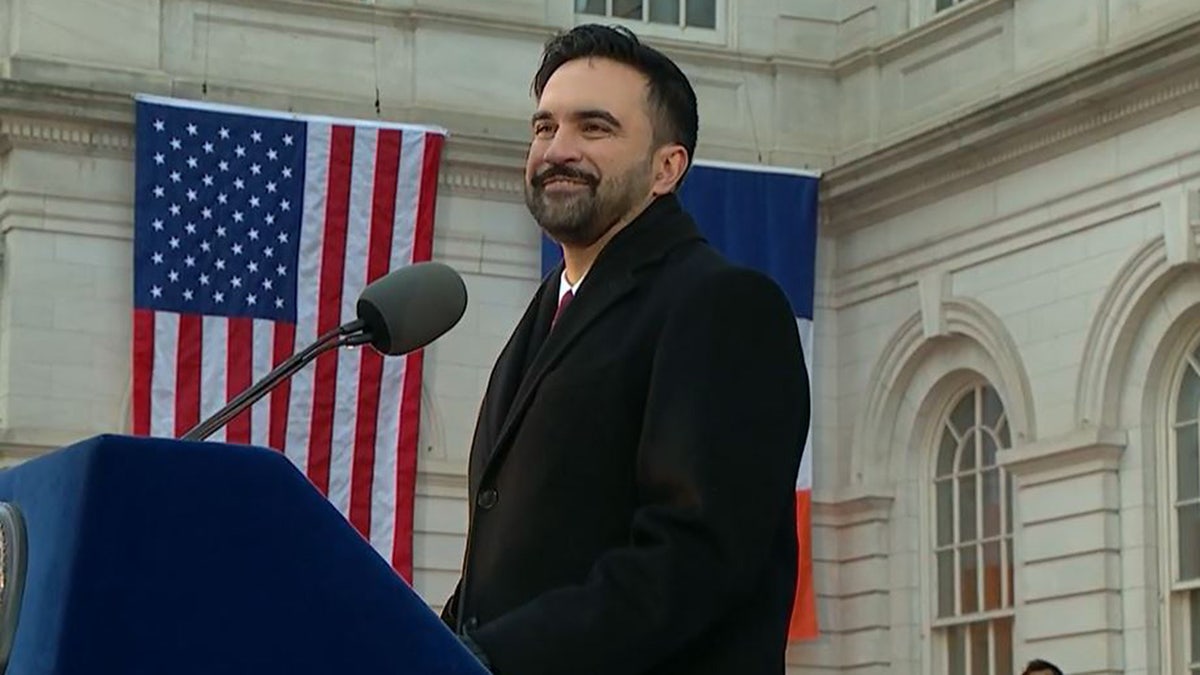
NYC Mayor Zohran Mamdani delivers his inauguration address, Thursday, Jan. 1, 2026, outside City Hall.

New York City Mayor Zohran Mamdani delivers his inaugural address Thursday, Jan. 1, 2026, outside City Hall. (Fox News/Pool)

The Anti-Defamation League (ADL) reported in December that more than 80 individuals — about 20% of Mamdani’s appointees at the time — had ties to anti-Zionist organizations or movements.

One of Mamdani’s transition aides, Hassaan Chaudhary, previously referred to Israel as “barbaric” and used the term “Jew” as a slur, according to the ADL.

ADL CHIEF WARNS NYC MAYOR-ELECT ZOHRAN MAMDANI POSES A ‘CLEAR AND PRESENT DANGER’ TO JEWISH COMMUNITY

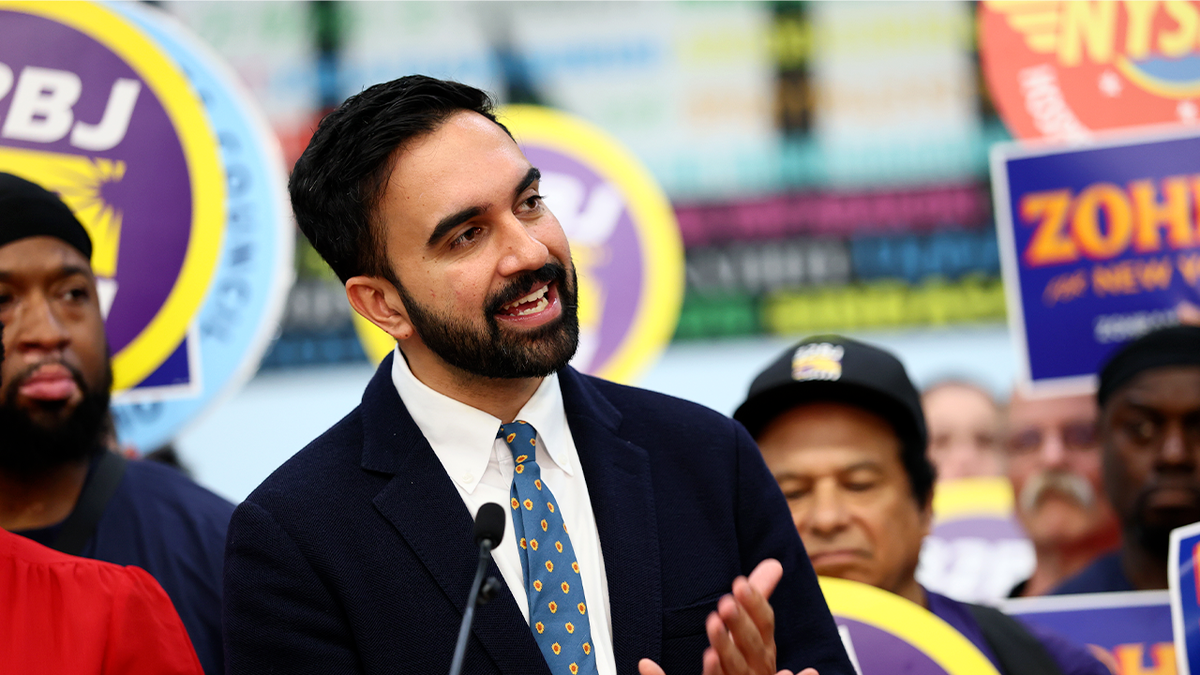
Mayor Mamdani speaks during press conference

New York City Mayor Zohran Mamdani’s appointees have come under scrutiny for alleged anti-Zionist ties. (Michael M. Santiago/Getty Images)

CLICK HERE TO DOWNLOAD THE FOX NEWS APP

Several other appointees were also cited for statements that appear to support or justify violence against Israel and the Oct. 7 attacks.

Fox News’ Bonny Chu contributed to this report.