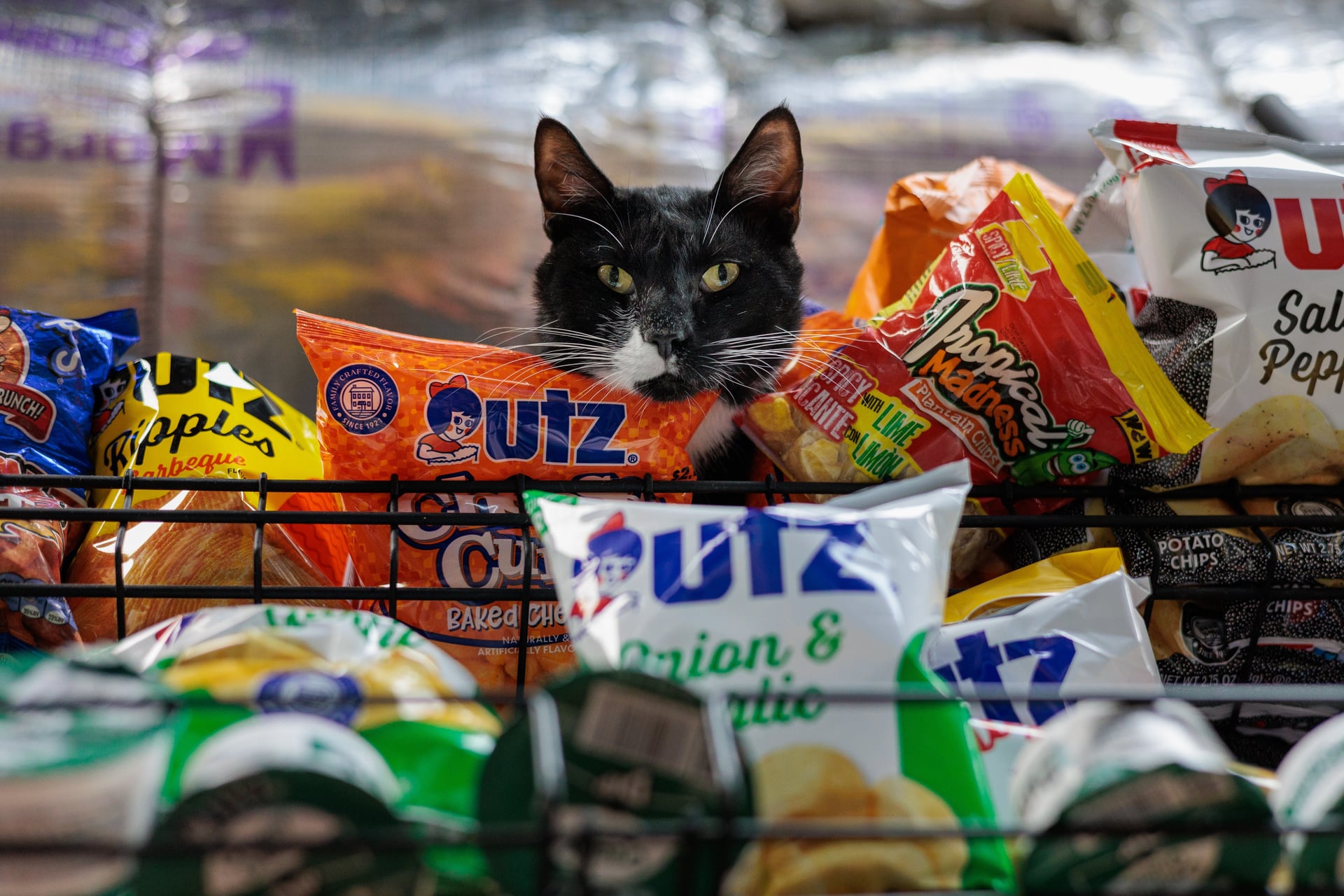
The Bodega: cultural cornerstone of every New York neighborhood. Alongside the milk, deli meats, bread, and mysterious miscellaneous items in the dusty back corner, is one essential item: The Bodega Cat. A resident feline (or felines) is something that has become synonymous with these local corner stores, and many of these customer-friendly cats have been in residence longer than the current employees. The Bodega Cat is such a New York icon that one man has made it his mission to make sure these furry store greeters receive the attention and protection they deserve.
Back in 2020, as bodegas stayed open while most of the world was shut down due to the COVID pandemic, author Dan Rimada started to photograph and document the various cats he encountered in his neighborhood. After a while, strangers started to send him photos and stories about their local bodega cats, and Rimada realized that this was a story that needed to be told.
Image Credit: Bodega Cats of New York
Along with photographer Gulce Kilkis, Rimade spent four years collecting tales and images of this unique aspect of everyday life across all five boroughs. The culmination of that work, the book
As his collection of bodega cats grew, he became aware of a problem that could mean the end of this New York institution.
Under current regulations, a cat in a food establishment is a health code violation, one that attracts a fine of $200. For years, bodega owners have continued to encourage their feline visitors as they help keep a larger (and more expensive) problem at bay: rats. If rats (or evidence of rats) are detected during a health inspection, the fine is $1000, not to mention the cost to the bodega’s reputation. The threat of an occasional $200 fee has been largely accepted as a ‘rat tax’ by bodega owners, and many health inspectors have been known to look the other way when it comes to the resident feline, aware that they are providing an essential service.
However, ‘rat math’ and goodwill are shaky foundations to stand on, which is why Rimada decided it was time to give these cats the security of being rightly designated as service animals.
Image Credit: Bodega Cats of New York
Changing the Law
Like many movements, this one started small. What began as a simple documentation project has become a coalition for change. Thousands of petition signatures, millions of followers, and now two state bills headed to the Senate.
Council Member Keith Powers reached out to Rimada on Instagram and has introduced Int. 1471: Cats In Retail Food Stores, which would override the provisions of the New York City Health Code that prohibit owners of retail food stores from keeping a cat within their store. At the same time, unbeknownst to Rimada, State Assembly Member Linda Rosenthal presented A08341, which requires the establishment of health and safety guidelines for cats living in retail food stores to ensure the humane treatment of such cats while adhering to relevant health code provisions. If passed, these laws would not only protect the status of the Bodega Cat but also ensure that the State Department of Agriculture and Markets create official health and safety guidelines for cats in retail food stores, including regular vet check-ups, mandatory spaying or neutering, proper nutrition, and designated “cat zones” separate from food prep and storage.
Image Credit: Bodega Cats of New York
Of course, the battle is far from over, and there are some serious hurdles to overcome before these bills are passed as laws. According to Rimada, Bodega Cats of New York needs a partner in the Senate, and asks his fellow New Yorkers to lend their support.
“If you live in New York, now is the time to call your State Senator. Tell them there’s a bill in the Assembly that would create care standards for working cats in retail food stores, and it needs a champion in the Senate.”
As long as there are bodegas, there should be Bodega Cats.
Feature Image Credit: Bodega Cats of New York
Did You Know?
Our brand-new posts are rounded up and included in our weekly emails. Don’t miss out on the latest – sign up for our newsletter below!
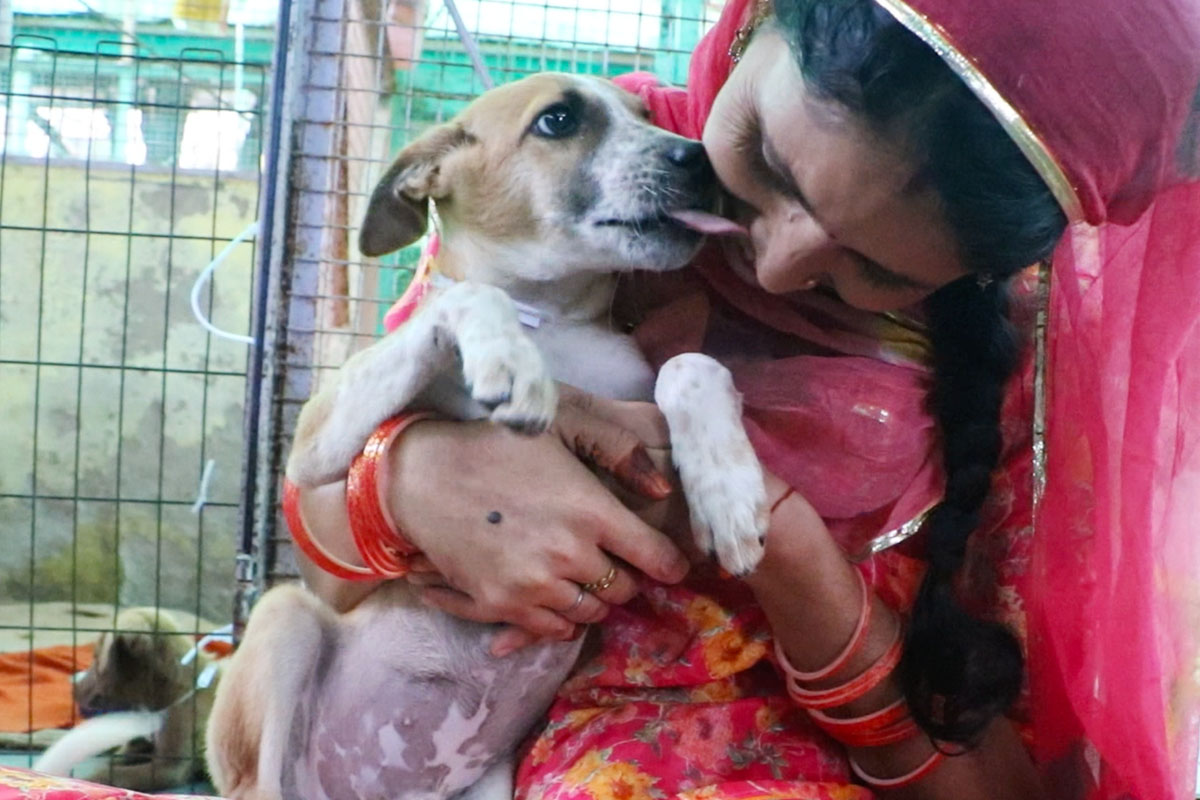
His neighbors must have gasped when they saw the size of this puppy’s wound.
They reported, astonished, that he even wagged his tail when they bent to pick him up, and they themselves hired a rickshaw to rush him to the hospital.
The little angel would definitely have died within a few hours if not immediately treated. We gave him pain medicine right away, and prepared him for surgery as soon as he’d been off feed for a few hours.
He needed stitches internal and external, and luckily there was enough skin for our surgeon to close this horrific wound. And meet beautiful Leo now!
This story was originally shared on The Animal Rescue Site. Submit your own rescue story here. Your story just might be the next to be featured on our blog!
This is my beautiful Hannah girl 💗
She found me at the Animal Protection Society in Keysborough.
John Carlon
She was my best friend, my companion, and the most loyal living being I’ve ever had in my life. I owe her so much — she truly saved me 💗
John Carlon
Unfortunately, she passed over the rainbow bridge nearly two years ago, and it was one of the worst days of my life having to say goodbye 💔
John Carlon
They were the best 16 years of my life. Until we meet again, my beautiful girl, I will never forget you 💔❤️
Story submitted by John Carlon
This story was originally shared on The Animal Rescue Site. Share your very own rescue story here!
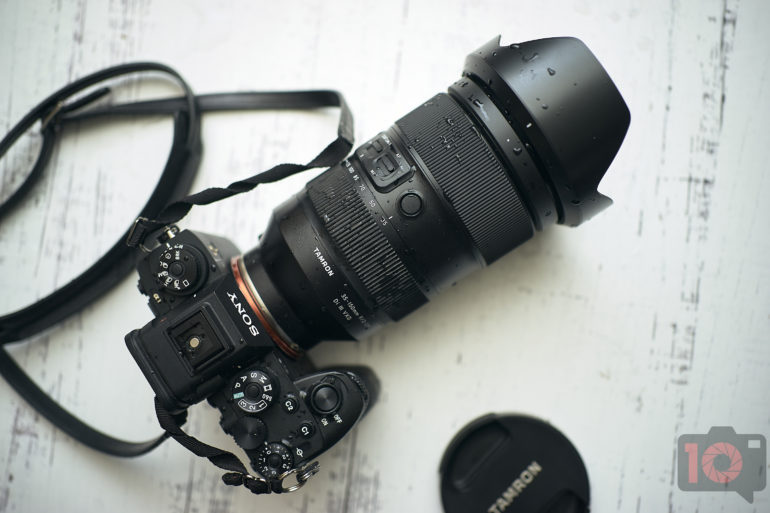
The Nikon ZR promises cinema-level features in a body that overlaps heavily with the Nikon Z8, and that overlap raises a real question about what you’re actually gaining. If you shoot both photo and video, the choice affects how you work day to day, not just how your footage looks.
Building a DIY photography prop box gives you a versatile pedestal for posing models, displaying products, and creating dynamic compositions in your studio. Commercial prop boxes cost $200-400, but you can build your own custom photography prop box for around $100 using materials from your local hardware store. This DIY project takes a few hours and results in a professional 24×24-inch pedestal that supports various weights and adapts to different shooting needs.
Why Build Your DIY Photography Prop Box
A photography prop box serves multiple purposes in the studio. Models can sit or stand on it for different posing angles, products display at ideal heights, and you gain creative flexibility for portrait photography and commercial work. The ability to customize dimensions means you build exactly what your shooting style requires.
This modular design allows you to change the height by adding or removing sections. Start with a 2-foot-tall photography prop box, then build additional modules to create a 3-foot version when needed. The removable top also provides storage space inside for lights, modifiers, or other equipment when the box isn’t in use.
Materials for Your DIY Photography Prop Box
Purchase these materials from your local Home Depot or hardware store:
Wood:
3 pieces of plywood (24″ x 24″, 3/4″ thick)
2 pieces of plywood (24″ x 22.5″, 3/4″ thick)
Hardware:
Wood screws (shorter than 3/4″ board thickness)
Metal angle brackets (plan for 2-3 per corner)
Screws for angle brackets
4 wooden dowel pins (1/4″ diameter)
Tools:
Power drill with Phillips head bit
Drill bits (including 1/4″ for dowel holes)
Tape measure
Marker
Sandpaper
Hammer and nails (alternative to a drill)
Finishing:
White gloss spray paint with primer
Optional: plastic wood filler
Total cost: Approximately $100 for all materials and tools if you don’t already own basic equipment.
DIY Photography Prop Box Wood Dimensions
This DIY photography prop box uses specific dimensions to create a perfect 24×24 inch square. Three pieces measure 24×24 inches, while two pieces measure 24×22.5 inches. This difference accounts for board thickness when assembling the box.
When you place a 22.5-inch board between two 24-inch boards, the total length becomes 24 inches (22.5″ + 0.75″ + 0.75″ = 24″). This ensures all sides measure exactly 24 inches square. The shorter pieces sit on top of the longer pieces during assembly, maintaining proper dimensions throughout.
Alternative Design for Seamless Look
If you want a seamless DIY photography prop box where the top isn’t visible, modify the design slightly. Purchase four 2×4 boards cut to 22 inches in length. Mount these inside the box perimeter as support ledges. Cut your top piece to 22.5×22.5 inches so it sits inside the frame on these ledges rather than on top of the box.
This creates a flush appearance where you don’t see the top edge. The trade-off is losing the modular capability of easily removing the top. Choose based on whether you prioritize appearance or functionality for your DIY photography prop box needs.
Before drilling, mark where the screws will go. Place three screws evenly spaced along each edge where boards connect. Measure and mark at 6 inches, 12 inches, and 18 inches from the edge. This creates even distribution along the 24-inch length.
Also, mark the depth positioning. Since boards are 3/4 inch thick, mark at approximately 3/8 inch from the edge. This helps keep the screws centered within the board’s thickness, preventing them from breaking through either surface. Accurate marking ensures your photography prop box assembles properly.
Step 2: Attach Angle Brackets
Before joining boards together, attach angle brackets to the inside corners. Position brackets where two boards will meet. Use screws shorter than your board thickness to attach brackets. Remember that 3/4 inch boards require screws no longer than 3/4 inch, or they’ll poke through the surface.
Place at least two angle brackets per corner. For additional support, use three brackets per corner since they cost only about 50 cents each. The extra reinforcement matters when your photography prop box supports heavier models or equipment during studio sessions.
Step 3: Assemble the First Two Boards
Take one 24×24-inch board and one 22.5×24-inch board. The shorter board sits on top of the longer board’s edge, not beside it. This maintains the 24-inch total dimension. Position the boards at a right angle and drill pilot holes through your marked positions.
Drive screws through the pilot holes to connect the boards. The angle brackets you installed provide interior support, while the screws provide exterior joining strength. This dual attachment method creates a strong corner for your photography prop box.
Connect the third board to create an L-shape with two boards attached. Then add the fourth board to complete the square frame. Throughout assembly, verify that shorter boards (22.5 inches) sit on top of longer boards (24 inches) to maintain proper dimensions.
After joining all four sides, measure the frame to confirm it’s 24×24 inches on all sides. Check both top and side measurements. This verification ensures your top piece will fit properly and your DIY photography prop box maintains its square shape.
Step 5: Validate Your Measurements
Double-check measurements before proceeding. The frame should measure exactly 24 inches in both directions. If measurements are off, the 24×24 inch top piece won’t sit flush. Take time to verify dimensions now rather than discovering problems later.
Place the top piece on the frame to test the fit. It should rest evenly across all edges without gaps or overhangs. If fit isn’t perfect, identify which board is misaligned and adjust before final assembly.
Step 6: Create Dowel Pin Holes for Modular Top
For a removable top that allows height modifications, use dowel pins instead of screws. Mark the center point on two opposite sides of your frame’s top edge. This is 12 inches from either end. Also mark 3/8 inch from the outer edge to center the hole in the board thickness.
Drill pilot holes at these marks using a smaller drill bit first. This guides the larger 1/4 inch bit that creates the actual dowel holes. Drill carefully to keep holes perpendicular to the board surface. Repeat the process on the corresponding spots on the underside of your top piece.
Step 7: Install Dowel Pins
Cut wooden dowel pins to the appropriate length. You need enough length to extend into both the frame and the top piece, roughly 1.25 inches total. Insert dowel pins into the holes on the frame. They should fit snugly but not so tightly that they’re impossible to remove.
Test fit the top piece by aligning its holes with the protruding dowel pins. The top should seat firmly onto the pins. This connection holds the top in place during use, especially with a model’s weight pressing down, but allows you to lift it off when needed.
If you don’t want a modular DIY photography prop box, skip the dowel pins and simply screw or bracket the top permanently to the frame. Use angle brackets mounted inside the box, attaching them to both the frame and the underside of the top piece.
Step 8: Sand All Edges
Before painting, sand every edge of your DIY photography prop box. Pay special attention to corners and edges where models might sit or lean. Sharp edges can snag clothing or scratch skin, so round them off with medium-grit sandpaper.
Sand in smooth, even strokes along each edge. You don’t need to remove much material, just enough to eliminate sharp corners. This safety step takes only 10-15 minutes but prevents accidents during photoshoots.
Step 9: Apply Primer and Paint
Work in a controlled environment rather than outdoors. Wind wastes spray paint and creates uneven coverage. A garage or covered area works better. Use white gloss spray paint that includes primer, or apply separate primer first, then paint.
Apply thin, even coats rather than trying to cover everything in one pass. Hold the spray can about 12 inches from the surface and use smooth, overlapping strokes. Allow each coat to dry completely before adding the next. Plan for at least two to three coats for full coverage on your photography prop box.
Pay attention to corners and edges where paint tends to pool. Multiple thin coats create better results than single thick coats that drip and run. The gloss finish gives your photography prop box a professional appearance that photographs cleanly.
Use solid wood boards rather than plywood if possible. Plywood consists of thin layers glued together, making it harder to drill and screw accurately. Solid wood accepts fasteners more reliably and creates stronger joints for your DIY photography prop box.
If the visible top edge bothers you, fill gaps with plastic wood filler before painting. Sand the filler smooth once dry, then paint over it. Alternatively, remove the top edge in post-production using Photoshop’s clone stamp tool. This takes seconds and eliminates the need for additional construction work.
Add extra angle brackets beyond the minimum. At 50 cents each, the cost is negligible, but the added support significantly strengthens your photography prop box. Consider three brackets per corner instead of two, especially if you’ll be photographing heavier subjects.
Paint in a controlled environment to avoid waste and achieve better coverage. Outdoor painting loses product to wind and creates uneven coats. A garage or covered workspace provides the control needed for professional results.
Using Your DIY Photography Prop Box
Position your completed photography prop box anywhere in your studio for creative compositions. Models can sit on it for portraits, products can be displayed at ideal heights for tabletop photography, or it can be used as a platform for fashion shoots.
The white finish reflects light cleanly and doesn’t introduce color casts. This neutral surface works with any backdrop or lighting setup. The 24-inch square top provides ample space for various poses and products.
For added versatility, build multiple modules at different heights. Stack them to create taller pedestals or use them separately throughout your studio. The modular design means you adapt to different shooting scenarios without buying multiple fixed-height boxes.
Storage Benefits
The removable top transforms your DIY photography prop box into storage when not in use. Store RGB lights, small light modifiers, cables, or other equipment inside the hollow frame. This maximizes studio space efficiency by giving equipment a dedicated storage spot that doubles as a functional prop.
The sturdy construction supports storage weight without issue. Simply lift the top, place items inside, and replace the top. Your photography prop box maintains a clean exterior appearance while organizing gear internally.
Customization Options
Paint your DIY photography prop box any color to match your studio aesthetic or specific shoot requirements. Black creates dramatic contrast, gray offers neutral tones, or use custom colors for branded commercial photography. The modular design accepts any spray paint finish.
Build boxes in different dimensions for varied applications. Smaller boxes work for product photography, while larger versions accommodate full-body posing. The construction process remains identical regardless of size – just adjust your wood dimensions accordingly.
Build Your Studio Essential
Creating a DIY photography prop box for around $100 gives you a professional studio tool that rivals commercial options costing several times more. The customizable design adapts to different shooting needs, the sturdy construction supports various weights, and the modular top allows height adjustments as your requirements change.
This project demonstrates that professional studio equipment doesn’t require professional budgets. With basic materials from the hardware store and a few hours of work, you gain a versatile pedestal that enhances portrait sessions, product shoots, and creative compositions. Your photography prop box proves that thoughtful DIY solutions deliver professional results.
We use cookies to ensure that we give you the best experience on our website. If you continue to use this site we will assume that you are happy with it.
With cats as pets, every pet owner has to be extra cautious, as they can open many things easily and do as they wish. Even this owner has to take some precautions to prevent her food from spoiling because of her Orange cat. Seeing how easily the feline opens the door, the mom had to put a child lock on their freezer to keep things safe. The clip surely resonated with many cat owners as it received a lot of attention online, garnering more than 4k likes at the time of writing.
Cat apparently opens the freezer using her paws
Does your cat open your freezer? If so, what precaution did you take to prevent your feline from doing so? Even this Orange cat named Miss Mayonnaise can easily open the freezer. As a result, the cat owner came up with a solution that left many in stitches.
Talking about her “Canadian mainecoon girl with thumbs” on @mayothemainecoon, the mom explained that despite being “child free,” they “need child locks on everything,” as their feline “goes on top of the freezer and she opens the freezer with her thumbs and she defrosts” off of their “meat.”
Hence, as a precaution, they had to use this safety device to prevent their food from spoiling. While the mom seems relieved with the solution, Miss Mayo does not seem happy with it, as she sits on the freezer, trying her best to understand the reason for the lock.
However, looking at the things her feline can do, the mom expressed her worry in the caption saying, “This is what happens when you live with an orange cat with thumbs. Soon she will be driving our vehicles and doing our taxes.”
Nevertheless, many cat owners have found this video relatable, as one pet parent said, “Which lock is that? My girl chewed through the strap style lock I had on my fridge and steals me food all the time.” While another cat owner mentioned, “My gingy, Fred, also opens doors, cabinets, drawers, dishwasher and the freezer. Certified orange.”
We use cookies to ensure that we give you the best experience on our website. If you continue to use this site we will assume that you are happy with it.
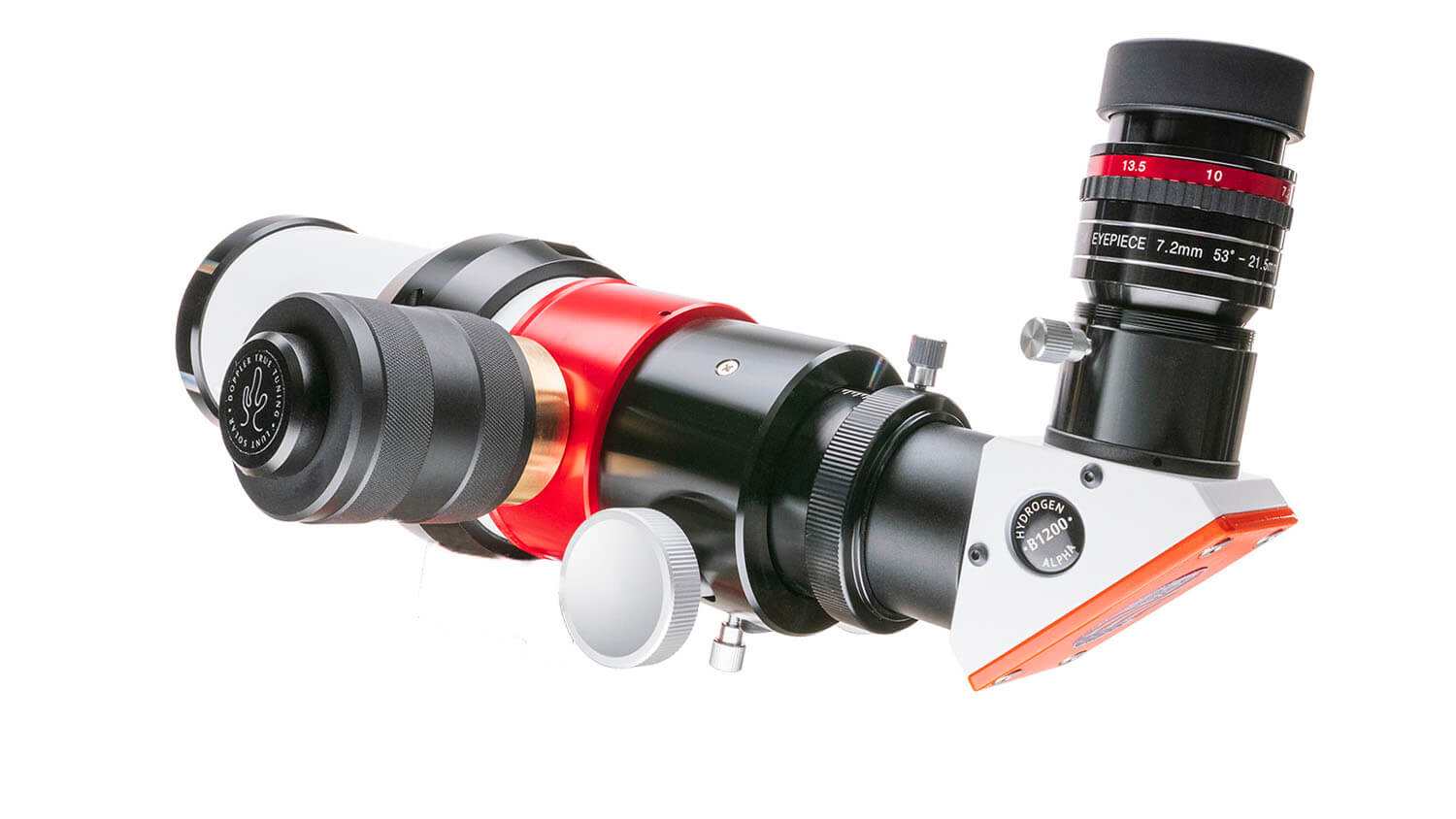
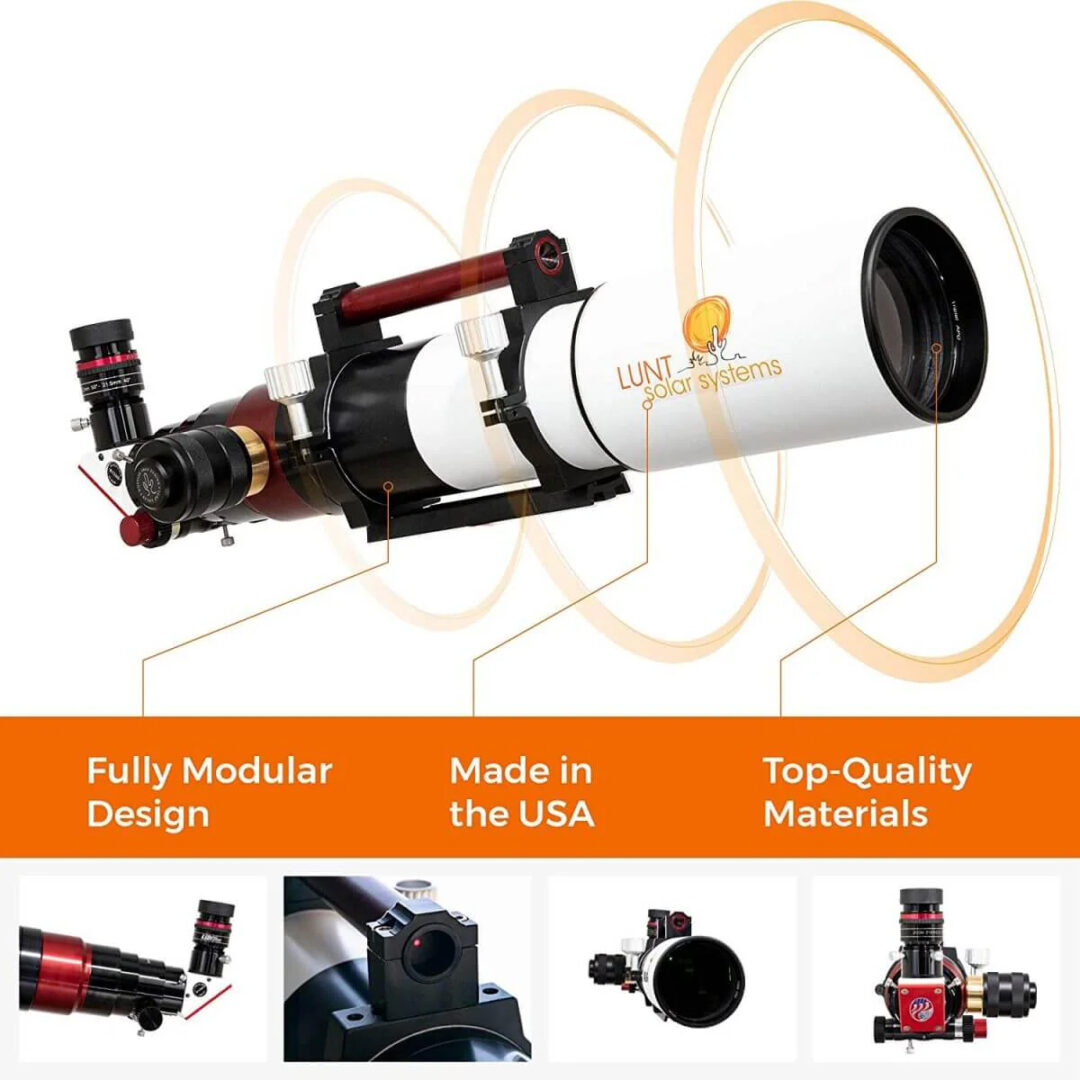
Hydrogen-alpha solar telescopes have traditionally served a single purpose. Most instruments in this category focus exclusively on daytime chromospheric work. As a result, observers often maintain separate optical systems for solar and nighttime astronomy. The Lunt 60 mm Universal Telescope, widely known as the LS60MT, combines a pressure-tuned H-alpha system with a removable solar module inside a compact ED refractor platform.
Lunt Solar Systems developed the LS60MT to function as a convertible optical system rather than a fixed solar tube. The telescope operates as a dedicated hydrogen-alpha instrument when configured for solar work. However, it transforms into a conventional ED refractor once the solar components are removed. That dual-mode capability defines the instrument’s position in the current amateur solar market. The LS60MT occupies the mid-aperture segment of Lunt’s universal series. It balances portability, optical quality, and modular expansion. Consequently, it appeals to observers who want serious solar capability without committing to a large, single-purpose system.
Optical design
The LS60MT is built around a 70 mm ED doublet objective. Lunt specifies FPL-51 class glass for the primary element. This choice reduces chromatic aberration and preserves contrast across the visible spectrum. The telescope has a focal length of 420 mm and a focal ratio of f/7. These parameters place it firmly in the short refractor category.
Lunt LS60MT universal telescope
In nighttime configuration, the telescope uses the full 70 mm aperture. When configured for hydrogen-alpha work, the effective working aperture becomes 60 mm. This reduction results from the internal solar module geometry and energy rejection system.
Lunt applies ion-assisted broadband anti-reflection coatings to the objective surfaces. These coatings improve transmission efficiency and suppress stray reflections. As a result, the optical path remains clean in both solar and nighttime modes.
The internal etalon is tuned precisely to the hydrogen-alpha wavelength of 656.28 nm. In single-stack configuration, the system achieves a bandpass below 0.65 Å. With the optional double-stack module installed, the bandpass tightens to below 0.45 Å. These figures place the LS60MT firmly within the serious amateur solar imaging class. The telescope’s recommended maximum magnification is approximately 100×.
The telescope has an aperture of 70mm for nighttime and 60mm for solar imaging
Universal configuration and multi-mode operation
The defining characteristic of the LS60MT is its universal observing capability. Lunt designed the telescope as a modular platform that supports solar and nighttime modes. The transition between modes occurs through the removal or installation of dedicated optical modules.
In the hydrogen-alpha configuration, the telescope functions as a dedicated solar instrument. The internal etalon and blocking filter isolate the narrow H-alpha bandpass. This allows observers to examine prominences, filaments, plages, and chromospheric surface detail with high contrast.
Once the solar module is removed, the optical tube behaves like a conventional ED refractor. At that stage, the telescope supports lunar observation, planetary viewing, and wide-field deep-sky imaging. The 420 mm focal length makes it particularly suitable for large nebulae and star fields.
The LS60MT also supports Calcium-K solar observing at 393.4 nm with an approximate 2.2 Å bandpass. This wavelength probes a different solar layer than hydrogen-alpha. As a result, users can study complementary solar structures. White-light solar observation remains another supported mode. Observers can use either a front-mounted solar film filter or a white-light wedge to monitor sunspots and photospheric detail. This multi-mode capability transforms the LS60MT into a genuinely flexible solar platform.
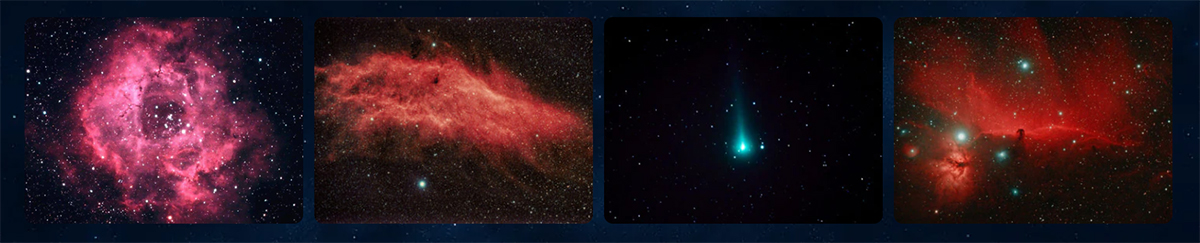
Nighttime deep sky images taken with Lunt LS60MT (via Lunt Solar Systems)
Pressure tuning and etalon control
A major technical feature of the LS60MT is Lunt’s Doppler True pressure tuning system. Instead of tilting the etalon to shift the wavelength, the telescope adjusts the internal air pressure surrounding the etalon cavity. This method provides more uniform spectral performance across the field.
Tilt-tuned systems often produce a sweet spot where contrast peaks in one region of the field. Pressure tuning reduces this effect. Consequently, the solar disk appears more evenly illuminated during both visual observation and imaging.
The tuning mechanism allows precise adjustment around the hydrogen-alpha line center. Observers can slightly offset the tuning to emphasize either prominences or surface contrast. The pressure system responds immediately to adjustments, which makes fine-tuning straightforward in the field.
The etalon itself uses UV-grade fused silica. This material offers excellent thermal stability under sustained solar exposure. Stability matters because even small thermal shifts can affect bandpass accuracy. Lunt’s material choice helps maintain consistent performance during extended solar sessions.
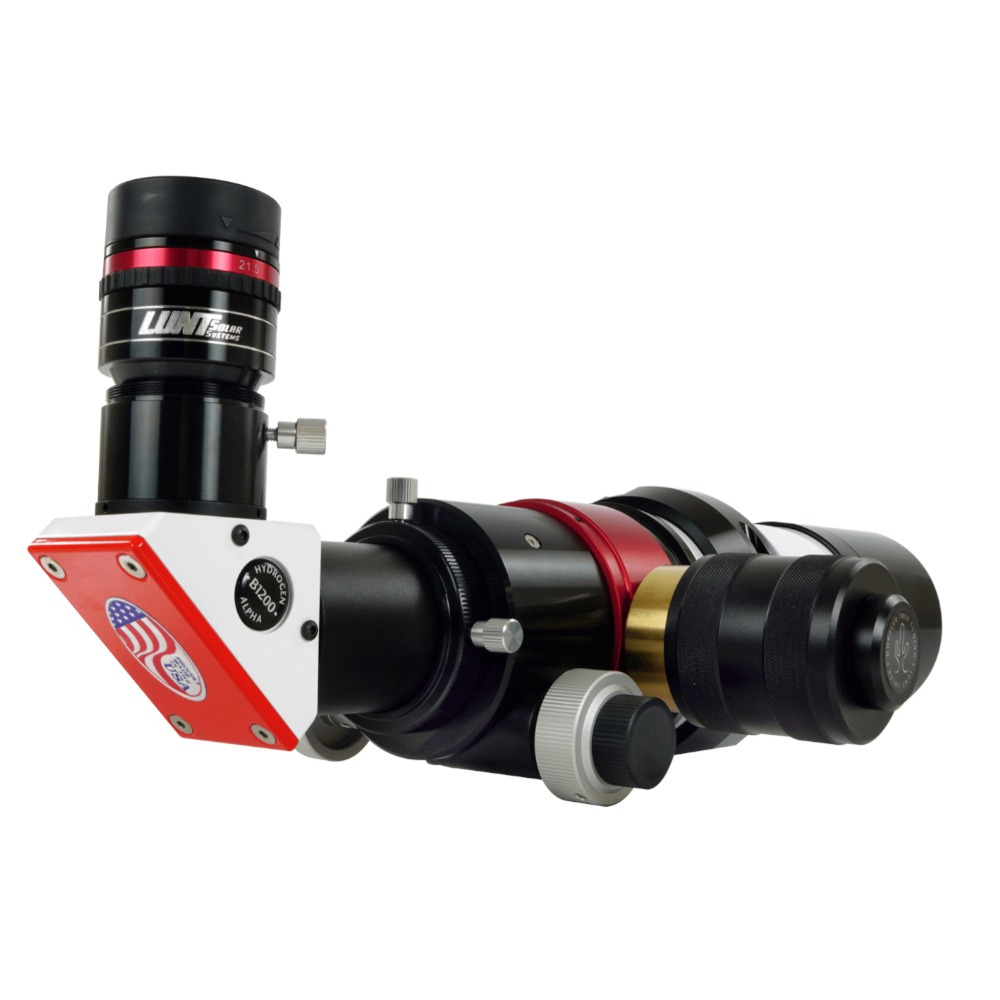
The etalon used in the telescope is pressure-tuned
Blocking filters and system configurability
Lunt designed the LS60MT as a configurable system. Buyers can select among several blocking filter sizes, typically 6 mm, 12 mm, or 18 mm. The blocking filter determines the fully illuminated field at the focal plane. Smaller blocking filters work well for visual observing. Larger filters benefit imaging applications and wide-field eyepieces. For example, a 12 mm or 18 mm blocking filter reduces vignetting when paired with modern solar cameras.
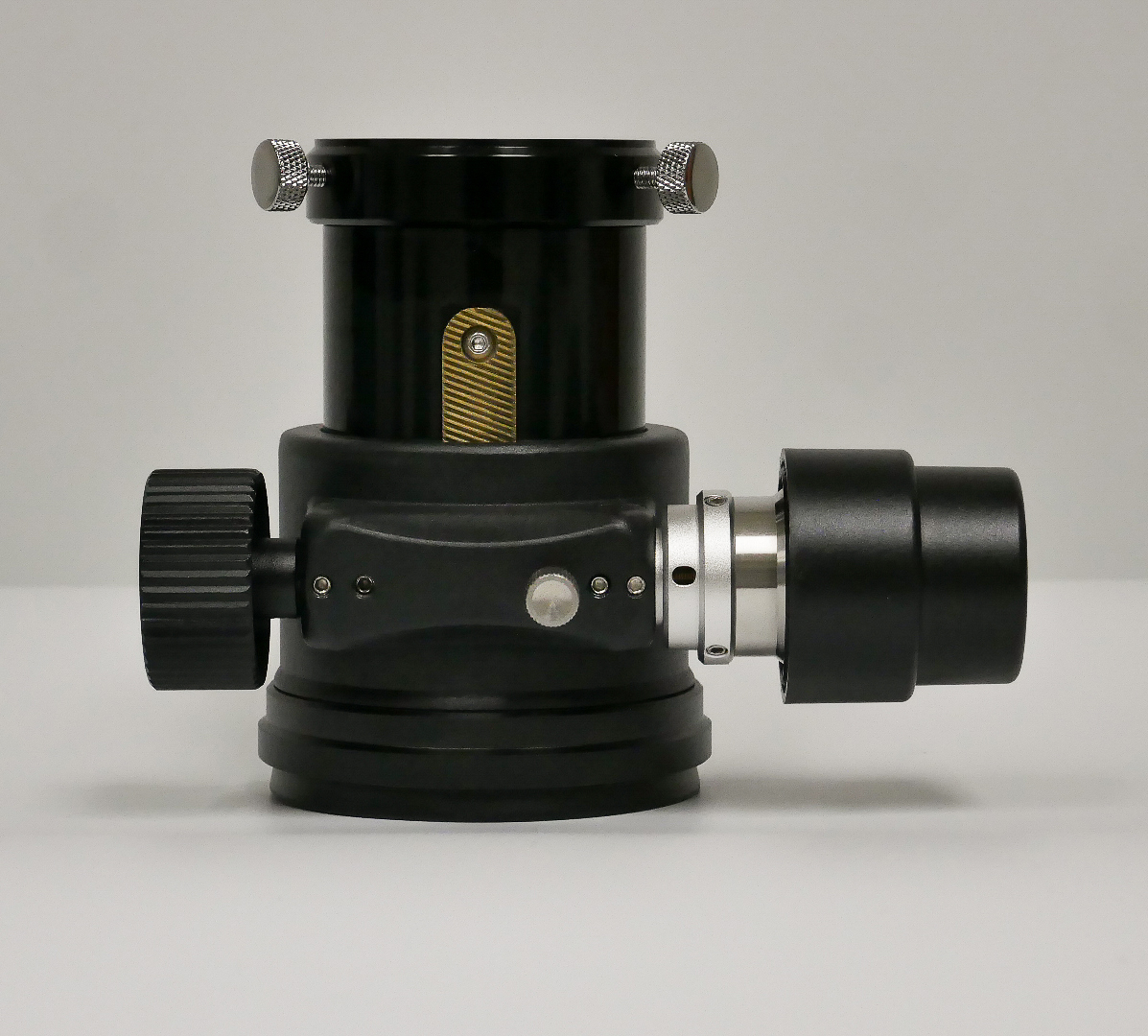
The focuser assembly is also configurable. Lunt offers dual-speed rack-and-pinion and Feather Touch options. Each version includes fine-focus reduction, typically around 10:1. This level of control becomes critical during high-resolution solar imaging.
Dual-speed rack-and-pinion focuser
Another important upgrade path involves double-stacking. Adding a second etalon narrows the bandpass below 0.45 Å. This significantly increases chromospheric contrast and suppresses continuum leakage. Many experienced solar observers eventually adopt this configuration to extract finer surface detail.
The telescope ships with a CNC-machined clamshell and a Vixen-style dovetail plate. This arrangement ensures compatibility with most modern mounts without requiring custom hardware.
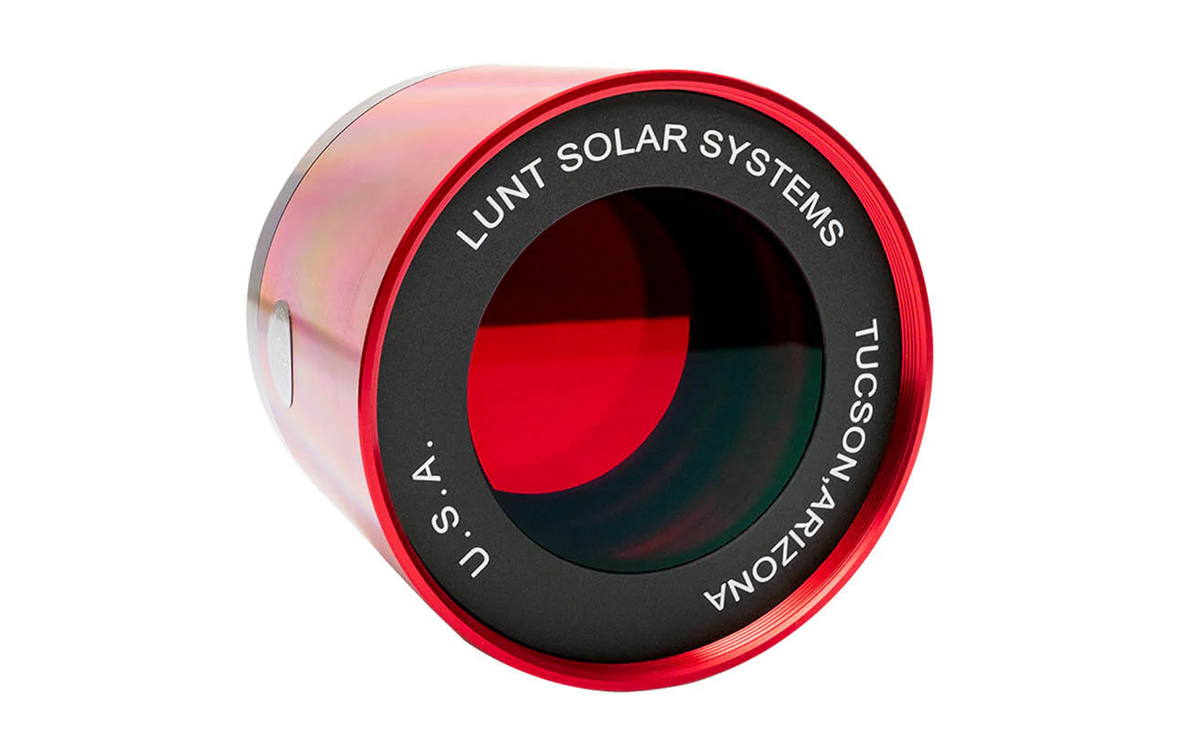
Lunt LS60FHa Front Mount 60 mm Double Stack Filter
Key specifications, price, and availability
Here are some of the key specifications of the Lunt LS60MT:
Telescope Type
Universal Day and Night
Universal Capabilities
H-alpha, CaK, White Light, Lunar, Planetary, Deep Space, Terrestrial
Aperture
70 mm Native, 60 mm H-alpha
Objective Type
Professional Grade ED Doublet
Objective Material
FLP51
Objective Coating
Ion Assist Broadband AR
Focal Ratio
F/7
Focal Length
420 mm
H-alpha Etalon Type
Modular
Etalon Wavelength
656.28 nm
Etalon Bandpass
<0.65 Å Single Stack, <0.45 Å Double Stack
Telescope Weight
~7lbs
Theoretical Max Magnification
100 x
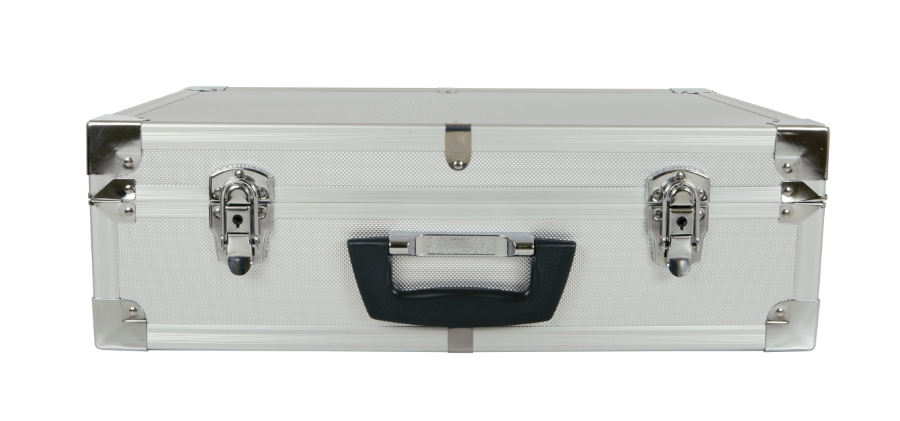
Lunt supplies the instrument in a fitted aluminum hard case. The foam interior protects the etalon and optical components during transport. Given the precision nature of hydrogen-alpha systems, proper storage remains essential.
The telescope is shipped in an aluminum hard case
The Lunt LS60MT is priced at $1,998 (OTA only). It is available with a B600 Blocking Filter ($2,393 for OTA + Blocking Filter) and with a B1200 Blocking Filter ($2,543 for OTA + Blocking Filter).
Lunt also offers multiple accessories, including double-stack units, white light solar wedges, Calcium K module, Sun Finders, eyepieces, and Feather Touch focuser, all of which can be bought separately or together with the telescope.
Within Lunt’s broader lineup, the LS60MT occupies a middle position in the universal telescope series. It offers more capability than entry-level solar scopes while remaining far more portable than larger dedicated instruments. The telescope targets observers seeking serious hydrogen-alpha performance in a travel-friendly format. Its modular architecture also appeals to users who prefer incremental system upgrades.