Monthly Spotlight: SHARED’s Fish Welfare Work in Ghana


5 minute read

This month, we spoke with Emmanuel Awuni, Director at SHARED (Sustainable Health And Resilient Environments for Development), a non-profit dedicated to fostering a sustainable future through the One Health approach. SHARED recognizes the interconnectedness of animal, human, and environmental health and work to establish evidence-based policies that promote wellbeing.

Emmanuel is a physiotherapy professional with nearly half a decade of clinical experience. Discovering effective altruism led him to pursue a high- impact path beyond healthcare. In this interview, Emmanuel discusses SHARED’s role in integrating farmed animal welfare into public health and environmental policy, and their recent work shaping aquaculture regulations in Ghana.

1. Can you share an overview of what SHARED does?

SHARED is a Ghana-based organization focused on farmed animal policy across Africa. We use a One Health approach, recognizing that animal health, human health, and environmental health are deeply interconnected, to advocate for evidence-based interventions that benefit farmed animals while simultaneously advancing public health and environmental outcomes.

Our mission is to reduce animal suffering, improve human health, and protect the environment through collaborative, holistic solutions. Our vision is a future where the wellbeing of animals, humans, and ecosystems across Africa is mutually reinforcing, leading to thriving communities and flourishing environments.

2. How does SHARED identify interventions that can simultaneously improve animal welfare, public health, and environmental resilience?

Animal welfare as a standalone issue rarely rises to the top of government agendas in Africa. So rather than advocate for it in isolation, we identify interventions where animal welfare intersects meaningfully with public health or environmental priorities, areas governments are already motivated to act on. Through research, we find those overlapping spaces and build the evidence base needed to make our case. This approach allows us to drive real, policy-level change for farmed animals while working within the priorities and systems that actually shape decisions on the ground.

3. What were the key findings from your recent report on aquaculture and fish welfare in Ghana?

We collaborated with Naveeth of AWASH to produce an evidence-based assessment of fish welfare in Ghana’s aquaculture sector, named Aquaculture and Fish Welfare in Ghana. Key findings include:

Scale and concentration. Ghana’s farmed fish production grew from 7,500 MT in 2009 to 100,000 MT in 2023, an increase of roughly 250 million fish per year. About 90% of production is Nile tilapia cage-farmed on Lake Volta, with approximately 101 producers accounting for 90% of output.

No legal protections exist. There are no enforceable standards for stocking density, water quality, handling, transport, or slaughter. Fish welfare depends entirely on individual farmer discretion.

Disease is widespread. ISKNV (Infectious spleen and kidney necrosis virus)

was found in 80% of the farms, bacterial pathogens in 68%, and farmers reported median mortality rates of 70%.

Hatcheries are a critical welfare bottleneck. Survival rates in Ghanaian hatcheries are typically 40–70%, compared with 80–90% in grow-out systems. Pathogens have been detected in broodstock, eggs, and early life stages, yet no major initiative has directly targeted hatchery welfare.

Stocking density is the highest-impact, lowest-cost intervention. Overstocking drives both welfare and productivity problems. Reducing density requires no capital investment and improves feed conversion, significant given that feed accounts for 60–70% of production costs.

The government can deliver at scale when motivated. The ISKNV vaccination programme demonstrated that national-level implementation capacity exists. The constraint is political priority, not institutional ability.

Act 1146 creates a time-limited regulatory window. Implementing regulations must be drafted within a year. The Act’s licensing and enforcement framework can accommodate welfare standards through subsidiary regulations, without the need for new primary legislation.

Welfare must be framed around economics, not ethics. Across every project reviewed, interventions succeeded when linked to productivity, biosecurity, cost savings, or export readiness. Standalone ethical framing does not gain traction with farmers or government, and we design accordingly.

4. What are the most significant challenges you currently face in advancing your mission?

Every stage of this work comes with real friction, and we’ve had to be intentional about how we navigate it.

Animal welfare is rarely a government priority in Ghana or across much of Africa. We address this by anchoring our advocacy in interventions that serve interests governments already care about, while ensuring those interventions deliver the most impact for animals.

Government timelines can shift unpredictably due to consultation processes and approval bureaucracy. We’ve learned to build relationships with high-level individuals within our target institutions early, because trust at the right levels can move things faster than formal processes alone.

Weak enforcement is a systemic challenge across Sub-Saharan Africa. Rather than fight that reality, we design interventions that fit within existing enforcement frameworks while gradually building government capacity to do more.

Finally, as a lean organization operating remotely, we face practical challenges. Stakeholders sometimes want to visit a physical office, and maintaining one is also a compliance requirement. We’re actively fundraising to secure a permanent space that reflects the credibility of the work we’re doing.

5. How has the ACE Movement Grant helped strengthen SHARED’s work?

The ACE Movement Grant has been foundational to our progress. Policy advocacy for animals is challenging anywhere, but in Africa, where the field is still emerging, having funders who understand that and believe in what we’re building makes an enormous difference.

Our most recent and significant success was securing government agreement to include aquaculture health and fish welfare within the scope of implementing regulations under Ghana’s Fisheries and Aquaculture Act, 2025 (Act 1146). This scope expansion came directly from SHARED’s engagement with the Ministry of Fisheries and Aquaculture and the Fisheries Commission, and it would not have been possible without the support we received from ACE.

We’ve also been appointed to lead the Fish Health Cluster within the Technical Working Group, giving SHARED direct responsibility for drafting the fish health and welfare provisions. That’s a meaningful seat at the table, and it reflects what sustained, evidence-based engagement can achieve.

6. If you had to share a final message with the ACE audience, what would it be?

Farmed animal agriculture is expanding rapidly across Africa, and because it’s still in its early stages, there is a genuine window to shape how it develops. Today, we can influence the standards, practices, and regulations that govern it before harmful norms become entrenched.

Policy advocacy is one of the most powerful tools available to do that. But to be effective, it needs to be grounded in locally contextualised research, evidence that reflects the real conditions, incentives, and systems in African contexts, not transplanted assumptions from elsewhere.

Africa needs more researchers, more advocates, and more funders willing to invest in that work. The opportunity to get ahead of industrial animal agriculture on this continent is real. We shouldn’t let it pass.


Find more conversations in our Monthly Spotlight series:


Monthly Spotlight: SHARED’s Fish Welfare Work in Ghana

About Emmanuel Awuni

Emmanuel Awuni is the Director of SHARED (Sustainable Health And Resilient Environments for Development). He is a physiotherapy professional with nearly five years of clinical experience. After engaging with effective altruism, he shifted his focus toward pursuing higher-impact work beyond clinical practice.
He is a volunteer member of the Animal Welfare League (AWL) and founded Sahara Veg, a project promoting sustainable diets in Ghana to mitigate climate change and improve human and animal health outcomes.
Emmanuel has contributed to several initiatives, including the Community-Based Rehabilitation Programme (CBR) and Black Girls Elevation. His interests include sustainability, regenerative agriculture, community development, and public health.

ace logo

ACE is dedicated to creating a world where all animals can thrive, regardless of their species. We take the
guesswork out of supporting animal advocacy by directing funds toward the most impactful charities and programs,
based on evidence and research.

167
Recipients working on promising projects

42
Countries across six continents.

$68M
Donations within the animal advocacy movement.

$58,000,000+
in donations already made to our recommended charities between January 2019 and March 2025

Looking to make your first donation? We’re happy to help

Learn more

Donate now


Neakasa Self-Cleaning Litter Box: My Cat’s Winter Enrichment Toy Layla Morgan Wilde


After 15 years of writing about cats, I thought I’d seen every form of enrichment.

But this winter, the most fascinating object in the house isn’t a toy. It’s our Neakasa Self-Cleaning Litter Box. Who knew it would become a Winter Enrichment “Toy” for my cats.

Lumi has developed a ritual. She hops in, places her front paws on the rim like she’s monitoring operations, does her business, scratches madly at the interior walls for the hell of it, and leaps out with joy.

There’s a short delay before the pod’s top closes and it rotates to reset itself. The soft mechanical hum draws both cats’ attention — they sit and watch as if something important is happening.

It turns out a litter box can be an adventure.

Why the Self-Cleaning Litter Pod Is More Than Convenience

The design is modern and open, which I prefer. I have never liked fully covered litter boxes, and most cats don’t either. Visibility and easy entry reduce stress. Just because a cat tolerates an enclosed box doesn’t mean it’s their preference.

Key features:

  • Self-cleaning rotation after each use
  • Open-top design for comfort and visibility
  • Step stool with charcoal odor absorber (helps with smell and catches stray litter)
  • Mat underneath to contain scatter
  • Less manual scooping (which, let’s be honest, is also winter enrichment for humans)

This model is not excessively tall, and the step stool helps with access and litter containment. For cats with severe mobility issues, a lower-entry box might still be better — one solution never fits all.

Over the years I’ve used:

  • Low-entry boxes for arthritic seniors
  • Extra-large pans for diabetic elders with mobility changes
  • High-sided boxes for enthusiastic diggers
  • Open designs for cats who dislike confinement

The right litter box depends on the cat in front of you. Read one of our many articles about litter boxes like History of cat litter and boxes

Remember cats like privacy for doing their business. We have several locations on two floors. This is our special litter box corner off the kitchen.


Winter Enrichment and Why It Matters

Winter changes the rhythm of a cat’s world. Outdoor time may be shorter, windows stay closed, and environmental novelty decreases. Even cats with GPS collars and cat doors experience a shift in stimulation.

Enrichment is about providing mental and physical engagement so cats remain curious and content. It doesn’t always look like a toy or an elaborate setup.

Winter Enrichment Beyond the Pod

Even with the self-cleaning litter pod, Otto and Lumi thrive on variety:

  • Outdoor adventures with GPS collars and a cat door (even in the snow)
  • Vertical spaces and hidey holes (beds on top of a tall armoire, cozy nooks)
  • Interactive toys for mental stimulation
  • Bird-watching stations (Lumi is bird obsessed —


  • Human interaction and structured play
  • Otto and Lumi never met a box they didn’t love.


Enrichment is layered. A litter pod does not replace play or emotional connection. It simply adds another stimulating element.

Even a cat sleeping in the sun might be bored. That is often the perfect moment for interactive play.

Winter reduces outdoor activity and environmental novelty. Indoor enrichment becomes more important, not less.

A self-cleaning litter pod is not the whole solution — but it is one interesting piece.

The Cat Corner

Our litter pod lives in the “cat corner,” a small mission-control area:

  • Original cat art from our collection
  • A poster by renowned feline illustrator Louis Wain
  • Cat calendar & bulletin board
  • Self-cleaning litter pod and step stool
  • Odor-absorbing charcoal step
  • Large litter mat
  • Litter

It’s practical and slightly whimsical — a space dedicated to their needs.

Lumi treats the pod like advanced technology. She watches the rotation cycle with fascination. Otto observes with less drama but equal curiosity.

After 15 years of cat wisdom, I’m still delighted by what captures their attention.

Sometimes enrichment looks like a toy.

Sometimes it looks like vertical space.

And sometimes it looks like a self-cleaning litter box that rotates in the corner.

That’s life. Cat’s life.

Disclosure: The Neakasa M1 Plus self-cleaning litter pod and step stool were gifted for review. (This post contains my honest experience.)

Learn more:neakasa

Their site also features videos and user examples, which are fun to watch if you’re curious about how other cats interact with the system.

Lumi’s paws-on-the-rim ritual and post-business inspection is hysterical. It captures exactly what I mean by adventure — not mountains or expeditions, but curiosity in everyday objects. Otto is equally obsessed with their new out of this world adventure pod.

One of the top concerns of cat owners are litter box issues. Who knew a litter box can be so fascinating and attractive to cats?

Note: This is a luxury item and not a requirement for good cat care. Automated systems can be wonderful tools for some households, but they are not universal solutions. Cats differ in temperament, sensitivity, and preference. Some adapt immediately; others require gradual introduction; and some will always prefer traditional boxes. All of those responses are normal.

Good enrichment is about meeting the individual cat’s needs. You may also enjoy our post about Winter Cat Care

Do you have a self-cleaning litter box? If you have any questions, please leave a comment.


What Really Happens to Waves as You Change Shutter Speed


What Really Happens to Waves as You Change Shutter Speed

Over the years, seascape photography has become the area of my work where shutter speed decisions matter most. Waves never repeat themselves, and small changes in exposure time can completely alter how water behaves in an image. A fraction of a second can preserve structure and texture, while a longer exposure can simplify the scene and emphasize static elements. Learning how shutter speed affects water is one of the most important technical skills in coastal photography. 

[Read More]


Lifesaving Grant Makes a Difference – Cat Depot


Captain Jack and Riley are on the road to recovery thanks to lifesaving care funded by a generous grant from the .

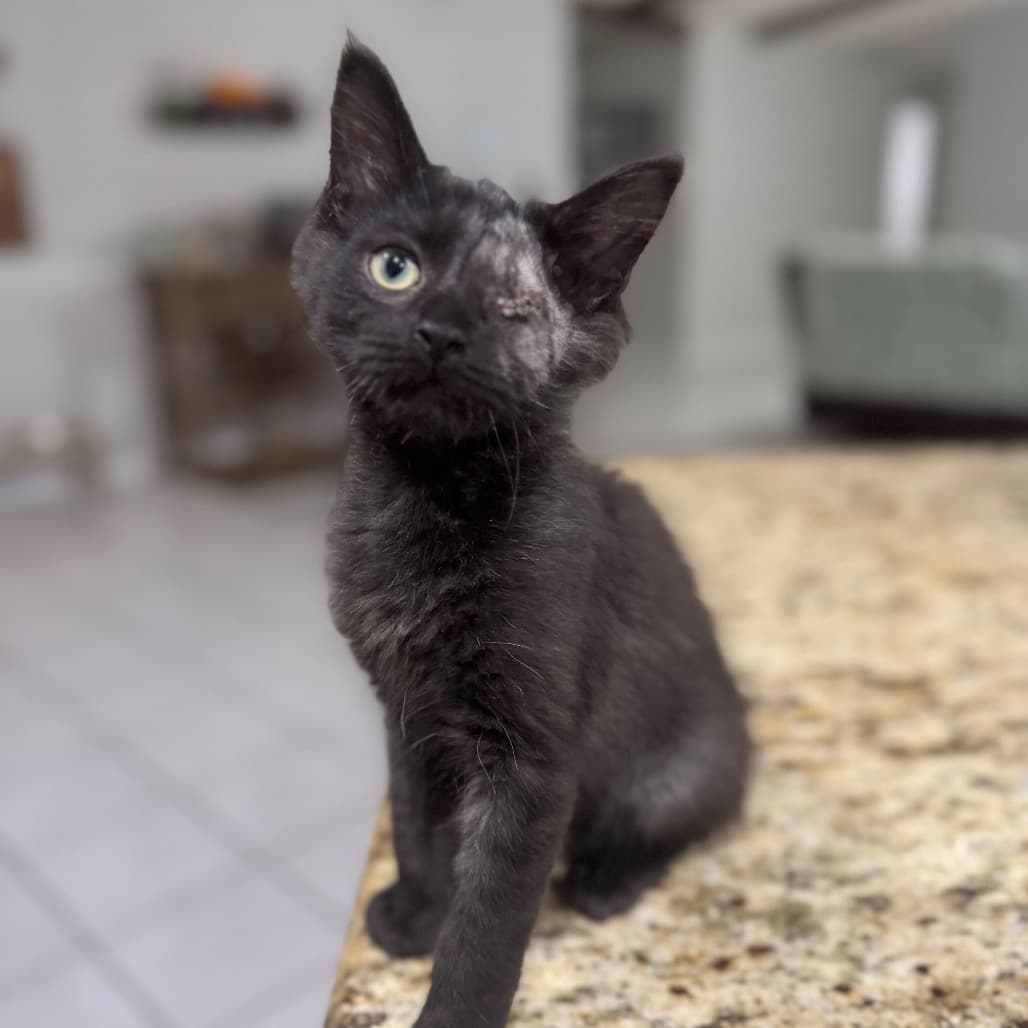
These two siblings are now safe and warm in a loving foster home after being rescued as tiny, abandoned kittens in Manatee County. When little Captain Jack was found, he was suffering from a dangerously infected eye that required immediate medical attention.

At just five weeks old, Captain Jack was beginning to wobble through his first steps and explore the world when he was discovered injured and cold in a field with his littermates—no mother in sight. He was scooped up and brought to safety just in time.

One of his eyes had been severely injured, and infection had already set in. Without urgent treatment, he would not have survived.

That care was waiting for him at Cat Depot, where he received immediate medical attention and a chance to heal. Today, Captain Jack is thriving alongside his sister Riley—safe, playful, and well on his way to a bright future.

Manatee County Animal Welfare, one of Cat Depot’s longtime partners, reached out for help, and we immediately welcomed this duo into our rescue program.

Thanks to funding from the Vinall Fund of the Manatee Community Foundation, Cat Depot was able to provide the lifesaving veterinary care both kittens so urgently needed. We are deeply grateful to have been awarded $15,000 to support routine and intake veterinary expenses for cats and kittens transferred to us from Manatee County.

Cat Depot serves as a lifeline for cats and kittens in urgent need of medical care—brought to us by local shelters, rescue groups, community cat caregivers, Good Samaritans, and pet owners seeking help for animals with complex medical needs.

This grant was put to work immediately, helping cover the extensive veterinary expenses for Captain Jack and Riley and giving them the second chance they deserve.


How to Build a DIY Macro Lens Adapter for Close-Up Photography Under $15


How to Build a DIY Macro Lens Adapter for Close-Up Photography Under


UPDATE! Motion To Federalize Orelha Case Denied As New Video & Photos Surface – World Animal News


Update: 2/27/26

The fight for justice in the Orelha case continues in Santa Catarina, as new developments emerge.

According to Samantha Grace, who has been reporting on the case, the majority of the municipal council voted against a motion supporting federalization, failing by just two votes. Federalization would transfer the case to Brazil’s federal authorities, rather than keeping it under local jurisdiction.

The vote has sparked worldwide outrage, especially after a councilwoman who publicly campaigned for federalization and launched a petition ultimately voted against the motion. Legal experts say federalization is still possible through other legal channels.

According to reports, several alleged suspects have returned to their classes, with images showing at least four individuals giving testimony while their families defend their innocence. Tensions remain high, with reports of confrontations and assaults at school. Advocates stress that violence undermines the pursuit of lawful accountability.

Newly surfaced video and photos are raising questions. Timestamps show one image at 5:58 a.m. and another at 6:12 a.m., depicting a group reportedly together that morning, raising doubts about their claimed activities. A recent video allegedly shows individuals vandalizing property, intensifying public scrutiny.

Supporters hope more evidence, including potential surveillance footage, will surface. The case continues to deeply impact the community, with many grieving, frustrated, and determined to demand accountability.

For now, the case remains under local jurisdiction in Santa Catarina. As developments continue, many are holding onto hope that the truth will fully emerge.

#JusticeForOrelha

______________________________________

Update: 2/16/26

In a significant development in the heartbreaking case of Orelha, the beloved community dog who was brutally attacked, tortured, and later died from his injuries in Praia Brava, Brazil, authorities in Florianópolis have ordered a new forensic examination.

With judicial authorization, Orelha’s body has been exhumed at the request of the Ministério Público de Santa Catarina. The new analysis is being conducted by the Polícia Científica de Santa Catarina to strengthen the evidence on record as the investigation moves forward.

This additional forensic review is expected to shed further light on the full extent and nature of the injuries Orelha suffered at the hands of his attackers. Prosecutors are working to ensure that every piece of evidence is carefully examined as the case moves forward through Brazil’s juvenile justice system.

Orelha’s tragic death has sparked outrage across Brazil and around the world, with advocates calling for justice and stronger legal enforcement in cases of extreme animal cruelty, especially involving juveniles.

World Animal News will continue to monitor this case closely and report on further developments as they unfold.

______________________________________

Update: 2/11/26

The case surrounding the brutal killing of Orelha, the beloved community dog from Praia Brava in Florianópolis, Brazil, has now moved into the judicial phase.

Orelha was found tortured and gravely injured on January 4, 2026, and later euthanized due to the severity of his injuries. His death has sparked national outrage and protests across Brazil, with thousands demanding accountability and stronger protections for animals.

The Civil Police of Santa Catarina have formally concluded their investigation. Authorities identified one adolescent as the principal assailant in the beating that led to Orelha’s death and have requested his internment under Brazil’s juvenile justice system. The police report references security footage, witness testimony, and forensic findings as part of the evidence.

The investigation also examined the attempted drowning of another beloved community dog, Caramelo, who thankfully survived.

In addition, three adults were formally indicted for coercion of a witness after investigators determined there were efforts to interfere with testimony during the case.

Although the police have closed the inquiry, the Public Ministry of Santa Catarina (MPSC) has identified gaps in the investigation and requested additional measures. According to reports, prosecutors are considering requesting that Orelha’s body be exhumed for further forensic analysis to resolve remaining questions in the case.

Because minors are involved, key details of the case remain confidential under Brazil’s Statute of the Child and Adolescent, the judicial process is ongoing.

Orelha’s death has ignited a nationwide call for justice and renewed pressure on lawmakers to strengthen enforcement of Brazil’s animal cruelty laws.

WAN will continue to closely monitor official court proceedings and report developments as they unfold.

______________________________________

Update 2/2/26

Public outrage continues to sweep across Brazil following the tragic killing of Orelha, a 10-year-old beloved community dog. On January 4, 2026, he was attacked and brutally tortured in Praia Brava, Florianópolis, leaving him gravely injured. His wounds were so severe that Orelha had to be euthanized the following day, January 5, at a veterinary clinic, cutting short the life of a dog cherished by his community and leaving a nation in shock and grief.

The case has sparked mass demonstrations across Brazil, including protests in Florianópolis this past weekend, with thousands of people taking to the streets demanding justice and accountability. Demonstrations have also occurred in other cities, as animal advocates and concerned citizens call for stronger enforcement of animal cruelty laws.

According to the Civil Police of Santa Catarina, four teenagers are under investigation in connection with Orelha’s death. Authorities say the case is being examined using witness statements and other evidence, as part of an ongoing investigation.

The investigation has since expanded beyond the teenagers allegedly involved. Police have confirmed that at least three adults are under investigation for obstruction of justice, including allegations of witness intimidation and attempts to interfere with the investigation. One of those under investigation is reportedly a police officer and the father of one of the suspects. Authorities have said this aspect of the case remains ongoing.

The story has also drawn widespread international attention online, with the hashtag #JustiçaPorOrelha (“Justice for Orelha”) trending as supporters demand accountability and stronger legal protections for animals in Brazil.

As the investigation continues, Orelha has become a symbol of the fight against animal cruelty in Brazil, uniting activists and communities across the country to use their voices for those who cannot speak for themselves.

______________________________________

1/29/26

Communities in Brazil are in shock after the horrifying death of Orelha, a 10-year-old “community dog” cherished by residents of Praia Brava. In early January 2026, he was found tortured and critically injured in a case that has shocked the nation and continues to draw international attention.

According to reports, Orelha’s injuries were so severe that veterinarians had no choice but to euthanize him to end his suffering. His tragic death has left the community heartbroken, mourning the loss of a dog who had been a beloved presence for over a decade.

Authorities have identified at least four to five teenagers as suspects. Reports suggest the attack may have been recorded. At least two of the suspects reportedly fled to Orlando, Florida, shortly after the incident, prompting calls for their return to Brazil to face justice.

The Civil Police of Santa Catarina (PCSC) are leading the investigation. Authorities are treating the case as severe animal cruelty, highlighting the extreme violence inflicted on Orelha.

Orelha’s death has sparked broader concern about how crimes committed by minors are handled in Brazil, raising questions about justice and fairness in such cases.

More than a dog, Orelha was a symbol of community spirit and love. His tragic death is a stark reminder of how vulnerable animals are and the urgent need for accountability. Across Brazil and beyond, people are calling for justice, not just for Orelha, but for all animals who cannot speak for themselves.


Homeowner Opens Door And Owl Moves In For Morning Nap | The Animal Rescue Site


Every now and then, animal rescue stories offer a perfect mix of surprise, humor, and quiet tenderness. This sleepy owl tale from Florida is one of those gentle, light-hearted moments. It begins with a very simple scene: a woman opens her back door early one morning and, without warning, an eastern screech owl sees an opening and takes full advantage. In a quiet neighborhood where many bird species are already at home outdoors, this little owl decided an indoor nap sounded even better. For anyone who follows cute owl stories or unexpected wildlife encounters, this one is hard to resist.

Homeowner Opens Door And Owl Moves In For Morning Nap | The Animal Rescue Site

Facebook/Wild Florida Rescue

The homeowner had never experienced anything like it. Birds might be common in the area, but they usually stay in the trees or on the lawn, not the living room. Yet this particular screech owl flew straight inside, selected a curtain rod as if it were a branch, and settled into a deep, uninterrupted sleep. There was no frantic flapping, no crash into a window. Just a calm little owl taking what looked like the most peaceful nap in the world.

Rescuer in uniform looks up at a brown owl flying inside a house near a white ceiling fan and shuttered window.

Facebook/Wild Florida Rescue

At first, the woman chose patience over panic. Instead of rushing at the owl or trying to push it out, she opened the back door again, along with as many windows as she could, to provide the clearest exit routes. Then she made a thoughtful decision. She stepped out and left the house entirely, hoping that once the owl woke up, he would notice the open air and quietly leave the way he came in.

Hours went by. When she returned, the eastern screech owl had not budged from his makeshift perch. He was still snoozing on the curtain rod, entirely unbothered by the change in his surroundings or the passing time. I found this detail striking, because it captures the core of the story: a wild animal feeling just comfortable enough in a stranger’s home to genuinely relax.

Realizing that her polite invitation to leave was not going to work, the homeowner reached out to Wild Florida Rescue, a local organization experienced with safely helping wildlife. When the rescuer arrived, they found exactly what the woman had described. The owl was still deeply asleep, perched inside, blissfully unaware that his nap spot was about to be revoked. It took the appearance of a rescue net to jolt him awake.

According to Heather Pepe-Dillon, chief operations officer and cofounder of Wild Florida Rescue, the story suddenly shifted from quiet nap to unexpected house tour. The moment the rescuer tried to use the net, the owl sprang into action. Startled and alert, he bolted from his cozy spot and flew into another room, then into a second one. What had started as a sleepy scene turned into a brief chase as the bird navigated the unfamiliar indoor space.

The screech owl’s quick lap through the home felt almost like a curious exploration. Instead of heading straight for an open window, he seemed to be figuring out this strange environment room by room. Eventually, he landed on a mirror in one of the bedrooms, giving the rescuer a clearer and safer opportunity to help. From that vantage point, they were able to maneuver the net and gently secure the owl without causing harm.

During the handling, the owl made his opinions crystal clear. Pepe-Dillon described how the bird remained very alert and delivered what she called unmistakable side-eye. That tiny detail is what makes this a particularly charming wildlife rescue story. The owl appeared unimpressed with the situation, as if silently insisting that he had just gotten comfortable and could not understand why his nap had been interrupted. The description gives the small raptor such personality without needing to exaggerate what happened.

Thankfully, the outcome was as positive as anyone could hope for. A careful assessment showed that the owl had not injured himself during his indoor adventure. There were no apparent wounds from collisions or stress, and no sign of illness indicated by his behavior. With that reassurance, the rescuer released him the same day, allowing him to return to his natural habitat where eastern screech owls belong, high in trees or hidden in cavities instead of perched above curtains and mirrors.

Stories like this one highlight the value of calm responses to wildlife surprises. The homeowner did not try to capture the owl herself, and she did not treat him as a threat. Instead, she provided escape options, gave him space, and then called in professionals from Wild Florida Rescue when it was clear he would not leave on his own. That thoughtful sequence probably helped keep the owl safe and reduced his stress, while protecting the home as well.

The timing of the encounter adds another layer of meaning. Nesting season is approaching in that part of Florida, which means owls and many other birds are looking for safe, sheltered places to rest and, eventually, to raise their young. After this experience, the homeowner reportedly promised to stay aware of any future opportunistic owls searching for cozy nesting spots. It is a small but meaningful commitment that recognizes how closely people and wildlife share space, especially in regions where habitats overlap with human neighborhoods.

This sleepy owl story also serves as a gentle reminder of how to respond when nature crosses the threshold into our homes. Keeping doors and windows closed when possible, checking for animals before fully securing an area, and contacting local rescue organizations when needed can make a big difference for both humans and wildlife. Eastern screech owls are small, often well camouflaged birds, and it is easy to imagine one slipping silently into a house if a door is propped open at just the right moment.

In the end, the image that lingers is simple and almost cinematic: a tiny owl perched high on a curtain rod, eyes closed, at peace in a place that was never meant to be his roost. Then, with a bit of side-eye and a short tour through a couple of rooms, he returns safely outdoors. It is a brief encounter, but one that carries a lot of quiet charm. For animal lovers and casual readers alike, it is the kind of light-hearted rescue tale that makes sharing space with wildlife feel a little more magical and a little more manageable at the same time.

Read more at


The 2026 Superblooms Are Here. Don't Be the Photographer Who Ruins Them.


The 2026 Superblooms Are Here. Don't Be the Photographer Who Ruins Them.

Death Valley National Park declared an above-average bloom year on February 22, and park officials are warming up to the word nobody wants to use prematurely: superbloom. The last time the park saw a display at this scale was 2016, a full decade ago. Unusually heavy rainfall in late 2025 (the Furnace Creek Visitor Center area recorded roughly 2.4 inches between November and early winter alone, far more than the park typically receives during those months) soaked deep into desert soils that had been waiting for exactly this kind of event.

[Read More]


ZEISS Expands Otus ML Line for Manual Focus Storytelling


ZEISS Expands Otus ML Line for Manual Focus Storytelling

German optics manufacturer ZEISS has expanded its Otus ML lineup with the launch of a new 35mm f1.4 manual focus prime for mirrorless cameras, positioning the lens as a precision tool for street, travel, and documentary photographers who prioritize deliberate control over focus and composition. 

The new Otus ML 1.4/35 joins the existing 50mm and 85mm lenses in the series, extending ZEISS’s manual focus offering to one of photography’s most widely used focal lengths. 

Available for Sony E, Canon RF, and Nikon Z mounts, the lens is designed for photographers who work intentionally, balancing context and subject within the frame while relying on optical performance rather than automation.

Zeiss

A 35mm Perspective Built For Storytelling

The 35mm focal length has long been favored for environmental storytelling. It is wide enough to capture context but tight enough to highlight key subjects. ZEISS positions the Otus ML 1.4/35 as a lens for composing stories instead of simply recording scenes. 

For photographers, this lens encourages intentional framing and rewards careful positioning and timing, particularly in street and documentary work where layers, geometry, and light define the final image. 

The fast f1.4 aperture adds flexibility in low light while allowing selective depth of field control to isolate subjects without losing a sense of place.

Optical Design And Image Characteristics

The Otus ML 1.4/35 employs an advanced aspherical Distagon design to reduce distortion and chromatic aberrations. 

ZEISS states the lens is engineered to deliver high performance even wide open at f1.4. Key characteristics include natural color rendition, high sharpness, and strong micro contrast, which together define the distinctive ZEISS Look. 

A ten-blade aperture creates smooth bokeh, helping subjects stand apart from backgrounds without harsh transitions. The ZEISS T* anti-reflective coating further reduces reflections, flare, and ghosting, especially in high contrast or backlit scenes, giving photographers greater control in challenging lighting conditions.

ZEISS Otus ML 35mm f1.4

Unlike many mirrorless lenses, the Otus ML 1.4/35 is manual focus only. ZEISS emphasizes this as a creative feature rather than a limitation. Manual focus encourages deliberate shooting, where precise focus placement becomes an active part of storytelling. 

The lens features a metal focus ring with a helicoid mechanism for millimeter-accurate adjustments. Its extended and smooth focus throw enables precise control, particularly at wide apertures where depth of field is shallow. An aperture de-click option allows smooth, silent exposure changes for video recording.

How It Fits Within The Otus ML Trio

With the addition of the 35mm, the Otus ML series now covers three key focal lengths. 

The 50mm lens serves as a versatile standard tool for portraits, street scenes, and cinematic compositions. The 85mm lens focuses on portraiture, isolating subjects with shallow depth of field and strong subject separation. 

The 35mm lens completes the trio as a storytelling lens, balancing context and subject within a single frame. 

Together, these lenses provide a consistent manual focus system for photographers who value optical quality and handling across different focal lengths.

ZEISS Otus ML 35mm f1.4

Price And Availability

ZEISS states the Otus ML 1.4/35 will be available from specialist retailers in Spring 2026. 

The recommended retail price is €2,399, or $2,299 in the United States. The lens sits firmly in the premium category, targeting photographers who prioritize optical character, mechanical precision, and a deliberate shooting workflow over convenience features like autofocus.

[Photos via Zeiss]