Dog Behavior Training: 7 Essential Commands Every Owner Should Master


Understanding the Foundation of Dog Behavior Training

Effective dog behavior training transcends mere obedience—it establishes a profound communicative bond between canine and human companions. This foundational relationship forms the cornerstone of harmonious coexistence, where mutual understanding replaces confusion and cooperation supplants chaos.

The neuroplasticity of canines allows them to absorb behavioral patterns throughout their lives, making training an ongoing journey rather than a finite destination. Professional ethologists emphasize that consistent reinforcement shapes not only immediate responses but also long-term behavioral matrices that define your pet’s character.

Training success depends on timing, consistency, and positive reinforcement rather than dominance-based methodologies that can damage the human-animal bond.

The Science Behind Canine Learning

Operant conditioning principles govern how dogs assimilate new behaviors. Positive reinforcement triggers dopamine release in canine brains, creating pleasurable associations with desired actions. This neurochemical response strengthens neural pathways, making commands more instinctive over time.

Understanding your dog’s learning capacity requires recognizing individual temperamental variations. Some breeds exhibit heightened trainability due to centuries of selective breeding for specific tasks, while others may require modified approaches tailored to their unique cognitive patterns.

The Seven Essential Commands for Behavioral Mastery

These fundamental directives form the behavioral scaffold upon which advanced training builds. Each command serves multiple purposes—ensuring safety, establishing boundaries, and fostering respectful interaction patterns that benefit both pet and owner.

1. Sit – The Gateway Command

The “sit” command represents the most elementary yet crucial behavioral foundation. This position naturally calms excitable dogs by redirecting their energy into a controlled posture. Begin training in distraction-free environments, holding treats slightly above your dog’s nose while moving your hand backward over their head.

As their head follows the treat, their hindquarters naturally lower. The moment their posterior touches the ground, immediately say “sit” and reward with praise and treats. Practice this sequence multiple times daily until the verbal cue alone elicits the desired response.

2. Stay – Building Impulse Control

Impulse regulation distinguishes well-trained dogs from their reactive counterparts. Teaching “stay” requires patience and graduated progression. Start with your dog in the sitting position, then take one small step backward while raising your palm in a “stop” gesture.

Return immediately and reward compliance. Gradually increase distance and duration, but never push beyond your dog’s current capability threshold. This command proves invaluable for safety situations and demonstrates your dog’s developing self-control mechanisms.

3. Come – The Lifesaving Recall

Reliable recall commands can prevent dangerous situations and provide freedom for off-leash activities. Begin recall training in secure, enclosed spaces where your dog cannot escape if distracted. Use an enthusiastic, high-pitched voice to make yourself irresistibly appealing.

Never call your dog to come for negative experiences—this creates negative associations that undermine future compliance. Instead, always reward successful recalls with high-value treats, enthusiastic praise, or favorite activities.

4. Down – Promoting Relaxation

The “down” position requires vulnerability from your dog, making it slightly more challenging than sitting. This command promotes calmness and submission to your guidance. From the sitting position, lower a treat toward the ground between your dog’s front paws.

As they follow the treat downward, their body should naturally follow. Some dogs require gentle guidance, but avoid forcing the position. Patient persistence yields better results than physical manipulation, which can create resistance or anxiety.

5. Heel – Structured Walking

Proper leash etiquette transforms chaotic walks into enjoyable experiences. “Heel” positioning places your dog at your left side with their shoulder aligned with your leg. This prevents pulling, reduces distractions, and maintains your leadership role during walks.

Begin training in familiar environments before progressing to areas with increased stimulation. Use treats to maintain your dog’s attention and reward correct positioning frequently during initial training phases.

6. Leave It – Impulse Prevention

This command prevents your dog from engaging with potentially dangerous or inappropriate items. Hold a treat in your closed fist, allowing your dog to smell but not access it. When they stop trying to get the treat and look at you instead, immediately say “leave it” and reward with a different treat.

Practice with various objects and scenarios to generalize this behavior. This command proves especially valuable for preventing consumption of harmful substances or inappropriate food items during walks.

7. Off – Boundary Establishment

Teaching “off” helps establish appropriate boundaries regarding furniture, people, and personal space. When your dog jumps on furniture or people, calmly say “off” while guiding them to the ground without pushing or shoving.

Reward compliance immediately with treats and praise. Consistency from all family members ensures your dog understands these boundaries apply universally, not just with certain individuals.

Training Techniques and Implementation Strategies

Successful dog behavior training requires systematic approaches tailored to individual learning styles and temperaments. Short, frequent sessions prove more effective than lengthy, exhausting marathons that may overwhelm your pet’s cognitive capacity.

Training Session Component Recommended Duration Frequency
Basic Command Practice 5-10 minutes 2-3 times daily
Socialization Exposure 15-20 minutes Daily
Advanced Skill Development 10-15 minutes Once daily

Positive Reinforcement Methods

Contemporary training methodologies emphasize reward-based approaches over punitive measures. High-value treats, enthusiastic praise, and favorite activities create positive associations with desired behaviors. Timing remains crucial—rewards must immediately follow correct responses to establish clear behavioral connections.

Vary your reinforcement schedule to maintain engagement. Intermittent rewards often prove more effective than constant treats, as unpredictability increases motivation and prevents dependency on continuous food rewards.

Common Training Challenges and Solutions

Distraction management represents one of the most significant obstacles in dog behavior training. Urban environments present countless stimuli that compete for your dog’s attention. Gradual exposure to increasing distraction levels builds confidence and reliability.

Consistency issues often arise when multiple family members employ different training approaches. Establish clear protocols and ensure everyone uses identical commands and reward systems to avoid confusing your pet.

Troubleshooting Training Difficulties

Every dog presents unique challenges that require adaptive training strategies. Recognizing individual learning patterns, motivational triggers, and potential anxiety sources enables more effective intervention approaches.

Addressing Stubborn or Resistant Behaviors

Some dogs exhibit apparent stubbornness that actually masks confusion, fear, or inadequate motivation. Reassess your training methods, reward values, and environmental factors before labeling behavior as defiant. Often, adjusting these variables resolves apparent resistance.

Consider your dog’s breed characteristics and individual personality traits. Herding breeds may respond differently than hunting breeds, requiring modified approaches that align with their natural behavioral predispositions.

When to Seek Professional Assistance

Persistent aggression, extreme anxiety, or complete training resistance may require professional intervention. Certified dog trainers and animal behaviorists possess specialized knowledge for addressing complex behavioral issues that exceed typical training challenges.

Early intervention prevents problematic behaviors from becoming deeply ingrained patterns that prove increasingly difficult to modify over time.

Maintaining Long-Term Training Success

Behavioral maintenance requires ongoing reinforcement and periodic refresher sessions. Dogs may experience skill degradation without regular practice, particularly with less frequently used commands.

  • Schedule weekly training reviews to assess command reliability
  • Incorporate commands into daily routines for natural reinforcement
  • Continue socialization throughout your dog’s lifetime
  • Adjust training intensity based on age and physical capabilities
  • Celebrate progress milestones to maintain motivation

Building on Basic Commands

Once these seven essential commands become reliable, you can introduce more advanced behaviors and tricks. This foundation enables complex training sequences and specialized activities like agility training, therapy work, or service dog preparation.

Remember that dog behavior training represents an investment in your pet’s well-being and your mutual relationship quality. Quality training equipment, nutritious rewards, and professional guidance when needed contribute to successful outcomes that benefit both pet and owner for years to come.


Godox AD300Pro II Review: Best 300W Portable Flash?


If you’re looking for a powerful yet portable studio flash, the Godox AD300Pro II might be exactly what you need, but most photographers barely scratch the surface of what it can actually do. This 300 watt battery-powered strobe sits perfectly between the AD200 and larger units like the AD400 or AD600, giving you serious power without the bulk. And that extra 100 watts over the AD200? It matters more than you think. In this review, I’ll walk you through the full setup, menu system, flash modes including Manual, TTL and Multi, how to activate High Speed Sync, and the one setting that can ruin your burst shooting if you miss it. If you’re not switching to Freeze mode when shooting continuous burst, you’re leaving performance on the table. We’ll also look at modelling light controls, Kelvin adjustments, wireless setup, and how to pair it with the Godox X3 Pro trigger. By the end, you’ll know exactly how to set up the AD300Pro II properly and decide if this is the best portable flash for your photography.

Don’t forget to check out the full written review.


ESA Scientists Photograph Annular Solar Eclipse from Antarctica


ESA Scientists Photograph Annular Solar Eclipse from Antarctica

On 17 February 2026, an annular solar eclipse occurred. The Moon, positioned near apogee in its elliptical orbit, aligned with the Sun and Earth along one of its nodal crossings. Because its apparent angular diameter was smaller than that of the Sun, it failed to produce totality. Instead, the antumbral shadow reached Earth’s surface and generated an annular solar eclipse. The resulting configuration left a narrow ring of photospheric light visible around the lunar disk.

The antumbral path fell almost entirely across Antarctica. Consequently, very few ground-based observers occupied the zone of annularity. Among them were scientists affiliated with the European Space Agency (ESA), stationed at Concordia Station on the Antarctic plateau. Their successful documentation of the eclipse transformed a geographically isolated event into a well-recorded scientific episode.

Orbital geometry and eclipse characteristics

An annular solar eclipse occurs when three conditions align. First, the Moon must pass directly between Earth and the Sun at the time of the new moon. Second, the alignment must be close enough to the lunar orbital node to produce a central eclipse. Third, the Moon must lie far enough from Earth that its apparent diameter remains smaller than the Sun’s.

The February 2026 event satisfied all three requirements. Because the Moon was near apogee, its angular size fell short of the solar disk. At maximum eclipse, the Moon covered roughly 96 percent of the Sun’s diameter. The remaining photosphere formed the familiar “ring of fire.”

ESA's Proba-2 satellite captured the "ring of fire" annular solar eclipse from space. Credit: ESA/Royal Observatory of Belgium
ESA’s Proba-2 satellite captured the “ring of fire” annular solar eclipse from space. Credit: ESA/Royal Observatory of Belgium

The peak annular phase lasted slightly more than two minutes at the point of greatest eclipse. While this duration falls within the normal range for annular events, the visual impact depends strongly on atmospheric conditions and solar altitude. In Antarctica, both factors added a unique observational character.

From first contact to final contact, the eclipse unfolded over a few hours, as expected for solar events of this type. Outside the narrow central corridor, observers saw only a partial eclipse with no complete ring formation.

A 'ring of fire' solar eclipse was seen from Concordia research station in Antarctica on 17 February 2026. Credit: ESA/IPEV/PNRA-A. Traverso
A ‘ring of fire’ solar eclipse was seen from Concordia research station in Antarctica on 17 February 2026. Credit: ESA/IPEV/PNRA-A. Traverso

A remote antumbral path

What truly distinguished the February 2026 eclipse was its ground track. The antumbral shadow swept across a long but narrow corridor over Antarctica. No major cities fell within the zone of annularity. In fact, only a handful of permanent research stations lie close to the central line.

The path measured a little over 4,000 kilometers in length and roughly 600 kilometers in width. Within this band, observers could see the full annular phase. Just outside it, the Sun appeared only partially covered. This sharp geographic cutoff illustrates the precision required in eclipse planning.

A few scientific outposts, including Concordia Station on the high plateau and Mirny Station near the coast, stood among the very few inhabited locations within reach of the event. Even there, success depended heavily on the weather. Most of the global population, including observers across the USA, remained completely outside the visibility zone.

Southern portions of Africa and South America experienced a partial eclipse. However, without annularity, the visual impact was far less dramatic. As a result, the February event became one of the least widely observed annular eclipses in recent years.

The antumbra is the lighter part of a shadow that forms at a certain distance from the object casting the shadow. Credit: timeanddate.com

Concordia station: The observing platform

Concordia Station stands at Dome C on the high Antarctic plateau, more than 3,000 meters above sea level. The site operates through European collaboration and supports a range of atmospheric, environmental, and space-related research programs. ESA has long maintained scientific involvement at Concordia, particularly in studies related to human spaceflight simulation and extreme-environment operations.

From an astronomical perspective, the station offers distinct advantages. The high elevation reduces atmospheric thickness. The air over the plateau remains extremely dry for much of the year. Furthermore, the stable stratification of the polar atmosphere often produces low turbulence when skies clear.

Concordia Station in Antarctica. Credit: IPEV/PNRA/ESA-J. Studer

February conditions at Concordia present moderate cloud risk but remain workable for carefully planned campaigns. Climatological averages indicate lower cloud fractions than many coastal Antarctic locations. While no site in Antarctica guarantees clear skies, the plateau offers comparatively favorable statistics.

Crucially, Concordia lay close enough to the path of annularity to permit direct observation of the ring phase. Given the scarcity of accessible land within the central track, this geographic position proved decisive.

Aurora Australis photographed over Concordia station in July 2025. Credit: ESA/IPEV/PNRA-N. Purivs/Lacrampe

Clear skies!


They Save a Cat From the Streets and Watch Him Shine, His Little Smile Warms Hearts Along the Way


They saved a cat from the streets and watched him shine. His little smile warmed hearts along the way.

They Save a Cat From the Streets and Watch Him Shine, His Little Smile Warms Hearts Along the Way HerbertKate @katesfosters

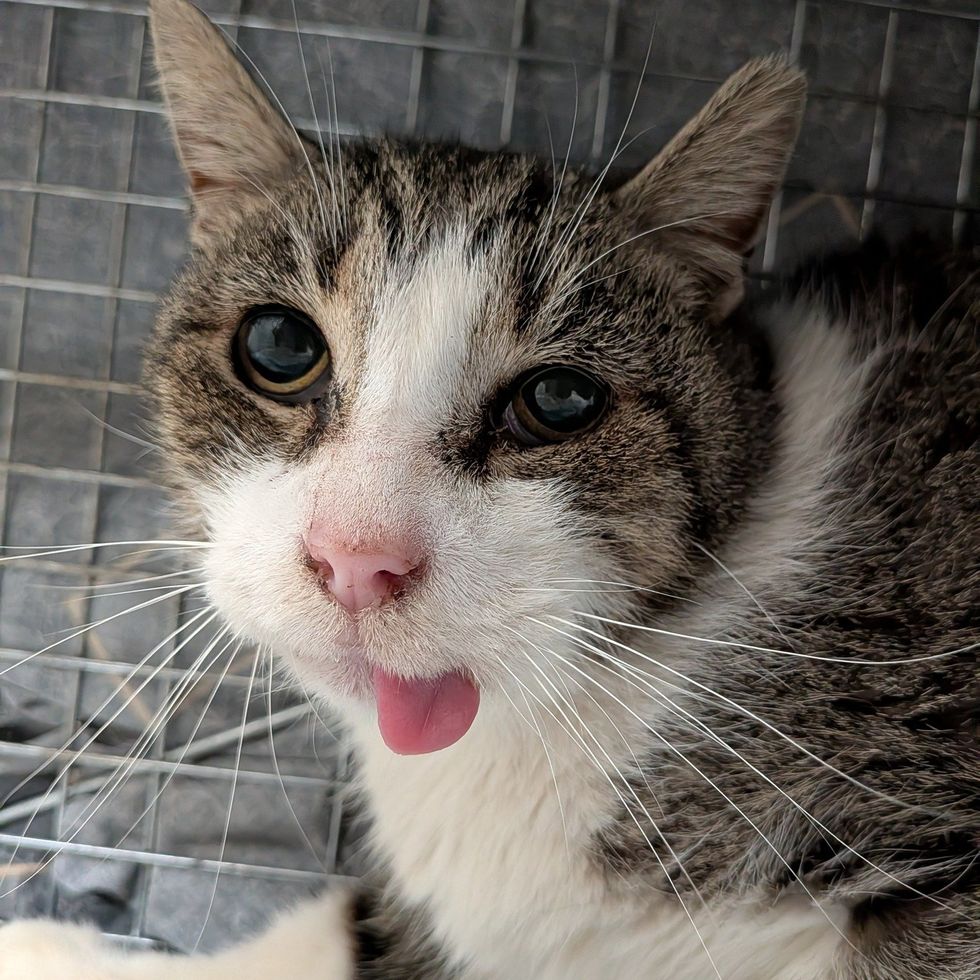
A dedicated cat colony caretaker reached out to the rescue community about a tabby who wasn’t doing well.

Kate, a foster volunteer with Tails High, saw the plea and didn’t hesitate to help. The cat, named Herbert, or Herbie, instantly reminded her of another foster cat, Rupert. Both shared the same sweet little smile and soulful eyes.

Serendipitously, Herbie was rescued on the two-year anniversary of Rupert’s gotcha day. “It feels like a sign,” Kate shared.

colony cat rescued Kate @katesfosters

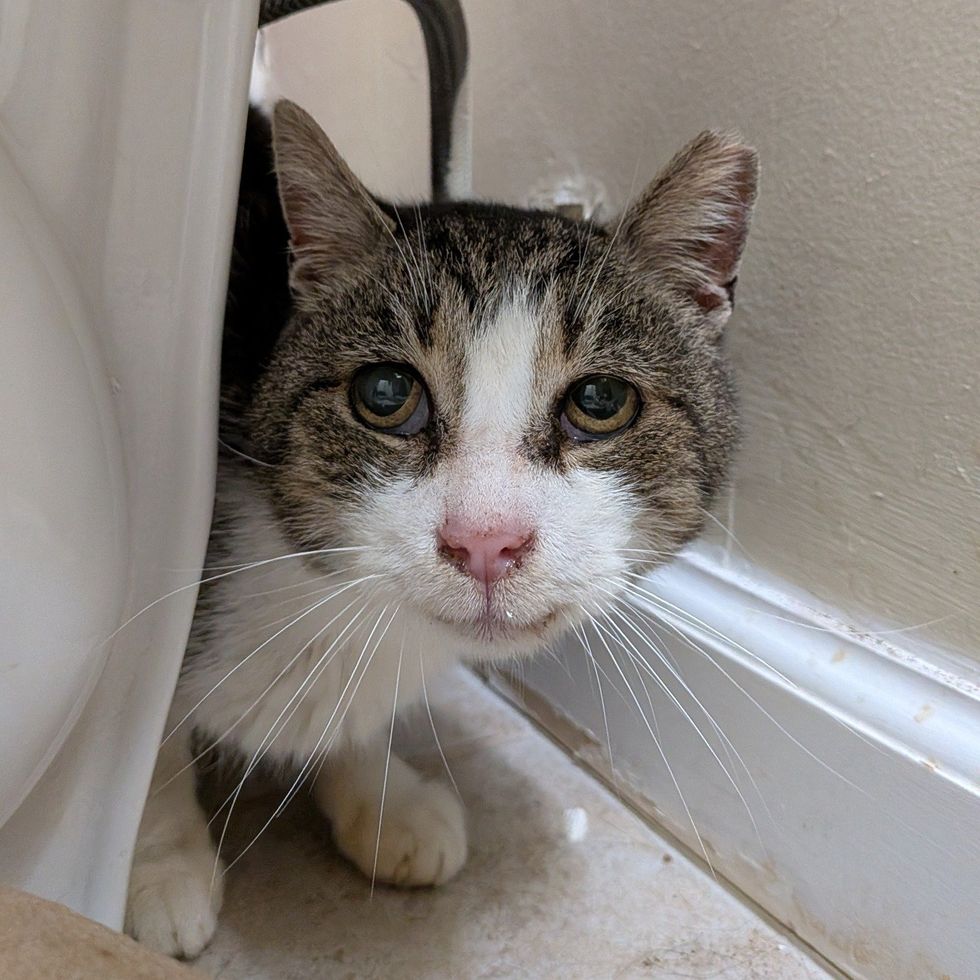
When Herbie arrived in foster care, he was understandably timid and overwhelmed by all the changes. He spent much of his time hiding, quietly observing as he tried to make sense of his new surroundings. Despite his fear, he’d look up at his foster mom with soft, gentle eyes.

The caretaker had been especially worried about his mouth. “It turns out he only has one tooth left.”

shy cat gentle smile Kate @katesfosters

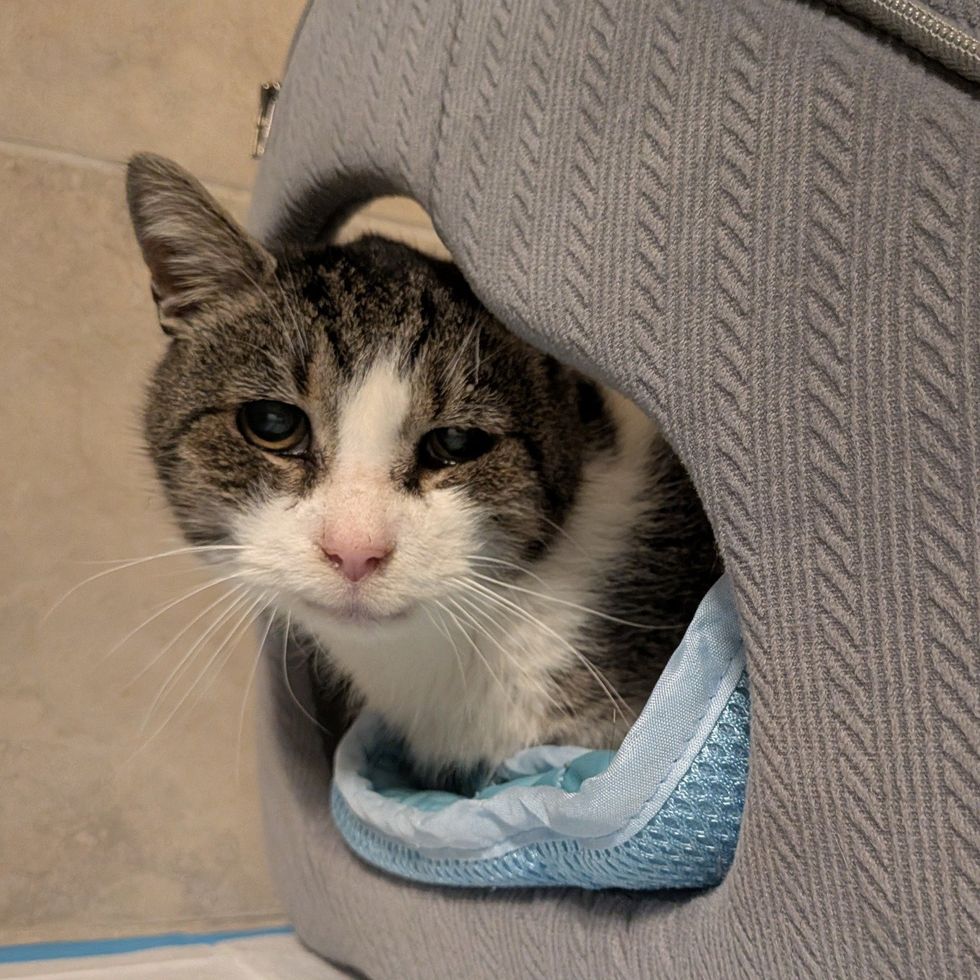
With a quiet environment and nourishing meals, Herbie began to relax. He poked his head out of his cubby bed, taking in all the new sights and smells. As curiosity replaced fear, he found the courage to explore and even seek out affection.

After a few days, Herbie finally came out of his shell.

shy cat cubby bed Kate @katesfosters

He stepped out of his hiding spot and walked straight up to Kate, gently nudging her for pets. For the first time in a long while, Herbie truly felt safe. His purr motor roared to life as he leaned into his foster mom, soaking up every bit of love.

Once he realized he no longer had to hide, he couldn’t get enough snuggles.

snuggly cat affectionate pets Kate @katesfosters

The first time Herbie cuddled in bed, he closed his eyes in pure contentment, wrapped in his foster mom’s embrace. “He and adoptable Nona (another foster cat) sniffed each other a bit, then he hopped up on the bed and slept next to me all night.”

He rubbed against his foster mom, his purrs so loud that the whole room seemed to hum.

happy cat cuddles human Kate @katesfosters

“Over the last several weeks, Herbie has seen our vet team, and we’ve learned more about him. How we wish these kitties could talk and tell us their stories,” Tails High shared. “It’s clear that Herbie once enjoyed life indoors and was loved, based on how quickly he has blossomed in his foster home.”

Estimated to be seven to eight years old, Herbie is now on a much healthier path. While he continues receiving care to get back to tip-top shape, he’s savoring every moment of his new life.

happy cat little smile Kate @katesfosters

Herbie has transformed into a total love bug who always wants to be close to his human. He’s the first thing Kate sees each morning, snuggled right on top of her. He keeps her company while she reads, offering affectionate head boops and serving as the most adorable page holder.

“He is such a sweetheart, and we’re so glad he’s indoors with Kate as we look at the snow outside.”

snuggly cat book buddy Kate @katesfosters

“With more veterinary care, a dental for his one remaining tooth, and time, we’re hopeful he’ll be ready to find the forever home he deserves. We know that blep of his will have adopters lining up around the block.”

Herbie decided to share a snuggle session with his roommate, Strega Nona, who had survived five winters outside before being rescued.

cat friends snuggle bed Herbert and Strega NonaKate @katesfosters

“Herbert is fortunate to have a foster mom who saw him and knew she needed to give him everything she possibly could. We couldn’t be luckier to have Kate and all the fosters who open their homes and hearts to these precious kitties.”

happy cat little smile Kate @katesfosters

Share this story with your friends. More on Herbert and Tails High on Instagram @tailshigh and Facebook. Thanks to Kate @katesfosters.

Related story: Street Cat Approaches People, Hoping for a Warm Place This Winter and the Good Life He’s Always Wanted


Third-Party Lenses: The Honest Guide to What You Gain, What You Lose, and What Nobody Tells You


Third-Party Lenses: The Honest Guide to What You Gain, What You Lose, and What Nobody Tells You

The narrative around third-party lenses has flipped completely in the last five years. What used to be a compromise, trading optical quality and autofocus reliability for a lower price, has become something closer to the default recommendation for most photographers. Sigma’s Art line routinely matches or exceeds first-party optical performance. Tamron is planning ten new lenses this year across four mounts. Viltrox just joined the L-Mount Alliance as a full partner.

[Read More]


All Ready


I like to be organised and I will admit that I also like writing lists. So this morning was spent packing my bag for hospital tomorrow where I will get my caudal steroid injections as a day case. I am wearing my favourite (and very worn out with holes) shirt.

Though, I also have an overnight bag ready just in case because you never know and I don’t want OH to have to drive all the way back for it.  Best case scenario, I will bring it home and unpack everything unused.

All Ready

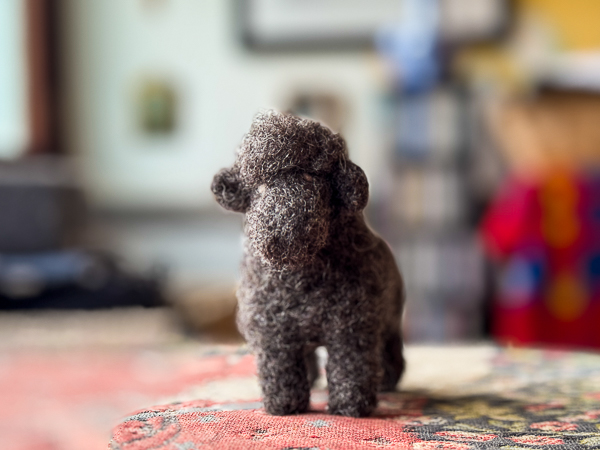
Sadly, there is no room in my bag(s) for this small doglet and I know she would be perfect for keeping my feet on the ground as I am totally over-thinking this whole hospital procedure to the point of feeling like being sick with fear.  The last time was horrendous while they scraped me off the theatre ceiling.  So things have to be bad if I’ve asked to have this procedure again.

I am telling myself I will just have to think of my happy place, man up and do my best, insisting on a huge amount of sedation (I want to be knocked out), as promised when I went to discuss this with the anaesthetist at my last appointment.

(and, yes, I am in a terrible dither)

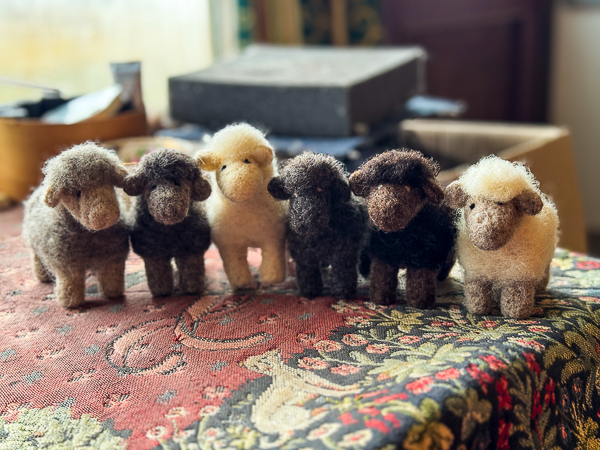
My sheep supplies are increasing now.  I made this little chap today.

And then I made this one too, staying a little longer in my shed as it may be a few days before I get back in again.

Floss sent me this photo from this morning.  I want to be like Monster. His ability to sleep absolutely anywhere is a talent and one I could do with.

Wish me luck. Think of me tomorrow.


Discover more from My Shetland

Subscribe to get the latest posts sent to your email.


William Optics Ultra-Cat 131 Anniversary Edition: The Largest Cat Launched


William Optics Ultra-Cat 131 Anniversary Edition: The Largest Cat Launched

William Optics has introduced the Ultra-Cat 131 30th Anniversary Limited Edition. It is a fast, wide-field Petzval astrograph designed for deep-sky imaging systems. The telescope combines a 131 mm aperture with a five-element optical configuration and a large corrected image circle.

The company developed this model to address the growing use of full-frame and medium-format CMOS cameras in amateur astrophotography. As sensor sizes increase, traditional triplet refractors often require spacing and additional corrective optics to achieve optimal performance. The Ultra-Cat 131 integrates field correction into its optical design, which reduces setup hassle. At the same time, the telescope commemorates the company’s 30th anniversary with this launch.

Optics and design

The Ultra-Cat 131 employs a five-element advanced Petzval configuration. This design differs from conventional doublet or triplet refractors because it incorporates rear optical elements that flatten the field internally. As a result, the telescope produces a naturally corrected image plane without requiring an external field flattener.

William Optics uses a combination of Super ED, ED, and lanthanum glass within the optical group. These materials help control chromatic aberration and maintain color correction across a wide spectral range. The Petzval layout also supports a relatively fast focal ratio while preserving edge performance.

The Ultra-Cat 131 comes with a five-element lens design

The telescope provides a focal length of 648 mm and operates at f/4.9. These values position it in the medium-wide imaging class. In practical terms, the system balances field coverage with sufficient image scale for structural detail in nebulae and galaxies.

Importantly, the integrated correction reduces one of the most common variables in refractor astrophotography. Users do not need to calculate back-focus spacing for a separate flattener. William Optics has steadily refined this Petzval philosophy through the Cat series. With the 131 mm model, the company extends the concept into a more demanding aperture and sensor class.

The telescope has an aperture of 131 mm and a focal length of 648 mm

Corrected image circle and sensor coverage

One of the defining specifications of the Ultra-Cat 131 is its 60 mm corrected image circle. This figure immediately signals the telescope’s intended audience. Many refractors in the 120–130 mm class provide smaller corrected fields that comfortably cover full-frame sensors but begin to struggle beyond that.

In contrast, the Ultra-Cat 131 is designed with large sensors in mind from the outset. The optical system fully supports APS-C and full-frame cameras. More notably, it also accommodates many medium-format CMOS sensors without severe edge degradation.

The 30th Anniversary logo is printed even on the handlebars

This capability becomes increasingly important as astrophotographers adopt larger detectors. Wide sensors quickly reveal residual field curvature, tilt, and off-axis aberrations. By delivering a broad corrected field, the Ultra-Cat 131 reduces the need for cropping and minimizes post-processing corrections.

From a system design perspective, the large image circle also provides flexibility. Users can rotate cameras, add filter wheels, or adjust framing without immediately pushing the optics to their limits. That margin often proves valuable during real imaging sessions.

The telescope will provide a corrected image circle of 60 mm

Mechanical system and focusing

Optical performance alone does not define an astrograph. Mechanical stability also plays a critical role, especially when heavy imaging trains are involved. William Optics addresses this requirement with its WIFD internal focusing system.

The WIFD focuser uses a rack-and-pinion mechanism designed to maintain rigidity under load. Because the focusing elements move internally, the external imaging train remains mechanically stable during focus adjustments. This approach reduces flexure and helps preserve sensor alignment.

The Ultra-Cat 131 telescope comes with the WIFD focuser

The focuser provides up to 20 mm of travel and supports electronic autofocus units. This compatibility reflects the telescope’s intended use in automated imaging environments. Many astrophotographers now rely on unattended overnight acquisition, and precise motorized focusing has become standard practice.

In addition, William Optics integrates the Sensor Tilt Xterminator into the imaging path. Sensor tilt remains one of the most persistent issues in large-sensor astrophotography. Even small misalignments can distort star shapes near the corners. The built-in tilt adjustment allows users to fine-tune alignment without adding third-party accessories.

The telescope also includes a front cover with an integrated Bahtinov mask. Although simple, this feature supports quick and repeatable focus verification in the field. It reflects a consistent emphasis on practical workflow considerations.

The Sensor Tilt Xterminator is integrated into the telescope

Position within the cat-series lineage

Earlier models, such as the RedCat 51, RedCat 71, and RedCat 91, focused primarily on portability and ultra-wide and wide-field imaging. Those instruments gained popularity because of their optical performance while remaining compact.

With the Ultra-Cat 131, William Optics extends the same design philosophy into a higher-performance regime. The company preserves the integrated Petzval concept but scales it for larger sensors and more demanding imaging systems.

The focal length of 648 mm occupies a productive middle ground. It provides a wider field than many long focal length triplets while still offering meaningful image scale. Many deep-sky imagers consider this range ideal for nebula and galaxy work.

The increased aperture also improves light-gathering capability compared with smaller Cat models. This allows shorter sub-exposures or deeper integrations under similar sky conditions. In this sense, the Ultra-Cat 131 complements the existing lineup rather than replacing it.

The Ultra-Cat 131 is the largest telescope in William Optics' cat-series
The Ultra-Cat 131 is the largest telescope in William Optics’ cat-series

Key specifications, price, and availability

Here are some of the key specifications of William Optics Ultra-Cat 131:

Lens Type 5-Element Advanced Petzval
Lens Elements Super ED Glass x2 ED Glass x1 Lanthanum Glass x1 X-Element x1
Focal Length 648 mm
Aperture 131 mm
Focal Ratio f/4.9
Image Circle 60 mm
Focuser WIFD R&P Focuser Compatible with EAF
Adapter Included Sensor Tilt Xterminator Rotator M68, M54, M48 Camera Adapters
Camera Format Medium Format, Full Frame, APS-C, M4/3
Dovetail Type Losmandy
Tube Length 650 mm – 785.5 mm
OTA Weight 9.95 kg / 21.94 lbs
William Optics Ulta-Cat 131 30th Anniversary Limited Edition telescope

The telescope is priced at $5,398 and is available for pre-order via the official website.

William Optics has announced that the Ultra-Cat 131 30th Anniversary Limited Edition will be produced in a limited, serialized batch of 30. Each unit carries commemorative detailing that marks the company’s anniversary milestone.

A commemorative certificate will accompany the telescope

Clear skies!


March 2026 Giveaway: Litter Zero Cat Litter Waste Disposal System – Floppycats™


Litter Zero: The New Korean Innovation in Cat Litter Waste Management

Ever since I started Floppycats, I’ve been on a mission to find products that make life with our cats cleaner and more enjoyable. While we love our cats, the daily chore of scooping is something we all wish were a bit more pleasant. Even with regular maintenance, the lingering scent of used litter in the home can persist.

March 2026 Giveaway: Litter Zero Cat Litter Waste Disposal System – Floppycats™

While waste pails like the Litter Genie have been the standard in the US for years, a new contender has arrived from South Korea: the Litter Zero cat litter waste disposal system.

After its debut at Superzoo, this “pet-tech” favorite is gaining traction in the USA. It isn’t a self-cleaning litter box; rather, it is a high-end solution designed to eliminate the smell of scooping by providing a hermetically sealed place to store waste until trash day.

YouTube video

What is Litter Zero?

The Litter Zero cat litter waste disposal system is a premium disposal unit manufactured by the Korean brand Petsnology. It is explicitly designed to sit in your litter box area, acting as a high-tech “vault” for waste.

Litter Zero Cat Litter Waste Disposal with a cat in a living room

You still perform your daily scooping as usual, but instead of walking a grocery bag to the outdoor bin or smelling the odors from a standard trash can, you drop the waste into the Litter Zero. In South Korea, where high-density apartment living is the norm, odor control is a science. This system was engineered to ensure that even in small spaces, you would never know a cat lived there.

Litter Zero Cat Litter Waste Disposal Box

Key Features for the Litter Box Area

What makes the Litter Zero stand out from the plastic pails we are used to?

Litter Zero Cat Litter Waste Disposal with refill cartridge

1. One-Touch Sealing Mechanism

Traditional systems often use a sliding trap door or a manual “plunger,” which can be messy. Litter Zero features a one-touch lever system. Once you drop the waste in, a simple press of the lever activates an internal mechanism that seals the bag and drops the waste into the lower compartment in a single, airtight motion.

2. 7-Layer Odor-Lock Technology

The secret to total odor elimination is the bag. Litter Zero uses a specialized 7-layer film refill. Unlike standard plastic bags that allow gas molecules to permeate over time, this multi-layered film is an impermeable barrier against ammonia and fecal odors.

Litter Zero Cat Litter Waste Disposal close-up of blue refill bag and trash bin entrance

3. Sophisticated Aesthetic

Let’s be honest: most litter pails look like diaper bins. Petsnology designed Litter Zero with a minimalist, modern silhouette and a matte finish. It’s designed to look like a high-end home accessory, blending seamlessly into your decor.

Dimensions: How It Fits Your Space

A primary concern for cat parents is whether a disposal system will fit in their designated litter box area, especially if you use extra-large or automatic litter boxes.

Feature English System (US) Metric System
Height Approx. 18.7 in Approx. 47.5 cm
Footprint Approx. 10.4 x 9.3 in Approx. 26.4 x 23.6 cm
Weight (Empty) Approx. 6.5 lbs Approx. 2.95 kg

The compact, square footprint makes it more stable than taller, rounder pails, which can be top-heavy. It is short enough to fit under most bathroom vanities but has a wide enough opening (approx. 6 inches) to accommodate large scoops used for Ragdoll-sized litter boxes.

Why “Pet-Tech” from Korea?

South Korea is currently a global leader in pet innovation. Because Korean cat owners prioritize cleanliness and efficiency in small spaces, Korean cat products are often more durable and better at odor control. The arrival of the Litter Zero cat litter waste disposal system brings that level of engineering to US cat parents who are tired of subpar disposal options.

Litter Zero Cat Litter Waste Disposal Litter Scoop and Holder close-up

Is It the Right Choice for You?

If you find yourself running to the outdoor trash every single time you scoop, the Litter Zero is a significant upgrade for your litter box area. It streamlines the “scoop-and-store” process, making the most tedious part of cat ownership nearly scentless and much more convenient.

Giveaway Details:

If you don’t win the giveaway, by entering this giveaway, you are automatically signed up to receive emails from Litter Zero and the FREE Floppycats weekly newsletter.

If you’d like to enter for a chance to win the Litter Zero, please enter via the ViralSweep widget below or visit this link:

Where to Buy Litter Zero

Ready to upgrade your litter routine? You can find the Litter Zero system at the links below:

PRO TIP: Use the coupon code FLOPPYCATS10 at the official store to save 10% on your purchase!

This giveaway ends on March 31, 2026, at 11:59 CT. A random winner* will be chosen in a drawing on April 1, 2026.

Enter Our Other Giveaways

*No purchase is necessary to enter. Void where prohibited or restricted by law. Winners will be alerted via e-mail. The winner(s) of the giveaway must give Floppycats a physical address (to which the prize will be mailed) within 72 hours.  If a reply email containing the physical address where the prize should be mailed is not received, an alternate winner(s) will be randomly chosen again.