
Will Vaulks: ‘Manosphere on Netflix was awful. True strength is being vulnerable’
Will Vaulks was close to both of his grandfathers.
“Granddad Tom, my dad’s dad, he took his own life first. He was very much like Jack the lad. He had a red Kawasaki 500 motorbike. He used to have a phrase when he looked after us, he’d say ‘when the cat’s away, the mice will play’ which was essentially when Mum and Dad weren’t there, there were no rules. He was brilliant fun.
“Grandad Hywel was a completely different man. He was really gentle, kind, loving, in a typical Grandma-Grandad house with baked apple crumble – I can still smell the house now. He’d sit you on his knee and read you a story. He taught me to play badminton and frisbee. He was just a lovely, kind, gentle man.”
Vaulks was 13 when Grandad Tom took his own life, and 14 when Grandad Hywel died in the same way less than 18 months later.
“It was hard,” says the Oxford United midfielder, speaking to The Independent on his way to training on the leafy fringes of the city. “One was shocking enough and then to have another one… yeah. It’s like a bomb goes off in your family, it’s the only way I can explain it.”
Vaulks grew up on the Wirral and was part of Tranmere Rovers’ academy as a teenager. His mum suffered severe anxiety attacks after her father’s death, and Vaulks remembers arriving home from school one day to find she had called an ambulance for herself. His grandma, Hywel’s wife, had a mental breakdown and was sectioned, and she spent the rest of her life in a home.
“You are left with questions for the rest of your life. It’s a really, really complex grief, and it goes on for a long time. We just wish that instead of making that decision, they’d have put their hand up and said, ‘Listen, I’m struggling here, I don’t know what’s going on, can we get some help?’”
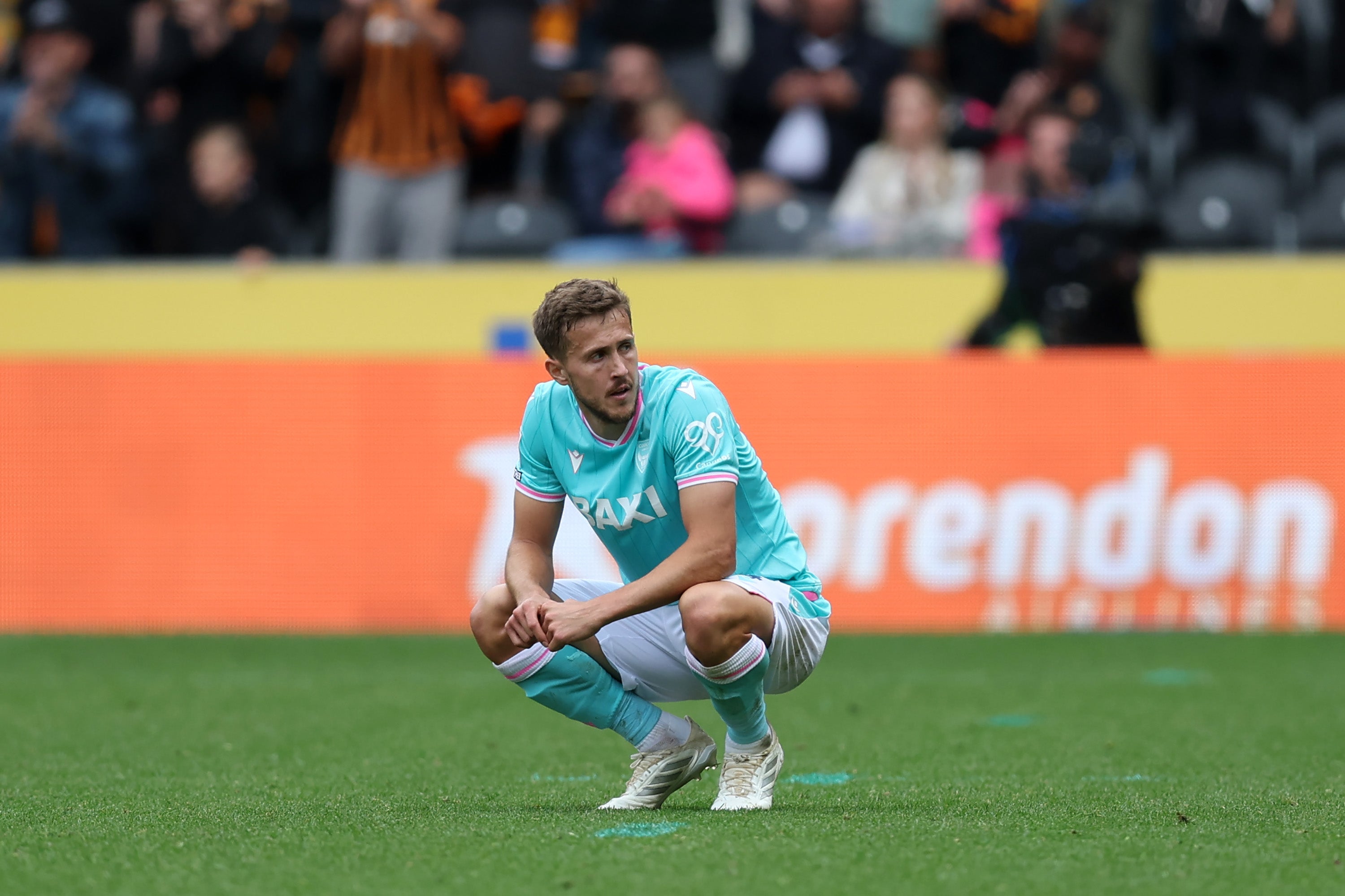
Vaulks was angry with the world and football offered him an escape. Training three days a week and running in the evenings – “I was obsessed with being fit” – offered him what he now recognises as mindfulness.
The pain that his family went through inspired Vaulks to use his platform as footballer. He is an ambassador for the suicide-prevention charity Baton of Hope, and visits schools to talk about suicide awareness with sixth formers. His work fronting Oxford United’s ‘Can We Talk?’ campaign earned him an award from FifPro, the global footballers’ association, and a prize of €10,000 to support his cause.
A few hours after our conversation on Tuesday, Vaulks put on a suicide-awareness workshop for 150 people at Oxford’s Kassam Stadium, and he will use the prize money to fund suicide prevention training for everyone in the room. “I wanted that money to go back into the Oxfordshire community … and to have something tangible that we can look back on and be proud of.”
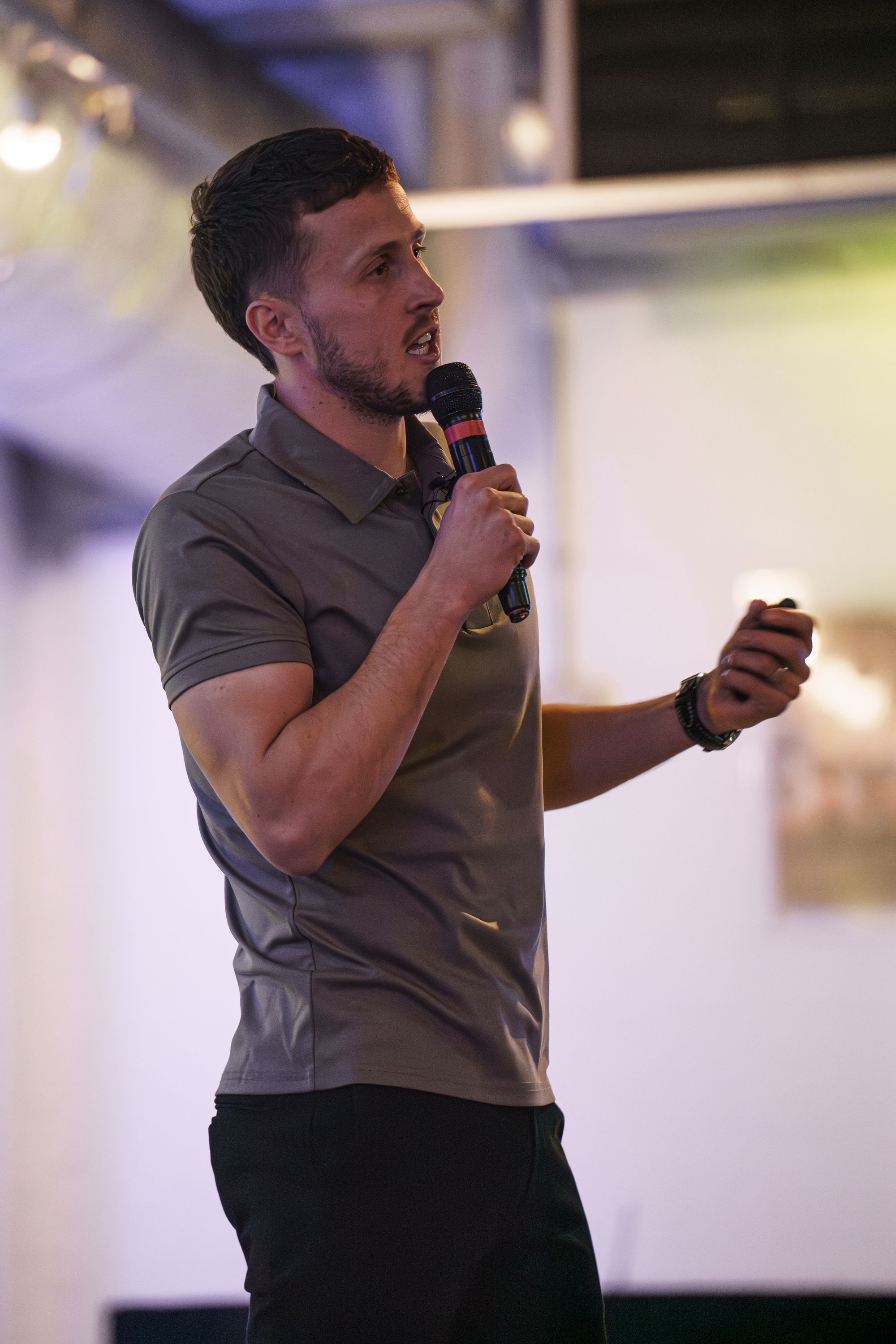
He is calling for every professional football club to adopt the Baton of Hope’s workplace pledge, a commitment to reducing stigma around suicide and educating staff on psychological safety. But Vaulks’ ultimate goal is more direct. “It’s to prevent families going through what my family has been through. It sounds a bit corny, but it’s so true: if it stops one person taking their own life, and one family does not have to go through the anguish and the grief that mine’s been through, then every bit of this work is worth it.”
Suicide is the leading cause of death of British men under 45 and women under 35. Wherever Vaulks goes now, he meets people who have been affected. “If I was hearing about this many car crashes, we’d be like, ‘F****** hell, we’ve got to do something about the roads’. So we have to be doing something about it. Everywhere I go, somebody’s lost somebody.”
Suicide can be confronted, he says. It is preventable. “We talk about the burden of suicide being 134 people, roughly. I feel really passionately that people need to understand that when they’re struggling, the burden that you will put on your family or friends by asking for help or by reaching out is far, far, far less than the burden when you take your own life.”
Vaulks wants people simply to talk, to ask each other questions and be courageous enough to hold deeper conversations when it might not feel natural or comfortable. “Be nice, ask twice,” he says. “It’s a bit corny but it’s basically, instead of just going, ‘You alright, yeah? Good,’ and then moving on, it’s like, “No, really, how are you, what’s going on?’”
The world has changed from the era Vaulks’ grandparents grew up in, and a healthy discourse around mental wellbeing is constantly open and accessible. But at the same time there is a growing group of disenfranchised young men who are drawn to angry online echo chambers, the sort of spaces where ideas of masculinity seem prehistoric.
“I watched that awful documentary last night, Manosphere [by Louis Theroux] on Netflix, which is basically the polar opposite of what we want right now,” Vaulks says. “Showing true strength is being vulnerable. Being vulnerable is really hard. I don’t particularly want to stand on stage tonight in front of 150 people and tell my personal story, and how I lost my grandfathers, but I know that by doing that and showing vulnerability, there’ll be people in the room that think, ‘You know what, I’m going to show that I’m vulnerable and I’m struggling’.
“I want my kids to feel that they can speak up and ask for help, because we really feel like if my granddads had done that then they’d have had a longer life and seen some really happy times that our family have had. But they didn’t feel safe enough, or it wasn’t talked about enough, for them to be vulnerable and say, ‘I’m struggling’.”
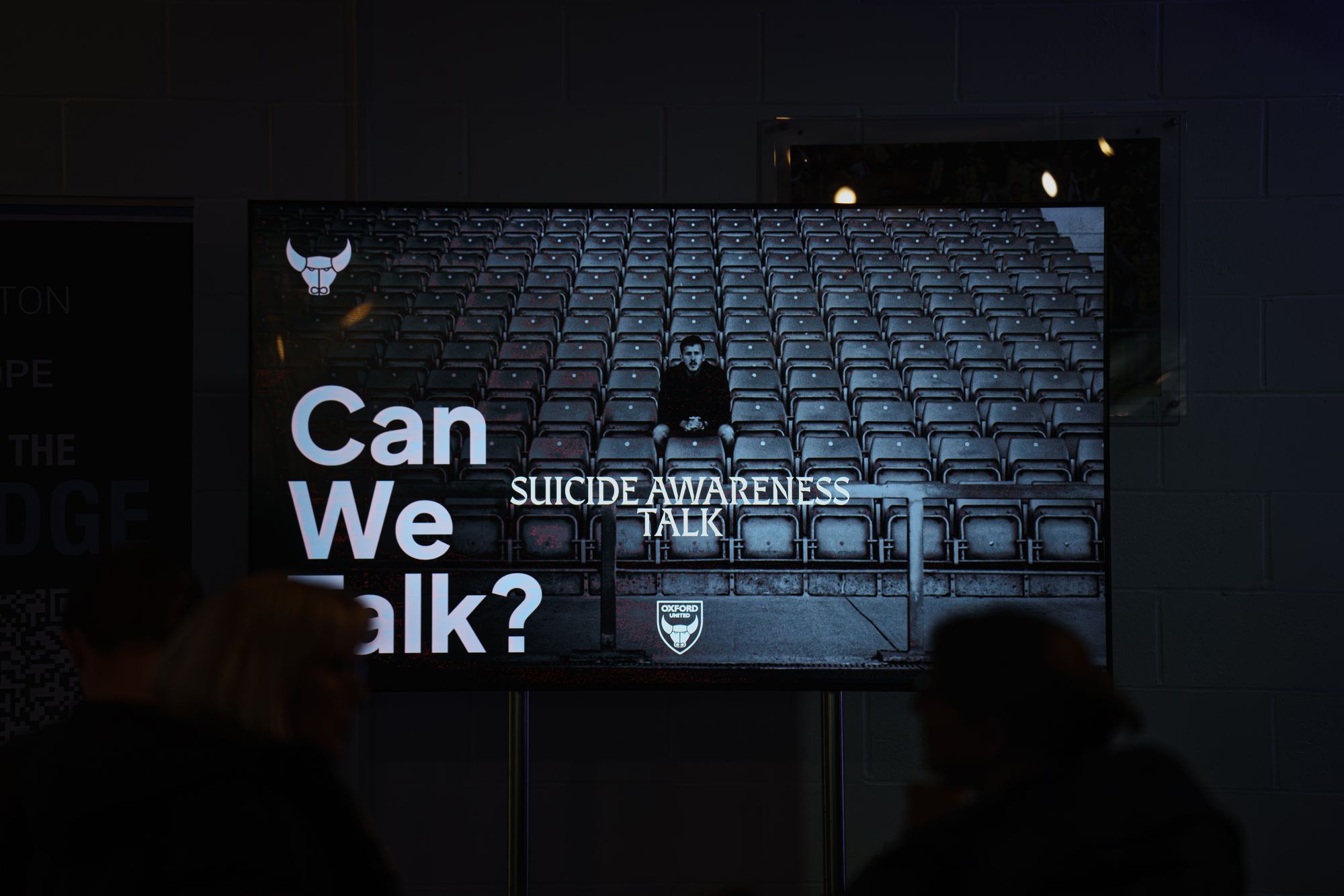
Oxford was, tragically, a well-aligned club for Vaulks’ campaign goals. One of the club’s greatest players, Joey Beauchamp, took his own life in 2023, around the same time that a young Oxford fan and non-league footballer, Jack Badger, also died by suicide. It is a poignant cause at Oxford and, like Vaulks, the club have won awards for their work alongside Baton of Hope and the Joey Beauchamp Foundation.
“I’m really grateful to the club for supporting me,” Vaulks says. “I want more football clubs to support me, because at the end of the day, it will save lives. We have proof of that.”
There has been an unintended consequence of Vaulks’ campaigning. He has felt unburdened. The anger he held in his childhood has dissipated. He has been able to speak to friends more frankly and open up with his close-knit family. This, he hopes, will be part of the legacy of Grandad Tom and Grandad Hywel.
“We now and then talk about it at Christmas and things. You have to come to a point as a family where you think, that was a really hard time and now we remember them with fondness. Now it’s about the future. Now it’s about how I can use my life to help others, because then my grandads potentially ended up saving lives.”
If you are experiencing feelings of distress, or are struggling to cope, you can speak to the Samaritans, in confidence, on 116 123 (UK and ROI), email jo@samaritans.org, or visit the Samaritans website to find details of your nearest branchIf you are based in the USA, and you or someone you know needs mental health assistance right now, call or text 988, or visit 988lifeline.org to access online chat from the 988 Suicide and Crisis Lifeline. This is a free, confidential crisis hotline that is available to everyone 24 hours a day, seven days a week. If you are in another country, you can go to www.befrienders.org to find a helpline near you.