
When players become artists: the rise of in-game photography
Hironobu Sakaguci, one of the creators of the long-running Final Fantasy game series, once observed: “The game itself is fun to play, but its strongest characteristic is the visual entertainment the game provides.”
This aesthetic appeal is a big part of the enjoyment players take from their favourite games. Far from the simple graphics of early games, players can now explore photorealistic forests in Kingdom Come Deliverance II (2025), cross neon-drenched cities in Cyberpunk 2077 (2020), or explore alien planets in No Man’s Sky (2016) – all while taking pictures of them.
Players have long documented their adventures in virtual worlds. The practice of taking “screenshots” – still images captured from the screen during gameplay, like a single frame from a film – predates today’s culture of live streaming. At the turn of the millennium, players were already sharing screenshots on forums and early social media platforms. Some wanted to show how they had overcome a difficult section of the game, while others highlighted interesting locations, or captured funny moments.
Game developers noticed, and over time “photo modes” became a standard feature in many games. These allow players to pause the action and take pictures of the game as if they were using a virtual camera.
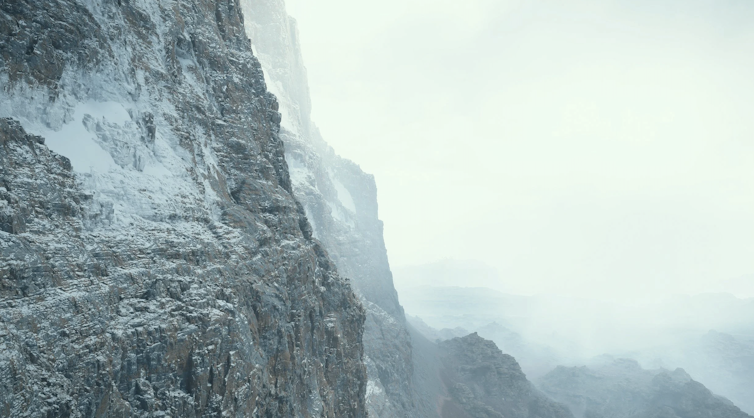
Courtesy of Pascal Greco
This feature is implemented in different ways. In Grand Theft Auto V (2013), the player character can equip the camera like any other in-game item. They can frame the shots and tune the settings as in a real camera, and export the images from within the game world. Western game Red Dead Redemption 2 (2018) even equips the player with a period-accurate 1898 Kodak camera.
Other games still provide a photo mode without tying it to the in-game world. A camera appearing in the inventory of the 13th century samurai of Ghost of Tsushima (2020) would be out of place. But with the powerful photo mode, the player can still modify numerous image settings, and also the game world itself, such as time of day, weather and the character’s facial expressions, to get the “perfect shot”.
In-game photography as art
Video games are a visual medium, and promotional screenshots remain central to how they are advertised. But several artists have now turned in‑game photography into a serious artistic practice, with radically different approaches.
British in-game photographer Duncan Harris is a pioneer. Already active in the early 2000s, his photographic works are collected in the blog Deadendthrills. Harris also produces promotional imagery for major games-publishers. His images push game-engines to their limits, often using custom tools to showcase impressive graphics of detailed characters and sweeping vistas.
Other artists have taken more critical or experimental approaches. Dutch artist Robert Overweg takes pictures from impossible angles: inside a wall, underground or inside buildings that are not meant to be accessed by players. His series Flying and Floating, showing visual glitches and the impossible structures of the 1950s Chicago-like city of the game Mafia 2 (2010), was exhibited at the Centre Pompidou in Paris in 2015.
Los Angeles-based artist Kent Sheely adopts a documentary approach and subverts the gameplay accordingly. For his DoD series, inspired by war photographer Robert Capa, he modified the second world war online shooter Day of Defeat (2003). His character carried no weapons, no user interface cluttered the screen, and the “shoot” button was converted into a screenshotting key, as if he were an actual war photographer on the field.
Sheely’s works have been exhibited at venues including the Fotomuseum Winterhur in Switzerland. Ubisoft commissioned his abstract shots, dubbed “Phantom Arrays”, for the Photomode: Out There in Games exhibition in 2022, which showcased what artists can do with the photo mode of their games.
Swiss artist Pascal Greco occupies yet another position between documentary and the avant-garde. A self-taught filmmaker, cinematographer and photographer, Greco has staged live performances in which he plays Death Stranding (2019) while capturing in-game photographs in front of an audience. His photobook Photography, Video Game, Landscape (2025) presents pristine virtual natural landscapes, devoid of human elements, interjected by glitches – fragmented vistas of these landscapes, between the sublime and the abstract.
Questions of authorship
In 2024, the first academic conference dedicated to in-game photography was held in Milan. Among the key topics was authorship. Who owns the rights to in-game photographs: the photographer who takes the picture, or the developers who created the game?
The work of Italian artist Leonardo Magrelli is emblematic in this regard. His photobook West of Here (2021) collects screenshots taken by other players in Grand Theft Auto V. Magrelli edited them into a black-and-white photobook, echoing the traditions of American documentary photography and appropriation work such as Sherrie Levine’s After Walker Evans (1981).
The project provoked strong reactions from online users, who argued that Magrelli had no right to use images he had not personally captured. Subsequent legal enquiries suggested that, in principle, only Rockstar Games – the developer – could pursue legal action regarding the use of its intellectual property. At the time of writing, no such action has been taken.
In-game photography is an innovative artistic medium that sits at the intersection of play, technology and artistic expression. It is not merely an aesthetic exercise, but rather an experimental terrain where the barrier between spectator and creator is removed, and players become artists, chroniclers or archivists of ever-changing virtual universes.