This December, we’re championing kindness in all its forms through HuffPost UK’s Kindness Advent Calendar. Check back daily (until 24 December) for new stories focusing on how individuals and communities are going above and beyond to help others in their times of need.
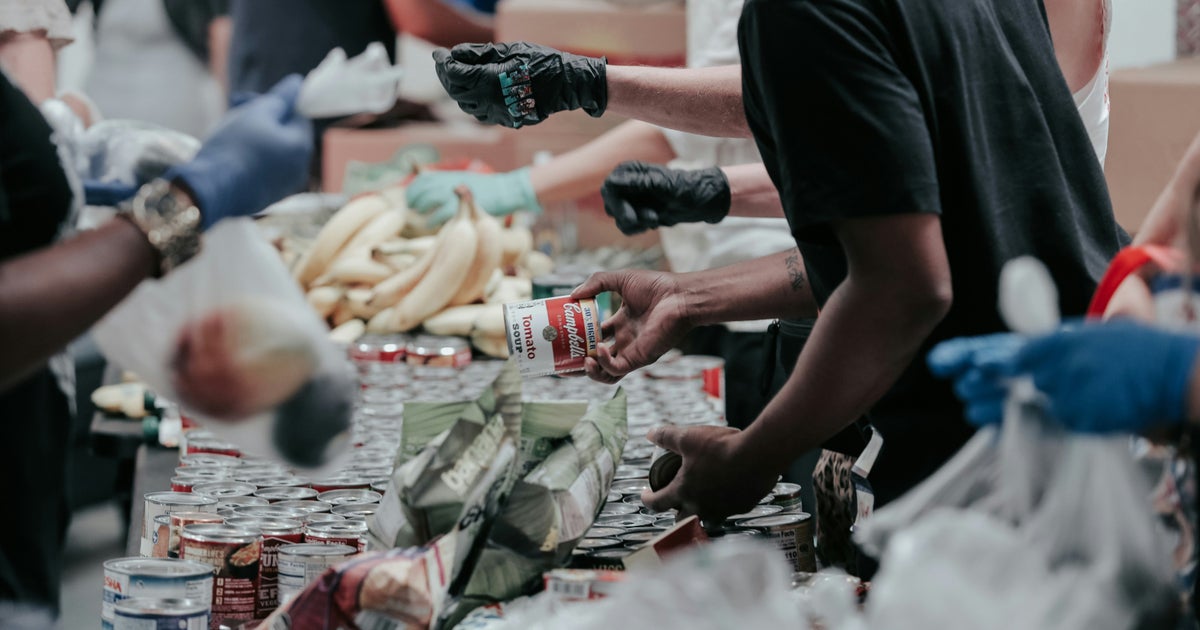
As Christmas draws ever closer, in food banks and community centres across the country, demand for essentials is growing.
Lynda Battarbee, director of operations at 1,400-strong food bank organisation Trussell, told HuffPost UK: “Winter is often the busiest time for food banks as temperatures start to drop and energy bills begin to rise, and many food banks are telling us they are already at breaking point.”
But what is the best way to support your local food bank this year?
We spoke to Battarbee and Rachel Ledwith, Head of Community Engagement at The Felix Project (which, though not a direct food bank, supplies high-quality surplus food for “upwards of 1,200 different community organisations and schools across London”), about what they actually need at this busy time.
Though both shared some ways of helping I hadn’t expected, they agreed on one core principle: listening to the needs of the community you’re helping, rather than deciding what a food bank’s needs look like ahead of donating, is key.
What does my local food bank really need?
Perhaps a more outdated idea of food banks goes like this: you donate old cans to an organisation, they deliver them to those in need, and everyone’s happy.
Though the spirit of giving is welcome, however, Ledwith told us this isn’t always the most efficient way to help.
She shared: “I don’t think there is any organisation that would turn down money, because money can be used in so many different ways… [but] there definitely are organisations that would say, ‘Please don’t give us any more baked beans’, or ‘Please don’t give us any more warm winter coats’, because their store cupboards have just been inundated.
“And, you know, in some ways, you think, ‘Oh, that’s a good problem to have’, but when you’re the organisation drowning in all these donations, it’s not helpful because you haven’t got anywhere to store them.”
Battarbee agreed, sharing that there are specific apps which can make working out what food banks really need easier.
“Bank the Food app shows what food banks are most in need of and alerts you when you’re in supermarkets,” she told us.
Ledwith added: “There are a lot of supermarkets that run permanent collection points (PCPs), where it will say ‘donate here for the local food bank’ and they will generally specify what items they’re short of during that period.
“So it might be they don’t need baked beans, but they really do need tissues. They haven’t got any tea. You know, coffee is so expensive.”
Plus, she continued, you can simply look up or phone your local food bank or community organisation (The Felix Project redistributes a lot of food through community spaces, like schools, rather than direct food banks) and ask what they need.
After all, the need for non-food items, like period products, pet care items, and cold weather supplies, is high at this time of year, she said; parents are seeking gifts for their children in many areas, too.
The point, both experts seemed to agree, is that when it comes to working out what food banks really need, listening is much more effective than guessing.
Are there any unexpected ways to help food banks?
Battarbee told us “you can send someone an e-card and donate what you would have spent on the card to Trussell” – they’ve also paired with companies like Rowse honey, Cards For Good Causes, and Cafe Nero’s charity line.
And Ledwith pointed out that you don’t have to spend a penny to help organisations in need, either.
“People can help us in our depots, with picking and sorting food. People can help us by being drivers and driving our vans,” she said (the Felix Project has centres in Greenfield, Enfield, Deptford, Poplar, and Acton).
They also run a Green Scheme in the capital. “If people work in central London and want to do something on their way home, we can [arrange] where you cycle, drive or walk to an organisation, pick up some food… and then drop it off at a community organisation that we support – directly on your way home.”
She added that roughly 80% of the places they supply offer other community support services, too, which means even if you’re not interested in directly supporting the food supply side, you may still be able to offer something.
“You could be a meet-and-greet person. You could get trained up to offer advice. It could be that it’s… an elderly Lunch Club, and they’re looking for people who can provide a bit of entertainment,” she explained.
“So maybe you can play the piano, maybe you can juggle, maybe you can knit or crochet, and you can offer people the opportunity to learn something.
“It might be that it is a traditional food bank, but they have a huge number of families that come in, and the mums need someone to look after the children while they’re going through and sorting the food, so they run a creche there. You could get involved with looking after the kids.”
Ledwith stated that the depth of need is so great that “there is something for everyone to be able to get involved that… goes way beyond that food provision piece”.
You can donate to both The Felix Project and Trussell online. Got a kindness story to share? Please email uklife@huffpost.com with more information.