
Mother of Nottingham killer ‘asked for son to be admitted to hospital after outburst’
Valdo Calocane’s mother pleaded for her son to be admitted to hospital after a violent outburst three years before he killed three people in a mass stabbing in Nottingham, a public inquiry has heard.
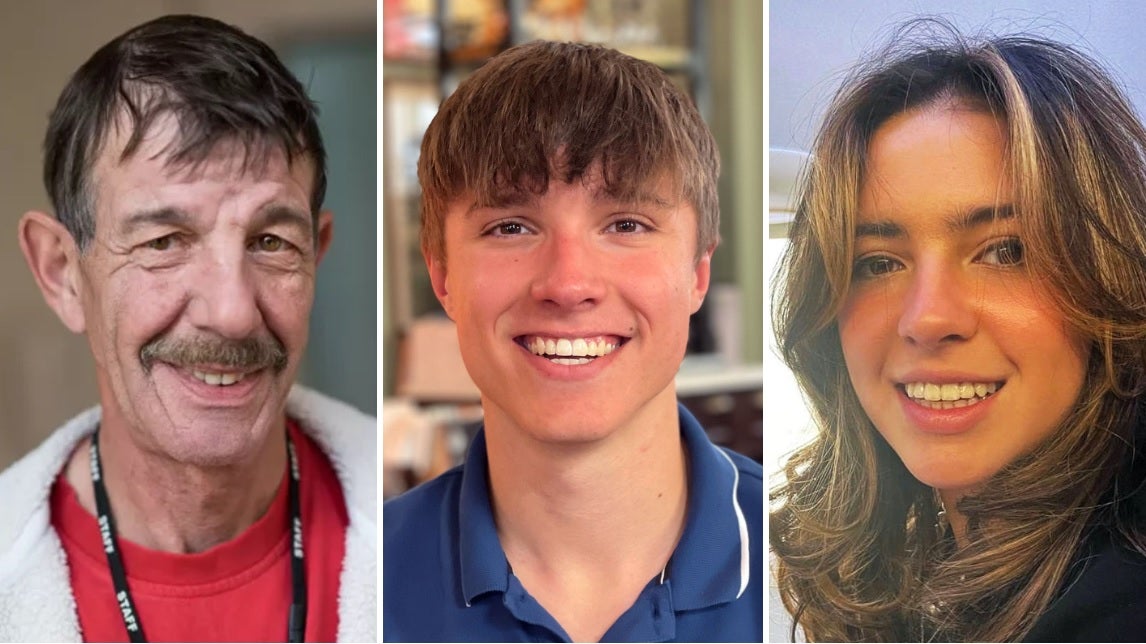
Calocane, who had been diagnosed with paranoid schizophrenia, killed University of Nottingham students Barnaby Webber and Grace O’Malley-Kumar, both 19, and caretaker Ian Coates, 65, and attempted to kill three more people in Nottingham in June 2023.
A series of reports into the incident by the NHS so far have highlighted failings in Nottinghamshire Healthcare Foundation Trust’s management of Calocane, including failures to appropriately assess the risk he posed to himself and others. A public inquiry will now scrutinise prosecutors, police and medical professionals.
During the first day of the hearings on Monday, the inquiry heard that Calocane first had a serious violent episode on 24 May 2020. But mental health professionals ruled Calocane was safe to be treated in the community rather than being admitted.
Counsel to the inquiry Rachel Langdale told the hearing that, during the incident, Calocane, who is referred to as “VC” in proceedings, was found “repeatedly kicking and punching a door” in an attempt to get into a neighbour’s flat.
He was assessed by a mental health professional and found to be suffering from a psychosis mental health episode and “was noted to be presenting with mental health issues, hearing voices, appeared vacant, and had not slept for five days”.
At a follow-up mental health act assessment, Dr Gandhi, along with an approved mental health practitioner, Ben Williams, and a mental health nurse Anna Palmer, agreed he would be offered treatment with antipsychotic medication in the community rather than as an inpatient admission.
According to the statement, Dr Gandhi said he was leaning towards detaining Calocane “given it was the first presentation of psychosis, and a lack of information on risk history”. But he said that the team of professionals also “considered the research evidence that shows overrepresentation of young Black males in detention”.
Dr Gandhi said it is part of his role in assessments to be aware of research, evidence and data including health inequalities but that it would not have affected the decision to admit or treat Calocane in the community.
The inquiry will look at how appropriate that mental health act assessment was.
KC Langdale’s statement later quotes Royal College of Psychiatrist’s evidence stating there is “there is no evidence that psychiatrists are not admitting patients because they are black. The rates of admission are the same as at the time of the publication of the independent review and recent evidence shows that detentions are going up.”
She added that in the specific case of Calocane the inquiry may want to consider whether race was a factor however said the evidence so far received does not suggest it was, and note that he was admitted on four on four occasions.
Shortly after being released, Calocane was arrested after attempting to get into another neighbour’s flat and causing the the woman to become so scared she jumped out of her first floor window, causing serious damage to her spine.
Following his arrest, Ms Palmer spoke with his mother, Celeste Calocane, who “noted that she would prefer that her son goes into hospital for treatment, as he’s a risk to others in his current mental state”, the inquiry heard.
Ms Langdale added that the chair of the inquiry Deborah Taylor may ask why Calocane was released at that stage and whether release straight into the community was appropriate.
It was not until the next day, during a further mental health act assessment, that he was recommended for section.
The inquiry will also probe why services deemed, prior to discharging him, that there had been “no incidents of violence” from Calocane despite the episodes in May 2020, as well as a prior incident in which he “had entered a neighbour’s flat to confront those who believed were trying to spy on him and torment his mind”.
Ms Langdale’s opneing statement further revealed in Christmas 2022, Calocane sent his parents files over christmas which included, a document explaining he “had been hearing voices in his head all the time, but this wasn’t the result of mental ill-health”, but it was explained by “mind control technology”, the inquiry heard.
After the attacks on June 13, analysis of Calocane’s phone was undertaken, which show he researched “mind control technology” and watched videos including of a shooting. He also viewed documents with some content relating to the law and police powers, Ms Langdale said.
He largely kept a low profile during his fourth hospital admission in early 2022, spending most of his time on his phone.
Ms Langdale said the inquiry will “explore with treating clinicians whether they ever asked VC what he was viewing on his phone, if not, why not, and whether patients routinely have unfettered access to their phone”.
His risk assessment was updated for the final time prior to the attacks on February 28 2022 – which noted “that given the history of violence and aggression, there should not be home visits, and if a home visit was required it should be a joint visit; no lone working”.
Ms Langdale added: “We will ask why this assessment of the risks to the community medical team did notapply equally to other students and the wider public.”
In September 2022 Calocane was discharged from the early intervention in psychosis team which were responsible for his care in the community at the time. He was discharged back to his GP as the team could not make contact with him despite attempts to.
The inquiry will consider whether discharging him to his GP for non-attendance to appointments should have been a signal of his deteriorating mental health.
In the months leading up to the killings in June 2023 Calocane’s GP sent text messages asking him to arrange an appointment, however he was not seen and was not provided with any medication.
“The Inquiry will consider the role of primary care services following discharge of non-engaging patients, especially where the non-engagement may be an indication of deteriorating mental health and increased risk,” the statement said.
Ms Langdale also said there appears to be a “lacuna” in terms on monitoring patients’ medication as Calocane’s GP claimed this was the responsibility of the trust.
“It does not appear the GP practice took any steps to manage VC’s prescriptions or make any efforts to ensure he received any. VC was essentially in the community disengaged from any health service and unmedicated”, the inquiry heard.
Calocane was sentenced to an indefinite hospital order in January 2024 after admitting manslaughter by diminished responsibility and attempted murder – something which has been widely criticised by the victims’ families.
The inquiry continues.