A tiny 14mm prime that costs less than many filters is a tempting way to shake up your everyday kit. When a lens adds strong flare, heavy vignetting, and quirky autofocus, it can change how you approach street work, travel, and casual shooting with your APS-C camera.
Coming to you from Dylan Goldby, this thoughtful video takes a hard look at what the TTArtisan AF 14mm f/3.5 lens does well and where it will frustrate you. You see the compact metal build, the smooth aperture ring with its Leica-style notches, and the simple reality that there is no weather-sealing anywhere. Goldby compares it directly to the older Fujinon XF 14mm f/2.8 R, calling that lens sharp but dated and expensive if you only need something for relaxed sessions. The TTArtisan option comes in at a fraction of that cost, which changes how you think about risk, about walking in busy streets, and about tossing a lens into a bag “just in case.” You get a sense that this is built more like a premium lens than its price suggests, with the trade-offs hiding in autofocus and optics rather than the shell.
Autofocus is where Goldby starts raising red flags. The stepping motor stays quiet, but focus can feel hesitant, especially once the light drops, and he mentions that a noticeable chunk of his images ended up out of focus. That problem even shows up during controlled sharpness tests, where the lens struggles to lock onto a flat target at close to infinity before finally giving a usable set. Wide open at f/3.5, the center is only “acceptable” in his words, while stopping down to around f/4 through f/8 gives a much cleaner result in the middle of the frame. Corners remain soft and distorted, no matter how far you stop down, so architectural work and detail-obsessed projects are not where this lens shines. Vignetting is strong and persistent, which can either help you frame a subject or leave you fighting dark corners in post if you misjudge exposure.
Key Specs
Lens mount: FujifilmTiny TTArtisan 14mm f/3.5: Flawed, Cheap, and Weirdly Fun X, Sony E
Lens format coverage: APS-C
Minimum focus distance: 9.84″ / 0.25 m
Optical design: 8 elements in 7 groups
Aperture blades: 7
Focus type: Autofocus
Image stabilization: No
Filter size: 39 mm (front)
Dimensions: ø 2.4 x L 1.2″ / ø 62 x L 31 mm
Weight: 3.5 oz / 98 g
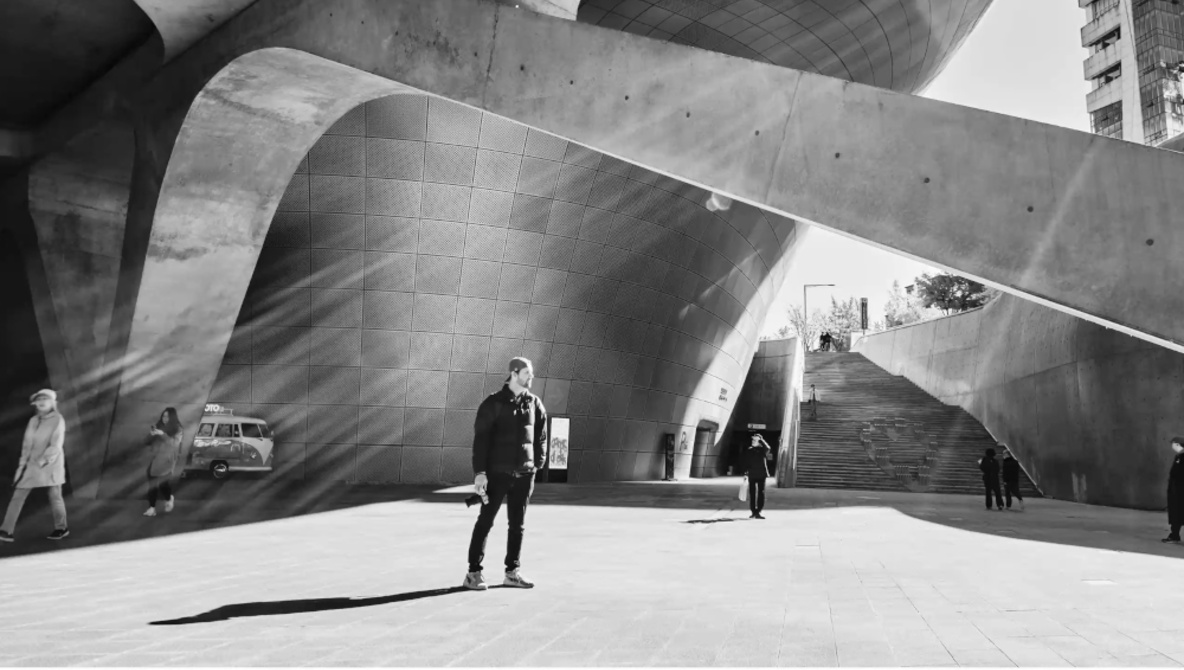
Where things get interesting is on the creative side. Goldby shows how bokeh from this lens is not something you chase; out-of-focus highlights become heptagons, especially toward the edges, and they are not evenly lit. Instead of pretending this is a shallow-depth-of-field tool, he leans into what TTArtisan lenses are known for in his work: wild flare and ghosting when strong light hits the front element. You see scenes where the frame fills with streaks and blobs that would horrify anyone seeking clinical perfection, yet give a simple street scene a little chaos and personality. The lens invites you to stop worrying about perfect rendering and start playing with light sources, reflections, and busy environments in a way a more restrained optic would discourage.
You also see how this lens fits into a real day out. Goldby talks about heading to a smaller city with a client, pulling a Think Tank rolling bag behind him while keeping a Fujifilm X-T50 in one hand with a BlackRapid wrist strap. The 14mm stays on the camera as his only lens for relaxed walkaround shooting, encouraging one-handed frames, quick reactions, and a general sense of not caring too much about technical perfection. Autofocus misses still happen, and optical flaws do not magically disappear, but the tiny size and low cost make those issues easier to live with when you are exploring and trying ideas. You start to see this not as your main ultra wide, but as a throw-in lens that pushes you toward more playful pictures. Check out the video above for the full rundown from Goldby.