
The Short, Painful Lives of Billions of Chickens Farmed for Meat
Lukas Vincour/Zvirata Nejime/We Animals
Lukas Vincour/Zvirata Nejime/We Animals
At over 70 billion per year, chickens are the most commonly farmed animal on earth. In the United States alone, 9.5 billion chickens are raised for meat annually, and yet, they are excluded from federal animal welfare protections.
Because these billions of birds are left out, they are left to suffer from hatching to slaughter.
Read on to discover more about the lives of farmed chickens.
Chickens Are Bred for Painful, Rapid Growth
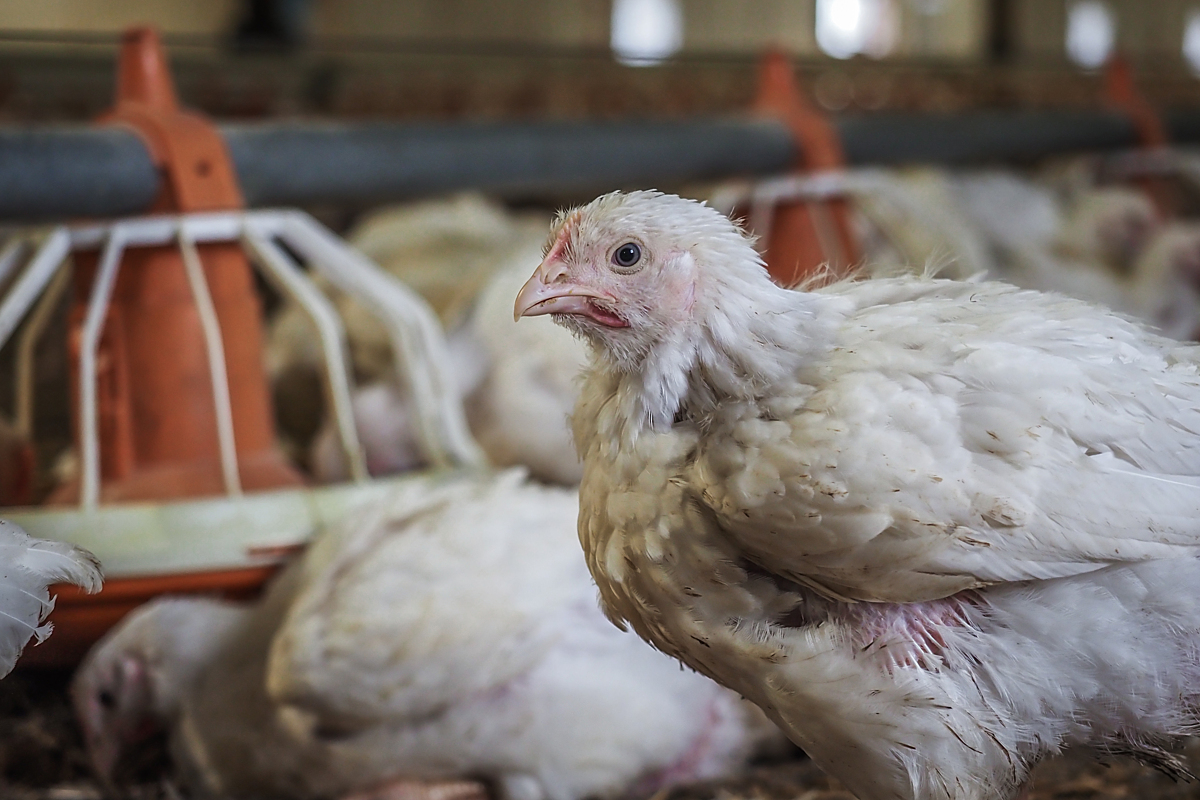
Maximizing profit at the expense of animal welfare, the meat industry selectively breeds birds like chickens (and turkeys) to grow unnaturally large, very quickly. This allows multi-billion-dollar corporations to produce more meat at lower cost, fattening chickens to “market weight” in just 6-7 weeks. Today, chickens intensively farmed for meat are bred to grow over 400 times faster than in the 1950s, taking a devastating toll on their bodies.
The birds become weighed down by their own size, often leading to leg injuries and an inability to walk or even stand. They’re too large to mate naturally; instead, invasive artificial insemination is used to breed more birds. Many chickens suffer from cardiovascular conditions or even die of heart attacks.
Newly Hatched Chickens Face Cruelty on Day One
Let’s go back to the start. Each year, around 10 billion chicks start out in U.S. hatcheries supplying the meat industry. If they were living a natural life, these chicks would emerge in a nest lovingly built by their mothers, whose comforting presence they would immediately recognize. But industrial hatcheries are a world of suffering.
Some chicks will never even hatch due to the effects of breeding for fast growth or the careless handling of eggs. Others live for just moments, deemed unprofitable due to injury or illness. These birds are cruelly left to die or dropped into a “macerator” that grinds them alive.
For those who survive the hatchery, the suffering is just beginning. They are crowded into crates piled on trucks headed for “grow-out farms,” where they will be raised for slaughter.
Nearly All U.S. Chickens Are on Factory Farms
Industry marketing often shows birds grazing in idyllic pastures, but factory farms are sadly the norm, not the exception. Over 99.9% of commercially raised chickens in the U.S. are kept on industrial farms, where tens of thousands of birds—or even more than a million—are subjected to crowded, stressful conditions.
Most live their entire existence indoors, never feeling the sunshine or engaging in their natural behaviors, such as grazing, nesting, or perching. Even their sleep cycles are disrupted because lights are kept on for long periods to maximize production by keeping the birds awake and eating.
And each year, hundreds of millions of chickens don’t even survive long enough to make it to the slaughterhouse.
Sick and Injured Chickens Are Cruelly Killed
The suffering chickens face in industrial animal agriculture is so grave that hundreds of millions don’t survive it, with over half a billion birds dying on farms or en route to slaughterhouses each year.
Some, who are sick or injured, are killed prior to when they would’ve been slaughtered for human consumption. This is commonly known as “culling,” but this industry term doesn’t reflect the brutality involved.
When one chicken is being “culled,” it is often through cervical dislocation, in which the bird’s head is quickly and violently pulled away from its body to break their neck. When many chickens are killed en masse, such as during bird flu outbreaks on farms, they are usually killed in one of several cruel ways: suffocation or drowning with water-based foam, gassing with carbon dioxide, or ventilation shutdown (VSD). In VSD, all vents on a farm are closed—and sometimes, heat is pumped in, too—and the birds are left to die of heat stroke.
20 Million Chickens Die on the Way to Slaughterhouses
The journey from farm to slaughterhouse is deadly for more reasons than one. Each year, over 20 million chickens die before the transport trucks they’re crowded onto can reach their final destination.
Once they’re determined to be at “market weight,” chickens are forced into crates crowded with other birds, and the crates are then stacked onto trucks. From there, they face long and stressful drives, sometimes in extreme heat or cold, without food or water.
The only U.S. legislation protecting farm animals during transport, The Twenty-Eight Hour Law, is already terribly inadequate, requiring only that animals are offered five hours of water, food, and rest if transported for periods longer than 28 consecutive hours. And, once again, farmed birds are denied even this basic protection.
Chickens Are Excluded From the Humane Methods of Slaughter Act
Despite being slaughtered in the highest numbers of any animal on earth, chickens (as well as other birds, like turkeys and ducks) on U.S. farms are excluded from federal legislation governing the welfare of farm animals—including the Humane Methods of Slaughter Act. This leaves the way they are treated largely up to corporations that run on killing millions of animals quickly and cheaply.
At the slaughterhouse, chickens are roughly handled to keep up with the fast pace. The birds are shackled upside down by their legs and moved down the slaughter line, and some are still conscious when dunked into scalding hot water or killed, as a life of suffering comes to a brutal end.
Get to Know Chickens
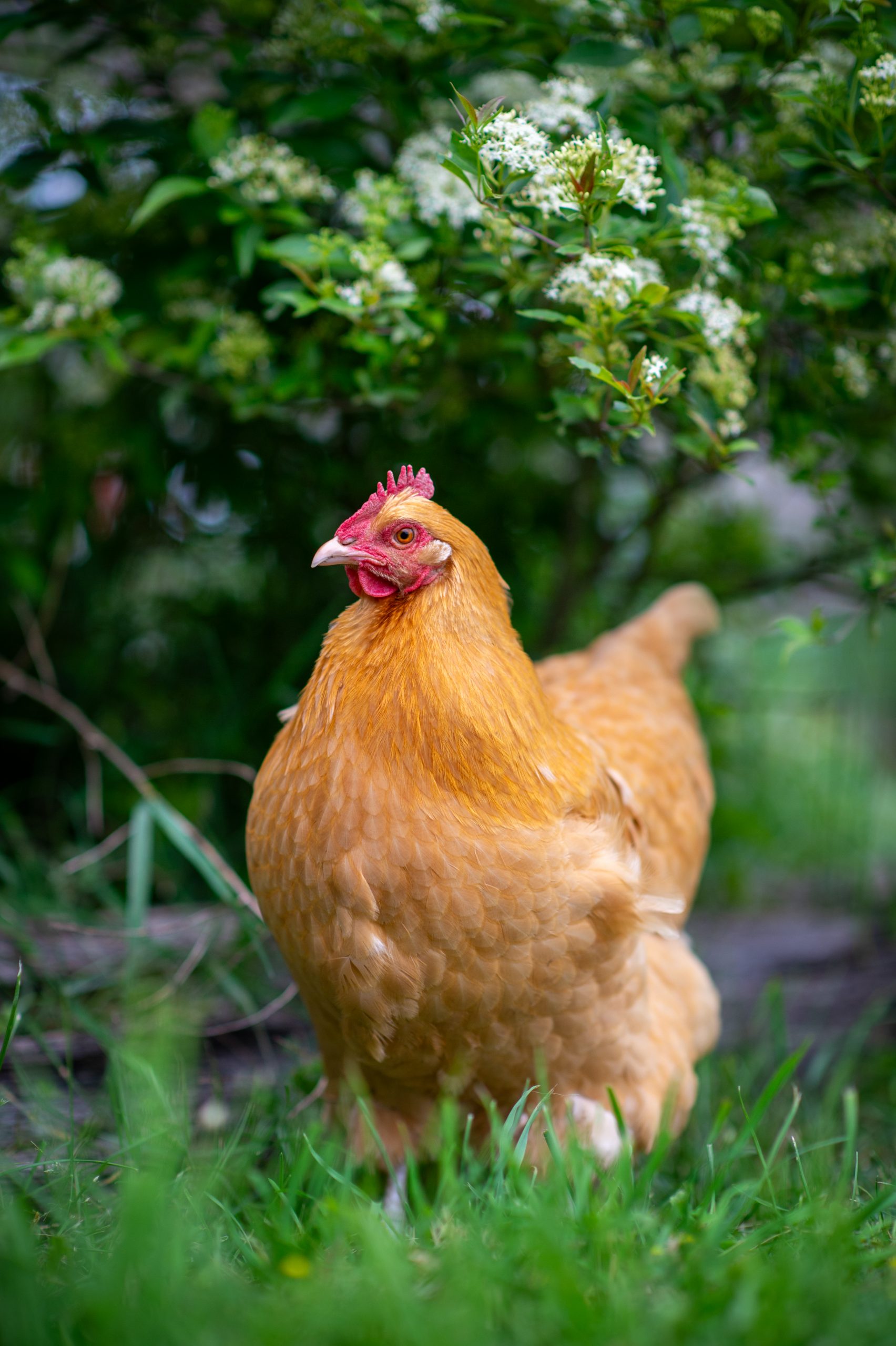
No animal deserves a life of cruelty and pain, and you have the power to make a difference. You can stand up for chickens every time you choose a plant-based meal that leaves animals off your plate.
Plus, take a moment to read a few facts you probably didn’t know about chickens, then share to spread the word about these smart and social birds. And sign up for our newsletter to be notified of timely ways to help farm animals!