
The Overlooked Key to Your Cat’s Happiness: Interactive Play – Cat Behavior Associates
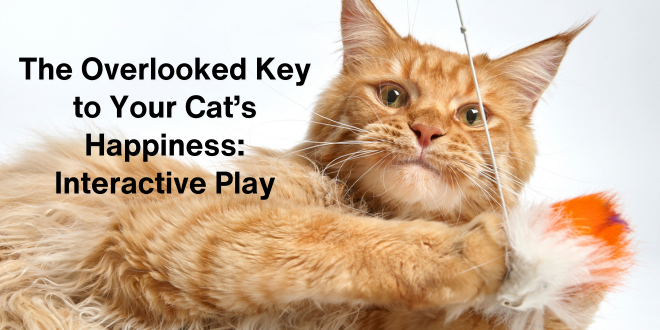
Interactive play is not optional, it’s essential. Play is often misunderstood as something cats can do all by themselves, or something the cat parent does with the cat as time allows. For some cat parents, interactive playtime isn’t even on their radar. In reality, interactive playtime is a critical component of your cat’s physical, emotional, and behavioral wellbeing. Domestic cats retain the instincts of their wild ancestors, and without appropriate outlets, behavioral issues can crop up, such as boredom, destructive behavior, depression, nighttime hyperactivity, attention-seeking behavior, and increased stress.
At the core of interactive playtime is the natural hunting sequence: stalk, chase, catch, eat, and rest. Effective interactive play should replicate this cycle. Of course, you don’t have to supply a live mouse for your cat to eat, you can offer a treat for a job well done or time your play session before mealtime.
What makes interactive play different from your cat simply playing with one of the many toys in his collection? You! The difference is that you’re involved.
Structuring Interactive Play Sessions
Cats benefit most from at least two interactive play sessions per day, generally lasting about 15 minutes each. Cats are crepuscular, meaning they are naturally most active during early morning and early evening hours so if you can align play with these periods, you have the benefit of working with your kitty’s natural internal clock.
The type of toy used is equally important. Interactive wand toys (fishing pole design) are effective because they mimic the unpredictable movement of prey and you can control/direct that. And even though the use of a laser pointer may be very tempting, I don’t recommend it. Your cat needs to be able to feel the prey under his paw. He needs the satisfaction of having caught something. With a laser pointer, your cat never gets to have a successful capture and that can lead to frustration. If you insist on using a laser pointer, only use it briefly in the beginning and then introduce a physical toy. Direct the beam of light on it so your cat can transition to having an actual catch.
Technique: Simulating Real Prey
How you move the toy significantly impacts the quality of the play session. Avoid constantly doing erratic or fast motion. Instead, keep movements relatively low to the ground and incorporate pauses, hiding the toy behind furniture or around corners. This encourages stalking behavior and mental engagement. Allow the cat to observe, track, and plan before initiating the chase.
Periodic pauses are essential because they simulate the natural stop-and-start rhythm of prey and prevent overstimulation. The goal is not to exhaust your cat, but to engage his instincts in a controlled and satisfying way. If you watch how a cat would naturally hunt actual prey, you’ll notice much of it is a mental game, where the cat uses stealth and patience to quietly get within ambush distance before he pounces, and hopefully delivers a successful killing bite.

Completing the Cycle
One of the most overlooked aspects of play is how it ends. Don’t stop the game abruptly because that can leave your cat frustrated or still very stimulated. Wind the action down as the game ends, almost as if the prey is getting tired or is injured. This will allow your cat to slow his movements down and have that final grand capture. He will feel satisfied and relaxed instead of still revved up. After a successful “hunt,” cats would typically eat and then rest. Offer your cat a tasty treat or two or schedule the session before mealtime to help complete this natural cycle. This simple step can avoid post-play frustration.
Behavioral and Emotional Benefits
A consistent schedule of interactive play is one of the most effective tools for preventing and resolving common behavioral issues. Give your cat this beneficial outlet to help prevent aggression, such as biting or ambushing. It can alleviate boredom and may prevent or reduce anxiety or stress-related behaviors. Another benefit is that it may reduce nighttime activity.
Interactive play strengthens the bond between you and your cat. It builds trust, increases confidence in shy cats, and provides a predictable outlet for energy. One obvious benefit is that it provides exercise and movement. And one more thing: it’s also FUN!
Playtime is Fundamental
Interactive playtime should not be treated as an occasional activity, but as a daily requirement. When done with consistency, interactive play becomes a powerful form of enrichment that supports both behavioral health and overall well-being.
Need More Information?
For more information on playtime and how to use it to help with behavioral issues, refer to the books by best-selling author, Pam Johnson-Bennett. Pam’s books are available at bookstores and online. For your convenience, we’ve included a link to Amazon here on our website.