
The four types of dementia most people don’t know exist
What most people think of when they hear the word “dementia” is memory problems and forgetfulness. But what people often don’t know is that dementia can cause many different symptoms – affecting speech, behaviour, sleep, motor function and more.
In fact, dementia is an umbrella term. There are estimated to be more than 100 types of dementia. Alzheimer’s disease is the most common subtype of dementia, affecting approximately 60% of all cases. Memory loss in one of the most common symptoms of this type of dementia.
But approximately 40% of all dementia cases are considered to be different, rarer types. Unfortunately, having a rarer subtype of dementia often makes diagnosis more difficult and requires more complex care.
Although most people might be aware of some types of dementia – including Lewy Body, Parkinson’s disease dementia and frontotemporal dementia – awareness of other rarer types is low.
Knowing how to spot the signs of these rarer types of dementia early could be crucial in ensuring loved ones get the support they need.
Posterior cortical atrophy
Posterior cortical atrophy (PCA) affects mostly visual and spatial functioning. Memory is not as badly affected early on as it is in Alzheimer’s disease.
People with PCA can struggle with visual hallucinations and spatial navigation. This can become apparent when reading or judging depth and space on a staircase – making it difficult to judge where the next step is, for example. Symptoms commonly start appearing between the ages of 55 and 65.
There’s still much we don’t know about PCA because of how rare it is. Researchers are still trying to figure out whether PCA is a distinct subtype of dementia or whether it’s an atypical form of Alzheimer’s disease. This is because the brain changes that occur in people with PCA closely resemble those that occur in people with Alzheimer’s disease, although the symptoms are different. It’s also estimated that between 5% to 15% of people with Alzheimer’s have PCA.
Creutzfeld-Jakob disease
Creutzfeld-Jakob disease is a particularly rare form of dementia, affecting about one in 1 million people worldwide.
Creutzfeld-Jakob disease is a prion disease. These diseases involve prion proteins which, for unknown reasons, suddenly change into a three-dimensional shape. The function of healthy prions remains unknown, but they appear to play some role in protecting nerves and brain cells and keeping the body’s circadian rhythm functioning (the natural, 24-hour cycle our body follows that controls everything from sleep, digestions and immunity).
The misfolding of prion proteins in Creutzfeld-Jakob disease causes a very rapid and severe form of dementia, progressing much more quickly than Alzheimer’s disease or Lewy Body dementia, for example. Besides the notably quick nature of progression, people with Creutzfeld-Jakob disease struggle with memory and movement, including sudden jerky movements.
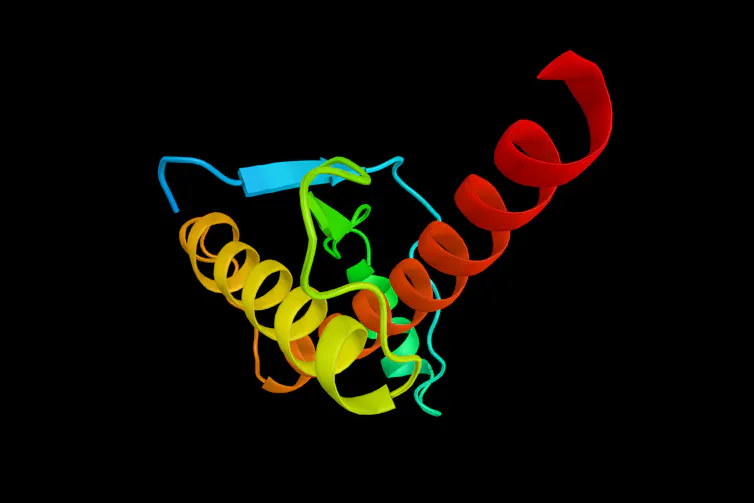
ibreakstock/ Shutterstock
Risk factors for this subtype of dementia include old age and genetics (occurring in 10-15% of cases). In very rare cases, it can also develop as a result of contamination – such as from eating beef from cattle infected with mad cow disease.
FTD-MND
FTD-MND is a form of frontotemporal dementia that occurs alongside motor neurone disease.
Frontotemporal dementia refers to subtypes of the disease that cause gradual brain tissue loss in the frontal and temporal lobes of the brain.
Read more:
Bruce Willis has frontotemporal dementia – here’s what we know about the disease
Motor neurone disease, on the other hand, is a rapidly progressing neurological condition which can lead to difficulties breathing, movement and paralysis. Although it affects the brain and nerves, it is not itself a form of dementia.
Approximately 10-15% of people with frontotemporal dementia also develop motor neurone disease. This co-occurence seems to be linked to a mutation in the C9orf72 gene. Because of this genetic link, FTD-MND can run in families.
People with FTD-MND experience several muscle-related issues, including muscle waste, stiffness and problems with swallowing. These are things you would not normally associate with dementia and memory problems.
It’s currently not clear whether frontotemporal dementia develops first and then motor neurone disease, or if it’s the other way around.
Progressive supranuclear palsy
Progressive supranuclear palsy (PSP) is a rare neurological condition that causes both dementia and problems with movement.
It’s estimated to affect approximately 4,000 people in the UK. PSP is difficult to diagnosis as it overlaps with many other conditions – including Parkinson’s disease.
PSP primarily leads to damage in subcortical brain regions, specifically the brainstem and basal ganglia. These areas are linked to vision and movement.
As such, people with PSP struggle using their eyes and can thus often fall and experience difficulties moving around. People with PSP can also struggle concentrating and problem solving.
Dementia support
As with all dementia subtypes, there is no cure yet. While there are medications that can delay symptoms, these only work in cases of Alzheimer’s disease.
As such, we still need to find ways to support people with other subtypes of dementia as best as possible.
One way of doing this is by properly understanding their condition and their subtype. Knowing that someone might particularly struggle with walking and movement as opposed to memory is important to put the right care in place in advance.
It is just as important to be able to spot the signs early on. Dementia doesn’t just affect memory. Changes in behaviour, problems seeing or falling more frequently, walking or moving differently or difficulty speaking can all be early signs of dementia.
Better understanding dementia’s many forms will hopefully lead to better ways of managing and treating this complex disease.