
The Black Death’s counterintuitive effect: as human numbers fell, so did plant diversity
Between 1347 and 1353, Europe was gripped by the most catastrophic pandemic in its history: the Black Death. Killing many millions, the plague wiped out between one-third and a half of Europe’s population.
In some cities, mortality rates were as high as 80%. In rural areas, Black Death mortality caused intense labour shortages. Entire villages were left empty as rural economies collapsed. In many places, cultivated fields were abandoned and reclaimed by woodland, scrub and deer.
Given the widely reported negative effects that people have had on nature over recent decades and centuries, we might expect this continental-scale “rewilding” to have enabled biodiversity to flourish. However, our new study in the journal Ecology Letters uncovers a potentially counterintuitive result: when Europe’s human population crashed, plant biodiversity also plummeted.
Fossilised pollen grains in sediment cores extracted from lakes and bogs contain information about plant communities that existed thousands of years ago. We used data from over 100 fossil pollen records from across Europe to explore how plant diversity changed before, during and after the Black Death.
The pollen data show that between 0BC and 1300, plant diversity in Europe increased. It grew through the rise and fall of the Western Roman Empire and continued through the early Middle Ages. By the High Middle Ages, biodiversity levels were at their peak.
However, in 1348, Europe was hit by plague and for about 150 years, plant biodiversity plummeted. It was only after a century and a half – as human populations recovered and farming resumed – that plant diversity began to rise again.
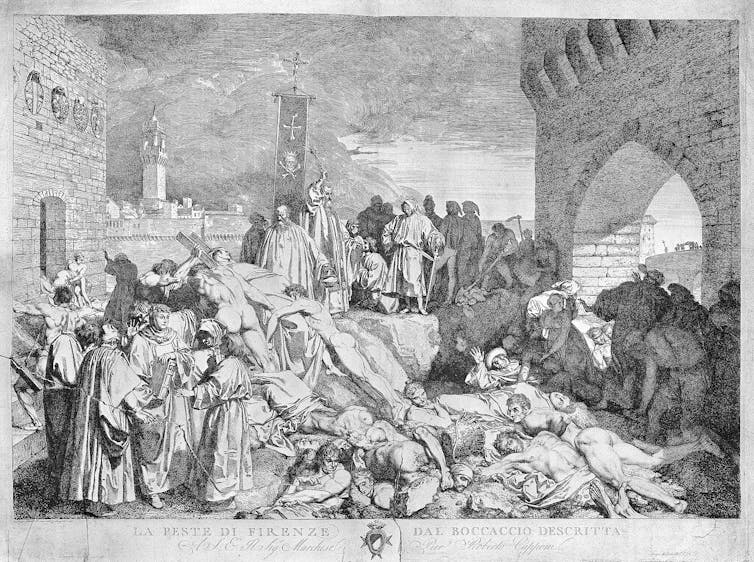
Wellcome Collection gallery (2018-04-05), CC BY-NC-ND
We found that the biggest losses of plant diversity occurred in areas most affected by land abandonment. By plotting patterns of biodiversity changes from sites with different Black Death land use histories, we discovered that biodiversity collapsed in landscapes where crop (arable) production was abandoned, whereas landscapes with growing or stable arable farming became more biodiverse.
Our work suggests that over 2,000 years of increasing European biodiversity was generated because of – not in spite of – humans. But why? And what lessons can we learn from this for managing biodiversity now, when land being converted into farmland is driving biodiversity losses?
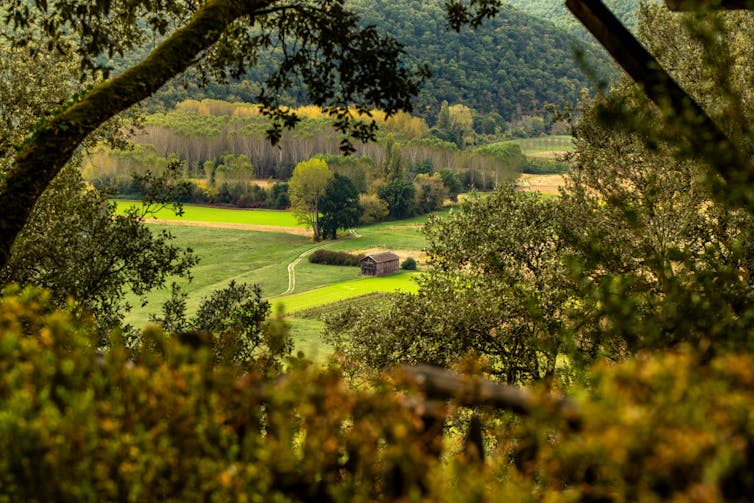
Population growth and technological innovations pushed agricultural activities into previously unused lands over the first 1,300 years of the common era. Unlike today – where crop monocultures are dominant – mixed agricultural systems were the norm over the majority of the last 2,000 years. Across Europe, a diverse lattice of farmlands and farming practices were typically separated by woods, rough grazing lands and uncultivated plots, often enclosed by hedgerows or trees.
Yuri Dondish/Shutterstock
The result was a patchy landscape where there were lots of opportunities for different plant species to survive, and biodiversity was high.
The Black Death disrupted this by reducing human disturbance. The result was a less patchy landscape and an overall loss in plant diversity. Diversity only recovered when extensive farming returned.
People can boost nature
These findings call into question conservation policies that advocate for removing or reducing human influence from Europe’s landscapes to protect biodiversity.
One such policy initiative is rewilding, which is seen by many as a route to achieving a biodiverse future where nature is given space to flourish. Yet, many of the most biodiverse locations in Europe are those with a long history of low-intensity, mixed agriculture. To rewild these human-formed landscapes may, paradoxically, risk eroding the biodiversity that conservationists seek to protect.
Our findings of long-term positive human–biodiversity relationships is not solely a European phenomenon. Multimillennial interactions between humans and the natural world have resulted in elevated biodiversity levels across planet. Examples of diverse, cultural ecosystems include the forest gardens of the Pacific North West (forests cultivated by Indigenous peoples), the satoyama of Japan (low intensity mixed systems of rice paddies and woodlands in mountainous foothills) and the ahupua’a of Hawaii (segments of diverse hillsides used to cultivate multiple crops).
Modern, intensive farming practices have caused substantial biodiversity losses across the globe. Yet, our Black Death findings, in combination with numerous other examples, show us that humans and nature do not always have to be kept separate to conserve and promote biodiversity. Indeed, recognising landscapes as cultural ecosystems may help us imagine futures where both nature and people can live together and thrive.
Traditional, low-intensity land management practices have generated diverse ecosystems for millennia. Today, where locally appropriate, they should be encouraged for the conservation of both biological and cultural diversity.