Australia’s most decorated living veteran to be charged with committing 5 war crime murders in Afghanistan


Australia’s most decorated living veteran, Ben Roberts-Smith, faces war crime charges on allegations that he killed five unarmed Afghans while serving in Afghanistan from 2009 and 2012, police and media reported on Tuesday.

Police have not confirmed the name of the 47-year-old former soldier who was arrested on Tuesday. But he has been widely reported in the media to be Roberts-Smith, a former Special Air Service Regiment corporal who was awarded both the Victoria Cross and Medal of Gallantry for his service in Afghanistan.

He is expected to appear in a Sydney court late Tuesday or Wednesday, police said.

Ben Roberts-Smith arrives at the Federal Court in Sydney, Australia, on June 9, 2021. AP

Roberts-Smith is only the second Australian veteran of the Afghanistan campaign to be charged with a war crime.

Former SAS soldier Oliver Schulz, 44, has pleaded not guilty to a charge of war crime murder. He is accused of shooting Afghan man Dad Mohammad three times in the head in an Uruzgan province wheatfield in May 2012.

War crime murder carries a potential sentence of life in prison. It’s a federal crime in Australia, defined as the intentional killing in the context of armed conflict of a person who is not taking an active part in hostilities, such as civilians, prisoners of war or wounded soldiers.

Police arrested Roberts-Smith at Sydney Airport on Tuesday after he arrived on a flight from Brisbane, Australian Federal Police Commissioner Krissy Barrett said.

“It will be alleged that the victims were not taking part in hostilities at the time of their alleged murder in Afghanistan. It will be alleged the victims were detained, unarmed and were under the control of ADF members when they were killed,” Barrett told reporters, referring to the Australian Defense Force.

Queen Elizabeth II greets Australian SAS Corporal Ben Roberts-Smith (L), who was recently awarded the Victoria Cross for Australia, during an audience at Buckingham Palace in London on Nov. 15, 2011. PA

“It will be alleged the victims were shot by the accused or shot by subordinate members of the ADF in the presence of and acting on the orders of the accused,” Barrett added.

In September last year, Australia’s highest court removed Roberts-Smith’s last chance to clear his name of court findings that he unlawfully killed four Afghans.

The High Court said it would not hear his appeal against a federal judge’s civil court finding in 2023 that he likely killed noncombatants unlawfully in 2009 and 2012.

Three federal court judges had unanimously rejected his appeal against that ruling.

Roberts-Smith sued for defamation after several newspapers published articles in 2018 accusing him of a range of war crimes.

Roberts-Smith, a former Special Air Service Regiment corporal who was awarded both the Victoria Cross and Medal of Gallantry for his service in Afghanistan. AFP via Getty Images

But while the civil courts found the war crimes allegations were mostly proven on a balance of probabilities, the new charges would have to be proved in a criminal court to a higher standard of beyond reasonable doubt.

The charges follow a military report released in 2020 that found evidence that elite Australian SAS and commando regiment troops unlawfully killed 39 Afghan prisoners, farmers and other noncombatants.

Barrett said few soldiers were involved in the new allegations.

“The alleged conduct related to these charges is confined to a very small section of our trusted and respected ADF which helps keep this country safe,” Barrett said.

“The overwhelming majority of our ADF do our country proud. Today’s charges are not reflective of the majority of members who serve under our Australian flag with honor, with distinction and with the values of a democratic nation,” she added.

The Office of the Special Investigator was established to work with police on the war crime allegations. The office’s director of investigations Ross Barnett said allegations of 53 war crimes had been investigated and 39 of those investigations had concluded without charges. Around 40,000 Australian military personnel served in Afghanistan between 2001 and 2021, of whom 41 were killed.


US, Israeli airstrikes batter Iran as Trump’s Strait of Hormuz deadline looms


Israel and the United States carried out a wave of attacks on Monday that killed more than 25 people in Iran.

Tehran responded with missile fire on Israel and its Gulf Arab neighbors as US President Donald Trump’s deadline for Tehran to reopen the Strait of Hormuz loomed.

Explosions rang out into the night in Tehran and low-flying jets could be heard for hours as the capital was pounded. Thick black smoke rose near the city’s Azadi Square after one airstrike hit the Sharif University of Technology grounds.

Two people were found dead in the rubble of a residential building in Haifa, according to Israeli authorities. The search was ongoing for two more even as new Iranian missile attacks hit the northern Israel city early Monday.

Smoke rises from the site of an Israeli airstrike that targeted a building in Beirut’s southern suburbs, on April 5, 2026. AFP via Getty Images

Kuwait and the United Arab Emirates both activated their air defense systems to intercept incoming Iranian missiles and drones, as Tehran kept up the pressure on its Gulf neighbors. Iran’s regular attacks on regional energy infrastructure and its stranglehold on the Strait of Hormuz, through which a fifth of the world’s oil is shipped in peacetime, has sent global energy prices soaring.

Under pressure at home as consumers are growing increasingly concerned, Trump gave Tehran a deadline that expires Monday night, Washington time, saying if no deal was reached to reopen the strait the US would hit Iran’s power plants and other infrastructure targets and set the country “back to the stone ages.”

“Tuesday will be Power Plant Day, and Bridge Day, all wrapped up in one, in Iran,” he threatened in a social media post, adding that if Iran did not open the strait “you’ll be living in Hell.”

Trump’s deadline to open Hormuz strait looms but no signs of Tehran backing off

Tehran has shown no signs of backing down off of its stranglehold on shipping through the strait, which was fully open before Israel and the US attacked Iran on Feb. 28 to start the war.

Smoke rises from Israeli airstrikes in Dahiyeh, a southern suburb of Beirut, Lebanon, Sunday, April 5, 2026. AP

Following Trump’s expletive-laced posts on Easter Sunday, Iran’s parliamentary speaker Mohammad Bagher Qalibaf called the threats of targeting Iran’s infrastructure “reckless.”

“You won’t gain anything through war crimes,” Qalibaf wrote on X. “The only real solution is respecting the rights of the Iranian people and ending this dangerous game.”

Brent crude oil, the international standard, rose to $109 in early Monday spot trading, some 50% higher than it was when the war started.

Iran has let some vessels through the strait since the war began, but none belonging to the US, Israel or countries perceived as helping them. Some have paid Iran for passage and the overall flow of traffic is down more than 90% over the same period last year.

A commercial plane is preparing to land at Beirut Airport as smoke rises from Israeli airstrikes in Dahiyeh, a southern suburb of Beirut, Lebanon, on April 5, 2026. AP

Beyond Trump’s military threats, diplomatic efforts are still underway to see if a solution can be reached to open the waterway.

Oman’s Foreign Ministry said that deputy foreign ministers and experts from Iran and Oman met to discuss proposals to ensure “smooth transit” through the strait.

Egypt said that Foreign Minister Badr Abdelatty had spoken with US envoy Steve Witkoff and Iranian Foreign Minister Abbas Araghchi, and with Turkish and Pakistani counterparts. Russia said that Araghchi also spoke with Russian Foreign Minister Sergey Lavrov.

Airstrikes kill more than 25 across Iran

One of Monday’s morning airstrikes targeted Tehran’s Sharif University of Technology, where Iranian media reported damage to the buildings as well as a natural gas distribution site next to the campus.

Smoke rises from the site of an Israeli airstrike that targeted an area in Beirut’s southern suburbs, on April 5, 2026. AFP via Getty Images

It wasn’t immediately clear what had been targeted on the grounds of the university, which is empty of students as the war has forced all schools into the country into online classes. However, multiple countries over the years have sanctioned the university for its work with the military, particularly on Iran’s ballistic missile program, which is controlled by the country’s paramilitary Revolutionary Guard.

A strike near Eslamshar, southwest of Tehran, killed at least 13 people, the semiofficial Fars news agency reported. Five others were killed when a residential area in the city of Qom was hit, and six more were killed in strikes on other cities, the state-run IRAN daily newspaper reported.

Three more people were killed when an airstrike hit a home in Tehran, Iranian state television reported.

War’s death toll in the thousands

More than 1,900 people have been killed in Iran since the war began, but its government has not updated the toll for days.

In Lebanon, which Israel has invaded by ground, more than 1,400 people have been killed and more than 1 million people have been displaced. Eleven Israeli soldiers have died there while targeting Iranian-backed Hezbollah militants.

In Gulf Arab states and the occupied West Bank, more than two dozen people have died, while 19 have been reported dead in Israel and 13 US service members have been killed.


How US used SEAL Team 6, a CIA ruse and death from above to rescue missing F-15 airman in Iran: ‘They’ve been schwackin’ dudes chasing him’


The US rescued a missing F-15E airman deep inside Iran with an incredibly complex and daring mission that involved SEAL Team 6, a CIA ruse, a hastily constructed forward air strip in hostile territory and patrols of friendly aircraft that gave the Air Force colonel cover.

A life-or-death race between US and Iranian forces to find the “seriously injured” weapons officer outside Isfahan over two days culminated in the crew member’s extraction by America’s most elite commandos and a fire fight with local militias that were hunting for him, according to a report in the New York Times.

The unnamed officer hid out in the mountains and managed to climb a 7,000-foot ridge in order to evade capture while American MQ-9 Reaper drones pounded nearby Iranian forces with missiles if they got close to his position, according to reports.

“He evaded up a 7k ridge. They’ve been schwackin’ dudes chasing him all day. Was nuts,” a source told Toby Harnden, the veteran war correspond and author.

In an effort to confuse the Iranians, who put a $60,000 bounty (more than 10 times the average household income) on the officer’s head, the CIA pulled off a diversion — planting fake intel that he had already been rescued and was being driven out of Iran, according to the Times.

US forces successfully rescued a missing F-15E airman shot down over Iran. United States Air Forces Central

The operation involved landing multiple transport aircraft inside Iranian territory just south of the city of Isfahan, some 200 miles inside the country.

Two of the aircraft — believed to be MC-130J Commando IIs, specialized, high-tech transport planes, became stuck at the forward airfield in Iran — and three more aircraft were dispatched to pick up the US forces left stranded there, according to the Times.

The two MC-130Js — each worth around $100 million — were demolished in place so as not to fall into enemy hands.

Photos from Iran show the burned out wreckage of multiple aircraft, believed to be the planes.

President Trump confirmed the successful operation. Getty Images

There were no US deaths among the rescue team, and all the commandos and the weapons officer involved returned safety, a senior US military official said.

The injured airman has been flown to Kuwait for medical treatment in a rescue plane.

On Friday, the first of the two pilots was rescued during another daring operation.

The daring raid involved hundreds of special ops forces. Nellis Air Force Base

“WE GOT HIM!” President Trump confirmed in a Truth Social post. “This brave Warrior was behind enemy lines in the treacherous mountains of Iran, being hunted down by our enemies, who were getting closer and closer by the hour.”

In a later post, he said, “this type of raid is seldom attempted because of the danger to ‘man and equipment.’”

The president said he would hold a news conference with the military at the Oval Office on Monday at 1:00 p.m. in the aftermath of the successful operation.


Pope Leo marks first Easter as pontiff with call for hope amid global conflicts


Pope Leo celebrated his first Easter Mass as pontiff with a call Sunday to exercise hope against “the violence of war that kills and destroys,’’ saying “we need this song of hope today” as conflicts spread around the world.

With the US-Israeli war on Iran in its second month and Russia’s ongoing campaign in Ukraine, Leo has repeatedly called for a halt in hostilities.

In his Easter homily, the pope singled out those who wage war, abuse the weak and prioritize profits.

Pope Leo XIV presides over his first Easter Mass in St. Peter’s Square on April 5, 2026. Getty Images

Leo, the first US-born pope, addressed the faithful from an open-air altar in St. Peter’s Square flanked with white roses, while the steps leading down to the piazza where the faithful gathered were filled with spring perennials, symbolically resonating with the pope’s message of hope.

The pontiff implored the faithful to keep their hope in the face of death, which lurks “in injustices, in partisan selfishness, in the oppression of the poor, in the lack of attention given to the most vulnerable.

“We see it in violence, in the wounds of the world, in the cry of pain that rises from every corner because of the abuses that crush the weakest among us, because of the idolatry of profit that plunders the earth’s resources, because of the violence of war that kills and destroys,” he said.

He quoted his predecessor Pope Francis in warning against falling into indifference in the face of “persistent injustice, evil, indifference and cruelty,” because “it is also true that in the midst of darkness, something new always springs to life and sooner or later produces fruit.”

He will later deliver the traditional “Urbi et Orbi” message — Latin for “to the city and the world.’’

Thousands of worshippers fill St. Peter’s Square as Pope Leo XIV leads the Easter Sunday Mass at the Vatican on April 5, 2026. AP
Pope Leo XIV blesses the crowd with a bouquet during the Easter Mass outside St. Peter’s Basilica. AFP via Getty Images

Christians in the Holy Land were marking a subdued Easter

Traditional ceremonies at the Church of the Holy Sepulchre, revered by Christians as the traditional site of Jesus’ crucifixion and resurrection, were scaled back under an agreement with Israeli police.

Authorities have put limits on the sizes of public gatherings due to ongoing missile attacks.

The restrictions also dampened the recent Muslim holy month of Ramadan and Eid al-Fitr holiday, as well as the current weeklong Jewish festival of Passover.

On Sunday, the Jewish priestly blessing at the Western Wall — normally attended by tens of thousands — was limited to just 50 people.

Pope Leo XIV offers a prayer during Easter Mass, as part of Holy Week celebrations, at the Vatican. AFP via Getty Images

The restrictions have strained relations between Israeli authorities and Christian leaders.

Police last week prevented two of the church’s top religious leaders, including Latin Patriarch Pierbattista Pizzaballa, from celebrating Palm Sunday at the Church of the Holy Sepulchre.

On Tuesday, the pope had expressed hope that the war could be finished before Easter.


Leo XIV celebrates first Easter vigil as pope, calls for harmony and peace in a world torn by war


Pope Leo XIV, carrying a tall, lit candle through a darkened and silent St. Peter’s Basilica, ushered in Christianity’s most joyous celebration with his first Easter vigil service as pontiff Saturday night, urging that Easter would bring harmony and peace to a world torn by wars.

Easter for Christians commemorates Christ’s triumph over death with his resurrection following his crucifixion.

Lighting the candle before he entered the basilica, the pope intoned: “The light of Christ who rises in glory.”


Leo XIV celebrates first Easter vigil as pope, calls for harmony and peace in a world torn by war
Pope Leo XIV used his first Easter vigil to highlight that the holiday will lead to harmony and peace after the wars that have occurred in Ukraine and Iran. Anadolu via Getty Images

Candle bearers stopped to light candles of the congregants as they walked down the central aisle, spreading flickers of light through the dark basilica before the lights went up as the pope arrived at the baroque main altar, followed by cardinals dressed in white.

In his homily, Leo called sin “a heavy barrier that closes us off and separates us from God, seeking to kill his words of hope within us,’’ and likened it to the stone that had covered Jesus’ tomb — but which was found overturned, revealing Jesus’ resurrection.

Leo said that there are stones representing sins to be overturned today, some “so heavy and so closely guarded that they seem to be immovable.”

“Some weigh heavily on the human heart, such as mistrust, fear, selfishness and resentment; others stemming from these inner struggles, sever the bonds between us through war, injustice and the isolation of peoples and nations.

“Let us not allow ourselves to be paralyzed by them!” the pope said, calling on the faithful to make a commitment “so that the Easter gifts of harmony and peace may grow and flourish everywhere and always throughout the world.’’


Pope Leo XIV celebrating Easter Vigil at St. Peter's Basilica.
Marco Cordone/ZUMA / SplashNews.com

With the U.S.-Israeli war on Iran in its second month and Russia’s ongoing campaign in Ukraine, Leo has repeatedly called for a halt in hostilities.

On Palm Sunday, he said that God doesn’t listen to the prayers of those who make war or cite God to justify their violence,

As is tradition, Leo baptized 10 adults from all over the world during the Mass.

During Leo’s first Holy Week, which is notoriously demanding, the pontiff carried the cross for the entire 14 stations during the Way of the Cross on Good Friday, the first time a pope has done so for decades.

On Holy Thursday, he washed the feet of 12 priests in the traditional Holy Thursday ritual, restoring a tradition his predecessor Pope Francis had broken by including laypeople and non-Christians.

On Sunday morning, Leo will celebrate an open-air Mass in St. Peter’s Square before delivering his Easter message and offer the traditional “Urbi et Orbi” message “to the city (of Rome) and the world,” which acts as a summary of the world’s woes.


Three men charged over arson attack on Jewish community ambulances in London


British prosecutors said on ​Friday they had charged three men ‌in connection with an arson attack last month on Jewish community ambulances in North London.

The ambulances ​were set on fire on March ​23 in what British Prime Minister Keir ⁠Starmer described as a “deeply shocking antisemitic arson attack.”

The ​SITE Intelligence website has said an Iran-aligned ​multinational militant collective called Islamic Movement of the People of the Right Hand had claimed responsibility for ​the incident near a synagogue in the ​Golders Green area of London.


Three men charged over arson attack on Jewish community ambulances in London
Charred remains of Jewish community ambulances after they were set on fire in North London, March 23, 2026. REUTERS

Counter-terrorism officers are heading the ‌investigation, ⁠but as yet the incident is not being treated as terrorism.

The Crown Prosecution Service said the three men — aged 20, 19 ​and 17 — ​have been ⁠charged with arson with intent to damage property and being reckless ​as to whether life would be ​endangered.

Two ⁠are British nationals, while the third is a dual British-Pakistani citizen.


A man from the Jewish community walks past a police car and an ambulance damaged by an antisemitic arson attack.
A member of the Jewish community walks past the scene of the arson attack, March 24, 2026. AFP via Getty Images

The three men were ⁠expected ​to appear at Westminster Magistrates’ ​Court on Saturday.


China moves to regulate digital humans, bans addictive services for children


China’s cyberspace regulator issued draft regulations on Friday to oversee the development online of digital humans, requiring clear labeling and banning services ​that could mislead children or fuel addiction.

The Cyberspace Administration of ‌China’s proposed rules would require prominent “digital human” labels on all virtual human content and prohibit digital humans from providing “virtual intimate relationships” to those under 18, according to rules published ​for public comment until May 6.


China moves to regulate digital humans, bans addictive services for children
The proposed rules would require prominent “digital human” labels on all virtual human content. REUTERS

The draft regulations would also ban the ​use of other people’s personal information to create digital humans without ⁠consent, or using virtual humans to bypass identity verification systems, reflecting Beijing’s efforts ​to maintain control in the face of advances in artificial intelligence.

Digital humans are ​also prohibited from disseminating content that endangers national security, inciting subversion of state power, promoting secession or undermining national unity, the draft rules said.

Service providers are advised to prevent ​and resist content that is sexually suggestive, depicts horror, cruelty or incites discrimination ​based on ethnicity or region, according to the document. Providers are also encouraged to take ‌necessary ⁠measures to intervene and provide professional assistance when users exhibit suicidal or self-harming tendencies.


Close-up of a child lying in bed at night, illuminated by the light from a smartphone held in front of their face.
The new rules aim to fill a gap in governance in the digital ​human sector, setting clear red lines for the healthy ​development of ⁠the industry. zilvergolf – stock.adobe.com

China made clear its ambitions to aggressively adopt AI throughout its economy in the new five-year policy blueprint issued last month. The push comes alongside tightening ​governance in the booming ​industry to ensure ⁠safety and alignment with the country’s socialist values.

The new rules aim to fill a gap in governance in the digital ​human sector, setting clear red lines for the healthy ​development of ⁠the industry, according to an analysis published on the cyberspace regulator’s website.

“The governance of digital virtual humans is no longer merely an issue of industry norms; ⁠rather, ​it has become a strategic scientific problem that ​concerns the security of the cyberspace, public interests, and the high-quality development of the digital ​economy,” it added.


French, South Korean leaders say they’ll work together on the Strait of Hormuz


French President Emmanuel Macron and South Korean President Lee Jae Myung agreed Friday to work together to help reopen the Strait of Hormuz and ease global economic uncertainties caused by the war in the Middle East.

Their summit in Seoul came as US President Donald Trump slammed allies for not supporting the US and Israeli war against Iran. 

Macron was making his first visit to South Korea since taking office in 2017, as part of an Asian tour that already has taken him to Japan.

French President Emmanuel Macron shakes hands with South Korean President Lee Jae Myung during their meeting in Seoul, South Korea on April 3, 2026. AP

Macron told Lee at the start of the meeting that the two countries can play a role in helping to stabilize the situation in the Middle East, including Iran’s chokehold on the Strait of Hormuz, which has unleashed shock on global energy markets.

At a joint televised briefing afterward, Macron underscored the need for France and South Korea to cooperate to help reopen the strait and deescalate Middle East animosities, while Lee said the two affirmed “their resolves to cooperate to secure the safe shipping route in the Strait of Hormuz.”

The two leaders did not take questions and did not elaborate on how they would help reopen the strait — the narrow waterway between Iran and Oman through which about one-fifth of the world’s oil usually passes.

“We need to clearly define, at the international level, the conditions for a process to ease the crisis and conflict in the Middle East,” Macron said. “We need to ensure that the Strait of Hormuz is reopened.”

Cargo ships in the Gulf near the Strait of Hormuz, north of Oman, on March 11, 2026. REUTERS

Lee said he and Macron agreed to expand cooperation in technology, energy and other areas. South Korean and French officials also signed agreements to cooperate on nuclear fuel supply chains, jointly invest in an offshore wind project in southern South Korea and to collaborate on critical minerals.

South Korea has moved to increase output at its nuclear reactors to mitigate the energy crunch and Lee has also called for a faster transition to renewable energy, saying the war has exposed the country’s heavy reliance on fossil fuel imports.

President Trump had called for his allies in Asia and China to get involved in reopening the Strait of Hormuz REUTERS

Macron’s Asia trip comes as Trump has ramped up his frustration with allies.

In a speech Wednesday, Trump said Americans “don’t need” the strait but the countries who do “must grab it and cherish it.”

In an earlier Easter event at the White House, Trump called for his allies in Asia and China to get involved in reopening the waterway.

“Let South Korea, you know, we only have 45,000 soldiers in harm’s way over there, right next to a nuclear force — let South Korea do it,” Trump said. “Let Japan do it. They get 90% of their oil from the strait. Let China do it.”

The United States stations about 28,000 troops in South Korea, not the 45,000 stated by Trump.

The US troops’ deployment in South Korea is meant to deter potential aggressions from North Korea.

Macron has said reopening the Strait of Hormuz through a military operation is unrealistic.

South Korean officials have said they are in contact with Washington on the issue and that Seoul isn’t considering paying Iran transit fees to secure fuel shipments through the strait.


Trump ‘strongly considering’ pulling US out of NATO over Iran, alliance a ‘paper tiger’: report


President Trump said he’s strongly considering pulling the US out of NATO after the alliance failed to get behind Washington’s operation in Iran as he branded the defense pact a “paper tiger.”

Trump went on to claim the transatlantic alliance was beyond “reconsideration,” adding: “I was never swayed by NATO,” the Telegraph reported Wednesday.

“I always knew they were a paper tiger, and Putin knows that too, by the way.”


Trump ‘strongly considering’ pulling US out of NATO over Iran, alliance a ‘paper tiger’: report
President Trump said he’s strongly considering pulling the US out of Nato. REUTERS

Trump claimed NATO “wasn’t there for the US” when Washington rallied behind its European allies in the face of Russia’s illegal invasion of Ukraine.

“We’ve been there automatically, including Ukraine. Ukraine wasn’t our problem,” he said.

“It was a test, and we were there for them, and we would always have been there for them. They weren’t there for us.”

Trump’s skepticism of the alliance has been well documented, which dates back to before his 2016 election win.

He has previously described the alliance as “obsolete” and told the Washington Post in 2016 that NATO was costing the US a “fortune.”

Last week, Trump lashed out over the alliance’s apparent unwillingness to help with the conflict, and implied the US may no longer “be there” for its allies.

He blasted the Europeans for failing to step up. 

“I’m so disappointed in NATO,” he said. “This was a test: you can help us — you don’t have to, but … if you don’t do that, we’re going to remember!” he said.

Trump has called on allies to help reopen the Strait of Hormuz – the waterway which sees 20% of the world’s oil supply pass through.

The president has taken particular aim at UK Prime Minister Sir Keir Starmer, describing him as “no Churchill.”

London refused to join the US and Israel’s offensive operations in Iran and initially blocked Washington from using UK bases amid concerns it would violate international law.

Starmer’s government, which says it “doesn’t believe in regime change from the skies,” then switched its position and allowed the US to use the bases for self-defensive purposes, “to degrade the missile sites and capabilities being used to attack ships in the Strait of Hormuz.”

Despite Starmer’s U-turn, Trump said the UK “took far too long” in changing its stance.


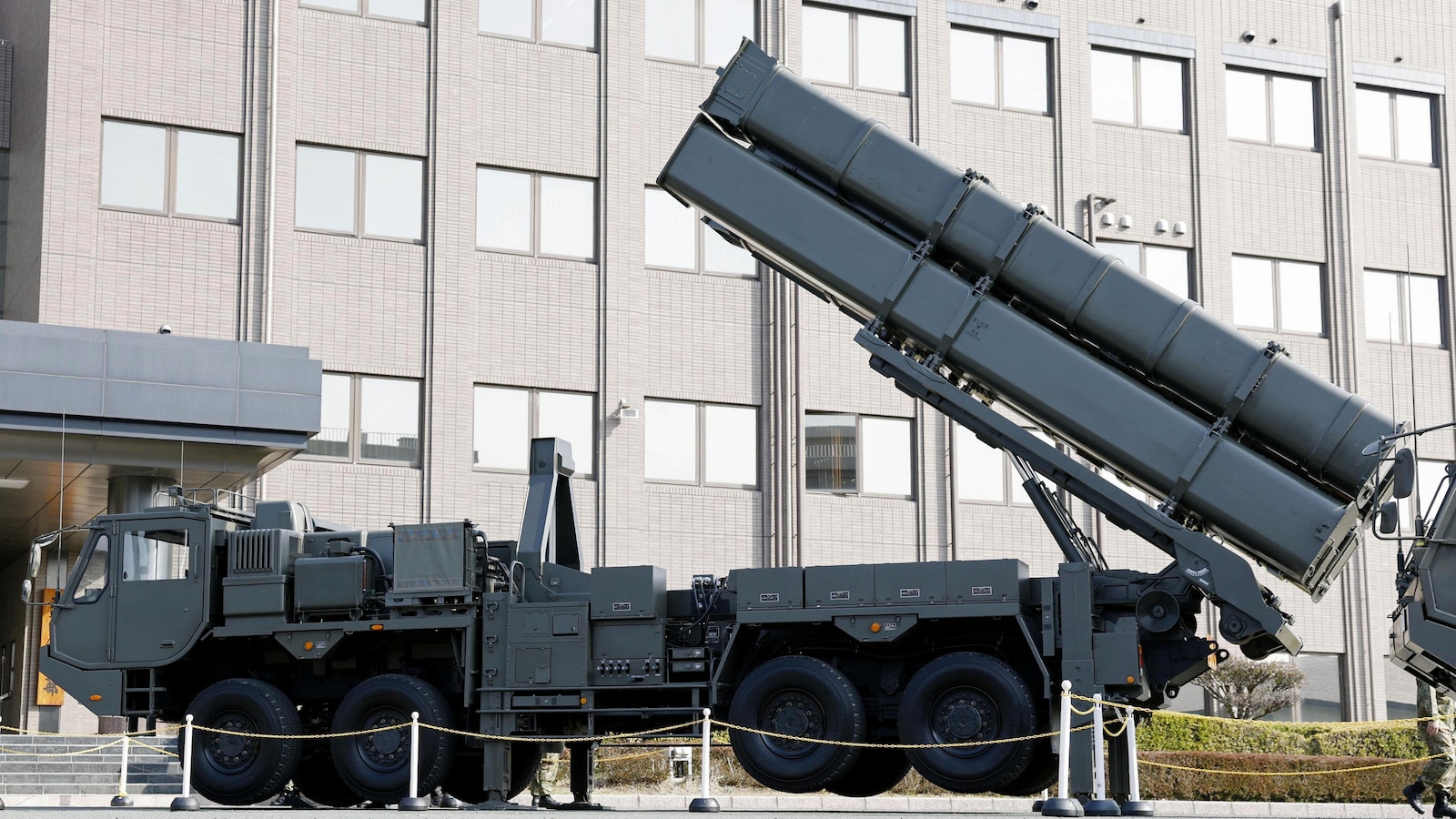
Japan deploys its first long-range missiles


TOKYO — Japan’s first long-range missile was deployed at a southwestern army camp, officials said Tuesday, as the country pushes to bolster its offensive capabilities.

The upgraded Type-12 land-to-ship missiles, developed and produced by Japan’s Mitsubishi Heavy Industries, became operational at Camp Kengun in Kumamoto prefecture.

“As Japan faces the most severe and complex security environment in the postwar era … it is an extremely important capability to strengthen Japan’s deterrence and responsiveness,” Defense Minister Shinjiro Koizumi told reporters. “It demonstrates Japan’s firm determination and capability to defend itself.”

The upgraded Type-12 missile has a range of about 1,000 kilometers (620 miles), a significant extension from the 200-kilometer (125-mile) range of the original that would allow it to reach mainland China.

The deployment of the long-range missile gives Japan a “standoff” capability, meaning it can strike enemy missile bases from afar, marking a break from the self-defense-only policy the country long followed under its pacifist constitution.

Residents opposing the deployment near the residential area staged protests outside the Kengun camp, saying it would escalate tension and increases risks the area could be targeted by potential enemies.

Also Tuesday, a hypersonic glide vehicle, a new weapons system designed for island defense, was deployed to Camp Fuji in the Shizuoka prefecture, west of Tokyo. Additional deployment of the upgraded Type-12 missiles and HGVs at other locations in Japan, including Hokkaido in the north and Miyazaki in the south, are planned by March 2028.

Japan also plans to deploy U.S.-made, 1,600-kilometer (990-mile)-range Tomahawk cruise missiles on Japanese destroyer JS Chokai later this year, and eventually on seven other destroyers.

Japan considers China its main regional security threat and has fortified the country’s southwestern islands near the East China Sea in recent years.

Prime Minister Sanae Takaichi ‘s Cabinet in December approved a record defense budget plan exceeding 9 trillion yen ($58 billion) for the fiscal year beginning April and aims to fortify its strike-back capability and coastal defense with cruise missiles and unmanned arsenals.

Japan last June spotted two Chinese aircraft carriers almost simultaneously operating near Japanese remote islands in the Pacific for the first time, sparking Tokyo’s concern about Beijing’s military activity stretching far beyond its borders.

The defense minster last week announced the establishment of a new office dedicated to studying China’s Pacific activity.

Tensions have escalated further since Takaichi’s statement in November that any Chinese military action against Taiwan could be grounds for a Japanese military response.