My daughter was 12 when she was first sexually harassed


My daughter was 12 when she was first sexually harassed
Before having a daughter, I admit I was completely oblivious to this problem (Picture: Neil G)

My daughter was on the bus home when a boy at her school began making rude gestures towards her.

Elodie told me he was egged on by his friends, who were all laughing about it. I was horrified when I heard about this – and that was just the start. 

She was just 12 when she first experienced public sexual harassment.  

Now aged 16, Elodie has told me something like this happens regularly, around once a month, and she worries about being harassed and humiliated almost every time she goes out. 

As her dad, this is heartbreaking to hear.

That’s why I’m incredibly pleased that the government has brought into force a law that sexual harassment in public will be considered a specific offence.

But my main concern is still raising awareness. Without this, harassment will still happen and the impact on the victim will still be felt.

I hope new laws like this can put these issues forefront in the minds of the public.

Before having a daughter, I admit I was completely oblivious to this problem.

Yes, I’d always felt some of the things I heard men say to girls and women were unacceptable. But what I see now really scares me – the nastiness and abusive comments are not ‘banter’, they’re controlling and hurtful. There is a real intention to cause harm behind these words. 

This Is Not Right

On November 25, 2024 Metro launched This Is Not Right, a campaign to address the relentless epidemic of violence against women.

With the help of our partners at Women’s Aid, This Is Not Right aims to shine a light on the sheer scale of this national emergency.

You can find more articles here, and if you want to share your story with us, you can send us an email at vaw@metro.co.uk.

Read more:

So many men I speak to when discussing Elodie’s experiences, like friends and family members, are shocked when I tell them what is ‘acceptable’ within the law, like making sexually explicit comments or sexually propositioning someone in public.

They think about their wives and daughters, and cannot believe so much harmful behaviour is legal, particularly when these same behaviours are specifically banned in the workplace through the Equality Act. 

And what is more devastating is that Elodie is not alone. Research from Plan International UK found 75% of girls, some as young as 12, in the UK have experienced some form of public sexual harassment.

For some girls, this is a daily occurrence that affects their walk to school, where they exercise and where they spend time with their friends. Some have even avoided school altogether. 

Neil - I worry for my daughter's safety on UK streets
Despite my fears, I try my best to reassure my daughter (Picture: Neil G)

I worry about Elodie experiencing public sexual harassment all the time: my fear is she’s at risk of assault, or even abduction, when walking alone. She shares my concern that a comment could quickly escalate. 

When Elodie is planning to go out, I have a real mental battle with myself. Should I raise the subject of staying safe and put this issue on the table, or leave it and hope nothing happens?

Elodie is a very level-headed young woman and I trust she is aware of the risks, so I don’t want to limit her life experiences by raising my own fears. But, of course, that doesn’t mean that I don’t sit and watch both the clock and the phone when she is away from home. 

My anxiety increases later in the day – evenings are particularly bad because I fear she could be assaulted after dark, and winter is worse again as everyone is bundled up and less aware of what’s going on around them.  

I also really worry when she’s on public transport. Anyone could sit next to her and touch her inappropriately or prevent her getting off at her stop, and my wife and I wouldn’t know until it’s too late. That fills me with dread and it’s so easy to see it happening.  

We often pick Elodie up when she’s been out and always check she doesn’t walk home on her own. We’ve also all agreed to use an app on her phone so we can check where she is.

But it’s a tough balancing act – she’s a young woman and we want to give her freedom. We don’t want her to feel she’s being watched all the time by her parents, and we also don’t want to worry ourselves silly as that isn’t healthy for us or Elodie. 

Despite my fears, I try my best to reassure my daughter. Until today, there was no single piece of legislation to protect girls and women from public sexual harassment. 

Neil - I worry for my daughter's safety on UK streets
New strong and effective legislation would send a clear signal that public sexual harassment is not OK (Picture: Neil G)

It was a law that my Elodie had a part in, and I’m so proud of my daughter and the fact she has been involved in something that will make such an important difference to girls across the country. She feels empowered by how her hard work and commitment to this issue is starting to pay off. 

. We need to do everything we can to help create a society where this kind of behaviour is seen by everyone for what it is: harmful and unacceptable.

As parents, we have a crucial role to play in educating both boys and girls that this kind of behaviour, far from being harmless or even a way of complimenting a girl, is always wrong. 

Men also need to model good behaviour for their sons and grandsons, as well as calling out friends or colleagues if they see them sexually harassing someone.

This has really changed how I behave when I’m out too: I’ll often try to walk in front of a woman so she can see me, instead of hearing me behind her and potentially worrying about who is there. 

No-one should feel uncomfortable going about their daily life and the long-term psychological impact on girls is severe, let alone any physical threats they may also face. All I want is for Elodie – and all girls in the UK – to feel safe. I don’t think that’s too much to ask. 

A version of this piece was published in April 2023

Do you have a story you’d like to share? Get in touch by emailing Ross.Mccafferty@metro.co.uk. 

Share your views in the comments below.


Girls Get Better Grades, But That ‘Advantage’ Doesn’t Seem To Lead To Fair Pay


Expert comment provided by the European Institute for Gender Equality.

A Cambridge study found that in the UK, boys typically perform worse than girls in exams, from early years through to university.

Some researchers, including those commissioned by parliament’s Education Committee, have sought to find out why that is, while headlines posit that schools might be “biased” against boys.

We aren’t seeking to explain that difference here. Instead, we wanted to know whether the higher grades girls tend to get in school actually translate to better wages once they enter the workplace.

Here, we asked a spokesperson for the European Institute for Gender Equality (EIGE) about the topic.

“These stronger school outcomes do not automatically translate into equal outcomes later in life”

An EIGE spokesperson said that girls’ academic achievements are a “long-standing achievement in the EU”.

Women increasingly outnumber men in completing third-level education, they added.

But “these stronger school outcomes do not automatically translate into equal outcomes later in life.

“Evidence consistently shows that structural inequalities in households, the labour market and public life continue to shape women’s opportunities, earnings, and career progression.”

Indeed, the author of the Cambridge study we mentioned earlier said that “apparent advantages” suggested by girls’ academic successes “are not necessarily carried through to employment”.

At its current rate, the Trade Union Congress says, the UK’s gender pay gap is not expected to close for another 30 years.

Why don’t girls’ higher grades appear to lead to better pay?

The EIGE spokesperson said that one-third of young men aged 15-24 believe men are better leaders than women, compared to 15% of young women.

“These attitudes shape unequal outcomes over the life course, [and] contribute to a persistent divide in the labour market, where women are overrepresented in public sectors such as education, health, and care – roles that are essential but often undervalued and lower paid,” they added.

Men, meanwhile, are likelier to work in higher-paying sectors.

Additionally, when women choose lucrative jobs, these tend to become lower-paid if others join them and the career is deemed “feminine”. The inverse appears to have happened in e.g. programming, when a formerly feminised role became male-dominated.

And “even when women enter the workforce with strong qualifications, they face barriers to career progression. Women remain underrepresented in senior and decision-making positions, which has a direct impact on earnings,” the spokesperson said.

For instance, in education, which is 76% female, men make an average of 17% more than women in the UK. As a percentage, men are significantly more likely than women to be headteachers (5.8% vs 3.9%).

“In addition, unequal sharing of care responsibilities means women are more likely to work part-time, take career breaks, or adjust their working patterns, all of which can slow career advancement and reduce lifetime earnings,” the EIGE spokesperson said.

“Women are also twice as likely as men to provide over 35 hours of childcare per week and, on average, receive only 75% of men’s pensions.”

Ultimately, “the assumption that better school results lead to better professional outcomes does not hold in reality. Addressing these gaps requires tackling structural inequalities that continue to limit women’s economic equality.”


Fide Candidates rocked by war fears: Koneru Humpy set to pull out as organisers refuses to move Cyprus event


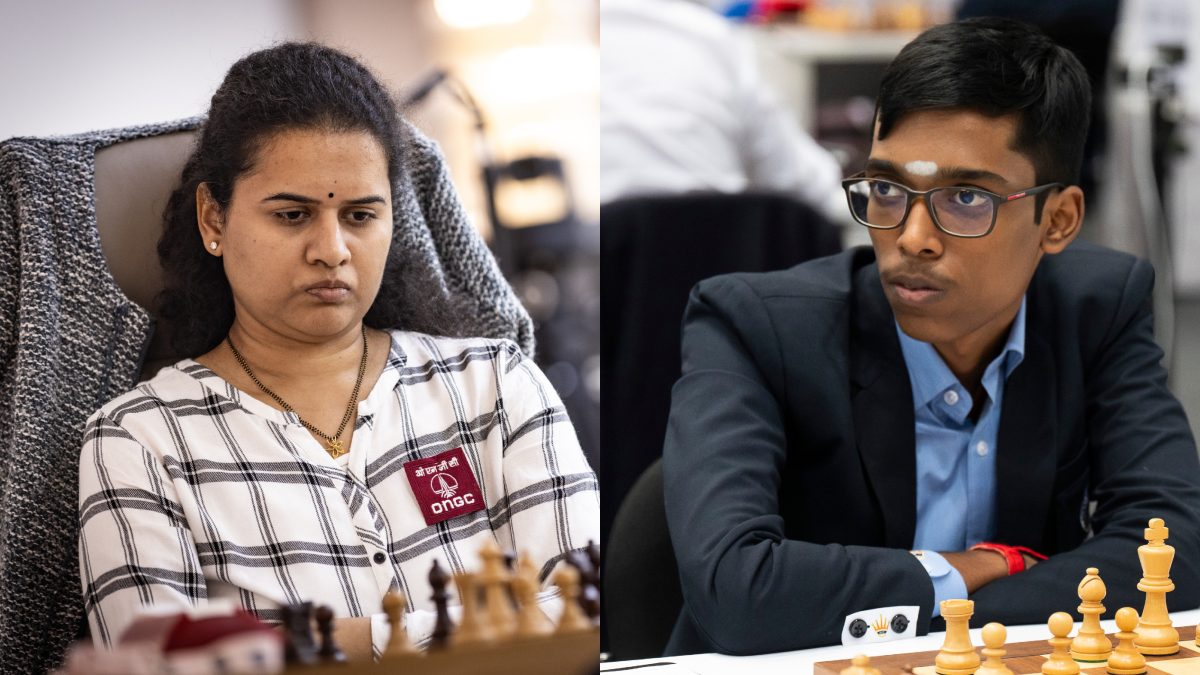
There’s still close to two weeks to go for Fide Candidates 2026 in Cyprus but questions are being raised on the venue amid the USA-Iran war as Indian chess star Koneru Humpy is set to skip the women’s competition.

Indian chess star Koneru Humpy is set to pull out of the Women’s Candidates 2026, but the prestigious Fide Candidates 2026 and the women’s tournament will go ahead as planned from 28 March in Cyprus, despite a recent drone attack on a British air base, the CEO of the chess global body – CEO Emil Sutovsky – has confirmed.

While Cyprus was picked as a venue for Fide Candidates 2026 last November, the situation has changed rapidly after the USA and Israel launched attacks on Iran. On 1 March, a British air base was hit by a drone. While European warships and Turkish fighter jets are guarding the Mediterranean island, there have been serious question marks over whether it should be hosting the Candidates, which will decide the next challenger for the World Chess Championships.

STORY CONTINUES BELOW THIS AD

Fide says Candidates 2026 will be played in Cyprus

Speaking to ChessBase India, Fide CEO Emil Sutovsky has clarified that Cyprus is not involved in war, hence there are no plans to change the venue for the tournament.

“Our plans have not changed. We are in the final stages of preparing the Candidates’ Tournament. Of course, we are monitoring the situation. Cyprus is not too far from, let’s say, the war zone or conflict zone, but at the same time, it is not directly involved in any way and is not in a state of war,” Sutovsky said.

“There is no emergency situation or anything like that. Of course, about ten days ago there were some worrying news, but since then the situation has appeared quite calm.

“But we are, of course, not just hoping that nothing will happen. We are constantly monitoring the situation and also staying in contact with the state authorities who are assisting us with everything related to the tournament.”

Also Read |
Fabiano Caruana leads strong Candidates field in Cyprus with odds favouring world No 3 over Hikaru Nakamura

Sutovsky added that tournament postponement or venue change is possible, but that would only happen if the situation worsens from here.

“We are considering various scenarios, even the most unlikely ones. But we firmly believe that the current situation provides no grounds or reasonable reasons to postpone the date or move the tournament from Cyprus.

“Could something happen? Possibly. But at the moment, we don’t see anything even remotely dangerous enough to consider moving it.”

STORY CONTINUES BELOW THIS AD

Koneru Humpy slams Fide over lack of action

Meanwhile, Indian Grandmaster Koneru Humpy, who is the third Indian in the Women’s Candidates along with Divya Deshmukh and R Vaishali, is unlikely to participate in the Cyprus tournament, considering the tension in West Asia.

“It just doesn’t make any sense. It’s dangerous to travel anywhere near West Asia at this point when there’s so much tension and uncertainty,” Koneru Humpy told Hindustan Times. “The war started around a fortnight ago, it’s still ongoing and the tournament is less than two weeks away. I don’t think any official body would dare host an event in the region at this point.”

Humpy also slammed Fide for sticking with the pre-decided calendar despite a war breaking out in West Asia.

“From an organisational point of view, it’s just not the right call. It’s one of the most crucial tournaments and you have just 16 top players (combining Open and Women) to think of, why not look at alternatives and different dates? As someone who’s spent decades in chess, I thought I should speak up. Irrespective of whether you’re a champion or not if you can’t speak up when the situation so demands, it means that you’ve learnt nothing from sport.”

STORY CONTINUES BELOW THIS AD

For the unversed, R Praggnanandhaa is the only Indian Grandmaster in the Fide Candidates 2026. The winner will face world champion D Gukesh in the World Chess Championship.

End of Article


My partner’s revolting pyjamas are ruining our sex life


My partner’s revolting pyjamas are ruining our sex life
This week’s diarist is turned off by one item of clothing in particular (Picture: Myles Goode)

Welcome to How I Do It, the series in which we give you a seven-day sneak peek into the sex life of a stranger.

This week, we hear from Tammy*, a 43-year-old working in the media, who met her now-boyfriend Charles* three months ago.

Enticed by his good looks, charm, and intelligence, Tammy quickly fell for the 65-year-old, but there’s just one problem: his ‘revolting’ nightshirt.

Charles’ refusal to part ways with his pyjama shirt is a major turn-off for Tammy, and it’s causing her to question the relationship.

‘I have a healthy sex drive and in my last relationship my partner and I usually had sex twice a day,’ she says. ‘We both worked from home and we were always heading back to the bedroom.

‘However, with Charles, although I stay over three or four nights a week, we have not yet had sex.’

Tammy can see potential in Charles, but this lack of sex has left her feeling unhappy in her relationship. ‘It’s making me understand why people have affairs.’

Without further ado, here’s how Tammy got on this week…

The following sex diary is, as you might imagine, not safe for work.

Sign up to The Hook-Up, Metro’s sex and dating newsletter

Love reading juicy stories like this? Need some tips for how to spice things up in the bedroom?

Sign up to The Hook-Up and we’ll slide into your inbox every week with all the latest sex and dating stories from Metro. We can’t wait for you to join us!

I wake up influencer-orange from doing my tan the night before. After breakfast I go for a swim and have an everything shower. This takes about three hours and I spend the rest of the day doing my hair and make-up.

I work from home, so I answer the odd email, but I’m getting ready to spend the weekend with Charles. I want to look fabulous, so that’s my priority.

I arrive at his at 7pm, in an Uber he’s sent for me. We enjoy a G&T before heading next door for a soiree at his neighbour’s house. There are 12 of us, including a couple who’ve recently moved into the square.

The woman is pretty and when Charles meets her, he practically forgets who I am. He says: ‘This is…….’ Then there’s a long awkward silence where my name should be until I step in and introduce myself. I let it go.

Charles has an eye for pretty women and quite frankly I find it rude. 

As usual, I wake up by myself and open the bedroom door only to be hit by a fog of cigar smoke. Charles gets up at around 5am, so by this point he’s been smoking for over three hours.

I march about briskly opening windows as Charles complains about the cold, and I remind him that I didn’t choose to have a relationship with a smoker. He lied about his smoking on Hinge, as well as claiming he was 50(15 years younger than he actually is).

I suppose this explains his struggles with erectile dysfunction, although I’ve never brought it up with him, but funnily enough this is not the biggest barrier to us having sex.

The most insurmountable issue is that he comes to bed dressed like Wee Willie Winky. Yes, he actually wears a nightshirt. I did not even know they existed outside of the Dickens film that’s on at Christmas, but somehow Charles has located one, perhaps by robbing the grave of someone buried in the Edwardian era.

The one thing worse than seeing him walk into the bedroom wearing it, is seeing him sit about in it all morning. It revolts me and I can barely look at him until nearly 11am, when he finally has a shower and gets dressed.

When he’s in a nice shirt and chinos with a cashmere jumper, I do find him attractive, he’s a handsome man. He’s over 6ft with the sort of bone structure most usually seen in the society pages of Tatler.

Seeing him like this, I definitely would, so I slip his hand inside my bra, hoping to excite him. I’m not sure if his ED is affected by his drinking, so I try to ignite the spark before he has alcohol in his bloodstream.

Charles is a big drinker, at the weekend he’ll start drinking before midday.

My efforts at putting his hand on my breast lead nowhere as he tells me I’m in the way of the television. He’s watching Formula 1.

We open a bottle of wine with lunch, so there’s no chance now, but the motorsports must have jacked up his testosterone levels as he tells me he’ll give me ‘a damn good f***ing’. I wish he would.

It used to excite me when he said things like this, but seeing as he’s never done it, I no longer believe him. It’s like Del Boy in Only Fools and Horses saying: ‘This time next year we’ll be millionaires.’ Ironically, Charles is a millionaire, but I despair of ever again getting a good d**king.

Friends are coming over for lunch and Charles reminds me how much he likes it when I am affectionate towards him in front of other people.

I can’t even deal with dissecting this so I just say: ‘OK darling!’ I give him a little kiss and make a mental note to ramp up the PDA when the guests arrive.

I must do a good job because one of them says: ‘Awww! You guys are so cute!’

And actually, we are a good match in a lot of ways. 

As well as being well-educated, Charles has impeccable manners and he’s very thoughtful. He’s the kind of man who takes care of things and I feel like I’m in safe hands when I’m with him.

Plus, penetrative sex isn’t everything, and Charles did go down on me twice last night. I prefer this anyway. If I had to choose between penetrative sex and receiving oral, I would definitely choose receiving oral. I just wish he would do it more often.

I didn’t actually want it the second time – I was tired and I wanted to go to sleep. However, I think he felt a surge of male pride at making my legs shake as I orgasmed and he wanted to do it again for the applause. 

It’s gone 9pm by the time the last guest leaves. We’re both tired by then, but Charles loads the dishwasher and we watch a bit of Top Gun 2 on the telly.

Monday

I wake up and walk into the sitting room where Charles is chain-smoking his miniature cigars, dressed in his ancient artefact. It’s like he’s cosplaying a Jane Austen character.

I want to tell him: ‘The V&A called – the costume curator wants their 18th century exhibit back’, but I bite my tongue.

He announces: ‘I was rock hard last night! Rock hard!’

He sounds extremely proud of himself, but unfortunately his claim bears no relation to reality. What actually happened is that he poked his semi-flaccid penis at me in the night and I ignored him until he stopped bothering.

You might imagine I’d be pleased at the prospect of having sex, and perhaps even helped matters along. However, the image of his ‘Tiny Tim’ nudging a molehill in his nightshirt makes me queasy.

I hate the idea of him hitching up his nighty and there’s no way I am putting my hand up there. I just won’t do it. I know he’s naked underneath, only because I see his boxers on the bathroom floor, and I don’t know why he can’t wear those to bed instead. 

Charles is working from home today and he wants me to stay and work from his, but I tell him I can’t concentrate so he orders me an Uber. At home I unpack then tackle my inbox before doing yoga.

I’m so happy to be sleeping by myself in my own bed. I love showering then getting into a freshly changed bed, with crisp clean sheets.

Charles’ cleaner changes his bed on a Monday morning, and I typically stay with him on Friday, Saturday and Sunday night, so his bed’s never freshly changed when I’m there.

But it’s the nightshirt that makes the bed manky. I hate it – the fact that it’s always the same grubby garment disgusts me.

My revulsion is skyrocketing, but picking my battles, I decide I might be more able to stomach him wearing a nightshirt if it’s new, and clean on, rather than a dirty old dishcloth that I wouldn’t even use on the floors.

If I buy him a stack of new ones, he can always wear a clean one to bed. But aside from getting in a time machine and traveling back to 1840, where would I even find nightshirts?

I put these thoughts aside as I have a celebrity to interview for a newspaper. I spend the morning prepping, and afterwards I go to the gym.

I’ve spent the day wracking my brains, and all I can think of is an Ebeneezer Scrooge halloween costume. I find loads of them online, modelled by unpleasant old men.

The costumes come in synthetic fabrics with a range of accessories including fake candles, night caps and walking sticks. Although this is an amusing bonus, I’m unwilling to subject myself to a polyester-clad bed partner. Surely there must be nightshirts in natural fibres?

Enjoying this? There’s more…

I have a flash of inspiration and turn to a forum on Reddit, where there is indeed a thread on men’s nightshirts. The original poster has asked if anyone wears them so I sift through the replies.

These include: ‘I think that was five generations back from anyone alive today lol’ and ‘Good lord, honey, we weren’t pioneers.’

With no pointers from Reddit, I’ve hit a dead end. I think about this as I transcribe yesterday’s interview. It takes all day but I prefer to do it myself as I don’t trust AI transcription services. In the evening I go for a run and head to bed.

I bite the bullet and call Charles to let him know I’m looking for new nightshirts for him. ‘Why?!’ he snaps.

I want to tell him: ‘Because it’s disgusting!’. However, in an effort to help him understand, I say: ‘Well, you wouldn’t wear the same shirt to work each day, would you?’

‘I wash it,’ he declares. ‘How often?’ I ask, gently.

I know his answer of every other day sadly isn’t true. He just hangs it back up on a hook on the door, with the rip in the cuff confirming that it is indeed the same old rag that he wears night after night.

Wary of arguing, I let it drop, but he later WhatsApps me saying: ‘I’ve bought four for £16 on Amazon.’

This is a miracle. Charles has Amazon Prime so maybe they’ll even be there when I go over tomorrow. As unsavoury as it is seeing him come to bed looking like a relic from Victorian times, at least he won’t be marinating in the same filthy fabric each night.

I stay in this relationship because Charles has some amazing qualities, and we have a shared love for entertaining at lunches and suppers, but now, if I’m feeling less repulsed by his nightshirts, who knows what this could do for our sex life, too.

Do you have a story to share?

Get in touch by emailing MetroLifestyleTeam@Metro.co.uk.


The Issues Straight Women Bring Up Most In Sex Therapy


Sexologist comment provided by licensed sexologist, relationship therapist, and author at Passionerad, Sofie Roos.

Last week, sexologist and therapist Sofie Roos shared the issues straight men most often brought up in sex therapy.

And this week, she spoke to us about straight women.

Here, she shared the topics she hears about most frequently:

1) Having a lower sex drive than their partner

“The single most common problem straight women bring up with me is that their sex drive has decreased or is overall low, while their partner is way more interested in being intimate, leading to worries and tension in the relationship,” Roos told us.

She added that women may be more likely to compare their lust levels to their partner’s, and feel their lower desire poses an “issue”.

2) Pain during penetrative sex

Experiencing pain during sex thanks to conditions like vulvodynia, vaginal dryness, or pelvic floor issues is “extremely common” among this group, said Roos.

“What most don’t know is that there’s both a physical and mental part… pain leads to fear, and fear leads to deeper problems,” leaving some in a vicious cycle.

3) Not orgasming during partnered sex

Straight women have long suffered from “the orgasm gap”. The sexologist said this doesn’t seem to be going away.

“Many straight women are having a very hard time orgasming during intimacy with their partner, and they don’t know how to solve it,” she said.

4) Body image issues

“I’ve met countless straight women that are extremely aware of how their own bodies look, smell and feel… they think so much about age, weight and how they are seen that it becomes difficult to just let go and be in the moment,” Roos added.

5) Losing desire thanks to the mental load

In straight relationships, the mental load – or having to think about, keep track of, and remember the endless tasks that keep a household going – still predominantly falls on women’s shoulders.

And the sexologist said that can have a knock-on effect in the bedroom. Doing “all the planning… as well as all the emotional work in the relationship” can “lead to higher stress levels, which makes the body de-prioritise desire”.

6) Not putting their own pleasure first

“I often meet women who describe themselves as having a hard time with setting their sexual needs and boundaries first, as they’ve been taught to be accommodating rather than prioritise what they want and don’t want,” she stated.

So, uh, any advice?

Yes. The sexologist said that accepting shifts in your levels of lust and trying alternative forms of intimacy, like “oral sex, massage, kisses, caresses and more mentally-focused pleasure, such as roleplaying or dirty talk,” may help.

Explore your own desires, perhaps through masturbation, and communicate them with your partner. “As a majority of women can only reach all the way via clitoral stimulation, I also advise focusing more on that, either with your hands, mouth or a sex toy,” the sexologist said.

Remember also that “pain during sex isn’t normal”, so it’s important to seek professional help if you experience it.

And keep in mind that “your sex life isn’t isolated from the rest of the way you live, so try to look at your diet, sleep schedule, exercise habits, how you drink, how you deal with stress and how your relationships are,” she concluded.


Itchy Ears? It Could Be A Sign You’re Entering This Dreaded Phase.


While hot flashes and night sweats are commonly recognised signs of perimenopause, there’s one lesser-known symptom: itchy ears.

Described by many as a deep-seated crawl or tickle in the ear canal that feels impossible to reach, itchy ears are easy to shrug off as a hygiene issue. But experts say it can actually be a natural result of the hormonal ups and downs of perimenopause.

Here’s the lowdown on this often-overlooked symptom:

How Changing Hormones Affect Your Ears And Skin

Oestrogen levels naturally rise and fall throughout each menstrual cycle as a follicle matures and eventually ruptures to release an egg. “[But] during perimenopause, as egg and follicle quality declines, oestrogen production can vary more dramatically from cycle to cycle, depending on the quality of the specific follicle developing that month,” explained Dr. Sandy Chuan, a double board-certified reproductive endocrinologist and obstetrician-gynaecologist at San Diego Fertility Center.

Chuan added that it’s also common to intermittently skip ovulation entirely during this transitional period. “During these anovulatory cycles, or cycles without ovulation, oestrogen levels remain low because no follicle is developing, resulting in minimal oestrogen production.”

And according to Dr. Christine Maren, a board-certified physician and Menopause Society-certified provider, those dramatic swings aren’t the only issue.

“Hormonal shifts in perimenopause often begin with less progesterone. Progesterone is anti-inflammatory and, importantly, stabilises mast cells, which are the immune cells that release histamine,” she said. These chemical messengers regulate inflammation and allergic reactions, like itching, flushing and hives.

Combined with fluctuating levels of oestrogen, the symptoms amplify. “High levels of estrogen … stimulate mast cells and release more histamine,” Maren said. “But on the other hand, low levels of estradiol, which we also see during perimenopause, disrupt immune balance and create more inflammation. The real issue isn’t simply high or low oestrogen; it’s the loss of hormonal balance and immune regulation over time.”

Then there are the changes in the gut microbiome to consider. “By menopause, the diversity of a woman’s gut microbiome has declined and resembles the male gut microbiome,” said Maren, noting that this shift may mean more histamine producers, fewer bacteria that break down histamine and a greater overall histamine load in the body, which can show up as itchy skin or hives.

“Low oestrogen states also affect the barrier function of the gut, which increases inflammation and also plays a role in autoimmune diseases like psoriasis,” Maren said.

The combined shifts in hormones, immune signals and gut health help explain why skin can suddenly become reactive during perimenopause. And those same hormonal changes that make your skin dry and sensitive can also affect your ears.

“Declining oestrogen levels affect the keratinocytes in the skin,” according to Chuan, referring to the primary cells that build the protective barrier shielding your body from environmental damage, infection and moisture loss.

When oestrogen drops, hydration levels, collagen and glycosaminoglycans ― the molecules that help keep skin plump and cushioned ― also decline, leaving a thinner, more vulnerable barrier.

“Ears are already delicate and regularly exposed to elements like weather, earbuds, hearing aids and hair products — creating a perfect storm for irritation,” Chuan said.

Estrogen also affects how the spinal pathways process itch signals. “As hormone levels rise and fall, these pathways can become more or less sensitive, which can change how strong itching feels,” Chuan explained. During hormonal shifts, the same minor irritation might suddenly feel more intense.

There’s another layer to consider. Maren added that age and hormonal shifts can alter the composition of earwax, which helps lubricate the ear canal. “As this protective layer changes, the skin in the ear canal is more likely to feel dry or sensitive,” Maren said.

Itchy Ears? It Could Be A Sign You’re Entering This Dreaded Phase.
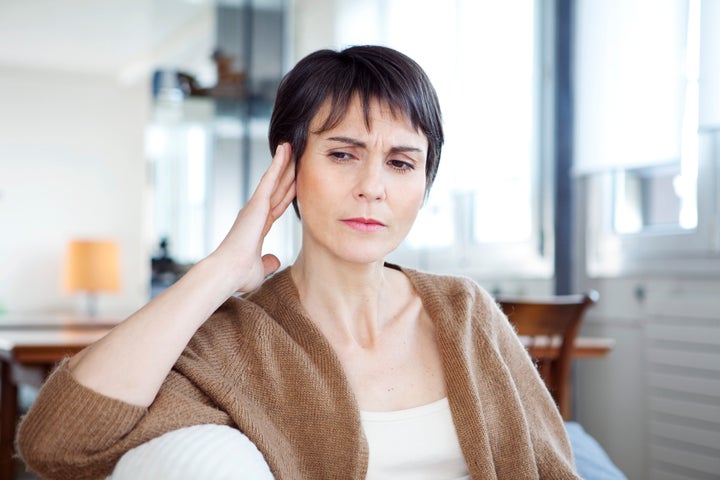
Hormonal shifts can affect inflammation, histamine and your earwax production, all of which can lead to itchy ears.

Everyday Habits That Could Affect Your Itchy Ears

Your daily habits can also influence how your skin and ears feel during perimenopause.

“Poor sleep and increased stress response both cause the release of pro-inflammatory markers, which can impact overall skin barrier function, turnover and healing, contributing to skin dryness and irritation,” said Dr. Catherine Hansen, a board-certified obstetrician-gynaecologist, certified menopause practitioner and chief medical officer at Effica Health.

Food choices matter, too. “Dietary patterns can help to modulate inflammation and improve the skin barrier function,” said Dr. Stacey Silverman Fine, a board-certified obstetrician-gynaecologist at Maven Clinic.

Fine pointed to plant-based diets rich in phytoestrogens to reduce hot flashes and further support skin health through anti-inflammatory effects. Omega-3 fatty acids can also help support the skin barrier function through anti-inflammatory mechanisms, and ensuring adequate vitamin D status may support overall skin health.

How To Tell if Hormones Are Behind Your Itchy Ears And What To Do About It

Timing, patterns and accompanying signs can offer valuable clues about what’s driving the itch.

“Paying attention to triggers is important, especially what makes a symptom like itchy ears better or worse,” Maren said. “Hormone-mediated itchy ears may experience fluctuations during the month, or be associated with other hormonal symptoms such as vaginal dryness, hot flashes, irritability and change in menstrual cycles.”

On the other hand, allergy-related itch tends to come with classic symptoms like a runny nose, sneezing, itchy eyes and a seasonal pattern that flares during high-allergen times of year. Eczema-related itching, meanwhile, usually comes with a clear breakdown of the skin barrier, like flaking, scaling and redness.

Managing hormone-related ear discomfort at home can be simple and effective.

“Gentle ear canal moisturization is the foundation of at-home management,” said Fine, recommending a small amount of petrolatum-based ointment or cream applied to the outer ear canal with a clean finger or cotton swab, while avoiding going too deep, which could disturb earwax or damage the eardrum. “Also, taking short, lukewarm showers helps preserve skin moisture better than prolonged hot water exposure, which strips natural oils and worsens the itching.”

Avoiding common irritants is equally important. Fine noted that hair products that drip into the ear, nickel or reactive-metal earrings, cotton swabs and moisture-trapping earplugs can all worsen itching or disrupt the ear’s natural protective wax layer.

“Dry skin and itching sadly affect more than 50% of women over age 65 and are progressive without treatment. Unlike vasomotor symptoms, like hot flashes, that improve with time, skin symptoms generally worsen with time,” Fine said. “I’d recommend seeking medical treatment if the symptoms are persistent and don’t respond to diet, lifestyle changes or at-home strategies.”


Women Haven’t Felt Less Free To Talk Politics Since ’97: ‘The Backlash Is Real’


Comment provided by Helen Pankhurst CBE, a senior adviser at CARE International, women’s rights activist, and professor at Manchester Metropolitan University.

According to a global analysis conducted by CARE International, women’s freedom to speak openly about politics has regressed to levels not seen since 1997.

This is part of a regressive trend that has been ongoing since 2012.

“If nothing changes, an expected 1.74 billion women and girls will be subject to restrictions on their freedom to express their political views by 2050,” the report reads.

Here, we spoke to women’s rights activist and great-granddaughter and granddaughter of leading suffragettes Emmeline and Sylvia Pankhurst (respectively), Helen Pankhurst CBE, about the findings.

“These findings should concern anyone who cares about democracy”

The CARE analysis suggested that women are, on average, less able to discuss politics openly without fear of harassment.

“These findings should concern anyone who cares about democracy,” Pankhurst said.

“When women feel less able to speak openly about politics, it’s a clear warning sign that civic space is shrinking. This isn’t just about confidence; it reflects growing hostility, restrictions and systemic barriers that are pushing women out of public debate.

“If half the population feels silenced, our politics becomes weaker and less representative. Our democracy is weaker for it. It is a warning light.”

In 2025, the United Nations (UN) said that deadly conflicts, financial cuts, and backlash to women’s rights led to “stagnation and regression” of women’s freedoms.

The UK “is not immune” to this “backlash”

In 2024, UN Women said that one in four countries reported “backlash” on hard-won women’s rights.

Pankhurst thinks this rings true.

“Broadly speaking, we are seeing a rollback. After years of slow progress, women’s rights are stagnating or reversing in too many places,” she said.

“The backlash is real, from attacks on reproductive rights to rising online abuse and cuts to funding for women’s organisations.”

The women’s rights activist stressed that the UK “is not immune.

“We’ve seen a deterioration in the tone of political discourse, increasing harassment of women in public life, and policy decisions that risk undermining hard-won gains.

“Progress isn’t inevitable, and it absolutely cannot be taken for granted. Each step forward is hard-won, progress needs to be defended, and much more work is needed to ensure we don’t turn back the tide on our freedoms.”


Amazon tribe facing extinction welcomes new member with unexpected birth


SAO PAULO (AP) — Pugapia and her daughters, Aiga and Babawru, lived for years as the only surviving members of the Akuntsu, an Indigenous people decimated by a government-backed push to develop parts of the Amazon rainforest. As they advanced in age without a child to carry on the line, many expected the Akuntsu to vanish when the women died.

That changed in December, when Babawru — the youngest of the three, in her 40s — gave birth to a boy. Akyp’s arrival brought hope not just for the Akuntsu line but also for efforts to protect the equally fragile rainforest.

“This child is not only a symbol of the resistance of the Akuntsu people, but also a source of hope for Indigenous peoples,” said Joenia Wapichana, president of Brazil’s Indigenous protection agency, known as Funai. “He represents how recognition, protection and the management of this land are extremely necessary.”

In this photo provided by Funai, Babawru Akuntsu, top, rests beside Akyp, her newborn son, at the Regional Hospital of Vilhena in Vilhena, Rondonia state, Brazil, on Dec. 9, 2025, one day after the birth. AP

Protecting Indigenous territories is widely seen as one of the most effective ways to curb deforestation in the Amazon, the world’s largest rainforest and a key regulator of global climate.

Researchers warn that continued forest loss could accelerate global warming. A 2022 analysis by MapBiomas, a network of nongovernmental groups tracking land use, found Indigenous territories in Brazil had lost just 1% of native vegetation over three decades, compared with 20% on private land nationwide.

In Rondonia state, where the Akuntsu dwell, about 40% of native forest has been cleared, and what remains untouched is largely within conservation and Indigenous areas. The Akuntsu’s land stands out in satellite images as an island of forest surrounded by cattle pasture as well as soy and corn fields.

In the 1980s, deforestation pushed attacks in Rondonia

Rondonia’s deforestation traces back to a government-backed push to occupy the rainforest during Brazil’s military regime in the 1970s. Around the same time, an infrastructure program financed in part by the World Bank promoted domestic migration to the Amazon, including the paving of a highway across the state.

In the 1980s, Rondonia’s population more than doubled, according to census data. Settlers were promised land titles if they cleared the forest for agriculture and risked losing claims if Indigenous people were present, fueling violent attacks by hired gunmen on Indigenous groups such as the Akuntsu.

Funai made first contact with the Akuntsu in 1995, finding seven survivors. Experts believe they had numbered about 20 a decade earlier, when they were attacked by ranchers seeking to occupy the area.

Funai agents found evidence of the assault, and when they contacted the Akuntsu, the survivors recounted what happened. Some still bore gunshot wounds.

The last Akuntsu man died in 2017. Since then, Babawru lived with her mother, Pugapia, and Aiga, her sister. The women, whose ages aren’t known for certain, have chosen to remain isolated from the non-Indigenous world, showing little interest in it.

In 2006, Funai granted territorial protection to the Akuntsu, establishing the Rio Omere Indigenous Land, which they have since shared with the Kanoe people. The two groups, once enemies, began maintaining contact, usually mediated by officials. The relationship is complex, with cooperation but also cultural differences and language barriers.

The Associated Press requested a facilitated interview with the women through Funai, but the agency didn’t respond.

The Rio Omere Indigenous Territory is a territory for isolated indigenous peoples in Rondonia, Brazil. Joe Roe

Amanda Villa, an anthropologist with the Observatory of Isolated Peoples, said Akuntsu women depend on Kanoe men for tasks considered masculine, such as hunting and clearing fields. The two groups have also exchanged spiritual knowledge — the current Kanoe spiritual leader, for example, learned from the late Akuntsu patriarch.

But the most consequential development for the future of the Akuntsu may have occurred last year, when Babawru became pregnant by a Kanoe man.

Linguist Carolina Aragon is the only outsider able to communicate with the three women after years of studying and documenting their language. She works closely with Funai, translating conversations almost daily through video calls.

Aragon also supported Babawru remotely during her labor and was with her during an ultrasound exam that confirmed the pregnancy.

Aragon said Babawru was stunned by the news. “She said, ‘How can I be pregnant?’” Aragon recalled. Babawru had always taken precautions to avoid becoming pregnant.

Social collapse shaped the Akuntsu’s choices

The surviving Akuntsu women had decided they would not become mothers. The decision was driven not only by the absence of other men in their community, but also by the belief that their world was disorganized — conditions they felt were not suitable for raising a child.

“You can trace this decision directly to the violent context they lived through,” said Villa, the anthropologist. “They have this somewhat catastrophic understanding.”

The Akuntsu believed they could not bring new life into a world without Akuntsu men who could not only perform but also teach tasks the group considers male responsibilities, such as hunting and shamanism.

“A breakdown of social relations that followed the genocide shaped their lives and deepened over the years. That does lead people to think — and rethink — the future,” Aragon said. “But the future can surprise everyone. A baby boy was born.”

Aragon said the women were embarking on a “new chapter,” choosing to welcome the child and adapt their traditions with support from the Kanoe and Funai. Villa said the fact that the newborn is a boy creates the possibility of restoring male roles like hunter.

A location map of the Igarape Omere Indigenous Territory in the state of Rondonia, Brazil, is pictured.

Researchers and officials who have long worked with the three women understood that protecting the territory depended on the Akuntsu’s survival as a people. They sought to avoid a repeat of what happened to Tanaru, an Indigenous man who was discovered after living alone and without contact for decades.

After the discovery, authorities struggled to protect Tanaru’s territory. After he died in 2022, non-Indigenous groups began disputing the land. Late last year, the federal government finally secured the area, turning it into a protected conservation unit.

Funai’s Wapichana said Babawru’s child “is a hope that this next generation will indeed include an Indigenous person, an Akuntsu, ensuring the continuity of this people.”

Through years of careful work, Funai secured territorial protection for the Akuntsu and helped foster ties with the Kanoe. The agency also arranged spiritual support from an allied shaman, allowing the women to feel safe bringing new life into the world after decades of fear and loss.

The Akuntsu form emotional bonds with the forest and with the birds. Now, they are strengthening those bonds with a new human life in their world.

“What kind of relationship will this boy have with his own territory?” Aragon said. “I hope it will be the best possible, because he has everything he needs there.”


Despite Being Diagnosed And Treated, Endometriosis Still Rules My Life


Back in 2012, at the age of 21, I was finally diagnosed with endometriosis, a whole nine years after I had started to display symptoms. I had spent my school years with heavy periods that would soak through uniforms; wearing multiple sanitary towels to get through back-to-back lessons and fainting during PE lessons.

When I was finally diagnosed via laparoscopic surgery, I was told that I had stage 4 endometriosis and that it was unlikely that I’d ever conceive. I was also informed that my ovaries, uterus and bowel were ‘glued’ together with endometriosis lesions and I’d need surgery to remove them.

At the time I was told that this diagnosis and upcoming treatment was ‘gold standard’ and that I was ‘lucky’. While I understand that being diagnosed is incredibly difficult – according to Endometriosis UK, it takes on average 8 years and 10 months – I didn’t feel lucky. I felt scared but hoped that treatment would give me my life back.

In 2013, I was finally operated on and for a while, thought that the worst days of endo were behind me.

Endometriosis cannot be cured, though

The sad thing is, my story with endometriosis was just starting and I would battle for years to come to get the accommodations I needed in the workplace.

I am very skilled at what I do and I LOVE my job but when an endometriosis flare hits, I’m just not my usual super-capable self. Lil-lets describe endo flare ups as: “Endometriosis flare-ups are bursts of intense endometriosis symptoms. Increased pain is the most common symptom and flare-ups can be debilitating and unexpected.”

Which is about right. For me, it’s increased pain and sensitivity as well as fatigue. It gets really rough and the only thing I can do is take painkillers and rest, which contrasts with my usually busy professional work life.

What I’ve found is that oftentimes, employers aren’t as understanding as they would maybe like to portray that they are. I have been asked when this condition will be cured (never), how I can predict a flare up (I can’t) and if a hysterectomy is worth considering (beyond inappropriate to ask).

The sad fact of the matter is, many of us feel like we don’t matter to our employers if we are experiencing intense endo symptoms. Not even high-flyers are safe.

In fact, Sanju Pal was a high-flyer – ambitious and successful, she won the Asian Woman of Achievement Award, met the late Queen Elizabeth, had been invited to 10 Downing Street because of her work. However, when she was recovering from surgery to remove endometriosis cysts, she lost her job due to not meeting performance targets.

Speaking to the BBC, she said: “I wasn’t a high performer anymore, according to them, because I had a disability, because I was unwell and wasn’t going to be contributing to the business in the way that I had been before.”

Sanju is far from alone. In fact, according to Endometriosis UK, one in six women and those assigned female at birth with endometriosis have to leave the work place due to their condition.

The charity adds: “This is unacceptable and it’s vital that Governments and employers take action to protect those with endometriosis from unfair practices in the workplace.

“Nobody should face discrimination at work or risk losing their job because of their endometriosis, and we’re determined to work with employers and Governments to ensure this isn’t the case.”

I mourn what my career could have been without endometriosis

For the past seven years, I have worked on a self-employed basis and it has been tremendously helpful in managing my illness, as well as the debilitating bout of fibroids that I also experienced.

I am proud of what I’ve achieved in my career and know that I am great at what I do. I also really miss being part of a team, part of a workforce working together to one goal but I do still live in fear of discrimination all these years later as despite multiple surgeries, the condition is still present in my body and I still experience flare-ups.

There is some small progress in this area, though. Sanju won her employment tribunal against the employers that sacked her following surgery, offering hope for future workplace protections.

Additionally, Endometriosis UK are offering employers the opportunity to learn more about the condition so that they can better support their staff with Menstrual Health at Work resources.

I hope things get better soon.

Help and support:

  • Mind, open Monday to Friday, 9am-6pm on 0300 123 3393.
  • Samaritans offers a listening service which is open 24 hours a day, on 116 123 (UK and ROI – this number is FREE to call and will not appear on your phone bill).
  • CALM (the Campaign Against Living Miserably) offer a helpline open 5pm-midnight, 365 days a year, on 0800 58 58 58, and a webchat service.
  • The Mix is a free support service for people under 25. Call 0808 808 4994 or email help@themix.org.uk
  • Rethink Mental Illness offers practical help through its advice line which can be reached on 0808 801 0525 (Monday to Friday 10am-4pm). More info can be found on rethink.org.


First ever all-Asian women’s snowboard halfpipe podium signals shift in Winter Olympics dynamics


17-year-old Choi Ga-on of South Korea won gold while Korean-origin Chloe Kim of the United States took silver in her bid for an unprecedented three-peat, and Mitsuki Ono of Japan secured bronze.

The 2026 Winter Olympics are going on in full swing in Milan and Cortina as the best of athletes are competing hard to collect medals and memories. One such wholesome moment came during the final of the women’s snowboard halfpipe event.

USA’s South Korean-origin athlete, Chloe Kim, the two-time defending champion of the event, seemed set to earn her third straight gold. In competition was also a 17-year-old South Korean Choi Ga-on.

STORY CONTINUES BELOW THIS AD

Choi did not have the best of starts to the event but ultimately emerged as the shock winner to dethrone Chloe. As Choi won the event, Chloe rushed towards the teenager and embraced her. She had mentored Choi and despite losing the gold could not stop herself from celebrating the victory. While Choi’s win was big, there was another big story unfolding at the same time.

Asian powers rise in snowboarding

Winter Olympics is a stronghold of the western countries. European nations like Switzerland, France, and Austria dominated many Winter Olympic disciplines throughout the history of these events. They had the money, they had the infrastructure and they had a cultural affinity towards snow sports as well.

However, things are changing now. Not just did a South Korean athlete and another one of origins in South Korea won the snowboarding gold and silver medals, the bronze to went to an Asian country. Japan’s Mitsuki Ono clinched the bronze, to mark the first time in history that an all-Asian podium had been achieved in women’s snowboarding halfpipe in Winter Olympics history.

After years of playing catch-up, these East Asian powers are now rising rapidly. South Korea, Japan, China, and the Asian diaspora in western countries is now challenging old hierarchies of winter sports.

With more and more Asians at the podium leading the charge, expect more of them to join these sports back home. This will further boost Asian efforts in snow sports and soon other countries too will join in. The power dynamics in winter sports are being challenged and it helps the entire winter sports ecosystem if these sports go global.

STORY CONTINUES BELOW THIS AD

End of Article