A historic splashdown is just days away off San Diego — and the Navy is ready to be a part of the action.
The San Diego-based USS John P. Murtha will be front and center to recover NASA’s Artemis II astronauts after their spacecraft hits the Pacific later this week, Navy officials confirmed Monday.
Sailors aboard the amphibious transport dock have been drilling nonstop ahead of the high-stakes return, with the crew’s capsule expected to splash down just after 5 p.m. Friday.
In a statement, the Navy said the ship has “unique advantages” that will help with recovering the Orion capsule and gathering “critical data to help ensure it’s ready to recover the astronauts and capsule during future Artemis missions.”
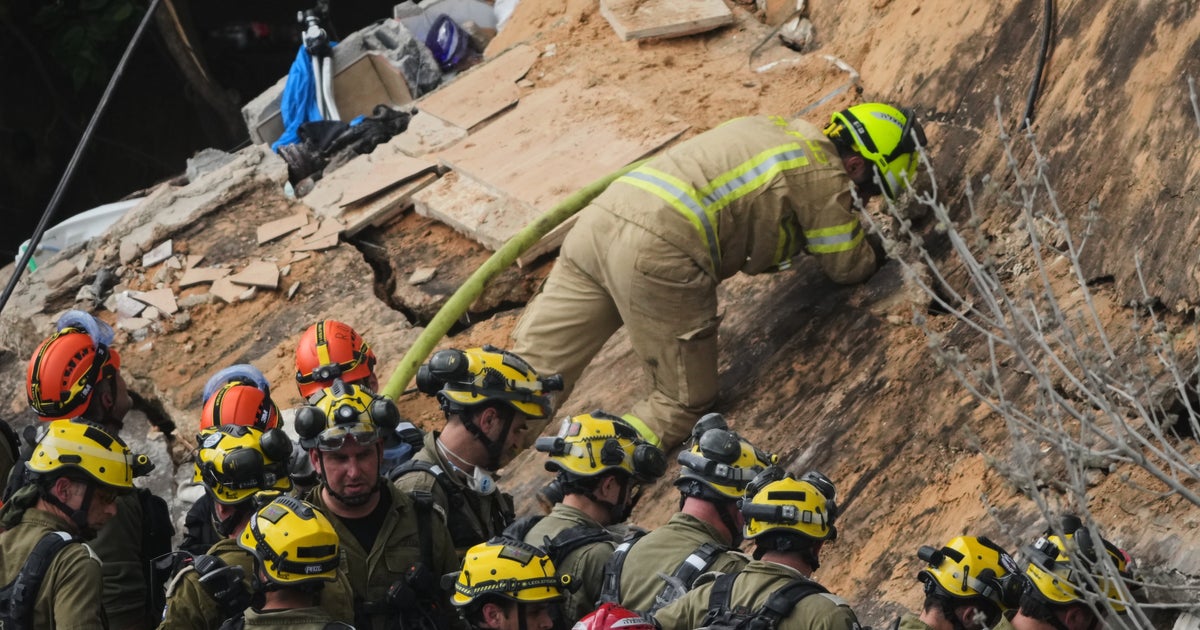
An Orion test capsule floats in the ocean within the well deck of the USS John P. Murtha USS John P. Murtha (LPD 26)Crew members in hard hats and safety vests conduct recovery tests aboard the USS John P. Murtha. USS John P. Murtha (LPD 26)Naval officers explain the purpose of the bridge to a NASA associate administrator. Commander, Naval Surface Force,
The ship’s commanding officer, Capt. Erik Kenny, called the mission “a fitting tribute” to its namesake, Pennsylvania Congressman John P. Murtha.
“We are honored to carry on his legacy by supporting NASA and the Artemis II mission,” Kenny said.
A Navy helicopter squadron based out of Naval Air Station North Island will track the capsule as it streaks through Earth’s atmosphere, then pick up the four astronauts and deliver them to the ship for evaluation, the Navy said.
Navy divers will also plunge into the ocean to recover the Orion capsule and haul it onto the ship’s deck.
Training has been nonstop in support of Space Command’s human space flight recovery mission to retrieve NASA’s Artemis II crew and spacecraft. USS John P. Murtha (LPD 26)
The dramatic return follows a history-making moment Monday, when the astronauts soared farther from Earth than any humans ever — breaking the Apollo 13 record of 248,655 miles set in 1970 during a lunar flyby, according to NASA.
Advocacy groups are demanding California lawmakers cough up $26 million in funds for access to “gender-affirming care” despite concerns about a multi-billion dollar state budget deficit.
In a packed committee hearing Monday, statehouse Democrats explored further ways to fight off what they described as “a significant threat” to care access for transgender Californians from the Trump administration.
“Since the very beginning the Trump administration has meticulously, inhumanely attacked the LGBTQ communities, specifically the trans community,” said Sen. Caroline Menjivar. “We believe everyone deserves the right to be treated equally and fairly.”
“Since the very beginning the Trump administration has meticulously, inhumanely attacked the LGBTQ communities, specifically the trans community,” said Sen. Caroline Menjivar. AP
Trump has been targeting federal funding of services such as puberty blockers or surgery designed to help a person become a specific gender. The U.S. Department of Health and Human Services issued a declaration in December that such treatments are unsafe, which California sued over.
Last year, the state authorized $15 million to defray costs of providing coverage affected by the finalized rule. Now, California lawmakers want to do more to prepare for the pending funding cuts, such as propping up a state-based framework to pay for that coverage.
Lawmakers also considered using CalRx, a state initiative that produces lower-cost prescription drugs, to make any needed gender-affirming drugs.
One finalized federal rule already classifies “gender-affirming” procedures as non-essential health benefits.
The federal government also proposed rules to restrict access for youth through Medicare and Medicaid — health insurance offered through the government for older and low-income Americans. Hospitals and medical providers enrolled in those programs would be prohibited from offering gender transition services to youth, and those funds can’t be used to pay for such services.
“So-called gender-affirming care has inflicted lasting physical and psychological damage on vulnerable young people,” HHS Secretary Robert F. Kennedy Jr. said.
LGBT advocacy organizations claim the federal efforts have dissuaded many doctors from offering transgender services and therefore put lives at risk. JM Jaffe, executive director of Lyon-Martin Community Health Services, said Trump’s funding cuts have had a real impact on staffing and prevented them from applying to federally sourced contracts.
JM Jaffe, executive director of Lyon-Martin Community Health Services, said Trump’s funding cuts have had a real impact. State of California
“In a state budget of over $300 billion, our $26 million ask is a small investment to protect and stabilize access,” Sacramento Pride said on social media.
Members of the public wait to attend a hearing on funding gender affirming care. Courtesy of Jean Berns
However, opponents of the state funding criticized lawmakers for excluding voices who are concerned about the effects of “gender-affirming” care.
“When millions in taxpayer dollars and irreversible medical decisions for children are on the line, lawmakers have a duty to hear all the evidence, not just one side,” Women Are Real, which advocates for women’s sex-based rights, said in a statement to The Post.
The Trump administration is targeting gender-affirming care. AP
Assemblymember Joe Patterson, a Republican, said at the hearing he thinks California is going in the wrong direction on the issue.
“The realization that a lot of western society has abandoned transgender affirming care for children, California continues to go full steam ahead on it,” he said.
The deadline for lawmakers to pass a state budget is June 15.
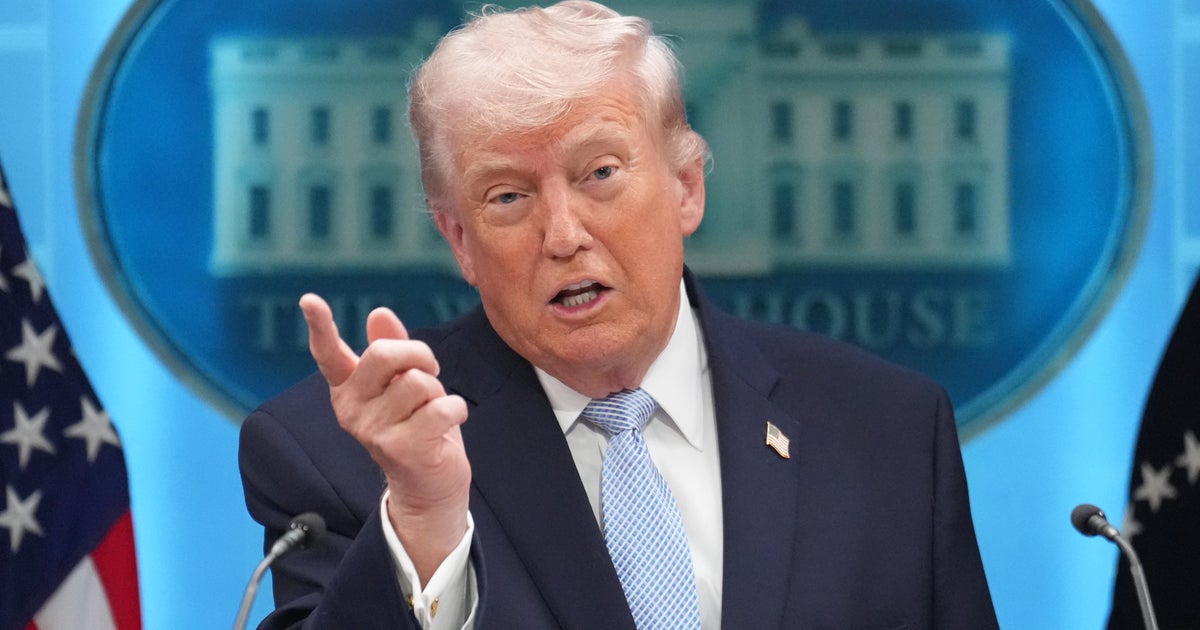
Donald Trump has doubled down on his threat to take out Iran by claiming the entire country could be wiped out in one night.
The US president claimed over the weekend that Tehran had until Tuesday evening to open the major oil shipping lane, the Strait of Hormuz, or face total wipeout.
In a post on TruthSocial on Tuesday, he said: “Tuesday will be Power Plant Day, and Bridge Day, all wrapped up in one, in Iran. There will be nothing like it!!!
“Open the Fuckin’ Strait, you crazy bastards, or you’ll be living in Hell – JUST WATCH! Praise be to Allah.”
The country closed the waterway, which carries around a fifth of the world’s oil supply, in response to US-Israeli strikes five weeks ago – knocking the global economy in the process.
While describing the US military’s “historic” mission to rescue two airmen from Iran during a press conference on Monday, the president interrupted himself to reissue his warning.
“The entire country could be taken out in one night. And that night might be tomorrow night,” the president said.
During an earlier Easter address, Trump claimed Iran is “not too strong at all” compared to a month ago, when the US-Israeli strikes began.
He also told the press that the US would target Iranian civilian infrastructure if it does not surrender.
“And if they don’t, they’ll have no bridges. They’ll have no power plants. They’ll have no anything,” Trump said.
Then he claimed he “won’t go further, because there are other things that are worse than those two”, adding: “If I had my choice, what would I like to do? Take the oil.
“Because it’s there for the taking. There’s not a thing they can do about it.
“Unfortunately the American people would like to see us come home. If it were up to me, I’d take the oil, I’d keep the oil […] make plenty of money and I’d also take care of the people of Iran.”
The president also upped his attacks on UK prime minister Keir Starmer, comparing him to Neville Chamberlain who championed the appeasement policy for Adolf Hitler prior to World War 2.
Donald Trump could be pressured to de-escalate tensions in Iran either by military leaders or Republicans in Congress, according to a US national security analyst.
The president issued an expletive-laden rant at Iran over the weekend, threatening to bomb civilian infrastructure unless it opens the oil shipping lane – the Strait of Hormuz – before his self-imposed deadline tonight.
Ben Rhodes, who served as the deputy US national security adviser under Barack Obama, said Trump was operating outside of the usual checks and balances US presidents usually rely on.
He told BBC Radio 4′s Today programme: “It increasingly feels like at times, not all the times but at times, it is one man in one room making decisions or making threats and a government adjusting to that.
“We’re seeing a lack of expertise, a lack of thinking even two steps ahead, and I think that’s probably a sign they’re not following the normal process.”
“It’s kind of frightening really,” Rhodes added, pointing to the senior figures within the first Trump administration who stood up to the president.
Trump said: “This time, on the military side, with the selection of Pete Hegseth, he got the secretary [of defence] he wanted. Someone who principally would just follow Trump’s directive and be something of a spokesperson for them.
“Frankly, I think the checks are going to come from external sources.”
Rhodes suggested now it might all come down to Republicans in Congress who are “terrified about the political unpopularity of this war, from the markets and stock markets Trump pays attention to”.
He said he believes they will have more impact at “restraining Trump” than any process within the Pentagon or government.
Rhodes also claimed he hopes military leaders will pressure the president behind the scenes as Trump continues to threaten “absolute war crimes”.
“It’s a very important test really if the US military is willing to say no to Trump. He didn’t like it when they said no to him in the first term,” Rhodes said.
“There’s no way around the fact that we may be approaching that point because the war itself, I would argue, may be illegal but these things he’s threatening are clear war crimes.”
But the specialist warned Trump has set so many objectives for this war so will be pushing for a victory of some sorts.
“That is not something the Iranians are going to give him, right, because they control the strait,” Rhodes added.
He said they would most likely to have to resolve the war over negotiations with other countries around the table.
Subscribe to Commons People, the podcast that makes politics easy. Every week, Kevin Schofield and Kate Nicholson unpack the week’s biggest stories to keep you informed. Join us for straightforward analysis of what’s going on at Westminster.
A string of inmate deaths at an infamous Chicago jail have been linked to a terrifying new drug trend — paper laced with a deadly drug and smuggled behind bars.
And the correction officers who have been fighting it say it threatens to be more lethal than the crack epidemic of the 1990s.
When guards at the Cook County Correctional Facility found 57-year-old inmate Thomas Diskin dead, slumped around his cell’s toilet in January 2023, investigators were left scratching their heads — there was no evidence of foul play or a fall that could’ve killed the prisoner.
Pieces of white paper containing drugs confiscated from Chicago’s infamous Cook County Correctional Facility. Cook County Sheriff’s Office
The only thing out of the norm? Tiny strips of singed paper littered around his cell.
“I said, we need to test this and find out what’s going on with it,” Cook County Sheriff’s Office Chief of Staff Brad Curry recalled about that moment, referring to the paper shreds.
Eventually, a Virginia lab would confirm that the strips were soaked in a synthetic cannabinoid called Pinaca, which proved lethal when Diskin smoked the paper.
Before authorities could stop it, other inmates were dropping dead under eerily similar circumstances.
Jail officials tried to warn prisoners about the dangers of the toxic laced paper by posting these signs throughout the facility. courtesy of Cook County Sheriff’s Office
Less than two weeks after the first death, a 23-year-old was found dead, and less than a month after that, a 35-year-old inmate died.
By year’s end, six prisoners fatally overdosed after smoking tiny strips of paper that had been soaked in synthetic drugs — often using a “wick,” or slow-burning string of toilet paper or fabric.
“We didn’t know what was on [the paper in Diskin’s cell], but we knew it was a drug,” Curry told The Post.
“And it was a race against time … we had a new drug that is very, very toxic and very, very deadly, that Narcan apparently didn’t work on,” he explained.
Video showing a suspected non-fatal overdose in CCCF in 2023. Courtesy of Cook County Sheriff’s Office
They tried to warn prisoners about the dangers — throwing up signs in every ward of the approximately 6,000-inmate facility, warning against “drugs smuggled into the jail, like soaked paper.”
The message was stark: “Do not take drugs in the jail if you want to live.”
Guards also began inspecting every single piece of mail that came into the lockup, looking for stains and discoloration that could indicate synthetic drugs on it, and ramped up random cell searches and surveillance.
Several prisoners fatally overdosed by smoking the laced paper, often using a self-made wick, which inmates are seen lighting in a microwave. Courtesy of Cook County Sheriff’s Office
But the strips of drug-soaked paper were sometimes so tiny, guards wouldn’t find them — and not even drug-trained police K-9s were able to sniff out the new synthetic cannabinoid they contained, Curry explained.
While officials did everything short of banning paper — which “is necessary for everybody’s job function here, and for inmates to communicate with their family and friends,” Curry said — to curtail the trend, smugglers grew more advanced.
‘Doing it for the money’
When the mailroom got too hot with scrutiny, smugglers began dousing legal documents in drugs to make it look like it came straight from the courthouse.
They even put it on pages of thick books that came to the prison packaged as if they’d been sent straight from Amazon or a local bookstore.
Just one, 12×12 piece of paper full of the drugs could run up to $10,000 — a price tag apparently high enough to turn the heads of several money-hungry staffers — who ended up in cuffs for smuggling it to inmates, according to Curry.
“If you’re a dirty officer, [inmates working as dealers] will give them a certain amount of that every time they bring in a sheet of paper … so they’re doing it for the money. It’s so lucrative,” Curry said.
In-person visitors are another avenue to get the goods inside prison walls. Surveillance footage shared with The Post from one May 2024 visit shows a female guest take a tiny, white slip of sullied paper and suddenly launch it across the table, with the inmate catching it across the table and slyly moving it into his uniform pocket.
A Cooks County Sheriff’s Office investigator tests a book for the deadly drug. Courtesy of Cook County Sheriff’s Office
Between smugglers and inmates found possessing the drug-dunked paper, Cook County law enforcement has made a combined 130 felony arrests since 2023.
A sophisticated, paper-testing machine — which blinks red if paper has anything other than ink on it, and can test hundreds of sheets at one time — has also assisted in their efforts against the epidemic.
Prison deaths from smoking drug-soaked paper fell to just one in 2024. However, one death in 2025 and two already in 2026 are being eyed as drug-doused paper deaths, according to the sheriff’s office, which said it’s awaiting official results from the Cook County Medical Examiner’s Office.
And throughout the years, the synthetic cannabinoids used in the recipes have changed — and gotten stronger.
“I think the type of drug that they’re using now, the potency of that drug, will probably be a contributing factor to why we see a [bigger] rise this year [in deaths] than what we’ve seen the last two years,” Curry explained.
Although the epidemic has since hit other prisons throughout the country, Curry said, he and his sheriff’s office cohorts fear for what would happen if the drug-doused paper hit the outside world.
“If you’re a police officer and you pull somebody over … and there’s a stack of paper in an open Office Depot wrapper, you have no idea that that’s $1 million worth of drugs right there, and your dogs are not going to hit on it. Nobody’s going to know that … until we educate all our police officers.
“So the ramifications, if this does go to the street, are huge. This would be the biggest war on drugs you’ve ever seen in your life … you’d have a lot of new drug dealers that are millionaires, because nobody would catch onto it probably for a long time,” he warned.
“And how do you keep it out of schools, because it’s on pieces of paper? It’s terrifying. It would be worse than the fentanyl in the street,” Curry said.
Iran has claimed Donald Trump’s threat to attack its civilian infrastructure “constitute war crimes”.
The president threatened to strike Iranian power plants and bridges in a foul-mouthed rant on Sunday if Tehran did not open the Strait of Hormuz.
Approximately one fifth of the world’s oil supply passes through the waterway, but Iran effectively blocked the shipping lane after the US and Israeli bombings against the country began at the end of February.
Subsequent economic pressure has seen the president grow increasingly irate.
He said on Saturday that “all hell would reign down” if Tehran did not re-open the strait within 48 hours, and on Sunday he listed all of the civilian targets the US would go after.
He said: “Tuesday will be Power Plant Day, and Bridge Day, all wrapped up in one, in Iran. There will be nothing like it!!! Open the Fuckin’ Strait, you crazy bastards, or you’ll be living in Hell – JUST WATCH! Praise be to Allah.”
Iran’s deputy foreign minister Kazem Gharibabadi claimed on Monday that Trump’s threats “constitute war crimes” and a “flagrant violation of Article 2(4) of the United Nations Charter”.
He added that Iran will deliver a “decisive, immediate and regret-inducing response to any aggression or imminent threat”.
An earlier statement from the spokesperson for Iran’s highest operational military command unit, Khatam al-Anbiya Central Headquarters, also warned: “If attacks on civilian targets are repeated, the next stages of offensive and retaliatory operations will be much more devastating and widespread.”
Tom Fletcher, the UN’s under-secretary general for humanitarian affairs told the BBC: “This stuff isn’t negotiable. You don’t hit civilian infrastructure. You don’t hit schools, you don’t hit energy sources, you don’t hit bridges. Those are war crimes. That is absolutely clear in international law.
“But somewhere along the way we seem to have thrown that all aside and we’ve chosen impunity, indifference, game show gambling over solidarity and humanity.”
Subscribe to Commons People, the podcast that makes politics easy. Every week, Kevin Schofield and Kate Nicholson unpack the week’s biggest stories to keep you informed. Join us for straightforward analysis of what’s going on at Westminster.
A California karate dojo is reeling after a rock-throwing vandal on a bicycle smashed through their window to snatch a priceless piece of Japanese history.
The brazen burglary went down around 3 a.m. last Saturday, at the Zen Martial Arts Center in East Sacramento. Surveillance footage from a neighboring business shows the two-wheeled thief scoping out theJ Street studio before lobbing rocks through the front glass to create a makeshift entrance on March 28.
The stolen Wakizashi samurai sword dates back to the 1600s. Mike Oliver
The perpetrator didn’t go for the cash register or the electronics — he had his eyes on the prize: a 17th-century wakizashi samurai sword that has been in the same family for over 400 years.
“It actually belonged to a student, a long-time student,” Mike Oliver, the dojo’s owner, told local outlets. “It was in their family for a long time and they allowed us to display it. In Japan, you can’t export a wakizashi anymore. It’s kind of a cultural heritage, so it’s a special thing.”
The blade — a shorter companion to the traditional katana — was more than just steel to the George family; it was a holy grail. The heirloom belonged to their ancestor, Chitoshi Yanaga, and the family had been waiting for the perfect moment to hand it down to their son: the day he earned his black belt. The sword is reportedly worth between $4,000 and $6,000.
A neighboring business had the thief on its surveillance footage. Mike Oliver
The dojo has been a neighborhood staple since 2009.
Oliver and the George family are now pleading with local pawn shops, antique dealers, and the Sacramento community to keep their eyes peeled for the ancient artifact.
They have also teamed up with the Sacramento Valley Crimestoppers, offering up a $1,000 reward for anyone who can help track down the steel and the dishonorable thief who took it.
The latest location pings from Contender, the largest adult male white shark tagged in the Atlantic, are helping scientists to understand possible reasons for shark migration patterns.
OCEARCH tagged Contender in January 2025 off the Florida/Georgia coast.
Since then, his location has been marked by satellite pings as he moves and migrates during the year.
On Wednesday, April 1, Contender was pinged past the Gulf Stream deep off the coast of Georgia.
OCEARCH scientists said his recent movements from near the coast of Florida to rapidly moving out into deeper waters could be a sign of breeding.
“This sudden movement could be to forage in deeper waters, but we cannot rule out the possibility that it’s related to reproduction at this time of year,” said OCEARCH Senior Data Scientist John Tyminski.
Contender is the largest adult male white shark tagged in the Atlantic. OCEARCH / SWNS
OCEARCH said these trends are common among mature male white sharks like Contender and Breton.
Since his tag on Wednesday, Contender has moved back closer to the Georgia coast, still in deeper waters, but just on the edge of the Gulf Stream.
Clocking in at nearly 14 feet long and roughly 1,650 pounds at the time of his tagging, Contender is OCEARCH’s largest male white shark ever tagged in the Atlantic.
OCEARCH first tagged Contender in January 2025 off the Florida/Georgia coast. OCEARCH / SWNS
His movements have taken him all around the East Coast of the US, and up into Canada.
OCEARCH is a global nonprofit organization dedicated to researching and protecting sharks, whales, sea turtles and other ocean life, tagging these animals to track and study their migration habits and behaviors from afar.
A Caribbean Airlines passenger went into labor moments before her flight landed at John F. Kennedy Airport on Saturday – as air traffic control suggested a crafty name for the newborn.
The bundle of joy was delivered aboard Caribbean Airlines’ Flight 005 as the aircraft was on final approach to New York just before noon, according to an ATC recording obtained by CBS News.
“Tell her she’s got to name it Kennedy,” a JFK ground controller creatively suggested for the new mother.
A Caribbean Airlines Boeing 737 lands at John F. Kennedy International Airport on Feb. 13, 2020. NurPhoto via Getty Images
The Boeing 737 Max 8, which departed from Kingston, Jamaica, turned into an impromptu delivery room as the pilots on board asked officials for a quicker landing.
“Descend and maintain 3000, Caribbean 005, and we have a passenger that’s going into labor at this time, and we’d like to continue direct Zetal,” the pilot said, according to the audio.
The air traffic controller misheard the pilot and questioned whether there was a “sick passenger” aboard the plane.
“We have a passenger, a pregnant passenger, who’s going into labor at this time, requesting direct Zetal,” the pilot corrected.
A JFK ground controller suggested the new mother name her baby “Kennedy” after the mid-flight birth. X/thenewarea51
The plane was given the green light for the direct approach, with medical personnel stationed to meet it at the gate.
“Kennedy Tower, Caribbean Airlines 005, descending through 2,200 for 2,000 direct ZETAL, with one woman in labor on board,” the pilot said.
After the plane landed, a JFK ground controller welcomed the flight and asked about the child’s status.
“Caribbean five, ground. Is it out yet?” the airport official asked as the pilot responded with a hardy ” Yes, sir.
The conditions of the mother and her newborn were not immediately known.
Saturday’s birth is not the first time a baby has been born on a flight flying to JFK.
In January 2015, a then-33-year-old mother went into labor during a Royal Jordanian flight as a doctor and nurse on board helped with the delivery.
The flight landed just over two hours after the birth and both mother and child were brought to Jamaica Hospital in Queens in good condition.
A New Jersey man claims he became severely addicted to kratom drinks and it landed him in rehab — after he spent more than $60,000 in two years on the habit, according to a lawsuit.
Evan Eichhorn, of Haddon Heights, alleged that CBD Kratom, a chain of retail stores, and its parent company, MNG Brands, sold him an extremely addictive substance marketed as “an energy boosting pre-workout,” according to a proposed class action lawsuit.
Eichhorn claimed in the March 14 Pennsylvania Federal Court filing that the stores failed to warn customers of the risk from the drinks.
CBD Kratom is being sued after a customer allegedly got hooked on a kratom drink. UCG/Universal Images Group via Getty Images
The 34-year-old was working in Philadelphia as a building engineer in 2024 when he allegedly became intrigued by a sign promoting the drinks containing the hybrid drug that mimics the effects of an opioid.
Kratom is legal in most states — including Pennsylvania and New Jersey — but it is not FDA approved.
In fact, the FDA has issued several warnings about 7-hydroxymitragynine (7-OH), one of kratom’s components, which causes users to feel “high,” and urged for 7-OH to be placed on the federal government’s list of restricted illegal drugs.
Eichhorn allegedly became hooked after his first sip, he said in the lawsuit.
Kratom mimics the effects of an opioid drug. betka82 – stock.adobe.com
“Upon drinking his first beverage …Eichhorn experienced a feeling of euphoria,” the filing reads.
He began chugging down 16 cans of the drink each day — buying them at various CBD Kratom stores in Philly and ordering them online when he was at home. There are no CBD Kratom stores in New Jersey.
Allegedly unable to quit, Eichhorn went to rehab in March 2025 and was given suboxone, used to treat opioid withdrawal, to come off the drug.
CBD Kratom and MNG Brands did not immediately respond to requests for comment.