Russia’s war on Ukraine puts women off having children — and that could spell economic disaster


A woman and a baby look out of a window of a train in Kyiv, Ukraine.

Future Publishing | Future Publishing | Getty Images

Four years of war between Russia and Ukraine are beginning to take their toll on the countries’ demographics as the conflict puts women off — or prevents them — from starting or expanding their families.

While the effects of that broad-based hesitancy to have children might not be immediately apparent, a decline in the birth rate can have far-reaching consequences for economies and societies further down the track.

Since Russia’s full-scale invasion of Ukraine began on Feb. 24, 2022, Ukraine’s fertility rate — the average number of births per woman — has plummeted, exacerbated by the war, the loss of partners and spouses in the fighting, and family separation and mass emigration.

In 2021, Ukraine’s total fertility rate stood at 1.22 but this has since dropped to 1.00 in 2025, according to United Nations population data. Some have cited a more dire metric, with the First Lady of Ukraine, Olena Zelenska, warning in December that the fertility rate in the country had plunged to 0.8–0.9 children per woman, with the war and insecurity across Ukraine causing this “critical decline.”

For a society to replace itself from one generation to the next, without relying on migration, a total fertility rate of 2.1 children per woman is necessary.

Russia, too, has also seen a longer-term trend downwards in its fertility rate exacerbated by the war. In 2021, Russia’s fertility rate was 1.51 but by 2025, it had dropped to 1.37 children per woman, down from 1.4 recorded the year before.

Ongoing trend

Ukraine and Russia aren’t alone in experiencing declining fertility and birth rates — the trend can be seen in a variety of European and Asia countries — and the decreases can be down to several factors, from career and lifestyle choices to economic constraints.

A woman carries a baby as she reacts after evacuating from Russian troop-occupied Kupiansk town in a bus convoy, amid Russia’s attack on Ukraine, on the outskirts of Kharkiv, Ukraine May 30, 2022. Picture taken May 30, 2022. 

Ivan Alvarado | Reuters

But four years of war appear to have played a big part in deterring or preventing women in Ukraine from having children, while in Russia, women seem resistant to repeated calls from the Kremlin, and President Vladimir Putin, to have larger families.

Declining birth rates pose big problems for countries as they have knock-on effects on the economy and society, with few births meaning fewer workers in the labor force in future, as well as lower productivity and economic growth.

That means lower tax receipts for governments and extra strain on pension and healthcare systems as an ageing population grows and becomes dependent on a shrinking working population.

(EDITORS NOTE: Image contains graphic content.) A man holds an injured baby in his arms and walks down the stairs in damaged residential building on July 4, 2023, in Pervomaiskyi, Ukraine.

Oleksandr Magula | Getty Images News | Getty Images

While the declining fertility and birth rate — referring to the number of live births per 1,000 people each year — had been declining before the war, Russia’s invasion made the situation even worse, Iryna Ippolitova, senior researcher at the Kyiv-based Centre for Economic Strategy, told CNBC.

“Of course, in 2022 it got it even worse because of this massive migration and because the majority of those who left Ukraine were people of working age, economically active people,” she noted, adding:

“A lot of women who theoretically could have children left, and for those who stayed, the war and uncertainty meant they were unprepared to give birth in Ukraine, and the number of births is still declining.”

Even if peace talks come to fruition and the war ends, Ippolitova said migration out of Ukraine could continue, while those staying in the country could be put off having families if they fear a repeat invasion by Russia. This, she said, was another reason why Ukraine needed security guarantees as part of any peace deal.

Maternity units and hospitals have been damaged during the Russia-Ukraine war. This photo shows debris inside a damaged maternity hospital in Zaporizhzhia, Ukraine after Russian shelling on February 1, 2026. Russia denies deliberately targeting civilian infrastructure.

Global Images Ukraine | Global Images Ukraine | Getty Images

Although fertility trends are notoriously hard to predict, and baby booms are often seen after wars end, Ippolitova said the country’s low fertility rate could still trouble the Ukrainian economy in the future.

Schools and universities were already starting to experience falling numbers of pupils, she said, signaling a smaller working-age population down the line.

“I think that it is a huge problem. We have labor shortages right now, already, and after the war, it will only get worse … In 10 or 15 years when people my age retire, there will be nobody to replace them on the labor market,” Ippolitova said.

Russia looks for a baby boom

Despite being the injured, invaded party in the war, Ukraine is not alone in experiencing declining numbers of births. Russia has seen the same trend over several decades despite Putin promoting larger families as a “traditional Russian value” and patriotic duty.

The Russian state has introduced incentives for women who have three or more children, including lump-sum payments, tax breaks and state benefits. The Kremlin has even revived the Soviet-era “Mother Heroine” award, giving women a cash reward of 1 million rubles (around $13,000) for having 10 or more children.

Resistance to such incentives remains, however, with Russia recording 1.222 million births in 2024, the lowest annual total since 1999.

In December, Putin said during his year-end press conference that the fertility rate stood at 1.4 in 2025 (the actual figure was 1.374) and suggested Russia needed a baby boom.

“We also have a slight decline [in the fertility rate] — approximately 1.4. We need to achieve at least 2.0,” Putin said during his annual “Direct Line”, telling the public that “we must make the happiness of motherhood and fatherhood fashionable.”

Journalists watch Russian President Vladimir Putin answering questions during the annual “Direct Line with Vladimir Putin broadcast live” by Russian TV channels and radio stations at the Gostiny Dvor studio, in Moscow on June 15, 2017. / AFP PHOTO / Kirill KUDRYAVTSEV (Photo credit should read KIRILL KUDRYAVTSEV/AFP via Getty Images)

Kirill Kudryavtsev | Afp | Getty Images

Critics say Putin’s position on the country’s low fertility rate boils down to control rather than demographic concerns.

“I strongly believe that Putin’s regime’s efforts to double down on encouraging births is not related to any kind of demographic trends. This is all about societal control,” Konstantin Sonin, the John Dewey Distinguished Service Professor at the University of Chicago Harris School of Public Policy, told CNBC.

“[Russia’s authorities] want women to be at home, they want women to be with kids. They want men to care about the women, not about politics,” Sonin, a prominent Putin critic, said.

CNBC has contacted the Kremlin for a response to the comments and is awaiting a reply.

Sonin argued that Putin had already shown he did not care about demographics by starting the war against Ukraine, with the conflict causing economic instability, labor market shortages and inflation.

Efforts by the Kremlin to encourage more births had fallen flat, Sonin said, because women in Russia did not feel safe and secure, with the low birth rate direct evidence of that and effectively dispelling positive images of the country and war promoted by Russia and state-run media.

“There are more important things for any woman, for any young family, than just how much money in a direct cash transfer they will receive from the state. What matters for them is the general feeling of safety. And this is not there in Russia,” Sonin said.

“The quality of life has fallen since the beginning of the war. Hundreds of thousands of young people are dead because of the war, so people suddenly feel much less safe than they felt in other circumstances.”


Ukraine’s morale remains up as it fends of Russia, winter barrage: ‘Still a force to be reckoned with’


When Russian tanks rolled into Ukraine four years ago, there was never much doubt that Roman Ratushnyi would take up arms. The 24-year-old was a seasoned independence activist, having been a teenage leader of the street protests that toppled Kyiv’s pro-Kremlin government in 2014.

When he died just three months into his military service, a street in Kyiv was named after him, and today his grave is a place of pilgrimage for young Ukrainians. The pilgrims also learn, though, that war is irredeemably cruel — as proved by the extra headstone that now lies next to his own. It marks the grave of his brother, Vasyl, who died in combat a year ago this Friday, leaving his parents mourning the loss of both sons.

Peace would bring back hundreds of thousands of battle-hardened, traumatized troops from the front. AP

“Even now, a year later, I’m not sure I can quite accept that it’s happened,” says the brothers’ father, Taras, 52, himself now a captain in an artillery brigade. “We in Ukraine are living through the most horrific experience in Europe since World War II.”

It is men like Taras whom Vladimir Putin would have hoped to have broken by now, wearing their morale down to the point where they no longer wish to fight. Yet as the invasion marks its fourth anniversary today, Taras sees light at the end of a very long tunnel. Not because he thinks victory is immediately within grasp or because he has any faith in Donald Trump’s peace talks. Instead, it is because the past year has been Ukraine’s toughest so far — and yet it has pulled through.

Relentless Russia

After all, it was 12 months ago this week that President Volodymyr Zelensky had his infamous Oval Office fallout with Trump, when the US leader warned that he didn’t have “the cards” to win without US support.

Since then, Russia has continued its slow but steady gains on the battlefield, grinding Kyiv down by its simple willingness to sacrifice far more troops. This winter — the coldest in a decade — Putin has also tried to break Ukraine’s civilian morale, bombing power stations to leave cities unheated in minus-13 degrees. This past Sunday, though, Ukrainians finally observed Kolidii, the traditional Slavic festival that marks the end of winter. And even if temperatures are only up to a balmy 33 degrees, there’s a sense of having weathered the storm.

“The Russians left millions of Ukrainians without heating and electricity, but it’s still not enough,” says Taras. “Did they get our missile or drone factories? No. We are still a force to be reckoned with.”

“There is a sense that the Kremlin has failed to seize the advantage,” adds Alina Frolova, deputy chair of the Center for Defense Strategies, a Ukrainian military think tank. “While things aren’t great, we may yet prevail.”

Fallen Ukrainian soldiers Vasyl and Roman Ratushnyi. Obtained by the NY Post

The mood is certainly more upbeat than at the start of winter last November, when Zelensky admitted Ukraine was facing “one of the most difficult moments of our history.”

 His government was engulfed in a corruption scandal over the theft of millions of dollars from the state energy provider, the outfit tasked with keeping the country warm in winter. Russian troops were close to seizing Pokrovsk, a strategically important city in the eastern Donbas region. And in US-instigated peace talks, Trump was pressuring Kyiv to a deal that would hand over yet more of its territory to Putin, despite Zelensky warning that Ukrainians themselves would never accept it.

Drones guard line

So how have things changed? On the front lines, Ukraine has focused on using drones rather than infantry, creating a 12-mile deep defensive “kill zone” that is extremely hard for Russian troops to break through. All Moscow can do now is send in small groups of soldiers on near-suicidal raids, which often progress as little as 15 yards a day.

For every single Ukrainian soldier who dies, between five and 25 times that many Russians perish, a ratio that is gradually sapping Moscow’s manpower advantage. Until now, Moscow has bought in new recruits by offering signup bonuses of up to $50,000 — a life-changing sum for many Russians. But Ukrainian officials say that since December, Russian casualty levels have outstripped recruitment. Sanctions, including those imposed by Trump last year on Russian oil, are also starving Moscow of the cash it needs to pay its troops.

The snow-covered gravesite of Roman Ratushny. Obtained by the NY Post

The talks, meanwhile, have largely petered out and while Trump may not be giving Ukraine US weapons anymore, he has not stopped his Europe allies buying them on Ukraine’s behalf.

“These are potentially the best prospects Ukraine has had since the war started,” reckons Glen Grant, a former British diplomat and advisor to Ukraine’s defense ministry. He says if Europe ups its weapons supply and follows America’s lead in cracking down on Russia’s “shadow fleet” of oil-smuggling ships, Ukraine could “catch the moment,” shortening a war that might otherwise drag on till 2030.

Whether Putin wants the conflict to stop is another matter. Peace would bring back hundreds of thousands of battle-hardened, traumatized troops from the front. And if sanctions-battered Russia is no longer a home fit for heroes, then hard questions may be asked about whether it was worth it.

Indeed, as Putin’s “Special Military Operation” becomes the most disastrous five-year plan since the days of the Soviet Union, the real miracle is not that Ukraine is still hanging on, but that he is. Zelensky may not have “the cards” to win, but no longer does Putin — despite having once held all the aces.

Colin Freeman is the author of “The Mad and The Brave: The Untold Story of Ukraine’s Foreign Legion.”


Four Years After Putin’s Invasion, Can Trump Secure Peace In Ukraine?


Ukraine will mark the fourth anniversary of Vladimir Putin’s barbaric invasion on Tuesday, February 24.

The date will serve as a cruel reminder of just how long this war has been raging, especially as the third round of trilateral talks between Russia, Ukraine and the US failed to make any significant progress last week.

Moscow’s refusals to give up its maximalist goals weigh down Donald Trump’s push for a speedy peace deal – though the US president continues to falsely blame Kyiv for the stagnant talks.

Earlier this week, he told reporters that it was going to be “very easy” to reach a deal.

But he warned: “Ukraine better come to the table, fast. That’s all I’m telling you. We are in a position, we want them to come.”

Desperate to secure an agreement and consolidate his supposed reputation as a “deal-maker”, Trump has time and time again promised a truce is on the horizon – all while Russian strikes continue to target Ukraine.

But, as Ukraine enters its fifth year of war, could the president be right, and an end is in sight?

HuffPost UK asked experts just how realistic Trump’s claims are – and if there are any alternatives to a formal peace agreement.

Could 2026 Be The Year The Ukraine War Finally Turns Around?

British officials are confident that Ukraine can hold its ground on the battlefield in the east, even after a challenging winter where Russia repeatedly targeted Ukraine’s energy infrastructure.

That enables Kyiv to hold a firmer line in negotiations – like refusing to give into Putin and Trump’s demands that Ukraine gives up even more land.

But there are fears – particularly in Ukraine – that the talks themselves are just theatre to entertain Trump, with Kyiv delegates put under pressure to join.

Similarly, experts told HuffPost UK that it seems unlikely these negotiations will result in anything.

Professor Konstantin Sonin, from the University of Chicago Harris School of Public Policy said he remains sceptical that Trump could secure a peace deal because “the basic, big things remain unchanged”.

Four Years After Putin’s Invasion, Can Trump Secure Peace In Ukraine?
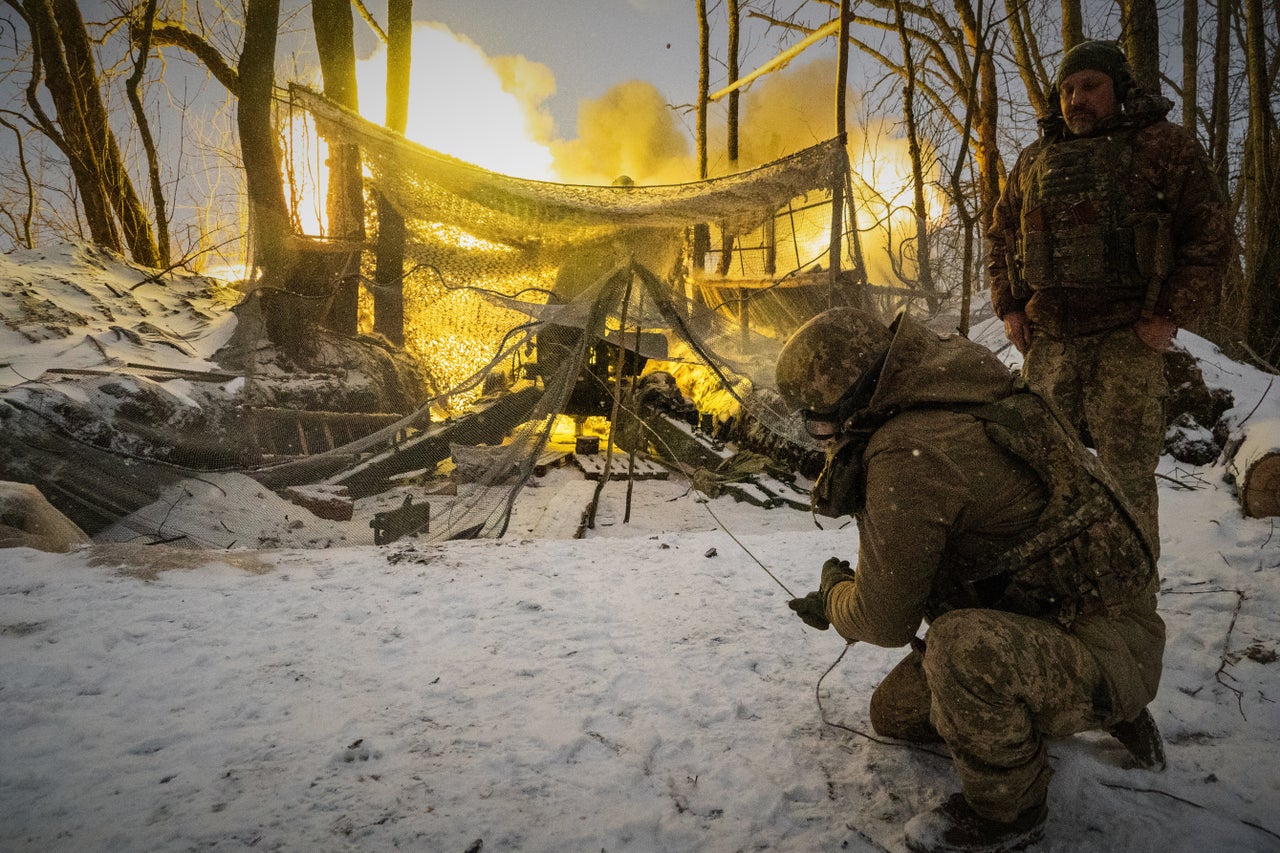
Ukrainian soldiers of the 48th separate artillery brigade fire at Russian positions on the frontline in Kharkiv region, Ukraine, Wednesday, Feb. 18, 2026.

He told HuffPost UK that Putin does not care about the cost of the war in terms of soldiers’ lives and material expenses, even though Russia is estimated to have suffered 1.2 million casualties since the conflict began.

While British officials have signalled that, beneath the surface, Russia’s economy is slowing down – with a fall in oil prices and a hike in VAT – that impact does not seem to have yet trickled through to the battlefield.

It’s suspected that Putin has not been informed about the reality of the public finances, or the eroding public support for the war.

But, at the same time, the Ukrainian army and state is nowhere near the state of collapse. In fact, its defence sector has been boosted over the last four years.

“A couple of more years of grinding warfare, in which the Russian army exchanges dozens of thousands of men for villages and townships in Eastern Ukraine, are totally possible,” Sonin, a Russian citizen and Kremlin critic, said.

“And then a new US president, a Republican or a Democrat, will be able to push Putin towards peace.”

Dr Simon Bennett, from the University of Leicester’s civil safety and security unit, also suggested it seemed pretty unlikely Trump’s efforts would result in a peace deal.

He said: “The upshot of this in 2026 is likely to be that Russia’s gains will come at an even greater cost, and, occasionally, will be partially reversed, albeit on a small scale in terms of square miles retaken by Ukraine.”

Bennett predicted Putin’s ongoing bid to control the whole of Ukraine’s eastern region, the Donbas, will likely mean the territory continues to be “the same bloody quagmire in 2026 as it was in 2025.”

“A couple of more years of grinding warfare… are totally possible”

– Professor Konstantin Sonin, the University of Chicago Harris School of Public Policy

Could Anything Force Trump To Crack Down On Putin?

Kurt Volker, who stepped down as Trump’s special envoy to Ukraine in 2019, claimed this week that the president has done a lot towards ending the war.

For instance, he has encouraged Ukraine to accept the idea of a ceasefire, and forced European allies to increase defence spending.

But speaking to the Centre for European Policy Analysis (CEPA) think tank, Volker said: “He still needs to get an end to the war. We need to be demanding a ceasefire and putting pressure on Russia to do that as soon as possible.”

The president’s annual State of the Union address is set to be on February 24 this year, the fourth anniversary of Russia’s full-scale invasion.

But experts do not expect him to use the opportunity to finally recognise the extent of Russia’s aggression against Ukraine.

As Bennett said, Trump is too “inconsistent” – and his approach to policy-making is a “crisis or war waiting to happen”.

The specialist also pointed out that “Putin has no intention of negotiating a peace deal” and claimed he is playing “demonstrably gullible” Trump.

Meanwhile, when asked if the US president could crack down on Russia in a bid to boost his ratings before the midterm elections in November, Sonin said: “There will be more pressure on Trump from the Congress Republicans, because both the US population and the elite have been consistently supportive of Ukraine through the years of war.

“So, I’d expect Trump to do small things against Putin.”

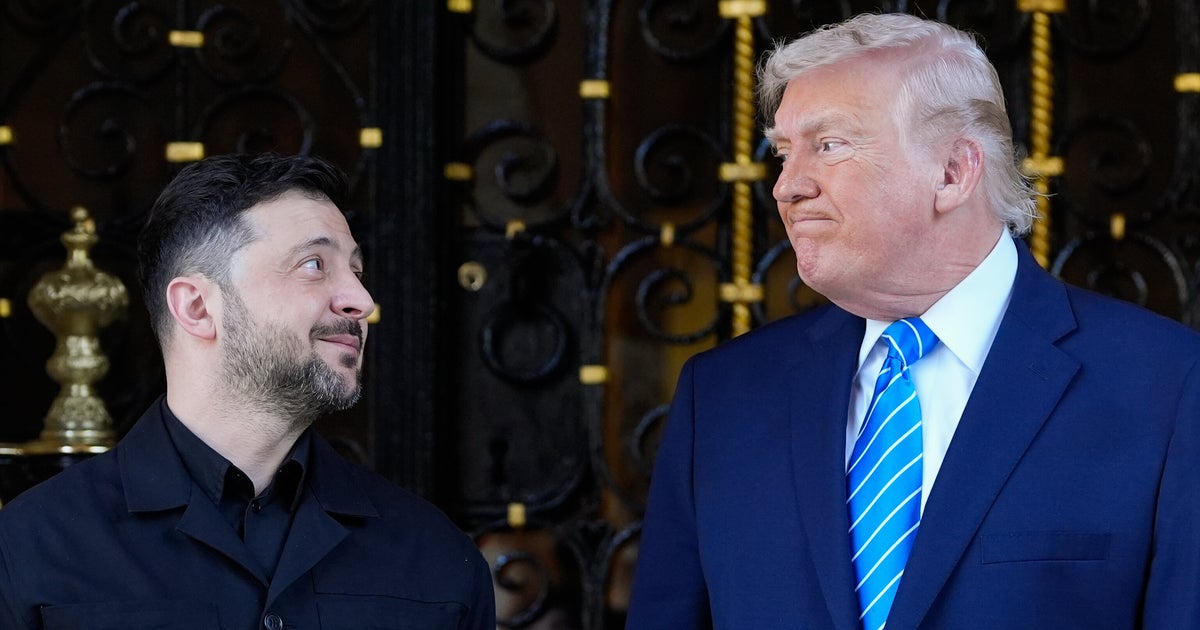
President Donald Trump, right, and Ukraine's President Volodymyr Zelenskyy shake hands at the start of a joint news conference following a meeting at Trump's Mar-a-Lago club, Dec. 28, 2025, in Palm Beach, Fla.
President Donald Trump, right, and Ukraine’s President Volodymyr Zelenskyy shake hands at the start of a joint news conference following a meeting at Trump’s Mar-a-Lago club, Dec. 28, 2025, in Palm Beach, Fla.

Could It Be Possible To Agree To A Ceasefire, but Not A Peace Deal?

Kurt Volkner told CEPA that it could be possible to strike up a deal comparable to the one which stopped the war between North and South Korea.

That non-aggression pact has – for the most part – held for more than 70 years, even though neither side technically agreed to a sustainable peace.

Volkner said: “Someday, I do believe there will be a ceasefire. I don’t believe there will ever be a peace agreement.

“I don’t believe Vladimir Putin will ever accept that there is an independent and sovereign Ukraine.

“Again, of the West, of governments, of investors, businesses, needs to be one that assumes that we will have a strong, growing, prosperous democratic European Ukraine that is safe and worthy of investment and business growth, very much like South Korea, without a final peace agreement with Russia, that’s just going to be where we are.”

But Sonin disagreed with this idea.

He said that while the North-South Korea deal was “one of the most durable, effective peace agreements despite never being finally ‘settled’”, it’s clear from previous attempts that written agreements between Russia and Ukraine do not work.

He also pointed out that such an agreement relies on the US commitment to help South Korea if North Korea invades, and China’s commitment to help North Korea if South Korea invades.

Sonin said: “A ‘peace agreement without a peace agreement’ between Russia and Ukraine is totally possible, but it will require Polish, German, Swedish, Baltic, etc, troops on the ground in Ukraine and a firm US commitment to get involved immediately if a new conflict starts.”

Bennett also dismissed Volker’s argument, as Putin still wants to restore Ukraine into a satellite state for Moscow.

“Few western leaders mention the fact that Putin’s war aims have not changed, first, because it does not fit with the Trump-the-Peacemaker-Extraordinaire narrative and secondly, because, when it comes to dealing with Trump, most western leaders are spineless,” Bennett said.

President Donald Trump, right, shakes the hand of Russia's President Vladimir Putin during a joint press conference at Joint Base Elmendorf-Richardson, Alaska, Friday, Aug. 15, 2025.
President Donald Trump, right, shakes the hand of Russia’s President Vladimir Putin during a joint press conference at Joint Base Elmendorf-Richardson, Alaska, Friday, Aug. 15, 2025.

Can Anything Be Done In The Pursuit Of Peace?

It’s widely believed that, in the absence of a stronger response from Trump, only a firmer intervention from Europe can actually stop the war.

But Ukraine allies across the continent have so far refused to commit to sending troops unless they operate in a peace-keeping capacity, as they want to avoid direct conflict with Russia.

Sonin told HuffPost UK: “I think that European countries will have to get involved into the military defense of Ukraine – sending ground troops, drone operators, etc. Of course it is a heavy lift politically.

“However, for the elites in Poland or Germany or Czech Republic or Romania or Baltic countries a scenario of Russia-controlled Ukraine (with Ukrainian army under maybe influence of the Russian masters) should be so scary that even a political heavy lift might become reality.”

He warned that without such an intervention, “the only hope is an internal collapse of Putin’s regime”.

Similarly, Bennett said Europe must resolve the issue by sending arms to Ukraine urgently, while the Russian army is weak.

“The cost in blood and treasure will be great,” Bennett said. “But nowhere near as great as allowing Russia to regenerate its armed forces for a final push on western Europe in five to 10 years’ time.”

Bennett said he saw this year’s Munich Conference as a “watershed moment”, as US secretary of state Marco Rubio reiterated that the White House primarily sees the Ukraine conflict as a problem for Europe not for the US.

Similarly, Volker said: “Europe can do a lot and can do a lot more than it is currently doing. And as I said, I picked up in Munich a realisation among a lot of European leaders that they’re not doing enough, that they need to step in and fill a gap that the US is leaving. So there are there’s a lot they can do.”

“The US sees itself as more of an arbiter than a prime mover in respect of European security,” Bennett said, adding: “I shall put it bluntly: the only way to end this war is through war. Europe must take Russia down.”

With nothing within Russia threatening to slow Putin’s ongoing aggression, and Trump’s efforts still – for now – amounting to mainly showmanship, ending the war in 2026 seems like a pipe dream, unless Europe gets directly involved.

As Bennett said: “Our fate is in our hands, and no-one else’s.”


Father searches for remains of son, one of 27 Canadians killed in Ukraine | Globalnews.ca


A New Brunswick father is preparing to travel to war-torn to seek answers about his son’s death — one of 27 Canadians the federal government said have died in that country during the war.

Father searches for remains of son, one of 27 Canadians killed in Ukraine  | Globalnews.ca

Marc Mazerolle will be flying out from his home in Inkerman, N.B., this week and hopes to find his son’s remains to bring back to Canada.

“I don’t blame nobody, you know, it’s just the speed of the system,” he said. “It’s long and it’s frustrating for families because we don’t got much answer.”

His son Patrick, 24, was killed while volunteering to fight for the Ukrainian army last fall.

Mazerolle didn’t even know his son had joined the fight until Patrick was already there.

Story continues below advertisement

The family believed Patrick had travelled to the U.K. on vacation. Instead, he had made the trek to Poland and volunteered to fight in the Russian-Ukrainian war.

“Patrick was a good kid, he was a good soul. All his intentions was good. I’m not sure he was ready to really understand what he was getting into,” said Mazerolle.

“He said, ‘I’m going to get out of there a better person, You’ll be so proud of me.’”


Mazerolle said his son was killed in the Russian-occupied Luhansk Oblast area, and he understands it would require a ceasefire in order for it to be remotely possible to repatriate his son’s remains.

His family has worked desperately to get as much information about Patrick’s final days as possible. After speaking out last year and sharing their story, Mazerolle said others on the front lines have come forward with vital news.

For news impacting Canada and around the world, sign up for breaking news alerts delivered directly to you when they happen.

Get breaking National news

For news impacting Canada and around the world, sign up for breaking news alerts delivered directly to you when they happen.

“(We) talked to the last soldier who was with him when he was alive. So now we know that Patrick died on Sept. 1 between 8:00 and 8.15 in the morning. I got a location within 20 metres where his remain is,” he said.

Mazerolle and his wife have submitted DNA and provided DNA from Patrick to Canadian authorities but without a centralized system, the process has been stalled.

Story continues below advertisement

While he’s been in contact with Global Affairs Canada and independent agencies that help repatriate soldiers, it’s been a complicated and difficult process, and one the family has had to navigate alone.

“In Canada, we don’t have much support. Like the government is trying but it’s such a slow process,” he said.

“We gave Patrick’s DNA and our DNA within the first week after the incident. I don’t even got confirmation that Patrick’s are in the system in Ukraine yet.”

Global Affairs Canada doesn’t track how many Canadians have gone to Ukraine to fight nor does it keep a registry of Canadians who have been injured or killed.

“Like all Canadian citizens abroad, these individuals are not required to register with the Government of Canada, and there is no legal mechanism to compel them to do so,” a spokesperson told Global News in an email.

“(Global Affairs Canada) is aware of the deaths of 27 Canadian citizens in Ukraine since Feb. 24, 2022. This figure includes all causes of death.”

University of Ottawa researcher Jean-François Ratelle estimates there have been around 130 to 150 Canadian fighters in Ukraine at any given time since the war started in 2022.

Taking into account the number of deaths from Global Affairs Canada, Ratelle said that means the fatality rate for fighters could be as high as 20 per cent.

Story continues below advertisement

“(That’s) quite high for a war where the Canadian army and the Canadian government is not directly involved,” said Ratelle.

To honour Canadians killed or wounded, the Ukrainian Canadian Congress has given out 14 Ukrainian Canadian Sacrifice Medals. Patrick Mazerolle is among the latest recipients.

“It is both an honour for our community but also a deeply sombre and moving and sad thing that we do,” said Orest Zakydalsky, senior policy adviser with the organization.

When asked if he had a message for other Canadians who volunteer to fight in Ukraine, Mazerolle said he understands they may want to help but he believes there are other ways to go about it without putting themselves in danger.

He said he’s heard from other Canadians struggling because a loved one volunteered, saying,”They kind of disappeared without telling them exactly where they were going.”


Click to play video: '‘Canada will always stand in solidarity with Ukraine,’ says Carney on Ukraine Independence day'


‘Canada will always stand in solidarity with Ukraine,’ says Carney on Ukraine Independence day


Although the search for answers has been hard, Mazerolle said he feels compelled to continue and plans to start a non-profit to help other families in the same situation.

Story continues below advertisement

“We’re doing that to help out other families, but in the same process (we hope it will) give us a better chance to bring him back home,” he said with emotion.

“It’s sad, but I’ll be proud of that kid for the rest of my days. It takes a lot of courage to go there, believe me.”

&copy 2026 Global News, a division of Corus Entertainment Inc.


Ottawa expects Ukrainian emergency visa holders to return after war ends – National | Globalnews.ca


Canada’s immigration department says it still expects Ukrainians who fled the war with Russia to return to their home country once the conflict ends.

Father searches for remains of son, one of 27 Canadians killed in Ukraine  | Globalnews.ca

That’s in spite of comments from Immigration Minister Lena Diab, who recently acknowledged that many Ukrainians who came to Canada on temporary visas are here to stay.

Nearly 300,000 people came to Canada through an emergency work and study visa program that was launched after Russia launched its full-scale invasion of Ukraine almost four years ago.

Get the day's top news, political, economic, and current affairs headlines, delivered to your inbox once a day.

Get daily National news

Get the day’s top news, political, economic, and current affairs headlines, delivered to your inbox once a day.

The Ukrainian Canadian Congress is one of the groups pushing for a dedicated permanent residency stream for these visa-holders, as many don’t have enough points to qualify through Canada’s express entry system.

However, Canada is reducing the number of permanent residents it is admitting compared to recent years and there is an extensive list of applications.

Story continues below advertisement

The wait time for those seeking permanent residency in humanitarian and compassionate cases is more than 10 years.

Ukrainians can apply for permanent residency through conventional means, and IRCC data shows about 2,500 have received permanent residency.


Click to play video: 'Ukrainian visas extended amid uncertainty'


Ukrainian visas extended amid uncertainty


&copy 2026 The Canadian Press


Vladimir Putin ‘doesn’t have too much time left’ says Zelensky as 73-year-old Russian leader disappears mysteriously for a week


Ukraine’s president has said Vladimir Putin ‘doesn’t have too much time left’ amid questions over the Kremlin leader’s whereabouts as he has not been seen in over a week. 

Speaking to Politico during the Munich Security Conference on Friday, just days before the fourth anniversary of Moscow’s invasion, Volodymyr Zelensky said: ‘I’m younger than Putin…He doesn’t have much time, you know.’

While his remarks prompted a laugh from the audience, the Ukrainian president added: ‘No, no, believe me, this is important.’

The 48-year-old also described his rival, 73, as a ‘slave to war’ earlier today as he drew parallels between the current conflict and the 1938 Munich Agreement.

The agreement forced Czechoslovakia to surrender its bordering region with Germany, the Sudetenland to Adolf Hitler – a year before World War II began. 

Zelensky’s recent comments come as Putin has mysteriously vanished from the public eye for over a week, with Russian state media broadcasting pre-recorded footage of the Kremlin leader meeting officials in recent days. 

The Kremlin leader was last seen by the public delivering a speech on February 5, and it remains unclear what has caused his latest absence. 

It is not the first time Putin has disappeared from public view, with the dictator having cultivated a reputation for vanishing for periods of time with no explanation.  

Vladimir Putin ‘doesn’t have too much time left’ says Zelensky as 73-year-old Russian leader disappears mysteriously for a week

Ukraine’s president has stated that Vladimir Putin ‘doesn’t have too much time left’

The Kremlin leader was last seen by the public delivering a speech on February 5

The Kremlin leader was last seen by the public delivering a speech on February 5

Pictured: Firefighters at the site of a Russian drone strike in Ukraine on February 13

Pictured: Firefighters at the site of a Russian drone strike in Ukraine on February 13

Pictured: Damaged cars in Odesa, Ukraine, after they were hit by a Russian strike

Pictured: Damaged cars in Odesa, Ukraine, after they were hit by a Russian strike

However, such absences have led to speculation of Putin undergoing secret medical treatment.

Zelensky’s statement comes as the United States continues to strive for Russia and Ukraine to end the almost four-year war, with Trump recently setting a June deadline for the two sides to negotiate peace.

On Friday, Trump said Zelensky would miss an opportunity if he doesn’t ‘get moving’, and claimed Russia was willing to end the war through a peace deal.

‘Russia wants to ‌make a deal, and Zelensky’s going ‌to have to get ⁠moving. Otherwise, he’s ⁠going to miss a great opportunity. He has ‌to move,’ he said.

Between February 17 and 18, a new round of peace negotiations involving Ukraine will be conducted by the US and Russia in Geneva.

The Kremlin has confirmed Vladimir Medinsky, a presidential aide to Vladimir Putin, will lead the Russians. 

More recently, Kyiv and its Western allies have accused Moscow of deliberately freezing Ukraine’s population with its attacks on the energy grid.

‘There is not a single power plant left in Ukraine that has not been damaged by Russian attacks,’ Zelensky said. ‘Not one.’

‘But we still generate electricity,’ he added, praising the thousands of workers repairing the plants.

The Ukrainian President appealed once again to his Western allies to deliver air-defence systems to Ukraine more quickly.

Taking a brutal swipe at the Kremlin leader, Zelensky added: ‘He may see himself as a tsar, but in reality he is a slave to war.’

Russia and Ukraine are set to hold US-brokered talks next week, as Zelensky maintains Kyiv is doing ‘everything’ to end the almost four-year war.

It comes as questions over Putin’s health were raised in November when he met with Yekaterina Leshchinskaya, 22, the chair of the Russian Healthy Fatherland movement.

As he reached to shake the woman’s hand, the Russian leader’s right hand was seen with visible bulging veins, prominent tendons, and thin, wrinkled skin.

Pictured: The State Emergency Service of Ukraine on February 13, 2026

Pictured: The State Emergency Service of Ukraine on February 13, 2026

Pictured: A house destroyed in a Russian airstrike in Ukraine on February 13

Pictured: A house destroyed in a Russian airstrike in Ukraine on February 13

Ukraine President Volodymyr Zelensky speaks at a panel discussion during the 62nd Munich Security Conference (MSC) at the hotel 'Bayerischer Hof', in Munich, Germany, 14 February 2026

Ukraine President Volodymyr Zelensky speaks at a panel discussion during the 62nd Munich Security Conference (MSC) at the hotel ‘Bayerischer Hof’, in Munich, Germany, 14 February 2026

Footage saw the Russian leader appear to nervously move his fingers and clench them into a fist under his blazer sleeve.

Following the circulation of the clip on X, and later in Polish media, Ukrainian sources suggested that the Russian dictator may be suffering from pain.

Prominent interviewer, and media personality Dmytro Gordon said: ‘Putin clenches his hands into something resembling fists.

‘They look swollen and sore, with veins bulging prominently on one hand.’

Another source said that Putin merely exhibits the normal signs of male ageing which he seeks – through alleged cosmetic surgery – to hide from Russians after more than a quarter of a century in power.

Questions over Putin’s whereabouts come as a group of European countries on Saturday said Russian opposition leader Alexei Navalny was poisoned by the Kremlin. 

The foreign ministries of the UK, France, Germany, Sweden and the Netherlands said analysis of samples taken from Navalny’s body ‘conclusively confirmed the presence of epibatidine’ – a neurotoxin found in the skin of dart frogs in South America. 

A joint statement said: ‘Russia had the means, motive and opportunity to administer this poison.’

Putin has mysteriously vanished for more than a week, while Moscow state media has been using pre-recorded footage of the dictator

Putin has mysteriously vanished for more than a week, while Moscow state media has been using pre-recorded footage of the dictator 

The five countries said they were reporting Russia to the Organisation for the Prohibition of Chemical Weapons for a breach of the Chemical Weapons Convention.

The announcement came as Navalny’s widow, Yulia Navalnaya, attended the Munich Security Conference in Germany as the second anniversary of Navalny’s death approaches.

Navalny, who crusaded against official corruption and staged massive anti-Kremlin protests as President Vladimir Putin’s fiercest foe, died in an Arctic penal colony on February 16, 2024, while serving a 19-year sentence that he believed to be politically motivated.

‘Russia saw Navalny as a threat,’ British Foreign Secretary Yvette Cooper said. ‘By using this form of poison, the Russian state demonstrated the despicable tools it has at its disposal and the overwhelming fear it has of political opposition.’

It comes after five European countries today claimed that Russian opposition leader Alexei Navalny was poisoned by Russia. Pictured: Navalny attends a hearing at a court in Moscow in 2017

It comes after five European countries today claimed that Russian opposition leader Alexei Navalny was poisoned by Russia. Pictured: Navalny attends a hearing at a court in Moscow in 2017 

Navalny pictured with his wife Yulia in 2020

Navalny pictured with his wife Yulia in 2020 

‘Putin killed Alexei with a chemical weapon,’ she wrote on social network X. She said Putin was ‘a murderer’ who ‘must be held accountable’.

Russian authorities said that the politician became ill after a walk and died from natural causes.

Epibatidine is found naturally in dart frogs in the wild, and can also be manufactured in a lab, which European scientists suspect was the case with the substance used on Navalny. It works on the body in a similar way to nerve agents, causing shortness of breath, convulsions, seizures, a slowed heart rate and ultimately death.

Navalny was the target of an earlier poisoning in 2020, with a nerve agent in an attack he blamed on the Kremlin, which always denied involvement. His family and allies fought to have him flown to Germany for treatment and recovery. Five months later, he returned to Russia, where he was immediately arrested and imprisoned for the last three years of his life.

The U.K. has accused Russia of repeatedly flouting international bans on chemical and biological weapons. It accuses the Kremlin of carrying out a 2018 attack in the English city of Salisbury that targeted a former Russian intelligence officer, Sergei Skripal, with the nerve agent Novichok. Skripal and his daughter became seriously ill, and a British woman, Dawn Sturgess, died after she came across a discarded bottle with traces of the nerve agent.

The poisoning of Navalny shows ‘that Vladimir Putin is prepared to use biological weapons against his own people to remain in power,’ French Foreign Minister Jean-Noël Barrot wrote on X.

Yvette Cooper pictured with Navalny's widow Yulia today during the Munich Security Conference

Yvette Cooper pictured with Navalny’s widow Yulia today during the Munich Security Conference 

Yulia Navalnaya, human rights activist and wife of Russian opposition leader Alexei Navalny, gives a press statement on the death and circumstances of her husband's death on the sidelines of the Munich Security Conference in Munich, Germany, Saturday Feb. 14, 2026

Yulia Navalnaya, human rights activist and wife of Russian opposition leader Alexei Navalny, gives a press statement on the death and circumstances of her husband’s death on the sidelines of the Munich Security Conference in Munich, Germany, Saturday Feb. 14, 2026

Navalny’s widow said last year that two independent labs had found that her husband was poisoned shortly before he died. She has repeatedly blamed Putin for her husband’s death. Russian officials have vehemently denied the accusation.

Yulia Navalnaya said Saturday that she had been ‘certain from the first day’ that her husband had been poisoned, ‘but now there is proof’.

A British inquiry concluded that the attack ‘must have been authorised at the highest level, by President Putin’.

The Kremlin has denied involvement. Russia also denied poisoning Alexander Litvinenko, a former Russian agent turned Kremlin critic who died in London in 2006 after ingesting the radioactive isotope polonium-210. A British inquiry concluded that two Russian agents killed Litvinenko, and Putin had ‘probably approved’ the operation.

At the Munich Security Conference this weekend, Zelensky also poked fun at Hungarian leader Victor Orban’s belly, saying Ukraine’s fight against Russia allowed Europe to live freely. 

Zelensky was describing how Europe gains from having Ukrainian forces battling Russian troops in Ukraine.

Ukraine’s relations with neighbouring Hungary have been strained by Orban’s support for Russia and have deteriorated further in recent weeks as the veteran leader has ramped up attacks on Ukraine ahead of a closely fought parliamentary election in April.

‘There can be a sovereign Moldova and a Romania without dictatorship and even one Victor can think about how to grow his belly, not how to grow his army to stop Russian tanks from returning to the streets of Budapest,’ Zelensky said.

‘But look at the price. Look at the price, look at the pain Ukraine has gone through, look at the suffering Ukraine has faced. It’s Ukrainians who are holding the European front,’ he said.

Although Ukraine applied to join the European Union days after Russia invaded, it has been unable to advance accession talks because of Orban’s vetoes.

Unlike other European countries, Hungary has not diversified its imports from Russia since Moscow’s assault on Ukraine.


Zelenskyy Has A Theory As To Why Trump Is In Such A Hurry To End Ukraine War


Volodymyr Zelenskyy has said Donald Trump is determined to secure a peace deal to end the Ukraine war before the US midterm elections later this year.

The Ukrainian president previously claimed that the White House wants the conflict to draw to a close by June.

He has since warned that the US needs to put apply more pressure to Russia if it wants the war to end by summer.

Moscow is allegedly still deliberating over attending the next round of trilateral talks in Miami.

Trump started his second term in office last year by declaring that he would end the Ukraine war within 24 hours.

The conflict is now approaching its fourth anniversary at the end of this month, and Russia continues to drag its feet over negotiations.

The US president has continually blamed Ukraine for the delay, however.

He is desperate to get some kind of deal over the line, as soon as possible – even if that means rewarding Vladimir Putin’s aggression.

Speaking to The Atlantic, Zelenskyy said the most “advantageous situation for Trump is to do this before the midterms” in November.

He added: “Yes, he wants there to be less deaths. But, if you and I are talking like adults, it’s just a victory for him, a political one.”

Zelenskyy also claimed ending the Russia-Ukraine war would be Trump’s “no.1 legacy”.

The Republican Party is expected to take a beating at the midterms.

However, the Ukrainian president continues to hold onto his red lines in the negotiating process – while trying to offer up something new to keep the US president on side.

Trump has repeated Kremlin claims that Zelenskyy is a “dictator” for staying in his post longer than his term, even though Ukrainian martial law imposed during wartime prohibits elections.

So Zelenskyy said Ukraine will hold elections once it has security guarantees in place and a ceasefire with Russia.

He said the idea of holding the election during the war came from Moscow because “they want to get rid of me”.

The Ukrainian president continued: “No one is clinging to power.

“I am ready for elections. But for that we need security, guarantees of security, a ceasefire.”

“We’ve never been against ending the war. It’s the Russians who have shown they are not ready for a dialogue,” he said.

Zelenskyy said Moscow should use this time before the midterms to “end the war while President Trump is really interested in that”.

The president also acknowledged elements of Trump’s peace deal – such as US security guarantees – have not been nailed down yet, and called for all of their terms to be “written out.”

It should then be put to the Ukrainian people in a public vote, according to Kyiv.

“I don’t think we should put a bad deal up for a referendum,” Zelenskyy added, noting that while Ukrainians are “in a hurry to end the war” they do not want to rush to cut a deal.

Zelenskyy will meet with prime minister Keir Starmer, US secretary of state Marco Rubio, Nato secretary general Mark Rutte and French president Emmanuel Macron at the annual Munich Security Conference, where peace in Ukraine is set to be discussed.

But Russia continues to hold onto its maximalist goals with Ukraine, insisting on taking more territory.


Europe has ‘failed’ in the face of Trump and Putin’s ‘wrecking ball’ politics, top security official says


US President Donald Trump holds a bilateral meeting with European Commission President Ursula Von der Leyen on the sidelines of the United Nations General Assembly in New York City on September 23, 2025.

Brendan Smialowski | Afp | Getty Images

Europe is “totally on the sidelines” on the global stage as “wrecking ball” politics has become the norm, the head of the continent’s biggest security forum has said.

Speaking to CNBC’s Annette Weisbach ahead of the Munich Security Conference (MSC), Wolfgang Ischinger, the organization’s chairman, said it was Europe’s “own fault” that its power on the global stage has been diminished.

“Europe has failed to speak with one voice to China and about China, Europe has failed with one voice, to come up with a clear concept about the future of the Middle East, including about how to deal or not to deal with the Iranian nuclear question,” said Ischinger, who is a former German ambassador to the U.S.

Earlier this week, the MSC published its 2026 report, for which Ischinger wrote the foreword. It warned that “the world has entered a period of wrecking-ball politics,” where “sweeping destruction … is the order of the day.”

The report said that U.S President Donald Trump was “at the forefront of those who promise to free their countries from the existing order’s constraints and rebuild stronger, more prosperous nations,” arguing he was just one movement “driven by resentment and regret over the liberal trajectory their societies have embarked on.”

Ischinger told CNBC that Europeans were “totally on the sidelines” on negotiations around Gaza and Ukraine.

“We have no role. Things have been decided by others,” he said. “When I look at the war in Ukraine, Europe has no place,” he said, adding the U.S. and Russia were leading discussions.

U.S. delegates have been helming peace talks with officials from Ukraine and Russia since late 2025, with European officials scrambling to maintain a say on how to end the four-year war between the two countries.

“Why the hell do we not have a place at the table? This is our continent. It’s our future,” Ischinger said on Friday. “The answer, of course, is not that Donald Trump is making a mistake. The answer … is that we have failed to speak with one voice.”

Ischinger added that he rejected “the blame game regarding the United States,” but for areas where Europe “clearly failed” to adopt a strategic position.

Delegates from all over the world are gathering for the Munich Security Conference on Friday. The event runs through Sunday.

Ischinger told CNBC that the “wrecking ball” was “being used by many” in addition to Trump, including right-wing extremist parties across Europe and Russian President Vladimir Putin.

But he called Trump “the single most prominent example” of someone who “questions existing arrangements and tries to replace them.” “That is for countries like Germany, which have been so dependent on the existing international rules … a worrisome development,” he added.

CNBC reached out to both the White House and the Kremlin for responses to the MSC’s commentary.

Transatlantic trust had also been damaged by Trump’s push for the U.S. to annex Greenland, Ischinger said.

After weeks of rhetoric on bringing the Arctic island — a Danish territory — under Washington’s control, Trump threatened to impose tariffs on European allies who stood in his way, before announcing a “deal” on Greenland had been reached.

Since Trump’s return to the White House, European leaders have been making commitments to drastically increase security spending. Last summer, European members of NATO agreed to raise defense spending to 5% of their individual national GDP — a move Trump had been pushing for for some time.

The spending plans have bolstered European defense primes, some of which have seen their shares more than double in value, while order backlogs have hit record levels.

Ischinger told CNBC Europe needed “to create a more consolidated, a more competitive, a more unified defense industry.”