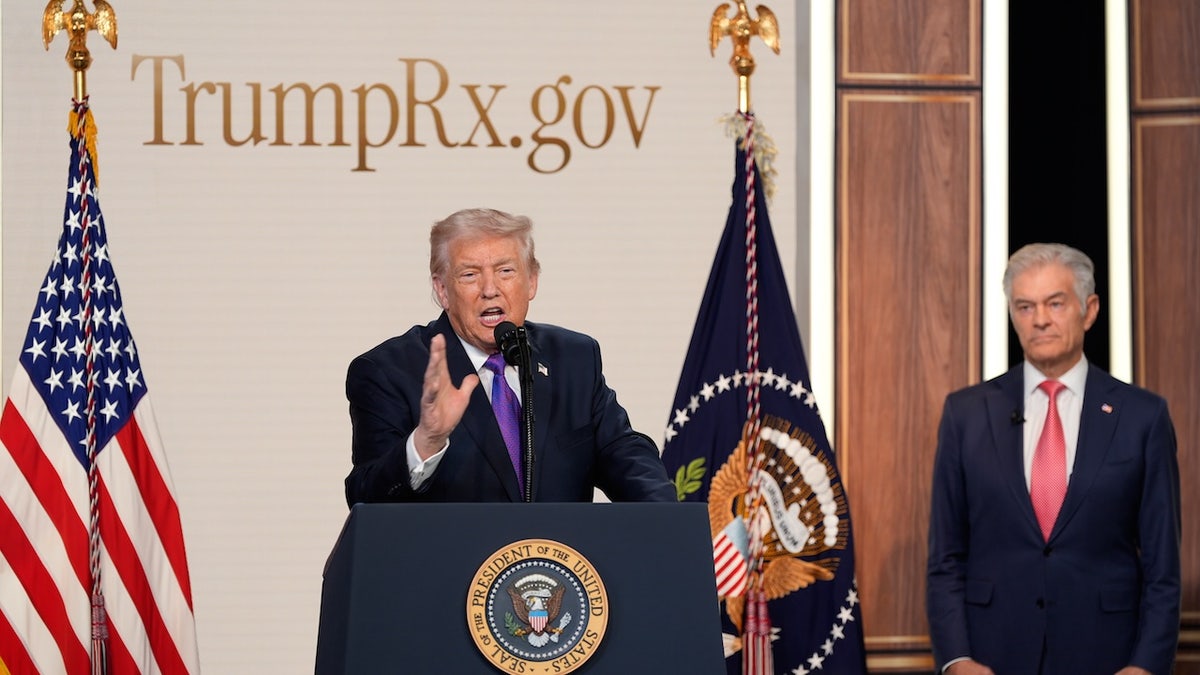
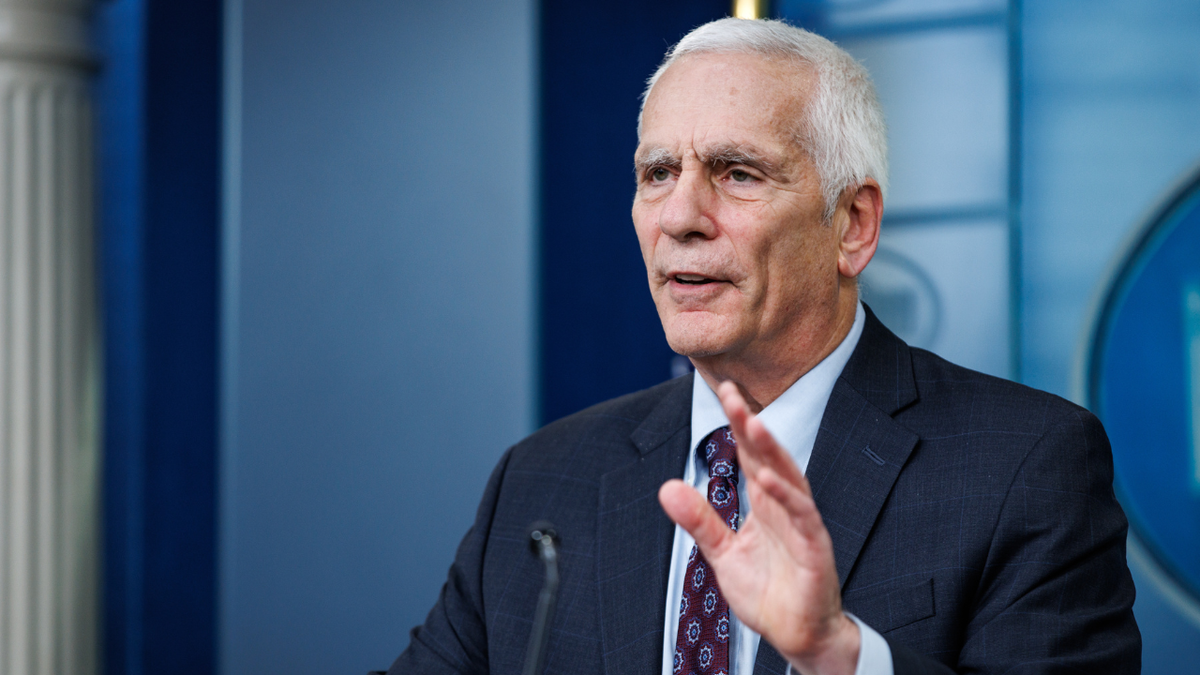
U.S. President Donald Trump speaks during a press briefing held at the White House February 20, 2026 in Washington, DC.
Kevin Dietsch | Getty Images News | Getty Images
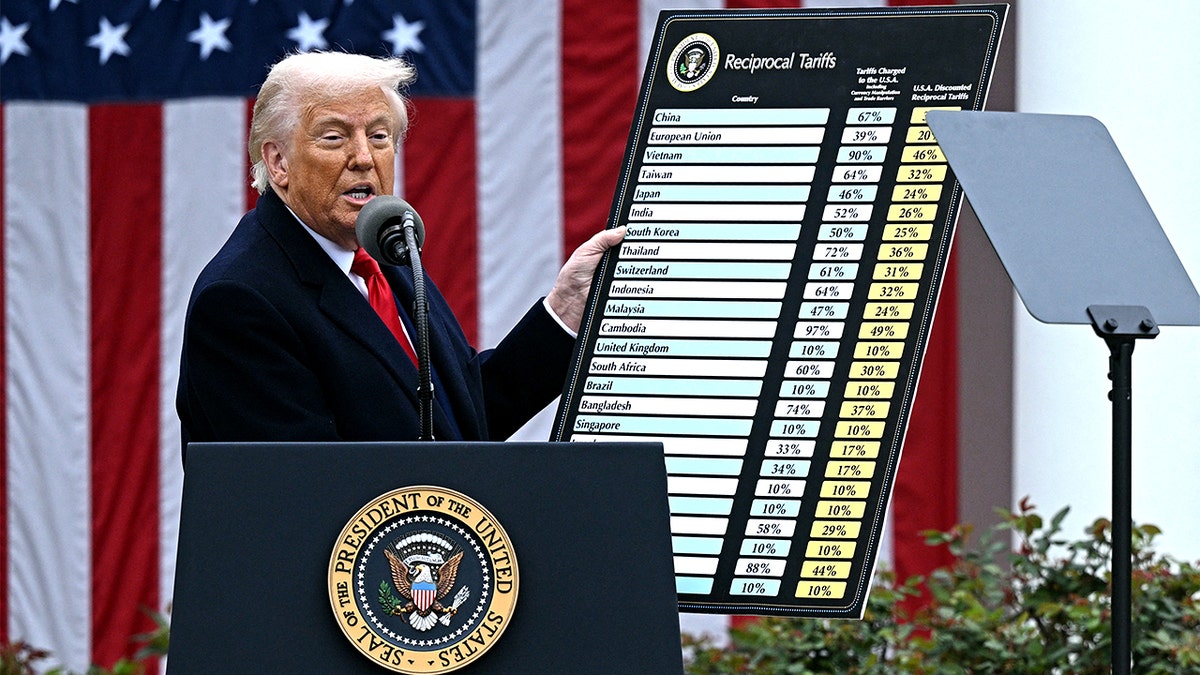
President Donald Trump on Saturday said he would increase global tariffs to 15% from 10%, one day after the Supreme Court struck down his “reciprocal” tariffs.
The new tariffs will be “effective immediately,” Trump said in a Truth Social post.
“I, as President of the United States of America, will be, effective immediately, raising the 10% Worldwide Tariff on Countries, many of which have been “ripping” the U.S. off for decades, without retribution (until I came along!), to the fully allowed, and legally tested, 15% level,” he wrote.
In his social media post Saturday, Trump also warned that additional tariffs would follow.
“During the next short number of months, the Trump Administration will determine and issue the new and legally permissible Tariffs,” he wrote.
The White House did not immediately respond to a CNBC request for comment.
The increase comes after the Supreme Court on Friday, in a 6-3 tariff ruling, decided that Trump wrongfully invoked the International Emergency Economic Powers Act (IEEPA) to implement his levies.
Trump responded the same day with a 10% global tariff, exercising his authority under Section 122 of the Trade Act of 1974. The statute allows the president to implement only temporary levies, with any extension requiring congressional approval.
Read more CNBC coverage on tariffs
The president was scathing in his remarks against the Supreme Court decision, calling it in his social media post that it was “ridiculous, poorly written, and extraordinarily anti-American.”
He also attacked Justices Neil Gorsuch and Amy Coney Barrett after they voted with the majority in the ruling.
This is breaking news. Please refresh for updates.
World leaders during the G7 Leaders’ Summit in Kananaskis, in Alberta, Canada, June 17, 2025.
Amber Bracken |Reuters
U.S. trading partners offered a cautious welcome to the U.S. Supreme Court’s decision Friday to strike down large parts of President Donald Trump’s flagship trade policy on global tariffs — but global trade bodies warned of lingering uncertainty surrounding import levies.
The law that undergirds the import duties “does not authorize the President to impose tariffs,” the majority ruled six to three in the long-awaited Supreme Court decision.
Hours after the ruling, Trump said he signed an executive order imposing a new 10% “global tariff”. The “Section 122” tariffs will take effect “almost immediately,” Trump said. At a White House press briefing Friday afternoon, Trump railed against the “deeply disappointing” 6-3 ruling.
Trump’s tariff regime impacted a swathe of countries from the U.K. to India and the European Union. Some governments, like Vietnam and Brazil are still in negotiations.
Taiwan, home to the the world’s leading contract chipmaker and producer of the most advanced semiconductors, said the 10% flat tariff rate would, according to an initial assessment, have a “limited impact” on its economy.
The island will continue to “closely monitor” developments and maintain close communication with the U.S. to understand the specific measures and respond in a timely manner, the Taiwanese cabinet said in a statement on Saturday.
French President Emmanuel Macron reportedly said the Supreme Court’s ruling proved the benefit of having an effective counterweight to power.
“It is not bad to have a Supreme Court and, therefore, the rule of law,” Reuters quoted him as saying at an event in Paris on Saturday.
A U.K. government spokesperson said the country would continue to work with the White House administration to understand how the ruling will affect tariffs for the U.K. and the rest of the world
“This is a matter for the U.S. to determine but we will continue to support U.K. businesses as further details are announced,” the spokesperson said.
“The U.K. enjoys the lowest reciprocal tariffs globally, and under any scenario we expect our privileged trading position with the U.S. to continue.” The U.K. agreed a wide-ranging trade deal with the U.S. in May last year, which imposed a broad 10% levy on many goods, but also included certain carve-outs on steel, aluminum, cars and pharmaceuticals.
The Supreme Court case focused mainly on reciprocal tariffs, and the ruling leaves much of the U.K.’s trade deal with the U.S. — including preferential sectoral tariffs on steel, pharmaceuticals and autos — unaffected.
However, the British Chambers of Commerce (BCC) trade body said the U.S. Supreme Court decision adds to the ongoing uncertainty around levies.
William Bain, head of trade policy at the BCC, said the move “does little to clear the murky waters” for British businesses, warning that the President still has “other options at his disposal” to retain his current regime on steel and aluminum tariffs.
“The court’s decision also raises questions on how U.S. importers can reclaim levies already paid and whether U.K. exporters can also receive a share of any rebate depending on commercial trading terms,” Bain said in a statement. “For the U.K., the priority remains bringing tariffs down wherever possible.”
Olof Gill, European Commission spokesperson for trade and economic security, said businesses on both sides of the Atlantic depend on “stability and predictability.”
“We remain in close contact with the U.S. Administration as we seek clarity on the steps they intend to take in response to this ruling,” Gill said. “We therefore continue to advocate for low tariffs and to work towards reducing them.”
Meanwhile, Dominic LeBlanc, Canada’s minister for U.S.-Canadian trade relations, said the decision “reinforces Canada’s position that the IEEPA tariffs imposed by the United States are unjustified.”
No trade ‘win’ yet
Elsewhere, Swissmem, Switzerland’s technology industry association, welcomed the ruling — but warned that the Trump administration could invoke other laws to “legitimize tariffs,” and called on Swiss policymakers to strengthen the competitiveness of the country with new free trade agreements.
“From the perspective of the Swiss export industry, this is a good decision. The high tariffs have severely damaged the tech industry. However, today’s ruling doesn’t win anything yet,” Swissmem said.
“The high tariffs have severely damaged the tech industry,” Swissmem wrote on X. “The crucial thing now is to quickly secure relations with the U.S. through a binding trade agreement.”
The International Chamber of Commerce noted that many businesses will welcome the ruling given the “significant strain” that has been placed on balance sheets in recent months.
“But companies should not expect a simple process: the structure of U.S. import procedures means claims are likely to be administratively complex. Today’s ruling is worrying silent on this issue and clear guidance from the Court of International Trade and the relevant U.S. authorities will be essential to minimise avoidable costs and prevent litigation risks,” the ICC said.
— CNBC’s Jackson Peck and Greg Kennedy helped contribute to this story.
The prospect of a U.S. attack on Iran has roiled oil prices this year, but analysts tell CNBC a strike would require more military commitment and be more complicated, than the U.S. is prepared for.
Brent crude April futures
Tensions are high, and despite talks last week in Oman, both sides remain at an impasse. U.S. President Donald Trump’s pressure on the Iranian regime escalated after a brutal crackdown on anti-government protestors across the country last month.
Trump said this week he was considering sending a second aircraft carrier to the Middle East, even as Washington and Tehran prepare to resume talks. On Tuesday, he threatened Iran with “something very tough,” if it does not agree to Washington’s demands, which range from halting the country’s nuclear enrichment to cutting Tehran’s ballistic missile program.
The U.S. deployed the USS Abraham Lincoln carrier strike group to the Middle East in January. This brought the number of missile destroyers in the region to six, but, analysts say, this still wouldn’t be enough to topple the regime. Following through on his “something tough” threat would mean a prolonged conflict in a region Trump is wary of.
“U.S. forces in the region are not adequate to support a significant long-term military operation in Iran which would be necessary to achieve any major military objective,” Alireza Ahmadi, executive fellow at the Geneva Center for Security Policy, told CNBC.
Trump has also dialed up his pressure on the Islamic Republic, applying financial pressure to an economy already crippled by sanctions. Just last month, he vowed to impose tariffs on any country that acquires any goods or services from Iran.
But it is unclear what could come next. “President Trump is notoriously unpredictable,” Ali Vaez, director of Iran Project at Crisis Group, told CNBC but added Trump is aware “the Iran problem set does not lend itself to clean and easy military options.”
Could the U.S. still attack Iran?
Michael Rubin, a former Pentagon official and senior fellow at the American Enterprise Institute, told CNBC that “the cost of not attacking Iran would be huge,” adding, if he doesn’t, “Trump’s legacy will be as the president who enabled Iran to go nuclear.”
“The President is in a jam, his options are not great and it’s a very risky moment at this point,” Bob McNally, president of Rapidan Energy Group, told CNBC’s Dan Murphy last week. McNally added the country’s ballistic missile program meant that “we’d have to go big, because Iran is quite formidable.”
What are Trump’s options?
Trump said last week that Iran’s supreme leader, Ayatollah Khamenei, should be “very worried.”
But targeting Iran’s leadership would not be an operation like the one that seized Venezuelan President Nicolas Maduro, analysts have warned.
“The Iranian government is not Venezuela,” Alireza Ahmadi said, adding that if the U.S. removed Khamenei, “a replacement would be chosen immediately and the military would effectively be running the country for the foreseeable future.”
Power in Iran is centralized around Khamenei. While there is a president, the Islamic Republic’s political, military and foreign policy decisions are all made by him. Khamenei has held ultimate authority for the last three decades, aided by the Iranian Revolutionary Guard Corps, which helps enforce the regime’s policies and plays a major role in its foreign policy.
If the U.S. were able to remove Khamenei and found a regime official to replace him with, there would still be an “open question” on what happens to the IRGC, Rubin told CNBC.
Iranian worshippers hold portraits of Iran’s Supreme Leader, Ayatollah Ali Khamenei, and a country flag during a protest to condemn Israeli attacks on Iran, after Friday prayers ceremonies in downtown Tehran, Iran, on June 13, 2025.
Morteza Nikoubazl | Nurphoto | Getty Images
“The U.S. cannot change the regime through air power alone and without any boots (U.S. or Iranian) on the ground. It can only transform the regime into something else, which could be worse, or turn Iran into another failed state,” Vaez told CNBC.
Ahmadi said regime change in Iran “would require at least an Iraq War level of military commitment, which Trump is unlikely to favor.” Between 2003 and 2011, 4,500 American armed forces personnel were killed in Iraq.
The White House claimed after strikes on three main nuclear sites last year that Iran’s nuclear facilities were “obliterated.” Iran moved to quickly repair the damage to ballistic missile sites but according to analysis from the New York Times, has made “limited fixes” to the major nuclear sites hit by the United States.
Iran has long claimed it does not have any plans to develop nuclear weapons. As talks restart between Washington and Tehran, Iran has offered to cap its enrichment at low levels. The U.S. has opposed the Iranians enriching any uranium since the nuclear deal collapsed in 2018.
While the U.S. has vowed to attack Iran if it resumes its nuclear and missile programs, it is unclear whether these sites would again be primed for attack. “Both options are likely to lead to a disproportionate Iranian retaliation, which could then turn the confrontation into a regional conflagration,” Vaez said.
Potential Iranian retaliation
Iran has vowed to retaliate against U.S. bases in the region if Washington strikes.
“Iran is betting that the U.S. does not have enough missile interceptors and THAAD systems to protect its sprawling military bases and facilities across the region, as well as Israel,” Ahmadi told CNBC.
The U.S. has around 40,000 military personnel in the Middle East. It has bases in the Arabian Gulf including the United States Naval Forces Central Command in Bahrain, Al Udeid air base in Qatar, which Iran hit last summer and Al Dhafra air base just south of Abu Dhabi.
In this frame-grab made from video, missiles and air-defense interceptors illuminate the night sky over Doha after Iran launched an attack on US forces at Al Udeid Air Base on June 23, 2025 in Doha, Qatar.
Getty Images
“Iran will undoubtedly target U.S. bases in Iraq, Syria, the Gulf, and its naval assets. It is also likely to target Israel. The remnants of its proxies could also join in,” Vaez told CNBC.
Iran seems “to be preparing for a week, if not months, long military confrontation. There seems to be a sense among Iranian leadership that the U.S. is overestimating its leverage and that a significant war may be necessary to correct those assumptions,” Ahmadi added.
An organization that represents pea, lentil and bean growers in Saskatchewan says it supports a new federal investment intended to spur diversification among its trading partners.
Canada’s agriculture minister announced Tuesday a $75-million investment over five years to expand export activities into new, non-traditional markets and support sectors most affected by trade barriers.
“This added investment will help our sector access new markets, strengthen interprovincial trade and build more resilience in the face of global challenges,” said Heath MacDonald, minister of agriculture and agri-food, at an unrelated policy breakfast in Ottawa.
The program builds on the existing AgriMarketing Program and adds funding for two new streams: national industry associations and small and medium-sized enterprises.
Organizations can apply for funding to expand export activities, with priority given to sectors most impacted by trade barriers, such as pulses and canola, according to a news release from Agriculture and Agri-Food Canada.
Story continues below advertisement
“There are opportunities all over the world, but we can’t spread ourselves too thin. We have to target our markets and go after them,” said MacDonald.
Get breaking National news
For news impacting Canada and around the world, sign up for breaking news alerts delivered directly to you when they happen.
The federal government’s investment is being well-received by the national industry association representing pulse growers.
“Any investment in helping us diversify and helping us find new avenues, new uses, new ways to put more pulses on more plates around the world is something that we support,” said Jeff English, vice-president of public affairs at Pulse Canada.
In January, Canada struck a trade deal with China to remove the 100 per cent tariffs on Canadian yellow peas, effective March 1 through the end of the year.
China imposed this tariff in March 2025 in response to Canada’s previously imposed 100 per cent tariff on Chinese electric vehicles and a 25 per cent import tax on steel and aluminum.
But India’s 30 per cent tariff on Canadian yellow peas remains in place, something local pulse producer associations say is a reason the industry needs to diversify its trading partners.
Trending Now
Carney says he had ‘positive’ call with Trump on Gordie Howe bridge threat
Air Canada suspends all flights to Cuba, effective immediately
“The more diversified we are, the less of an impact that will be, and we’ll have stronger prices for farmers at the end of the day,” said Carl Potts, executive director of Saskatchewan Pulse Growers.
Potts said his association is exploring strategies to tap into other markets worldwide, including the Indo-Pacific and Latin America regions.
Story continues below advertisement
Alongside diversifying its trading partners, the organization is also focused on increasing demand for other products in new markets, such as pet food and animal feed. This, according to Potts, was a strategy that helped bolster pea imports into China 20 years ago.
“At the time, they might have been importing maybe 200,000 tonnes a year, but we worked with local industry and consultants in the market to help develop more demand for peas,” said Potts.
“We’ve grown that into a market of over two million tonnes in some areas.”
Alongside finding new markets, the pulse grower associations say they are also continuing to advocate for strengthened relations with current trading partners and look forward to new opportunities to do so — from CUSMA renegotiations to a potential India trip by Prime Minister Mark Carney.
“As the government does its job in terms of building a stronger relationship with India, we’re doing things in lockstep as well,” said English.
This photograph shows a partial view of a Volvo X30 electric car with the company logo at the Volvo factory in Ghent on April 25, 2025. This factory will produce the Volvo X30 100% electric model for the European market.
Nicolas Tucat | Afp | Getty Images
Shares of Sweden’s Volvo Cars tumbled as much as 19% on Thursday morning, putting the company on track for its worst trading day ever.
The automaker, which is owned by China’s Geely Holding, posted a substantial drop in fourth-quarter operating profit, citing the impact of U.S. tariffs, negative currency effects and weak demand.
Volvo Cars said fourth-quarter operating income excluding items affecting comparability fell by 68% to 1.8 billion Swedish krona ($200.46 million) compared to the same period a year prior.
“We have a very challenging market, especially in China, very tough competition. All of our European colleagues have the same problem,” Volvo Cars CEO Hakan Samuelsson told CNBC’s “Europe Early Edition” on Thursday.
He added the discontinuation of EV incentives in the U.S. and China were also contributing to “a very challenging external environment.”
“But internally we have had very good work done with lowering our costs and securing a positive cash flow, so that I would highlight as the most important positive things that we have reached during the year,” he added.
Shares of Volvo Cars were last seen down 18.1%, having pared some of its earlier losses. A single-session fall of more than 11.2% would reflect the firm’s worst trading day ever.
Industry groups, which tentatively welcomed the trade deal at the time, expressed deep concern about the costs associated with the new tariffs.
Volvo Cars has long been considered one of the most exposed European carmakers to U.S. tariffs.
Looking ahead, Volvo Cars said deliveries of its new and fully electric EX60 mid-size SUV will ramp up during the second half of 2026.
However, it warned the year ahead is likely to be another challenging one, with continued pricing pressure, tariff effects, regulatory uncertainty and softer consumer sentiment likely to weigh on the industry.