‘Mossad agents in Iran’: Do Indian GMs agree with World No. 2 Hikaru Nakamura’s FIDE jab? | Chess News – The Times of India

‘Mossad agents in Iran’: Do Indian GMs agree with World No. 2 Hikaru Nakamura’s FIDE jab? | Chess News – The Times of India
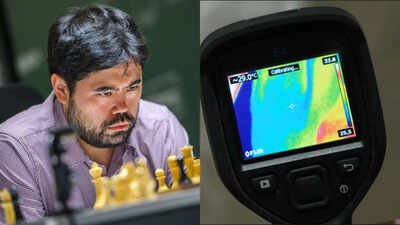
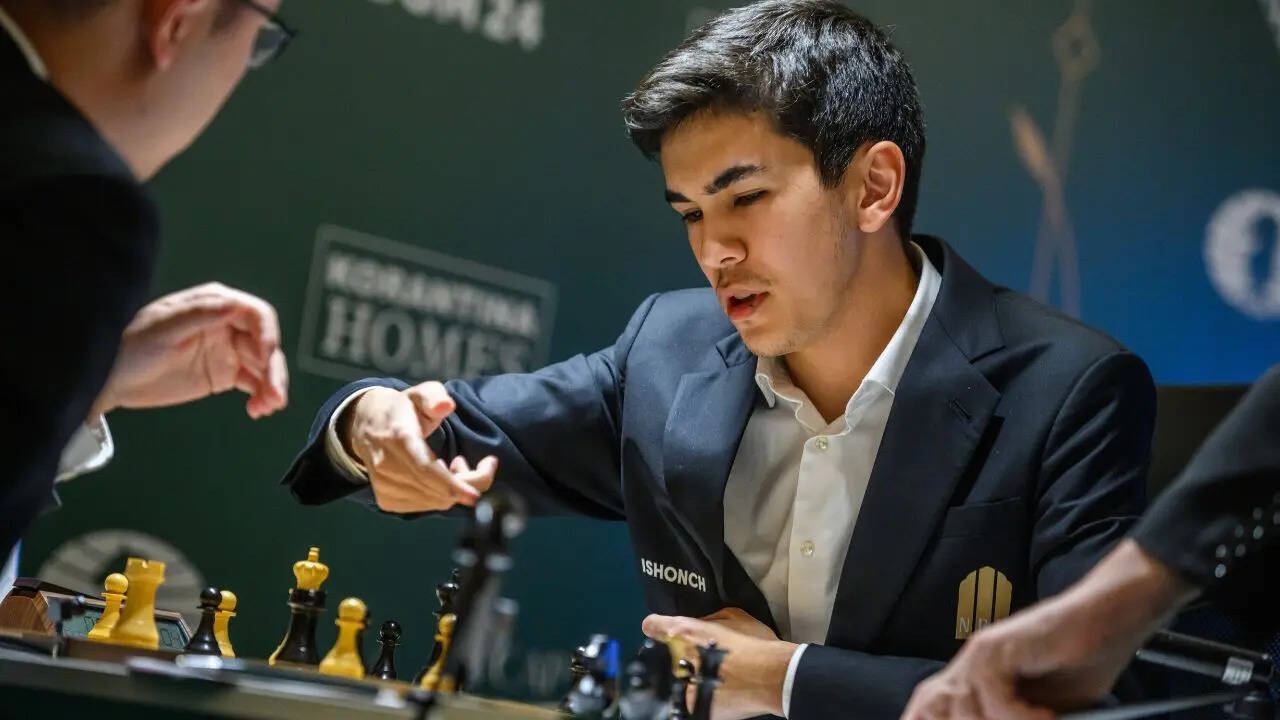
World No. 2 Hikaru Nakamura questions FIDE’s safety protocols (Photo by Michal Walusza)

NEW DELHI: The year was 2015. At 55, veteran Grandmaster (GM) Pravin Thipsay hadn’t won any chess tournament in four years. He arrived at the inaugural Dr. Hegdewar Open in Delhi hoping to break the hex, but by the fifth round, he found himself staring at a nightmare.Across from him sat Dhruv Kakar, a 19-year-old engineering student with a modest rating of 1575 on paper. But as the game unfolded, Thipsay watched in disbelief as his pieces were traded away with clinical, engine-like precision.After 87 gruelling moves, the teenager prevailed as the GM sat at the other end of the board with utter disbelief.

Watch

Nihal Sarin Exclusive: Candidates 2026 Predictions, Anish Giri’s ‘Drawish’ Tag, and More #Chess

“The quality of moves was not matching his rating,” Thipsay told TimesofIndia.com, recalling the incident. “There was a consistency of time taken by him irrespective of whether the move was obvious or not.”The suspicion was immediate. In a scene resembling a thriller, the youngster was taken to a private room afterwards. Authorities then conducted a body search on Kakar and found him strapped with several mobile phones across his body and wearing an earphone so tiny it had to be removed with a magnet.The veteran eventually went on to win the tournament, his first in four years, but the victory was stained by the realisation of how easily the soul of the game could be sold for a digital signal.Fast forward to 2026, and the shadows of 2015 have grown into a global obsession. At the ongoing FIDE Candidates, the pinnacle of the sport, the atmosphere is less like a quiet library and more like a high-security black site.It was this tension that prompted World No. 2 Hikaru Nakamura to launch a sarcastic verbal gambit that has since gone viral.“They scan us before the game. They scan us after the game. They have metal detectors and a variety of other scanners,” Nakamura scoffed on his YouTube channel. “I mean, who are we? Are we like Mossad agents inside Iran or something? Come on, we’re chess players! Let’s be real.”For Nakamura, the measures are “complete nonsense”, a theatrical overreaction to a threat he believes is managed through sheer hardware saturation. Yet, FIDE stands firm.Andy Howie, FIDE’s Fair Play Officer, defended the protocols as a necessary shield for a World Championship qualifier. “We have to make sure the players are in a safe environment,” he said on video on FIDE’s YouTube channel.The debate has split the chess world down the middle. Is FIDE protecting the integrity of the game, or have they turned a battle of wits into a TSA checkpoint?The Indian perspectiveRight after the Nakaumra rant, Koneru Humpy, India’s legendary female GM, was one of the first Indian GMs to take to X (formerly Twitter) to voice her support for the strictness.“In today’s era of rapid technological advancement, strong anti-cheating measures are essential,” she noted. “They may feel demanding, but they ensure games are decided by skill. There have been times of doubt during games, but existing rules make it difficult to speak openly.”Humpy’s sentiment is echoed by GM Shyam Sundar M, though he acknowledges the friction Nakamura describes.“It (having proper safety measures) is an absolute must because these days so many technologies keep coming up,” Shyam told this website. “I know how annoying it is. Before the game, players are usually focused only on the board. A long queue for ten minutes or more can be frustrating.”“What annoys a player even more than the waiting time is if someone cheats and never gets caught,” Shyam added. “So, for the benefit of the game, I think, uh, it is essential. Like in the airport, the security check is for our own safety. Once this is done, we know whether we are playing human players or ‘meta-humans.'”Is broadcasting the real problem?While Nakamura rails against the scanners, Pravin Thipsay offers a radical alternative that could render the metal detectors obsolete. Kill the live feed.“Cheating is a major threat. Any Tom, Dick, and Harry with the help of an engine could beat the world champion,” Thipsay explained.“I think live chess is not a necessity. If the games are delayed by one hour, it’s not going to affect the popularity of chess. It’s not like a cricket match where people want to see the match live. People look at these games at their convenience.”
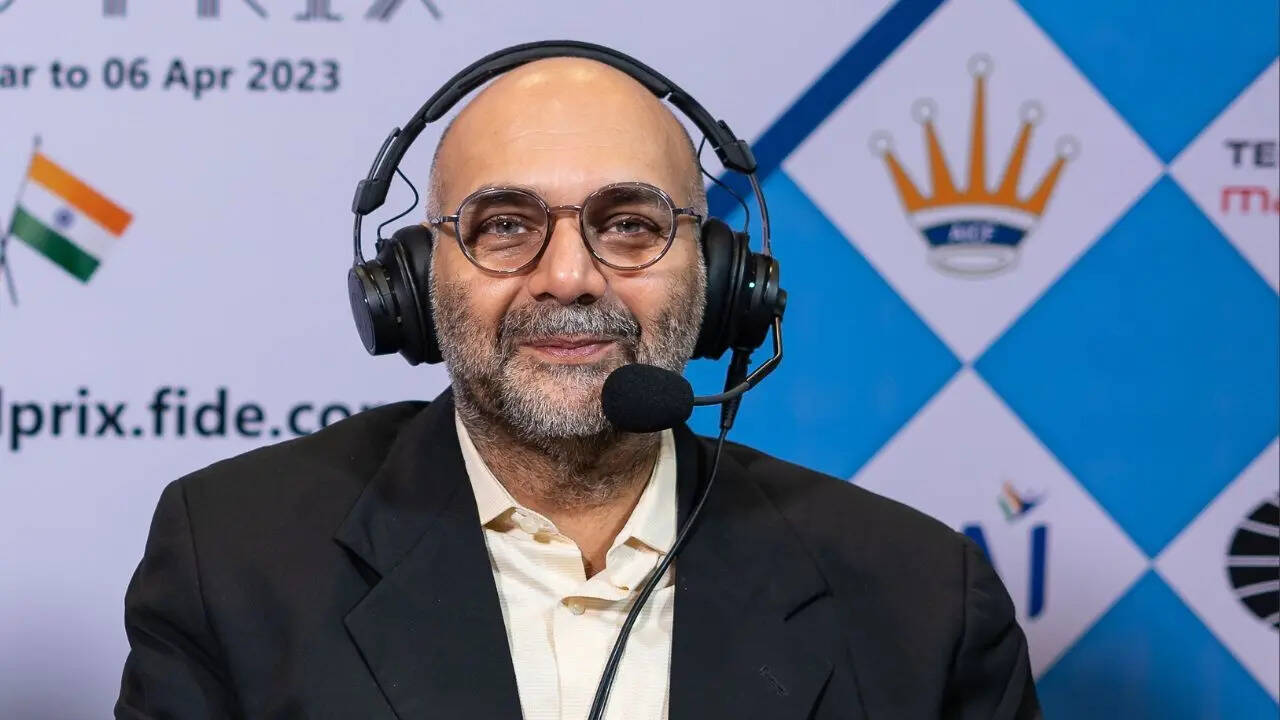
Pravin Thipsay

Pravin Thipsay

Thipsay argues that FIDE is “mistaken” in thinking that popularity depends on instant data.He points out the logistical nightmare the current rules create for travelling pros.“When we go abroad, we don’t know where to leave our phones. You need a mobile to reach the location, but you can’t leave it with the organisers, and you can’t take it to the hall. It’s a serious inconvenience,” he further added.His solution, thus, lies in delaying the broadcast by 30 to 60 minutes. “In that case, the cheating chances are almost zero. Players are happy to see even 100-year-old games. The priority should be that nobody has the privilege of showing the games while they are in progress.”A price for the greater good?For younger GMs like Abhimanyu Puranik, the “Mossad agent” treatment is simply the cost of doing business at the highest level.“Anti-cheating measures are of paramount importance nowadays,” Puranik, who recently turned 26, told TimesofIndia.com. “While obviously nothing suspect is going on in events like the Candidates, these events set an example for the quality of anti-cheating that tournaments around the world should aspire to.”
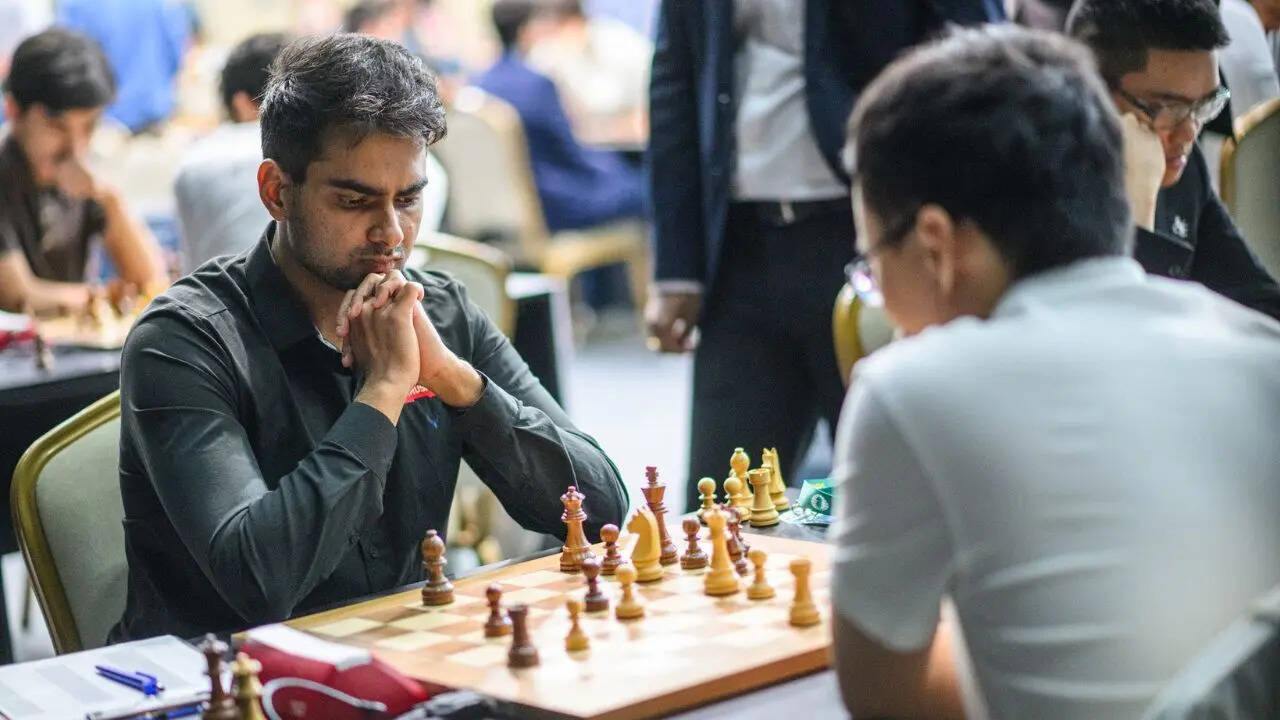
Abhimanyu Puranik (Photo by Michal Walusza)

Puranik feels the process can be a hassle, but he also feels: “It is a small price to pay for the greater good of the game.”Nakamura might feel like a spy in a foreign land, but for many Indian players, the memory of the “average player” playing god-like moves is a ghost they aren’t ready to stop hunting.For now, the scanners aren’t going anywhere. And as long as that threat exists, Grandmasters will have to keep acting like secret agents.
Candidates Chess: Vaishali, Divya Deshmukh save Indian blushes; Praggnanandhaa must act now | Chess News – The Times of India


Candidates Chess: Vaishali, Divya Deshmukh save Indian blushes; Praggnanandhaa must act now | Chess News – The Times of India
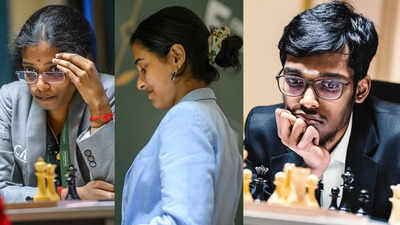
Vaishali, Divya Deshmukh, and Praggnanandhaa (Photos by Michal Walusza and Yoav Nis)

NEW DELHI: As the FIDE Candidates Tournament crosses the near-midway mark of its 14-round marathon, a kind of intensity has started filling the Mediterranean air. However, for the Indian contingent, the narrative is split between a desperate scramble for relevance in the Open section and a gritty, if somewhat erratic, resurgence in the Women’s category.While Uzbekistan’s Javokhir Sindarov is currently playing a version of chess that seems light-years ahead of his peers, leading the Open section with a staggering 5.5/6, the Indian challenge, single-handedly led by R Praggnanandhaa in the respective category, appears to be stuck in second gear.

Watch

Nihal Sarin Exclusive: Candidates 2026 Predictions, Anish Giri’s ‘Drawish’ Tag, and More #Chess

In the Women’s section, Vaishali Rameshbabu and Divya Deshmukh managed to secure crucial wins with the black pieces in Round 6 at the Cap St Georges Hotel & Resort in Cyprus on Saturday, even though these victories owed as much to the collapse of their opponents as to their own clinical play.The Sindarov Storm continuesIn the Open category, the gap between the leader and the chasing pack is widening into a chasm. Sindarov’s dominance is so absolute that a World Championship match against D Gukesh later this year is looking like an inevitability.Fabiano Caruana sits at a distant second with 4 points, 1.5 points behind the leader, while India’s lone hope, Praggnanandhaa, languishes with 3 points.Analysing the round, veteran Grandmaster Pravin Thipsay noted that while Praggnanandhaa showed intent against Hikaru Nakamura, the execution fell short of a decisive blow.“Praggnanandhaa did play quite ambitiously against Nakamura. He was black, but he kept on complicating the positions. However, Nakamura was able to find the correct moves and the game ended by a repetition of moves as both players were compelled to repeat, otherwise they would be in an inferior position. It was a well-fought draw, but equality nonetheless,” Thipsay told TimesofIndia.com after the day’s play. The real story, however, remains Sindarov, who dismantled Wei Yi with surgical precision. Thipsay was effusive in his praise, marking a clear distinction between the Uzbek and the rest of the field.“The best game of the round was between Wei Yi and Sindarov. Sindarov simply outplayed him in a very strange positional battle. Wei Yi seemed to be better, but in fact, Sindarov was better for quite a long time. The quality of play is completely above others, a different class altogether,” Thipsay explained.

Javokhir Sindarov (Photo by Michal Walusza)

Javokhir Sindarov (Photo by Michal Walusza)

If Sindarov continues like this, he is bound to win the tournament with one or two rounds to spare. Though Caruana has been playing consistently and solidly, Sindarov is just a different class in this tournament.”FIDE Candidates Round 6 Results – April 4, 2026Open Section

  • Fabiano Caruana 0.5–0.5 Andrey Esipenko
  • Hikaru Nakamura 0.5–0.5 R Praggnanandhaa
  • Anish Giri 0.5–0.5 Matthias Blübaum
  • Wei Yi 0–1 Javokhir Sindarov

Fortune favours the erratic in Women’s sectionIn the Women’s section, India finally found some momentum, though the critical lens remains fixed on how these points were earned.Vaishali and Divya have now joined the chasing pack behind leader Anna Muzychuk (4/6 points). Vaishali’s encounter with Kateryna Lagno was a rollercoaster where the Indian opted for aggression at the expense of structural integrity.“Vaishali tried to complicate matters at the cost of positional concessions,” Thipsay observed. “It wasn’t clear if she was better by move 20. When she offered the h5 pawn (on 22nd move), it was a risky decision. Lagno could have taken it with 24.Qxh5 instead of 24.Rc1, which turned out to be a bad choice.” According to Thipsay, Vaishali’s persistence paid off only because Lagno retreated into a shell.“Vaishali kept playing aggressively, and Lagno kept playing passively. By move 29, Vaishali offered a bishop sacrifice (…Bxh3) which couldn’t be taken,” he noted. “By move 32, she sacrificed the same bishop at a different place (32…gxf3) to open the king’s position completely. Lagno eventually had to give up on move 47, but the game was on a knife-edge for a long time.”Divya’s great escapeDivya Deshmukh’s win over Bibisara Assaubayeva followed a similar script of drifting followed by a late-game rescue. Utilising her favourite Cambridge Springs Defense, Divya found herself in a rare variation previously seen between Magnus Carlsen and Vincent Keymer.“The position was equal early on, but Bibisara correctly varied on move 15, giving her a slight advantage. At this stage, Divya started drifting. She was facing serious difficulties by move 24 when Bibisara broke open the kingside,” Thipsay remarked. However, the Indian was handed a lifeline by a series of unforced errors from the Kazakh player.“Bibisara chose to attack with the queen instead of the knight on move 26. 26.Ng4 would have given her a big advantage, but she played 26.Qe3. Then came a sequence of inaccurate, unforced errors: 27.c5,28.c6. These moves were inferior compared to her earlier play. Eventually, Divya got the opportunity to strategically and tactically outplay her for a win after 46 moves.”Despite Saturday’s favourable results, the Indian camp will be wary. If Praggnanandhaa is to stop the Sindarov juggernaut, and if the women are to overtake Muzychuk, the reliance on opponent blunders must be replaced by the clinical dominance currently being displayed by the tournament leader.FIDE Candidates Round 6 Results – April 4, 2026Women’s Section

  • Zhu Jiner 0–1 Anna Muzychuk
  • Tan Zhongyi 0.5–0.5 Aleksandra Goryachkina
  • Kateryna Lagno 0–1 Vaishali Rameshbabu
  • Bibisara Assaubayeva 0–1 Divya Deshmukh

Round 7 Pairings – April 5, 2026

  • Open Section: Esipenko vs. Wei Yi; Sindarov vs. Anish Giri; Blübaum vs. Nakamura; Praggnanandhaa vs. Caruana.
  • Women’s Section: Muzychuk vs. Assaubayeva; Divya vs. Kateryna Lagno; Vaishali vs. Tan Zhongyi; Goryachkina vs. Zhu Jiner.