Artemis II Commander Reid Wiseman’s moon mission was predicted by a fortune cookie nearly a decade ago


Snack to the future?

Artemis II Commander Reid Wiseman foretold his historic voyage to the moon in 2017 after opening a fortune cookie that predicted he would travel to a “strange place.” An X post showing the spaceman holding the prescient pastry’s prophecy is taking off online.

“A visit to a strange place will bring you renewed perspective,” reads the oracular cookie’s forecast, along with the lucky numbers 47, 31, 22, 9, 19, and 35.

In the caption, Wiseman wrote that he chose to “believe the fortune” and that the so-called voyage would perhaps entail a trip to the “moon or a #JourneyToMars.

Reid said he saw the message as a sign he’d be traveling to the moon or Mars. X/astro_reid

While it may have seemed like a humorous distraction at the time, the confection’s prophecy would seemingly come true less than a decade later.

On Monday, Reid and his crew — Victor Glover, Christina Koch ⁠and Canadian astronaut Jeremy Hansen — traveled the farthest anyone has gone into space after flying a staggering 252,756 miles from Earth during their historic tour of the moon.

In doing so, they eclipsed the record of 248,655 miles set by Apollo 13 in 1970. During this latest fly-by, the intrepid Artemis squad gazed upon swaths of the moon’s far side never before seen by human eyes

Reid observed the moon from Orion. “A visit to a strange place will bring you renewed perspective,” read the fortune. AP

Fans of the mission were awestruck over how well the fortune had foretold Reid’s future.

“Hey, you’re gonna be shocked when I say this but … this is you on the way to the moon,” shared one viewer, along with a pic of Reid and his fellow astronauts phoning home from the cosmos.

“I’m from the future, boy do I have news for you,” said another.

“That’s one fortune cookie that delivered on a cosmic scale,” added a third.

Others observed that the numbers 47 and 22 are considered lucky across many cultures.

NASA also weighed in on Reid’s “good fortune,” sharing his X post with checkmarks next to “Strange place” and “New perspective” to suggest that the prediction had come to life.

Others wished him well on his return flight.

“What a beautiful fortune to have come true,” gushed one fan. “Congrats Reid, and have safe travels back home.”

Reid is pictured with his late wife, Carroll Wiseman, who died of cancer in 2020. NASA

The Artemis II has since departed the moon’s gravitational pull and is currently en route back to Earth with the projected “splashdown” slated for 8:07 p.m on Friday, if everything goes according to plan.

Perhaps the most moving moment of the voyage came when, after breaking Apollo 13’s record, members of the crew asked to name one of the newly observed lunar craters after Wiseman’s late wife, Carroll.

She died of cancer in 2020, leaving behind Wiseman and two daughters.

“A number of years ago, we started this journey in our close-knit astronaut family, and we lost a loved one,” Jeremy Hansen told NASA’s mission control in Houston during a Monday call as Wiseman cried along with the mission’s other two crew members. “There’s a feature in a really neat place on the moon, and it is on the near side-far side boundary.”

“It’s a bright spot on the moon, and we would like to call that Carroll,” he added, with Houston appearing to agree to the request.

The crew also requested that another crater be named after their capsule, Integrity.


Artemis II Crew Asks To Name Lunar Crater For Astronaut’s Late Wife


The Artemis II crew honoured NASA commander Reid Wiseman’s late wife, Carroll Wiseman, in an emotional tribute on Monday.

Wiseman, one of four astronauts on the Artemis II mission, lost Carroll, a 46-year-old paediatric nurse practitioner, to cancer in 2020.

Carroll was survived by Reid and their two daughters, Ellie and Katherine, according to an obituary in The Virginian-Pilot.

In remarks to mission control, the crew announced that they would like to name an unnamed crater on the moon for Carroll.

“There’s a feature in a really neat place on the moon, and it is on the near side, far side, boundary. In fact, it’s just on the near side of that boundary, and so at certain times of the moon’s transit around Earth, we will be able to see this from Earth,” CSA astronaut Jeremy Hansen said, his voice breaking at times.

“We lost a loved one, her name was Carroll, the spouse of Reid, the mother of Katie and Ellie. And if you want to find this one, you look at Glushko, and it’s just to the northwest of that at the same latitude as Ohm. And it’s a bright spot on the moon. And we would like to call it ‘Carroll.’”

Reid Wiseman could be seen on video wiping away tears as he put his hand on Hansen’s shoulder. The four crew members, which also includes astronauts Victor Glover and Christina Koch, then embraced in a hug.

To commemorate the Artemis II mission, the astronauts announced their suggestion to rename certain features on the Moon to honor the Orion spacecraft, named Integrity, as well as commander Reid Wiseman’s late wife, Carroll. pic.twitter.com/ejfhnItDo8

— NASA (@NASA) April 6, 2026

The crew also proposed naming another crater after their Orion spacecraft, Integrity.

Wiseman has said that Carroll insisted he continue pursuing his dreams as an astronaut even after she got sick, per the British outlet The Times.

He has also discussed what it’s like to be an only parent and how he prepared his daughters for the potential risks associated with a mission into space.

“I went on a walk with my kids, and I told them, ’Here’s where the will is, here’s where the trust documents are, and if anything happens to me, here’s what’s going to happen to you,” Wiseman said at a January NASA news conference, according to The Baltimore Banner. “That’s just a part of this life.”

In an Instagram post he shared shortly before liftoff last week, Wiseman boasted about his children.

I love these two ladies, and I’m boarding that rocket a very proud father,” Wiseman wrote in a caption alongside a selfie with his daughters.


Why Canadian seeds are on their way to the moon with Artemis II – New Brunswick | Globalnews.ca


Thousands of kilometres from Earth, in an aluminum foil envelope, 2,600 Canadian seeds are on a voyage through outer space — along with the Artemis II crew.

Why Canadian seeds are on their way to the moon with Artemis II – New Brunswick | Globalnews.ca

“Looks a little bit like five aluminum ravioli stuck together, is what I’ve been telling people,” National Tree Seed Centre coordinator Darren Derbowka said.

The seeds include lodgepole pine, eastern white cedar, red maple, white birch and eastern white pine.

But they won’t be used to start a moon forest, or even for research. Instead, their purpose is much closer to home.

Get daily Canada news delivered to your inbox so you'll never miss the day's top stories.

Get daily National news

Get daily Canada news delivered to your inbox so you’ll never miss the day’s top stories.

“Right now, 25 per cent of Canada’s native trees are imperiled or threatened in some way. So this project is really to sort of build that awareness around the importance of seed,” Derbowka said.

The National Tree Seed Centre, located in Fredericton, has over 13,000 seed collections of more than 250 species of trees and shrubs.

Story continues below advertisement

Derbowka said that conservation work is becoming more important as a result of climate change — and he hopes Artemis II will bring light to the important work happening on Earth.


“There’s already one planet in this solar system that needs terraforming and we are standing on it,” he said.

The seeds aren’t the only Canadian representation on board. Astronaut and London, Ont., resident Jeremy Hansen is on his way to making history as the first Canadian to fly around the moon. And University of New Brunswick faculty and students are tracking the spacecraft, Orion, as part of a volunteer program with NASA.

“It’s contributing a little piece of Canada onto a really important space exploration mission, and so the opportunity to do that is a once-in-a-lifetime chance,” Derbowka said.


&copy 2026 Global News, a division of Corus Entertainment Inc.


Stunning first glimpse of Earth sent by Artemis crew


Stunning first glimpse of Earth sent by Artemis crew
Hello, world (Picture: NASA)

This is how planet Earth looks to the Artemis II astronauts.

The crew travelling on board the Artemis II rocket have sent through the first images of Earth as it looks from their POV.

The surreal snaps were taken by the NASA astronaut and Artemis Commander Reid Wiseman, who is one of the four-strong team on their way to the moon.

It shows Earth from the Orion spacecraft’s window after it completed the translunar injection burn, which took the rocket out of Earth’s orbit.

This image provided by NASA shows a downlink image of Earth taken by NASA Artemis II astronaut commander Reid Wiseman inside the Orion capsule on Friday, April 3, 2026.
A second snap was taken from one of the Orion rocket’s windows (Picture: AP)

Eagle-eyed viewers can spot two auroras on the top right and bottom left, with a zodiacal light glimmering on the background as the Earth eclipses the Sun.

A second image shows the view from one of the Orion’s four windows.

NASA said: ‘We see our home planet as a whole, lit up in spectacular blues and browns. A green aurora even lights up the atmosphere. That’s us, together, watching as our astronauts make their journey to the Moon.’

Read here how long it will take for the astronauts to reach the moon.

These are the first two images shared to the world aboard the historic Moon mission.

To view this video please enable JavaScript, and consider upgrading to a web
browser that
supports HTML5
video

Wiseman is heading to the moon and back with Victor Glover, Christina Koch and Jeremy Hansen.

The crew are inching closer towards the moon inside the spacecraft, which has been described as cosy after taking off from Florida on April 1.

They will be carrying out all their daily duties inside the 330-cubic-foot capsule – roughly the size of a minivan.

It will be their home for 10 days until it plunges back on Earth and into the Pacific Ocean.

The astronauts have all gone through special cosmic toilet training to deal with the pesky lack of gravity.

Get in touch with our news team by emailing us at webnews@metro.co.uk.

For more stories like this, check our news page.


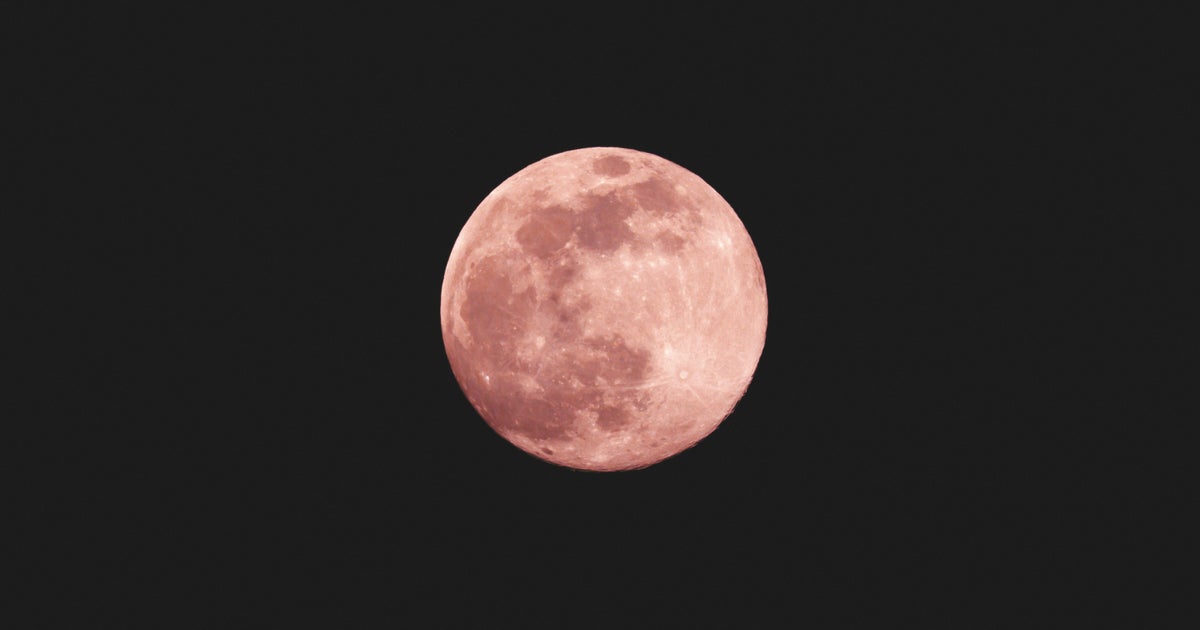
April’s Huge ‘Pink Moon’ Rises This Thursday: The Best Time To See It In The UK


On Thursday, 2 April, the “Pink moon” will rise.

Though it’s likely to be full and bright, unfortunately, the moon probably won’t actually look pink during the event.

But the fourth full moon of the year, which may appear a kind of peachy orange, is still worth a proper good gawk, if you ask us.

Here’s when, where, and how to see it.

When will April’s pink moon rise?

In the UK, it’ll peak at 3:12 am on Thursday, 2 April, 2026.

But it’ll look full for much longer than that. Watch the skies the night of, leading up to, and immediately after that date for an almost-full sight.

Where can I see April’s pink moon in the UK?

The full moon should be visible anywhere without too much light pollution at night.

What will April’s pink moon look like?

OK, it won’t be Barbie pink. But when it’s near the horizon, April’s full moon will look 1) huge and 2) faintly orange.

That’s because, BBC Sky At Night explained, the sunbeams that reach the moon – which is expected to sit quite low in the sky – get filtered by the thicker air of the Earth’s horizon before it rises higher.

It’s quite similar to what happens during a “blood moon,” which, sadly, was not visible in the UK this March.

But we’ve been repaid, I reckon. The moon will look more like a grapefruit in the sky than a tangerine; the same low-down position that gives the moon its orange tint also creates an illusion that makes it seem massive, too.

Why is April’s full moon called a pink moon?

Sadly, the moon’s pale face won’t blush as much as the name might suggest. Instead, the “pink moon” is named after a flower in North America that blooms at the same time April’s full moon typically rises.

It is sometimes also called the sprouting grass moon, the egg moon, and the fish moon.


Nasa camera accidentally captures moment comet breaks up in real time


Nasa camera accidentally captures moment comet breaks up in real time
This series of images from NASA’s Hubble Space Telescope of the fragmenting comet C/2025 K1 (ATLAS) was taken over the course of three consecutive days – November. 8, 9, and 10 last year (Picture: NASA/Cover Media)

NASA astronomers struck it lucky after the Hubble Space Telescope observed a comet in the act of disintegrating completely by chance.

The event was one that scientists believed they were unlikely to witness in real time.

And it was even more extraordinary as researchers had intended to observe a different comet, but were forced to change plans due to technical constraints.

The findings were published on Wednesday in the journal Icarus.

‘Sometimes the best science happens by accident,’ John Noonan, a research professor in the Department of Physics at Auburn University in Alabama, said.

‘This comet got observed because our original comet was not viewable due to some new technical constraints after we won our proposal. We had to find a new target – and right when we observed it, it happened to break apart, which is the slimmest of slim chances.”

The object, known as Comet C/2025 K1 (ATLAS), can be seen progressively breaking apart in a sequence of images taken between November 8 and 10 last year.

Initially appearing as four bright objects, the largest fragment then splits further, with pieces drifting away from one another.

This diagram shows the path the comet took as it swung past the Sun and began its journey out of the solar system (Picture: NASA/Cover Media)

Noonan, a co-investigator on the study, said he did not realise the significance immediately.

‘While I was taking an initial look at the data, I saw that there were four comets in those images when we only proposed to look at one,’ he said. ‘So we knew this was something really, really special.’

Scientists have long attempted to capture such an event using Hubble, but the unpredictability of comet break-ups has made this difficult.

‘The irony is now we’re just studying a regular comet and it crumbles in front of our eyes,’ said principal investigator Dennis Bodewits, also of Auburn University.

‘Comets are leftovers of the era of solar system formation, so they’re made of “old stuff”—the primordial materials that made our solar system.

‘But they are not pristine – they’ve been heated; they’ve been irradiated by the Sun and by cosmic rays.

‘So, when looking at a comet’s composition, the question we always have is, “Is this a primitive property or is this due to evolution?’”

‘By cracking open a comet, you can see the ancient material that has not been processed.’

Hubble observed the comet splitting into at least four pieces, each surrounded by a glowing cloud of gas and dust known as a coma. While ground-based telescopes saw only faint bright patches, Hubble’s high resolution allowed scientists to distinguish individual fragments clearly.

The observations were made shortly after the comet passed its closest point to the Sun – known as perihelion – when heating and stress are at their greatest. Scientists believe the comet began breaking up about eight days before Hubble captured the images.

However, the team has identified a puzzling delay between the break-up and the brightening detected from Earth.

A series of images from NASA’s Hubble Space Telescope of the fragmenting comet (Picture: NASA/Cover Media)

One theory is that a layer of dust must first form over newly exposed ice before being blown away. Another possibility is that heat builds up beneath the surface before ejecting material into space.

‘Never before has Hubble caught a fragmenting comet this close to when it actually fell apart. Most of the time, it’s a few weeks to a month later. And in this case, we were able to see it just days after,’ said Noonan.

‘This is telling us something very important about the physics of what’s happening at the comet’s surface. We may be seeing the timescale it takes to form a substantial dust layer that can then be ejected by the gas.’

Early observations suggest the comet is chemically unusual, with significantly lower levels of carbon than typically seen. Further analysis using Hubble’s instruments is expected to reveal more about its composition and, potentially, the origins of the solar system.

Now reduced to a cluster of fragments about 250 million miles from Earth, the comet is travelling through the constellation Pisces and is expected to leave the solar system permanently.


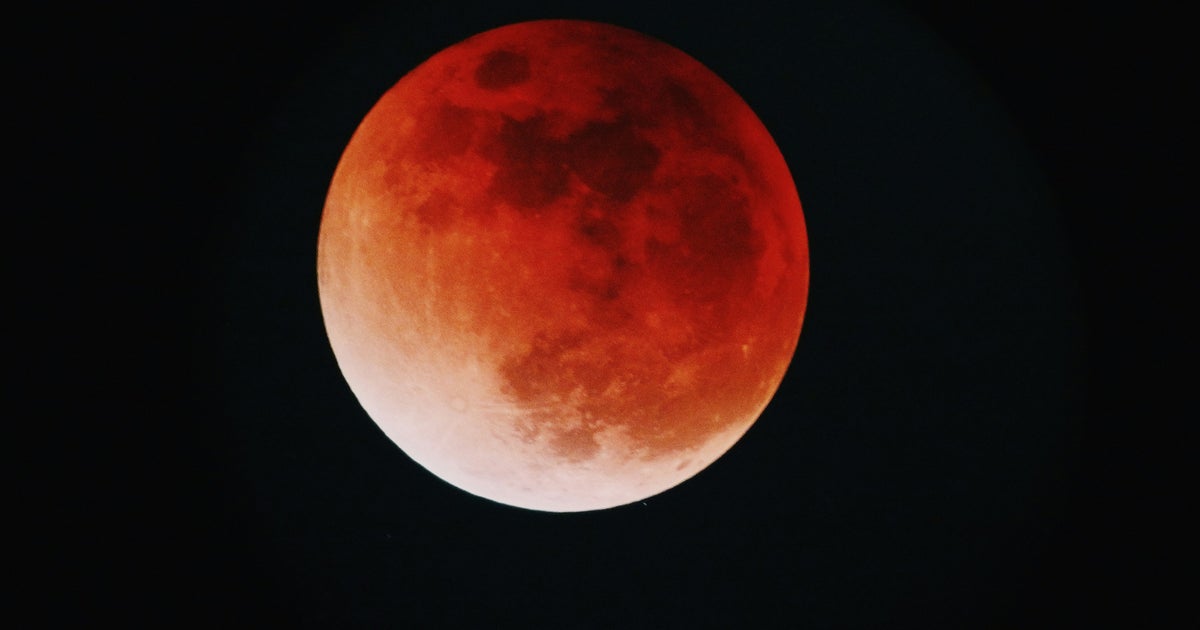
‘Blood Moon’: Today’s Lunar Event Won’t Happen Again Until 2028


There will be a total lunar eclipse tonight (3 March) that’ll lead to a “blood moon”.

This will see the moon turn a deep red or orange as the Earth interrupts some of the sun’s rays, usually reflected by the satellite.

And it’s the last one we’re expected to get until 2028.

Why do total solar eclipses make the moon look red?

Total solar eclipses can only happen during a full moon. They occur when the Earth is positioned directly between the sun and the moon.

The “blood moon” occurs when the Earth’s “umbra”, or the shadow of its centre, covers the moon.

During this period, the light on the moon gets filtered through the Earth’s atmosphere.

Shorter wavelengths, which create colours like blue, scatter more quickly than longer ones, like red and orange.

That means redder hues show up on the moon’s surface during the eclipse.

The more dust in our atmosphere, the redder the moon will appear.

Where can I see the blood moon?

Unfortunately, it’s not going to be visible in the UK.

Nor will it be seen from Africa or the rest of Europe.

But America, parts of East Asia, the Pacific region, and Australia will see the event at its burgundy best.

Though the actual eclipse will last just under an hour, the red effect is expected to stick around for much longer.

There will be partial lunar eclipses long before 2028, however

OK, so we’ll have to wait a while for our next total solar eclipse.

But partial solar eclipses, which occur when the moon is full but the Earth doesn’t sit perfectly between it and the sun, are a little more common.

The next lunar eclipse is expected in late August 2026.

Partial lunar eclipses can look different depending on your location.

Speaking of which, more good news: the next partial lunar eclipse will be visible from the UK and Europe.

And you don’t need any fancy tools to observe it – just head outside and look up.


On 3 March, The ‘Worm Moon’ Will Turn Blood Red


!function(n){if(!window.cnx){window.cnx={},window.cnx.cmd=[];var t=n.createElement(‘iframe’);t.display=’none’,t.onload=function(){var n=t.contentWindow.document,c=n.createElement(‘script’);c.src=”//cd.connatix.com/connatix.player.js”,c.setAttribute(‘async’,’1′),c.setAttribute(‘type’,’text/javascript’),n.body.appendChild(c)},n.head.appendChild(t)}}(document);(new Image()).src=”https://capi.connatix.com/tr/si?token=8b034f64-513c-4987-b16f-42d6008f7feb”;cnx.cmd.push(function(){cnx({“playerId”:”8b034f64-513c-4987-b16f-42d6008f7feb”,”mediaId”:”8ada6b79-325c-4aef-9b1d-9f05b4b23378″}).render(“69a1bef8e4b022e3a55846dc”);});

On 3 March 2026, the “worm moon” – a name given to the full moon in March – will rise. 

And due to an event called a total lunar eclipse, this year, it’s set to look deep red from some parts of the Earth. 

What is a total lunar eclipse? 

This can only happen during a full moon. It occurs when the Earth gets into a position right in between the moon and the sun, making the surface of the moon look dimmer. 

When the moon moves into the inner part of the Earth’s shadow (its umbra) in a total lunar eclipse, the Earth’s atmosphere filters the light from the sun to the moon. 

Why will March’s “blood moon” be red?

During a total lunar eclipse, the light on the moon has to pass through our atmosphere.

Because shorter waves of light, like blue and purple tones, scatter faster than their longer-length cousins, red and orange, the moon can look reddish or orange during the event. 

“It’s as if all the world’s sunrises and sunsets are projected onto the Moon,” NASA said.

This is sometimes called a blood moon, thanks to the colour.

The more dust in our atmosphere, the redder the moon is likely to look.

When will the “blood moon” happen? 

It’s set to happen on 3 March, 2026. And while the time the moon actually spends in the Earth’s umbra is just under an hour, Space.com said that “the show goes on for much longer than that”.

The eclipse will “peak” at 11:33am GMT. At this point, the moon will move closest to the centre of the Earth’s shadow, as part of the “eclipse maximum”. 

Where can I see the March blood moon? 

Sadly, it won’t be visible from the UK or Ireland – nor will it be seen from Africa or Europe. 

But views from North America, the Pacific area, Australia, and parts of East Asia are expected to be particularly stunning.

Why is the March moon called the “worm moon”? 

Per Royal Museums Greenwich, the name comes from Native Americans, who coined the term because of “the worm trails that would appear in the newly thawed ground” in March. 

Other names include the death moon, crust moon, sap moon, and chaste moon. 

And, of course, this month, it counts as a “blood moon” too.


We could use a ‘solar slingshot’ to catch 3I/ATLAS, scientists say


We could use a ‘solar slingshot’ to catch 3I/ATLAS, scientists say
Would make for quite a good amusement park ride (Picture: Getty/Metro)

Scientists are considering a rather novel way to get a better look at 3I/ATLAS – a solar slingshot.

In the months since the interstellar trespasser was spotted, scientists clashed over whether it was a giant snowball (a comet) or… a UFO.

One reason for this was that even at its closest to Earth in December, 3I/ATLAS was still 167 million miles away, making observations tricky.

So, why not just send a spacecraft over there? This is what scientists are thinking could be possible by doing a rather risky rocker manoeuvre.

In a new paper, a team from the non-profit Initiative for Interstellar Studies said this would be achievable by exploiting the ‘Oberth effect’.

‘As a spacecraft is falling into the gravitational potential well, it fires its rockets, coming out of it with a greater kinetic energy,’ Dr Alfredo Carpineti, an astrophysicist who was not involved in the paper, told Metro.

Comet 3I/ATLAS streaks across a dense star field in this image captured by the Gemini Multi-Object Spectrograph (GMOS) on Gemini South at Cerro Pach'n in Chile, one half of the International Gemini Observatory, partly funded by the U.S. National Science Foundation (NSF) and operated by NSF NOIRLab.
Comet 3I/ATLAS was first spotted last July (Picture: International Gemini Observatory)

The sun’s gravity, in other words, would give the 500kg probe a speed boost – a change in velocity of at least 5.1 miles per second.

If successful, this would make the 3I/ATLAS interceptor the fastest spacecraft in human history.

Our interstellar visitor will do a pit-stop at Jupiter in about 20 days, marking the halfway point of its time in our cosmic neighbourhood.

The plan would also be to fly out the interstellar interceptor to the gas giant first to use its gravity to slow it down. (If it beelined to the sun, it would travel so fast that it would end up being burned out.)

Experts propose launching the probe in 2035, as it could reach 3I/ATLAS by 2085, when it would be 68 million miles away.

As elaborate as this sounds, Dr Carpineti says this is ‘the most efficient time to burn fuel’.

To achieve this, though, would involve flying just 140,000 miles from the sun’s centre, meaning the craft would need to endure searing heat.

The researchers suggest the craft could be clad in a carbon-composite and aerogel, one of the lightest materials in the world.

One thing holding the mission back is that even with the Oberth effect, the craft still wouldn’t be fast enough to get close to entering 3I/ATLAS’ orbit.

3I/ATLAS, formerly known as A11pI3Z, is only the third interstellar visitor to be discovered passing through our neck of the cosmic woods.

The first was Oumuamua, which travelled past us in 2017. In 2019, Borisov, a comet of interstellar origin, passed by.

Like Borisov, scientists believe 3I/ATLAS likely formed as a comet around another star before being flung out into the cosmos.

Dr Carpineti adds: ‘The work doesn’t look at the feasibility of the mission but just the manoeuvre.

‘Indeed, it’s possible to use this approach to catch up with the rocket.

‘But since the interstellar object is so much faster than the previous two, it would take decades.’

Get in touch with our news team by emailing us at webnews@metro.co.uk.

For more stories like this, check our news page.