Mullin confirmed as DHS chief as lawmakers near solution on shutdown standoff


NEWYou can now listen to Fox News articles!

The Senate confirmed Sen. Markwayne Mullin, R-Okla., as the ninth Homeland Security secretary, capping a sprint to replace embattled outgoing Secretary Kristi Noem.

It also caps off a 13-year career in Congress that began in the House and saw Mullin score a seat in the Senate in 2021 where he became the de facto bridge between both chambers, helping to build trust between the House and Senate during last year’s push to pass the “big, beautiful bill.” Ahead of the vote he arrived flanked by his family, and was excited to cast his final vote on himself.  

Mullin, who was picked by President Donald Trump earlier this month to lead the Department of Homeland Security, was confirmed on a largely party-line vote. Sens. John Fetterman, D-Pa., and Martin Heinrich, D-N.M., joined nearly every Republican to clinch his nomination.

Heinrich said he bucked his party because he has seen that Mullin — who co-chairs the Senate Legislative Branch spending committee with him — “is not someone who can simply be bullied into changing his views.”

MULLIN’S CONFIRMATION SURVIVES KEY TEST VOTE AS DHS REMAINS SHUT DOWN
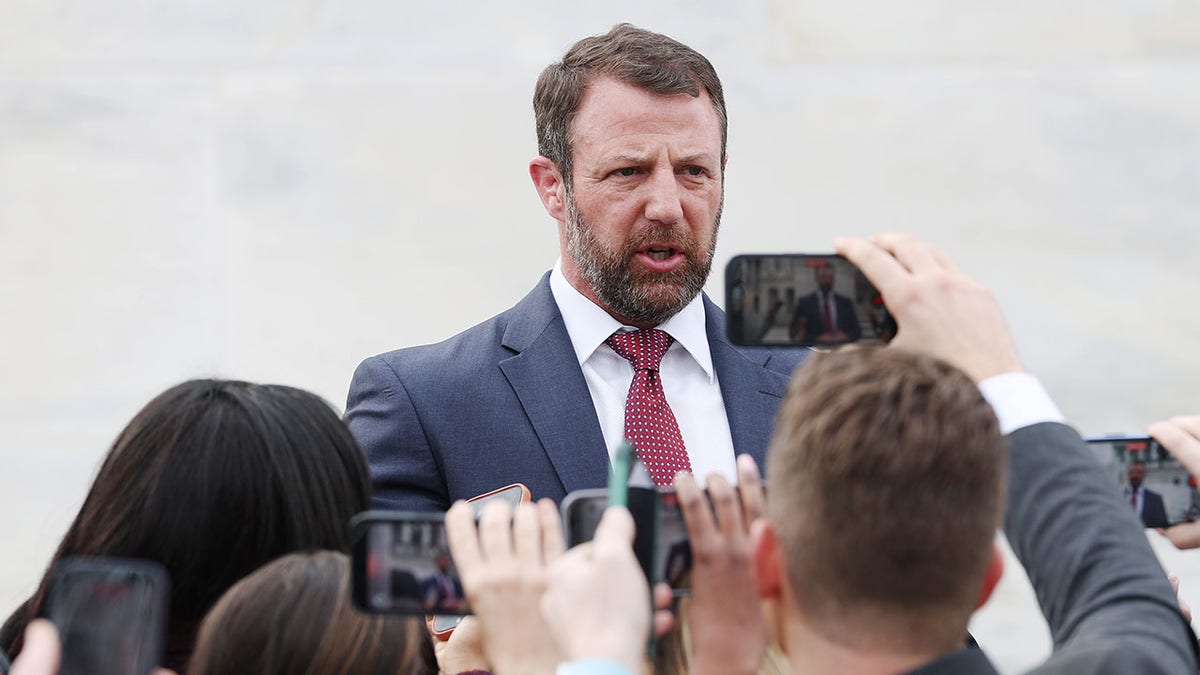
Mullin confirmed as DHS chief as lawmakers near solution on shutdown standoff

Sen. Markwayne Mullin, Republican from Oklahoma, addresses reporters at the U.S. Capitol after being tapped as President Donald Trump’s new nominee to lead DHS, March 5, 2026. (Anna Moneymaker/Getty Images)

“And I look forward to having a secretary who doesn’t take their orders from Stephen Miller,” Heinrich said.

Sen. Rand Paul, R-Ky., was the only Republican to vote against Mullin, citing their chilly relationship and Mullin’s past comments that his 2017 assault was “justified.”

Mullin’s confirmation also saw the close of a whirlwind month in which Noem was reassigned after an explosive pair of hearings on Capitol Hill, as well as the deaths of Renee Nicole Good and Alex Pretti, who were fatally shot by Immigration and Customs Enforcement agents.

SCHUMER GAMBIT FAILS AS DHS SHUTDOWN HITS 36 DAYS AND AIRPORT LINES GROW
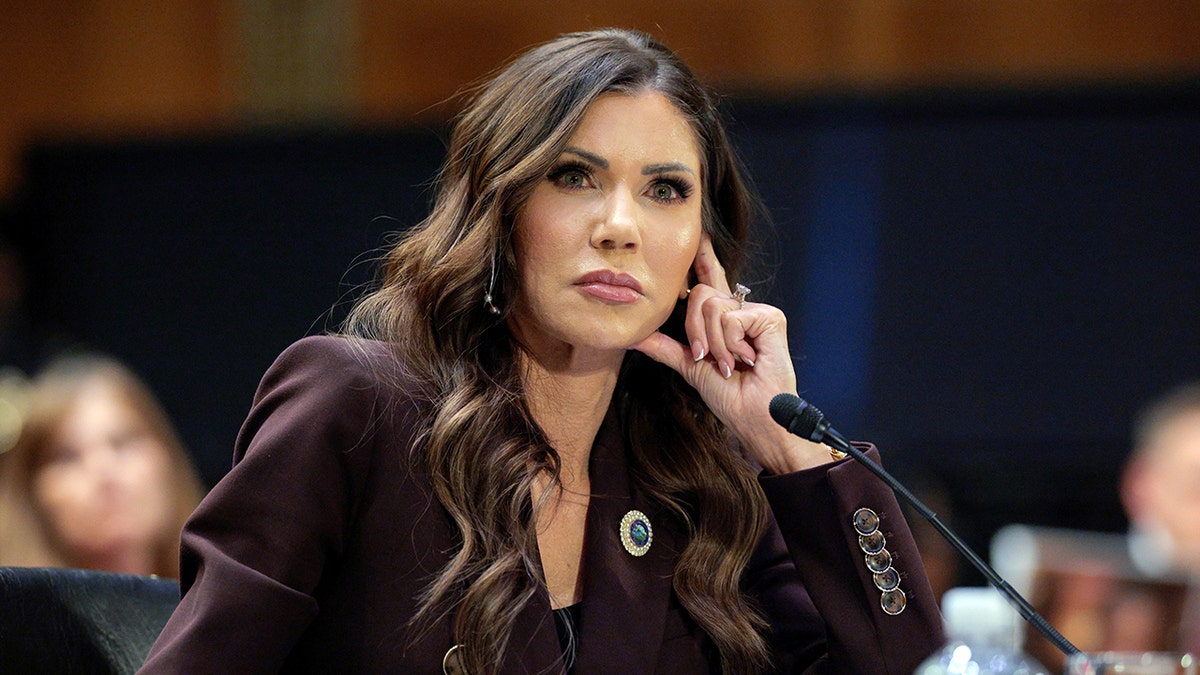
Kristi Noem at hearing

Secretary of Homeland Security Kristi Noem testifies in a hearing in Washington in March 2026. (Chip Somodevilla/Getty Images)

Still, Noem’s ousting and Mullin’s ascension have done little to shift Senate Democrats from their position. They continue to demand sweeping reforms to ICE and have so far blocked funding to the agency five times, along with several GOP attempts to temporarily extend funding to DHS.

The path to ending the shutdown appeared to become more complicated over the weekend.

Both sides began meeting for the first time during the shutdown, with Senate Majority Leader John Thune, R-S.D., and Senate Minority Leader Chuck Schumer, D-N.Y., characterizing the talks as “productive.”

However, Trump threw a wrench into negotiations Sunday night, writing on Truth Social: “I don’t think we should make any deal with the Crazy, Country Destroying, Radical Left Democrats unless, and until, they vote with Republicans to pass ‘THE SAVE AMERICA ACT.’”

GOP SENATOR’S GAMBIT EXPOSES FALSE DEM CLAIMS ABOUT SUPPORTING VOTER ID

Donald Trump speaking to reporters in front of Air Force One.

U.S. President Donald Trump speaks to reporters before boarding Air Force One at Palm Beach International Airport on March 23, 2026 in West Palm Beach, Florida. President Trump is traveling to Tennessee before returning to Washington. (Roberto Schmidt / Getty Images)

“In other words, lump everything together as one, and VOTE!!! Kill the Filibuster, and stay in D.C. for Easter, if necessary,” Trump said.

That comes after Thune suggested to the president that Republicans could carve out ICE and Customs and Border Protection funding from a broader DHS package and instead fund those agencies through budget reconciliation.

Canceling recess may be a hard sell in the upper chamber, given that votes this past weekend were plagued by absences. When asked if he would cancel the upcoming two-week break, Thune said, “We’ll see.” 

A cohort of Senate Republicans met with Trump ahead of Mullin’s confirmation vote. Sen. Katie Britt, R-Ala., told reporters after that the meeting went “really well.” 

When asked if Republicans had a solution to end the closure, she said, “We do.” 

CLICK HERE TO DOWNLOAD THE FOX NEWS APP

Still, Senate Democrats remain unified in their opposition to the Safeguarding American Voter Eligibility (SAVE) Act.

“We’re ready to meet with the White House today to keep talking,” Schumer said. “In fact, we were going to meet this morning with Tom Homan. But apparently the White House pulled that meeting because of Donald Trump’s temper tantrum. They’re all scrambling around there in the White House. They don’t know what to do.” 


Sen. Cornyn: Why the SAVE Act matters more than the filibuster


If a man takes a swing at you and barely misses, that doesn’t make him a pacifist — it just means he has bad aim.

Standing still and giving him a second free swing wouldn’t be wise or honorable; it would be foolish.

In 2022, Chuck Schumer and 47 other Senate Democrats tried to change the rules of the US Senate and “nuke” the filibuster to ram through a left-wing takeover of election laws.

They were just barely stopped by two holdout Democrats who were promptly driven out of their party and into retirement.

In 2024, Schumer confirmed to reporters that Democrats mean to finish the job and kill the filibuster’s 60-vote threshold the next time they take the majority. 

For many years, I believed that if the US Senate scrapped the filibuster, Texas and our nation would stand to lose more than we would gain.

My fellow conservatives and I have proudly used the 60-vote threshold to protect the country from all sorts of bad ideas and dangerous policies.

But when the reality on the ground changes, leaders must take stock and adapt.

Today, Democrats are weaponizing the Senate’s rules to block the SAVE America Act, defund the Department of Homeland Security and hurt the American people — all to spite President Donald Trump.

But they say openly that if these same rules ever get in Democrats’ way, they won’t hesitate to rip them up.

A rule is only a rule if both sides follow it.

I believe that Democrats, with their votes and statements, have already dealt the filibuster a fatal blow: The Senate rules will change eventually, whether Republicans like it or not.

This leaves conservatives with two options.

We can either unilaterally disarm, or we can stand and fight.

We can let the Democrats keep obstructing today and then smash the rules the first chance they get, or we can act now and use the mandate the American people gave this president and this Congress to secure our elections, protect our homeland and bring back common sense.

The answer is clear: We need to stand, fight and win.

Democrats started this fight. Now Republicans should finish it. 

When 48 Democrats nearly killed the filibuster, it was to pass radical legislation designed to increase election fraud.

They tried to ban voter ID requirements, to decriminalize ballot harvesting, and even to send taxpayer dollars into Democrats’ own campaign funds.

The SAVE America Act, which I’ve cosponsored, would do the opposite.

It would make it easy to vote but harder to cheat, by requiring proof of citizenship and voter ID.

These basic, commonsense protections are massively popular with the American people — and the fact that the radical left apparently sees them as such a threat to their chances in November truly gives their game away.

The president has made the SAVE America Act his “number one priority,” and he is right.

But it’s also urgent to overcome other aspects of the far left’s obstruction.

Americans are being forced to wait in line for three hours at airport security checkpoints because the Democrats are blocking funding for homeland security and immigration law enforcement.

Bad enough that Democrats’ political tantrum is ruining travelers’ days — but at this time of hostilities with Iran, their financial siege of DHS is not just inconvenient, it’s dangerous. 

Texans don’t need more endless discussions over Washington rules that Democrats have already promised to break. Talk is cheap.

They need leaders who get results.

And results are exactly what I have been proud to help President Trump deliver during both of his terms.

I’ve partnered with the president to cut taxes for working families, rebuild our military, stop inflation, transform the courts and secure our border.

Now this success story needs its next chapter.

After careful consideration, I support whatever changes to Senate rules that may prove necessary for us to get the SAVE America Act and homeland security funding past the Democrats’ obstruction, through the Senate, and on the president’s desk for his signature.

This could be a “talking filibuster” that removes the obstructionists’ free pass and makes them defend their indefensible views on the Senate floor, or it could be a different reform.

Process matters, but outcomes matter more: The Democrats’ assault on election integrity and national security must be stopped.

Leadership means upholding core principles and applying them thoughtfully as circumstances change.

I spent years defending the filibuster because the 60-vote threshold was a net benefit to Texas and our nation.

Before moderate Democrats went extinct, the rules worked.

But as President Abraham Lincoln once warned Congress, “the dogmas of the quiet past” can become “inadequate to the stormy present.”

The Democrats’ recklessness and radicalism have changed the landscape.

On these critical issues, at this critical hour, the old procedures no longer align with the core American principles we must defend.

It is time for our Senate Republican Conference, led by our strong and strategic Majority Leader John Thune, to retake the initiative, rebuild momentum and get results.

I respectfully urge the remaining handful of my Republican colleagues still holding on to the old position that I used to share to reassess the new reality and update their thinking.

We should use the authority the voters have entrusted in us to pass the SAVE America Act, fund homeland security, and bring the far left’s obstruction to an end.

John Cornyn represents Texas in the US Senate.


Senate panel says immigration measures should be removed from border bill – National | Globalnews.ca


Senators on the social affairs committee want to see immigration-related sections in the government’s border security bill, C-12, removed or significantly modified by the Senate national security committee.

Senate panel says immigration measures should be removed from border bill – National | Globalnews.ca

The national security committee is responsible for tabling amendments, while the social affairs committee has conducted an in-depth study of the bill’s immigration measures.

The national security committee began Monday with independent Senator Tony Dean reading a lengthy letter on behalf of Public Safety Minister Gary Anandasangaree and Immigration Minister Lena Diab on the rationale for the bill, responding to issues raised in the social affairs committee study.

The letter stressed that there is bipartisan support for this bill as only “a handful” of MPs voted against it and B.C. Premier David Eby said it should be passed “without delay” after alleged extortionists made asylum claims in that province.

Story continues below advertisement

That study says the social affairs committee heard from witnesses who warned the legislation could violate human rights and lacks procedural fairness.

Bill C-12 has sections focused on immigration that deal with information-sharing and managing the asylum system. It also proposes giving the government new powers to modify or cancel existing immigration documents and applications.


Click to play video: 'Liberals table 2nd border bill after backlash to 1st version'


Liberals table 2nd border bill after backlash to 1st version


The committee’s report says if the national security committee opts not to remove the sections on immigration, it should introduce more robust parliamentary oversight to the legislation and include a sunset clause to require a parliamentary review.

For news impacting Canada and around the world, sign up for breaking news alerts delivered directly to you when they happen.

Get breaking National news

For news impacting Canada and around the world, sign up for breaking news alerts delivered directly to you when they happen.

The report was broadly welcomed by civil society groups who testified before the Senate social affairs committee.

“When senators actually listened to the people who would be impacted by Bill C-12 — after we were blocked from testifying in the House — they heard how dangerous it is and called for deletion of the immigration sections,” Karen Cocq, Migrant Rights Network spokesperson, said in a media statement.

Story continues below advertisement

The Senate committee report contains nine other recommendations aimed at addressing questions raised by witness testimony.

They include a change to the section in the legislation that would bar people who first came to Canada more than a year prior from filing refugee claims. That section would be retroactive to June 24, 2020.

Diab told the committee earlier this month that 37 per cent of asylum claims filed between June 3 and Oct. 31, 2025 would be disallowed under this ineligibility measure — about 19,000 of 50,000 applications.

The letter from Diab and Anandasangaree says while asylum claims have dropped by one third in 2025 compared to 2024, more still needs to be done to disincentivize misuse of the asylum system and new measures are needed with plans to reduce temporary visa volumes.


Click to play video: 'Anandasangaree introduces bill aimed at tightening border security, immigration system'


Anandasangaree introduces bill aimed at tightening border security, immigration system


Witnesses warned the Senate social affairs committee that the current wording might prevent someone who came to Canada as a baby on a family vacation from making a conventional asylum claim. The committee wants to see that one-year period increased to five years.

Story continues below advertisement

The government defended this timeline during committee hearings, saying people could still apply for a pre-removal risk assessment if they sought asylum under these conditions.

Witnesses, including the Canadian Bar Association and Amnesty International, argued the legislation would set up a two-tier asylum system that wouldn’t guarantee in-person hearings for vulnerable people, such as members of the LGBTQ+ community and survivors of domestic violence.

The senators also reject making that section retroactive to June 24, 2020 and want it made active once the bill receives Royal Assent.


The bill proposes giving the government powers to cancel or modify a host of immigration documents — including permanent residency cards — that have been issued already or are in the government’s application inventory if cabinet decides it’s in the public interest.

Government witnesses told the committee this power would be used to address administrative errors, fraud and threats to public health, public safety or national security.

Other witnesses said the broad “public interest” wording could be used to justify discriminatory mass cancellations and cited how sweeping government orders were used to turn away Jewish refugees fleeing Nazi Germany.

The committee recommends adding an amendment to require “robust parliamentary oversight” to monitor the use of these proposed powers.

The social affairs committee also recommends that the government give the Immigration and Refugee Board extra resources to help it review refugee claims. The IRB currently has a backlog of about 300,000 claims waiting to be processed.

Story continues below advertisement

The bill proposes giving the government power to share the personal information of migrants, permanent residents and naturalized citizens with other federal departments, provinces, territories and foreign governments.

The government told the committee these powers are intended to ease the administrative burden of information-sharing and ensure applicants get access to services.

The Senate social affairs committee wants the wording changed to exempt permanent residents and naturalized citizens from information-sharing and to introduce a mandatory privacy commissioner review.

The bill has a second reading vote deadline of Feb. 26.

&copy 2026 The Canadian Press
