I Swear By This Simple Air Fryer Potato Recipe On Low Energy Days


Once we’re over the hump of midweek, I often find myself really drained of energy and the thought of standing in the kitchen cooking for an hour or so is completely exhausting.

When I hit this stage, the temptation to just order a takeaway is strong but I have found that keeping a bag of new potatoes in the fridge and grabbing them on occassions like this, paired with some salad and a bit of frozen food can actually do the trick.

Plus, I don’t need to buy an extra ingredients. Win-win.

The easy air fryer potato recipe I swear by

So, I will say, I don’t use exact measurements. When you’re tired and wired out from stress, you don’t need to also be thinking about maths. I measure with my heart and sometimes, that means having a little more garlic than I expected.

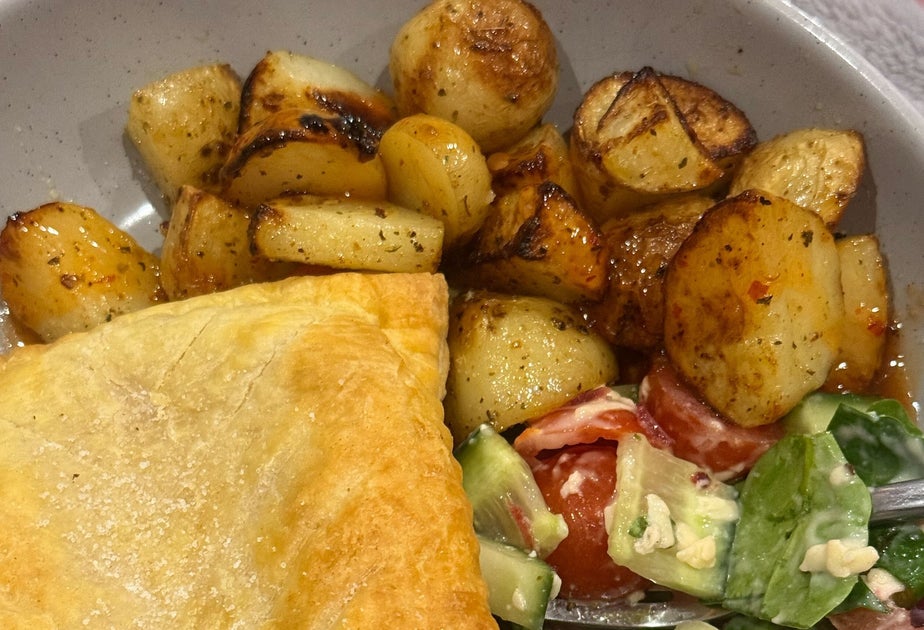
First, I chop up the potatoes into halves and place them into a bowl. I then pour over rapeseed oil (yes, measured with my heart) but if you don’t have that, sunflower oil is fine.

  • Garlic seasoning
  • Rosemary
  • Salt and pepper
  • Italian seasoning

Sometimes, I’ll swirl in some honey before putting them in the air fryer, too. I cook them at 190 for 20 minutes, doing the obligatory air fryer shake halfway through before serving them piping hot with a little sweet chilli oil drizzled over them.

What all of this results in is flavourful, tender potatoes that are deliciously soft and warm on the inside and incredibly filling. They could honestly even work as a snack if you just need to get yourself through the day!

Of course, this recipe is completely flexible so if you want to add different spices, herbs or coatings for the potatoes, you totally can. It’s mostly about keeping it easy and using ingredients you already have.

Let us know if you try it!


Queen Elizabeth’s Coronation Chicken – and its ‘vile’ changes


Tom Parker Bowles’ book features more than 100 recipes spanning from Queen Victoria’s reign to King Charles III

Tom Parker Bowles has revealed a simple recipe that Queen Elizabeth savoured during her Coronation 72 years ago, while also lamenting how it’s been butchered over time. Despite acknowledging the ‘vile’ alterations to the dish over the years, Tom chose to focus on the original version crafted by Constance Spry and Rosemary Hume.

“I know, I know it really wouldn’t be a royal cookbook without this so-called regal ‘classic’,” he wrote in his 2024 book, Cooking & The Crown. “…Now the original version, as below, is perfectly civilised, but as the years went on, all manner of base and vile things were done to this perfectly innocent recipe, adding almonds and sultanas, lashings of turmeric and God knows what else, until it became a banana-hued, sickly-sweet aberration, the abject filling for a thousand sorry service station fillings.”

The dish in focus is Poulet Reine Elizabeth, or as we know it, Coronation Chicken sandwiches. While Spry and Hume are credited with its creation, the exact source of their inspiration remains a mystery.

Back in 1935, George V was served Jubilee Chicken, a concoction of mayonnaise, chicken, and curry powder. This has led some to speculate that it might have influenced the creation of Coronation Chicken, although concrete evidence is scant.

Queen Elizabeth II’s coronation took place at Westminster Abbey in 1953, just a year shy of rationing’s end after 14 years of post-war austerity. Chicken wasn’t exactly an everyday staple back then, which made the Coronation dish quite the indulgence.

For anyone fancying a taste of Royal history, Tom’s book lays out the uncomplicated recipe. Whilst boiling and shredding chicken is standard fare, nailing the sauce might take a bit more finesse.

You may be surprised to learn that the original filling contains more than just chicken, mayonnaise, and curry powder. It also includes tomato paste and red wine, amongst other components.

Bay leaves, lemon juice, and the usual salt and pepper seasoning are added for additional flavour before the mixture is served on brown bread. Tom explained the crusts must be cut off to enjoy sandwiches the Royal way.

“Remove the crusts and cut each sandwich into three fat fingers,” he added, according to a previous OK! article. Tom’s book Cooking & The Crown provides a more detailed step-by-step recipe and ingredient guide to creating the Coronation classic.

Beyond Poulet Reine Elizabeth, it features more than 100 recipes spanning from Queen Victoria’s reign to King Charles III. Whilst many of these seem rather lavish, including ‘Pommes Elizabeth’ and ‘Pudding au Pain et aux Cerises’, there are numerous simpler recipes to attempt at home.

More information can be found here.


10 ‘Simple’ Tips For The Perfect Pancakes (According To A Chef)


I’ve said it before, and I’ll say it again: Pancake Day (which falls on 17 Feb) is the best holiday of the year.

It involves no fiddly etiquette, no obscure hints as to what your loved ones really want, and no £50+ pressies: the rules are to make pancakes, eat them, and then, maybe, make more.

But for all the welcome simplicity of the holiday, the actual food can be hard to perfect. Mine all too often end up a little rubbery (though I have learned some tricks for fluffier, crispier American kinds).

Still, it’s a good thing chef Paul Foster of Michelin-starred restaurant Salt has shared some tips for pro-level pancakes.

The culinary legend, who’s paired with British Lion eggs, said: “By following some simple guidelines, anyone can make perfect pancakes.”

Here are his top 10 tips:

1) Don’t over-mix the batter

This makes gluten build up, which creates “tough, chewy pancakes”.

2) Use an extra egg white

This makes the batter runnier, which allows it to “spread further and thinner” in the pan, Foster said. “The extra protein will help the pancake to set, so it is a better option than adding more milk.”

3) Use room-temperature eggs

This helps to “achieve a smoother batter when hand mixing”.

4) Rest the batter

Once you’ve mixed the batter, leave it to rest for 20-30 minutes, “as this will allow the flour to absorb the moisture from the egg and milk, so you achieve the desired consistency”.

It can also help your pancakes to cook more evenly, as the ingredients are better incorporated.

5) Go easy on the oil or butter

Usually, the more fat, the better when it comes to flavour. But for pancakes, Foster noted if you use too much oil “the batter will fry, and not brown properly”.

“It should be almost like a dry bake in the pan.”

6) Use a non-stick pan

It might sound obvious, but this “will help you achieve evenly cooked pancakes, as well as it not sticking”.

7) Stick to medium heat

A high heat will “give a darker colour and bitter flavour”, while medium heat ensures an even cook, advised the chef.

8) Season your batter

A pinch of salt in your batter can transform its flavour, said the pro. “It won’t make it savoury, but will help to balance the flavour.”

9) Don’t flip too early

One of the main reasons many people find flipping so tricky, Foster said, is that they don’t wait long enough to allow one side to set.

“Wait until there is no more liquid on top before flipping – or just turn them with a spatula for a safer option!”

10) Accept the fate of the cursed first pancake

Even chefs face the first pancake curse, apparently.

But this doesn’t have to be a bad thing: Foster said you should see it as a tester.

“This is the best way to gauge the correct temperature of the pan. It also means that the cook gets the first taste for doing all the hard work!”