It’s time to take the ‘Ella McCay’ challenge on Hulu


Before the release of the recent James L. Brooks film Ella McCay, film fans on social media operating (as they tend to do) somewhere between genuine fandom and irony-poisoned wiseassery, extolled people to take the “Ella McCay challenge,” namely posing next to the poster for the film and imitating star Emma Mackey (yes, Emma Mackey IS Ella McCay) adjusting her shoe mid-stride.

They might have tried something less specific; the true Ella McCay challenge, it turned out, was getting anyone to show up at a theater playing Ella McCay. The film is about the title character unexpectedly ascending to the office of governor (“of the state you were born and raised in,” unnamed) after her boss (Albert Brooks) vacates the job for a cabinet position. In other words, it was never expected to be a holiday blockbuster. But it nonetheless still felt like yet another blow to the idea of grown-up movies playing in movie theaters when, during the most lucrative several weeks of the box office year, Ella McCay not only became the lowest-grossing new wide release of December but made less money than fellow 2025 releases The Alto Knights, A Big Bold Beautiful Journey, or (most damning) The Weeknd’s insane vanity project Hurry Up Tomorrow. Two of those three got significantly better reviews, too.

Now that Ella McCay is arriving on Hulu, viewers will have the chance to take the challenge at home. (Maybe they can adjust their slipper midstride?) Nearly anyone streaming it will find that certain criticisms of the film ring absolutely true. First and foremost: James L. Brooks, who was an ’70s sitcom titan via The Mary Tyler Moore Show and Taxi, an ’80s Oscar darling with Terms of Endearment and Broadcast News, and a ’90s shepherd of blockbusters in both cinema (As Good As It Gets) and TV (The Simpsons), does not have any of that juice in the 2020s, unless you count The Simpsons still being on and sometimes good.

Brooks seems to recognize this, too. He sets Ella McCay in late 2008, which his narrator (Julie Kavner) describes with wry knowingness as a time when people liked each other more. Uh, maybe. Which people, Jim? He doesn’t exactly name names, because despite the movie explicitly taking place during the 2008 financial crisis and cabinet-appointment season (which is to say, in the wake of the presidential election), the names “Barack Obama,” “John McCain,” or “George W. Bush” are not so much as obliquely alluded to, nevermind actually uttered. “Financial crisis” and different-styled phones are just about all you get for that ’08 feeling. The barely-subtext is that it’s set at this time because Brooks could still make sense of the world in 2008, which makes sense; after all, that was a full two years before his 2010 movie How Do You Know bombed expensively at the box office and presumably knocked some wind out of him.

The 2008 setting also allows flashbacks to Ella’s teenage years to get closer to the Brooks heyday, in the early 1990s. This would be especially convenient if any of the flashback scenes were a good idea. Instead, they have Mackey unconvincingly playing a 17-year-old in multiple scenes of hoary psychological baggage, where we learn that Ella has been let down by her philandering father (Woody Harrelson), bereaved by the death of her beloved mother (Rebecca Hall, clocking in for a single scene), and partially raised by her outspoken aunt (Jamie Lee Curtis, sometimes overdoing it). We also meet Ella’s younger brother Casey (Spike Fearn in his adult years) who later inexplicably shares a long scene with his ex-girlfriend Susan (Ayo Edebiri), a distracting break from Ella’s vantage point and a subplot that is abruptly dropped well before the movie ends.

ELLA MCCAY, Emma Mackey, 2025.
Photo: ©20th Century Studios/Courtesy Everett Collection

Yes, it’s safe to say that Brooks, at the age of 85, is only slightly more convincing as a chronicler of urbane and anxious young people than Woody Allen. It’s also safe to say that against many odds, with an underdog scrappiness worthy of Governor McCay herself, Ella McCay is actually pretty charming. That is, Ella McCay herself is charming, because Emma Mackey gives what might be considered a superhuman performance in making her part seem playable at all.

The best decision Brooks makes is to build a movie about a character who plays a bit like the woman Lisa Simpson could only grow into through her show’s many what-if future-set episodes. Ella is wonky, policy-focused, serious-minded, earnest as hell, and, in classic (as well as less-than-classic) Brooks fashion, has to do a lot of thinking aloud that only superficially involves other people. Mackey plays these qualities with the slightly frazzled confidence of a screwball professional, even though the movie talks itself pretty far afield from the genuine screwball delight it could have been. Often, the movie feels like a political comedy from 1946 talking itself down from farce.

Brooks characters talk in circles without necessarily realizing they do; sometimes I’m not even sure if Brooks realizes it. It can make his movies, especially his later-period stuff, seem weirdly uneventful; in the often funny How Do You Know, half the story is predicated on the Paul Rudd character getting in legal trouble that he doesn’t understand and most of the characters refuse to explain to him. Rather than a genuine dilemma, it feels like the movie is stalling for time. Ella McCay also feels like it’s running out the clock, though at least it’s for more thematically appropriate reasons, as a scandal threatens to derail Ella’s governorship before it’s begun. (That’s another reason Brooks must have wanted to jump back to 2008; the notion that this movie’s scandal involving Ella, uh, having sex with her husband could move the needle in any way does not track nearly two decades later. In a weird way, it comes across like Brooks is a bit nostalgic for what used to look like intransigence regarding sex. This may or may not have something to do with a truly bizarre post-coital shot of Ella where she appears to be wearing a scarf or a blanket around her neck.)

But! But!!! The relationship between Ella and her prickly mentor “Governor Bill” retains some of the old-fashioned Brooks good-sitcom zing, and the movie’s take on familial forgiveness has a tartness that most comedy-dramas would never touch. Moreover, this is Mackey’s movie, as she overthinks her way toward making the whole thing feel somewhat less like it was designed by space aliens intent on quietly destroying the reputation of the state Ella was born and raised in. Not for nothing, but I took my ten-year-old daughter to this movie – it was a Christmas-movie compromise (or, per Ella’s preferred terminology, consensus) between her refusal to see Song Sung Blue and my wife’s refusal to see a SpongeBob – and she was able to lock into this talky, apolitically political comedy-drama, with a rootable heroine and some funny moments of relatable neuroses. Families used to see movies like this together all the time, I think! It’s hard to remember. 2008 was a long time ago, much less 1995. I’m not sure where exactly Ella McCay wound up taking me, but I was happy to take the challenge of being whisked away to whatever state it was born and raised in.


How To Watch Ella McCay

If you’re new to Hulu, you can get started with a 30-day free trial on the streamer’s basic (with ads) plan. After the trial period, you’ll pay $10.99/month. If you want to upgrade to Hulu ad-free, it costs $18.99/month.

If you want to stream even more and save a few bucks a month while you’re at it, we recommend subscribing to one of the Disney+ Bundles, all of which include Hulu. These bundles start at $12.99/month for ad-supported Disney+ and Hulu and goes up to $32.99/month for Disney+, Hulu, and Max, all ad-free.

Jesse Hassenger (@rockmarooned) is a writer living in Brooklyn. He’s a regular contributor to The A.V. Club, Polygon, and The Week, among others. He podcasts at www.sportsalcohol.com, too.

Stream Ella McCay on Hulu


Ottawa to scrap EV mandate as part of national auto strategy: sources – National | Globalnews.ca


Prime Minister Mark Carney is expected to announce a national automotive strategy Thursday which will scrap the electric vehicle sales mandate in favour of new vehicle emissions standards and revive consumer rebates for EV purchases.

Ottawa to scrap EV mandate as part of national auto strategy: sources – National | Globalnews.ca

Ottawa is also set to announce an EV infrastructure fund, expected to be worth $1.5 billion.

Government and industry sources, who were not authorized to publicly discuss details ahead of the announcement, say Ottawa will introduce emission standards on new vehicles similar to what’s in place in Europe.

The European Union sets emissions performance standards for new passenger cars and vans, commonly known as “corporate average fuel efficiency” standards, or CAFE. The system requires that average emissions from all new passenger cars and vans meet specific emissions targets.

The European Commission says the regulations led to a 28 per cent decrease in emissions from all new passenger cars between 2019 and 2024, while emissions from new vans dropped nine per cent.

Story continues below advertisement

While it’s not clear what Canada’s standards will be, Europe’s current target is to ensure that all new cars and vans produce no emissions by 2035 — although revised regulations proposed in December would reduce the target to 90 per cent, allowing some flexibility for plug-in hybrids.

Get the day's top news, political, economic, and current affairs headlines, delivered to your inbox once a day.

Get daily National news

Get the day’s top news, political, economic, and current affairs headlines, delivered to your inbox once a day.

One source said Canada’s new emissions regulations would get close to the reduction in emissions set out in the original EV mandate.

The previous Liberal government set a target of having EVs account for at least 20 per cent of sales across Canada this year. The target was to increase to 100 per cent by 2035.

Carney paused the EV mandate in September and launched a 60-day review to offer Canada’s auto sector liquidity in the face of the ongoing trade war with the United States.


Click to play video: 'Prime Minister Carney pauses EV mandates for 2026'


Prime Minister Carney pauses EV mandates for 2026


Automakers had called on the government to scrap the sales mandate altogether, arguing it was unnecessary since Canada already has other policies to meet its emissions reduction targets.

Story continues below advertisement

As first reported by CBC News, the government is also expected to revive the popular incentives program to encourage Canadians to buy new EVs.

The incentive for zero-emission vehicles program — iZEV for short — was paused last year after its funding pool of more than $3 billion ran out.

Sources tell The Canadian Press the government will bring back the rebates at a similar level. Ottawa is expected to offer $5,000 toward the purchase of a new fully electric vehicle and $2,500 for plug-in hybrids.


Previously, fully-electric and longer-range plug-in hybrid electric vehicles received the full $5,000 rebate, while shorter-range ones were eligible for a $2,500 rebate.

Conventional hybrid vehicles will no longer be eligible for rebates, but manufacturers will be able to claim emissions credits for selling them.

Federal ministers promised during and after the spring election campaign to being back the incentives but never set a date. That frustrated car dealers who said EV sales slumped as consumers opted to wait for the rebates to return.

EV sales in Canada started to rise toward the end of 2025. According to the most recent data from Statistics Canada, EVs accounted for 11.3 per cent of all new vehicle sales in November.

Monthly sales peaked in December of 2024 at 18.29 per cent, before the iZEV program was paused.

&copy 2026 The Canadian Press


Long waits, complex procedures frustrated some voters in 2025 Edmonton election: report – Edmonton | Globalnews.ca


Long lineups, complex voting procedures and challenges with new technology affected the voting experience for a significant number of Edmontonians during the 2025 municipal election, according to a newly-released interim post-election report.

Ottawa to scrap EV mandate as part of national auto strategy: sources – National | Globalnews.ca

The report, presented to the city’s audit committee Wednesday, outlines early findings from Edmonton Elections’ review of the October 2025 vote and identifies several areas for improvement ahead of the next municipal election in 2029.

While a majority of voters were able to cast ballots without major difficulty, the report suggests that changes driven by new provincial legislation — including the introduction of a permanent electors register and a shift to hand-counted ballots — contributed to delays and confusion at some voting stations.

“There were so many changes,” said Thu Parmar, one of the city councillors who reviewed the report at city hall on Wednesday.

“It wasn’t one change. It was one bill that came through, then one bill got amended, and so there were multiple changes leading up to that election day.”

Story continues below advertisement

About 60 per cent of voters surveyed said they completed the voting process in 30 minutes or less, and 83 per cent finished within an hour.

However, 16 per cent reported waiting longer than an hour, with longer wait times strongly linked to lower satisfaction.

Overall, 63 per cent of Edmonton voters said they were satisfied with their experience, the report said.


Click to play video: 'Some Alberta voters ‘walk away’ from municipal election lineups'


Some Alberta voters ‘walk away’ from municipal election lineups


Satisfaction dropped sharply amongst those who waited more than an hour: dropping to 24 per cent for waits of one to two hours and just 14 per cent for waits exceeding two hours.

“Edmontonians were very committed to voting,” said Ward Ipiihkoohkanipiaohtsi councillor Jon Morgan. “I did hear about long lines during the election, upwards of two hours… but I also heard they were committed to seeing it through.

Story continues below advertisement

“So I’m pretty proud of that fact — for Edmontonians to be that committed to it, but, I can understand their frustrations.”

Voters and election workers both pointed to complexity in voting process as a key source of their frustration.

For news impacting Canada and around the world, sign up for breaking news alerts delivered directly to you when they happen.

Get breaking National news

For news impacting Canada and around the world, sign up for breaking news alerts delivered directly to you when they happen.

Fifteen per cent of surveyed voters reported difficulties with forms, verification steps and multi-station workflows — particularly in situations where they needed to be added to or updated on the new permanent electors register.

Those more complex transactions often slowed voting lines, the report said, contributing to bottlenecks during peak periods at some polling locations.


Click to play video: 'Slow results and long lines in 2025 Edmonton election'


Slow results and long lines in 2025 Edmonton election


The changes this year prohibited the use of electronic vote tabulators and instead required all ballots to be counted by hand, increasing the number of ballots and ballot boxes used at each voting station.

Story continues below advertisement

“I would definitely like to see a return to our tabulators,” said Morgan, who was elected to city council back in October. “That would be a big help for our election team and for the safety and security of our elections.”

Several boxes of ballots had to be re-counted by hand during the election, delaying the release of the results. Morgan said using paper ballots and people counting introduces room for error.

“We should be using the tools that are proven to make sure that our elections are fair and free.”

The 2025 election marked the first time Edmonton was required to use a permanent electors register, following amendments to Alberta’s Local Authorities Election Act.

To support the permanent register, Edmonton Elections deployed an electronic elector register at voting stations. While the system allowed for real-time updates and added security protections, it also posed challenges for some people hired to work the polls.

Election workers were surveyed and 22 per cent said the technology was difficult to use, while nine per cent reported technical issues during their shift.

They also reported difficulty completing required paperwork, including ballot accounting forms, with 22 per cent saying those procedures were hard to complete.

“There is so much more work to this election than there has been in the past,” Parmar said.

Story continues below advertisement

During the election, residents voted for mayor, their city councillor, and school trustee and instead of one electronic ballot with all their names on it, the 2025 election saw it split up.

“In this sense, it was actually three separate votes. So that created more time,” Parmar said of the workers having to physically doll out the three different sheets of paper.

“That may not have been factored when you were looking at how many people you were going to hire.”


Click to play video: 'Long municipal election lines in Alberta after legislation changes'


Long municipal election lines in Alberta after legislation changes


The report notes while accurate ballot accounting is essential to election integrity, some workers felt the complexity of the process limited their ability to serve voters efficiently — especially during busy periods such as the early evening when people got off work and went to vote.

Gaps in training were another contributing factor.

Story continues below advertisement

More than 5,400 election workers were hired to staff the election, filling more than 6,600 positions. While most workers completed mandatory online and in-person training, feedback suggested more hands-on training would have helped workers navigate the new systems and forms more confidently.

To address concerns raised during advance voting, Edmonton Elections offered additional hands-on training for supervisors.

Those who took part said it improved confidence and effectiveness, but the opportunity to take part could not be extended to all workers due to time and capacity constraints.

“I think what we heard very clearly was that it’s very difficult to train 5,000 people for one day, right? And I think to give some grace to that, what we saw was that the checks and balances did work.”


Click to play video: 'Albertans to elect municipal governments Monday in what’s been dubbed a ‘meh’ election'


Albertans to elect municipal governments Monday in what’s been dubbed a ‘meh’ election


In a separate advisory report, the city auditor echoed many of the same concerns, noting observations on election day revealed frustrations amongst both voters and staff — largely tied to system challenges and form completion.

Story continues below advertisement

The auditor’s office had one main suggestion: Edmonton Elections consider a more comprehensive, hands-on training approach for future elections to reduce voter frustration and operational risk.

Parmar said she’s looking forward to seeing an action plan.

“What are they actually going to do to make sure that we can have higher voter turnout, that we can have a service level that is definitely not over one hour to be able to vote?

“That is not what Edmontonians expect, it’s not what I expect, it’s not what council expects and so we’ll be looking at that.”

Despite the challenges, the auditor reported Edmonton Elections addressed all significant findings before and during the election, and issues identified during ballot reconciliation did not affect election results.


&copy 2026 Global News, a division of Corus Entertainment Inc.


Paul Weiss chairman Brad Karp resigns after Jeffrey Epstein email disclosures


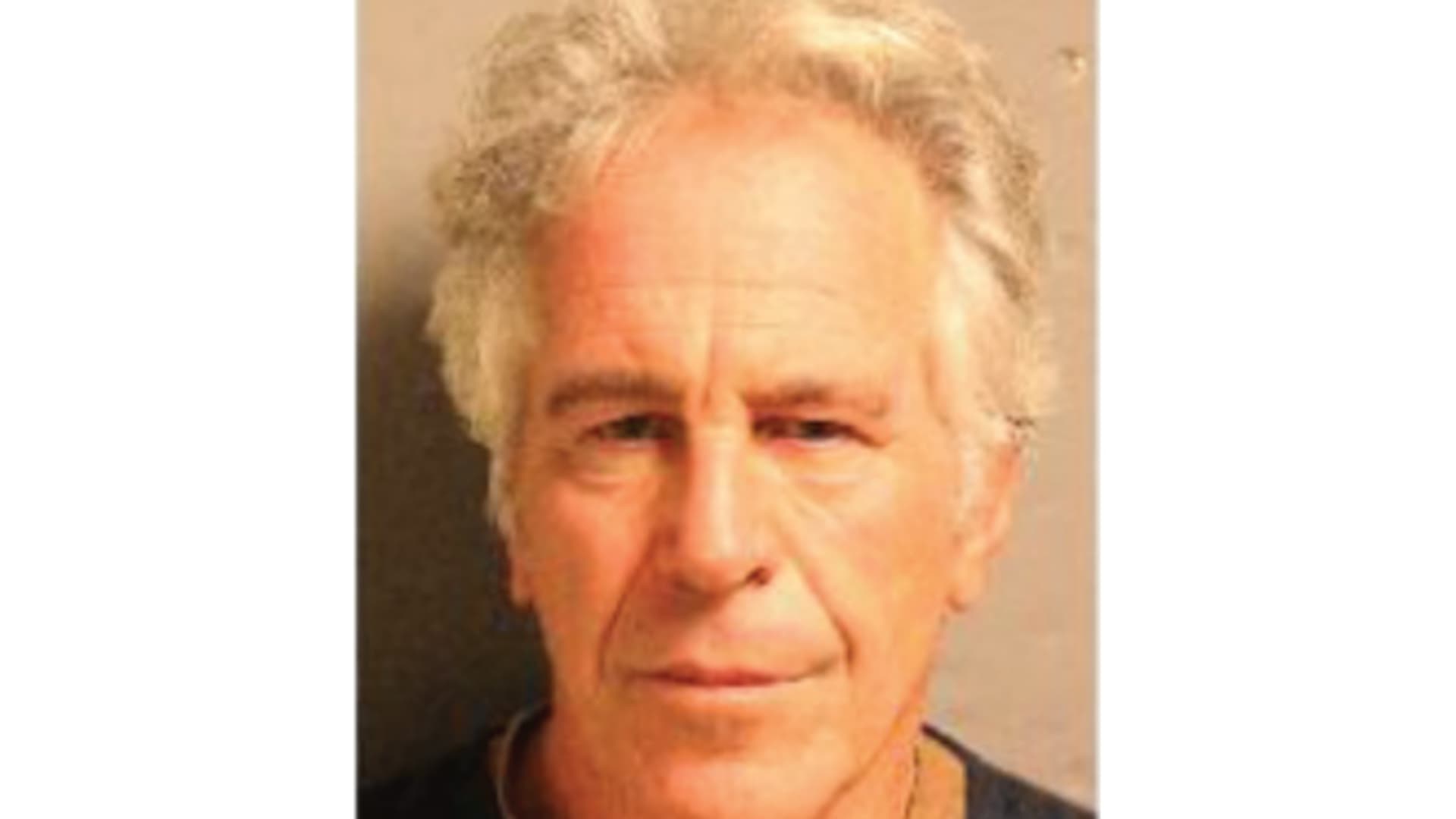
A mugshot of Jeffrey Epstein released by the U.S. Justice Department.

Source: U.S. Justice Department

Brad Karp, chairman of the major corporate law firm Paul Weiss, resigned on Wednesday after fallout over emails between him and notorious sex offender Jeffrey Epstein were made public.

“Leading Paul, Weiss for the past 18 years has been the honor of my professional life,” Karp said in a statement. “Recent reporting has created a distraction and has placed a focus on me that is not in the best interests of the firm.”

Read more CNBC politics coverage

Scott Barshay, who had been chair of Paul Weiss’ corporate department, was appointed chairman of the firm, effective immediately, according to the firm.

Karp had been at Paul Weiss for more than four decades.

His resignation comes two days after the firm said “Mr. Karp attended two group dinners in New York City and had a small number of social interactions by email” with Epstein, all of which he regrets.”

The emails were among millions of documents related to Epstein that were released last week by the Department of Justice.

Bloomberg reported that one email from Karp asked Epstein for help securing a job for Karp’s son on a Woody Allen movie.

Paul Weiss, in response to that Bloomberg article, had said, “Paul Weiss was retained by Leon Black, then the CEO of the firm’s longtime client Apollo, to negotiate a series of fee disputes with Jeffrey Epstein that spanned several years.”

“The firm was adverse to Epstein, and at no point did Paul Weiss or Brad Karp ever represent him,” the firm said.

The firm’s new chairman, Barshay, in a statement on Wednesday, said Karp made “immense contributions” during his tenure.

“As Chairman of the firm, he transformed Paul, Weiss in an unprecedented way to the great benefit of our clients,” Barshay said.

“We are grateful to him for his extraordinary dedication and service over his many years as Chairman.”