Trump demands Netflix fire Susan Rice as DOJ probes Warner deal


A drone view shows the Netflix logo on one of the company’s buildings in the Hollywood neighborhood in Los Angeles, California, U.S., Jan. 20, 2026.

Daniel Cole | Reuters

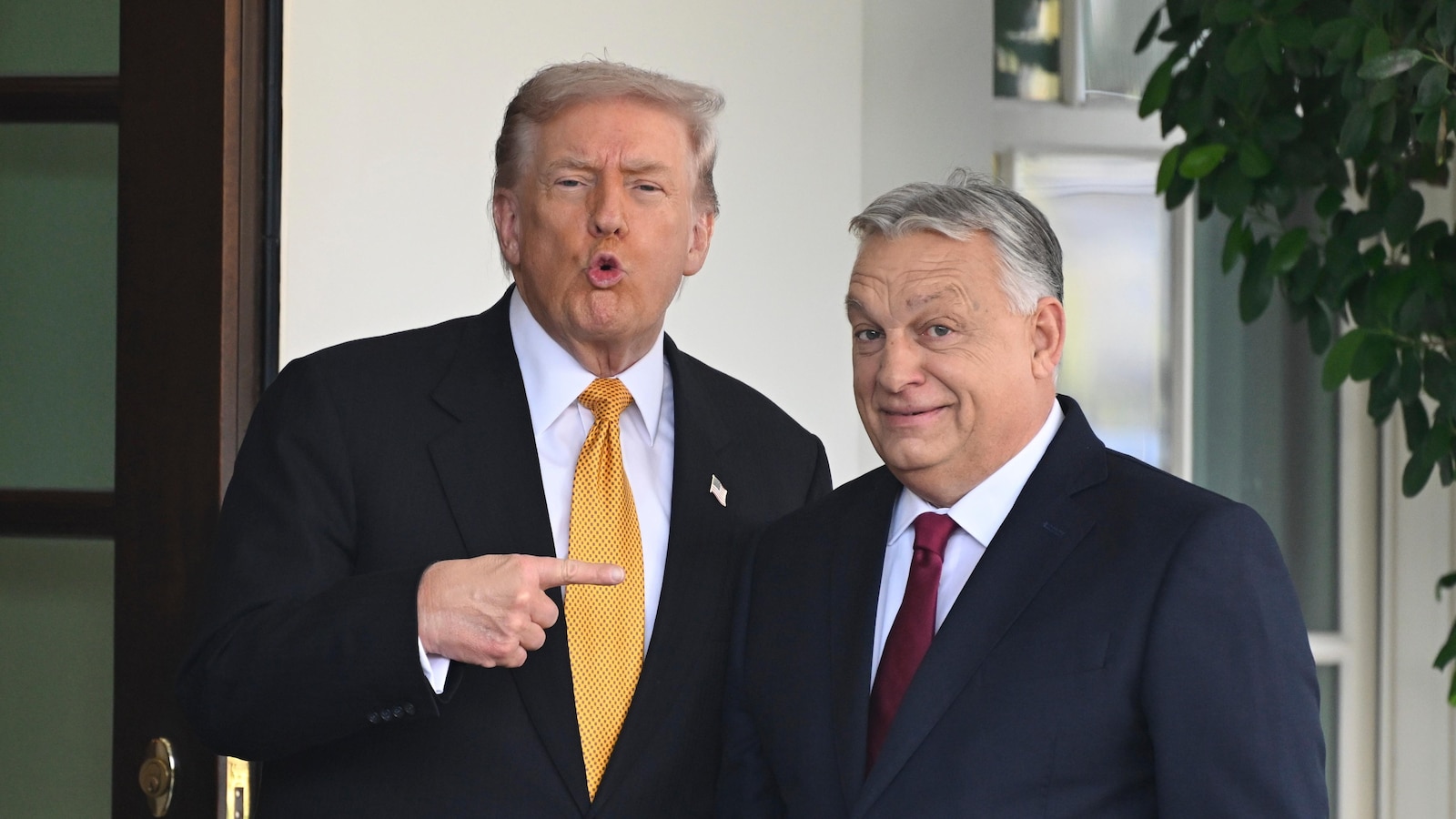
President Donald Trump late Saturday called on Netflix to fire board member Susan Rice or “pay the consequences,” after she said Democrats would push for corporate accountability if they regain power in the November midterm elections.

In a Truth Social post on Saturday, Trump described Rice, who served as President Joe Biden’s domestic policy chief and held top foreign policy posts under President Barack Obama, as “purely a political hack” with “no talent or skills.”

“HER POWER IS GONE, AND WILL NEVER BE BACK,” Trump wrote.

Rice argued during a podcast last week that “it is not going to end well” for corporations, news organizations, and law firms that “bent the knee” to Trump, and that their deference is unpopular.

“There is likely to be a swing in the other direction, and they are going to be caught with more than their pants down,” Rice told Preet Bharara, a former U.S. attorney for the Southern District of New York. “They’re going to be held accountable by those who come in opposition to Trump and win at the ballot box.”

She added, “If these corporations think that Democrats, when they come back in power, are going to play by the old rules, and say, ‘Never mind, we will forgive you for all the people you fired and all the policies and principles you violated, all the laws you skirted,’ I think they got another thing coming.”

Rice served on Netflix’s board from 2018 to 2021, and rejoined in 2023 after leaving the Biden administration.

Netflix representatives didn’t immediately respond to a request for comment. The White House did not immediately respond to a request for comment.

Trump included a screenshot of an earlier post from far-right activist and Trump ally Laura Loomer, who said Rice’s remarks were “anti-American” and urged the president to “kill the Netflix-Warner Bros. merger now.” Loomer also tagged Federal Communications Commission Chairman Brendan Carr in her post.

The comments come after Trump told NBC News earlier this month that the Department of Justice will “handle” the deal and that he’ll stay out of their review, after previously saying he’d be involved in the process. The DOJ is currently reviewing Netflix’s proposed acquisition of Warner Bros. Discovery.

Netflix has proposed acquiring WBD in a $72 billion deal that would not include the company’s cable networks, including CNN.

Paramount Skydance, in response, launched a hostile takeover bid for all of WBD, promising its shareholders $30 per share in an all-cash deal.

The DOJ is investigating whether Netflix’s proposed deal could hurt competition, and it’s also asked how the company’s previous acquisitions have affected competition for creative talent, The Wall Street Journal reported earlier this month.

As part of its review, the agency is also examining whether the streaming giant uses anticompetitive tactics in negotiations with independent content creators for acquiring programming, Bloomberg reported, citing documents.

Netflix co-CEO Ted Sarandos said last month that he’s confident the company will be able to secure regulatory approval “because this deal is pro-consumer … pro-innovation, pro-worker.”


Trump reveals his ‘new hero’ Supreme Court justice after tariffs ruling


President Donald Trump revealed which Supreme Court justice he considers to be his “new hero” after a high court ruling rejected his sweeping tariff powers on Friday.

Trump made the declaration in a post on his Truth Social platform on Saturday morning, a day after the Supreme Court voted 6-3 to block Trump’s tariff powers under the International Emergency Economic Powers Act (IEEPA).

“My new hero is United States Supreme Court Justice Brett Kavanaugh and, of course, Justices Clarence Thomas and Samuel Alito,” the post read. “There is no doubt in anyone’s mind that they want to, MAKE AMERICA GREAT AGAIN!”

While all three justices voted with the minority, Kavanaugh wrote a fiery dissent that called the high court’s decision “illogical.”

“As they interpret the statute, the President could, for example, block all imports from China but cannot order even a $1 tariff on goods imported from China,” Kavanaugh wrote. “That approach does not make much sense.”

Kavanaugh asserted that the IEEPA “does not draw such an odd distinction between quotas and embargoes on the one hand and tariffs on the other,” but rather empowers the president to regulate imports during national emergencies using tools such as quotas, embargoes and tariffs.

President Donald Trump speaks at a press conference at the White House after a Supreme Court ruling on tariffs on Feb. 20, 2026. Kyle Mazza/Shutterstock
Brett Kavanaugh testifies before the Senate Judiciary Committee during his Supreme Court nomination hearing on Sept. 27, 2018. AP

Trump last year bypassed Congress and unilaterally levied tariffs on nearly every country in the world by invoking the IEEPA.

The president argued that an influx of illicit drugs from China, Mexico and Canada and a trade deficit that has decimated American manufacturing constituted emergencies that justified the tariffs.

Trump, in a Friday speech remarking on the decision, praised Kavanaugh for “his genius and his great ability,” adding he was “very proud of that appointment.”


Here’s the latest on President Trump’s tariffs following Supreme Court ruling:


Kavanaugh wrote in his dissent that while he disagrees with the court’s ruling, its decision may not “substantially constrain” a president’s ability to order tariffs going forward because of “numerous other federal statutes” that allow the president to impose tariffs.

The justice added that the court’s decision may, however, have substantial interim effects.

“The United States may be required to refund billions of dollars to importers who paid the IEEPA tariffs, even though some importers may have already passed on costs to consumers or others,” Kavanaugh wrote. “As was acknowledged at oral argument, the refund process is likely to be a ‘mess.’”

President Donald Trump reveals his “reciprocal tariffs” during an event in the Rose Garden of the White House on April 2, 2025. Getty Images
The Supreme Court voted 6-3 to block Trump’s tariff powers under the International Emergency Economic Powers Act. AP

He added that the high court’s decision could “generate uncertainty” regarding what the government has said were trade deals worth trillion of dollars with foreign nations, including with China, the United Kingdom and Japan.

Trump on Saturday raised the global tariff to 15% — up from the 10% global tariff he announced Friday in the wake of the Supreme Court ruling.

He cited Section 122 of the Trade Act of 1974 in announcing the new levy.


Ipsos poll suggests Canada more united than in 2019 – National | Globalnews.ca


New Ipsos polling suggests Canada is more united today than it was seven years ago, despite louder political rhetoric around separatism, particularly in Alberta.

Ipsos poll suggests Canada more united than in 2019 – National | Globalnews.ca

The data, drawn from the same Confederation Stress Test survey that previously examined separatist voting intentions, indicates that several measures that were rated as high have eased since 2019.

“We’ve been tracking this for a while.… National unity in Canada and how people are feeling about Confederation, whether their province is fairly treated,” said Jack Gregory, senior vice-president of Ipsos Public Affairs.

“What we found when we looked at it this year was that some of these measures are actually down in terms of people feeling the country is more divided than ever, that their province isn’t getting its fair share.

Gregory said the findings were somewhat unexpected given current political debates.

Story continues below advertisement

“This was a little bit surprising for us because obviously in the current environment, there’s a lot of talk of separatism in Alberta and unhappiness with how the federation is working.”

For news impacting Canada and around the world, sign up for breaking news alerts delivered directly to you when they happen.

Get breaking National news

For news impacting Canada and around the world, sign up for breaking news alerts delivered directly to you when they happen.

Ipsos tracking shows that in 2019, six in 10 Canadians said the country was “more divided than ever.”

That figure now sits at 55 per cent, according to new data.

In Alberta, where feelings of alienation have historically been higher, the shift is more pronounced.


“Eight in 10 Albertans said that in 2019 and now that number is only seven in 10,” Gregory said.

Perceptions of economic fairness are also observed to have changed.

In 2019, Ipsos found that 65 per cent of Albertans believed their province was not getting its fair share from Confederation. The new data places that number at 51 per cent.

Nationally, the comparable figure has declined from 35 per cent to 27 per cent.

Support for separation has also softened.

“The numbers saying that their province would be better off if it separated is actually lower now in Alberta than it was in 2019.”

Story continues below advertisement

Gregory noted that the earlier polling came during a period of heightened political tension.

“The polling in 2019 came on the heels of the election when the Conservatives were shut out west of Manitoba, and there was still a lot of talk about energy constraint, Indigenous blockades and all the things we were worried about mere months before COVID.”

While dissatisfaction remains higher in Alberta than the national average, Gregory said the broader trend points toward reduced intensity.

“For sure, there is still anger in Alberta, especially compared to the national numbers, but it is lower than it was seven years ago despite the calls for independence getting louder.”

Gregory said several factors may help explain the shift in attitudes, including political developments in Alberta and broader changes in the national climate since 2020.

&copy 2026 Global News, a division of Corus Entertainment Inc.


Feds certify Gulfstream G500 and G600 jets – National | Globalnews.ca


OTTAWA – Transport Canada has certified General Dynamics’ Gulfstream G500 and G600 business jets, following threats from U.S. President Donald Trump.

Ipsos poll suggests Canada more united than in 2019 – National | Globalnews.ca

A spokesperson for the office of the transport minister says the government is still discussing the certification of other aircraft with the U.S. Federal Aviation Administration.

Related Videos

The government has yet to certify the Gulfstream G700 or G800 models.

Story continues below advertisement

A government document says the G500 and G600 were certified on Feb. 15.

For news impacting Canada and around the world, sign up for breaking news alerts delivered directly to you when they happen.

Get breaking National news

For news impacting Canada and around the world, sign up for breaking news alerts delivered directly to you when they happen.

Trump threatened last month to decertify Canadian-built planes unless the government greenlit Gulfstream business jets.

The G700 and G800 have been flagged because of possible de-icing concerns.

This report by The Canadian Press was first published Feb. 20, 2026.


&copy 2026 The Canadian Press


U.S. trading partners cheer Supreme Court tariff ruling — but businesses must still navigate ‘murky waters’


World leaders during the G7 Leaders’ Summit in Kananaskis, in Alberta, Canada, June 17, 2025.

Amber Bracken |Reuters

U.S. trading partners offered a cautious welcome to the U.S. Supreme Court’s decision Friday to strike down large parts of President Donald Trump’s flagship trade policy on global tariffs — but global trade bodies warned of lingering uncertainty surrounding import levies.

The law that undergirds the import duties “does not authorize the President to impose tariffs,” the majority ruled six to three in the long-awaited Supreme Court decision.

Hours after the ruling, Trump said he signed an executive order imposing a new 10% “global tariff”. The “Section 122” tariffs will take effect “almost immediately,” Trump said. At a White House press briefing Friday afternoon, Trump railed against the “deeply disappointing” 6-3 ruling.

Trump’s tariff regime impacted a swathe of countries from the U.K. to India and the European Union. Some governments, like Vietnam and Brazil are still in negotiations.

Taiwan, home to the the world’s leading contract chipmaker and producer of the most advanced semiconductors, said the 10% flat tariff rate would, according to an initial assessment, have a “limited impact” on its economy.

The island will continue to “closely monitor” developments and maintain close communication with the U.S. to understand the specific measures and respond in a timely manner, the Taiwanese cabinet said in a statement on Saturday.

French President Emmanuel Macron reportedly said the Supreme Court’s ruling proved the benefit of having an effective counterweight to power.

“It is not bad to have a Supreme Court and, therefore, the rule of law,” Reuters quoted him as saying at an event in Paris on Saturday.

A U.K. government spokesperson said the country would continue to work with the White House administration to understand how the ruling will affect tariffs for the U.K. and the rest of the world

“This is a matter for the U.S. to determine but we will continue to support U.K. businesses as further details are announced,” the spokesperson said.

“The U.K. enjoys the lowest reciprocal tariffs globally, and under any scenario we expect our privileged trading position with the U.S. to continue.” The U.K. agreed a wide-ranging trade deal with the U.S. in May last year, which imposed a broad 10% levy on many goods, but also included certain carve-outs on steel, aluminum, cars and pharmaceuticals.

The Supreme Court case focused mainly on reciprocal tariffs, and the ruling leaves much of the U.K.’s trade deal with the U.S. — including preferential sectoral tariffs on steel, pharmaceuticals and autos — unaffected.

However, the British Chambers of Commerce (BCC) trade body said the U.S. Supreme Court decision adds to the ongoing uncertainty around levies.

U.S. trading partners cheer Supreme Court tariff ruling — but businesses must still navigate ‘murky waters’

William Bain, head of trade policy at the BCC, said the move “does little to clear the murky waters” for British businesses, warning that the President still has “other options at his disposal” to retain his current regime on steel and aluminum tariffs.  

“The court’s decision also raises questions on how U.S. importers can reclaim levies already paid and whether U.K. exporters can also receive a share of any rebate depending on commercial trading terms,” Bain said in a statement. “For the U.K., the priority remains bringing tariffs down wherever possible.”

Olof Gill, European Commission spokesperson for trade and economic security, said businesses on both sides of the Atlantic depend on “stability and predictability.”

“We remain in close contact with the U.S. Administration as we seek clarity on the steps they intend to take in response to this ruling,” Gill said. “We therefore continue to advocate for low tariffs and to work towards reducing them.”

Meanwhile, Dominic LeBlanc, Canada’s minister for U.S.-Canadian trade relations, said the decision “reinforces Canada’s position that the IEEPA tariffs imposed by the United States are unjustified.”

No trade ‘win’ yet

Elsewhere, Swissmem, Switzerland’s technology industry association, welcomed the ruling — but warned that the Trump administration could invoke other laws to “legitimize tariffs,” and called on Swiss policymakers to strengthen the competitiveness of the country with new free trade agreements.

“From the perspective of the Swiss export industry, this is a good decision. The high tariffs have severely damaged the tech industry. However, today’s ruling doesn’t win anything yet,” Swissmem said.

“The high tariffs have severely damaged the tech industry,” Swissmem wrote on X. “The crucial thing now is to quickly secure relations with the U.S. through a binding trade agreement.”

The International Chamber of Commerce noted that many businesses will welcome the ruling given the “significant strain” that has been placed on balance sheets in recent months.

“But companies should not expect a simple process: the structure of U.S. import procedures means claims are likely to be administratively complex. Today’s ruling is worrying silent on this issue and clear guidance from the Court of International Trade and the relevant U.S. authorities will be essential to minimise avoidable costs and prevent litigation risks,” the ICC said.

— CNBC’s Jackson Peck and Greg Kennedy helped contribute to this story.


Justice Department swiftly fires lawyer chosen as top federal prosecutor for Virginia office


A lawyer picked by judges to serve as the top federal prosecutor for a Virginia office that pursued cases against foes of President Donald Trump was swiftly fired Friday by the Justice Department in the latest clash over the appointments of powerful US attorneys.

Deputy Attorney General Todd Blanche announced the firing of James Hundley on social media shortly after he was unanimously chosen by judges to replace former Trump lawyer Lindsey Halligan as interim US attorney for the Eastern District of Virginia.

While the law says that the district court may choose US attorneys when an initial appointment expires, the Trump administration has insisted that the power lies only in the hands of the executive branch.

James Hundley was fired after he was unanimously chosen by judges to replace former Trump lawyer Lindsey Halligan as interim US attorney for the Eastern District of Virginia. Briglia Hundley

“EDVA judges do not pick our US Attorney. POTUS does. James Hundley, you’re fired!” Blanche said in a post on X.

Hundley, who has handled criminal and civil cases for more than 30 years, didn’t immediately respond to an email seeking comment Friday evening.

The firing of Hundley is the latest reflection of tumult in one of the Justice Department’s most elite prosecution offices, which since September has been mired in upheaval following the resignation of a veteran prosecutor amid Trump administration pressure to prosecute two of the president’s biggest political foes, former FBI Director James Comey and New York Attorney General Letitia James.

That prosecutor, Erik Siebert, was effectively forced out and swiftly replaced by Halligan, a White House aide who secured indictments against Comey and James but was later deemed by a judge to have been unlawfully appointed.

The cases were dismissed, but the Justice Department has appealed that decision.

The Albert V Bryan US Courthouse in Alexandria, Virginia. Andrew Thomas – CNP for NY Post
Hundley was tapped to replace Lindsey Halligan as interim US attorney for the Eastern District of Virginia. AP

Halligan resigned from the position last month after judges in the district signaled continued skepticism over the legitimacy of her appointment.

US attorneys, the top federal prosecutors in regional Justice Department offices around the country, typically require Senate confirmation but the law does permit attorneys general to make temporary appointments for limited time periods.

In several instances, though, the Justice Department has attempted to leave its temporary appointees in place in ways that have invited court challenges and drawn resistance from judges who have found the appointments unlawful.

Last week, a lawyer appointed by judges to be the US attorney for northern New York was fired by the Justice Department after spending less than a day in the job.

Judges in the district appointed Kinsella after declining to keep the Trump administration’s pick, John Sarcone, in place after his 120-day term elapsed.


Board of Metro Vancouver’s CAO tight-lipped about status, cost of ‘leak’ investigation – BC | Globalnews.ca


The Chief Administrative Officer of Metro Vancouver has spoken for the first time since Global News broke the story about chaos in the organization’s leadership.

Ipsos poll suggests Canada more united than in 2019 – National | Globalnews.ca

The Board of Metro Vancouver then claimed it was launching an investigation into the “leaked” information and might even hire a private investigator.

Jerry Dobrovolny was at Friday’s Vancouver Board of Trade meeting and said that it shouldn’t be phrased as a leak.

“You know, laws may have been broken, and so that’s what we’re looking at,” he said.

Dobrovolny said he couldn’t comment on a private investigator and that it was “driven by the board.”

Dobrovolny refused to say how much taxpayer money might be used to hunt for an alleged whistleblower. However, he claimed “transparency” about who’s running the organization has been expensive.

Story continues below advertisement

“So I think taxpayers should be concerned about the laws being followed, rules being followed,” he added.

Get the day's top news, political, economic, and current affairs headlines, delivered to your inbox once a day.

Get daily National news

Get the day’s top news, political, economic, and current affairs headlines, delivered to your inbox once a day.

“I think that’s important. And there’s been considerable cost, hundreds of thousands of dollars of cost to the organization as a result.”


Click to play video: 'Metro Vancouver leadership instability'


Metro Vancouver leadership instability


When asked to explain how a “leak” of information might have cost the organization, Dobrovolny said he would not explain it at this point.

Dobrovolny failed to mention that his suspension of Chief Financial Officer Harji Varn overstepped his authority, setting in motion a series of costly problems.

“Let’s be clear about transparency,” he said on Friday.

“We did a governance review. And Deloitte, who did the governance review, said that Metro is one of the most transparent organizations that it works with. Our information is posted and it is available. And I really wish organizations would use the information that’s available.”

Story continues below advertisement

Metro Vancouver has since emailed Global News to say that, “The amount stated by our CAO today was speculative.”


&copy 2026 Global News, a division of Corus Entertainment Inc.


Supreme Court strikes down Trump tariffs, rebuking president’s signature economic policy


Supreme Court strikes down Trump tariffs, rebuking president’s signature economic policy

The Supreme Court on Friday struck down a huge chunk of President Donald Trump’s far-reaching tariff agenda, delivering a major rebuke of the president’s key economic policy.

The law that undergirds those import duties “does not authorize the President to impose tariffs,” the majority ruled 6-3 in the long-awaited decision.

The ruling is a massive loss for Trump, who has made tariffs — and his asserted power to impose them on any country at any time, without congressional input — a central feature of his second presidential term.

Trump’s legal stance “would represent a transformative expansion of the President’s authority over tariff policy,” the majority concluded. And they highlighted that Trump imposed the tariffs without Congress, which has the power to tax under the Constitution.

Chief Justice John Roberts delivered the opinion of the court. Justices Clarence Thomas, Samuel Alito and Brett Kavanaugh dissented.

Read more CNBC coverage on tariffs

The decision noted that before Trump, no president had ever used the statute in question “to impose any tariffs, let alone tariffs of this magnitude and scope.”

To justify the “extraordinary” tariff powers, Trump must “point to clear congressional authorization,” the court wrote. “He cannot.”

The ruling was silent on whether tariffs that have been paid under the higher rates will need to be refunded. That sum could total $175 billion, according to a new estimate from the Penn Wharton Budget Model.

Kavanaugh wrote in his dissent that the refund process “is likely to be a ‘mess,'” after predicting that the short-term impact of the court’s tariff ruling “could be substantial.”

Betting it all on IEEPA

Trump critics — and businesses — rejoice

Reaction to the ruling quickly poured in, with the loudest voices cheering the demise of the chaotic policy that has been blamed for raising prices and straining long-standing global alliances.

“This ruling is a victory for every American family paying higher prices because of Trump’s tariff taxes,” Rep. Brendan Boyle of Pennsylvania, the House Budget Committee’s top-ranking Democrat, said in a statement. “The Supreme Court rejected Trump’s attempt to impose what amounted to a national sales tax on hardworking Americans.”

House Ways and Means Committee ranking member Richard Neal, D-Mass., in a statement called the decision “a victory for the American people, the rule of law, and our standing in the global economy.”

Footwear Distributors and Retailers of America, a U.S. sneaker industry group, said Friday’s ruling “marks an important step toward creating a more predictable and competitive environment for American businesses and consumers.”

“This ruling provides relief at a time when cost pressures have been significant,” Matt Priest, president and CEO of the footwear group, said in a statement.

The Distilled Spirits Council, an advocacy group for U.S. liquor makers, responded to the ruling by urging the Trump administration to “secure a permanent return to zero-for-zero tariffs” with top trade partners.

Doing so “would provide much needed certainty for American spirits exporters while helping ease financial pressures on bars, restaurants and retailers at a time when affordability remains a major concern for consumers,” said the council’s president and CEO, Chris Swonger, in a statement.

Dominic LeBlanc, Canada’s minister for trade with the U.S., said in a post on X that the decision “reinforces Canada’s position that the IEEPA tariffs imposed by the United States are unjustified.”

Tariff tumult

Trump last April unveiled his sweeping reciprocal tariff plans at a much-ballyhooed White House event marking what he had dubbed America’s “liberation day.”

That announcement stoked a sudden market panic, and the tariffs were quickly put on pause. They have since been repeatedly tweaked, delayed and reimposed, adding confusion and further complexity to the administration’s tangled web of trade policies.

Other IEEPA-based tariffs include a set aimed at Mexico, Canada and China related to allegations that those countries have allowed the deadly drug fentanyl to flow into the U.S.

Trump, a fierce critic of America’s recent history of making free trade deals, has repeatedly praised tariffs as both a bountiful source of federal revenue and a key tool in negotiations with foreign partners and adversaries alike.

He has claimed foreign countries bear the cost of his tariffs, and he has downplayed concerns that the taxes lead to higher prices for Americans. His administration, however, has admitted that the duties are paid by U.S. importers.

Trump has claimed the tariff revenue has been so large that the duties may be able to replace the income tax. He has also floated the idea of sending Americans $2,000 tariff dividend checks.

“We have taken in, and will soon be receiving, more than 600 Billion Dollars in Tariffs,” he wrote in a recent Truth Social post.

Other estimates are significantly lower: The Bipartisan Policy Center, for instance, tallied U.S. gross tariff revenue in 2025 at about $289 billion. U.S. Customs and Border Protection said it had collected roughly $200 billion between Jan. 20 and Dec. 15.

For the IEEPA-specific tariffs, the administration said it has collected about $129 billion in revenue as of Dec. 10.

Ahead of the ruling, Trump and his administration talked up the consequences of the high court striking down the tariffs.

“If the Supreme Court rules against the United States of America on this National Security bonanza, WE’RE SCREWED!” Trump wrote on Jan. 12.

U.S. officials, including Treasury Secretary Scott Bessent, have stated they believed the Supreme Court would not undo the president’s “signature” economic policy.


Trump’s global tariffs were struck down. Don’t expect price drops: experts – National | Globalnews.ca


While U.S. President Donald Trump’s sweeping global tariffs were struck down by the U.S. Supreme Court on Friday, experts and economists say the decision is unlikely to bring relief for consumers in Canada.

Ipsos poll suggests Canada more united than in 2019 – National | Globalnews.ca

Hours after the court’s decision on his tariffs, Trump said he was imposing another global tariff of 10 per cent under Section 122 of the U.S. Trade Act, which limits tariffs that address trade deficits to 15 per cent and for no longer than 150 days.

The law Trump used to impose the global tariffs that were struck down — the International Emergency Economic Powers Act (IEPPA) — “does not authorize the President to impose tariffs,” Chief Justice John Roberts wrote in the majority opinion.

Economists have pointed out that the impact of the IEEPA tariffs on Canada has been blunted by the exemptions granted to goods traded in compliance with the Canada-U.S.-Mexico Free Trade Agreement (CUSMA).

Story continues below advertisement

According to a report by RBC, around 89 per cent of Canadian exports to the U.S. in December were not charged with tariffs because they’re compliant with rules of origin requirements in CUSMA.

“The ruling will have less impact on Canadian trade than most other countries. Most Canadian exports are already exempt from IEEPA tariffs via an exemption for CUSMA compliant trade,” the RBC report said.


Click to play video: 'Supreme Court strikes down Trump’s global tariffs'


Supreme Court strikes down Trump’s global tariffs


While nearly 90 per cent of the tariffs’ economic burden was borne by U.S. consumers and firms, Canadians have felt the impact of higher prices because of the integrated supply chains between the two countries.

Get the day's top news, political, economic, and current affairs headlines, delivered to your inbox once a day.

Get daily National news

Get the day’s top news, political, economic, and current affairs headlines, delivered to your inbox once a day.

For example, beer cans use Canadian aluminum and are made into can sheets in the United States. The metal crosses the border several times before it hits the shelves.

Story continues below advertisement

Friday’s decision does not affect the sectoral tariffs on key Canadian products, like metals, autos and lumber.

“It’s not material at all for our industry in the aluminum sector because we are under a different section, Section 232,” said Jean Simard, president and CEO of the Aluminum Association of Canada.

Before Trump’s tariffs went into effect last year, some businesses acted proactively, said Concordia University economist Moshe Lander.

“Canadian businesses front-loaded a lot of exports into the U.S. to avoid the tariffs,” he said.

This meant many businesses had built up inventory to avoid price increases for their consumers.

Once prices have been raised, its unlikely that they’ll be reversed, said retail analyst Bruce Winder.

“These new prices have been normalized now,” Winder said.

“Most large retailers don’t lower prices. They might use some of that money for share buybacks, dividends or strategically lower prices or promotions if they see the market going that way. But no one at the top wants to lower prices unless you have a strategic reason to do it. It’s not good for sales and earnings,” he added.


Click to play video: 'Trump could scale back aluminum and steel tariffs ahead of midterms: report'


Trump could scale back aluminum and steel tariffs ahead of midterms: report


The real impact may be less so on price tags at stores and more on consumer confidence, said BMO Capital Markets senior economist Erik Johnson.

Story continues below advertisement

“It’s less likely to have implications on the job market and things that feed into decisions consumers make every day about whether to go out and buy a new car or whether to buy a new home or upgrade or downsize — all those big consumer decisions,” he said.

But Canadian businesses will continue to be on shaky ground with the cloud of uncertainty still hanging over the U.S. trading relationship, Lander said.

“The problem is not just the tariffs themselves. It’s these constant reversals on policy. Businesses that make decisions 30 to 50 years out need to have some degree of clarity,” he said.

“What you don’t need is a White House that takes a decision on a Monday, does a 180 on a Tuesday, doubles down on Wednesday, and then backs away from it entirely on Thursday,” he added.


&copy 2026 Global News, a division of Corus Entertainment Inc.


Ontario bars can open at 6 a.m. Sunday to host Team Canada watch parties | Globalnews.ca


An hour before the sun is up in Ontario on Sunday, restaurants and bars will be allowed to start serving alcohol to excited hockey fans.

Ipsos poll suggests Canada more united than in 2019 – National | Globalnews.ca

To coincide with the Canadian men’s ice hockey gold medal game, the provincial government will temporarily change licensing rules to allow alcohol sales to begin at 6 a.m.

“The entire country will be watching on Sunday morning as our men’s hockey team plays for Olympic gold,” Ontario Premier Doug Ford wrote in a social media post after Canada narrowly beat Finland to advance.

Get the day's top news, political, economic, and current affairs headlines, delivered to your inbox once a day.

Get daily National news

Get the day’s top news, political, economic, and current affairs headlines, delivered to your inbox once a day.

“To help us all celebrate Team Canada, the province will be allowing bars and restaurants across the province to sell alcohol starting at 6:00 a.m. EST. Let’s all come together, support local businesses and cheer on Team Canada!”

Ontario normally allows alcohol sales from 9 a.m. until 2 a.m., with extended hours for New Year’s Eve.

Story continues below advertisement

An exemption in the act allows Toronto to decree its own opening times, which have been set to 6 a.m. since the beginning of the Olympics.

The gold medal game will begin at 8:10 a.m. on Sunday.

&copy 2026 Global News, a division of Corus Entertainment Inc.