JD Vance reveals no deal with Iran following 21 hours of peace talks as he warns the situation is ‘worse’ for Tehran


JD Vance revealed that Iran has not accepted a deal after a grueling, 21-hour marathon of historic peace talks. 

‘We’ve been at it now for 21 hours. We’ve had a number of substantive discussions with the Iranians. That’s the good news,’ Vance told reporters at the Serena Hotel in Islamabad, Pakistan.

‘The bad news is that we have not reached an agreement, and I think that’s bad news for Iran much more than it’s bad news for the United States of America.

‘So we go back to the United States having not come to an agreement.’ 

Negotiations appeared to end while Donald Trump attended a UFC match in Miami with his family and Secretary of State Marco Rubio.

Vance said he did not want to ‘negotiate in public,’ but explained that Iran would not commit to stopping its pursuit of nuclear weapons.

‘We’ve made very clear what our red lines are, what things we’re willing to accommodate them on, and what things we’re not willing to accommodate them on, and we’ve made that as clear as we possibly could, and may have chosen not to accept our terms,’ he said.

‘We need to see an affirmative commitment that they will not seek a nuclear weapon and they will not seek the tools that would enable them to quickly achieve a nuclear weapon.’ 

JD Vance reveals no deal with Iran following 21 hours of peace talks as he warns the situation is ‘worse’ for Tehran

Vice President JD Vance revealed that Iran has not accepted a deal after the almost 24 hours of historic peace talks

Vice President JD Vance met with Pakistani Prime Minister Shehbaz Sharif ahead of Saturday's meeting

Vice President JD Vance met with Pakistani Prime Minister Shehbaz Sharif ahead of Saturday’s meeting

Vance added: ‘That is the core goal of the president of the United States. And that’s what we’ve tried to achieve through these negotiations.’ 

The Vice President did not elaborate on what the next steps for the negotiations are and did not address concerns over the Strait of Hormuz.

‘We leave here with a very simple proposal: a method of understanding that is our final and best offer. We’ll see if the Iranians accept it,’ Vance said. 

He said he spoke with Trump ‘a half dozen times, a dozen times, over the past 21 hours’ and was in contact with other US leaders during the peace talks.

‘We were constantly in communication with the team because we were negotiating in good faith,’ Vance said before departing Islamabad.

Negotiations began in Pakistan’s capital city on Saturday, following Wednesday’s fragile truce between the two countries after six weeks of conflict.

The US delegation to the peace talks is being led by Vance, along with Steve Witkoff, the special envoy and Jared Kushner, who is Trump’s son-in-law.

The Iranian delegation is being led by Parliament Speaker Mohammad Bagher Qalibaf. 

Vance said he did not want to 'negotiate in public,' but explained that Iran would not commit to stopping its pursuit of nuclear weapons

Vance said he did not want to ‘negotiate in public,’ but explained that Iran would not commit to stopping its pursuit of nuclear weapons

Negotiations appeared to end while Donald Trump attended a UFC match in Miami with his family and Secretary of State Marco Rubio

Negotiations appeared to end while Donald Trump attended a UFC match in Miami with his family and Secretary of State Marco Rubio

While speaking to reporters outside the White House on Saturday, Trump acknowledged the ‘very deep negotiations,’ but said that no matter what happens during the talks, the United States has already won.

‘Regardless what happens, we win. We’ve totally defeated that country. And so, let’s see what happens. Maybe they make a deal, maybe they don’t. From the standpoint of America, we win regardless,’ he said.

‘With all of that, let’s see what happens, but from my standpoint, I don’t care.’

The president then took a dig at NATO while saying his next step is to open up the Strait of Hormuz.

‘We defeated their leaders. Their leaders are all dead. Now all we do is we’ll open up the strait, even though we don’t use it. Because we have a lot of other countries in the world that do use it, that are either afraid or weak or cheap,’ he said.

‘I don’t know what it is, but we were not helped by NATO that I can tell you.’


NATO chief says he understands Trump’s ‘disappointment’ with allies on Iran – National | Globalnews.ca


NATO Secretary-General Mark Rutte said Thursday he understands U.S. President Donald Trump’s “disappointment” in the alliance for not immediately helping him with his war with Iran, but also backed Trump’s decision to not inform allies ahead of time.

NATO chief says he understands Trump’s ‘disappointment’ with allies on Iran – National | Globalnews.ca

Speaking at the Ronald Reagan Institute in Washington a day after meeting with Trump privately to discuss the president’s criticisms, Rutte expressed support for U.S. military actions in Iran while acknowledging Trump’s frustration with the alliance.

“When it came time to provide the logistical and other support the United States needed in Iran, some allies were a bit slow, to say the least,” Rutte said.

“In fairness, there were also a bit surprised. To maintain the element of surprise for the initial strikes, President Trump opted not to inform allies ahead of time, and I understand that.”

Story continues below advertisement

He further explained later: “There was not a lot of prior consultation. So then they had to scramble to understand what was happening and then to step up.”


Click to play video: 'Trump will hold Iran accountable for keeping Strait of Hormuz open, White House says'


Trump will hold Iran accountable for keeping Strait of Hormuz open, White House says


Prime Minister Mark Carney and other NATO leaders have suggested they did not join the U.S. and Israeli military campaign against Iran because they were not consulted ahead of time.

Several European allies have since provided logistical support for U.S. military assets in the Middle East, and U.K. Prime Minister Keir Starmer is leading international efforts to secure the Strait of Hormuz.

Rutte said this support is evidence of a “mindset shift” he said is necessary to accompany Europe’s move away from “unhealthy codependence” on American security “to a transatlantic alliance grounded in true partnership.”

Get breaking Canada news delivered to your inbox as it happens so you won't miss a trending story.

Get breaking National news

Get breaking Canada news delivered to your inbox as it happens so you won’t miss a trending story.

While Rutte appeared to sympathize with Trump’s criticisms, he did push back on previous comments by U.S. Secretary of State Marco Rubio, who met separately with Rutte on Wednesday, that NATO cannot be “a one-way street.”

Story continues below advertisement

“It was not a one-way alliance when U.S., European and Canadian troops fought and sacrificed shoulder-to-shoulder in Afghanistan,” Rutte said.

“And I am heartened by the knowledge that every day as I speak, that U.S., European and Canadian troops continue to train and deploy in support of our shared security. I am confident that a stronger Europe and a stronger NATO will not take U.S. leadership for granted.”


Click to play video: '‘This was a was a war of choice’: Trump pushes for NATO and European allies to open Strait of Hormuz'


‘This was a was a war of choice’: Trump pushes for NATO and European allies to open Strait of Hormuz


Asked about the meeting Wednesday, White House Press Secretary Karoline Leavitt read out a statement she said was from Trump, who said the alliance had been “tested and they failed.”

“It’s quite sad that NATO turned their backs on the American people over the course of the last six weeks, and it’s the American people who have been funding their defence,” Leavitt added.

Story continues below advertisement

After the meeting, Trump issued an all-caps statement on social media suggesting he remained aggrieved.

“NATO WASN’T THERE WHEN WE NEEDED THEM, AND THEY WON’T BE THERE IF WE NEED THEM AGAIN,” Trump said in his post. “REMEMBER GREENLAND, THAT BIG, POORLY RUN, PIECE OF ICE!!!”


Rutte said his meeting with Trump on Tuesday was “very frank and open,” and that he “sensed his disappointment about the fact that he felt that too many allies were not with him.”

“I explained to him yesterday, I said, ‘Hey, Mr. President, clearly the overwhelming majority of Europeans have done what the U.S. asked of them and what was previously agreed in these circumstances,’” he said.

“And yes, sometimes it takes a bit of time, but hey, guess what? We have coalitions in Europe. We have sometimes the political (situation) to take care of, sometimes it takes a couple of days, but then we pull together. And almost all of Europe did.”


Click to play video: 'Canada meets 2% defence target for 1st time amid shifting NATO priorities'


Canada meets 2% defence target for 1st time amid shifting NATO priorities


Rutte later added: “It was a good conversation. It was open and candid, and I clearly felt his disappointment, which again, to a certain extent, I understand.”

Story continues below advertisement

The NATO chief repeatedly refused to directly answer questions from the event moderator and the crowd about whether he felt Trump might follow through with his threats to pull the U.S. out of the alliance.

He instead pointed to increased defence spending and the move by European allies to take the lead on their own security, which he said will allow the U.S. to better balance its European defence commitments with the growing importance of the Indo-Pacific.

Every NATO member, including Canada, has finally met the alliance’s old target of spending at least two per cent of GDP on defence, NATO confirmed earlier this month. NATO agreed last year to boost that target to five per cent by 2035, including 3.5 per cent on “core” military spending.

This growing strength and commitment, Rutte claimed, ran counter to fears about the survival of the alliance.

“Why, then, does everyone in this room have a knot in their stomach about the future of the transatlantic alliance?” he asked. “Why, when we turn on our televisions or are scrolling our phones, do we see eager early drafts of NATO’s obituary?

“Let me be clear: this alliance is not whistling past the graveyard, as you would say in the United States.”

&copy 2026 Global News, a division of Corus Entertainment Inc.


Trump’s NATO payback: President considers taking US troops out of ‘unhelpful’ allied nations’ bases


Donald Trump is considering punishing members of NATO that he believes were unhelpful to the US and Israel in the war against Iran by pulling American troops out of the country’s bases.

The proposal would involve moving troops out from North Atlantic Treaty Organisation member countries deemed uncooperative with the military campaign, and transferring them to nations who are more supportive of Washington.

Trump has in recent weeks repeatedly threatened to withdraw America from the 32-member alliance, after several NATO countries rejected his calls to help reopen the vital Strait of Hormuz through which 20 per cent of the world’s oil and gas flows.

The President’s belief that the nations didn’t do enough to help the US during Operation Epic Fury is threatening to tear apart the trans-Atlantic alliance, creating what is perhaps the greatest challenge it has faced in its history. 

Washington has around 84,000 soldiers stationed across Europe, with US bases serving as a critical hub of global military operations, as well as providing an economic boon to the host country through investment. 

Bases stationed in Eastern Europe also serve as a deterrent against Moscow. 

Beyond transferring troops away, the punishment could also involve the closure of a US base in at least one of the European countries, possibly Spain or Germany, according to two administration officials who briefed the Wall Street Journal.

It comes as Trump attacked NATO in a furious post on Truth Social following a private meeting with its Secretary General Mark Rutte at the White House on Wednesday, telling his followers: ‘NATO WASN’T THERE WHEN WE NEEDED THEM, AND THEY WON’T BE THERE IF WE NEED THEM AGAIN.’

Trump’s NATO payback: President considers taking US troops out of ‘unhelpful’ allied nations’ bases

Donald Trump used Truth Social to hit out at NATO for its refusal to intervene in the war in Iran and made a thinly-veiled threat about Greenland, which he has repeatedly sought to take over

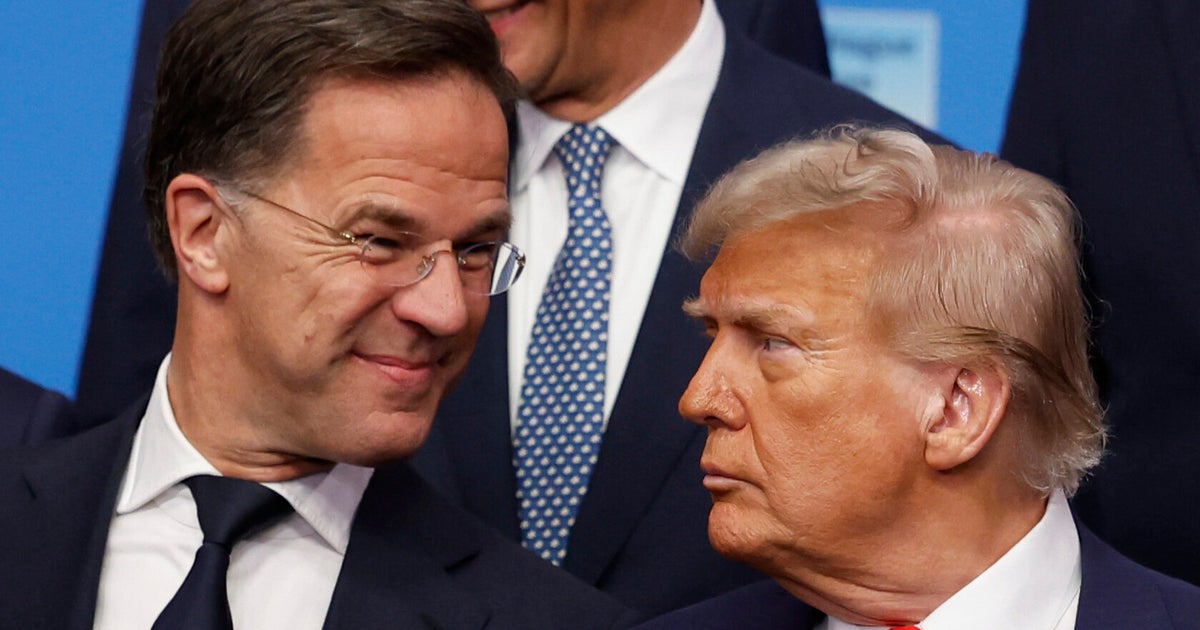
The President met NATO Secretary General Mark Rutte on Wednesday and was expected to discuss the possibility of the US leaving the alliance

The President met NATO Secretary General Mark Rutte on Wednesday and was expected to discuss the possibility of the US leaving the alliance

In the Truth Social post, Trump also made a thinly-veiled threat about Greenland, which the President has repeatedly sought to take over.

The relationship between the White House and NATO had already soured before the war with Tehran, largely as a result of disagreements over Trump’s desire to seize the semi-autonomous territory of the Kingdom of Denmark.

The plan to transfer US troops away from certain NATO nations has circulated and gained support among senior administration officials in recent weeks, highlighting the growing rift between Trump and his European allies.

‘It’s quite sad that NATO turned their backs on the American people over the last six weeks when it’s the American people who have been funding their defence,’ White House press secretary Karoline Leavitt said on Wednesday. 

She said the President planned to have a very ‘frank and candid conversation’ with Rutte, who was expected to cajole and convince Trump that it’s in his interest, and America’s, to stay in the alliance.

When asked for comment on the proposals, White House referred to recent statements made by Secretary of State Marco Rubio criticising NATO nations for failing to be more supportive to Washington with the war in Tehran.

While it is still unclear which countries would lose US troops, several alliance members have publicly condemned Trump’s military campaign, and may in turn be considered as the nations to be punished.

Spain – the only NATO country that has not pledged to spend five per cent of its GDP on defence – prevented US planes involved in the war from using its airspace, and American officials are also frustrated with Germany after top politicians criticised the war strategy.

Nevertheless, Germany serves as one of the largest and most significant hubs for the US military to support its activities in the Middle East. 

Italy also briefly blocked American use of the Sigonella air base in Sicily, and Emmanuel Macron permitted the US to use a base in southern France after it promised only planes not involved in Iranian strikes would land there. 

Administration officials said that the countries which may benefit from more troop deployment include Poland, Romania, Lithuania and Greece, because they are deemed by the President as more supportive.

The Eastern European countries have some of the highest defence spending rates in NATO and were some of the first to announce they would join an international coalition to secure the Strait of Hormuz. 

After the joint US-Israeli operation against Iran began on February 28, Romania quickly approved Washington’s requests to allow its bases to be used by the US Air Force.

The proposal could result in deploying more US soldiers closer to the Russian border, in a move that will likely antagonise Vladimir Putin.

Following his sit-down with Trump, Rutte described the conversation as ‘very frank’ and ‘very open’, despite clear disagreements. 

While the President took to Truth Social to attack the alliance further, Rutte, who infamously called Trump ‘daddy’ at a summit last year, took on a conciliatory tone as he praised him for the ceasefire agreement in Iran.

The NATO Secretary General told CNN that Trump was ‘clearly disappointed’ by his allies refusal to send help, adding: ‘He clearly told me what he thought of what happened over the last couple of weeks.’

When anchor Jake Tapper asked if Rutte believed the world is safer today than before the war started at the end of February, the NATO leader said: ‘Absolutely… this is thanks to President Trump’s leadership.’

But Rutte declined to comment on whether Trump had expressed any desire to leave NATO, telling CNN: ‘It is a nuanced picture.’

He then went on to explain that degrading Iran’s nuclear capabilities is ‘really important for yours and my safety here in the US, in Europe and in the Middle East’.

Trump last week warned that he was strongly considering pulling the US out of the ‘paper tiger’ bloc. 

He said: ‘I was never swayed by NATO. I always knew they were a paper tiger, and Putin knows that too, by the way.’

On Monday, he said he was ‘very disappointed’ with the alliance and that their unwillingness to support the US on the Iran war is ‘a mark on NATO that will never disappear’.

During his first term in 2020, Trump ordered the withdrawal of around 12,000 troops from Germany, but the move was reversed by President Joe Biden after he took office in 2021.


Nato Chief Mark Rutte Finally Explains Why He Called Trump ‘Daddy’


Mark Rutte has finally explained why he controversially described Donald Trump as “daddy” during a toe-curling joint appearance last year.

Nato’s secretary-general went viral when he used the bizarre term of endearment for the US president in June.

Trump at the time told reporters that warring nations Israel and Iran were like “two kids in a schoolyard”, fighting.

Rutte, who consistently turns the charm offensive on for Trump to try to dissuade him from leaving Nato, replied at the time: “Daddy has to use tough language.”

During an appearance at the Ronald Reagan Institute on Thursday, Rutte was asked by a reporter if he still thought of Trump as “daddy” even as the president continues to accuse Nato of not supporting the US in its war against Iran.

The Dutch politician immediately said the “daddy” drama stemmed from a “language problem”, adding: “It follows me a little bit, I can assure you.”

He continued: “In Dutch, you would say – the translation of your father is daddy – and I said, ‘sometimes daddy has to be angry’.

“So I was not calling him my daddy.

“But of course, daddy has all sorts of special connotations, and now I have to live with it for the rest of my life.”

He laughed, adding: “And I own it. And the president owns it. He brought out t-shirts, he made a movie, ‘Daddy is home’, when he returned to the United States. This is why I like him so much.

“You make mistakes, and this is when you are not a native speaker – sorry for that.”

The secretary general had a private conversation with Trump in the White House on Wednesday evening.

While it’s not known what they discussed, the president accused Nato of not being “there when we needed them” on TruthSocial.

But Rutte has played down speculation that he had a falling out with Trump.

He insisted that they had an “open conversation” between friends, but that Trump was “clearly disappointed” at the lack of support from allies.


Trump warns of ‘bigger, and better, and stronger’ strikes unless ‘real agreement’ is reached and says troops will stay put while clock ticks on deal


President Trump said the US military was ‘loading up and resting’ for its ‘next conquest’ but pledged to stay in the Middle East and strike Iran ‘bigger, and better and stronger’ if a deal isn’t reached.

Trump, as well as his counterparts in Iran and Israel, entered into a contentious two-week ceasefire on Tuesday. Officials representing the three countries are scheduled to meet in Islamabad, Pakistan on Saturday to negotiate an end to the war.

It comes as Lebanon was hit with the heaviest bombardment by Israel so far in the conflict, killing 182 people and wounding 800 others, sparking fury from the Islamic Republic.

Tehran dubbed the attack a ‘massacre’ and said it represented a ‘grave violation of the ceasefire’, heightening fears that the regime may back out of the peace process. 

As part of the deal, Iran publicly released what it claimed was a ten-point peace plan that demanded control over the Strait of Hormuz and the right to enrich uranium. 

But Trump blasted the proposal and threatened to take even more aggressive action as he announced that US forces will remain in the area amid negotiations. 

‘All US Ships, Aircraft, and Military Personnel, with additional Ammunition, Weaponry and anything else that is appropriate and necessary for the lethal persecution and destruction of an already substantially degraded Enemy, will remain in place in, and around, Iran, until such time as the REAL AGREEMENT is fully complied with,’ he wrote in a Truth Social post late Wednesday night.

‘If for any reason it is not, which is highly unlikely, then the “Shootin’ Starts” bigger, and better and stronger than anyone has ever seen before.’

Trump also denied Iranian claims that a peace deal would include the country’s right to enrich uranium.

‘It was agreed, a long time ago, and despite all of the fake rhetoric to the contrary – NO NUCLEAR WEAPONS and the Strait of Hormuz WILL BE OPEN AND SAFE.’

Trump warns of ‘bigger, and better, and stronger’ strikes unless ‘real agreement’ is reached and says troops will stay put while clock ticks on deal

Trump threatened to strike Iran ‘bigger, and better and stronger’ if authorities cannot reach an agreement on the country’s nuclear program and control of the vital Strait of Hormuz

‘In the meantime, our great Military is Loading up and Resting, looking forward, actually, to its next Conquest.’

The post came just about an hour after the president slammed reports about Iran’s 10-point plan.

‘The Failing New York Times and Fake News CNN each reported a totally FAKE TEN POINT PLAN on the Iran negotiations which was meant to discredit the people involved in the peace process,’ he claimed. 

‘All ten points were a made up HOAX – EVIL LOSERS!!! MAKE AMERICA GREAT AGAIN.’

The Trump administration had been facing backlash all day over the ceasefire and Iran’s 10-point plan, which even some of the president’s staunchest allies have argued concedes too much to the Iranian regime. 

Republican Representative Don Bacon of Nebraska, for example, said Trump had secured ‘significant victories’ but expressed skepticism over the peace talks and the president’s claims of ‘total victory.’

‘The government’s still in place and we should be negotiating from a position of strength, not a position that’s good for them,’ he told CNN.

‘They will work with Russia and China as soon as they can to start rebuilding their military. And they will be a threat five, six, seven, eight years down the road. And so, as long as this government’s in place, total victory has not been earned.’

Mark Levin, a pro-Israel commentator with close ties to Trump, also said that while he trusts the President’s ‘instincts,’ the Iranians could not be trusted. 

‘This enemy is still the enemy; they’re still surviving,’ he said of Iran.

IRAN’S 10-POINT PEACE PLAN

1. Commitment to non-aggression

2. Iran’s control over the Strait of Hormuz

3. Acceptance of Iran’s uranium enrichment

4. Lifting of all primary sanctions

5. Lifting of all secondary sanctions

6. Termination of all UN Security Council resolutions

7. Termination of all Board of Governors resolutions

8. Paying compensation to Iran

9. Withdrawal of US combat forces from the region

10. Cessation of war on all fronts, including in Lebanon 

Amid the backlash, the president walked back his statement that the 10-point plan was a ‘workable basis on which to negotiate.’

A White House official has since claimed the points in the released plan did not match what Trump had in mind.

But Trump later seemed to contradict his own team, saying most points had ‘been fully negotiated’ while leaving the door open to resuming strikes if the deal fell apart as the ceasefire began with a rocky start.

Iran reportedly closed the Strait of Hormuz over Israeli attacks on the regime’s proxy terror groups in Lebanon, according to Iran’s semi-official Fars news agency.

It reported that two tankers were allowed through the strait Wednesday morning as the two-week ceasefire began, but operations were suspended ‘simultaneous with Israel’s attacks on Lebanon.’ 

Speaking to the BBC’s Today programme, Iran’s Deputy Foreign Minister Saeed Khatibzadeh said that Israel’s strikes against Lebanon were ‘grave violation’ of the ceasefire agreement. 

He said that Tehran had told the White House overnight: ‘You cannot have a cake and eat it at the same time. 

‘You cannot ask for a ceasefire and then accept terms and conditions, accept all the areas that a ceasefire is applied to, and name Lebanon, exactly Lebanon in that, and then your ally just starts a massacre.’

White House Press Secretary Karoline Leavitt denied the claims, as she agreed with Israeli officials that ‘Lebanon is not part of the ceasefire.’

Smoke rises from an explosion in the Abbasiyeh neighbourhood following an Israeli strike, in Tyre, Lebanon, April 8

Smoke rises from an explosion in the Abbasiyeh neighbourhood following an Israeli strike, in Tyre, Lebanon, April 8

First responders stand amid rubble at the site of an Israeli airstrike in Beirut's Corniche al-Mazraa neighbourhood on April 8

First responders stand amid rubble at the site of an Israeli airstrike in Beirut’s Corniche al-Mazraa neighbourhood on April 8

Firefighters spray smoldering debris at the site of an Israeli airstrike that struck a building in Beirut, Lebanon, Wednesday, April 8

Firefighters spray smoldering debris at the site of an Israeli airstrike that struck a building in Beirut, Lebanon, Wednesday, April 8

Hezbollah later announced that it had retaliated against Israel with a rocket salvo, saying that its attacks would continue until Israeli strikes end, arguing they are a violation of the ceasefire agreement.

Lebanese officials said at least 182 were killed and 890 wounded in the attacks. 

Meanwhile, Iran threatened to destroy oil tankers if they try to travel through the Strait without permission, as the regime has imposed a toll of up to $2 million per vessel.

Saudi Arabia’s East-West oil pipeline, a critical artery routing crude from the Gulf to the Red Sea, also came under drone attack at 1pm local time, while Kuwaiti officials said its air defenses intercepted 28 drones in sustained attacks targeting oil facilities, power plants and water desalination infrastructure.

Despite the setbacks, North Atlantic Treaty Organization chief Mark Rutte praised Trump’s efforts to secure a ceasefire as he discussed his meeting with the president on CNN Wednesday.

Anchor Jake Tapper asked the NATO Secretary-General whether he believed the world is safer today than before the war started at the end of February.

‘Absolutely,’ Rutte replied. ‘This is thanks to President Trump’s leadership.’

Trump, on the other hand, hit out at the alliance for its failure to intervene in the war in Iran, despite his repeated requests for NATO member nations to send warships to the area to help reopen the Strait of Hormuz.

He was expected to bring up the possibility of the US leaving the treaty organization in his meeting with Rutte, Leavitt said earlier in the day.

‘Withdrawing from NATO… is something that the president will be discussing in a couple of hours with [Rutte] and perhaps you’ll hear directly from the president following that meeting,’ she told reporters.

The press secretary added that she thought it was ‘quite sad that NATO turned their backs on the American people over the course of the last six weeks, when it’s the American people who have been funding their defense.’ 

Trump’s meeting with Rutte did not seem to assuage his concerns, as he later lashed out at the alliance on social media.

‘NATO WASN’T THERE WHEN WE NEEDED THEM AND THEY WON’T BE THERE IF WE NEED THEM AGAIN,’ the president posted on his Truth Social media platform, hours after White House Press Secretary Karoline Leavitt relayed his message that NATO was ‘tested and failed.’

He then seemed to make a veiled threat about Greenland, a territory he has repeatedly sought to take over. 

‘REMEMBER GREENLAND, THAT BIG, POORLY RUN, PIECE OF ICE.’ 

The president is now reportedly considering punishing NATO member nations that did not help with the war effort. 

Still, a spokesperson for NATO told the Daily Mail that Rutte and Trump ‘had a frank discussion on a range of issues related to our shared security, including in the context of Iran.’

The Secretary General underscored the importance of Allies continuing to step up to deliver a stronger, fairer Alliance,’ the spokesperson said.


Not Even Nato Chief Mark Rutte Is Safe From Trump’s Wrath Over Iran


Donald Trump has hit out at Nato for not being “there when we needed them” shortly after intense talks with the alliance’s chief.

The president had a private meeting with Mark Rutte in the White House on Wednesday evening, but judging by his TruthSocial post, Trump was not happy with the way the conversation went.

The US president wrote: “NATO WASN’T THERE WHEN WE NEEDED THEM, AND THEY WON’T BE THERE IF WE NEED THEM AGAIN.”

He also revived his row with Nato members over his demand to own Greenland, the autonomous Danish territory, writing: “REMEMBER GREENLAND, THAT BIG, POORLY RUN, PIECE OF ICE!!!”

Rutte has bent over backwards to appease Trump since he returned to the White House last year.

Nato’s secretary general went viral when he called the president “daddy” in public after Trump compared Israel and Iran to unruly children last June.

His trip to the US this week was meant to try and smooth over relations with Washington after Trump repeatedly threatened to pull out of the defence alliance.

The president has fumed over the way several Nato allies did not send warships to force Iran to reopen the Strait of Hormuz as global oil prices were rising.

Trump has repeatedly ignored that the organisation is built on the idea of defending one another if attacked – not if launching an attack themselves.

The White House did not reveal what Trump and Rutte discussed during their meeting.

White House press secretary Karoline Leavitt said on Wednesday that Nato countries had “turned their backs on the American people” after the States had funded those countries’ defence.

She said Trump would have a “very frank and candid” conversation with Rutte.

The Nato chief later told CNN that he had “very frank” and “very open” talk with the president, despite Trump being “clearly disappointed” with allies.

He said he noted “the large majority of European nations have been helpful with basing, with logistics, with overflights” when it comes to Iran, so it’s a “nuanced picture”.

Rutte claimed the world was “absolutely” safer now after Trump’s five-week campaign against Iran, and credited that to the president’s “leadership” in weakening the Middle Eastern country’s nuclear capabilities.

He claimed Nato members do not see the war in Iran as illegal and that most agreed it was key to address Iran’s nuclear threats.

But UK prime minister Keir Starmer previously warned that Trump’s attacks on Iran have been “unlawful” and poorly planned.

Spanish prime minister Pedro Sanchez also accused the president of setting “the world on fire” and just showing up with “a bucket”, referring to Trump’s two-week ceasefire deal with Iran which kicked in on Tuesday.

Subscribe to Commons People, the podcast that makes politics easy. Every week, Kevin Schofield and Kate Nicholson unpack the week’s biggest stories to keep you informed. Join us for straightforward analysis of what’s going on at Westminster.


How Putin could attack Europe if Trump abandons Nato: Fears Russia will seize on alliance chaos as US President threatens to withdraw America’s military might


Donald Trump’s warning that he is ‘absolutely’ considering withdrawing from NATO has raised a difficult question for Europe: will Vladimir Putin seize on the chaos within the alliance to attack the continent?

The US President dubbed NATO a ‘paper tiger’ and said removing America from the defence treaty was now ‘beyond reconsideration’ in an interview with the Telegraph.

And in an address to the American nation last night, he appeared to wash his hands of the Strait of Hormuz, calling on his European allies to ‘build up some delayed courage’ and sort the situation out themselves as global oil and gas prices continue to spiral.

‘The countries of the world that do receive oil through the Hormuz Strait must take care of that passage. They must cherish it. They must grab it and cherish it, they can do it easily,’ Trump declared.

‘We will be helpful, but they should take the lead in protecting the oil that they so desperately depend on.’

Now, experts are speculating whether the Russian dictator could exploit Trump’s threat to quit NATO by launching an attack elsewhere in Europe. 

‘Of course it plays into the hands of Putin,’ a senior diplomat from a European NATO country told The i Paper. ‘He can fetch his popcorn and watch America deal with the mistake [it has made and] divisions becoming more visible between the US and Europeans.’

Considering Trump’s declining approval ratings in America and expectations that the Democrats will enjoy success in November’s mid-term elections, the diplomat added that Putin might conclude that he has a short ‘window of opportunity’ for an attack, which will close if a more Russo-sceptic, pro-NATO leader is elected in 2028. 

How Putin could attack Europe if Trump abandons Nato: Fears Russia will seize on alliance chaos as US President threatens to withdraw America’s military might

Experts are speculating whether Vladimir Putin could exploit Trump’s threat to quit NATO by trying to provoke a ‘crisis or conflict’ elsewhere in Europe

Firefighters work on an apartment building hit by a Russian drone strike, amid Russia's attack on Ukraine, in Kharkiv, Ukraine, April 2

Firefighters work on an apartment building hit by a Russian drone strike, amid Russia’s attack on Ukraine, in Kharkiv, Ukraine, April 2

In recent weeks, Trump has accused NATO nations of being ‘cowards’ who have done ‘absolutely nothing’ to help his war with Iran, writing on Truth Social: ‘The U.S.A. needs nothing from NATO, but “never forget” this very important point in time!’

The sentiment was echoed by US Secretary of State Marco Rubio, who said America will ‘reexamine’ its relationship with NATO once the Iran war has ended.

‘When we need them to allow us to use their military bases, their answer is no? Then why are we in NATO?’ Rubio told Fox News, adding that you have to ask why the US has contributed ‘trillions of dollars’ to the alliance over the years.

Another European diplomatic said that while Moscow probably did not have sufficient troops to launch a direct military assault on a NATO country because of the bombardment of Ukraine, ‘there is room for other types of escalation’.

They added that Putin could employ hybrid-warfare tactics, with many countries in the EU already being pummelled with ‘constant cyber-attacks, constant disinformation’. 

‘It’s not peacetime we live in,’ they added. 

It comes as the Russian dictator dismissed Ukrainian President Volodymyr Zelensky’s call for an Easter ceasefire, claiming the proposal was too vague to lead to a lasting peace.

Meanwhile, Moscow rolled out a terrifying intercontinental missile for nuclear drills this week, with eerie released by the defence ministry appearing to show the missile being driven through a snow-covered forest in the dead of night, its launcher looming out of the darkness during the exercise. 

Crews practiced a range of activities during the drills in Siberia, involving camouflaged movements of Yars intercontinental ballistic missiles capable of carrying nuclear warheads.

There is no denying that the US has long been NATO’s backbone. In 2025, the combined military spending of NATO states reached approximately 1.5 trillion dollars, with the US alone accounting for over 900 billion dollars of that total.

NATO members were previously expected to spend at least 2 per cent of GDP on defence, a number Trump had long argued should be higher, leading to a new 5 per cent target by 2035 being agreed upon at last year’s NATO Summit.

In 2024, the US spent around 3.38 per cent of GDP on defence, trumped only by Estonia who spent 3.43 per cent and Poland’s 4.12 per cent.

In military power, NATO as a whole dominates Russia. As of 2025, the alliance had around 3.5 million active military personnel compared with Russia’s 1.32 million.

NATO countries collectively have more than 22,000 aircrafts compared to Russia’s 4,292, as well as 1,143 military ships compared with their 400.

Meanwhile, the combined nuclear arsenal of the US, UK, and France is slightly lower, amounting to 5,692 nuclear warheads, compared with Russia’s 5,600.

On the whole, Europe without the US would not be defenceless. According to CNN, the 31 NATO members aside from America still control over a million troops, hold advanced weaponry, and significant industrial and technological capacity.

Turkey alone has the alliance’s largest armed forces after the US, with more than 355,000 active personnel, followed by France, Germany, Poland, Italy and the UK.

Several European NATO countries have weapons that rival or exceed Russian equivalents.

While Russia operates a single aging aircraft carrier, the UK commands two modern carriers capable of launching F-35B stealth fighters.

France, Italy and Spain also operate aircraft carriers or amphibious ships capable of launching combat aircraft.

France and the UK maintain independent nuclear deterrents, and European NATO members collectively operate around 2,000 fighter and ground attack jets, including dozens of F-35s.

Yet military experts argue that what Europe lacks is not manpower or hardware alone, but the strategic enablers that allow modern wars to be fought and sustained.

Russia's Yars intercontinental ballistic missile system unit drives during drills by the country's strategic missile forces in an unknown location in Siberia, Russia, April 2

Russia’s Yars intercontinental ballistic missile system unit drives during drills by the country’s strategic missile forces in an unknown location in Siberia, Russia, April 2

The US President dubbed the alliance a 'paper tiger' and said removing America from the defence treaty was now 'beyond reconsideration'

The US President dubbed the alliance a ‘paper tiger’ and said removing America from the defence treaty was now ‘beyond reconsideration’

According to the Centre for European Policy Analysis, Europe remains heavily dependent on the United States for intelligence, surveillance and reconnaissance capabilities, integrated air and missile defence, strategic airlift, space assets, cyber capabilities and long range precision striking.

US Major General (rtd.) Gordon ‘Skip’ Davis said these capabilities are essential to command and control multi-domain operations at scale.

‘What the US brings is capabilities like strategic command and control systems and intelligence, surveillance, and reconnaissance (ISR) assets,’ Davis said, warning that without them European forces would struggle to sustain prolonged high intensity conflict.

Command structures pose another major challenge. NATO’s most senior operational commands, including Supreme Allied Commander Europe, Allied Air Command and Allied Land Command, are all led by US officers.

‘I don’t think that NATO could operate without US commanders and staff. That would be extremely difficult,’ Davis said.

The war in Ukraine has also exposed shortages in ammunition stockpiles and industrial capacity.

The EU failed to meet its target of supplying Ukraine with one million artillery shells by spring 2024, while the US doubled its monthly production of 155mm shells.

Russia, meanwhile, is reportedly producing around three million artillery munitions annually. 

US aid has also been central to Ukraine’s cause, through American supplied HIMARS rocket systems, Patriot air defences and earlier deliveries of Javelin anti-tank missiles.

The pause in US aid at the start of March 2025 raised doubts about whether European allies can compensate if American support is withdrawn completely.

As Davis warned, if Russia is given time to rebuild while Europe fails to rearm at the same pace, the balance could shift.

‘I’ve been one of the strongest defenders of NATO during my time as a United States senator because I found great value in it,’ Rubio told Fox News. ‘And it wasn’t just about defending Europe. I said it also allowed us to have military bases in Europe that allowed us to project power into different parts of the world when our national security was threatened. 

‘If now we have reached a point where the NATO alliance means that we can’t use those bases, that in fact – that we can no longer use those bases to defend America’s interests, then NATO is a one-way street,’ he concluded.

In a recent post on Truth Social, Trump expressed about his disappointment with NATO, particularly his allies’ unwillingness to deploy naval escorts to help secure the Strait of Hormuz.  

‘They didn’t want to join the fight to stop a Nuclear Powered Iran. Now that fight is Militarily WON, ​with very little danger for them, they complain about the high ​oil prices they are forced to pay, but don’t want to help open ‌the ⁠Strait of Hormuz, a simple military maneuver that is the single reason for the high oil prices. So easy for them to do, with so little risk,’ Trump wrote.

On Tuesday, the President singled out the UK over Sir Keir Starmer’s attitude towards military involvement, saying: ‘All of those countries that can’t get jet fuel because of the Strait of Hormuz, like the United Kingdom, which refused to get involved in the decapitation of Iran, I have a suggestion for you: Number 1, buy from the US, we have plenty, and Number 2, build up some delayed courage, go to the Strait, and just TAKE IT.’

He continued: ‘You’ll have to start learning how to fight for yourself, the U.S.A. won’t be there to help you anymore, just like you weren’t there for us. Iran has been, essentially, decimated. The hard part is done. Go get your own oil!’ 

Trump’s recent public criticism of the UK prime minister – deriding Starmer as ‘no Winston Churchill’ – has had a chilling effect on US-UK relations behind the scenes, according to the Financial Times.

Now, cracks are appearing in security cooperation between the allies as tensions rise over the crisis in the Middle East.

The President previously mocked Britain for seeking to ‘join wars after we’ve already won’ after the UK government’s initial decision not to join initial US and Israel strikes on Tehran.

Now, the handful of American officials seconded to UK government departments are increasingly being asked to exit meetings when sensitive information is discussed, in contrast to a more permissive approach historically, a source told the FT.

While such behaviour has been present since Trump returned to the White House, a more alarming development is the longer time taken by the UK to approve requests for American aircraft to use British military sites including RAF Fairford in Gloucestershire, the person added.

These requests used to just be ‘rubber-stamped’ by the UK, but now were ‘stickier’ due to the ‘little bit of extra tension in the system’, they said.

Last week, the US President described Britain’s aircraft carriers as ‘toys compared to what we have’ in another swipe at the UK’s lack of support for his war against the Islamic Republic.

Speaking to reporters at the White House last Thursday, Trump said: ‘The British said: “We’ll send our aircraft carriers” – which aren’t the best aircraft carriers by the way, they are toys compared to what we have – “We’ll send our aircraft carrier when the war is over”. I said: “That’s wonderful, thank you very much – don’t bother.”‘

It comes amid claims that the US President threatened to stop supplying weapons for Ukraine in order to pressure European nations into joining a ‘coalition of the willing’ to reopen the strait.

In response to the reluctance of NATO nations to send warships, Trump said he would stop supplying NATO’s Purl, a European-funded initiative which secures the procurement of US weapons for Kyiv’s war, according to the FT.

As a result of Trump’s warning, and at the urging of NATO secretary-general Mark Rutte, a group of countries including France, Germany and the UK issued an urgent statement on March 19 which said: ‘We express our readiness to contribute to appropriate efforts to ensure safe passage through the Strait [of Hormuz].’

An official briefed on the President’s thinking told the FT: ‘It was Rutte who insisted on the joint statement because Trump had threatened to withdraw from Purl and from Ukraine in general.

‘The statement was then quickly put together, and other countries joined in afterwards because there was not enough time to invite everyone to sign up straight away.’

In the two days before the hastily written statement was released, Rutte was involved in several calls with Trump and Rubio.

The NATO chief will travel to Washington next week for a ‘long-planned visit’ as tensions continue to escalate.


Trump says he’s considering pulling out of NATO, calls it a ‘paper tiger’ – National | Globalnews.ca


U.S. President Donald Trump is considering leaving the North Atlantic Treaty Organization (NATO), he told British newspaper the Telegraph on Wednesday.

NATO chief says he understands Trump’s ‘disappointment’ with allies on Iran – National | Globalnews.ca

Trump called the 77-year-old U.S.-led military alliance a “paper tiger” and said Russian President Vladimir Putin “knows that too,” in an interview with the Telegraph.

Trump, who has been frustrated by U.S. allies refusing to get involved in the U.S. war on Iran and the subsequent efforts to force Iran to reopen the Strait of Hormuz to full international traffic, was asked in the interview if he would reconsider ending U.S. membership in the alliance.

“Oh yes, I would say [it’s] beyond reconsideration. I was never swayed by NATO. I always knew they were a paper tiger, and Putin knows that too, by the way,” Trump said in the interview.

Story continues below advertisement

The Strait of Hormuz accounts for one-third of the global oil trade and has been closed for weeks, with Iran blockading the key waterway as it exchanges strikes with the U.S. and Israel.


Click to play video: 'NATO ‘should not get involved’ in Iran: former Canadian NATO Ambassador'


NATO ‘should not get involved’ in Iran: former Canadian NATO Ambassador


Trump said he was frustrated with allies “not being there” to help the U.S.

Get breaking Canada news delivered to your inbox as it happens so you won't miss a trending story.

Get breaking National news

Get breaking Canada news delivered to your inbox as it happens so you won’t miss a trending story.

“Beyond not being there, it was actually hard to believe. And I didn’t do a big sale. I just said, ‘Hey,’ you know, I didn’t insist too much. I just think it should be automatic,” he said.

Trump’s explanations for why the U.S. launched the attacks on Iran have shifted repeatedly over recent weeks since the war began on Feb. 28.

Earlier this month, Foreign Affairs Minister Anita Anand said NATO had not received a formal request from Washington for member countries to formally launch efforts to secure the Strait of Hormuz.

Story continues below advertisement

“To our knowledge, a request has not been made to NATO for the type of assistance that is being requested and Canada, as a founding member of NATO, continues to support the principles of collective defence,” she said.


In his Telegraph interview, Trump said the U.S. has “been there” to support Ukraine against Russia’s invasion.

“We’ve been there automatically, including Ukraine. Ukraine wasn’t our problem. It was a test, and we were there for them, and we would always have been there for them. They weren’t there for us,” he said.

Trump has long criticized NATO members for not increasing their defence spending. In June 2025, Canada joined other NATO countries in pledging five per cent of its budget on defence spending by 2035.

Last week, NATO confirmed that Canada has hit its target of spending two per cent of its GDP on national defence by March of this year.

Trump on Wednesday also claimed that Iran’s president wanted a ceasefire ahead of his speech to the American people set for later this evening.

Trump made the claim on his Truth Social website. Iran had no immediate response to Trump’s post.

Iran’s Foreign Minister Abbas Araghchi, in an interview with Al Jazeera aired late Tuesday, signalled Tehran’s willingness to keep fighting.

Story continues below advertisement

“You cannot speak to the people of Iran in the language of threats and deadlines,” he said. “We do not set any deadline for defending ourselves.”

— with files from The Associated Press.

&copy 2026 Global News, a division of Corus Entertainment Inc.


Trump ‘strongly considering’ pulling US out of NATO over Iran, alliance a ‘paper tiger’: report


President Trump said he’s strongly considering pulling the US out of NATO after the alliance failed to get behind Washington’s operation in Iran as he branded the defense pact a “paper tiger.”

Trump went on to claim the transatlantic alliance was beyond “reconsideration,” adding: “I was never swayed by NATO,” the Telegraph reported Wednesday.

“I always knew they were a paper tiger, and Putin knows that too, by the way.”


Trump ‘strongly considering’ pulling US out of NATO over Iran, alliance a ‘paper tiger’: report
President Trump said he’s strongly considering pulling the US out of Nato. REUTERS

Trump claimed NATO “wasn’t there for the US” when Washington rallied behind its European allies in the face of Russia’s illegal invasion of Ukraine.

“We’ve been there automatically, including Ukraine. Ukraine wasn’t our problem,” he said.

“It was a test, and we were there for them, and we would always have been there for them. They weren’t there for us.”

Trump’s skepticism of the alliance has been well documented, which dates back to before his 2016 election win.

He has previously described the alliance as “obsolete” and told the Washington Post in 2016 that NATO was costing the US a “fortune.”

Last week, Trump lashed out over the alliance’s apparent unwillingness to help with the conflict, and implied the US may no longer “be there” for its allies.

He blasted the Europeans for failing to step up. 

“I’m so disappointed in NATO,” he said. “This was a test: you can help us — you don’t have to, but … if you don’t do that, we’re going to remember!” he said.

Trump has called on allies to help reopen the Strait of Hormuz – the waterway which sees 20% of the world’s oil supply pass through.

The president has taken particular aim at UK Prime Minister Sir Keir Starmer, describing him as “no Churchill.”

London refused to join the US and Israel’s offensive operations in Iran and initially blocked Washington from using UK bases amid concerns it would violate international law.

Starmer’s government, which says it “doesn’t believe in regime change from the skies,” then switched its position and allowed the US to use the bases for self-defensive purposes, “to degrade the missile sites and capabilities being used to attack ships in the Strait of Hormuz.”

Despite Starmer’s U-turn, Trump said the UK “took far too long” in changing its stance.


Senior MP Delivers Brutal Reality Check To Trump As He Slates Nato


A senior MP has called out Donald Trump after he again accused Nato of not supporting the US in its time of need.

The US president has lambasted the defence alliance repeatedly as its member states have refused to get involved in his offensive action against Iran.

He has repeated his false claim that Nato has never been there for the US and threatened to pull out of the alliance altogether.

Actually, the only time the mutual defence clause of Article 5 has been activated was following the 9/11 attacks in New York.

Multiple countries, including the UK, sent troops to war in Afghanistan on America’s behalf for nearly 20 years.

So Tory MP Alicia Kearns, who sits as the shadow national security minister, nit out at the president on X.

She wrote: “As a British MP I can tell you what ‘showing up’ looks like.

“It looks like 457 British soldiers who died in Afghanistan.

“Nato has only ever gone to war for one country. Yours.

“The question isn’t whether Nato showed up, it’s whether we forgive you for pretending otherwise.”

Her remarks come after Trump provocatively claimed on Friday: “Nato made a terrible mistake when they wouldn’t send a small amount of military armaments, just even acknowledge what we were doing for the world taking on Iran.”

He continued: “I think a tremendous mistake was when Nato just wasn’t there. They just weren’t there.

“They take a lot of money from the United States.

We spend billions of dollars a year on Nato.

“Hundreds protecting them! We would have always been there for them.

“But, now, based on their actions, I guess we don’t have to be, do we?”

He added: “Why would we be there for them if they’re not there for us?”

As a British MP I can tell you what “showing up” looks like.

It looks like 457 British soldiers who died in Afghanistan.

NATO has only ever gone to war for one country. Yours.

The question isn’t whether NATO showed up, it’s whether we forgive you for pretending otherwise. https://t.co/tu5RAHzRdP

— Alicia Kearns MP (@aliciakearns) March 28, 2026