Teenage girl who was repeatedly sent home from hospital with painkillers for her ‘migraines’ is told she has just weeks to live


At the age of 19, Ella-Louise Moroney should be enjoying the carefree years of early adulthood, spending time with family and friends, and looking ahead to the future.

Instead, the teenager from Peterborough is facing a devastating diagnosis – one that was almost missed by her physicians.

Only one month ago, the former early years worker was told she had an aggressive, cancerous brain tumour and, without urgent surgery, just weeks to live.

And her path to diagnosis was far from straightforward.

Ms Moroney, who had been suffering persistent migraines for two months before diagnosis, was sent home from hospital on two separate occasions, each visit ending with painkillers and other medications. 

It was only when her mother insisted on further investigation that doctors carried out a scan – confirming the family’s worst fears: a fast-growing, highly malignant tumour in her frontal lobe. 

However, even after finding the tumour, Ms Moroney said doctors tried to send her home once more.   

And to make matters worse, her tumour is so rare that neither Ms Moroney’s consultant nor oncologist had encountered it before, making treatment especially challenging.

Teenage girl who was repeatedly sent home from hospital with painkillers for her ‘migraines’ is told she has just weeks to live

Just weeks ago, Ella-Louise Moroney (pictured) was diagnosed with an aggressive, cancerous brain tumour and told that without urgent surgery, she had just weeks to live

Her sister, Deanne Moroney, has now launched a GoFundMe to help cover the mounting costs she faces, from medical devices, to travel for the numerous appointments she requires. 

Speaking to the Daily Mail, Ms Moroney described how her symptoms were repeatedly dismissed, leading to a frightening and prolonged medical ordeal that still has no clear end.

She said: ‘The first time I went to hospital in late January was because of migraines, which I had been suffering with since last summer. I was sent home with sumatriptan – a medicine to treat the migraines.

‘I then went back to the same hospital the following Sunday and I was sent away again with Naproxen for pain and another tablet.

‘I went to my partner’s house shortly after this. His mum had made me food, and I literally just couldn’t even look at the food.

‘I got really confused all of a sudden and got in touch with my mum, who said that something doesn’t really seem right.

‘So, I ended up calling 111 and going back to hospital that night.’

Even then, she said, doctors initially appeared ready to discharge her once more.

Ms Moroney (pictured) has a Grade 4 atypical teratoid/rhabdoid tumour (AT/RT) in her frontal lobe ¿ a highly aggressive and fast-growing cancer that is extremely rare in adults

Ms Moroney (pictured) has a Grade 4 atypical teratoid/rhabdoid tumour (AT/RT) in her frontal lobe – a highly aggressive and fast-growing cancer that is extremely rare in adults

It was only after her mother demanded a scan that her condition was taken seriously. Yet even after the scan revealed a brain tumour, Ms Moroney said staff still attempted to send her home.

Ms Moroney said: ‘I was sick in hospital and was brought to a side room for triage.

‘I was told that I would be seen in the next 20 to 25 minutes and there were loads of different doctors coming in to see me.

‘My mum had to demand that I have a scan, because they were going to send me home again.

‘I got put into a ward and then one of the stroke nurses came round to see me. This is when we discovered that I had a brain tumour.

‘At this stage the doctors didn’t know that the tumour was cancer because they hadn’t done a biopsy. They had only done a CT scan.

‘About half an hour later, another nurse came in to see me and basically said that the hospital wanted to discharge me. But at this point I had already been told that I had a tumour.

‘So, my mum said: “No, she’s not going home.”

Ms Moroney (pictured) remains determined to stay positive, and has began having her eggs harvested for later use

Ms Moroney (pictured) remains determined to stay positive, and has began having her eggs harvested for later use

Ms Moroney – who has chosen not to name the hospital where she was first treated – was later transferred to Addenbrooke’s Hospital in Cambridge, where she received further care and devastating news.

Ms Moroney said: ‘It was at Addenbrooke’s that doctors told me if I did not have surgery to remove the tumour as soon as possible, I would have a month to live.’ 

‘I had surgery on the 17th of February. I had a professor doing my surgery and he came round in morning of the surgery and basically said to me, we need to go now because it’s getting bigger.

‘Thankfully, they got most of the tumour out.’

However, a biopsy later confirmed her worst fears.

Ms Moroney has a Grade 4 atypical teratoid/rhabdoid tumour (AT/RT) in her frontal lobe – a highly aggressive and fast-growing cancer that is extremely rare in adults, more commonly affecting children under five.

She said: ‘After surgery, most of the tumour was removed, but chemotherapy and radiotherapy are still very much needed.

‘The tumour is very rare and it’s very uncommon for young adults in my group. It is more common in children under five.

Ms Moroney's (pictured) family are facing mounting costs, including travel for treatment, ongoing medical expenses and essential equipment such as a wheelchair to aid her recovery

Ms Moroney’s (pictured) family are facing mounting costs, including travel for treatment, ongoing medical expenses and essential equipment such as a wheelchair to aid her recovery

‘The consultant also said that there’s hardly any cases that are documented, which is why treatment is quite tricky. They just don’t really have a lot of information on my age range because it’s normally children that are so young.

‘The consultant said that in his career he hadn’t encountered this type of tumour. In their careers, both him and the oncologist who seen me had not seen this tumour in my age group before. 

‘It is very hard news to take in because there’s not enough research into it, so it is very hard to kind of sit back and just have to kind of accept the fact that we just don’t know anything.’

She is now preparing to begin an intensive course of treatment at UCL Hospital in London, starting with eight weeks of chemotherapy, followed by radiotherapy, and then a further eight weeks of chemotherapy.

Despite the enormity of her situation, Ms Moroney, who studied an apprenticeship in childcare, remains determined to stay positive.

She said: ‘I am having my eggs harvested at the moment. So that is postponing the chemotherapy and radiation. But that treatment is due to start in early April.

‘I am having chemo first for eight weeks and then I’ll travel to London for proton radiotherapy.

‘As much as I can, I try and make a joke out of it kind of thing because if not, there’s nothing else that I can do.

‘I am as optimistic as much as I can because I know that the doctors are doing everything that they can, and obviously I’m getting the best treatment that I can.’

Since undergoing surgery, she says her migraines have disappeared – though she continues to cope with the physical effects of the procedure.

She said: ‘I haven’t had any headaches since I had surgery, it’s been crazy, I haven’t had to take paracetamol at all for my headaches.

‘But because I’m still recovering from the brain surgery, I am still quite slow and my walking has changed quite a lot as well. Like I’ve just had really messed up knees.

‘I’ll wake up some mornings and my knees will just be in like excruciating pain.’

Meanwhile, her family are facing mounting costs, including travel for treatment, ongoing medical expenses and essential equipment such as a wheelchair to aid her recovery.

Sister Deanne has since launched a GoFundMe appeal with a target of £9,000 to help support her through treatment.

Deanne said: ‘I set the fundraiser up in hopes to raise some money to support the costs of travel, medical expenses and things like a wheelchair for Ella. 

‘We also want to raise brain cancer awareness and we have almost hit our goal, which we are so grateful for. There has been support by so many people already.’


Man guilty of murdering top London chef who studied at Prue Leith school


An alcoholic was today convicted of murdering a head chef who worked at top London restaurants including Claridge’s.

Alexis De Naray, 45, trained at the Prue Leith Cooking School and worked in several high-end kitchens in the capital, jurors were told.

But he began drinking ‘due to the stressful nature of the job’ and was also an alcoholic at the time of his death last June.

A court heard the talented chef ended up homeless and was found dead under a sleeping bag in the attic room of an abandoned building in Shrewsbury, Shropshire.

This afternoon, a jury unanimously convicted Adam Rowson, 26, who was also homeless, of killing Mr De Naray.

Judge Avik Mukarjee adjourned sentencing until May 6 and remanded Rowson into custody.

The judge thanked the jury for their ‘impressive commitment’ to the ‘distressing’ case and excused them from any future jury service.

During the two-week trial, Stafford Crown Court heard a post-mortem examination revealed Mr De Naray suffered 17 fractured ribs and injuries to his head and arms.

Man guilty of murdering top London chef who studied at Prue Leith school

Alexis De Naray worked at top London restaurants but had become a chronic alcoholic by the time of his death, the court heard

A forensic pathologist found the chef had been subjected to a significant blunt force assault before his death last June.

Opening the trial last month, prosecutor Sally Howes KC, said Mr De Naray was a ‘well-educated man’ from a Greek family.

‘Having attended the Prue Leith Cooking School, he worked as a head chef in a number of restaurants in London,’ she said.

‘Unfortunately, due to the stressful nature of that job, drinking became a way of life and his alcohol problems began.

‘By the time of his death he had become a chronic alcoholic.’

Jurors were told Mr De Naray, who was classically trained in French cuisine, nearly died from seizures caused by alcohol withdrawal during the Covid lockdown.

‘As a result, his father arranged housing for him in Shrewsbury – near to the family home,’ said Miss Howes.

‘However, despite the help of his father and a number of local agencies, at the time of his death, he was a homeless alcoholic.’

Mr De Naray’s father paid for his son to stay in local hotels, including a Travelodge and Premier Inn, the court heard.

After leaving London, the chef had a stint working at a Worcestershire pub before moving on to a restaurant and guest house in Ironbridge, Shropshire.

He has previously told the Private Dining Rooms website that Claridge’s, where Gordon Ramsay ran a restaurant, was the first restaurant he worked in. His signature dish was Filet mignon of beef with pan fried fois gras, reduced pan drippings and chanterelle mushrooms.

Jurors were told Mr De Naray met Rowson at the Royal Shrewsbury Hospital and the pair were seen on CCTV shortly before 4am the next morning walking towards the derelict building, it is claimed.

Miss Howes said it was the last time Mr De Naray was seen alive.

Prosecutors claim he was then subjected to a violent attack inside the abandoned property.

Rowson told jurors he invited a former high-flying chef back to his squat while collecting half-finished cigarette butts outside a hospital – before killing him in a fight.

The moment the fight broke out, Rowson said, was when Mr De Naray, while naked, “leaned” on Rowson as he was looking out of a window.

He told jurors he punched Mr De Naray to the chest. “I was anxious. I was freaked out,” he said.

Mr De Naray got on top of Rowson, the defendant told the court, and put “pressure” on his stomach.

“I didn’t want him on top of me at all,” Rowson said. “It was a horrible situation.”

Rowson claimed the chef was still alive when he left him.

Before the prosecutors closed their case, the jury heard from Jessica Kirk, who worked at the Shropshire Recovery Partnership drug and alcohol support service in Castle Gates, Shrewsbury.

She told how, at a scheduled appointment with Rowson, he asked her if he was going to be arrested, and told her he had “done something bad”.

Rowson claimed this related to his subsequent use of the victim’s bank cards, buying clothes and alcohol at several shops as well as drugs.

But the killer was also heard on CCTV cameras outside a supermarket on June 25 telling friends he had ‘killed someone’.

Mr De Naray’s father raised the alarm and reported his son as missing on June 24 after not hearing from him.

Three days later, police received a 101 call from Rowson saying he had found a body in the abandoned house.

Miss Howes said as well as the rib fractures, Mr De Naray suffered other multiple injuries, including a bleed on the brain.

The pathologist, Dr Alexander Kolar, gave a cause of death as multiple injuries compounded by complications of long-standing use of alcohol to excess and acute alcohol intoxication.

The court heard Mr De Naray also had cirrhosis of the liver and was more than five times the legal drink drive limit when he died.


Katie Price’s fourth husband Lee Andrews now claims he’s buying Chelsea football club just four years after current owner bought it for £4.25billion and insists ‘the money is there – watch this space’


Chelsea fans have suffered mixed fortunes since Todd Boehly and his BlueCo consortium bought the west London football club from Roman Abramovich in 2022. 

But they have the potential to change – for better or worse – should Katie Price’s fourth husband succeed in a proposed bid to buy a majority stake in the club, who are currently sixth in the Premier League and 22 points adrift of table-topping rivals Arsenal.

Dubai-based businessman Lee Andrews – who unsubstantiated claims of immeasurable wealth have been called into question following his shotgun marriage to Price in January – wants to forge ahead with a ‘crazy and ambitious’ plan to buy into the current World Club Cup holders.  

‘I can’t tell you all the workings and inner parts to my wealth but definitely the money is there,’ Andrews, 42, told The Sun. ‘And they have to accept and they have to verify, but it will be going in.

‘It sounds crazy, it sounds ambitious, but watch this space.’ 

Andrews will need a sizeable sum to wrestle control from current owner Boehly, the American businessman who acquired the football club for £4.25billion four years ago. 

Katie Price’s fourth husband Lee Andrews now claims he’s buying Chelsea football club just four years after current owner bought it for £4.25billion and insists ‘the money is there – watch this space’

Katie Price’s fourth husband is planning to forge ahead with a ‘crazy and ambitious’ plan to buy a majority stake in Premier League football club Chelsea

Since then, the club has hired and fired five different managers, among them current England boss Thomas Tuchel, while struggling to maintain the same domestic success they enjoyed so consistently during the Abramovich era. 

Financial shortfalls appear to match the team’s lackluster results, with the club posting a remarkable £262.4million pre-tax loss for the 2024-2025 season – despite the club qualifying for a lucrative Champions League spot by finishing fourth.

While Andrews’ financial worth remains questionable – the businessman claims to have links with Tesla founder Elon Musk, the world’s richest man – current Chelsea owner Boehly’s is not. 

The Miami based magnate’s personal fortune is estimated between $8.4billion and $9.3billion, while his impressive business portfolio includes a 20 percent ownership of baseball giants the Los Angeles Dodgers. 

The American’s incredible wealth eclipses that of Andrews, who has previously boasted of earning anywhere between £2million and £5million annually from a variety of investments in the United States. 

Andrews’ credibility and personal integrity has taken a battering from all sides following his marriage to Price, with furious ex-girlfriends labelling him a ‘scammer’ and urging the former glamour model to ‘run for the hills.’ 

Ex-fiancée Alana Percival, 32, who accepted a marriage proposal from Andrews just 16 weeks before he exchanged vows with Price, has accused him of scamming money out of her and making false claims about his personal wealth and various achievements. 

The businessman has previously claimed to hold a PhD from Cambridge University, while managing the sustainable vehicle venture, Aura Worldwide Holdings Limited, from his home in the United Arab Emirates. 

Andrews will need a sizeable sum to wrestle control from current owner Todd Boehly, the American businessman who acquired the football club for £4.25billion four years ago

Andrews will need a sizeable sum to wrestle control from current owner Todd Boehly, the American businessman who acquired the football club for £4.25billion four years ago

Katie Price's husband Lee Andrews has made yet more bombastic claims about his lavish life in his latest slew of Instagram posts

Katie Price’s husband Lee Andrews has made yet more bombastic claims about his lavish life in his latest slew of Instagram posts

He also claims to bilingual and fluent in almost every known language, including Arabic. 

In March, he shared a variety of images and videos across social media, including a post about becoming a ‘future trillionaire’, detailing a ‘mysterious income’ and being a member of ‘the 1%’. 

One post features a debonaire man standing at a bar with the words: ‘Mysterious income. Underground connections. Private life. Small circle. Hot brunette.’ 

He then shared an image of a yacht with the accompanying message: ‘Send this to future trillionaires’, with a voiceover detailing being worth $1,274,930,645,80.73. 

Yet another nod to his success and wealth featured the quote: ‘When you love Monday morning more than Friday night. Welcome to the 1% bro’. 

While there have been doubts over his alleged Cambridge education,  Price has hit back and insisted she has seen evidence of his university pedigree. .

The former glamour model also revealed that she has so much trust in her new husband that she declined to sign a prenup before their whirlwind wedding. 


Strictly star arrested on suspicion of rape won’t face charges after ‘insufficient evidence’


A Strictly star who was arrested on suspicion of raping a woman following a BBC event will not face criminal charges. 

The man, who cannot be named for legal reasons, was arrested on October 13 and an investigation was launched by Hertfordshire Police.

The investigation has now been closed due to ‘insufficient evidence’, Hertfordshire Police have said. 

‘This has been a really awful, hellish period for all parties. The man has been through hell and back, and just wants his name cleared now once and for all,’ a source told The Sun.  

In a statement, Hertfordshire Police said: ‘There will be no criminal charges brought against an individual arrested by Hertfordshire Constabulary in London on Monday 13 October 2025 on suspicion of rape.

‘The man, who had his bail extended on Tuesday 6 January until today, Tuesday 7 April 2026, to allow further enquiries to take place, will face no further action.

Strictly star arrested on suspicion of rape won’t face charges after ‘insufficient evidence’

A Strictly star who was arrested on suspicion of raping a woman following a BBC event will not face criminal charges

‘Early advice was sought from the Crown Prosecution Service, but detectives determined that there was insufficient evidence to bring forward criminal charges.’

The Daily Mail has contacted Hertfordshire Police for comment. 

The arrest was the latest scandal to hit the BAFTA-winning programme. It came just three months after another unnamed male star was arrested on suspicion of rape. 

In August, police said a man was arrested on suspicion of rape and for possessing ‘non-consensual intimate image abuse’. 

That Metropolitan Police investigation remains ongoing. 

Strictly has been plagued by scandal in recent years.

In 2024, bosses had to firefight a series of damaging allegations that called into question the integrity of the show, when Amanda Abbington accused former professional dancer Giovanni Pernice of ‘abusive and cruel’ behaviour in the 2023 series.

It prompted a forensic internal investigation costing some £250,000, which upheld some of Amanda’s complaints, but not the most serious.

Professional dancer Graziano Di Prima was then sacked after admitting he had kicked his celebrity partner Zara McDermott during rehearsals for the same series.

The dance show was forced to bring in chaperones to watch over training sessions under the corporation’s duty-of-care plans ahead of the 2024 series.

The measures also included a member of the production team being present during rehearsals at all times, and increased support for both celebrity contestants and the professional dancers. A celebrity welfare producer and a professional dancer welfare producer were also brought in.

Last year, contestant Wynne Evans was recorded making a sexualised remark at the Birmingham Arena as the contestants posed for a group photo for the Strictly tour. He was consequently dropped as a radio presenter by the BBC.

In February, BBC bosses cleared two Strictly stars of alleged cocaine use after a complaint was made by former contestant Wynne.

The corporation launched an investigation into the show and hired an external legal firm to carry out the probe last summer, following the accusation.

Now the programme has been given the all-clear after no evidence was found to support Wynne’s claim.

A Strictly source said last month: ‘The BBC took the claim made by Wynne very seriously, so much so that they funded an external inquiry so that no stone was left unturned.

‘But the investigation is now over and it’s back to business as usual. Strictly has a clean bill of health, despite Wynne appearing to throw allegations at it. Now everyone involved in Strictly is looking forward to a fantastic, clean and new start later this year.’

Bosses will be relieved at the news as it comes while they are looking for two presenters to replace hosts Tess Daly and Claudia Winkleman, who stood down at the end of last year.

There were concerns that the toxicity surrounding the programme may have put off potential stars to anchor the long-running show.

Wynne’s accusation of alleged drug use was made in a legal submission to the BBC in March last year by the law firm Russells.

The singer, who was partnered with dancer Katya Jones in the 2024 series, made the allegation after he was kicked off the Strictly tour in January 2025


Inside the world’s least visited countries – with no crowds, incredible coral reefs and £500 flights


Prefer your holidays without hordes of tourists and bustling crowds in sight?

If so, you’re in luck, as the five least-visited countries around the world have been revealed by the United Nations World Population Review.

It ranks countries by how many visitors they see each year – and some have just a few thousand, in comparison to popular European nations welcoming in millions.

Some of these are little-known destinations thousands of miles away, while others are previously popular spots that have been affected by natural disasters.

Here’s a rundown of the five least-visited countries around the world…

1. Kiribati: Annual visitors 9,500

Inside the world’s least visited countries – with no crowds, incredible coral reefs and £500 flights

The least-visited country in the world has been revealed as Kiribati

Made up of 32 atolls and one raised coral island, Kiribati lies between Australia and Hawaii – and is the only country in the world to touch all four hemispheres.

‘When you try to find it on a map, you can barely tell it’s there,’ the World Population Review says of the remote island nation.

According to the most recent data, Kiribati sees a max of 9,500 visitors each year.

Kiribati is also the first country in the world to celebrate the New Year due to its placement. 

To get there, travellers can fly from Fiji to Tarawa, Kiribati, with Fiji Airways or from neighbouring country Nauru to Tarawa with Nauru Airlines.

International travellers can expect a long journey. From London to Tarawa, the journey can last up to 35 hours or longer.

Return flights from London start from £4,400 – although they can be infrequent and complex.

2. Marshall Islands: Annual visitors 6,000

In second place is the Marshall Islands, a beach haven with a complex history

In second place is the Marshall Islands, a beach haven with a complex history

Join the discussion

Should more people visit these hidden gems or are they better preserved without mass tourism?

With around 6,000 visitors arriving each year according to the lastest 2024 data, the Marshall Islands – consisting of 29 coral atolls and five single coral islands – is the second least-visited country in the world.

With white sand beaches, crystal clear water, and diverse marine life and flora (including more than 160 species of coral), it’s a perfect destination if you’re seeking an under-the-radar beach vacation. 

The islands are also deeply rooted in Second World War history, having served as a Japanese base and then as the site of nuclear testing for the US military. 

But getting there from the UK is not easy – flights can cost up to a staggering £21,000 and can involve almost 60 hours of travel, with layovers in places such as Honolulu.

3. Niue: Annual visitors 9,000

Next up on the list is Niue, a small island nation in the South Pacific Ocean

Next up on the list is Niue, a small island nation in the South Pacific Ocean

Located in the South Pacific, Niue – regarded as one of the smallest nations on the globe – sees approximately 9,000 visitors per year, according to National Geographic.

With only 1,900 inhabitants, the tourist board says: ‘Niue is a place where it’s normal for complete strangers to wave at each other, all the time. It’s a place where nature hasn’t been broken… and things are “the way they used to be”.’

Niue also reportedly has no traffic lights – the roads are quiet and there are no queues.

The tourism board explains: ‘Niue has no traffic lights and only one petrol station. With quiet roads, minimal traffic, and no need to hurry, you can forget about rush hour and embrace a leisurely drive. But if you do have to stop at an intersection, it’s usually just to let a flock of chickens cross the road – and rest assured, they’re on island time too!’

You’ll have to think ahead if you’d like to visit, though.

Niue currently operates two three-hour flights per week from Auckland, New Zealand, to Niue’s International Airport, Hannan (IUE). 

Thankfully, Niue’s main town, Alofi, is less than five minutes from the airport.

Flights from the UK to Auckland start from £366 one way, while you can travel from there on to Niue for £160 also one way – a total of £526.

4. Micronesia: Annual visitors 18,000

In fourth place is Micronesia, which is situated in the North Pacific Ocean

In fourth place is Micronesia, which is situated in the North Pacific Ocean

Welcoming just 18,000 visitors per year according to the latest pre-pandemic figures, the islands of Micronesia are scattered across the North Pacific Ocean, between the Marshall Islands and Palau.

The tourism board explains: ‘Spread across nearly a million square miles of ocean north of the equator, the Federated States of Micronesia (FSM) boasts unparalleled cultural and biological diversity. 

‘Home to the world’s greatest coral reefs and best pelagic fisheries, FSM is a remote paradise that promises adventure, relaxation, and unforgettable experiences.’

It’s also home to the world’s only ancient city built on a coral reef, the UNESCO-listed Nan Madol – which has the remains of stone palaces, temples and tombs dating back 1,000 years.

You can find flights from £6,170 from London to Chuuk – but you might need to stop at least twice, and journeys can take as long as 50 hours.

5. Montserrat: Annual visitors

Rounding out the top five least-visited countries around the world is Montserrat

Rounding out the top five least-visited countries around the world is Montserrat

The mountainous Caribbean island is part of the Lesser Antilles chain and is a British Overseas Territory.

It used to be a popular tourist destination. 

However, a volcanic eruption in 1995 ravaged the island, including its capital city, Plymouth, and encouraged two thirds of its population to emigrate to other countries.

There are no direct flights to Montserrat, but travellers can fly to the neighbouring island of Antigua and catch a ferry or a flight to Montserrat.

Fares tend to start from around £1,000 for a return trip as the cheapest option.

Fun fact? It’s also the only country outside of Ireland to celebrate St. Patrick’s Day as a national holiday.


Princess Charlotte steals the show and gets a loving pat from her grandfather Charles as Royal Family presents a unified front at Easter Sunday service


The King couldn’t have looked happier to see his grandchildren yesterday as he led a notably unified Royal Family for their traditional Easter Sunday service.

Charles, accompanied by Queen Camilla, sweetly patted a beaming Princess Charlotte on the shoulder as he made his way into church.

The main group, led by William and Kate – in a £360 cream Self Portrait tailored dress and Juliette Botterill hat, with Queen Elizabeth’s ‘Bahrain’ pearl earrings and a brown Demellier London bag – walked down from Windsor Castle on foot to St George’s Chapel.

Charlotte, ten, in a camel-coloured coat with brown velvet cuffs and collar, waved excitedly to well-wishers as her brother Prince Louis, seven, walked proudly alongside her.

Future king Prince George, 12, appeared to have had another growth spurt – and not only towered over his siblings but seemed to be quickly catching up with his mother.

Finally, the King and Queen were driven down to the chapel in the State Bentley, Camilla regal in a red wool crepe dress and coat by Fiona Clare, hat by Philip Treacy and a Queen Elizabeth II brooch.

The King beamed broadly as he saw his family, clearly delighted at the turnout.

Also present was Princess Anne and her husband, Vice Admiral Sir Tim Laurence, as well as the Duke of Edinburgh and his son James, Earl of Wessex, 18. 

Princess Charlotte steals the show and gets a loving pat from her grandfather Charles as Royal Family presents a unified front at Easter Sunday service

King Charles, accompanied by Queen Camilla, sweetly patted a beaming Princess Charlotte on the shoulder as he made his way into church for the Royals’ traditional Easter Sunday service 

It was a notably unified Royal Family on display as they arrived at the 2026 Easter Matins Service at St George's Chapel, with Princess Charlotte offering a little wave

It was a notably unified Royal Family on display as they arrived at the 2026 Easter Matins Service at St George’s Chapel, with Princess Charlotte offering a little wave 

The King, accompanied by Queen Camilla, beamed broadly as he saw his family, clearly delighted at the turnout

The King, accompanied by Queen Camilla, beamed broadly as he saw his family, clearly delighted at the turnout

The Duchess of Edinburgh was, apparently, ‘under the weather’ and their daughter, Lady Louise, busy studying. In addition Peter Phillips had brought along not only his fiancee, Harriet Sperling, but also her daughter, Georgina, 13, for the first time.

The couple, both of whom have been married previously, are due to wed in June. Georgina was flanked by her two stepsisters-to-be, Savannah Phillips, 15, and Isla Phillips, 14. 

Princess Margaret’s daughter, Lady Sarah Chatto, and her husband, Daniel, made up the family group.

Notable by their absence at the Easter Matins service were Princess Beatrice and Princess Eugenie. 

With Andrew Mountbatten-Windsor banned from public family occasions and currently being investigated by police over allegations of misconduct in public office, his daughters had made alternative plans this year with the agreement of the King.

Sources have maintained they will join the Royal Family on future occasions, but in the current circumstances it was decided that they would stay away this Easter.

After the hour-long service, and a cup of tea with the Dean of Windsor, the Right Reverend Christopher Cocksworth, Charles and Camilla embarked on a shorter than normal walkabout given the unseasonably cold and blustery weather.

Among the onlookers was Frank Gates, seven, from Egremont in Cumbria, who was smartly dressed in the uniform of the Coldstream Guards and proudly saluted his Colonel-in-Chief – the King.

King Charles III and Queen Camilla, clutching a bouquet, looked happy and healthy as they turned out for Royal Family's annual Easter Sunday service

King Charles III and Queen Camilla, clutching a bouquet, looked happy and healthy as they turned out for Royal Family’s annual Easter Sunday service

Prince Louis shakes hands as Princess Charlotte and their father Prince William look on

Prince Louis shakes hands as Princess Charlotte and their father Prince William look on 

King Charles waves to onlookers patiently waiting for a glimpse of the royals as he arrives at the service

King Charles waves to onlookers patiently waiting for a glimpse of the royals as he arrives at the service

Before their arrival he said: ‘I really want to be in the Coldstream Guards when I am older.’ Asked why, he said sweetly: ‘Because they are second to none.’

Royal ‘superfan’ John Loughrey, from south London, said afterwards that His Majesty had spotted their flags: ‘He said he had seen our flags and wished us happy Easter.’

As the car drew away, the other members of the royal party came up the steps, led by the Waleses, who all – children included – waved happily to well-wishers wishing them ‘Happy Easter’.

As they walked back up the hill to the castle, Kate placed her arm around Charlotte’s shoulders and squeezed them in a display of maternal pride. 

As perhaps was intended, the focus was very much back on the royals who were there, not the ones who were not. 


How your sofa could be a cancer risk: Ministers forced to change fire safety laws that mean many are full of toxic chemicals


Fire safety rules that forced British sofas to be packed with potentially harmful chemicals are finally being overhauled.

The move follows years of campaigning by mother Delyth Fetherston-Dilke, who has warned the regulations are exposing families to harmful chemicals inside their homes.

An investigation has revealed how for almost 40 years the rules, far stricter than in any other country, have made it near impossible to pass furniture fire safety tests without using large amounts of chemical flame retardants.

A typical UK sofa contains about 2kg of these toxic substances.

Dilke has repeatedly called for reform, arguing that the current standards have created a hidden health risk, particularly for young children and pets who come into close contact with treated materials. 

The World Health Organisation announced last month in the latest Lancet Oncology journal that the most common flame retardant in UK sofas, TCPP, was ‘probably carcinogenic to humans’. 

Scientists and campaigners have also warned that these chemicals do not stay locked inside furniture. 

Instead, they can escape into household dust and be inhaled or ingested, with studies suggesting young children are particularly vulnerable due to their closer contact with floors and soft furnishings.

How your sofa could be a cancer risk: Ministers forced to change fire safety laws that mean many are full of toxic chemicals

Fire safety rules that forced British sofas to be packed with potentially harmful chemicals are finally being overhauled after a years-long campaign by a mother who warned they posed a risk to families. Pictured: A sofa dumped on a pavement in Chalvey

The policy U-turn comes after a long campaign by Delyth Fetherston-Dilke (pictured), a former lawyer from Richmond, south-west London, who uncovered the issue after retraining as an upholsterer

The policy U-turn comes after a long campaign by Delyth Fetherston-Dilke (pictured), a former lawyer from Richmond, south-west London, who uncovered the issue after retraining as an upholsterer

Officials now say they will replace the open flame test with a ‘smoulder test’, which more closely reflects real-life fire risks such as a lit cigarette, the Sunday Times reports.

The change is intended to maintain fire safety standards while significantly reducing reliance on chemical treatments. 

The government has acknowledged growing evidence linking flame retardants to a range of health concerns, including cancer, neurotoxicity, developmental issues and disruption to hormones. 

There are also fears the chemicals increase the toxicity of smoke in a fire and make recycling furniture far more difficult. 

The policy U-turn comes after a long campaign by Ms Fetherston-Dilke, a former lawyer from Richmond, south-west London, who uncovered the issue after retraining as an upholsterer.

While studying furniture construction, she found extensive scientific research suggesting the very chemicals designed to slow fires could be harmful to humans and animals. 

She has argued for years that Britain’s rules left households exposed to unnecessary risks without clear evidence they saved lives.

Her concerns were echoed by the fact that major retailers produce different versions of sofas for different markets, with flame retardants added only to those sold in the UK and Ireland.

The regulations themselves date back to late-20th century reforms brought in after a series of fatal fires, including a blaze at a Woolworths store in Manchester that killed 10 people. 

But critics say the rules have remained largely unchanged despite evolving evidence about health impacts. 

Warnings are not new. As far back as 2017, experts were raising alarm over a possible link between flame retardants and rising cancer rates.

Former government adviser Terry Edge claimed at the time that the chemicals could be contributing to thousands of illnesses, particularly affecting children. 

Separate research from Duke University found higher levels of certain flame retardants in the blood and homes of thyroid cancer patients. 

Although some of the most dangerous compounds have since been banned, they remain present in older furniture and continue to circulate in household dust. 

Ministers will now consult on the proposed changes, with campaigners hailing the decision as a major breakthrough after years of inaction. 

Ms Fetherston-Dilke said the shift marked a turning point, after more than a decade of pressure to bring Britain in line with international standards while better protecting public health. 


Champions Cup: Bath beat Saracens to set up quarter-final clash with Northampton Saints


Bath came back from a disappointing first half to progress through to the Champions Cup quarter-finals with a 31-22 win over Saracens; they will face fellow English club Northampton Saints in the quarter-finals at home next weekend

Last Updated: 04/04/26 6:24pm

Champions Cup: Bath beat Saracens to set up quarter-final clash with Northampton Saints

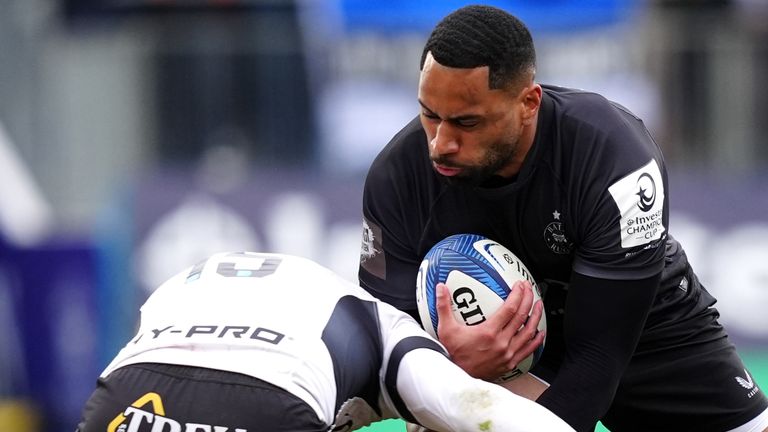
Joe Cokanasiga scored Bath’s second try to turn around the game in the second half

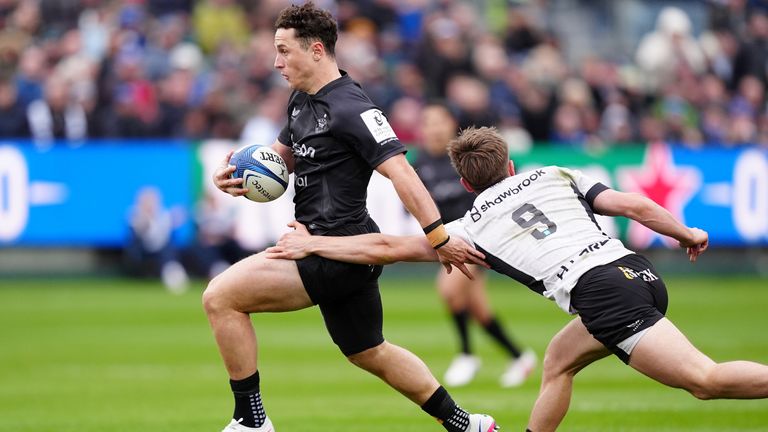
Bath turned to a quartet of their England backs to turn the tide as they edged into the Champions Cup quarter-finals with a 31-22 victory over Saracens.

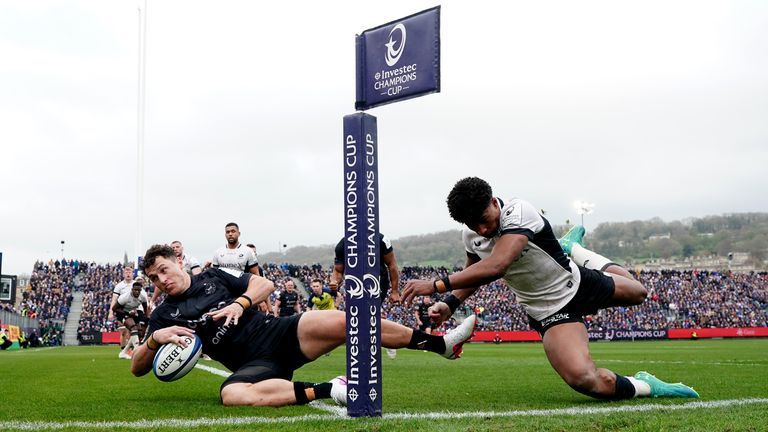
Trailing 10-0 at the interval at the Recreation Ground, the hosts burst into life with tries from Henry Arundell, Joe Cokanasiga, Ben Spencer and Ollie Lawrence as they set up a last-eight appointment at home against Northampton.

Spencer’s 59th-minute finish of an audacious attack that began on their own try-line looked to be pivotal but the determined Saracens refused to throw in the towel and were only truly beaten when Arundell ran in his second try in the 80th minute.

Bath’s scrum needed rescuing after a humbling first half with the introduction of prop Thomas du Toit making the difference with the South African tighthead also being named man of the match.

Unlike their visit to the Recreation Ground a fortnight ago when they were overwhelmed 62-15, it was clear Saracens meant business from the start as they halted an early Bath onslaught including holding up a forward drive over the line.

Having proved their mettle in defence, they surged ahead in the 14th minute when Charlie Bracken deceived Cokanasiga with a dummy from the base of a maul and raced over.

Follow Sky Sports on WhatsApp

Follow Sky Sports on WhatsApp for the latest sports news, videos, features, analysis and much more

Bath’s scrum was beginning to buckle and they were also suffering at the breakdown, but the visitors were their own worst enemies at times with Fergus Burke failing to find touch with a penalty.

Rhys Carre rampaged into space and Noah Caluori almost crossed in the left corner before Guy Pepper was shown a yellow card for cynically heading the ball away on the floor.

So many elements of Saracens’ game were firing but the points they deserved proved elusive with an Owen Farrell penalty their only other score in a half they had controlled.

Henry Arundell scored Bath's first try

Henry Arundell scored Bath’s first try

To punish their wastefulness, Arundell sprinted across after being released by Charlie Ewels early in the second half and then Cokanasiga scooped up a loose ball to weave over after Lawrence had carried into space.

The tries sandwiched a dramatic reversal in the scrum with Beno Obano sin-binned for a cumulation of penalties before Du Toit forced a penalty, providing Cokanasiga with the platform to score.

Bath led for the first time and then produced the highlight of the afternoon by stopping Saracens from scoring by dislodging the ball from Andy Onyeama-Christie as he ran at the line before strking with a move that began from their own whitewash.

Cokanasiga escaped the 22, found Alfie Barbeary who waited for Spencer and the England scrum-half had gas to finish from long range.

Bath will play Northampton Saints in the quarter-finals

Bath will play Northampton Saints in the quarter-finals

Maro Itoje and then Ivan van Zyl burst through the breakdown and Saracens were far from done as a period of pressure ended with Max Malins touching down in the left corner.

But Harry Wilson was the next to see yellow for a dangerous tackle on Miles Reid and soon after Lawrence crashed over from close range before Caluori replied for Saracens, but Bath ultimately had the final say at the death through Arundell.


Police make new arrest over Golders Green ‘arson’ that saw four Jewish community ambulances set on fire – as three appear in court over attack


Police have made a new arrest over an ‘arson attack’ in Golders Green that saw four Jewish community ambulances set alight.  

The arrest took place at Westminster Magistrates’ Court this morning, and was announced by prosecutor Emma Harraway during the hearing.   

This comes after two men and one youth appeared at the London court today charged with arson being reckless as to whether life would be endangered.

The charges come in connection with the alleged attack on ambulances outside a synagogue in north-west London last week. 

Hamza Iqbal, 20, Rehan Khan, 19, both British nationals from Leyton, and a 17-year-old boy, a dual British and Pakistani national from Walthamstow, were arrested on Wednesday. They were charged on Friday. 

Iqbal and Khan, who is a college student, have been remanded in custody after they were charged with the alleged arson attack that took place in the early hours of March 23. 

The two men appeared at court wearing a grey prison-issue tracksuit and spoke only to confirm their name, date of birth and address. As Iqbal was taken to the cells, a member of the public gallery said: ‘Take care son, yeah.’

The 17-year-old boy, also charged with the same offence, was remanded into youth detention accommodation after appearing in court. 

Police make new arrest over Golders Green ‘arson’ that saw four Jewish community ambulances set on fire – as three appear in court over attack

Four ambulances from Hatzola, a volunteer-led ambulance service operating in the Golders Green area of north-west London, were set on fire (pictured) in the early hours of March 23 

Hamza Iqbal (left) and Rehan Khan (right) appeared at Westminster Magistrates' Court today charged with arson being reckless as to whether life would be endangered

Hamza Iqbal (left) and Rehan Khan (right) appeared at Westminster Magistrates’ Court today charged with arson being reckless as to whether life would be endangered

The accused, who were arrested as part of a Counter Terrorism Policing investigation, did not enter pleas. 

Ms Harraway told the court today: ‘There is significant evidence that this was a premeditated and targeted attack against the Jewish community.’

The motivation behind the alleged attack is not yet known, the court heard, which ‘specifically targeted’ the ambulances. 

The incident in north-west London saw vehicles set alight in the early hours of last Monday outside a synagogue in a suspected anti-Semitic hate crime, resulting in £1million worth of damage, Westminster Magistrates Court heard.  

The firebombing caused gas canisters in the ambulances, from the volunteer-led service Hatzola, to explode. 

Two men aged 45 and 47 were arrested in the following days in connection with the incident. They have been released on bail until late April. 

The two British nationals were held by counter terrorism detectives at addresses in north-west London and central London, on suspicion of arson with intent to endanger life.

Police said earlier this week the incident was not ‘at this stage’ declared as terrorism, but due to ‘the circumstances of the incident’ counter terror detectives have been leading the probe.

Pictured: Three hooded suspects approach the vehicles before they are set alight

Pictured: Three hooded suspects approach the vehicles before they are set alight 

It caused gas canisters stored in the vehicles (pictured, in the aftermath) to explode

It caused gas canisters stored in the vehicles (pictured, in the aftermath) to explode 

The three defendants are set to appear at the Old Bailey on April 24. 

Commander Helen Flanagan, head of Counter Terrorism Policing London, said: ‘Since this appalling attack last week, we have been working continuously to investigate and identify those responsible.

‘The investigation has now reached a stage where three people have been charged and they will now appear in court.’ 

She had previously said: ‘We know concern among the Jewish community remains high, but I hope these arrests show that we are doing everything we can to bring those responsible to justice.

‘As I’ve said previously, the support we had from the local community since this attack took place has been incredible, and we will continue to work closely with local policing colleagues to do everything we can to keep the public safe.’

Six fire engines and 40 firefighters rushed to Highfield Road, near the Mchzike Hadath synagogue, at about 1.45am on March 23. No one was injured.

CCTV footage showed three hooded figures apparently pouring accelerant on the ambulances and setting them on fire.

The head of the Metropolitan Police said after the attack the force was investigating whether an Islamist group with possible Iranian state links was behind the arson.

The incident in north-west London in the early hours of last Monday saw the vehicles set on fire outside a synagogue in a suspected anti-Semitic hate crime. Pictured: The aftermath

The incident in north-west London in the early hours of last Monday saw the vehicles set on fire outside a synagogue in a suspected anti-Semitic hate crime. Pictured: The aftermath 

Investigators were looking into claims by a suspected Iran-backed group called Harakat Ashab al-Yamin al-Islamia that it had been behind the attack.

A video was posted on Telegram featuring a map of the location where the ambulances were kept and footage of them on fire.

Gas canisters kept in the ambulances exploded after they were set alight, with nearby homes evacuated as a precaution.

The force of the blasts caused windows to break in a nearby block of flats.

The synagogue, which is one of the oldest in Europe, had its roof damaged and stained glass windows smashed in the fire.

The volunteer-run Jewish organisation Hatzola, founded in 1979, provides free emergency medical response and transportation to hospitals.

In the wake of the arson, the Met deployed an additional 264 officers as well as specialist teams including firearms, the mounted branch and drones, to boost security for Jewish communities in the run up to Passover.

Condemning the ‘deeply shocking’ attack, Sir Keir Starmer said in the aftermath: ‘My thoughts are with the Jewish community who are waking up this morning to this horrific news.

‘Antisemitism has no place in our society. Anyone with any information must come forward to the police.’

Gideon Falter, chief executive of Campaign Against Antisemitism, said: ‘We are absolutely heartbroken that this is how low Britain has sunk.

‘This horrific act truly plumbs new depths.’

Health Secretary Wes Streeting announced the four ambulances would be replaced by vehicles from the London Ambulance Service.

Det Chief Supt Luke Williams, who leads policing in North West London said today: ‘We know local community concern continues to remain high – particularly for our Jewish communities as they now enter the Passover festival period.

‘Since the arson attack, we have put in place an enhanced, bespoke policing plan, which has been focused around vulnerable areas not only in Golders Green, but right across London.

‘This has involved a significant number of officers on the ground, with the aim of protecting communities, disrupting offenders, and detecting crime.

‘This activity is ongoing and will continue over the coming days and weeks and includes specialist officers and capability being deployed alongside local officers.

‘It is also being supported by highly visible armed police patrols to serve as a deterrent to anyone seeking to cause our communities harm.’

He described these as ‘precautionary measures and not in response to any specific threat’.

‘We continue to work alongside our colleagues in Counter Terrorism Policing to support their investigation,’ he added.

‘We will also continue to work closely with local communities and our partners to listen to their concerns and respond to these.’


Five officers taken off duty after ‘bag of guns left outside Sadiq Khan’s home’


Five officers taken off duty after ‘bag of guns left outside Sadiq Khan’s home’
Armed officers assigned to protect the Mayor of London reportedly left multiple guns and ammunition outside of his south London residence (Picture: James Veysey/Shutterstock)

Five police officers have been taken off duty after a bag of guns was found outside Sadiq Khan’s home.

Armed officers assigned to protect the Mayor of London reportedly left multiple guns and ammunition outside of his south London residence.

The bag contained an MP5 semi-automatic Heckler & Koch carbine, a Glock pistol, a Taser, and various rounds of ammunition.

They were discovered by member of the public Jordan Griffiths.

He told The Sun: ‘I could not believe my eyes and took some pictures as proof of what we had found.

‘I called the police and told them what I had found and within a few minutes they turned up to collect the guns.

‘When they arrived they were really shocked. They looked through the bag carefully and hurriedly took them away.

‘I was told they had been left there by one of Sadiq Khan’s security officers, which made sense as he lives here.’

The Metropolitan Police said: ‘At around 9.40pm, a member of the public called police after finding a bag containing Met-issued firearms and a Taser on a street in south London.

‘Within seven minutes of the call to police, officers arrived at the scene and safely recovered the items.

‘We are urgently reviewing the circumstances of this incident and recognise the concern it may cause.

‘At this stage it is believed the bag was misplaced by on-duty officers a short time before the member of the public located it.

‘We recognise the concern this may cause and an internal review was immediately launched into the circumstances.’

Latest London news

To get the latest news from the capital, visit Metro’s London news hub.

A spokesperson for Mayor of London Sir Sadiq said: ‘This is a very serious incident, which has been referred to the Met’s Directorate of Professional Standards.

‘The Met must now take all steps to ensure an incident like this never occurs again.’