Before My 15-Year-Old Died, I Never Said The S-Word. What A Grave Mistake That Was


Early in the morning of Nov. 10, 2017, I got the phone call every parent dreads and none of us are ever prepared for. On that November morning, my oldest daughter, 15-year old Parker Lily, lost the battle with her mental health that we thought she’d been winning. Since that call, my family and I have been trying to rebuild our lives.

For years, I carried around the same tacit misconception many people do about suicide: if someone seems depressed, dejected or hopeless, you don’t say the S-word. You definitely don’t ask if they’re thinking about taking their own life. The worry behind this misconception is simple: you don’t want to put the idea of suicide into their head.

I’m here to tell you, as a father whose life was split into “before” and “after” by that phone call, the opposite is true.

If you take nothing else from what I’m about to say, take this: you will not cause suicide by asking someone directly if they’re thinking about it.

The mental health world has firmly renounced the idea of not asking someone directly. And I’m hoping to get as many people as possible to understand this and to jettison silence. You might be the lifeline they didn’t know they were allowed to grab.

Parker wasn’t a “statistic.” She was my daughter. She was also a force of nature.

Even as a little girl, she was formidable: curious, larger than life and constantly creating. Almost from the time she could walk, teachers were telling us how gifted she was as an artist, how she possessed a level of abstract thinking way beyond her years.

She was a protective, loving big sister to her siblings Rory and Hudson. She was fiercely loyal, cared deeply about her family and friends and had an antipathy for injustice that would light up a room, or a dinner table argument.

She was also very funny. At four, she was already asking big questions like, “Why can’t I eat ice cream for breakfast?” and delivering them with a level of confidence that made you think, “Honestly, why can’t you?”

In later years, you would have seen a bright, artsy teenager who was thriving at her Maryland high school; a place structured specifically for kids battling mental health issues. She made friends, acted in plays, created art and seemed, finally, to be hitting her stride. From the inside, there was a lot more going on.

Parker struggled with her mental health. There were moods we didn’t understand, self-harm, a stay in a psych ward. There were shifts in medications, potential diagnoses (bipolar? borderline personality disorder?) that were terrifying to hear attached to your child. There were stretches when she seemed to be climbing out of it – when we allowed ourselves to think, “She’s winning. We’re over the worst of it.”

We wanted that to be true so badly.

The morning she died, my phone rang with a Maryland number I didn’t recognise. I almost didn’t pick up. But I did pick up, and I heard an officer tell me Parker had taken her own life. Her roommate had found her. The police hadn’t been able to reach her mother, Deb, my ex-wife. I heard a voice come out of my mouth that said: “I’ll tell Deb.”

My brain split. Part of me was insistent that this had to be a mistake, a sick joke. The other part was already running toward the house where Deb and the kids were sleeping, knowing I had to wake them up and say the words out loud.

On my way there, I found myself standing on a corner, outside of myself, waiting for a traffic light to change. The bus stop, the police precinct, the blue sky: None of it made sense. Parker was gone. There was no right side up.

Then something overwhelmed me, rushing past the horror. It was the first of many to follow. It was a wave of grief. Grief that manifested itself as pure love.

I’m not ascribing any mystical significance to the experience. I was reacting to massive trauma. Adrenaline, flooding brain chemicals, my emotions, my memories, all working together to keep me from completely losing my grip. That’s a perfectly reasonable explanation.

But in that moment, Parker came to me – from my heart, my mind, my soul – and gave me the courage to go to her mother, to her siblings, and tell them that she was gone.

That was the beginning of “After.”

Before My 15-Year-Old Died, I Never Said The S-Word. What A Grave Mistake That Was

Photo Courtesy Of Alex Koltchak

The author’s last picture with all three of his kids

In the months after Parker’s death, I started going to support groups for people left behind after suicide. I walked into those rooms feeling that my story was unique, my pain singular. I walked out realising that suicide is heartbreakingly common, and that most people don’t talk about it.

I heard story after story, each different in details but similar in impact: the shock, the guilt, the endless replaying of “What did I miss?” and “Why didn’t I…?” and “If only I’d said X, or done Y.”

The numbers are brutal, especially for young people. Too many of our kids are battling suicidal thoughts, and far too many of them are doing it in silence because they’re ashamed or scared, or because the adults around them are too terrified to even think about, let alone name what might be happening.

Then, in the spring of 2022, my daughter Rory wrote a college essay about living in the shadow of Parker’s death and her own mental health struggles. Reading her words – raw, direct, courageous – awoke something in me.

She talked about not knowing how to be anyone but “Parker’s sister,” about trying to figure out who she was in the wreckage. It knocked something loose in me.

I realised I couldn’t keep expecting my kids to tell the truth about their pain if I was going to stay quiet about mine. It was time to confront the silence and guilt that take over after suicide, and to make sure that people who feel pulled toward that edge know they are not alone. There is zero shame in asking for help.

So, I started telling my story.

At first, it wasn’t a show. It was just me, at a table late at night, scribbling memories and fragments: Parker as a little girl insisting on ice cream, Parker drawing on every surface in the apartment, Parker in a hospital gown apologising for being sick, Parker onstage at school and absolutely owning it.

I wrote about the day of the phone call and the immediate aftermath: the wake, and what it feels like to stand over your child’s body. What it feels like to see your grief mirrored by the family and friends surrounding you.

Over time, those pages turned into a script – a one-man show about a family punched through the heart by suicide, and the love that somehow keeps flowing regardless.

It’s a family portrait and a love letter to Parker. It’s also a survival story. Not a triumphant “and then everything was fine” survival, but the kind where you limp forward, fall down and keep getting up because there are still people who need you, who love you. I called it “Bent Through Glass” because life is unspeakably fragile, the world a place of broken shards despite our best efforts. And also, and more importantly, because even when glass fractures or breaks, it never ceases to refract the light around us.

If Parker can no longer be here, then what I want is for her story to help someone else stay.

If you’ve lost someone to suicide, you might be in the same loop I was:

How did I not see it coming? How did I let it happen? What kind of parent, partner, friend does this make me?

I don’t have answers that make those questions disappear. What I’ve learned is that the questions themselves are a vacuum. “Why?” is eternal, possessing an infinite array of answers. I spent years asking why, only to be dragged deeper into a lightless hole, every time.

The only thing that has any consistency for me now is this: don’t turn away from it. Turn toward it. That means turning toward your own grief instead of stuffing it down and pretending you’re “fine.” It means turning toward the people around you who are hurting, instead of looking away because you’re afraid of saying the wrong thing.

And it especially means this: if you think someone you love might be suicidal, say the word. Ask the question.

You are not going to “give them the idea.” If they are in that kind of pain, the idea is already there. What you might give them is permission to tell the truth out loud. Ask directly: “Are you thinking about killing yourself?” If the answer is yes:

  • Stay.
  • Tell them you’re grateful they told you.
  • Help them reach out to trained support: a crisis line (in the U.S., you can call or text 988), a therapist, a doctor, a trusted adult, whoever is available and trained to help.

You don’t have to fix them. You’re not a superhero. You’re a human being saying, “I see you, and I’m not going anywhere.”

If you’re the one in that dark place right now, hovering on the edge of thoughts you don’t want to admit even to yourself, this is what I want to say as a father:

Stay. Stay long enough to tell one person. Stay long enough to make one call or send one text. Stay long enough to get through this hour, and then the next one.

You are not weak for needing help. You are not a burden for feeling this way. There is no shame in saying, “I can’t hold this alone.”

When I step out under the lights and tell this story, I’m not doing it because I enjoy reliving the worst day of my life. I’m doing it because, in the aftermath of Parker’s death and Rory and Hudson’s struggles, it’s clear to me that silence around suicide is killing people.

We cannot afford that silence anymore. We never could.

Alex Koltchak is a writer, filmmaker, actor, performer, and stand-up comedian. His one-man show, Bent Through Glass, is being staged at The 30th Street Theater in NYC from April 1-25, 2026, with the aim of performing the work nationally.


Toddlers Catch Up To 19 Illnesses In First Year At Nursery – Study


Toddlers who start nursery for the first time can expect to catch up to 19 – yes, 19 – illnesses during that first year, a new study has found.

So if it feels like you’re spending a lot of time at home with them, unable to work, you’re certainly not alone.

While it’s possible for kids to still attend nursery with some illnesses (like coughs and colds), the research found children would typically have about 13 days off due to sickness.

Researchers from UCL, the University of Cambridge, Cornell University and North Middlesex University Hospital, were struck by how often their own children became ill after starting nursery.

So, they set about investigating how often a child starting nursery will get sick in their first year of attendance and what, if anything, can be done about it.

Which illnesses do toddlers catch at nursery?

The authors said a typical one-year-old starting nursery will experience:

  • Around 12-15 respiratory infections (which explains the almost year-round cough and snotty nose)
  • Two gastrointestinal illnesses (diarrhoea and vomiting),
  • And one or two rash-causing infections in the first year alone.

The NHS estimates children experience five to eight colds a year on average, yet toddlers are experiencing double the number of infections.

Young children are prone to getting sick largely due to their immature immune systems, according to researchers, rather than because of poor hygiene or childcare practices in nurseries.

Co-author Dr Leo Swadling, from UCL’s Institute of Infection, Immunity and Transplantation, explained: “Newborns have some protection against infection thanks to antibodies passed from the mother, but this wanes in their first year, leaving infants – especially those starting childcare – more vulnerable to infections.

“It’s normal for children to get sick a lot because their immune systems have never seen these bugs before – but then nursery serves as a ‘boot camp’ for their immune systems, building up resilience for the years ahead.”

Catching all these bugs at nursery appears to stand them in good stead before they start school

Children who attend nursery at a young age catch more infections from age one to five than those who remain at home until starting school.

But then once they’ve started school, this pattern is reversed, as kids who didn’t attend childcare get sick more often.

So in a way, it offers some protection for the early school years, likely due to kids already acquiring immunity to common infections.

Vaccination is important

The researchers said vaccination is one of the most effective things parents can do to protect their children from nursery illnesses.

As part of routine NHS vaccinations, children are offered some protection against a number of illnesses by the time they’ve turned one, including: meningitis, pneumonia, rotavirus, diptheria, polio, tetanus, whooping cough, Haemophilus influenzae type b (Hib), hepatitis B, diptheria, measles, mumps, rubella and chickenpox.

Dr Swadling continued: “Vaccines are a key way to protect children from serious infections in childcare, so we encourage parents to keep their children up to date with all available vaccines.”

What does all this mean for parents?

The key takeaway is that parents of children starting nursery should expect to need to take more time off to care for their kids when they’re constantly unwell – and employers should support working parents as they juggle this.

Co-author Dr Lucy van Dorp, an infectious disease genomics researcher in the UCL Genetics Institute, said: “Employers need to recognise that it’s normal for parents of young children to regularly need to take time off work to care for their children, and parents will also be more prone to getting sick themselves – but this will improve as the child ages.”


Keep Them In The Living Room: The ‘Parasocial’ Risk Of AI Toys


AI-powered toys that “talk” with young children should be more tightly regulated, suggests a report from the University of Cambridge.

Researchers at the university explored how generative AI toys capable of human-like conversation may influence development in the years up to age five.

The year-long project included scientific observations of children interacting with a GenAI toy for the first time.

While the report highlighted benefits to these toys, including that they could support language and communication skills; they also found the toys tended to struggle with social and pretend play, misunderstand children, and react inappropriately to emotions.

When one five-year-old told the toy, “I love you,” for example, it replied: “As a friendly reminder, please ensure interactions adhere to the guidelines provided. Let me know how you would like to proceed.”

Despite GenAI toys being widely marketed as learning companions or friends, their impact on early years development has barely been studied.

As a result, researchers are urging parents and educators to proceed with caution.

Discussing one potential red flag, study co-author Dr Emily Goodacre, said: “Generative AI toys often affirm their friendship with children who are just starting to learn what friendship means. They may start talking to the toy about feelings and needs, perhaps instead of sharing them with a grown-up.

“Because these toys can misread emotions or respond inappropriately, children may be left without comfort from the toy – and without emotional support from an adult, either.”

What did the study involve?

The study was kept deliberately small-scale to enable detailed observations of children’s play and capture nuances that larger-scale studies might miss.

Researchers surveyed early years educators to explore their attitudes and concerns, then ran more detailed focus groups and workshops with early years practitioners and 19 children’s charity leaders.

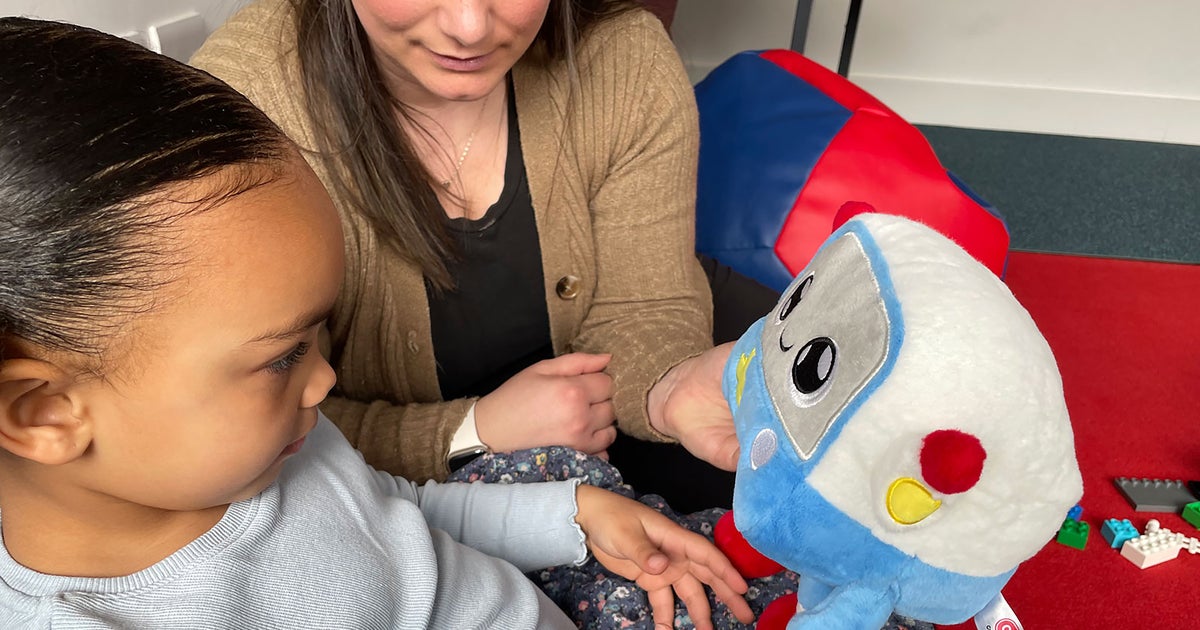
Working with Babyzone, an early years charity, they video-recorded 14 children at London children’s centres playing with a GenAI soft toy called Gabbo.

Designed for kids over three, Gabbo is a plush robot that can have “endless conversations” with children and provides “educational playtime”, according to Curio, which creates the $99 (£73) toy.

After the play sessions, they interviewed each child and a parent, using a drawing activity to support the conversation.

The pros and cons of AI toys

Most parents and educators felt that AI toys could help develop children’s communication skills and some were enthusiastic about their learning potential.

But equally, many worried about children forming “parasocial” relationships with toys. The observations supported this: children hugged and kissed the toy, said they loved it and (in the case of one child) suggested they could play hide-and-seek together.

Dr Goodacre stressed that these reactions might simply reflect children’s vivid imaginations, but added there was potential for unhealthy relationships to form.

Children in the study also struggled with the toy’s conversation, as it sometimes ignored their interruptions, mistook parents’ voices for children’s, and failed to respond to apparently important statements about feelings.

When one three-year-old told the toy: “I’m sad,” it misheard and replied: “Don’t worry! I’m a happy little bot. Let’s keep the fun going. What shall we talk about next?”

Parents were also worried about privacy – specifically what information the toy might be recording and where this would be stored. When selecting an AI-powered toy for the study, researchers said many GenAI toys’ privacy practices are unclear or lack important details.

On the Gabbo website, Curio said its toys are “built from the ground up with privacy and security at the forefront”. The company added that its operating system “merges all-ages fun with G-rated content, anonymity, and privacy, and security for every safeguarded adventure”. It’s also KidSAFE listed.

Nearly 50% of early years practitioners surveyed said they did not know where to find reliable AI safety information for young children, and 69% said the sector needed more guidance.

They also raised concerns about safeguarding and affordability, with some fearing AI toys could widen the digital divide.

Experts have also previously warned that AI can make mistakes, passing on incorrect information, as well as bias, to kids.

Strict regulation is needed, said researchers

AI-powered toys are set to boom in the coming years. In June 2025, one of the world’s leading toy companies, Mattel, announced a strategic collaboration with OpenAI (the company behind ChatGPT) with a view to creating “AI-powered products and experiences”.

Researchers now want to see clearer regulation which would address key concerns. They recommend limiting how far toys encourage children to befriend or confide in them, more transparent privacy policies, and tighter controls over third party access to AI models.

“A recurring theme during focus groups was that people do not trust tech companies to do the right thing,” said Professor Jenny Gibson, the study’s other co-author. “Clear, robust, regulated standards would significantly improve consumer confidence.”

The report urges manufacturers to test toys with children and consult safeguarding specialists before releasing new products.

Parents are also encouraged to research GenAI toys before buying and to play with their children, creating opportunities to discuss what the toy is saying and how the child feels.

And lastly, the authors recommend keeping AI toys in shared family spaces where parents can monitor interactions.


Campaigners Are Worried About A ‘Silent Re:Flex’ That’s Happening At Work


During (and after) the pandemic, it felt like the nation’s approach to flexible work shifted in a positive direction.

A large number of employees were given more freedom to work from home, benefiting a wide range of people – from those with chronic illnesses, mental health conditions and disabilities, to those with caring responsibilities.

But a new report reveals a trend that will concern a large number of people who are currently benefitting from this: flexible working appears to be silently being reversed.

A new Flex Appeal report, in conjunction with market research company Vivid Interface, polled 2,959 working mothers in January and found 35% reported increased office attendance expectations in the last year.

Campaigners are warning the move – dubbed the “silent re:flex” – could force even more mothers out of the workplace. (We say even more because Pregnant Then Screwed data suggests up to 74,000 women lose their job for getting pregnant or taking maternity leave each year, and ONS data previously found 84% of the 1.75 million people who’ve given up work to care for their family are women.)

Why is flexible work taking a hit?

Perhaps it should come as no surprise. KPMG’s 2024 CEO Outlook report revealed 83% of CEOs expected a full return to the office within three years. Return-to-office mandates are also on the riseyet they are increasingly met with resistance, particularly from parents.

Flexible work encompasses when, where and how a person works – and includes options like compressed hours, part-time work or flexitime, as well as options for remote working.

There are some who oppose the latter element in particular and are extremely vocal about it. Reform leader Nigel Farage said he believes we need an “attitudinal change to the idea of working from home” and “it’s a load of nonsense” that people are more productive at home.

The Apprentice star Lord Alan Sugar has also shared his support to get workers’ “bums back into the office”. Last year, the former boss of Marks & Spencer and Asda, Lord Stuart Rose, even went as far as suggesting working from home was “not doing proper work”.

A King’s College London analysis of the long-term impacts of flexible work arrangements through a case study company found productivity increased by 10.5% after transitioning to fully remote work during the pandemic.

Yet there was one caveat: employees who began with in-person training before switching to remote work showed higher long-term productivity and lower attrition rates than those who started remotely (suggesting initial in-person onboarding can be beneficial).

Most mums need flexibility at work because of childcare responsibilities

Research by Flex Appeal, founded by Anna Whitehouse (aka Mother Pukka), found almost half of mums (42%) want more flexibility than they currently have, and nine out of 10 (93%) need it due to childcare responsibilities.

There are other benefits to being able to work from home, too. Those who have flexible working in place say it reduces exhaustion from commuting, gives them more energy outside of work and lowers stress levels. Another important consideration during a time of rising maternal burnout.

Discussing the prevailing anti-flexible work rhetoric, Whitehouse said: “I am sick and tired of hearing privileged billionaires bleating about how important it is that we get people back to the office – as if the party is finally over and we need to pull our socks up and get back to work.

“Mothers’ flexible working rights are being rolled back silently in plain sight with more and more employers calling for increased office time, meanwhile mums are still not finding jobs that are flexible enough around childcare, and when they do, their careers are suffering for it.” (Three-quarters of mothers with flexible work believe it is limiting their career progression, according to the latest survey.)

Flex Appeal wants to see flexible working advertised upfront in job listings, and companies offering a ‘flexible first’ approach. Ahead of the government consultation into flexible working, it also wants recognition of the flexible working roll-back that one-third of mothers are already experiencing.

The reality is, without flexible – specifically remote – work, many mothers would be forced to quit their jobs because typical working hours simply do not fit around the school day.

What’s more, wraparound childcare comes at extra cost and securing it can be a major headache when school clubs only have limited capacity and slots become available at some obscure hour on a random weekday night – getting your hands on a Glastonbury ticket is probably easier.

That’s not even taking into account the huge swathes of time kids have off school in a year versus the standard amount of days (28, usually) most full-time workers get as paid annual leave.

Of the mothers surveyed, 20% said they have complete flexibility at work, while 38% said they have partial flexibility.

Many mums reported a negative attitude towards flexible working in their organisations. Only 14% said they feel comfortable asking for flexible working, and one in five (20%) say their workplace is explicitly unsupportive.

Almost one in three mums (29%) said their flexibility arrangements are informal, leaving many powerless to fight back if managers make a U-turn.

“It’s not just women who are negatively impacted, either; businesses are losing highly qualified, skilled, experienced employees every day because of rigid, out-of-date policies,” Whitehouse continued.

“Flexible working can and does work, but more needs to be done to implement it.”


Forget The Heavy Gear – This Travel Cot Is A Total Game-Changer For Trips With Kids


We hope you love the products we recommend! All of them were independently selected by our editors. Just so you know, HuffPost UK may collect a share of sales or other compensation from the links on this page if you decide to shop from them. Oh, and FYI – prices are accurate and items in stock as of time of publication.

Nipper Nest Quick Overview

Pros:

  • Easy to transport thanks to carry bag/lightweight frame
  • Pops up easily (barely any construction required)
  • Doubles up as a playpen
  • Cushioned edges
  • Premium feel
  • Mattress slightly more padded than competitors

Cons:

  • More expensive than other travel cots

A parent’s honest review of Out’n’About’s Nipper Nest

I’m all for the easy life these days, so when Out’n’About’s Nipper Nest landed on my doorstep for a trial period, I was intrigued to see how the travel cot-playpen would fare.

Over the years we’ve relied on a Joie travel cot which I panic-bought from Argos about three years ago when we were going away with our little one and had nowhere for her to sleep.

I’ve spent many an hour trying to put said cot up and down since then, as you have to lock the frame in place – sometimes this happens smoothly, other times not so much. The cot frame part-collapses, resulting in numerous meltdowns on my part.

I’ve had the same experience with other travel cots, usually when we’re staying in Airbnbs or with my parents. Sometimes the frames can be quite hard too, which resulted in a split lip for my toddler when she decided to throw herself at it during a tantrum one evening. And don’t get me started on those rock solid mattresses…

Anyway, I digress. Out’n’About’s Nipper Nest is a travel cot and playpen which is built for families who are always on the move. And let me tell you now, it’s the easiest travel cot I’ve ever put together (well, I didn’t even technically put it together).

You simply pull it out of the bag, and then stretch the legs outwards, and they quietly click into place. Unroll the mattress, pop it in the bottom (it sticks with velcro securely to the base so there’s no movement), and that’s it.

I love that the cot comes in a handy bag, so you can lug it around (but also store it) easily, and it’s also super lightweight – which makes travelling with it hassle-free, whether you’re carrying it through an airport or moving it around your living room fully-assembled.

The edges are well-padded (a must with babies when they start trying to stand) and the mattress, while still pretty thin, is much comfier than other travel cot mattresses which are like sleeping on cardboard.

The travel cot packed away in its bag

The Nipper Nest has plenty of space to play/sleep inside, and also comes with a handy UPF50 blackout cover so your kids can nap on holiday or sit in there to stay protected from the sun.

The base is also waterproof so you can stick it on the beach or in the garden without worrying any damp will seep up to where your child is sleeping or sitting.

The Nipper Nest in action on the beach.

With the travel cot doubling up as a playpen too, there’s a side zip so crawlers can easily get in and out (once you’ve unzipped it for them).

There’s also an optional bassinet attachment so the cot can be used from birth – accommodating newborn naps right up to toddler playtime. The recommended age is 0-24 months, but once they’ve outgrown it I reckon parents could get away with using it for older children who simply want a bit of shade, or somewhere sheltered to sit, in the garden or on the beach.

On the topic of putting the cot away – again, it’s an easy job. You simply squeeze two handle-bar-like buttons on the frame and then fold it into a Z shape. The legs can then be folded in on themselves. You wrap it in the mattress, put it in the bag, and you’re good to travel somewhere new!

At £195 it’s certainly not a budget buy (the materials and construct of this are certainly premium), but if you’re using it everyday as a playpen and then taking it travelling (or to the grandparents) for trips away, you’ll soon get your money’s worth.

Nipper Nest with UV canopy over the top

What other parents are saying about it…

  • “We love our Nipper Nest! It’s compact to carry and extremely easy to put up and pack away. We can take it to the beach or use it in the garden in the summer. The girls also love it as a cosy spot to read their books.”
  • “So easy to put up and fold away! Cabin approved luggage bag and takes up so little room. Great travel cot and fun for the children with the zipped side entry and ability to make into a ‘tent’ with the UV cover. The perfect safe space for little ones to play in or sleep in.”
  • “Our toddler has been enjoying using it during hide and seek and as a little den, the shade is both great for UV cover and for creating a dark space for our baby/ toddler to sleep during lighter evenings, or when sharing a hotel room and we require the light left on but the children need to sleep. The mattress bottom is incredibly padded and comfy. Really love this product, highly recommend.”
  • “Super impressed with this Nipper nest! I’ve tried a variety of different travel cots and this is by far my favourite, and it’s so versatile. It takes seconds to pop up and down, and comes in a perfect compact carry bag. You can also use it as a playpen or take it to the beach, thanks to the zip side entrance, and it comes with a UPF50 blackout cover, so perfect for the summer and to provide some much needed shade. The base is waterproof, so wet sand isn’t a problem.”


The ‘Spring Forward’ Clock Change Is Coming – The Effect On Your Sleep


Look, I’ll be the first to admit that whenever there’s a clock change, it takes me an embarrassingly long time to figure out how exactly it’s going to impact my day-to-day life.

Am I waking up an hour earlier? Later? Is it pushing my kids’ bedtime back? Or technically bringing it forward? Am I losing sleep? Gaining sleep? It gets me in a muddle.

This next clock change, which happens on Sunday 29 March 2026, will see the clocks ‘spring forward’ – heralding the start of British Summer Time (BST).

What does this mean for my sleep?

In short: you will lose one hour of sleep, as 1am (which is when the clocks officially go back) becomes 2am.

This means if you naturally wake up at 7am BST, your body thinks it’s technically still 6am.

Basically, it’ll feel quite early and it may still be dark when you wake up – compared to now, when it’s typically light at 7am. (Although it won’t be too long until the new 7am wakeup time will begin in daylight.)

As for bedtime, if you hit the hay at 10pm, this is actually more like 9pm (old time).

Overall you might feel a bit more tired (because you’ve lost an hour of sleep), but over the course of the week, your body should adjust to the new schedule.

If you want to get a head start and help your body clock gradually get used to the new routine, you can shift your bedtime 10-15 minutes earlier each night for three or four nights before the clock change.

What does this mean for parents?

This clock change can feel particularly tricky for parents as kids typically get up earlier – so that 6am start is now more like 5am. Ouch.

That said, bedtime is earlier too, so that’s a small win. You might even feel like you’re getting more of your evenings back.

And it also means you get more light in the evenings, making that post-school park trip or dinner picnic in the garden a lot easier to say ‘yes’ to.

Due to the sleep disruption, kids might be a bit (or in some cases, a lot) crankier than usual, but within a week or so, you should find everyone settling into the new rhythm. (Here’s hoping, anyway.)

If they are struggling to drift off during the lighter evenings, blackout curtains might help to trick their brains into thinking it’s later than it is.

Any other thoughts?

If you take medication at a certain time of day, experts broadly suggest sticking to the same schedule. This means if you take medication at 7pm (GMT), you should continue to take medication at 7pm (BST).

Wing Tang, head of professional standards at the Royal Pharmaceutical Society, told Which? they wouldn’t typically expect the clocks going forward to have a great impact on people taking regular medicines. But if you’re worried, you can double check with your GP or pharmacist.

You’ll also need to change the clocks on some of your appliances manually – while smartphones, smart TVs, newer radios etc., can update themselves, your oven clock, car clock (if it’s an older car) and older central heating controls will need a tweak.


Therapists Share Their Ultimate ‘Positive Discipline’ Tips For Parents


Parenting is a real rollercoaster – and one area plenty of parents (myself included) often find tricky is figuring out how on earth to successfully discipline kids.

After all, they will often push boundaries and buttons (especially the younger ones) and increasingly, we know that shouting and throwing our proverbial toys out of the pram isn’t going to help solve the problem.

Nor will taking their toys or privileges away in a knee-jerk, frustration-fuelled reaction.

People are increasingly rethinking how they parent, according to Pinterest’s latest parenting trends report – and interestingly, the platform has witnessed a 295% increase in searches for ‘positive discipline’.

What is positive discipline?

Per Unicef, positive discipline is “a method of teaching appropriate behaviour by interacting with children in a kind but firm manner”.

It’s about setting clear expectations, focusing on rewarding correct behaviour, correcting misbehaviour when it occurs, being respectful and non-violent, and providing logical consequences.

On the latter note, The Welsh government suggests parents should try to give positive consequences for their child’s positive behaviour more often than they give negative consequences for unwanted behaviours. An example of a positive consequence might be: “Well done for putting all your toys away, now we can read a book together.”

This can be helpful to prioritise as if we get into a habit of focusing on a child’s bad behaviour (which can be easily done), they might realise it’s a way to get your attention, and so the cycle continues.

Children who experience positive relationships are less likely to engage in challenging behaviour, according to Unicef, so it’s worth taking time to get this right.

With this in mind, I asked therapists and counsellors which positive discipline techniques work best for them in practice and, for those who have children, at home.

Therapists Share Their Ultimate ‘Positive Discipline’ Tips For Parents

rudi_suardi via Getty Images

1. I stop and ask myself: ‘What am I feeling just now?’

Sarah Wheatley, a BACP accredited therapist at Birth and Beyond, who specialises in supporting mums, says she will often stop and ask herself: “What am I feeling just now?”

She might be feeling defensive, scared, or angry. “If I am coming from a place of fear, such as fear of embarrassment or judgement or ‘getting it wrong’ in some way, then I might be trying to get my kid to behave in a certain way to manage MY anxiety,” she says.

“It can really help asking myself that question, because then it allows me to really pay attention to what actually might be going on for my child and try to understand better.

“Often, that helps me figure out an intervention (or not) that is going to REALLY work for them and help them grow, rather than me imposing something to try to control their behaviour.”

2. I regulate myself first

Similarly, Debbie Keenan, a BACP senior accredited psychotherapist, ensures she is regulated before she even attempts to help regulate a child.

“I always draw from The Polyvagal Theory,” she explains, “this concept explains how one nervous system can calm another nervous system, how our automatic nervous system responds to safety and danger.”

She will stop and notice what is going on in her own body first if a child is dysregulated, asking herself: Is my heart rate faster? My breathing shallow?

“By consciously slowing my breathing, softening my voice, relaxing my posture, it sends signals of safety,” she explains. “A calm, grounded adult nervous system can enable a child to shift out of their fight, flight or freeze reaction into connection.”

3. I prioritise connection before correction

For L.J Jones, a BACP registered therapist and author of Become the Parent You Needed: Heal Yourself to Raise Emotionally Healthy Children, “the most powerful discipline shift” is connect before you correct.

“Co-regulation and emotional connection with our children before leaping into rigid corrective mode is the baseline for healthy parenting, whilst still teaching realistic boundaries,” said Jones.

“When a child is overwhelmed, their nervous system moves into fight-or-flight. In that state, they cannot access logic, reflection, or learning. Attempting to discipline in that moment often escalates behaviour rather than resolving it, and increases stress levels for everyone involved.”

On the subject of connection, experts recommend planning in one-on-one time with children – whether five or 20 minutes a day – to help improve relationships and also reduce misbehaviour.

4. I admit when I’m wrong and apologise

Nobody’s perfect and sometimes we get things wrong. For BACP registered psychotherapist Charlotte Fox Weber, it’s crucial that parents acknowledge when this happens – and focus on repair.

It’s noticing those moments when you really did overreact or when you projected your own bad day onto a small person who had nothing to do with it.

She says children don’t need parents who get everything right, they need parents who can get it wrong and stay in the room. Parents who can say: “I shouldn’t have spoken to you like that.”

“That moment teaches something a chart or calm-voice technique can’t replicate – that ruptures are survivable,” she explains. “That love isn’t a performance of perfection but a willingness to come back, recalibrate, and try again.”

And it’s also vital for building enduring attachments, she adds. “Being openly fallible in front of the people you’re raising isn’t a weakness. It’s one of the most hopeful things you can model. You become living proof – in real time, in the kitchen, on a Tuesday – that people can make mistakes, stay, and come back better.”


Counsellors Are Seeing A Rise In ‘Nacho Parenting’ Among Stepparents


This article features parenting and relationship advice from counsellor Aimee Righton and psychotherapist Debbie Keenan.

Counsellors and therapists are noticing a trend among blended families where stepparents will take on more of a ‘nacho parent’ role.

Per Pop Sugar, in very basic terms it means “not your kid, not your problem” – so if someone’s stepchild is acting out, the stepparent would take a step back and not get involved with disciplining them or asserting authority, leaving that instead to the child’s biological parent.

“In many cases this is not even a formally agreed parenting strategy but rather something that evolves naturally within the family dynamic as adults attempt to reduce conflict or tension between the stepparent and the child,” says Counselling Directory member Aimee Righton.

While she is noticing the trend more and more in her work – “this is something that is appearing more often in my private practice and increasingly within wider society,” she tells HuffPost UK – she acknowledges it can be “a rather non-committal approach” that carries both positive and negative consequences for wider family relationships.

Let’s dive into why this might be…

The pros of nacho parenting

Connection is hugely important for children – and by taking a step back, stepparents can focus on this during what will probably be quite a tricky time for kids.

Activities centred around shared interests, and everyday interaction, can all help to allow the child to become familiar with the new adult without feeling that their existing family structure is being replaced or overridden, suggests Righton.

Conversely, if a stepparent were to move too quickly into a disciplinary or authoritative role, it might feel intrusive or threatening to the child and may lead to resistance or resentment. “In many cases this can damage the possibility of developing a trusting relationship in the future,” adds the counsellor.

Like Righton, psychotherapist Debbie Keenan, who is also a member of Counselling Directory, sees nacho parenting as a “useful initial approach for stepparents entering blended families” because it allows the stepparent to focus on building trust and connection with the stepchildren.

“The positives are that the stepparent isn’t seen as the ‘bad parent’,” she tells HuffPost UK. “It allows the stepparent to embed compassion and empathy into the relationship, while supporting the biological parents’ authority.”

But while it might help reduce conflict early on, both experts don’t necessarily recommend ‘nacho parenting’ as a long-term strategy.

The cons associated with nacho parenting

When this approach isn’t openly discussed or consciously chosen, it can create confusion around roles and emotional responsibility within the family.

“From a child’s perspective, the presence of an adult who does not respond in ways they typically expect from adults can be confusing or unsettling,” says Righton.

Kids might say/think: “I really act out in front of my stepdad and he doesn’t care – I can do whatever I like.” Or, “My stepmum hates me, she is always leaving the room whenever anything big is going on in my life.”

Righton continues: “A child will question why this adult in their home does not correct behaviour, enforce rules, or respond to situations in the same way other adults do. This can lead to feelings of uncertainty, bewilderment, or even rejection.”

Children might also try to play parents off against each other, and Keenan adds there is a danger that the stepparent’s role/authority becomes undermined, especially if they are not putting boundaries and consequences in place for bad behaviour.

While nacho parenting might initially reduce tension in the romantic relationship; over time, cracks may start to show.

“When implemented without open conversation and thoughtful discussion, this style of parenting can have a detrimental impact on the romantic relationship between the adults,” says Righton.

“The biological parent may perceive the stepparent’s withdrawal from parenting responsibilities as a lack of commitment to the family unit. In some situations it can feel as though the message being communicated is that ‘your children are not my responsibility’.”

Obviously this can cause emotional distance between partners, particularly if one parent feels they are doing the lion’s share of parenting, while the other doesn’t get involved. This is when resentment can creep in thick and fast.

The key to navigating this successfully

If ‘nacho parenting’ occurs unconsciously or without reflection, “the doubt it creates can place strain on both the couple’s relationship and the developing bonds within the blended family, often causing irreparable rupture in family systems,” concludes Righton.

Unsurprisingly then, communication really is the key to getting it right. “For blended families to navigate this successfully, ongoing dialogue between both the adults and children is essential,” she continues.

“When the approach is discussed openly and adapted to the needs of all, it may serve as a temporary framework while relationships develop. Family meetings (even blended family meetings) are key to this.”

Over time then, as trust develops, stepparents might want to naturally take on more responsibility within the family, without the relationship feeling forced.


Chloe Lewis Shares Update On Son’s Ice Skating Injury And Calls For Law Change


Former TOWIE star Chloe Lewis has shared more about the ice skating injury her son Beau, six, suffered on New Year’s Eve.

The youngster was ice skating in the afternoon when he fell over and someone ran over his finger with bladed skates, which the mum said “took his finger off”.

He underwent three-hour surgery to try and reattach the finger, which seemed to go well, but weeks later it became clear that it “didn’t take”.

Chloe is now petitioning for a change to the law that would see it become compulsory for children to wear safety gloves when ice skating to protect their hands.

The reality star, 35, who shares Beau with her ex partner Danny Flasher, told HuffPost UK: “After Beau lost his finger on New Year’s Eve, our world changed in an instant.

“The trauma of that day will stay with me forever, and watching him being put to sleep for surgery is something no parent should ever have to go through.

“It was absolutely heartbreaking.”

Last week she shared details of the family’s ordeal with her social media followers, as well as a link to the petition, which at the time of writing had almost 20,000 signatures.

The post prompted a wave of support, including from former TOWIE co-stars.

Ferne McCann commented: “Gosh I’m so sorry this happened. Brave Beau. I’ll be signing the petition.”

Lauren Goodger added: “Wow I’ve signed and sending you both so much love! Well done in this but I do hope your [sic] both ok and can’t imagine how hard this has been.”

Chloe said she is “asking for everyone’s support” in signing the petition. She hopes to garner 100,000 signatures so the issue will be considered for debate in parliament.

“Making gloves compulsory for children while ice skating is such a simple, practical step, but it could prevent devastating injuries and stop other families from experiencing the pain and trauma we have,” she told us.

“I want to turn our experience into something positive. I truly hope that one day I can tell my little boy that his bravery and strength helped bring about change and protected other children from suffering the same fate.”

As for Beau, Chloe said her son is “doing so well” and is now back at school.

In her social media post last week, Chloe explained that because his finger didn’t take, they are now waiting for it to “fall away naturally”. If it doesn’t, he’ll need another small operation to remove it.

In the meantime, the family is having weekly hospital check-ups. Chloe ended: “At the moment, it’s just a waiting game to see how everything heals, but we’re staying positive and hopeful.”


SEND Reforms Have Parents Asking: What Are ‘Complex Needs’?


Access to education, health and care plans (EHCPs) – which hundreds of thousands of children currently benefit from – is set to change, as part of the government’s overhaul of the special educational needs and disabilities (SEND) system.

An EHCP is a legally-binding document outlining the needs of a child and what support is required to meet those needs.

Currently, almost 640,000 children with SEND in England have one in place. But as part of the new plans, these documents will only be reserved for children with the most “complex” needs.

Understandably, parents who have fought hard to earn their children much-needed extra support through an EHCP are concerned by what this now means.

What happens to EHCPs now?

As part of the reforms, the government wants to put children with SEND into two main categories by 2035: Targeted, which is for those who are in mainstream schools and involves support from education, health and care professionals, where needed; or Specialist, which is for children with the most complex needs who are either attending a mainstream or specialist setting.

More than a million children with SEND will be legally entitled to a more “flexible” school-based support plan setting out a child’s day-to-day needs, this time called Individual Support Plans (ISPs).

Only those who come under the Specialist umbrella – meaning those with complex needs – will be entitled to ISPs and EHCPs, the latter of which the BBC noted is “the framework giving them legal entitlement to support”.

The government said the transition from EHCPs to ISPs for children without complex needs will begin from 2030. ISPs will be in place for children who are transitioning from an EHCP before they move to the new system, so there should be no break in support, it added.

The news has left parents with one key unanswered question, however. What constitutes ‘complex needs’?

In response to an Instagram post on the reform white paper, shared by @AutismDadcast, one parent said: “Big question – no definition or indication as to what complex needs looks like. Kept referring to it but who qualifies for complex needs and who’s deciding what that looks like?”

Another added: “How do they define children with the most complex needs?”

What does the government mean by complex needs?

We don’t yet have a full definition. HuffPost UK understands more detail on this will be set out following the government’s consultation and work with experts over the coming year.

Broadly, though, it’s likely to refer to children who need more support than can be accessed through their local mainstream school and through ‘experts at hand’ (a team of local professionals like speech and language therapists, educational psychologists, etc, which schools will be able to draw from as part of the new reforms).

The NHS suggests that if a child has been “diagnosed with an illness, disability or sensory impairment and needs a lot of additional support on a daily basis”, they’re described as having complex needs.

“A child might have complex needs from birth, or after an illness or injury,” the service adds.

There has been some concern that children with conditions that present on a spectrum, such as autism and ADHD, might lose out on specialist support.

The i Paper highlighted that ‘Specialist Provision Packages (SPP)’ will be the new gateway to an EHCP, however also noted “children and young people with underlying needs linked to a condition which presents on a spectrum (such as autism) may not necessarily be supported by the same Specialist Provision Package”.

When pressed on this, education secretary Bridget Phillipson said the system will be “needs-dependent, not diagnosis-dependent”.

She told the i Paper: “Some autistic children do need a [Specialist Provision Package]. Other children with autism – with the right level of support within mainstream [schools] – can thrive, can achieve.”

For now, parents are once again left to wait for more clarity.