More People Are Now Identifying As ‘Heteroflexible’


If you asked dating app and content creator Terry Rhea what his sexual orientation is, he’d say he’s “heteroflexible”.

If you responded quizzically – what’s that? – he’d gladly go into detail about what the word means to him.

“To me, heteroflexible means that under the right circumstances – the right place, time, person and environment – I would potentially have fun with someone of the same sex,” Rhea told HuffPost.

“I view sex as something pleasurable, intimate and connecting. It’s supposed to be fun,” he said. “As long as everyone has been tested, boundaries are established, and all parties are consenting adults, I see no issue with that.”

The “mostly straight” messaging of “heteroflexible” works for him in a way that “bisexual” doesn’t.

“Bisexual, to me, means you are romantically attracted to and would date or marry either sex,” he said. “Heteroflexible means you are primarily attracted to the opposite sex, but under the right conditions, you’d be open to same-sex experiences – for me, it’s strictly for fun, nothing more.”

He’s not alone in embracing the label. In its recent annual data deep dive, Feeld – a dating app that brands itself “for open-minded individuals” – found that heteroflexible is the fastest-growing sexuality on the platform. The number of people choosing the label increased by 193% over the past year.

Rhea isn’t the least surprised.

“We have more nuanced terminology to describe the full spectrum of sexual identity these days,” he said. “People aren’t forcing themselves into boxes that don’t quite work anymore.”

But how does “heteroflexible” differ from all the other terms that are already out there: bi-curious, bisexual and pansexual? And is there something a little queerbaiting about hinting at queerness while aligning yourself with heterosexuality, as some critics have claimed? Below, we explore that and more.

More People Are Now Identifying As ‘Heteroflexible’

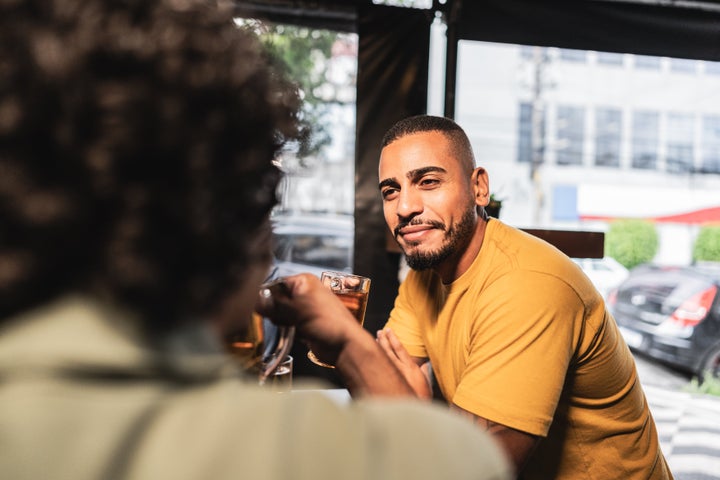
FG Trade via Getty Images

For some people, heteroflexible feels like an orientation, and for others it is more of a descriptive label for behavior or curiosity, explained Jesse Kahn, the director and a sex therapist at the Gender & Sexuality Therapy Center in New York.

Where did the word come from, and how does it differ from bisexual and other labels?

“Heteroflexible” first gained traction in the early 2000s on U.S. college campuses and in online forums. (For those too young to know, this was the “I kissed a girl, and I liked it” era.) People also started using the term “homoflexible”. Its inverse: someone who is mostly gay but open to opposite-sex experiences under the right circumstances.

Is it full-blown orientation? Depends on who you ask.

For some people, heteroflexible feels like that, but for others, it’s more of a descriptive label for behaviour or even just curiosity, explained Jesse Kahn, the director and a sex therapist at the Gender & Sexuality Therapy Center in New York.

“Experiences like this have always existed, and the language continues to evolve as people look for words that feel accurate and affirming,” he said. “The word reflects a broader shift toward understanding sexuality as fluid, contextual, and not always fixed or binary.”

Bisexuality and pansexuality are more fixed, said Alexandra Askenazi Marcus, a therapist and clinical supervisor at the Gender & Sexuality Therapy Center.

“Bisexuality and pansexuality are more established sexual orientations that involve consistent attraction to more than one gender, with pansexuality emphasising attraction regardless of gender,” she said.

“Heteroflexibility differs in that it often maintains heterosexuality as the primary identity while allowing for exceptions,” she said. “It’s less about identity.”

“Younger generations have been more open to viewing sexuality (and sexual orientation) as a spectrum,” said Jaunté Marquel Reynolds-Villarreal, another therapist and clinical Supervisor at the Gender & Sexuality Therapy Center in New York.

“Queer” meanwhile works as an umbrella term that gives people room to define their sexuality outside rigid or traditional categories.

Jaunté Marquel Reynolds-Villarreal, another therapist and clinical supervisor at the Gender & Sexuality Therapy Center, isn’t surprised the label is catching on. The discourse on love and sexuality is changing, he said, and younger people these days are down with the Kinsey Scale.

“Younger generations have been more open to viewing sexuality and sexual orientation as a spectrum,” he said. “In the past, we tended to use labels as very restrictive constructs, binding people into specific interests or attractions that just don’t really hold true here in 2026.”

There are some queer people who are critical of the label

Mary Hellstrom, a therapist and clinical supervisor at The Expansive Group in Honolulu, Hawaii, thinks that for some heteroflexible people, the label may function similarly to the popular ’90s term “bi-curious”.

As Hellstrom poetically put it, “[It’s] like a beautiful stepping stone along the path, or a set of water wings as one begins wading into the deep waters of queer sexuality for the first time”.

If the sexual orientations of bisexual, pansexual or queer function like houses of self, with permanent walls and art and glass windows, Hellstrom suggested that heteroflexibility functions more like a pop-up camper.

“It’s available for use when needed and easily packed away in storage when it isn’t,” she said. “Pop-up campers are wonderful inventions, perfect for those spontaneous, off-road weekend adventures, but they differ from a house and require much less effort to create and sustain.”

For critics of heteroflexibility – especially queer critics – what feels a little questionable about the label is how closely it sits to heterosexuality. Out of all the labels available, it’s a choice to describe your queer identity using the word hetero.

Given the hostile political climate LGBTQ people are currently facing, there’s safety in being straight adjacent, sex therapists we spoke to said.

“The most obvious difference between pansexual, queer or bisexual and heteroflexible is that those other identities are all subject to marginalisation and a lack of safety within our patriarchal systems,” Hellstrom said.

And as single women joke about frequently on TikTok, most people using the word heteroflexible on Feeld tend to be cis-men. “‘No homo,’ but I do occasionally have sex with men.”

Heteroflexible straight men get to experience the safety and privileges that come with the identity, without fully buying in and having their queerness threaten their masculinity. A full-bodied label, like, queer or gay, comes with a whole lot more stigma.

Rhea, the self-identifying heteroflexible man, agrees that such fears may come into play for some men who pick the label on Feeld.

“Because of how patriarchy functions, straight men who also experience any inkling of a homosexual thought or feeling often experience this as deeply threatening to their sense of self and masculinity,” he said. “The system is designed to evoke this feeling.”

For heteroflexible people, the label may function similarly to the aforementioned '90s term "bi-curious."

xavierarnau via Getty Images

For heteroflexible people, the label may function similarly to the aforementioned ’90s term “bi-curious.”

Rhea understands the criticism, but he views the terms as genuinely distinct. (And for the most part, people have reacted positively when he shares that he’s heteroflexible.)

“To me, bisexual is the umbrella term. Heteroflexible and homoflexible are subsets within it,” he said. “Heteroflexible means you primarily date and partner with the opposite sex but are occasionally open to same-sex play. Bisexual, in my view, sits in the middle: open to dating, partnering with, or marrying either sex. These aren’t the same thing, and the distinctions matter.”

Calling himself “heteroflexible” is an ethical, honest choice, he thinks: As he dates around, he doesn’t want a man to get the wrong impression about his openness to a relationship.

“I’m glad that Feeld offers heteroflexible as an option,” he said. “We’ve been placed into a worn-out box of compulsory heterosexuality. It’s refreshing to see that people are experimenting with little pushes against its walls.”


RAF veteran banned for being gay seeks £50,000 payout from MOD


RAF veteran banned for being gay seeks £50,000 payout from MOD
Chris Dennis served in the RAF for five years, joining when he was just 16 (Picture: SWNS)

An RAF veteran thrown out of the force for being gay is calling on the MOD to extend reparations for those thrown out of the armed forces for their sexuality.

80-year-old Chris Dennis joined the RAF as a radar technician straight out of school at 16, in 1961.

Chris was dishonourably discharged five years into his career at the RAF because of his sexuality.

A £75,000,000 scheme set up by the UK government in 2024 has paid out £50,000 sums to those thrown out of the armed forces because of their sexuality between 1967 and 2000, but Chris missed out on his payment by a matter of months.

The reparations provide an additional £20,000 available for those who suffered further negative impacts, such as investigations, harassment, or imprisonment.

But because Chris was thrown out of the RAF at the end of 1966, he’s not eligible for the scheme, and the veteran is now calling on the Ministry of Defence to revise the rules, allowing those outside the ‘arbitrary’ cutoff date to be offered the same compensation packages.

RAF veteran banned for being gay seeks £50,000 payout from MOD
Chris said the most hurtful part is not feeling as though he belongs (Picture: SWNS)

In addition to not being paid reparations, Chris says he is not allowed to fully participate in Remembrance Day parades, making him feel as unwelcome as when he was thrown out for his sexuality.

‘I enjoyed my job. It was great. Then, in 1966, I was arrested, interrogated by the SIB (Special Investigations Branch) and charged with, essentially, being a homosexual,’ he said.

Join Metro’s LGBTQ+ community on WhatsApp

With thousands of members from all over the world, our vibrant LGBTQ+ WhatsApp channel is a hub for all the latest news and important issues that face the LGBTQ+ community.

Simply click on this link, select ‘Join Chat’ and you’re in! Don’t forget to turn on notifications!

‘I think the actual wording was ‘an act of gross indecency with another man’. I was discharged with ignominy – a dishonourable discharge. A year later, the civilian law changed to decriminalise male homosexuality.’

The armed forces eventually changed the rules in 2000, making homosexuality legal in the military, but the damage had been done to thousands of soldiers like Chris.

As well as losing the job he loved, he was also unable to work on government contracts when he got work as a commercial engineer.

He also claimed that SIB officers had indicated he could receive an ordinary discharge if he gave the names of other gay servicemen, which he refused to do.

‘You are suddenly kicked out, and you lose the support, the job, everything. It was a big shock,’ he said.

‘The next biggest shock came when I lost my next job. I got a job with a private company as a radar engineer and worked with them for around three weeks.

‘But they said, ‘We can’t get security clearance for you’. Any company that has a government contract has to submit details of its employees. They said, ‘Can you tell us the reason we can’t get clearance for you?’. I told them, and they were quite helpful.’

Non-financial reparations offered to LGBTQ+ veterans include a rainbow pin, known as the Etherton Ribbon, as well as berets and the restoration of medals and rank.

But despite the Etherton Report extending these reparations, both financial and non-financial, to LGBTQ+ members of the armed forces who served between 1967 and 2000, Chris was denied these due to his being kicked out before that date.

‘The government accepted the report that you could only claim if you were discharged between 1967 and 2000,’ he said.

‘So I missed out by a matter of months. I still a pplied and got this letter back saying: ‘You don’t qualify’. It was another kick in the teeth. You see the military people wearing their berets and medals, but I am not allowed to do that. I couldn’t claim them back, the badges and medals.’

Chris said he’s pleased that other LGBTQ veterans have received reparations, but he still feels like an ‘outcast’.

‘People ask me if I’m angry, but there’s no point in getting angry. I am too old for that,’ he added.

‘I am disappointed, as much as anything, that it has come to this. [The RAF] is a brilliant life. If I could wind the clock back, knowing what I know now, I would still join up.’

Though £50,000 would ‘help in his pocket’, being denied the non-financial reparations is even more hurtful, Chris said.

‘The emotional side of, ‘You are now accepted back’ – that’s more important. Back in the day, it was difficult being gay. You had to be on your toes all the time, thinking: Do they know? Will they find out? Should I tell them?’

Mr Dennis and his partner of over 30 years got a civil partnership at a ceremony at the British Embassy in Hanoi, Vietnam, when they were both living in Hong Kong in 2012.

Peter Gibson, Chief Executive of LGBTQ+Veteran charity Fighting With Pride, said Mr Dennis not getting his reparations lacks ‘any sense of justice’.

He said: ‘It is grossly unfair that the MOD will not simply extend even the non-financial reparations to people like Chris. To not provide him with his beret and an Etherton Ribbon is simply mean and unkind, and lacks any sense of justice and fairness.’

A MOD spokesperson said it does not comment on individual cases, but added: ‘We deeply regret the treatment of LGBT serving personnel between 1967 and 2000, which was wholly unacceptable and does not reflect today’s Armed Forces.

‘LGBT veterans have the same right to wear their medals and berets as other veterans.’

Get in touch with our news team by emailing us at webnews@metro.co.uk.

For more stories like this, check our news page.


I found cellulite on my thighs – and cried with happiness


I found cellulite on my thighs – and cried with happiness
I’d been experiencing a rollercoaster of emotions trying to reconcile my outer appearance with my inner sense of self (Picture: Valerie Barone)

One day in 2023, I was scrutinising my body in a full-length mirror.

I did this a lot, this tearful ritual of self-flagellation – but this time, I noticed something that had never been there before.

Cellulite, dappled along the backs of my thighs.

The tears started flowing, as they often did. I wasn’t crying with horror, though, but with happiness.

Two years before, I had come out as transgender. Ever since starting Hormone Replacement Therapy (HRT), I’d been experiencing a rollercoaster of emotions trying to reconcile my outer appearance with my inner sense of self – but seeing the cellulite on my thighs was a moment of sheer catharsis.

I finally felt at home in my body.

I knew all the messages sold to women and girls: that cellulite is unattractive and undesirable, that it should be eliminated. And yet, standing in front of the mirror, I didn’t feel any of the shame women are taught to feel.

Valerie Barone - Pride & Joy: Discovering cellulite gave me gender euphoria picture: Valerie Barone
This is an experience I share with lots of women – except that I first spent years of my life as a man (Picture: Valerie Barone)

Instead, I felt overjoyed and proud to be experiencing something that so many women experience.

Join Metro’s LGBTQ+ community on WhatsApp

With thousands of members from all over the world, our vibrant LGBTQ+ WhatsApp channel is a hub for all the latest news and important issues that face the LGBTQ+ community.

Simply click on this link, select ‘Join Chat’ and you’re in! Don’t forget to turn on notifications!

In short, I felt gender euphoria.

But I certainly haven’t always felt this way – far from it.

My relationship with my body has always been complicated. As a child, I struggled with comfort eating and ended up overweight. Since then, I’ve dealt with persistent issues of body image.

Growing up, the mirror was my great enemy; it was the cudgel I used to punish myself for my (imagined) inadequacies.

This is an experience I share with lots of women – except that I first spent years of my life as a man.

I had always felt a sense of dissonance between how the world perceived me and how I perceived myself, and in puberty those issues only worsened. With each change I experienced – every new hair that sprouted on my body, every inch my shoulders grew – the gulf between the burgeoning woman I felt myself to be and the reality of my reflection widened.

Looking in the mirror felt like staring at a stranger.

Valerie Barone - Pride & Joy: Discovering cellulite gave me gender euphoria picture: Valerie Barone
I spent countless hours studying all the ways my body failed to meet the ideals of feminine beauty (Picture: Valerie Barone)

Over the years, gender dysphoria manifested itself subtly in me, as a nebulous feeling of absence. I didn’t have any exposure to the trans experience so I didn’t have language that would help me describe that painful feeling of something missing.

But I felt disconnected from myself, and for years I couldn’t understand why.

When I interacted with the world outside my room, I struggled to understand the expectations ascribed to boys and men. When strangers called me ‘Sir’, I often asked myself who they could be talking to.

I spent years as a passive observer in my own life – and, consequently, spent decades dealing with persistent depression.

I truly felt as though nothing mattered. I had no investment in my own life.

Even when I came out as transgender in February 2021, aged 30, I remained in front of the mirror – because coming out only served to further complicate my relationship with my reflection.

Pride and Joy

Pride and Joy is a series spotlighting the first-person positive, affirming and joyful stories of transgender, non-binary, gender fluid and gender non-conforming people. Do you have a story you’d like to share? Get in touch by emailing Ross.Mccafferty@metro.co.uk

I’d always been prone to negative self-comparison; but, while I was transitioning, this grew to include the impossible standards of feminine beauty levied upon women. ‘Your waist must be small, but not too small.’ ‘You must not have visible body hair.’ ‘You must sound, look, and act a certain way.’

I spent countless hours studying all the ways my body failed to meet the ideals of feminine beauty. I was ‘too fat’, ‘too broad’, ‘too masculine’.

It all left me feeling emotionally exhausted, depleted, and hopeless, and the irony – that comparing yourself unfavourably to other women is a common experience of womanhood – was lost on me.

I started HRT in June 2021 with the aim of raising my progesterone and oestrogen levels, and reducing my testosterone. Over the next few years, HRT slowly began to change my body in a myriad of ways – some expected, and others less so.

The redistribution of body fat, the softening of my features, the thickening of my hair.

Valerie Barone - Pride & Joy: Discovering cellulite gave me gender euphoria picture: Valerie Barone
It was like I’d cast off a weight, and in place of that weight was gender euphoria (Picture: Valerie Barone)

These things came too slowly to notice any change from one day to the next, and I still contended with my reflection daily, continuing to find ways to compare myself negatively to others.

It was on one of these days, years into my treatment, that I first noticed the cellulite rippling down the backs of my thighs and cried.

I’d spent my life in a prison; now here I was, crying with joy over something many women have been taught to hate about themselves.

To me, the appearance of cellulite wasn’t some omen of undesirability. It was evidence that I was moving closer to a body I felt at home in.

And in that moment, I recognised the beauty in my experience as a trans person.

I may have lost the ease of navigating the world as the gender I was assigned at birth – but I had also gained so much. I’d been afforded the chance to know myself intimately, to become who I always was; and I could experience the feeling of watching my body slowly change into something that didn’t hurt so much to see.

I didn’t always know when I was suffering through gender dysphoria, but I certainly knew when I’d found relief from it. It was like I’d cast off a weight, and in place of that weight was gender euphoria. A storm of butterflies in my stomach. A smile that nearly broke my jaw.

Valerie Barone - Pride & Joy: Discovering cellulite gave me gender euphoria picture: Valerie Barone
I have found so much comfort in the curves of my body (Picture: Valerie Barone)

Happiness. Bliss. Relief.

It’s been two and a half years since that day, and I cannot say my gender dysphoria is cured. If you’ve lived with body dysmorphia, you understand that your self-image can fluctuate from day to day.

I’ve heard it said by cis women over and over again – both on social media and in my day to day discussions with friends – that their trans sisters give them new perspectives on womanhood. 

That knowing and loving trans women helps them find new ways to appreciate the many joys of their gender, to divorce themselves from the insecurities packaged and sold to them as products.

And so my hope is that, in hearing my joy, in knowing my freedom, you can experience it for yourself. 

Perhaps the next time you look in the mirror and see the cellulite on your thighs, you’ll remember my story and the elation I felt; my hope is that you can learn to see it not as a burden but a bounty, and a reminder that it is a beautiful reflection of your womanhood staring unapologetically back at you.

Do you have a story you’d like to share? Get in touch by emailing jessica.aureli@metro.co.uk. 

Share your views in the comments below.