EV demand is getting a boost from the Iran war — just as auto giants pivot back to combustion engines


An electric vehicle (EV) is left to charge at a charging station in Tehran on February 23, 2026.

Atta Kenare | Afp | Getty Images

The sprawling Middle East crisis is expected to spur drivers to abandon traditional internal combustion engine vehicles in favor of EVs, analysts told CNBC, although early evidence suggests this will be a gradual gearshift.

The Iran war has severely disrupted oil exports through the strategically vital Strait of Hormuz, which typically carries about a fifth of the world’s oil and liquified natural gas (LNG). It has underlined the extent to which the world remains deeply reliant on fragile fossil fuel trade routes, while surging oil and gas prices have jolted energy markets and triggered widespread inflation fears.

Various car-selling platforms in the U.S. and Europe have reported a sharp increase in consumer interest for EVs since the war began in late February. The burgeoning trend comes even as a large chunk of the legacy car industry pivots back to internal combustion engine (ICE) vehicles.

Autotrader, an online vehicles marketplace, reported on March 26 a 28% jump in inquiries about buying a new EV and a 15% increase in inquiries about buying a used one, since the war in Iran started on Feb. 28. EV specialist Octopus Electric Vehicles said on March 25 it had seen EV leasing inquiries rise 36% since the start of the conflict.

But U.S. automakers Ford Motor, General Motors and Jeep owner Stellantis have all reversed course on EV strategies, booking tens of billions of dollars in combined write-offs and restructuring costs, in part due to lackluster consumer demand and shifting political landscapes.

It is indeed quite frustrating how we again talk about EVs as if we didn’t know that this is the structural measure to wean our transport system off oil.

Julia Poliscanova

senior director for vehicles and e-mobility supply chains at Transport & Environment

Steffen Michulski, senior consultant at JATO Dynamics, said that while the situation is still evolving, it was already clear that the fallout from the Iran war could influence EV demand.

Owning a battery electric vehicle (BEV) has become more compelling for drivers covering a lot of mileage, Michulski said, given that a sharp rise in oil prices has made conventional gasoline cars much more expensive.

Switching to an EV may also provide households with an extra layer of energy independence, Michulski said, although he cautioned that it would be important not to “oversimplify” the situation. He pointed out that the overall economic environment may soften if inflation and supply chain costs continue to rise, for example, with these broader pressures impacting all powertrains — electric or combustion.

EV demand is getting a boost from the Iran war — just as auto giants pivot back to combustion engines

“To shorten and summarize it: Yes, elevated oil prices and the renewed focus on energy security are likely to provide a mid term boost to BEV demand,” Michulski told CNBC by email.

“But this is best understood as an incremental shift rather than a sudden market wide acceleration. Electricity price risks, technological progress on the combustion side, and general economic uncertainty all act as counterweights,” he added.

An uptick in car shoppers considering EVs

Consumers may be more likely to consider all-electric vehicles amid higher gas prices but changing buying behaviors from traditional vehicles to EVs can be slow, according to Erin Keating, Cox Automotive’s senior director of economic and industry insights.

Cox expects gas prices will need to be inflated for six months or more for any notable increase in consumer buying habits for EVs, officials said during a call on March 25. Hurdles such as cost, charging infrastructure and range anxiety — the fear that an EV will run out of power before reaching a destination — remain, according to Keating.

Cox reports the average price for a new EV in the U.S. was $55,300 during the first quarter. That’s lower than in recent quarters but still higher than non-EV models at $48,768.

U.S. EV sales remain lower despite higher gas prices. Cox forecasts U.S. EV sales during the first quarter will be down 28% to 212,600 units.

However, electrified vehicle sales, which include EVs and hybrid vehicles, continue to increase as automakers shift their focus from EVs to hybrids, seeking a compromise to meet consumers’ expectations for fuel economy.

The GM logo on the water tank of the General Motors Ramos Arizpe assembly plant, in Ramos Arizpe, Coahuila state, Mexico, Jan. 19, 2026.

Antonio Ojeda | Reuters

Sales of electrified vehicles, led by Toyota hybrids, are expected to account for a record 26% of new vehicles sold during the first quarter, according to Cox.

Early signals from CarMax’s Edmunds.com suggest an uptick in car shoppers considering electrified vehicles amid higher gas prices.

“Fuel prices have long influenced how drivers think about their next vehicle because they are one of the most visible costs of car ownership. But whether the latest spike translates into meaningful shifts toward electrified vehicles may depend less on the price of gasoline itself and more on how long consumers expect fuel costs to remain elevated,” Edmunds said in a statement.

An even faster shift?

In Europe and Asia, the Iran war energy shock is expected to facilitate a more profound shift towards EVs than in previous fossil fuel crises.

“It is indeed quite frustrating how we again talk about EVs as if we didn’t know that this is the structural measure to wean our transport system off oil,” Julia Poliscanova, senior director for vehicles and e-mobility supply chains at the campaign group Transport & Environment, told CNBC by video call.

“I do think that this crisis might be different. In the past, there would be a crisis and then quite quickly as the crisis is over, we can go back to business as usual, and oil and gas is flowing.”

US President Donald Trump speaks with Ford executive chairman Bill Ford (L), Treasury Secretary Scott Bessent, Ford CEO Jim Farley (2nd R), and plant manager Corey Williams (R) as he tours Ford Motor Company’s River Rouge complex in Dearborn, Michigan, on January 13, 2026.

Mandel Ngan | Afp | Getty Images

Some of the reported damage to Middle East energy infrastructure, however, means it may take years for energy supplies to come back online, Poliscanova said.

An analysis published by Transport & Environment earlier this month found that electric cars were already cutting the European Union’s oil imports, noting that the nearly 8 million EVs in the EU will save the bloc around 46 million barrels of oil in 2025. That’s the equivalent of almost 3 billion euros ($3.45 billion) in avoided oil import costs.

In the context of the Middle East conflict, meanwhile, the analysis said that petrol drivers were expected to be five times more exposed to higher oil prices than EV owners.

Poliscanova said EV growth drivers in Asia, notably Vietnam, Thailand and Indonesia, which all benefit from affordable models by Chinese car manufacturers, were all likely to see an accelerated shift away from fossil fuels.

“We’re likely to see an even faster shift in some of these economies away from oil, meaning that we in Europe today, still discussing things like biofuels and hybrids, just look really stupid and detached from the reality,” Poliscanova said.

A spokesperson for the European Commission, the EU’s executive arm, declined to comment.
Choose CNBC as your preferred source on Google and never miss a moment from the most trusted name in business news.


Nissan’s new hybrid is a U.S.-first that mixes EV driving with a gas engine


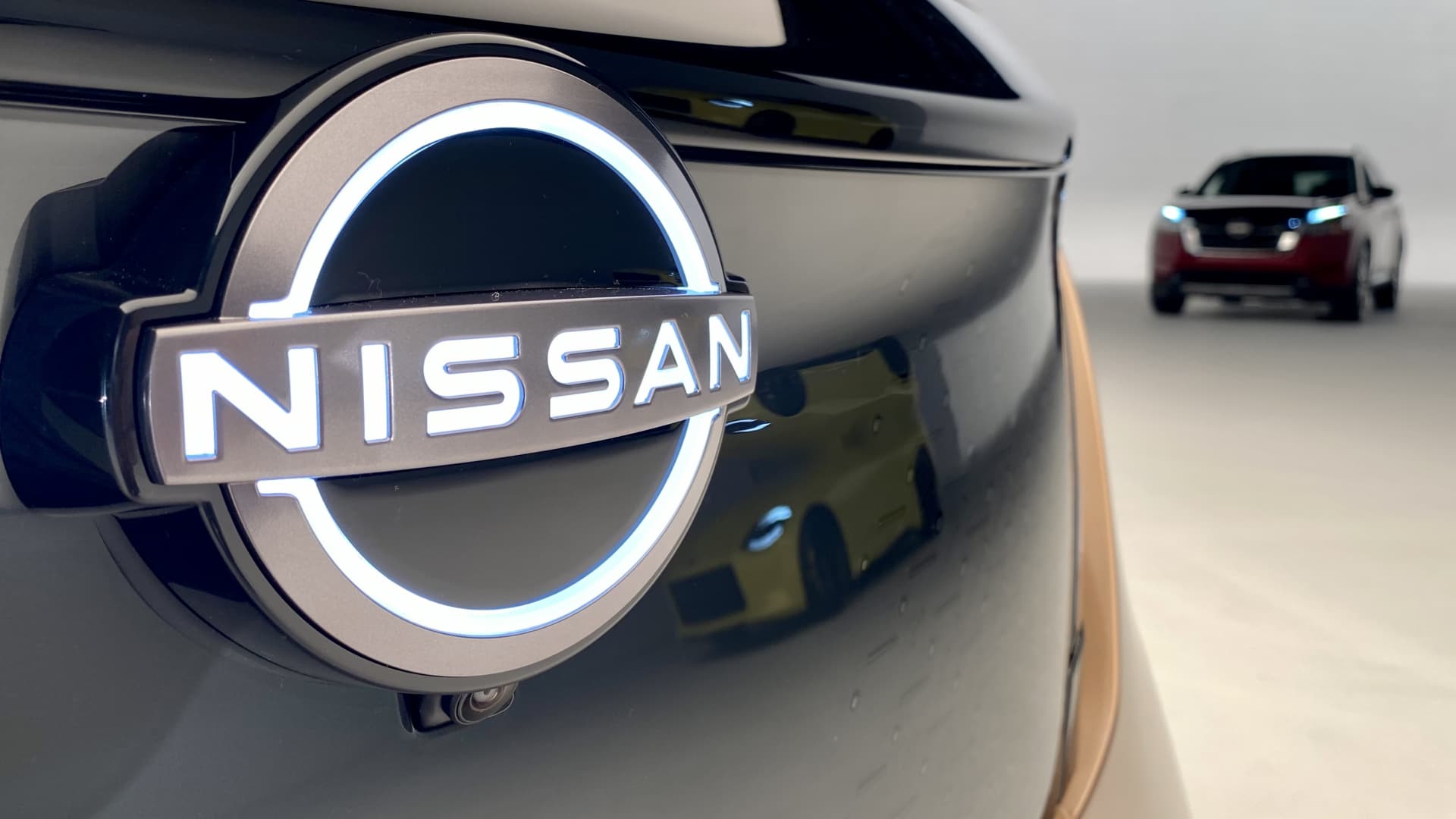
Nissan’s logo is illuminated on a prototype of its new all-electric Ariya crossover. Nissan’s Z Proto performance car is reflected in the vehicle’s grille, while a redesigned Nissan Pathfinder SUV sits in the background.

Michael Wayland / CNBC

Nissan Motor plans to introduce a new type of hybrid to the U.S. market that drives like an all-electric vehicle but is powered — not driven — by a traditional gas-powered engine. 

The new Nissan “e-Power” is called a series hybrid. It uses the engine as a generator to power the vehicle’s electric motors that then propel the vehicle. It operates like emerging extended-range electric vehicles, or EREVs, but has a smaller battery and doesn’t require a plug. 

It’s also different from a traditional hybrid, such as the Toyota Prius, because the gas engine in those vehicles is used to propel the vehicle. The series hybrid’s engine just keeps the battery charged to power the electric motors in the vehicles.

The e-Power hybrid system for Nissan is planned to launch domestically later this year in a new version of its popular Rogue compact SUV. 

Timing for such a vehicle could be ideal for Nissan with climbing gas prices, slower-than-planned adoption of EVs and an expected surge in hybrid sales amid new entries, according to officials.

After losing billions of dollars on EVs, automakers such as Nissan are turning to hybrid vehicles to meet customer expectations for fuel economy and to help with driving performance.

S&P Global Mobility expects hybrids in the U.S. this year to increase to 18.4% of new vehicle sales, up from 12.6% last year and 7.3% in 2023. It’s forecasting pure EVs, meanwhile, will be 7.1% of new vehicle sales, down from 8% last year.

“This is a unique powertrain for the for the U.S.,” Kurt Rosolowsky, Nissan North America vehicle evaluation and test engineer, said during a media briefing. “This is an electrically driven vehicle, as far as what is powering the wheels, but it doesn’t have a plug, and you fill it up with gas like you do with a normal car.”

Series hybrids

Nissan and other automakers have used series hybrids elsewhere, particularly in Asia, but companies have been reluctant to bring the vehicles to the U.S. because of consumer expectations for driving dynamics and power. 

To address those concerns, Nissan said it has developed a more powerful 1.5-liter, three-cylinder turbocharged engine specifically for the e-Power system, in addition to new packaging and other upgrades, to appease American buyers.

“The turbo is only there to serve efficiency at higher speeds for the gas engine to deliver energy,” Rosolowsky said.

The e-Power for the U.S. market is Nissan’s third generation of the series hybrid since it debuted in Japan in 2016. Since then, Nissan said it has sold more than 1.6 million vehicles globally with e-Power in nearly 70 countries.

“I think it’s going to be a really good system. I think it’s going to be very popular for Nissan in the new Rogue when it arrives later this year,” said Sam Abuelsamid, vice president of market research at communications and consulting firm Telemetry.

Abuelsamid said the only real drawback to the series hybrid is that it’s less efficient at higher speeds, which Nissan is trying to overcome with the new engine as well as battery size.

Driving e-Power

Driving a European version of the Nissan Rogue Sport sold with the ePower system around suburban Detroit, the vehicle’s driving dynamics — specifically fast acceleration and regenerative braking — are formidable.

They come with the familiar sound of an engine revving but without the shifting or sputtering of transmission gears and far less noise, vibration and harshness, or NVH, as the industry commonly refers to it. 

“The driving experience really is what makes it different with those fewer components. You have less noise and less vibration,” Rosolowsky said.

Nissan e-Power logo

Courtesy Nissan

Unlike traditional gas-powered vehicles, the e-Power system also does not require a traditional transmission to shift gears or a driveshaft that transfers torque from the transmission to the differential, powering the wheels.

While the Rogue Sport is a smaller vehicle and only forward-wheel-drive, it’s easy to see how the system will translate to a larger vehicle with all-wheel-drive, which the new Rogue with e-Power will be. 

The lack of a plug, some engine noise and slight vibration also might be more familiar for drivers who have been reluctant to adopt all-electric vehicles. 

While Nissan is not releasing specifics such as pricing or fuel economy for the upcoming Rogue with e-Power, the Rogue Sport was achieving more than 40 miles per gallon during heavy city driving, according to the vehicle’s MPG system.

The current Nissan Rogue, depending on the model, can achieve more than 30 MPG, according to U.S. Department of Energy and the U.S. Environmental Protection Agency.

Nissan’s vehicles historically been less fuel efficient than those from its larger Japanese rivals. Honda Motor and Toyota Motor, the latter of which pioneered traditional hybrids with the Prius and continues to dominate the sector in the U.S.

Nissan declined to discuss the possibility of expanding the e-Power system to other vehicles in the U.S., but confirmed the new system is modular and capable of working with many different engines.

“If we were to expand this to other vehicles, you can theoretically bolt this onto another gasoline engine of a different size and have more options for an e-Power system,” Rosolowsky said.

Choose CNBC as your preferred source on Google and never miss a moment from the most trusted name in business news.


EV maker Lucid reveals plans for robotaxi, positive free cash flow late this decade


The Lucid display is seen at the New York International Auto Show on April 16, 2025.

Danielle DeVries | CNBC

NEW YORK — Lucid Group expects to be cash flow positive late this decade as it plans to grow its vehicle lineup and increase its software and technology offerings, the all-electric vehicle maker announced Thursday during its first investor day in nearly five years as a public company.

The EV company aims to accomplish that through market expansion into midsize vehicles, robotaxis and new counties, specifically in Europe. It also expects to achieve efficiency gains and software revenue growth with the introduction of improved advanced driver assistance systems and a new Lucid artificial intelligence assistant.

That cash flow target is aggressive given the automaker’s current performance and waning demand for EVs in the U.S. While Lucid has been able to increase sales and narrow losses, the company lost $2.7 billion on revenue of $1.35 billion in 2025. It had negative free cash flow of $3.8 billion in 2025, a loss that was roughly 31% larger than a year earlier.

EV maker Lucid reveals plans for robotaxi, positive free cash flow late this decade

Lucid interim CEO Marc Winterhoff — who unexpectedly took over for company founder Peter Rawlinson last year — on Thursday said the company’s “north star” is “accelerating to profitability,” reiterating the investor event’s theme.

The automaker has been trying to increase investor interest in the company as it prepares to launch a new midsize vehicle at the end of this year. Its largest shareholder, Saudi Arabia’s Public Investment Fund, has also changed its investment strategy in the company from capital investment to revolving credit.

Shares of Lucid were off roughly 8% during much of the Thursday event despite the company giving its most detailed product and expansion plans to date.

Robotaxi, autonomy plans

Lucid on March 12, 2026 previewed plans for a new two-seat rbotaxi that the company is developing off its upcoming midsize electric vehicle platform.

Michael Wayland / CNBC

Midsize vehicles

Lucid on Thursday said it plans to produce three midsize vehicles, starting with a vehicle called Cosmos this year, followed by a model called Earth and an unnamed vehicle during an unspecified time frame.

“We think these three unique products will give us maximum opportunity to hit the widest audience possible. And that audience is where we are today, but it’s a different audience than our current market,” said Derek Jenkins, Lucid senior vice president of design and brand.

A Lucid-supplied teaser image of its upcoming midsize vehicle behind its current Gravity SUV.

Lucid

The three midsize vehicles are targeted at upscale buyers, younger “trendsetting achievers” and outdoor enthusiasts, Jenkins said. The last would be a direct competitor to fellow EV competitor Rivian Automotive, which is expected to release a new R2 midsize vehicle this spring, beginning with a roughly $58,000 version of the vehicle.

Lucid has said its midsize vehicle is expected to begin at roughly $50,000. That would position it in line with the average transaction prices of new vehicles in the U.S. as well as entry-level models of Rivian’s R2.

Both Rivian and Lucid are attempting to reassure investors that they can not only compete in a troubled EV market but thrive through the expansion of new vehicles and technologies to better compete against U.S. EV leader Tesla. Lucid said its new midsize EV platform will be class-leading in efficiency, something the company has strived to do with all its vehicles.

Both have touted having enough capital to get them through near-term initiatives but their long-term viability is still a major question for investors.

Lucid has said its total liquidity of $5.5 billion, including a roughly $2 billion delayed draw term loan credit facility from Saudi’s PIF, is enough to get through the first half of 2027.

Rivian ended the fourth quarter with $6.59 billion in total liquidity, including nearly $6.1 billion in cash, cash equivalents and short-term investments, as the company attempts to ramp up production this year of its midsize vehicle and new autonomy technologies.

Choose CNBC as your preferred source on Google and never miss a moment from the most trusted name in business news.


Jeep maker Stellantis posts first annual loss in company history after EV writedowns


Antonio Filosa attends the presentation of the new Fiat 500 Hybrid at the Stellantis FIAT Mirafiori plant in Turin, Italy, on November 25, 2025.

Nurphoto | Nurphoto | Getty Images

Auto giant Stellantis on Thursday reported its first-ever annual loss after posting substantial charges amid a major strategic shift.

The multinational conglomerate, which owns household names including Jeep, Dodge, Fiat, Chrysler and Peugeot, posted a full-year 2025 net loss of 22.3 billion euros ($26.3 billion), compared to full-year profit of 5.5 billion euros a year ago.

The net loss was impacted by 25.4 billion euros in write-downs from last year, Stellantis said, as the firm scales back its electric vehicle strategy.

The company said it had suspended its dividend for 2026, as it had previously flagged, and issued up to 5 billion euros of hybrid bonds. It also reiterated its 2026 forecasts, including a mid-single-digit percentage increase in net revenues and a low-single-digit adjusted operating margin.

“Our 2025 full year results reflect the cost of over-estimating the pace of the energy transition and of the need to reset our business around our customers’ freedom to choose from the full range of electric, hybrid and internal combustion technologies,” Stellantis CEO Antonio Filosa said in a statement.

“In 2026 our focus will be on continuing to close the execution gaps of the past, adding further momentum to our return to profitable growth,” he added.

Milan-listed shares of Stellantis rose 0.2% shortly after Thursday’s opening bell. The stock is down more than 31% so far this year.

Stock Chart IconStock chart icon

Jeep maker Stellantis posts first annual loss in company history after EV writedowns

Stellantis’ Milan listed shares year-to-date.

Other earnings highlights:

  • Adjusted operating loss of 842 million euros in 2025, compared to an adjusted operating income of 8.65 billion euros in 2024.
  • Estimates net tariff expenses of 1.6 billion euros in 2026.
  • Stellantis said it expects positive industrial free cash flow in 2027.

Over the second half of 2025, Stellantis it delivered a “solid” performance, noting consolidated shipments came in at 2.8 million units, with North America posting the strongest contribution.

Net revenues rose 10% to 79.25 billion euros through the latter half of 2025 when compared to the same period a year ago.

These results reflect the initial impact of improved operational efficiencies, disciplined commercial strategies and the strength of the firm’s global brand portfolio, Stellantis said.


Tesla’s Europe problem keeps getting worse. Here’s why


Elon Musk, chief executive officer of Tesla Inc., during the World Economic Forum (WEF) in Davos, Switzerland, on Thursday, Jan. 22, 2026.

Bloomberg | Bloomberg | Getty Images

U.S. electric vehicle maker Tesla‘s sales in Europe were down for a 13th consecutive month in January, while its biggest Chinese rival saw another surge.

Data published Tuesday by industry lobby group ACEA, or the European Automobile Manufacturers Association, found that Tesla’s new car registrations fell to 8,075 in January, down 17% from a year ago, representing the 13th consecutive month in which sales have shrunk.

Tesla’s market share across the European Union, Britain, Switzerland, Norway and Iceland fell to 0.8%, meanwhile, down from 1% in the same month last year.

It marks another “very weak” start of the new year for Elon Musk’s company, Rico Luman, senior sector economist for transport and logistics at Dutch bank ING, told CNBC by email.

“Tesla’s image has deteriorated in Europe last year and people have much more choice now with the range of new affordable EVs (including those of BYD and others like MG and ZEEKR) entering the market, while Tesla lacks new models,” he added.

Tesla’s focus on autonomous driving, rather than introducing new vehicles and expanding its range of mass models, is likely a factor too, Luman said.

“Another thing in Europe is that large numbers of first generations of Tesla’s are remarketed at the moment (after being leased for 4-6 years), this has driven second hand prices down,” Luman said, adding that there’s an abundance of competitively priced Tesla’s available on the used market.

A Tesla car is being charged at a Tesla electrical vehicle charging station in Norheimsund, Norway, Aug. 22, 2025.

Sergei Gapon | Afp | Getty Images

Tesla has been beset by challenges in Europe, including robust competition, particularly from Chinese car brands. It’s also struggled to shake off reputational damage from Musk’s rhetoric and close relationship with the Trump administration after the U.S. president returned to office last January.

Musk spent nearly $300 million to help elect U.S. President Donald Trump to a second term and subsequently led a tumultuous initiative to slash federal agencies. Protests erupted at Tesla dealerships across Europe at the height of Musk’s involvement with the White House.

Musk’s relationship with Trump later cooled, following a bitter online feud with the U.S. president.

Shares of Tesla were 0.5% lower in premarket trading on Tuesday. The company is off by around 11% year-to-date.

BYD continues its rapid growth

Chinese EV giant BYD continued its rapid growth in Europe at the start of 2026, per the ACEA data. New car registrations for the company rose by 165% year-on-year to 18,242 in January.

BYD also more than doubled its market share across the region, hitting 1.9% last month, up from 0.7% in January 2025. Tariffs have largely kept the company out of the U.S., including a 100% levy on Chinese EVs.

Tesla’s Europe problem keeps getting worse. Here’s why

Michael Field, chief equity strategist at Morningstar, said one of the main problems for companies such as Tesla is that Chinese automakers like BYD have an insurmountable cost advantage.

“The big question now is ‘will this trend continue?’. The answer, unfortunately for European automakers and Tesla, is yes,” Field told CNBC by email.

“Even looking 5 years out, we don’t believe the cost advantage will be completely breached because of China’s structurally lower labour costs,” he continued.

“There is some good news however, that European automakers and Tesla are learning. The cost gap in terms of battery and auto production is slowly closing, and these firms are introducing more models at lower price points, which should help reduce the hemorrhage in market share.”

Overall, sales in the European Union, Britain and European Free Trade Association (EFTA) countries, fell 3.5% to 961,382 cars in January.

Petrol car registrations fell about 26% year-on-year in January, while battery-electric, plug-in hybrid and hybrid-electric cars were up nearly 14%, 32% and 6%, respectively.


Tesla sues California DMV to reverse ruling that company engaged in false advertising on FSD


An aerial view of the Tesla Fremont Factory in San Rafael, California, Jan. 29, 2026.

Justin Sullivan | Getty Images

Tesla is suing California’s Department of Motor Vehicles to reverse a ruling that found the automaker violated the law by falsely promoting its cars’ self-driving capabilities.

The suit comes two months after the state’s Office of Administrative Hearings determined that Tesla engaged in false advertising, and said the DMV could temporarily suspend the company’s licenses to manufacture or sell cars in the state.

The DMV instead asked Tesla to clean up its marketing language. By Feb. 17, the agency said Tesla had done so appropriately and no license suspension would be required.

But Tesla, which is banking much of its future on robotaxis, wants the DMV to go further. In their complaint, dated Feb. 13, attorneys for the automaker alleged that the agency “wrongfully and baselessly” labeled Tesla a “false advertiser” for its prior use of the terms “Autopilot” and “Full Self-Driving.”

Tesla now uses the brand name “Full Self-Driving (Supervised)” to describe its partially automated driver assistance system, and it sells it only on a subscription basis. In the past, Tesla packaged partially automated driving features in Autopilot standard, Enhanced Autopilot and Full Self-Driving tiers, and it offered some customers “beta” or early access to new features, which are not yet fully debugged. It sold the systems for a single up-front fee.

The DMV did not immediately provide a comment. Tesla didn’t immediately respond to a request for comment.

Tesla CEO Elon Musk has long promised investors and customers that the company’s cars would be upgraded over time via over-the-air software updates that would turn them into robotaxi-ready vehicles. That hasn’t happened yet, though the company’s systems have become more sophisticated.

After sales of its electric vehicles declined last year, Tesla’s future success hinges largely on its ability to deliver driverless systems that make their cars safe to use without a human at the wheel, ready to steer or brake at any time.

Tesla is now testing a handful of automated vehicles in its Robotaxi pilot in Austin, Texas. Last week, the company announced the start of production of its forthcoming Cybercab, a two-seater designed without a steering wheel or pedals, in Texas.

Tesla has for years presented its systems as if they were safe to use without an attentive driver. For example, in 2018 Musk appeared on CBS’ “60 Minutes” driving in a Model 3 with Autopilot engaged and correspondent Lesley Stahl in the passenger seat. Musk kept his hands off the wheel and told Stahl that he was “not doing anything,” while the car was driving itself.

However, Tesla’s owners manuals specify that drivers should not use FSD (Supervised) features without paying attention to the road.

In filings with California’s OAH, lawyers for the state’s DMV wrote that Tesla’s marketing for “Autopilot” and “Full Self-Driving” falsely suggested the cars are capable of operating autonomously.

Tesla’s attorneys alleged that the DMV never proved consumers in the state had been confused about whether its cars were safe to drive without a human at the wheel.

When Tesla used those brand names, the company’s attorneys argued, “It was impossible to buy a Tesla equipped with either Autopilot or Full Self-Driving Capability, or to use any of their associated features, without seeing clear and repeated statements that they do not make the vehicle autonomous.”

In a separate class-action lawsuit that’s winding its way through California courts, customers who purchased FSD expecting their cars to be upgraded into robotaxi-ready vehicles over time are asking for their money back.

Tesla was also held partly liable for a fatal crash involving Autopilot. During the trial, the Tesla owner said he had dropped his phone while driving and scrambled to pick it up, but thought the car’s Enhanced Autopilot system would brake if an obstacle was in the way. The suit resulted in a $243 million verdict against Tesla to be paid to the family of the deceased and an injured survivor of the crash.

WATCH: Nancy Tengler says Tesla is still a generational opportunity

Tesla sues California DMV to reverse ruling that company engaged in false advertising on FSD