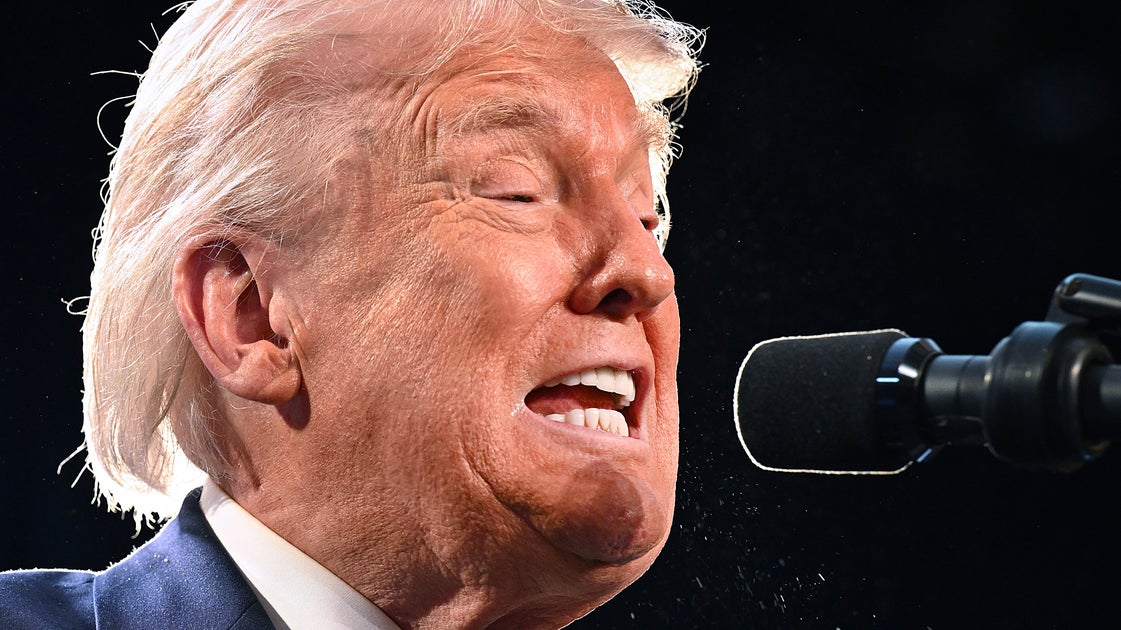
Israel’s leader Benjamin Netanyahu (left) and Mojtaba Khamenei, Iran’s Supreme Leader (Picture: Reuters/Getty)
Iran’s missing-in-action Supreme Leader has been tracked down by Israel, a security official has claimed.
Mojtaba Khamenei hasn’t been seen since he took over as leader after US-Israeli strikes killed his father, Ayatollah Ali Khamenei, on February 28.
Khamenei issued a defiant statement carried by state-controlled media on Thursday, vowing to avenge the deaths of Iranians.
Yet he has still not appeared on video or in public – Tehran officials said Khamenei’s legs were hurt in a strike on Thursday.
US President Donald Trump suggested that Khamenei is dead during an interview with NBC News over the weekend.
‘So far, nobody’s been able to show him,’ he told the American broadcaster.
Yet an Israeli official told the Daily Mail yesterday: ‘We know where he is.’
He was appointed leader last week Vuk Valcic/ZUMA Press Wire/Shutterstock)
They cautioned against reading Iranian news channels amid reports that Israeli leader Benjamin Netanyahu has died of a heart attack.
Experts have also cast doubt on the new Ayotollah’s statement, suggesting Iranian figures may have delivered them in his name. Rumours have even swirled that the leader has flown to Russia.
Iran has dismissed these claims, saying that Khamenei is sheltering at a highly secure location with limited communication.
Revealing his location would put him in danger, with Iran’s foreign minister Abbas Araghchi saying he is in ‘good health’ yesterday.
He added to The New Arab: ‘The timing of televised messages or direct appearances before the people is his prerogative.’
Khamenei was appointed leader earlier this month by the Assembly of Experts, a group of 88 senior clerics
Reports initially said Khamenei had died in US-Israeli strikes on Tehran – he survived but his parents and wife were killed.
Fujairah, United Arab Emirates, is among the areas of the Gulf struck by Iran in recent days (Picture: AP)
At his inauguration, a cardboard cutout with his image was used.
The American-Israeli air war against Iran, now in its third week, has so far killed more than 2,000 people, mainly Iranian and Lebanese civilians.
With few signs that the conflict will be over anytime soon, oil prices have surged as ships cannot pass through the Strait of Hormuz, a channel in the Persian Gulf that carries a fifth of the world’s oil.
Prices at the pump have become so eye-watering that UK Prime Minister Keir Starmer announced £53,000,000 in support for some households.
Cyprus has been pounded by drones, striking a British air base, with European leaders sending warships to the country.
Gulf nations have been dragged into the war, with Iran launching attacks against Dubai in the United Arab Emirates.
Restaurants and universities across South Asia, especially in India and Bangladesh, meanwhile, have closed to conserve fuel.
Get in touch with our news team by emailing us at webnews@metro.co.uk.
For more stories like this, check our news page.
MORE: Is it safe to travel to Turkey? Latest UK Foreign Office advice ahead of Easter holidays
MORE: Is it safe to travel to Dubai? Latest UK Foreign Office after drone strike near airport
MORE: Dubai isn’t just arresting influencers – three held for sharing bomb pictures privately
Some 63.4 million international tourists visited Turkey last year (Picture: Getty Images)
While tensions in the Middle East continue to escalate, it remains business as usual in Turkey’s main tourist hubs.
With historic cities and spectacular coastlines, the West Asian country remains one of the most popular holiday destinations for European travellers.
In 2025, it welcomed 63.4 million visitors, with Russia, Germany and the UK the top markets for inbound travel.
But as geopolitical tensions flare across the region, and given Turkey’s eastern land border with Iran, some may be reconsidering trips to the country during the busy Easter and summer seasons.
If you’re still weighing up plans, here’s everything you should know.
Is it safe to travel to Turkey? Latest FCDO advice
Best of Metro Deals
Get exclusive discounts with Metro Deals – save on getaways and spa days. Powered by Wowcher
Bannatyne Spa: Spa day for two with treatments, lunch & prosecco — save up to 57% off.
The Foreign Office continues to advise against ‘all travel to parts of Turkey’. This specifically refers to travel within 10km of the border between Turkey and Syria, in light of the terrorism risk.
As is stands, there is no travel warning for popular holiday destinations such as Istanbul, Cappadocia and Antalya.
Turkey welcomed 64 million international tourists in 2025 (Picture: Getty Images)
This means British nationals are required to request support from the British Embassy in Ankara before travelling to the border.
The guidance continued: ‘If you intend to leave Iran overland, you do so at your own risk.
‘In Iran, holding a British passport or having perceived connections to the UK can be reason enough for the Iranian authorities to detain you.’
Have flights to Turkey been cancelled?
Flights from European cities to major Turkish airports, including Istanbul’s two main commercial airports and Antalya Airport, continue to operate on schedule.
Flag carrier Turkish Airlines has only cancelled services to select locations across the Middle East and the Gulf.
British Airways, AJet, and Pegasus all run daily routes from London to Istanbul.
British Airways said it is closely monitoring the situation, and that it’s cancelled a ‘number’ of flights to the Middle East.
‘Safety is always our top priority and we would never operate a flight unless it was safe to do so,’ the guidance, posted on the BA website, reads.
Many airlines are cancelling flights to the Gulf and Western Asia (Picture: Getty Images)
BA gave passengers flying between Heathrow and Abu Dhabi, Amman, Bahrain, Doha, Dubai and Tel Aviv before March 15 the option to change their flight, free of charge, until March 29.
How close is Turkey to Iran?
Turkey and Iran are connected by land, and Tehran and Istanbul are between 2,000 and 2,050 kilometres away from one another by air.
The border between the two countries stretches for around 300 miles.
According to Alaraybiya English, day-trip crossings at the border between Turkey and Iran have been halted at all three customs gates.
However, Turkey’s trade minister, Omer Bolat, said Iran is allowing its own citizens to enter Iran via Turkey, and Turkey is allowing its own citizens to come back to Turkey from Iran.
The Turkish Riviera is home to iconc resorts such as Bodrum and Antalya (Picture: Getty Images)
Istanbul, Turkey’s largest city and its major tourism gateway, lies in the northwest of the country, thousands of kilometres from areas currently experiencing tensions.
The Turkish Riviera – which includes well-known holiday resorts such as Antalya, Bodrum and Marmaris – is located along the Mediterranean and Aegean coasts in the southwest.
What if I don’t want to travel to Turkey?
If you already have a holiday booked to Turkey and you choose not to travel, you won’t be eligible for a refund, because the Foreign Office has not explicitly advised against travelling there.
However, you should keep an eye on the Foreign Office guidance to monitor the situation.
If they do advise against travel, contact your tour operator, travel insurance provider or airline, who will be able to provide further assistance.
Do you have a story to share?
Get in touch by emailing MetroLifestyleTeam@Metro.co.uk.
MORE: ‘Chinese Nostradamus’ predicted Trump election and Iran war — now he’s made a bold new claim
MORE: How petrol prices have surged since start of Iran war – will they keep rising?
MORE: ‘Barebeater’ removed from flight after major airlines crack down on infuriating travel habit
A protester holds up a picture of Mojtaba Khamenei during the Al-Quds Day rally in Albert Embankment (Picture: Vuk Valcic/ZUMA Press Wire/Shutterstock)
Iran’s new supreme leader nearly killed in a US airstrike, was allegedly flown to Russia for life-saving leg surgery.
Despite US reports that he is was killed in the strike, Mojtaba Khamenei recently issued a blood-thirsty statement demanding revenge on the US and its allies.
Kuwaiti newspaper Al-Jarida reported that the son of the slaughtered Ayatollah had been snuck out of Iran for a top secret surgery.
The paper said that the evacuation took place under the strictest secrecy, and that the new Iranian leader was flown to Moscow on a Russian military aircraft.
Khamenei then allegedly received a ‘successful’ operation in one of Vladimir Putin’s presidential palaces.
Al-Jarida said its unverified information came from a ‘high-ranking source close to the new Iranian Supreme Leader’.
Iran has said the new Ayatollah is alive after Donald Trump suggested he heard the newly chosen supreme leader was ‘not’.
Iranian foreign minister Abbas Araghchi wrote: ‘The leader of the revolution is in good health and is fully managing the situation.’
Mojtaba Khamenei was selected to replace his father, Ayatollah Ali Khamenei, in the top role last week after the US and Israel carried out a targeted assassination at the beginning of the war.
But he has still not made a public appearance, and did not appear on camera to issue his first message of vengeance on Thursday.
MORE: Benjamin Netanyahu mocks rumours of his death in coffee shop sketch
MORE: Trump is in a ‘vulnerable position’ in Iran, former White House aide warns
MORE: First pictures of the US soldiers killed in Iraq military plane crash
Ambassador John Bolton spoke to Metro about the ongoing war in Iran (Picture: The Washington Post)
A former senior aide to Donald Trump has told Metro that the President is in a ‘vulnerable position’ with his war in Iran – and doesn’t know how to get out of it.
Since the US launched joint strikes in Iran with Israel more than two weeks ago, the oil industry has been thrown into chaos, neighbouring countries have been struck with missiles, and 13 US soldiers have been killed.
At the time, Trump said his reasons for the strikes on February 28 were he believed Iran was going to attack the US first – something that his own officials have since told Congress that there was no intelligence suggesting this.
Trump also said he hoped to prevent Iran from developing nuclear weapons, something Defence Secretary Pete Hegseth has also said, adding: ‘We didn’t start this war… but under President Trump, we’re finishing it.’
When the conflict began, only 41% of Americans approved of the intervention – far lower than support for any other US conflict in decades.
Now, John Robert Bolton, Trump’s former national security advisor from 2018 to 2019, told Metro that there is a strong case for regime change in Iran, but Trump hasn’t made this clear to the American public – something which could come back to haunt him.
He said: ‘You’ve always got to be prudent, but when a country is seeking weapons of mass destruction—chemical, biological, or nuclear—and engaging in international terrorism while repressing its own people, it is a problem,’ he warned.
‘If you wait too long to deal with it, as we did with North Korea, it becomes a bigger problem. It goes to what Churchill said regarding appeasement: “This just confirms the unteachability of mankind.”
‘You go through this over and over again; you don’t strike when it’s easy, you wait until it’s too late, and then you pay the price.’
Trump’s biggest mistake in Iran
Trump has ‘failed to make the case’ to the American public (Picture: AFP)
Having served under Trump for two years in his first administration, former US ambassador to the United Nations Bolton said the President needed to convince America why going after Iran would be to their benefit – but so far, he hasn’t.
‘Trump didn’t make it clear to the public, to Congress, or to the Allies. It’s not too late, but it’s getting close,’ he said.
‘By failing to make the case, he has put himself in a vulnerable position. He knows he’s in a difficult place, and he doesn’t know how to get out of it,’ Bolton added.
This is a ‘war of choice’
Ambassador Bolton argued this is a ‘preventative war’ (Picture: AFP)
Ambassador Bolton told Metro that while Iran was not considered an ‘imminent threat’, its nuclear programme was getting ‘too close for comfort’.
‘People say this is a “war of choice.” It is. It’s a preventive war to prevent the need to do something else in much more dangerous circumstances,’ he explained.
Referring to the US’ Iraq War in 2003, he added: ‘By the late 1990s, Saddam didn’t have centrifuges spinning, but he had kept together approximately 3,000 scientists and technicians who could rebuild the program.
‘That was the point: they have the knowledge. Iran may not have centrifuges spinning today, but they know how to put them back together.’
When a country is ‘seeking weapons of mass destruction and engaging in international terrorism while suppressing its own people’, it’s a problem, he added.
‘The lesson to us is: don’t be so patient. If a proliferator has enough patience and gets nuclear weapons, it becomes difficult, if not impossible, to take its program out without grave risk,’ Bolton said.
‘If the US had attacked Iran 20 years ago, it would have spared the region ‘a lot of pain and suffering’.
Trump needs to work with the opposition in Iran
Iran’s opposition movement could prove key to Trump’s aim of ‘regime change’ (Picture: AFP)
The opposition movement in Iran is extremely widespread, but not organised, Ambassador Bolton points out.
Still, working with dissidents inside the country could prove vital for Trump’s goals of regime change in the country.
‘Dissatisfaction with the regime has never been higher. It is weaker than at any point since it took power in 1979,’ Ambassador Bolton argued.
‘People age 30 and under—who make up two-thirds of the population—know they could have a different life. They can see it across the Gulf; they can see it on the internet when the government lets the internet operate.’
After the 2022 murder of Mahsa Amini, a Kurdish woman in Iran who was beaten and killed by police because she refused to wear the hijab, anti-government protests surged.
The murder of Amini prompted the ‘Women, Life, Freedom’ movement, which Bolton said is significant, because: ‘Once you challenge the Ayatollahs’ legitimacy, in effect, you are challenging the state.’
Knock-on effects cripple the Middle East
Gulf states are still suffering from missile and drone attacks after Tehran threatened to widen its campaign as the war in the Middle East entered its third week.
Iranian strikes have killed at least a dozen civilians in Gulf states, most of them migrant workers.
Yesterday, President Trump said he hoped allies would send warships to secure the Strait of Hormuz.
Iran has fired hundreds of missiles and drones at Arab Gulf neighbours during the war, but it has said it was targeting US assets, even as hits or attempts were reported on civilian ones such as airports and oil fields.
As global anxiety soars over oil prices and supplies, Trump said on Saturday that he hopes China, France, Japan, the UK, South Korea and others send warships to keep the Strait of Hormuz ‘open and safe’.
But Iran’s joint military command has reiterated its threat to attack US-linked ‘oil, economic and energy infrastructures’ in the region if the Islamic Republic’s oil infrastructure is hit.
Get in touch with our news team by emailing us at webnews@metro.co.uk.
For more stories like this, check our news page.
MORE: First pictures of the US soldiers killed in Iraq military plane crash
MORE: Iran says the Ayatollah is alive after Trump suggested he died
MORE: Dubai influencers say people who are fleeing city during Iran War are ‘ungrateful’
Experts say the war in Iran is driving up the cost of jet fuel, which will drive up the cost of flying.
“I think what you’re seeing happening now is a volatility in jet fuel that hasn’t been seen in years,” John Gradek, a former Air Canada executive and McGill University faculty lecturer in aviation management, told Global News.
“I think that the volatility starts with the price of oil, where it was up to 110 [a barrel] last week, or earlier this week, down to 89 yesterday and up to 98 again today. So it’s bouncing up and down. The impact of that on jet fuel is significant.”
Story continues below advertisement
Gradek said that the price of jet fuel is up about 30 per cent and the cost of fuel represents about 30 per cent of an airline’s operating costs.
“The airline’s margins that you typically have is about a three or four per cent margin on their sales,” he said. “So right now, with the cost of the fuel as we see it, they’re losing money on every flight. So what’s happening is that the airlines are trying, are scrambling to figure out how much of a fuel surcharge to put in.”
Gradek said Air Transat has already started adding a fuel surcharge to tickets and British Airways and Qantas are introducing some on Thursday.
Get daily National news
Get daily Canada news delivered to your inbox so you’ll never miss the day’s top stories.
“The world is starting to recognize that jet fuel is more expensive and fares are going up,” he said.
Canada’s role in historic emergency oil reserve release
Gradek said that other airlines are trying to figure out what to do to keep costs manageable, but also profitable.
Story continues below advertisement
He said that WestJet made a statement on Wednesday that there is a significant cost increase in fuel, while Air Canada and Porter are contemplating what to do.
“At what level do you set your surcharge based on the price of oil?” he said.
“And the price of oil is bouncing all over the place. So it is a moving target for them to, in fact, set a fuel surcharge on. But the longer they wait, the more money they lose. So they’ve really got to come to grips with this pretty quickly.”
Wayne Smith, a professor and director of the Institute for Hospitality and Tourism Research, said fuel surcharges are inevitable at this point.
“We’ve seen the fuel price basically go from the equivalent of about 76 cents a litre to over $1.30 a litre for them just from December till now,” he said.
“People don’t realize that fuel is a big, big part of an airline. So let me just give you a quick example here. A Boeing 777, just to take off, burns 2,200 litres of fuel. So if you’re looking at that, that’s $2,800, almost $2 900, just to take off and fuel alone. So that’s a big part.”
Smith said airlines are trying to keep their prices down, but travellers can expect to see a fuel surcharge on their bill.
Story continues below advertisement
“If you don’t see it in the price, you’ll see it in the surcharge afterwards,” he added.
Ashley Harold, a travel consultant with the Flight Centre Travel Group, told Global News that travellers will see a wide range of prices, depending on the destination, timing and competition on a route.
“At the moment, we’re seeing Canadians having more of a focus on the travel plans themselves and where their dollar can be stretched further,” she said.
“That’s what we’re seeing. And for folks that have a particular budget that they’re hoping to stay within, we encourage them to seek out an expert, such as a travel agent, to see where their budget can get them further, where the Canadian dollar stretches further.”
Gradek said that he thinks people will choose to fly within Canada and North America now, but the future is uncertain.
“The surcharges they’re looking for in Canadian traffic is probably somewhere between $50 and $100 one way as a surcharge,” he said.
“Once I get to Europe, probably $100 to $200 one way. And by the time I get to Asia, it’s probably around $300 to $400 one way, so that’s a typical distribution of how these fuel surcharges have been dealt with in the past. So I don’t expect any different actions coming up on this one.”
Writing on his Truth Social website, Trump said any attempt to block oil shipments would lead to an attack “TWENTY TIMES HARDER” ― and so severe that it will be “virtually impossible for Iran to ever be built back, as a Nation, again.”
Iran has responded to the US-Israeli military campaign by threatening to attack ships passing through the Strait of Hormuz, effectively cutting off some 20% of the world’s oil.
Critics said Trump’s rhetoric went beyond wartime belligerence and crossed a line into something far more ominous. They hit back on X:
Iran was hammered with more missiles overnight after the US carried out its ‘biggest’ bombing yet during the Middle East conflict.
The US military marked the seventh day of the Middle East war with more bombing in Iran last night.
Air sirens rang out in Tehran as explosions rocked the densely populated city of more than nine million people. Intense fire and smoke were also seen rising from Mehrabad International Airport in the early hours of the morning.
More than 1,200 people have been killed in Iran alone during the conflict, which has spilt into the neighbouring countries, the Gulf region and Lebanon.
Explosions rocked Tehran’s Mehrabad International Airport overnight (Picture: AFP/Getty Images)
Donald Trump’s administration’s senior official claimed last night’s offensive was America’s ‘biggest bombing campaign’ in Iran.
Treasury Secretary Scott Bessent told Fox Business: ‘We’ll do the most damage to the Iranian missile launchers, the factories that build the missiles.
‘And we are substantially degrading them. And, you know, our campaign has been overwhelming.’
The US Central Command claimed it has hit over 3,000 targets during the first week of ‘Operation Epic Fury,’ adding that it is ‘not slowing down.’
A woman kneeled down in grief during the funeral of Zainab Sahebi today, a two-year-old child who was killed in a strike (Picture: Majid Asgaripour/WANA via Reuters)
Trump’s provocative comments have added fuel to the flames over the conflict, with the US president saying there will be ‘no deal with Iran except unconditional surrender.’
Trump also said the MAGA slogan – Make America Great Again – should be turned into ‘MIGA’, ‘Make Iran Great Again’ in a ranting post on Truth Social yesterday.
Iran’s president, Masoud Pezeshkian, responded by saying that the unconditional surrender is a ‘dream that they should take to their graves.’
He called for the conflict to be solved through diplomacy, and apologised to Iran’s neighbouring countries ‘that were attacked by Iran.’
The US Central Command’s official social media account boasts about the deadly operations in Iran, with posts appearing to show targets being blown up (Picture: X/US Central Command)
‘From now on, they should not attack neighbouring countries or fire missiles at them, unnless we are attacked by those countries,’ Pezeshkian said in a pre-recorded address.
Across the Persian Gulf, flights were grounded in and out of Dubai airport, one of the busiest travel hubs in the world.
Emirates, the Kingdom’s flagship carrier, said it has halted all flights in the city until further notice.
Evacuation flights have been able to take off from neighbouring Oman and Saudi Arabia as other countries scramble to ferry off citizens.
Around 140,000 British nationals registered themselves with the Foreign Office, and the first evacuation flight landed at Stansted on Friday night.
Donald Trump is showing no sign of wanting to negotiate an end to the war against Iran it started with Israel (Picture: Aaron Schwartz/CNP/Shutterstock)
The second chartered plane touched down at Gatwick overnight.
Around 300,000 British nationals are estimated to be stuck in the Middle East.
The White House has suggested the war could take up to six weeks.
Trump has previously hinted that the US could go on for ‘far longer.’
Fears are growing over the impact on the global economy and trade after the Strait of Hormuz has effectively been closed since the start of the conflict.
Very few ships dare to pass through the 24-mile passage after Iran threatened it would strike any US, Israel or European-linked vessels.
The Strait handles around 20% of the world’s oil supply.
Get in touch with our news team by emailing us at webnews@metro.co.uk.
For more stories like this, check our news page.
MORE: US bomber ‘the Bone’ that can hit 900mph while carrying 24 missiles lands in UK
MORE: How fuel prices have surged since start of Iran war
MORE: Why are wealthy Dubai residents stuck abroad racing back to the UAE?
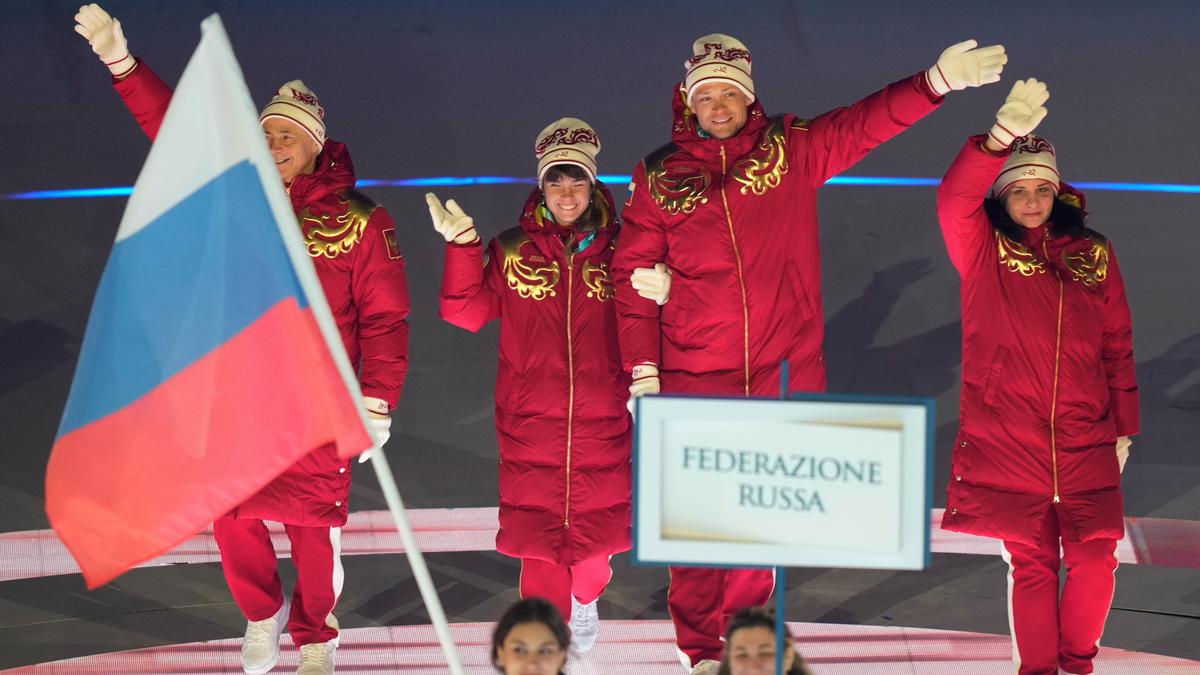
Athletes from Russia walk during the opening ceremony at the 2026 Winter Paralympics, in Verona, Italy, on March 6, 2026.
| Photo Credit: AP
The Milan Cortina Winter Paralympics opened amid the tensions of intensifying war in the Middle East and with some countries boycotting the opening ceremony because of the return of the Russian flag to the global sports stage.
The Russian flag made its return during the nations’ parade on Friday (March 6, 2026), marking the first time it was flown at the Paralympics since the 2014 Winter Games in Sochi, and signalling a possible full-fledged return to the Olympic circles ahead of the 2028 Summer Games in Los Angeles.
Some boos were heard as the Russian athletes entered the stage during the parade. Four members of the delegation represented the country wearing a bright red uniform. They waved to the crowd as they paraded at the ancient Arena di Verona that was retrofitted with new wheelchair ramps and accessible restrooms along with other safety upgrades.
Russia’s national anthem could be played for gold medalists for the first time on the stage of a major global sporting event since the invasion of Ukraine in 2022. Russian athletes were initially banned because of a state-sponsored doping program, and the sanctions had continued after the invasion.
There was applause when Ukraine was announced, but none of its athletes were seen as the country went through with its boycott of the ceremony. Six other nations had planned to not attend for political reasons, according to the International Paralympic Committee: the Czech Republic, Estonia, Finland, Latvia, Poland and Lithuania.
Also back was the flag of Russia’s close ally Belarus, which had two athletes participating in the parade in front of a virtually full Arena di Verona.
Iran’s flag was absent because the only athlete set to compete for the nation, Para cross-country skier Aboulfazl Khatibi, had to withdraw just hours before the opening ceremony after he could not make it to Italy safely amid the intensifying Middle East conflict that began with US and Israeli strikes on Iran.
“Four years ago I said I was horrified at what was happening in the world,” IPC president Andrew Parsons said.
“Unfortunately, the situation has not improved. In a world where some countries are better known by the names of their leaders, I prefer to know countries by the names of their athletes. Sport offers the world another way forward, another perspective.”
Only about 45 athletes — of the more than 600 competing — represented their nations at the ceremony. Because the Games are one of the most widespread ever, with competitions and venues in different clusters around Italy, many athletes were not able to attend.
Americans Laurie Stephens, a Para alpine skier and Josh Pauls, a Para ice hockey athlete, represented the United States in the parade.
Each nation announced their flagbearers, but volunteers were handed the task of actually carrying the flags for all nations because not all flagbearers could attend the ceremony for logistics and training issues. Many would start competing early on Saturday morning.
During the parade, videos were shown with the other athletes at their competition locations.
Italian fencing champion Bebe Vio carried the Paralympic flame into the arena, while compatriot and wheelchair athlete Francesca Porcellato lit the cauldron in Cortina d’Ampezzo.
Italian visually impaired alpine skier Gianmaria Dal Maistro lit the cauldron in Milan.
Among the performances during the ceremony at the Arena di Verona — the first UNESCO World Heritage site to host a Paralympic ceremony — was Stewart Copeland, the renowned drummer of the Police, and DJ Miky Bionic, known as the first DJ in the world to play with a bionic arm.
The Milan Cortina Games mark the 50th anniversary of the Winter Paralympics. Athletes will compete across 79 events in six sports. It is the biggest Winter Paralympics ever, with a record female participation, according to the IPC. The curling events began on Wednesday. (March 4, 2026)
Flights will leave Oman tonight and this weekend (Picture: Reuters)
The first government-chartered flight to evacuate UK citizens from Oman is believed to have taken off this evening as the war in Iran continues to escalate.
Around 7pm UK time, the flight was scheduled to leave Muscat, in addition to eight commercial flights leaving the United Arab Emirates this evening.
Metro has contacted the Foreign Office to confirm that the flight is en route.
Prime Minister Keir Starmer said two further Government-chartered flights will take off from the capital of Oman, Muscat, to London Heathrow on Friday and Saturday.
The first Government rescue flight and British Airways commercial flight from Muscat depart on Wednesday night.
More than 1,000 British nationals arrived back in the UK on commercial flights from the United Arab Emirates as of Tuesday.
Eight more UK flights are scheduled to depart the UAE today. Still, there is not expected to be a widespread evacuation of the 130,000 British nationals who have registered in the Middle East.
Some commercial flights are operating from Dubai and Abu Dhabi in the UAE, but most are cancelled because of airspace restrictions caused by the conflict between Iran and the US.
Violence in the Middle East has spilled over into neighbouring countries (Picture: AFP)
British Airways, which does not usually serve Muscat, said it remains unable to operate its scheduled flights from Abu Dhabi, Amman, Bahrain, Doha, Dubai and Tel Aviv.
Muscat has emerged as a key location for people to leave the Middle East, given the Foreign Office hasn’t advised against travel into the Oman airport – unlike the current advice for airports in Dubai, Abu Dhabi and Doha.
Muscat can be reached by road from both Dubai and Abu Dhabi with journeys of about 300 miles.
The Foreign Office said: ‘There are a limited number of commercial options available, including by air from the UAE and from Oman.
‘If your presence in the UAE is not essential, you may wish to consider departing – if you judge you can access these options safely.’
The Oman waterfront has seen debris from strikes wash up (Picture: Reuters)
Oman Air has continued to operate its two daily return flights between Muscat and Heathrow despite the war.
Flight-tracking service Flightradar24 said Muscat has ‘become a popular alternative for flying out of the region’ but warned that almost all scheduled flights from Muscat are fully booked.’
It added that private jets are being chartered to evacuate those who can afford it.
About half a million passengers per day usually use airports in Dubai, Doha or Abu Dhabi, which are vital hubs for travel between Europe and the continents of Asia and Australia.
Experts believe it could take weeks to clear the backlog of passengers.
Get in touch with our news team by emailing us at webnews@metro.co.uk.
For more stories like this, check our news page.
MORE: Cruise passengers stranded in warzone starting to panic with ‘booms’ of suicide drones overhead
MORE: Operation Epic Fury could burn through precision missiles to strike Iran ‘in days’
MORE: US ambassador to Israel jokes about staff ‘procreating’ during war
The five-day-old Iran war has “supercharged” oil prices that Canadian motorists are already seeing reflected at the pumps.
Drivers in British Columbia and Prince Edward Island are feeling the pinch the most with prices at the pumps there well above the national average of $1.38.1 per litre Wednesday morning.
CAA data shows that figure is a four cent increase from Tuesday and nearly a nine cent increase a week ago.
Oil prices soared to levels not seen in more than a year on Tuesday as Iran launched a series of attacks against the United States, Israel and neighbouring Gulf countries.
The attacks come after the U.S. and Israel began an aerial bombardment of Iran Saturday, targeting leaders within the Iranian regime and killing 86-year-old Supreme Leader Ayatollah Ali Khamenei.
Story continues below advertisement
U.S. President Donald Trump has said the strikes were intended to ensure Tehran does not obtain a nuclear weapon and aimed at “eliminating imminent threats” from the Iranian regime.
“The early fallout from this dangerous situation will be obvious the longer it goes on and depending on who joins the conflict. Geography is taking centre stage due to the importance of a crucial global crude oil conduit: the Strait of Hormuz, the passage of which is controlled by Iran,” Roger McKnight, chief petroleum analyst with En-Pro International, said in a statement Tuesday.
“Any restriction of tanker movement, whether in fact or rumored, will increase the price of crude, and this will quickly be reflected in consumer costs for all refined products such as gasoline and diesel.”
Carney on Iran war: U.S., Israel have acted without consulting allies
A fifth of all oil traded passes through the Strait of Hormuz, the narrow mouth of the Persian Gulf; Iran has disrupted tanker traffic through it, sending global oil and natural gas prices soaring. Iran has also struck energy facilities in oil-rich Qatar and Saudi Arabia.
Story continues below advertisement
McKnight said the price of crude is “being supercharged not by facts but by headlines,” which are spurred on by traders and investors worldwide.
Get breaking National news
For news impacting Canada and around the world, sign up for breaking news alerts delivered directly to you when they happen.
“The consumer is in for a very rough ride if this war extends in time and/or location. A crude oil increase from $67 to $80 per barrel would mean an increase at the pump of eight cents per litre. A jump to $100 per barrel would work out to a boost of 20 cents per litre,” he said.
“This could all be reversed should the political temperature be reduced. But right now, the pot is on full boil.”
Leaders around the world ‘blindsided’ by US-Israel strikes against Iran
Trending Now
Muslim mothers barred from volunteering at Quebec schools over hijabs
Carney reaffirms Canada’s support for strikes on Iran ‘with regret’
As of Wednesday morning, the price of West Texas Intermediate was trading at nearly US$74.30 per barrel, while Western Canadian Select was at US$62.21 per barrel.
Data from GasBuddy, a technology company that helps people find cheap gasoline, showed B.C. motorists were paying $1.61.9 per litre for regular unleaded gas Wednesday morning.
Story continues below advertisement
PE.I. drivers found themselves paying $1.54.2 per litre, data from the province’s Regulatory and Appeals Commission shows.
The prices for other Canadian provinces were as follows:
Quebec: $1.52 per litre via Gasbuddy.
Newfoundland: $1.51.8 per litre via Gasbuddy.
Nova Scotia: $1.47.7 per litre via the Nova Scotia Energy Board.
New Brunswick: $1.42 per litre via the New Brunswick Energy and Utilities Board.
Ontario: $1.36.6 per litre via Gasbuddy.
Alberta: $1.33.5 per litre via Gasbuddy.
Saskatchewan: $1.32.5 per litre via Gasbuddy.
Manitoba: $1.32.4 per litre via Gasbuddy.
The Nova Scotia Energy Board used its interrupter mechanism at midnight Wednesday to increase the price of fuel because it was “necessary due to significant shifts in the market price,” it said in a news release.
Even before the Iran attack, gasoline prices were already rising as refiners had begun switching over to more expensive summer fuel blends.
Trump acknowledged the rising oil prices during remarks in the Oval Office Tuesday.
“We have a little high oil prices for a little while, but as soon as this ends, those prices are going to drop, I believe, lower than even before,” he said.
Trump added in a social media post after that, if necessary, the U.S. Navy would escort oil tankers through the Strait of Hormuz. He also ordered the U.S. International Development Finance Corp. to provide political risk insurance for tankers carrying oil and other goods through the Persian Gulf “at a very reasonable price.”