Six Things You Should Know Before Travelling Abroad For Surgery


Around 523,000 people from the UK travelled abroad for surgery in 2024, with the most popular destinations for ‘medical tourism’ being Turkey, Poland and Romania, according to data from the Office for National Statistics (ONS).

People might travel abroad for treatments such as dental and cosmetic surgery, cancer treatment, weight loss surgery, fertility treatment, organ transplants and stem cell therapy, according to experts at TravelHealthPro.

“Transgender travellers may seek hormone therapy and gender reassignment surgery abroad,” they added.

The growth in medical tourism appears to stem from a mixture of factors, including higher disposable incomes, increased readiness to travel for health care, low-cost air travel and the expansion of internet marketing, TravelHealthPro said.

NHS waiting lists have also been growing in recent years, though NHS England noted it delivered more elective activity in 2025 than any other year in its history, “helping cut the waiting list to its lowest level since February 2023”.

If you’re one of the many people tempted to go abroad for surgery or treatment, Qian Huang, international claims manager at William Russell, has shared some key considerations below.

What you need to know before travelling abroad for surgery

“The idea of having surgery abroad can be nerve-wracking, particularly when it comes to questions of safety,” Huang said.

“Many people considering surgery abroad decide not to go because of concerns about safety, the quality of the medical care, or not understanding the foreign healthcare system.

“However, in reality, many international hospitals and clinics follow standards of care that match or exceed those found in the UK, US, or Europe. The key is knowing what to look for.”

How to find an accredited hospital abroad

Medical accreditations are a key indicator of a hospital’s commitment to international standards.

One of the most widely recognised is the Joint Commission International (JCI) accreditation, often considered the global gold standard, which evaluates hospitals on areas such as infection prevention, medication safety, staff training, patient communication, and emergency readiness.

To find an accredited hospital abroad, patients can check official accreditation bodies’ websites, verify information on hospital websites, contact the facility directly, or consult medical tourism networks and national health authorities.

What to check before booking surgery

To steer clear of issues, Huang shared six factors to be aware of before booking surgery abroad.

1. Lack of accreditation or vague claims

“Be wary of hospitals that mention ‘world-class standards’ without naming an actual accrediting body,” he said. “Reputable facilities will proudly display credentials from recognised organisations like JCI, ACHSI, or Temos.”

2. ‘Too good to be true’ pricing

Competitive pricing is probably one of the top reasons people consider surgery abroad, but Huang warned ultra-low prices should raise alarm bells.

Check the qualifications of the surgeon, what’s included in the cost, and whether the aftercare and follow-up appointments are covered, he added.

3. Poor communication or pressure tactics

If you’re struggling to get clear answers from the hospital or feel rushed into making a decision, consider taking a step back. Trustworthy providers are transparent, patient, and more than happy to talk you through the details.

4. No clear aftercare plan

Recovery is just as important as the procedure itself. A good hospital will give you a personalised aftercare plan, including advice on travel, medication, and any physical restrictions, before you agree to surgery.

5. Inconsistent or missing reviews

Take the time to search for independent reviews and testimonials before considering which hospital to have the surgery at. A complete lack of online feedback, or reviews that sound overly scripted, can be a red flag.

6. Limited information about the surgical team

When researching your hospital, you should be able to find the names, qualifications, and experience of the surgeons who’ll be treating you. If this information is unavailable or unclear, you need to proceed with caution.



Woman’s husband and brother died from ALS like Eric Dane and had ‘signs’


Actor Eric Dane, known for his roles in Grey’s Anatomy and Euphoria, died this week after suffering from ALS

ALS explained after Eric Dane’s death

A woman whose brother and husband died of Motor Neurone Disease like Eric Dane has revealed the unusual first “secret signs” they had the “cruel and devastating” incurable condition. Carol Deytrikh-White, 65, lost her husband Alex and brother Brian to MND in March 2009 and 2022, respectively.

American actor Eric Dane, known for his roles in Grey’s Anatomy and Euphoria, passed away on Thursday after suffering from amyotrophic lateral sclerosis (ALS), the most common form of MND. Alex’s first symptom was that he noticed running was getting harder, despite going three times a week.

For Brian, his first sign was that he was losing his voice towards the end of each day. MND is a life-shortening and incurable condition that causes weakening of the muscles until a person becomes unable to move, breathe or speak.

Carol, a retired nurse practitioner from Huntingdon, Cambridgeshire, became a carer to her late husband Alex in the months before he passed. She now devotes her time to raising awareness and fundraising for the condition, which she described as “cruel and devastating”.

Carol said: “We’re all aware that MND is one condition you don’t want to get – it’s so cruel. I think I knew that Alex had MND before he did – but the diagnosis was a completely devastating, heart-dropping kick in the stomach.

“It affects the whole family and, for the majority of people who develop MND, it doesn’t offer any hope. But awareness has a two-fold benefit – fundraising for treatments, but also so that the people around you can have more empathy for those affected. There’s a human tendency not to deal with or talk about things that feel uncomfortable.”

Alex was physically active, and he and Carol would regularly play squash and run together. But before he was diagnosed, Carol says Alex, who was an officer in the RAF, noticed his running was getting harder despite running three times a week.

He got a weakness in his left arm and, after failing his RAF medical, consultants started to run tests. It was first thought he might have a trapped nerve, but he was diagnosed shortly after, which Carol described as “devastating”.

After his diagnosis, as Alex’s condition deteriorated, he was less able to walk, talk, breathe and sleep. She eventually reduced her hours at work to just a handful a week, in order to care for Alex.

She said: “With Alex’s journey, the rate of progression was quick. He died within two years of the diagnosis.

“In the last two weeks I had to attend to Alex every half an hour because he was unable to swallow even saliva. I was attending to him all day, but I was also getting up throughout the night for his feeds and ventilation.

“I couldn’t go out, not even to the shops. But all I wanted was to be with him, I didn’t see it as a sacrifice. It was a privilege.”

After Alex passed away, Carol felt like she was “thumped in the stomach” when her brother, Brian, was diagnosed with MND a few years later. Brian – who was living in Thailand at the time of his diagnosis – emailed his sister to say he was losing his voice at the end of each day.

He had sent letters and tests back to Carol and the diagnosis was confirmed on a trip back to the UK. Brian returned to Thailand, with Carol flying over to help with equipment and support before his death in 2022 at the age of 57.

Carol said: “Hearing Brian’s diagnosis years after losing Alex, because MND is still relatively rare, and they didn’t have a genetic relation, it was unbelievable as well as devastating. Brian spent the last three of four years ‘locked in’ in his bed. He couldn’t move or eat.”

Carol has since remarried and spends a lot of her time fundraising for the Motor Neurone Disease Association with her husband, John White, 69. Alex had already raised a lot of money for the association and Carol wanted to continue his work and keep his memory “very much alive and celebrate his life”.

They are walking along the entire coast of the UK, which is around 11,000 miles in total, and around 8,000 miles to walk because of the layout of the paths, she said. They have been completing it bit by bit for the past ten years, alongside juggling seeing their seven children combined, plus 11 grandchildren and one great-grandchild.

At their current rate, they anticipate finishing in four years’ time. The challenge has raised £5,500 for the MND Association so far.

She said: “For other conditions, there is an element of hope, but at the moment, for MND, it’s not there. And hope is the last human instinct to go – I almost didn’t believe Alex was dying on the night that he died.

“But when you do watch someone you love die, you realise how lucky you are to have that day and the next. In my lifetime I want to keep fundraising and I want to see hope given for others diagnosed. I realise we’re privileged to have life and it’s our duty to make the most of it.”


NHS braces for ‘second surge’ of winter vomiting bug


Norovirus cases in NHS hospitals have risen to their highest level so far this winter, with an average of 1,012 patients in hospital beds each day.

NHS bosses have called on the public to do everything possible to prevent a “second surge” of the widespread norovirus that can prove to be “very unpleasant”. Cases are already occupying more than 1,000 hospital beds across England.

A spokesperson for NHS England said: “Norovirus cases in NHS hospitals have risen to their highest level so far this winter, with an average of 1,012 patients in hospital each day. These numbers have more than doubled since early January and have risen for the second week in a row.”

The health service is preparing for what has been described as a “second surge” of norovirus, commonly referred to as the vomiting bug. Figures released this week reveal that the average daily number of patients hospitalised with norovirus climbed above 1,000 for the first time this winter (1,012).

NHS national medical director Dr Claire Fuller said: “It’s vital that we do all we can to avoid a second surge in norovirus at a time when the NHS remains flat out coping with winter pressures. The public has a huge role to play in stopping the spread of this bug by taking some simple precautions, like good hand hygiene with regular handwashing with soap and water.

“If you have symptoms, stay home, rest and drink fluids, and please don’t go to places like schools, workplaces, hospitals, and care homes until you have been symptom-free for at least two days. If you have any concerns about norovirus symptoms, local pharmacies can provide support and advice and remedies, or please contact 111 or use 111 online.”

What are the warning signs of norovirus?

Norovirus is an extremely contagious illness that causes vomiting and diarrhoea. While anybody can contract norovirus, children under the age of five, elderly adults, and those with compromised immune systems are at greater risk of developing severe infections, reports the Mirror.

The principal symptoms of norovirus typically come on suddenly and may include nausea or vomiting and diarrhoea. Additional symptoms can include a high temperature, headache, and aching limbs and stomach. Health experts note that, although it is unpleasant, the majority of sufferers tend to recover within around two days.

How to treat norovirus

In most instances, norovirus does not necessitate hospital treatment and can ordinarily be managed from home. The NHS recommends:

  • Stay at home and get plenty of rest
  • Drink lots of fluids, such as water or squash – take small sips if you feel sick
  • Carry on breast or bottle feeding your baby – if they’re being sick, try giving small feeds more often than usual
  • Give babies on formula or solid foods small sips of water between feeds
  • Eat when you feel able to. It may help to avoid foods that are fatty or spicy
  • Take paracetamol if you are in discomfort. Check the leaflet before giving it to your child.

Should symptoms persist beyond three days, or if there are indications of severe dehydration, such as dizziness, confusion, little or no urine output, or a reduced level of consciousness, medical attention should be sought quickly.

In the first instance, call 111 where an operator will advise you on the appropriate course of action. If necessary, they are able to arrange a call back from a nurse or doctor.


B.C. government spending $50M to expand availability of nasal naloxone across province | Globalnews.ca


British Columbia Health Minister Josie Osborne says the province is spending $50 million to expand availability of anti-overdose nasal naloxone across the province.

B.C. government spending M to expand availability of nasal naloxone across province  | Globalnews.ca

She says the expansion is an important response to the overdose crisis, which was declared 10 years ago this April, and it will save lives.

Osborne says the funding over two years means the nasal medication will make up about half of the more than 400,000 naloxone kits distributed annually.

Receive the latest medical news and health information delivered to you every Sunday.

Get weekly health news

Receive the latest medical news and health information delivered to you every Sunday.

A statement from her ministry says injectable take-home naloxone kits have averted nearly 40,000 deaths since 2019.

Osbornes says the additional nasal kits will soon be distributed in 150 community sites, then in all 2,400 take-home naloxone sites from April.

Chloe Goodison, executive director of the NaloxHome Society, says the additional nasal kits will make it easier to save lives.

Story continues below advertisement

Goodison says drug poisoning is the leading cause of death for British Columbians aged 10 to 59, and nasal naloxone gives youth a tool they feel comfortable carrying and can confidently use in case of emergencies.


&copy 2026 The Canadian Press


After tragedy, Lapu Lapu victims were victims of ‘snooping’ at hospitals: report – BC | Globalnews.ca


In the aftermath of the deadly Lapu Lapu tragedy last April, dozens of people were rushed to hospitals to receive care.

B.C. government spending M to expand availability of nasal naloxone across province  | Globalnews.ca

Now, an investigation from B.C. Information and Privacy Commissioner Michael Harvey has found that 71 snooping incidents by 36 health-care workers happened, meaning their medical records were accessed without permission.

“When I say snooping, what I mean is the unauthorized access of a patient file by someone who doesn’t need to have access to it,” Harvey said.

Half of the patients treated after Lapu Lapu had their privacy breached, 16 in total.

The breaches happened across the Fraser Health, Vancouver Coastal Health and the Provincial Health Services Authorities and within Providence Health Care.

“We were obviously quite concerned once we learned about the extent of this, of this snooping, and so I launched an investigation,” Harvey said.

Story continues below advertisement


Click to play video: 'Remembering the Lapu Lapu tragedy in Vancouver'


Remembering the Lapu Lapu tragedy in Vancouver


The report found that most of the access was driven by curiosity and some employees opened multiple files a day.

Receive the latest medical news and health information delivered to you every Sunday.

Get weekly health news

Receive the latest medical news and health information delivered to you every Sunday.

According to the report, those employees faced discipline ranging from suspensions to terminations and some were reported to their regulatory colleges.

“To misuse that access is the betrayal of trust, and so we need to take this issue very, very seriously,” Harvey said.

Two health authorities initially argued that patients didn’t need to be told their privacy had been breached, but the commissioner disagreed.

“I think the concern was, do we need to harm them again by telling them something that they don’t need to know?” Harvey asked.

“But I think the conversation that we had with the health authorities about what people have a right to know was a very useful conversation to have.”

Story continues below advertisement


Click to play video: 'Lapu Lapu victim speaks to Global News'


Lapu Lapu victim speaks to Global News


On April 26, the day of the tragedy, the report shows that the first breaches occurred.

Within days, audits began, confidential flags were added to files and memos were sent reminding staff about privacy.

By April 30, the first breach was reported to the commissioner’s office.

“It is a tremendous violation of a person’s privacy,” Harvey said.

“Health information, health records, are confidential and must remain that way. There is no excuse for this behaviour.”

The commissioner found safeguards were in place, but were not strong enough.

The report made nine recommendations, including clearer privacy training, real-time monitoring and discipline strong enough to deter snooping.

Story continues below advertisement

In a joint statement, the health authorities called these breaches “unacceptable” and “inexcusable” and said collectively they have accepted all recommendations in the report.

“This — this kind of activity, this kind of action — really violates that trust,” B.C. Health Minister Josie Osbourne said.

“It’s important for us to rebuild it. That’s why I take the report so seriously.”

The commissioner says that intentional snooping is not a chronic issue, but in an era of digital records and high-profile tragedies, protecting patient privacy is more critical than ever.


&copy 2026 Global News, a division of Corus Entertainment Inc.


Ontarians without a family doctor at higher risk of death, study finds | Globalnews.ca


As some Ontarians remain without a family doctor, a new study shows not having one can increase your risk of death, but it found the risk is even higher for those with multiple chronic conditions the longer they’re without.

B.C. government spending M to expand availability of nasal naloxone across province  | Globalnews.ca

According to the study, those with multiple chronic conditions who went without a family doctor for two or more years had 12-fold higher odds of death, and a nearly 16-fold higher chance of premature death.

“So people with multiple chronic conditions who do have a family doctor compared to similar people in all other ways with multiple chronic conditions and the only real difference being they don’t have a doctor, (of) those two groups, there was double the risk of dying in the next year,” said Jonathan Fitzsimon, lead author of the study.

The study was published in the Health Affairs Scholar journal this month and saw more than 12 million Ontarians’ health records analyzed.

Story continues below advertisement

Of that 12 million, approximately 90 per cent or 11.5 million had a family doctor, with 83 per cent having had their physician for five years or more. The remaining 1.2 million did not have a family doctor, with the study finding roughly one-third being without one for five years or more, and 7.4 per cent without a physician for 15 or more years.

That’s a problem because when those who may need that primary care don’t get it, it can mean more burden on the health-care system.

Receive the latest medical news and health information delivered to you every Sunday.

Get weekly health news

Receive the latest medical news and health information delivered to you every Sunday.

“Maybe there needs to be a focus as well, and some degree of priority and additional work on those unattached patients who have multiple chronic conditions, because they’re the ones who are at the most risk individually, but they also have the highest burden on our hospital system,” Fitzsimon said.

A separate study conducted by Fitzsimon and four other researchers found prolonged periods without primary care were “significantly associated” with increased health-care costs. Those with high comorbidities without a family doctor for a long period of time had a median cost of about $8,100 annually.


Click to play video: 'Health Matters: 6M Canadians still do not have access to primary care, survey suggests'


Health Matters: 6M Canadians still do not have access to primary care, survey suggests


He noted the study also showed the risk for those with multiple health issues went up in the years after they lost their family doctor, especially within the first five years.

Story continues below advertisement

“People with chronic conditions, well-controlled, well-managed, their medications ordered, their prescriptions refilled on time, and then they lose their family doctor and now they’re having to manage these chronic conditions independently or without professional support,” Fitzsimon said.

“That leads to more emergency department visits, more hospital visits, and what we also found now in this new research, a higher association with mortality.”

Fitzsimon applauded efforts by the provincial government to get Ontarians access, noting their Primary Care Action Plan, but said action should still be taken on ensuring care gets to those who may need it the most.


Dr. Tara Kiran, a family physician at St. Michael’s Hospital in Toronto, said not having a family doctor can pose added issues when a patient has several health issues.

“You end up going for a lot of your care to walk-in clinics or emergency departments, and those settings are actually designed to just deal with an immediate issue,” Kiran said. “They don’t provide ongoing follow-up, and it’s not really their job to manage chronic conditions over time.”

She said while these facilities can refer you to specialists, such as an endocrinologist for diabetes, it would only manage “one part of you.”

“Very different from a family doctor that manages the whole of you and balances all of those chronic conditions and your many needs,” she added.

Story continues below advertisement

While Kiran agrees with the need to get those with chronic conditions a family doctor first, it can be difficult to ensure they are reached due to barriers they may face.

She said the focus needs to be getting everyone care.

“In theory, we should be trying to prioritize, but in practice that’s hard and that’s why I also support the efforts to just ensure that everyone has one (a family doctor) because if we get that to everyone, that will include the people who are complex too,” Kiran said.

&copy 2026 Global News, a division of Corus Entertainment Inc.


I Keep Waking Up Groggy And Fatigued. It’s Probably Because I’m Making These Mistakes


If you’re regularly waking up feeling groggy, tired or even anxious and on edge, you’re far from alone. I’m regularly there with you.

While I often attribute it to just being a parent (I was woken up a grand total of four times last night alone), some days I’ll get a solid seven hours and still wake up feeling fatigued.

And there might be another explanation (or five) as to why I – and many like me – wake up so groggy each day.

According to hormone health expert Mike Kocsis, of Balance My Hormones, the first 60 to 90 minutes after waking are perhaps the most hormonally sensitive of the whole day.

This period of time is when your body determines how focused, alert and resilient you will be for the next 12 hours, he says.

Understandably, then, small habits and routines in the morning can either balance that process or completely ruin it.

Here are just some of the habits you might want to avoid going forward…

1. Hitting the snooze button repeatedly

I am a serial snooze-button-pusher – and it turns out, I’m really not doing myself any favours. While it might seem like a fairly harmless habit on the face of it, Kocsis suggests it creates hormonal chaos.

“Each time your alarm goes off, the brain slightly wakes, releases adrenaline and cortisol, then is pushed back into sleep again,” he says. “Over time, this stop-start cycle breaks down the body’s natural cortisol (the stress hormone) awakening response.”

You’re basically giving yourself a series of false starts, which can leave you feeling mentally sluggish, irritable and groggy.

His advice for chronic snoozers is to “set your alarm 10 minutes later and allow one short snooze only”.

“This prevents repeated adrenaline spikes and helps cortisol rise more naturally,” he explains.

2. Starting the day with a doomscroll

Reaching for your phone as soon as you wake might feel like second nature, but the onslaught of notifications, emails and news headlines you’re met with are all signalling urgency, which your brain processes as a stress cue, triggering cortisol.

This might leave you feeling wired early in the morning, but will subsequently be followed by a crash in motivation, focus and mood later in the afternoon, says Kocsis.

“Rather than banning your phone completely, delay overstimulating content,” he advises morning scrollers.

“Keep notifications off and avoid any news or emails, however, allow music or a timer. This stops cortisol from peaking too early while still giving routine.”

3. Reaching for caffeine immediately

Coffee in bed might sound delightful, but health and wellness expert Andy Briggs from XO Fitness says your body actually produces its own natural “wake-up” hormone (cortisol) around 30-45 minutes after you wake.

“Hitting caffeine too early can mess with that process, make coffee less effective, spike stress levels, and even leave you dehydrated,” he explains.

His advice is to start with water instead, as after 6-8 hours without fluids, your body needs rehydrating.

If you do drink coffee or breakfast tea first thing, Kocsis advises making sure you stand or walk whilst doing so, as “gentle, slow movement buffers caffeine’s effects on cortisol and improves insulin sensitivity”, which ideally keeps those pesky jitters at bay.

If you wake up feeling groggy, you might want to switch up your morning routine.

Photo by Laura Chouette on Unsplash

If you wake up feeling groggy, you might want to switch up your morning routine.

4. Skipping breakfast (or waiting too long to eat)

Again, guilty. After getting two kids out of the door in the morning, and then kickstarting the day’s work and meetings, sometimes I’m not eating breakfast until about 10am.

Kocsis notes this can place the body under unnecessary stress: “When the body doesn’t receive energy in the morning, it instead raises cortisol levels to keep blood sugar balanced.

“This may feel like you’re functioning on adrenaline, you’re technically awake but not calm or stable. Over time, this pattern can cause anxiety, irritability, cravings and a sharp dip in energy mid-morning. You can start to feel shaky, stressed, short-tempered, extremely hungry and mentally foggy all before lunch.”

His advice? Use food to signal safety. Even a small amount of protein and fat first thing sends a strong signal to the brain that resources are there, he says. “This lowers the need for cortisol to increase and helps the adrenaline-fuelled ‘wired but tired’ feeling mid-morning to settle.”

5. Showering ‘too hot, too fast’

If you love a roasting hot shower to wake you up first thing, it’s worth noting this might not be doing you many favours.

“Very hot water causes blood vessels to constrict rapidly, which can drop blood pressure and set off compensatory cortisol release to keep you upright and alert,” Kocsis says.

You might notice a hot shower leaves you feeling light-headed or drained, which can carry into the morning. “This can be particularly impactful for people who already experience low blood pressure, fatigue or hormone sensitivity,” he continues.

If you do love a bit of heat to start your morning (and who doesn’t during the winter months?), his advice is to finish your shower with 15-30 seconds of slightly cooler water.

“This stimulates alertness and stimulation without triggering the stress response linked with intense temperature changes, leaving you awakened rather than drained,” he notes.

6. Starting the day in absolute silence

If you wake up in total silence with zero conversation, music or background noise going on, you might actually be helping your brain stay in a half-asleep state.

“The auditory system helps trigger wakefulness to the brain,” says Kocsis. “With stimulation, dopamine and cortisol can rise more slowly, delaying mental wakefulness.”

Listening to music, a podcast or even regular household noise can help prompt healthier hormone signalling, he offers.

7. Keeping the lights off

Briggs suggests staying in the dark after you’ve woken up confuses your body clock. “Natural light tells your brain it’s time to wake up, improves mood and helps regulate sleep patterns,” he explains.

“Open the blinds as soon as you can or, if it’s still pitch black outside, things like a sunrise alarm clock can help by gradually lighting the room without the shock of an overhead light.”

Kocsis adds: “A clear light helps cortisol peak early and decline effectively, reducing the 3pm slump and evening restlessness.”


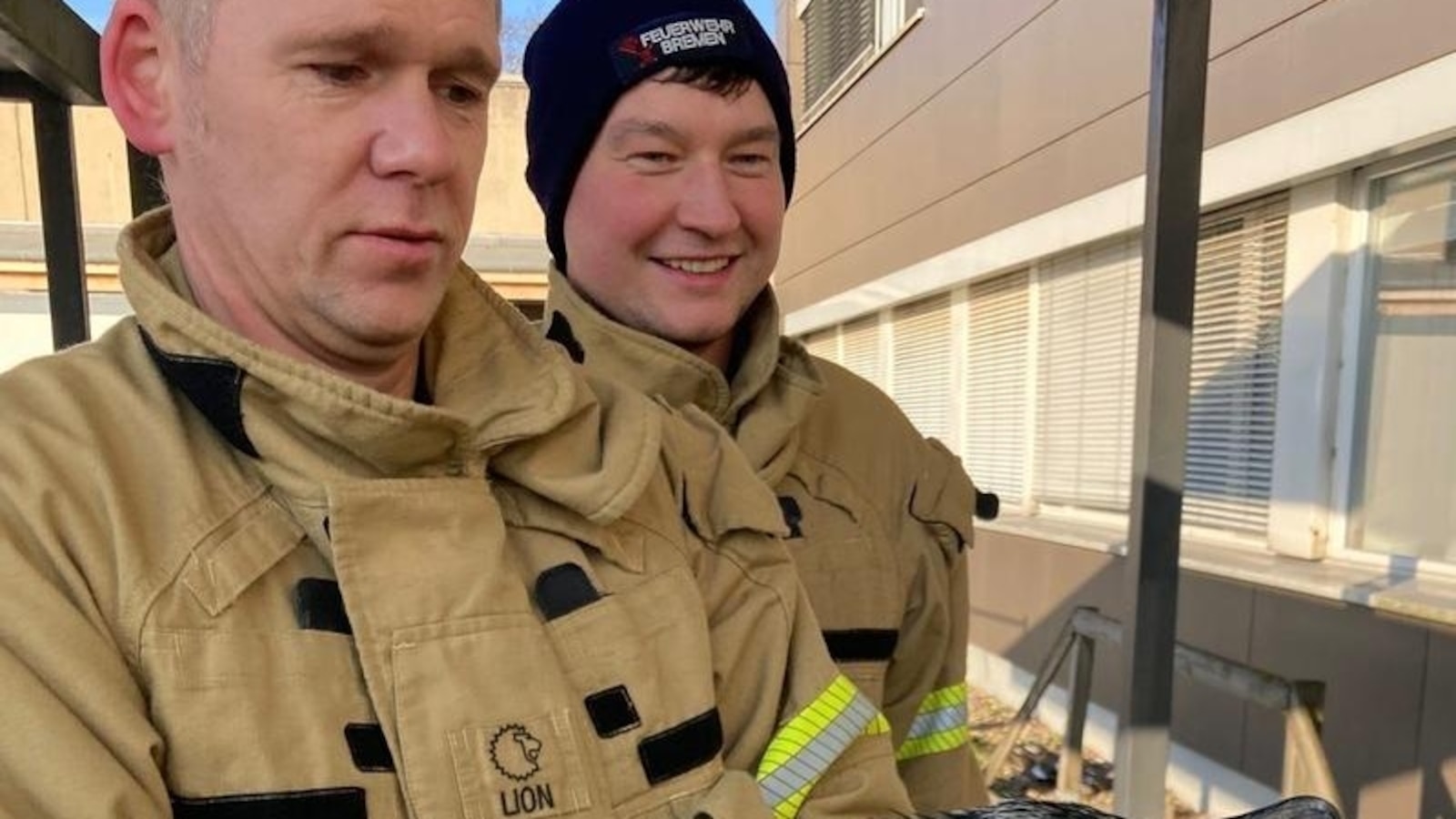
An injured seabird pecks at an emergency room door, prompting its own rescue


BERLIN — An injured seabird sought help by pecking at the door of an emergency room at a hospital in Germany until medical staff noticed it and called firefighters to help with its rescue.

The cormorant, a shiny black waterbird, had a triple fishing hook stuck in its beak when it made its presence known at the glass door of the Klinikum Links der Weser hospital in the northern city of Bremen on Sunday.

In a joint effort, medical staff and firefighters removed the fishhook and treated the wound, the Bremen firefighter department said in a statement. The bird was later released back into nature on the grounds of the hospital park.

“When an injured cormorant does approach humans, it is usually an animal in extreme distress that has lost its natural shyness,” the statement said.

A cormorant is a large bird with a long neck, wedge-shaped head and a distinctive sharp beak with a hooked tip. A fishhook in the bird’s beak would be extremely dangerous for the animal. Infections, pain and even starvation are possible, the firefighter department said.


Saskatchewan women advocate for shorter mammogram wait times | Globalnews.ca


At the beginning of 2026, the Saskatchewan government lowered the breast cancer screening age from 45 to 43, with plans to further drop it to 40 by June. While many applaud the move, they say something has to be done about wait times.

B.C. government spending M to expand availability of nasal naloxone across province  | Globalnews.ca

With pressure on the system, wait times to get a mammogram in the province can stretch to almost a year.

Breast cancer survivor Tammy Haas was diagnosed with invasive ductal carcinoma triple negative in April 2025. She says she was able to get in for a mammogram at the end of March due to a cancellation and believes her story would have ended differently had she not been seen when she was.

“At the time that I had the mammogram, the mass was measuring at five centimeters. By the time I started cancer treatment six weeks later, it was already measuring over eight centimeters, so in the span of about six weeks, it had grown quite significantly,” Haas says.

Story continues below advertisement

In an ideal world, Haas says, all tests would be completed within six weeks, adding that it is unfair and frustrating that patients have to fight to be seen sooner by a doctor.

“We shouldn’t have to push for our health-care system. We pay for it. That’s one of the joys of being Canadian. I shouldn’t have to… fight my way through it to try to get what I need from a medical standpoint,” says Haas.


Patient advocate and breast cancer survivor Lisa Vick was diagnosed in September 2023. She says that despite good efforts made by the government, communication is still lacking.

Receive the latest medical news and health information delivered to you every Sunday.

Get weekly health news

Receive the latest medical news and health information delivered to you every Sunday.

“We’re dealing with enough as a cancer patient, you shouldn’t be calling your doctor to follow up or you shouldn’t have to be calling the Breast Health Center to say, ‘Hey, when am I going to get in? When’s my biopsy? Where am I at on the wait list?” Vick says.

Vick is hopeful for improvement after being invited to tour the new breast center in Regina. She believes it will be a great resource for women in southern Saskatchewan.

“We got to see where the mammograms are done, the biopsies, the ultrasound. Then they told us that they have surgeons that come in every week. They see you pre- and post-surgery. They have a social worker on site and nurse navigator that walks you through the process,” Vick says.

Story continues below advertisement

“Once (the center) it’s up and running at full capacity and we can get these women through there faster and more streamlined, it’s just a fabulous process and I love the ideas of it,” says Vick.

Women in northern Saskatchewan are referred to the breast health center in Saskatoon.

In response to concerns over mammogram wait times, the Saskatchewan Health Authority (SHA) told Global News that referrals are dependent on individual clinics and personal risk factors.

“Diagnostic breast imaging, including mammography and ultrasound, requires physician referral and is dependent on an individual’s clinical indications and personal risk factors. SHA offers diagnostic breast imaging in several communities including North Battleford, Yorkton, Moose Jaw, and Swift Current, and prioritizes booking based on urgency. Wait times at SHA locations can vary between one week and 11 months,” SHA states.

Additionally, the SHA says mammogram screening is also offered through the Breast Check program.

“This program is available to women across the province, aged 43 years and older who have no breast health symptoms, are not currently in active follow-up for breast cancer and have been breast cancer free for more than five years.

“Wait times vary from two weeks to four months, depending on preferred location.”

Regardless of how long the wait, anxiety lingers for patients wondering what to do next.

Story continues below advertisement

In hopes to help more women understand what they are going through, and how to advocate for themselves, WeyStrong Cancer Support Services Inc. offers supports through their Facebook page.

&copy 2026 Global News, a division of Corus Entertainment Inc.


Experts share simple method to improve your digestion and reduce painful bloating after eating


Feeling bloated, gassy or suffering from indigestion after a meal is a common complaint – but before you reach for a packet of antacids or charcoal tablets, the answer might lie outdoors.

An estimated 43 per cent of Britons struggle with digestive discomfort, with many pinning the blame on their diet.

But new research suggests that going for a walk after a meal could be the solution to reducing post-dinner bloating. 

Despite there being well-versed rhetoric that you should rest after a meal, research has indicated that taking a light walk immediately or shortly after eating is beneficial for both digestion and blood sugar management. 

Dubbed a ‘fart walk’ on social media, the idea is to take a five to to 20-minute stroll after eating to help with digestion, reducing bloating and relieving any trapped wind in the digestive system. 

Deborah Luciano, a personal trainer and nutrition coach, told the Daily Mail that it makes sense. 

She says: ‘Digestion is a full-body process, not just a stomach process.

‘Once you eat, your body has to coordinate stomach acid production, enzyme release, gut motility, blood flow and hormone responses, and all of those are influenced by movement. 

Experts share simple method to improve your digestion and reduce painful bloating after eating

Feeling bloated, gassy or suffering from indigestion after a meal is a common complaint

‘How, or if, you move after meals can either support this process or slow it down.’

Gentle walking acts like a natural stimulator for the digestive tract, which encourages a gut motility called peristalsis.

This is a wave-like muscle movement that moves food through the gut. It can help reduce bloating and pressure, while also supporting a steadier metabolic response after eating.

And when you understand this about digestion, it makes other common post-meal options – such as lying down, having a herbal tea or a cigarette – seem like terrible choices. 

When it comes to your digestion, one of the worst things you can do after eating a meal is lying down or slumping in a chair.

If your stomach is distended with food, these positions put pressure on other organs and impairs peristalsis.

Smoking can also be harmful for digestion as nicotine can thin the gastric mucous, leaving the stomach lining more susceptible to stomach acids and increase the risk of gastritis and peptic ulcers.

Smoking also stimulates gastric acid secretion and inhibits the absorption of nutrients such as calcium and vitamin D.

Research indicates that taking a light walk immediately or shortly after eating is beneficial for digestion and blood sugar management

Research indicates that taking a light walk immediately or shortly after eating is beneficial for digestion and blood sugar management

And while peppermint tea can aid digestion, drinking green or black tea after meals is not recommended, as tannins in tea can inhibit the absorption of nutrients such as iron. Tea contains caffeine, which can worsen anxiety and aggravate heartburn.

In a healthy digestive system, the stomach expands to accommodate food, triggering the gastrocolic reflex which signals the colon to increase motility, which, in some people, can stimulate the need to pass stool soon after eating.

Immediately after eating, blood flow shifts toward the digestive organs and the gut starts rhythmic contractions to move food along. 

Getting up for a stroll straightaway can significantly reduce the usual glucose increase that comes from digesting what we’ve eaten, which is normally seen within 30-60 minutes of eating a meal.

This is why, for people with diabetes or insulin resistance, walking after a meal is particularly beneficial. 

Ms Luciano adds that a post-meal walk can also be especially helpful for people with reflux, functional bloating, slow digestion, or who tend to suffer from constipation.

‘It’s also useful for people who feel very sleepy or sluggish after meals,’ she says. 

‘Digestive symptoms are actually very common, so a small habit like a post-meal stroll can make a noticeable difference for everyone.

‘If you feel very full or tend to experience acid reflux, opt for waiting an extra 10–15 minutes so that food settles and you can feel more comfortable.’

The good news is that even short bursts of walking at a conversational pace can make a big difference for digestion. 

According to the NHS, even a short walk of two to five minutes taken as soon as you finish your meal can have benefits. 

‘To get the best results, know that consistency matters more than intensity here – regular short walks after meals often work better than occasional long ones,’ Ms Luciano says.

‘If you have a busy schedule or have limited space, you can still use walking to aid your digestion. 

‘Light stretching, slow stair walking, using a walking pad, or even doing small household tasks can help. 

‘The goal is simply to avoid staying completely still for long periods right after eating. Even pacing while on the phone or doing light tidying can support digestion.’